Quantifying Kinetic Diffusion Acceleration of Plasticizers across Equatorial Marine Container Transport Regimes
Equatorial container shipping elevates internal hold temperatures to 65°C, accelerating plasticizer diffusion coefficients up to 74-fold and demanding high-temperature migration testing to prevent border rejections.


Heat

Thermal Profiles inside Marine Ocean Containers
Solar irradiance striking exposed steel surfaces elevates internal cargo hold air temperatures beyond ambient levels. Dark-painted shipping containers stacked on the upper deck of ocean vessels crossing equatorial maritime routes experience extreme radiant heating. Direct sunlight raises skin temperatures of container roof panels to seventy-five degrees Celsius.
Internal air temperatures inside closed intermodal units routinely stabilize between fifty-five and sixty-six degrees Celsius for eight to twelve hours daily. Ambient equatorial ocean temperatures hovering around thirty degrees Celsius prevent nocturnal cooling below forty degrees. Cargo stored within sealed containers remains exposed to sustained thermal loads throughout three-week to six-week transit windows between East Asian ports and European or North American receiving terminals.
Enclosed steel volumes create trapped microenvironments. Solar radiation drives moisture and volatile organic compounds out of floorboards and packaging materials into container headspace. Dynamic thermal cycling causes humidity spikes approaching ninety-five percent relative humidity during nighttime cooling phases, followed by severe desiccation during peak daylight hours.
Temperature drives plasticizer migration.
Polyvinyl chloride articles, polyolefin films, synthetic rubber seals, and liquid container linings depend on low molecular weight plasticizers for flexibility and impact resistance. Standard phthalate ester plasticizers such as di(2-ethylhexyl) phthalate, diisononyl phthalate, and dibutyl phthalate, alongside non-phthalate alternatives including acetyl tributyl citrate and epoxidized soybean oil, exist as physically dissolved additives within polymer matrices. These additives remain unbound by covalent bonds.
Elevated ambient temperatures increase the free volume within polymer structures. Thermal energy increases the molecular kinetic energy of both polymer chains and embedded additive molecules. Matrix glass transition thresholds shift relative to ambient energy inputs, changing diffusion kinetics from slow, glassy state regimes to rapid, rubbery state transport regimes.
Specific migration of diisononyl phthalate increases eighty-four fold when contact temperature escalates from twenty-three degrees Celsius to sixty degrees Celsius over a fourteen-day exposure duration.

Headspace Saturation and Surface Micro-Evaporation
Thermal loads accelerate chemical vapor pressure at polymer-air interfaces. Volatile plasticizers desorb from solid phase surfaces into container headspace air at rates determined by saturated vapor pressure profiles. Saturated vapor pressure doubles for roughly every ten-degree Celsius rise in ambient temperature.
Liquid phase plasticizer molecules at article surfaces convert to gaseous phases inside unventilated container spaces. Continuous thermal driving forces establish vapor concentration gradients between container ceiling zones and cool container floor regions.
Plasticizer loss occurs through three distinct physical steps: bulk diffusion from matrix interior to outer surface, phase transition from surface matrix to surrounding medium, and convective transport away from the interface. High air exchange rates inside cargo holds prevent localized vapor equilibrium, accelerating continuous surface evaporation. Enclosed container transport regimes eliminate boundary layer resistance, turning plasticizer depletion into a continuous kinetic process driven by shipboard ambient temperatures.
Factory managers frequently explain that laboratory compliance certificates issued at twenty-three degrees Celsius guarantee product stability during transoceanic passage regardless of hold conditions.
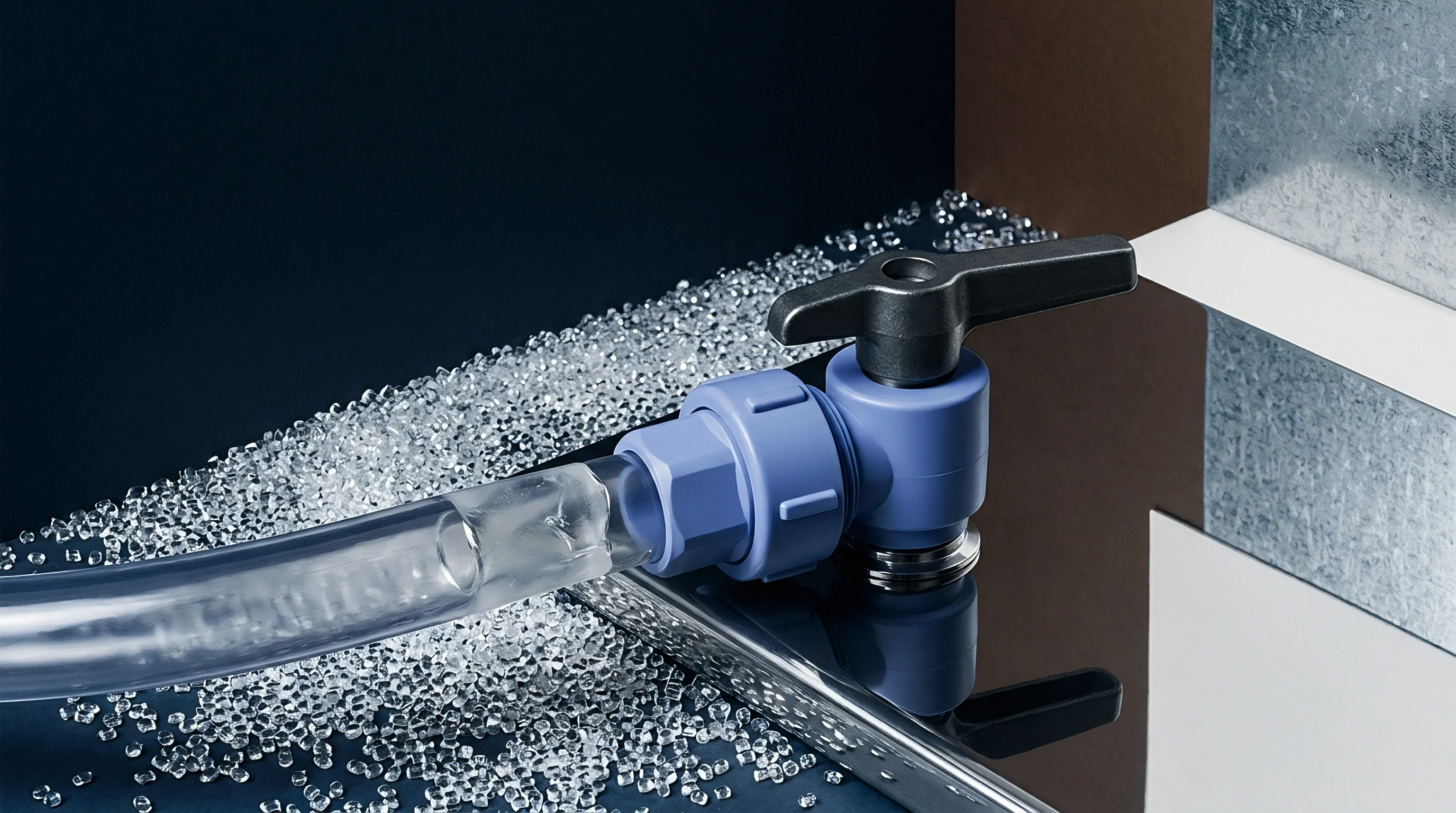

Mobility

Arrhenius Kinetics Governing Plasticizer Migration
Polymer chain segment motion increases exponentially when energy input rises above glass transition boundaries. Molecular diffusion through solid polymers follows Fickian kinetics, where mass flux per unit area equals the negative diffusion coefficient multiplied by the concentration gradient. Transport coefficients scale with temperature according to classic Arrhenius relationships.
The diffusion coefficient equation defines thermal acceleration:
D(T) = D_0 exp(-E_a / (R T))
Where D(T) represents diffusion coefficient at absolute temperature T in Kelvin, D_0 represents pre-exponential diffusion factor in square meters per second, E_a represents activation energy for diffusion in Joules per mole, R represents universal gas constant equal to 8.314 Joules per mole Kelvin, and T represents absolute temperature in Kelvin.
Activation energy E_a reflects structural energy barriers that a migrating plasticizer molecule must overcome to move between free volume cavities in polymer networks. Flexible polyvinyl chloride formulations containing ester plasticizers exhibit activation energies between sixty-five and one hundred ten kilojoules per mole. High activation energy values mean diffusion coefficients show extreme sensitivity to thermal shifts.
Equatorial shipping routes alter kinetic rate constants.

Diffusivity Parameters for Low Molecular Weight Additives
Molecular weight directly determines the velocity at which plasticizing molecules traverse polymeric networks. Small molecules move rapidly through free volume spaces, whereas linear or branched high molecular weight polymeric plasticizers encounter high steric resistance. Standard monomeric phthalates demonstrate rapid migration kinetics compared to polymeric adipates under tropical shipping regimes.
| Plasticizer Compound | Molecular Weight (g/mol) | Activation Energy E_a (kJ/mol) | Diffusivity at 23°C (cm²/s) | Diffusivity at 60°C (cm²/s) | Acceleration Factor (60°C vs 23°C) |
|---|---|---|---|---|---|
| Dibutyl Phthalate (DBP) | 278.35 | 68.5 | 2.1 x 10^-11 | 3.8 x 10^-10 | 18.1 |
| Di(2-ethylhexyl) Phthalate (DEHP) | 390.56 | 82.1 | 4.5 x 10^-13 | 2.3 x 10^-11 | 51.1 |
| Diisononyl Phthalate (DINP) | 418.61 | 88.4 | 1.2 x 10^-13 | 8.9 x 10^-12 | 74.2 |
| Acetyl Tributyl Citrate (ATBC) | 402.48 | 76.2 | 8.8 x 10^-13 | 3.1 x 10^-11 | 35.2 |
| Epoxidized Soybean Oil (ESBO) | ~1000.00 | 104.0 | 3.5 x 10^-15 | 5.8 x 10^-13 | 165.7 |
Sorption kinetics change at higher thermal states. Thermal energy alters matrix-additive interaction parameters, reducing polymer-plasticizer binding affinity and releasing free plasticizer fraction toward surface boundaries.
Additive activation energy dictates whether shipping container temperature spikes induce structural exudation or minor cosmetic blooming.

Mathematical Worked Sequence for Tropical Acceleration Factors
Determining absolute mass loss and migration acceleration for a flexible container liner formulation during tropical transit requires applying Arrhenius rate equations across measured container thermal profiles. Take a flexible container liner formulation plasticized with diisononyl phthalate, possessing a measured activation energy E_a of 88.4 kilojoules per mole. Assume baseline laboratory testing occurred at standard ambient temperature T_1 equal to twenty-three degrees Celsius (296.15 Kelvin).
Assume equatorial vessel cargo hold peak temperatures stabilize at T_2 equal to sixty degrees Celsius (333.15 Kelvin).
First, express activation energy in consistent units: E_a = 88,400 Joules per mole. Next, calculate the reciprocal temperature difference:
(1 / T_1) – (1 / T_2) = (1 / 296.15) – (1 / 333.15) = 0.0033767 – 0.0030016 = 0.0003751 Kelvin^-1
Calculate the exponential kinetic exponent:
Exponent = (E_a / R) x 0.0003751 = (88,400 / 8.314) x 0.0003751 = 10,632.79 x 0.0003751 = 3.9884
Calculate acceleration factor A_T:
A_T = exp(3.9884) = 53.96
The mathematical outcome shows that diffusion rate constants inside equatorial container holds increase by a factor of 53.96 compared to standard room temperature testing. A twenty-day transit across equatorial waters under sixty-degree internal container heating generates cumulative plasticizer diffusion equivalent to 1,079 days (nearly three years) of room-temperature storage. Arrhenius equations model temperature dependence.
Phase separation occurs when surface concentration exceeds solubility limits of plasticizer within polymer matrices. Exuded liquid layers form sticky, oily films on package surfaces. Liquid phase migration transfers plasticizers into adjacent packaging layers, corrugated outer cartons, or direct contact food products. analytical models continue to struggle when predicting whether localized saturation at film surfaces creates a self-limiting boundary layer or accelerates plasticizer exudation into adjacent dry goods.
Probe

Which Simulants Accurately Reflect Equatorial Container Acceleration?
Selection of contact media determines whether laboratory test protocols replicate sea transport degradation. Standardized regulatory migration testing under European Union Regulation (EU) 10/2011 and United States Food and Drug Administration 21 CFR 177.1210 specifies standard food simulants: Simulant A (ten percent ethanol), Simulant B (three percent acetic acid), Simulant C (twenty percent ethanol), Simulant D1 (fifty percent ethanol), Simulant D2 (vegetable oil or high-purity chemical substitutes), and Simulant E (poly(2,6-diphenyl-p-phenylene oxide), trade named Tenax).
Standard testing defaults to room temperature. Compliance testing protocols frequently employ ten days at forty degrees Celsius as a standard worst-case simulant exposure regime for long-term storage at ambient conditions. This standard exposure regime understates kinetic acceleration within equatorial shipping routes.
| Test Protocol / Standard | Simulant Selection | Test Time & Temperature | Simulated Real-World Equivalent | Equatorial Transit Deficit |
|---|---|---|---|---|
| EU 10/2011 Standard Long-Term | 3% Acetic Acid / 10% Ethanol | 10 days at 40°C | Storage at 20°C for 30 days | Underestimates diffusion rate by 75% |
| EU 10/2011 Hot-Fill / High Temp | Simulant D2 (Olive Oil) | 10 days at 60°C | Equatorial transit 14-21 days | Matches diffusion rate; over-predicts swelling |
| US FDA 21 CFR 177.1210 Condition C | n-Heptane / Water | 2 hours at 66°C / 50°C | Short high-temp spike | Fails to capture cumulative time-at-temperature mass loss |
| Accelerated Screening Method | Tenax (Dry Powder) | 10 days at 60°C | Dry food package contact under heat | Accurate for gas-phase desorbed plasticizer transfer |
Selecting incorrect simulants distorts analytical results. Organic liquid simulants like vegetable oil or solvent mixtures induce polymer matrix swelling. Swelling increases internal free volume artificially, yielding artificially high apparent migration numbers.
Conversely, dry food simulants or air-headspace testing without thermal compensation underestimate overall migration limits for low molecular weight phthalates.
Regulatory compliance declarations resting on ten-day migration tests conducted at forty degrees Celsius provide no legal defense when goods shipped through equatorial routes fail specific migration limits upon arrival.

Standardized Migration Exposure versus Maritime Transport Dynamics
European standard test EN 1186 establishes formal contact times that mismatch container voyage lengths. Standard EN 13130 defines analytical methods for specific migration testing using gas chromatography and liquid chromatography coupled with mass spectrometry. Standard test conditions apply static isothermal heating.
Maritime transport subjects cargo to dynamic temperature cycling with peak temperatures coinciding with high daytime ambient solar flux.
Simulant selection dictates laboratory results. Quantifying exact kinetic drift under simulated transit requires modified laboratory methodologies.
- Sample preparation cut panels from production lot batch samples to exact surface area measurements, recording initial mass on analytical balances calibrated to zero point zero one milligrams precision.
- Mount specimens into standardized double-sided migration cells to expose uniform surface areas to selected simulants without edge-cut swelling distortions.
- Condition migration cells inside programmed thermal chambers running cyclical temperature profiles swinging between thirty-five degrees Celsius and sixty-five degrees Celsius across twenty-four-hour periods for twenty-one consecutive days.
- Extract simulant fluid volumes at pre-determined sampling intervals, replacing extracted fluid with fresh conditioned simulant to maintain equilibrium drive forces.
- Quantify specific plasticizer levels within simulant samples using gas chromatography coupled with triple quadrupole mass spectrometry operating in selective reaction monitoring mode.
- Calculate diffusion coefficients by plotting cumulative migration mass against square root of time according to Fickian early-time desorption mathematical models.
Analytical quantification faces detection limits. High-performance liquid chromatography paired with tandem mass spectrometry achieves limit of detection levels down to zero point zero one milligrams per kilogram of food simulant. Gas chromatography mass spectrometry screening for non-intentionally added substances identifies breakdown products formed when primary plasticizers undergo thermal oxidation during long heat exposure phases inside shipping containers.
Testing regimes that evaluate migration only after thermal exposure returns to ambient temperatures routinely miss volatile phase transitions that occur during peak transit temperatures.
Attestation

Declarations of Conformity and Thermal Edge Cases
Regulatory compliance documentation remains valid only within the explicit thermal boundaries specified in supporting laboratory reports. Declarations of conformity issued under Regulation (EC) 1935/2004 and Regulation (EU) 10/2011 require manufacturers to state intended conditions of use. A declaration stating compliance for room temperature contact fails when cargo experiences kinetic acceleration inside heat-stressed ocean containers.
Declarations require exact batch tracing. Compliance claims depend on maintaining continuous traceability chains back to specific resin production lots and additive chemical masterbatches.
- Temperature Scope Omissions where declarations cite compliance for food contact without specifying maximum thermal limits or duration boundaries corresponding to container hold regimes.
- Batch Mismatch Gaps occurring when test reports cover laboratory trial resins rather than commercial production batches loaded into transit containers.
- NIAS Screening Shortfalls where testing fails to screen for thermal degradation products generated during dynamic tropical transport cycling.
- Dual-Use Additive Concealment failing to disclose restricted food additives that migrate at accelerated rates under thermal loads, breaching finished article specific migration limits.
- Surface-to-Volume Ratio Inconsistencies where laboratory reports assume ideal six square decimeters per kilogram ratios while actual packaged cargo presents smaller volume ratios that concentrate migrated additives.
Customs authorities check specific migration limits. Importers face legal exposure when border control laboratories test arriving shipments and discover plasticizer migration exceeding authorized thresholds. Phthalate restrictions carry strict thresholds.

Verification Gaps in Batch Traceability
Technical compliance dossiers frequently lack analytical testing that matches actual container transit conditions. European Union rules mandate that documentation supporting declarations of conformity remain available to national competent authorities upon request. Supporting records must prove compliance against both overall migration limits (ten milligrams per square decimeter of plastic surface) and specific migration limits assigned to individual additives.
- Analytical Test Reports issued by accredited laboratories under ISO/IEC 17025 standards demonstrating specific migration compliance under high-temperature simulant conditions.
- Resin Composition Declarations listing every monomer, additive, and polymer processing aid alongside CAS chemical registration numbers and specific migration limits.
- Arrhenius Migration Calculations providing kinetic modeling proof that thermal exposure profiles during transit do not push additive migration past legal boundaries.
- Good Manufacturing Practice Files proving adherence to Regulation (EC) 2023/2006, including process control records for uniform plasticizer distribution.
- Batch Traceability Records establishing direct links between individual ocean shipping container seal numbers, bill of lading codes, and tested resin production lots.
A declaration of conformity that omits high-temperature migration data transfers legal liability directly to the importer of record upon port entry.
Verification files must prove that transport heat spikes do not drive non-intentionally added substance generation beyond toxicological concern thresholds. Supply agreements incorporating ISO 22000 transport risk clauses place strict legal responsibility on exporters to prove that thermal migration acceleration inside shipping containers does not breach European Union specific migration limits.


Cargo

Mitigation Technologies and Thermal Control Economics
Thermal liners and refrigerated shipping containers represent distinct financial trade-offs for exporters. Protecting plasticized polymers and food-contact packaging from equatorial thermal acceleration requires controlling internal container microclimates. Engineering teams select among passive reflective foil blankets, desiccated cargo holds, modified vessel stowage requests, or active temperature-controlled refrigerated containers.
Refrigerated containers stabilize thermal exposure. Active reefer units maintain cargo environments at fixed setpoints between fifteen and twenty-two degrees Celsius, suppressing Arrhenius kinetic acceleration completely. Active temperature control increases freight rates significantly.
Passive thermal blankets line container walls with aluminum foil-laminated woven polyethylene sheets, reflecting radiant thermal energy during top-deck stowage. Passive protection limits peak temperature spikes by ten to fifteen degrees Celsius, reducing diffusion acceleration without active refrigeration power costs.
| Transport Regime Options | Peak Internal Container Temp | Max DINP Diffusion Acceleration | Relative Freight Cost Premium per FEU | Border Rejection Exposure Risk |
|---|---|---|---|---|
| Standard Dry Container (Top Deck Stowage) | 65°C | 74.2x | Baseline ($0) | High (Migration limits breached) |
| Standard Dry Container (Below Deck Stowage) | 45°C | 22.4x | +$150 (Stowage request fee) | Moderate (Requires precise resin selection) |
| Passive Thermal Container Blanket | 48°C | 28.1x | +$350 (Material + installation) | Low-Moderate (Protects against radiant spikes) |
| Active Refrigerated Container (20°C Setpoint) | 20°C | 0.8x | +$2,200 (Active reefer power tariff) | Negligible (Arrhenius kinetics suppressed) |
Financial liability rests with the importer. Decisions regarding cargo protection involve balancing upfront transport tariffs against total loss exposure from rejected shipments.
Unconditioned cargo risks structural failure.

Landed Cost Impact of Plasticizer Failure
Customs holds and product rejections at target ports convert minor packaging savings into catastrophic financial losses. When destination authorities detect plasticizer exudation, sticky film surface degradation, or specific migration limit failures, official port health officers quarantine entire ocean containers. Demurrage charges accruing during analytical dispute testing reach hundreds of dollars daily per container.
Product rejections mandate destruction of non-compliant cargo or mandatory re-export to port of origin at importer expense. Extended exposure to tropical shipping conditions alters material mechanical properties. Excessive plasticizer exudation causes flexible polyvinyl chloride articles to become brittle over time as additive concentrations drop.
Liquid plasticizer pools cause inner carton delamination, ink dissolution on primary packaging, and severe cosmetic degradation. Misjudging kinetic diffusion acceleration during ocean transit produces complete container rejections at customs entries, forfeit duty payments, and severe financial liabilities under importer indemnification agreements.