Quantifying Long Term Melt Index Drift and Comonomer Inhomogeneity in Imported Bulk Resin Containers
Quantify bulk resin drift by spatial container sampling, measuring high-load melt flow ratio shifts, stabilizer loss via HPLC, and Carbonyl Index oxidation.

Specimen
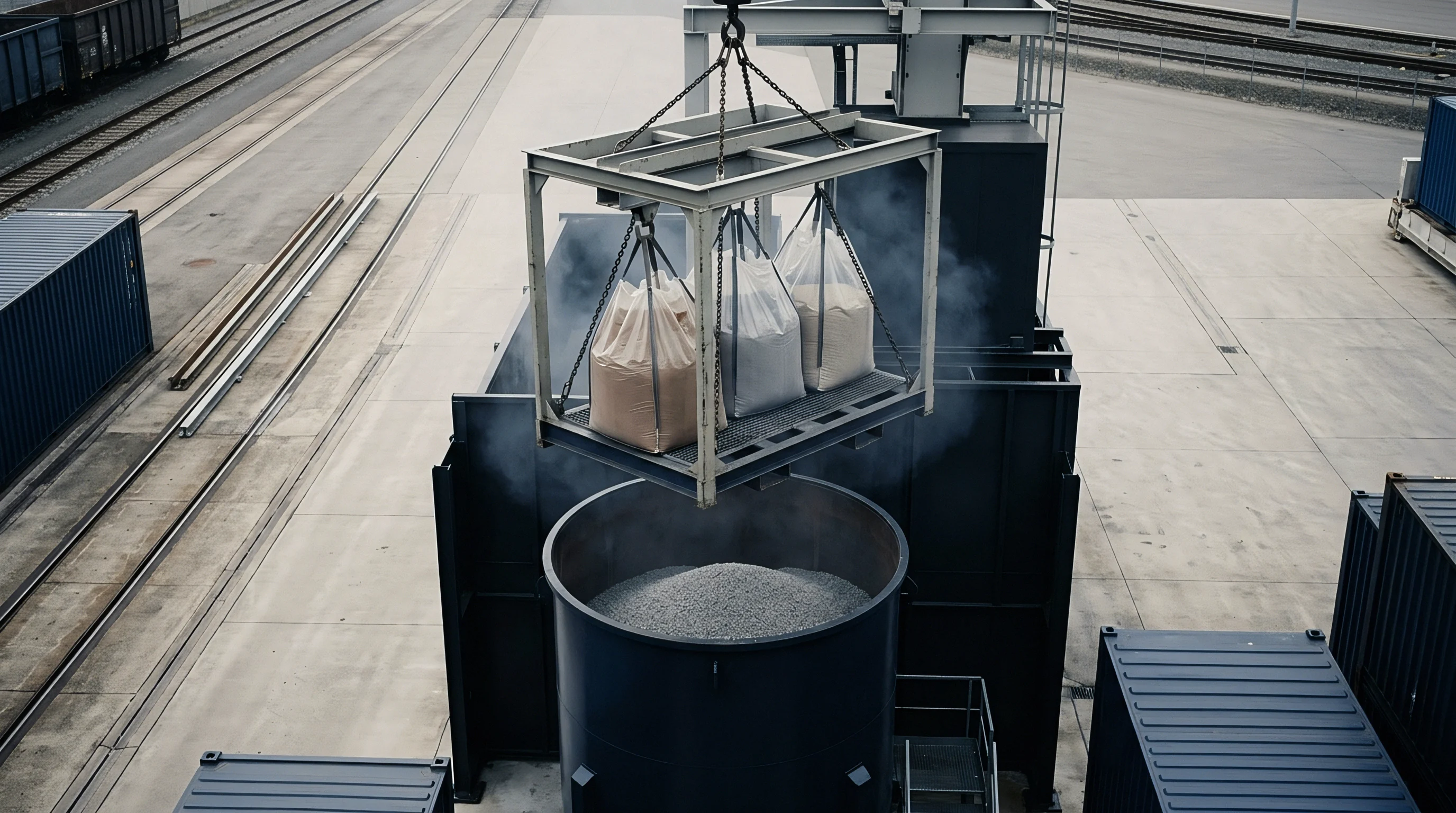
A certificate of analysis accompanying a standard twenty-foot shipping container carrying 24.75 metric tonnes of prime linear low-density polyethylene frequently records a single melt flow index of 1.00 g/10 min under 2.16 kg at 190 °C, alongside a target nominal density of 0.918 g/cm³. That single metric represents an arithmetic fiction constructed from a single five-pellet grab sample pulled at the pelleted stream discharge before pneumatic transfer into marine bulk liner bags. A sea transit extending through sixty to ninety days across equatorial shipping lanes exposes the pelleted cargo to diurnal thermal cycling between 28 °C and 68 °C inside uninsulated steel walls, accelerating chemical and physical transformations within the bulk cargo before the container ever reaches an unloading dock.
Incoming resin verification on maritime bulk imports encounters a coupled analytical problem. The nominal melt flow rate specified on the purchase order drifts as dissolved oxygen and residual catalyst complexes trigger radical chain scission or crosslinking reactions under long-term thermal dwell. Concurrently, the comonomer distribution across the vessel varies, expressing gas-phase fluidised bed segregation and Ziegler-Natta site kinetics where hexene or octene branches incorporate unevenly into the polymer backbone.
Processing plants attempting to blow thin film or run thin-wall injection moulding on these long-transit lots encounter persistent bubble instability, gauge variation, and intermittent seal failure.
A single melt flow value listed on a maritime shipping dossier conceals both radical chain drift and reactor-bed comonomer partitioning accumulated during extended ocean transit.
Quantifying these phenomena demands direct chromatographic and rheological profiling rather than reliance on single-point quality control metrics. ASTM D1238 Procedure A and ISO 1133-1 run at 190 °C under a 2.16 kg piston load establish whether the bulk melt mass-flow rate has deviated beyond standard commercial grade bands of plus or minus fifteen percent. Verifying the chemical origin of that deviation requires combining high-temperature gel permeation chromatography run in 1,2,4-trichlorobenzene at 160 °C with differential scanning calorimetry via ASTM D3418 and crystallisation analysis fractionation.
The analytical workflow separates bulk oxidative degradation from intrinsic reactor distribution spread.
The operational boundary between an acceptable shipment and a commercial rejection rests on these specific analytical methods. The downstream processor experiences melt fracture, elevated backpressure, and unreacted gel populations when the container floor pellets diverge in molecular architecture from pellets situated beneath the vessel roof. Resin buyers protect processing margins by establishing incoming test routines that sample the cargo across defined spatial gradients rather than accepting the supplier’s blended pre-shipment dossier.
Decay
Autoxidation in transit occurs primarily via thermal decomposition of primary hydroperoxides formed during high-temperature pelletisation and exacerbated by storage within unvented sea containers. Alkoxy and peroxy macro-radicals govern the degradation kinetics. In high-density polyethylene and linear low-density polyethylene containing vinyl unsaturation, macro-radicals engage in bimolecular termination via crosslinking, causing the weight-average molecular weight to rise and forcing the melt index downward.
In polypropylene homopolymers and random copolymers, tertiary carbon radicals undergo beta-scission, fracturing the backbone, truncating the molecular weight distribution, and driving melt flow upward under standard testing conditions of 230 °C and 2.16 kg.
A resin compounder protects the nascent polymer by adding primary hindered phenolic antioxidants, typically octadecyl-3,3,5-di-tert-butyl-4-hydroxyphenyl propionate, combined with secondary organophosphites like tris,2,4-di-tert-butylphenyl phosphite. In imported commodity lots, suppliers routinely drop additive loadings to minimal contractual thresholds, blending secondary phosphites at 400 parts per million and hindered phenols at 200 parts per million. When exposed to maritime humidity, secondary phosphites hydrolyse into acidic phosphite species, losing their capacity to decompose hydroperoxides into non-radical alcohols.
The effective antioxidant inventory depletes within thirty days of high-heat transit.
Measuring the residual antioxidant inventory isolates thermal degradation from pure synthesis variations. High-performance liquid chromatography coupled with ultraviolet detection via ASTM D6953 quantifies the active phenolic and phosphite concentrations remaining in the pellet matrix. When phosphite levels fall below 50 parts per million, thermal degradation accelerates along a non-linear path.
The remaining polymer matrix degrades during subsequent plasticating extrusion, causing unpredictable visual gel showers and variable motor load at the manufacturing facility.
Oxidation induction time testing conducted according to ASTM D3895 provides an immediate operational assessment of this thermal decay. Pellets heated to 200 °C in an aluminium pan under high-purity nitrogen before switching to pure oxygen register the time elapsed until exothermic oxidation initiates. Virgin stabilized prime film resin typically exhibits an induction time exceeding thirty minutes.
Degraded pellets drawn from the periphery of maritime bulk containers drop below ten minutes, indicating severe stabilizer depletion that renders the resin incapable of surviving standard blown-film extrusion temperatures without severe melt strength degradation.
The cost of operating a high-speed conversion line with degraded stabilizer packages surfaces as recurring bubble instability and unexpected line stops that double raw material scrap rates during subsequent manufacturing shifts.

Partition
Comonomer inhomogeneity in imported bulk polyethylene stems from the multisite nature of traditional heterogeneous Ziegler-Natta coordination catalysts. In a standard continuous fluidised bed reactor operating with titanium tetrachloride supported on magnesium chloride, several distinct catalytic active sites coexist. Sites with high propagation rates and low chain transfer yield high molecular weight polymer chains with negligible alpha-olefin comonomer incorporation.
Conversely, sites operating with lower steric hindrance incorporate high proportions of 1-butene, 1-hexene, or 1-octene, producing low molecular weight chains carrying short-chain branching densities up to thirty branches per thousand backbone carbons.
Metallocene and constrained geometry single-site catalyst systems resolve this intrasite variation by providing identical coordination environments, yielding a narrow short-chain branching distribution. Single-site grades, however, command a direct commercial premium of 120 to 180 dollars per metric tonne over traditional Ziegler-Natta materials. Global commodity traders routinely supply Ziegler-Natta resin into applications where converters expect single-site consistency.
The resulting inter-chain and intra-chain branching variations manifest as severe phase segregation during film blowing and blown container moulding.
| Catalyst Architecture | Short Chain Branching Distribution | Molecular Weight Dispersity Mw Mn | High-Branching Fraction wt percent | Nominal Hexene Content mol percent |
|---|---|---|---|---|
| Ziegler-Natta Multisite | Broad Bimodal | 3.8 to 5.2 | 18 to 26 | 2.1 to 3.4 |
| Metallocene Single-Site | Narrow Unimodal | 2.0 to 2.4 | 2 to 5 | 3.2 to 4.5 |
| Dual-Reactor Cascade | Bimodal Orthogonal | 6.5 to 9.0 | 12 to 17 | 1.8 to 2.8 |
| Chromium Phillips-Type | Broad Polydisperse | 8.0 to 14.0 | 6 to 11 | 0.8 to 1.5 |
Fractionation using temperature rising elution fractionation or crystallisation elution fractionation exposes this structural spread. In an inhomogeneous Ziegler-Natta copolymer, crystallisation elution fractionation isolates a distinct, highly crystalline linear fraction that elutes above 95 °C, consisting of homopolymer-like chains lacking comonomer branches. Concurrently, a highly branched, low-crystallinity fraction elutes below 40 °C. The high-temperature linear fraction crystallises rapidly during film bubble inflation, creating isolated crystalline lamellae that scatter visible light and generate high surface haze, while the low-temperature branched fraction remains semi-molten, migrating to the film surface and provoking excessive blocking.
ASTM D6474 high-temperature size exclusion chromatography resolves whether high melt strength arises from high-chain entanglements or localized crosslink networks formed during ocean transit.
Mechanical verification under ASTM D638, ASTM D1709, and ISO 178 illustrates the real performance cost of comonomer segregation. When short-chain branches cluster disproportionately within low molecular weight fractions, the tie molecules traversing adjacent crystalline lamellae diminish. Dart drop impact resistance plummets because mechanical stress concentrates in the amorphous zones between unbranched lamellae.
A blown film formulation configured to deliver 450 grams dart impact drops below 180 grams when running inhomogeneous material, without exhibiting any discernible variation on a standard single-point incoming density hydrometer.
The processing failure propagates downstream into heat sealing lines. Pouch converters experience narrow sealing windows when comonomer inhomogeneity causes low-melting-point fractions to soften at 85 °C while high-temperature unbranched fractions resist full consolidation until 125 °C. The heat seal layer delaminates under peel stress, venting contents in automated packaging machinery and voiding conversion margin.

Triage
Bulk container sampling protocol dictates analytical integrity. ISO 5667-1 and ASTM D7204 outline standard procedures for collection of representative bulk polymer samples. In practice, operators unlatch a sea container’s rear starboard door and push a manual split-tube grain probe into the discharge chute of the ocean liner bag.
That sampling point captures only the final two hundred kilograms loaded into the container envelope, completely bypassing the thermal boundary layer resting adjacent to the maritime vessel roof and steel side skins.
Accurate profiling requires dynamic spatial extraction using a compartmentalized pneumatic spear sampler. Operators take primary samples across nine distinct points: three at the top level immediately below the container crown, three at geometric mid-depth, and three across the bottom discharge floor. Samples are sealed immediately into air-tight, moisture-barrier aluminium foil laminate bags to prevent post-sampling oxidation before laboratory characterization.
Individual spatial samples undergo independent rheological testing rather than composite aggregation.
High-temperature gel permeation chromatography, run per ASTM D6474 at 160 °C using 1,2,4-trichlorobenzene stabilized with 250 parts per million butylated hydroxytoluene, profiles the molecular mass distributions across each sample zone. Detectors incorporating differential refractive index, four-capillary differential viscometry, and multi-angle static light scattering map molecular parameters across the entire population. The analysis extracts the number-average molecular weight, weight-average molecular weight, z-average molecular weight, and intrinsic viscosity distribution.
Thermal gradients inside the container register directly on the z-average molecular weight. For a baseline hexene-copolymer linear low-density polyethylene with initial weight-average molecular weight of 115,000 g/mol and z-average molecular weight of 310,000 g/mol, samples taken from the hot upper boundary exhibit crosslinking shifts. The z-average molecular weight climbs past 480,000 g/mol, generating a prolonged high-molecular-weight tail that standard single-point melt mass-flow rate testing fails to characterize fully.
The table below provides comparative spatial data collected across a representative forty-foot maritime bulk liner bag following sixty-two days of marine transit across Southeast Asian shipping channels.
| Sampling Location | Melt Flow Rate g 10min 190C 2.16kg | High Load MFR g 10min 190C 21.6kg | Melt Flow Ratio HL MFR MFR | Residual Phosphite ppm HPLC | OIT Minutes ASTM D3895 |
|---|---|---|---|---|---|
| Upper Front Roof Zone | 0.72 | 23.8 | 33.1 | 18 | 4.2 |
| Upper Aft Bulkhead | 0.76 | 24.1 | 31.7 | 24 | 5.8 |
| Geometric Container Core | 1.02 | 28.5 | 27.9 | 285 | 32.4 |
| Lower Port Floor Wall | 0.98 | 27.6 | 28.2 | 240 | 28.1 |
| Discharge Chute Floor | 1.01 | 28.4 | 28.1 | 290 | 33.5 |
| Testing conditions: ASTM D1238 Procedure B at 190 °C; ASTM D3895 copper pan at 200 °C under oxygen flow rate 50 mL/min. | |||||
The ratio between high-load melt mass-flow rate run under 21.6 kg and the standard 2.16 kg test provides a low-cost, sensitive indicator of shear thinning and long-chain branching drift. Virgin Ziegler-Natta linear low-density resin typically exhibits a melt flow ratio between 26 and 29. A climb above 32 signifies radical crosslinking and high-molecular-weight broadening generated by stabilizer starvation in high-temperature maritime zones.
Conversely, an inventory that registers high-load ratios below 24 indicates thermal beta-scission, a classic failure signature when polypropylenes are routed through tropical passages without adequate stabilizing packages.
Processing plants without multi-capillary viscometry rely on this simple ratio metric to isolate contaminated lots before dropping the container contents into main production silos.

Cargo
Evaluating the commercial impact of off-spec imported polymer requires calculating the delivered cost per good part produced. Resin purchased on a cost-and-freight basis at 1,050 dollars per metric tonne carries specific secondary costs: terminal handling charges, port clearance fees, overland drayage, and internal financing overhead, elevating raw landed pellet costs to 1,220 dollars per tonne. When thermal degradation and comonomer segregation pass unchecked into the manufacturing hall, standard economic models break down completely.
Assume an extrusion blown film conversion hall producing multi-layer agricultural barrier film at a standard conversion rate of 420 dollars per metric tonne. Under normal conditions using prime single-site or tightly controlled Ziegler-Natta resin, baseline process scrap runs at 3.5 percent by weight, primarily trimming and startup purge. The line yields an effective part cost of 1.699 dollars per kilogram of good, ship-ready film product.
Processing an unchecked maritime container lot suffering twenty-eight percent melt flow drift and elevated comonomer segregation shifts every operational parameter. The high-molecular-weight crosslinked fractions force an immediate fifteen percent reduction in line speed to prevent melt fracture and melt temperature overheating. The unbranched linear chains create cyclic gauge banding and wall-thickness variation that breaches film barrier tolerances, raising scrap rates to 14.8 percent.
Motor load increases by twelve percent, compounding conversion energy costs per kilogram output.
The resulting economics destroy processing margins:
- Extrusion line throughput falls from 850 kilograms per hour to 722 kilograms per hour, inflating direct labour, machine amortisation, and building allocation overhead by 17.7 percent per produced unit.
- Scrap generation climbs from 3.5 percent to 14.8 percent, forcing 148 kilograms of every raw material tonne through the regrind loop.
- Secondary regrind consumption degrades the barrier film melt integrity, triggering pinholes that render the finished agricultural sheet unsaleable on critical commercial contracts.
- Purging and die maintenance downtime requires eight line-hours per week for thermal burn-out of crosslinked gels from the spiral mandrel die assembly.
Total landed manufacturing cost climbs to 2.148 dollars per kilogram of good finished film. The converter loses 449 dollars on every metric tonne processed through the line. The apparent 80 dollar per tonne procurement discount negotiated against domestic prime resin translates into a severe net manufacturing loss.
A procurement savings of eighty dollars per tonne on imported resin evaporates when a twelve percent line scrap rate adds four hundred dollars per tonne to manufacturing overhead.
Recovering these losses through commercial debit notes against international polymer trading houses remains exceptionally difficult once the liner bag has been tipped into storage silos. Standard maritime bills of lading and cross-border commercial terms defer to the original loading-port certificate of analysis, which invariably attests that the material met specification at the moment of reactor transfer. Without rigorous spatial sampling and baseline chromatographic records established at container unsealing, the processing company absorbs the entire economic deficit.
The financial recovery protocol rests entirely on proving that the chemical architecture drifted inside the logistical corridor through stabilizer failure rather than intrinsic process errors inside the buyer’s manufacturing facility.


Audit
Which Analytical Techniques Isolate in Transit Degradation?
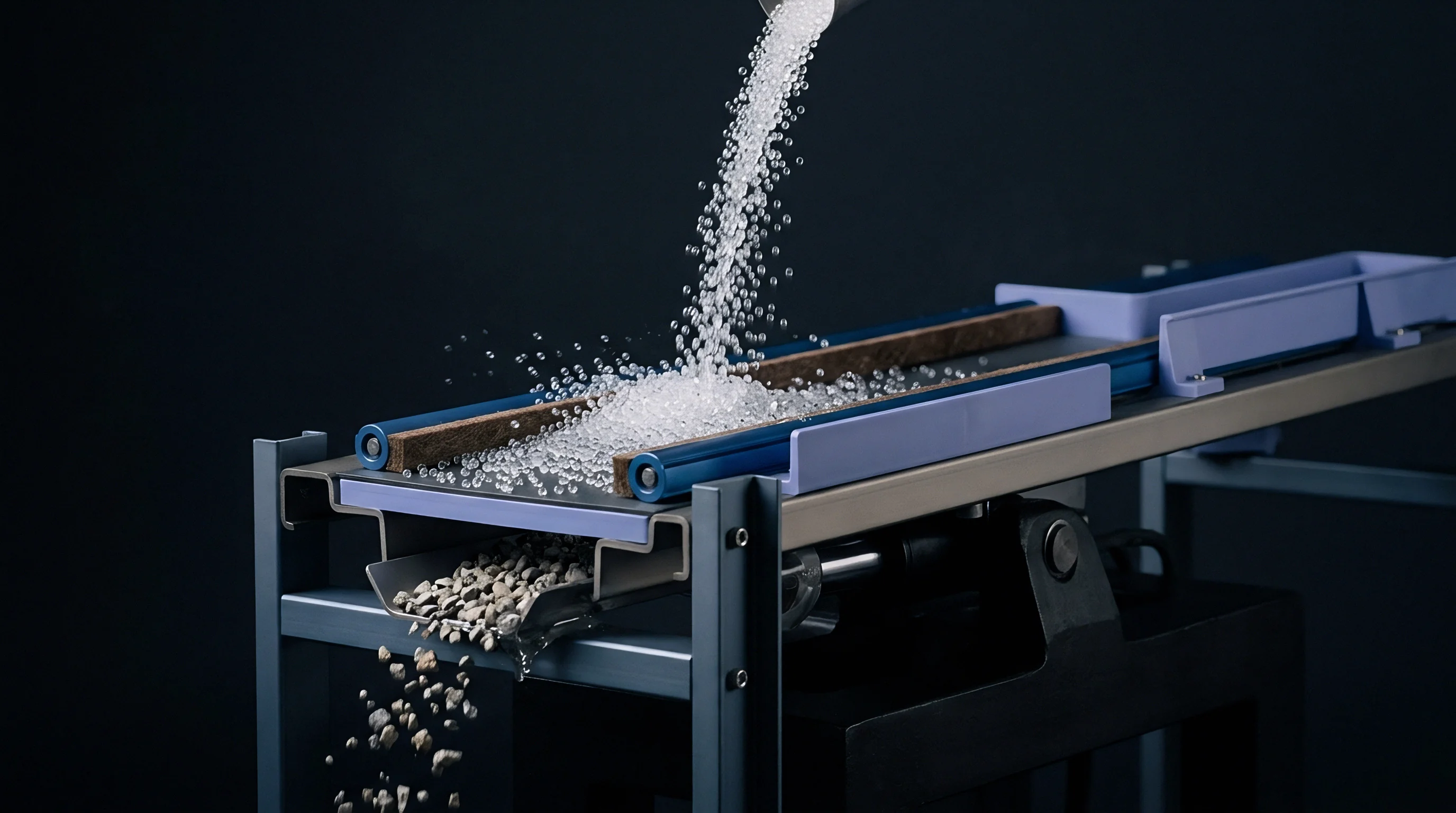
Resolving commercial disputes with overseas suppliers requires separating reactor variability from transit-induced thermal decay. Producers routinely claim that anomalous melt flow readings reflect accepted reactor transition parameters rather than oxidation decay. A forensic laboratory audit maps four distinct analytical vectors to settle the dispute unequivocally.
- Dynamic mechanical analysis per ASTM D4440 establishes storage modulus and loss modulus curves across frequencies from 0.01 to 100 rad/s under nitrogen at 190 °C, exposing zero-shear viscosity deviations and crosslink elasticity signatures that cannot exist in fresh reactor polymer.
- Fourier-transform infrared spectroscopy via ASTM D5576 targets carbonyl absorbance bands between 1710 and 1740 cm⁻¹, calculating a standardized Carbonyl Index that directly documents thermo-oxidative degradation along the container’s interior perimeter.
- Differential scanning calorimetry cooling cycles trace crystallisation kinetics, identifying heterogeneous nucleation driven by micro-gels that shift peak crystallization temperatures upward by three to seven degrees Celsius.
- Gel permeation chromatography with triple detection confirms whether polydispersity expansion follows long-chain branching crosslink mechanisms or standard polymerisation kinetic distributions.
Carbonyl Index calculation provides absolute baseline evidence. Virgin prime polyolefin film resin consistently displays a Carbonyl Index below 0.02, reflecting baseline processing stabilization. Samples drawn from the heat-affected boundaries of maritime containers subjected to extended transit across high-temperature routes routinely exhibit indices from 0.14 to 0.38.
This measurable surface oxidation tracks directly with active stabilizer depletion measured via high-performance liquid chromatography.
Suppliers confronting independent test reports presenting matched Carbonyl Index, residual phosphite concentrations, and differential high-load melt flow rates can no longer attribute operational failures to domestic plant setup parameters. The structural and chemical data conclusively demonstrates that the resin degraded chemically within the uninsulated intermodal container during transit.
The definitive commercial strategy shifts from post-mortem dispute handling to preventive contract formulation. Procurement teams must integrate specific chemical stabilization and sampling clauses into international purchase orders, obligating the resin producer to formulate stabilizer packages that survive worst-case maritime dwell times. This contractual boundary protects the buyer’s conversion margins long before the cargo boards the vessel.
Failure to mandate minimum post-transit antioxidant thresholds leaves the buyer bearing full financial liability for any resin decay occurring between the origin manufacturing gate and the final processing plant silo.