Cross-Site Chemical Mass Balance Credit Transfer Verification across European Packaging Tax Jurisdictions
Cross-site chemical mass balance credits fail European packaging tax audits that demand batch-level physical traceability and national standard accreditation.


Tax
Cross-site chemical mass balance credit allocations fail under audit when tax authorities examine the physical connection between mass flows and regional statutory definitions. Packaging taxes across European jurisdictions treat recycled content through divergent legal baselines. The United Kingdom Plastic Packaging Tax charges 217.85 pounds per metric tonne on finished packaging components containing less than 30 percent recycled plastic by weight, measured under strict physical trace rules.
Spain enforces a special tax on non-reusable plastic packaging at 0.45 euros per kilogram under Law 7/2022, recognizing chemical recycling only when certified under UNE-EN 15343:2008. Italy projects a levy of 0.45 euros per kilogram on single-use plastics under Law 178/2020. The statutory definitions determine whether book-and-claim mass balancing provides valid fiscal relief.
The fiscal exposure lands immediately on the importer of record or final converter.
National fiscal inspectors verify documentation at the customs border and through post-clearance reviews. When a converter located in Germany purchases mass balance pyrolysis oil derived from mixed plastic waste, cracks the feedstock into ethylene, polymerizes low-density polyethylene, and ships granules to a conversion plant in Spain, the fiscal treatment splits. Spain demands proof of physical incorporation into the manufactured batch.
A bookkeeping ledger transferring recycled credits from a chemical plant in Antwerp to an extrusion site in Valencia without a continuous, physically identifiable polymer batch fails the requirements of Law 7/2022. The Spanish tax agency rejects certificates issued under schemes that permit cross-site credit transfers across national boundaries when the underlying resin cannot be traced to an accredited mechanical or thermochemical transformation facility operating under designated batch standards.
Spanish Law 7/2022 disqualifies recycled content declarations lacking accredited UNE-EN 15343 certification, triggering back-taxes of 450 euros per metric tonne on imported non-compliant resins.
The gap between commercial accounting standards and statutory fiscal definitions creates substantial balance sheet liabilities. Resin suppliers promote ISCC PLUS, REDcert2, and RSB mass balance certificates to prove circular content. These schemes permit chemical producers to assign circular attributes across interconnected manufacturing complexes, and under specific corporate accounting rules, across distinct national sites belonging to the same legal entity.
Tax authorities operate under national legislation, rejecting third-party voluntary standards that contradict territorial revenue codes. When revenue agencies review credit transfers, they treat unevidenced mass balance claims as virgin fossil polymers, assessing statutory penalties alongside the underlying duty.
Corporate purchase contracts often state that resin deliveries include certified circular content without identifying the chain-of-custody model. Buyers discover during customs clearance that customs officials treat a credit transfer slip as an unsupported commercial paper. The buyer assumes all tax liability, penalties, and late payment interest.
The resin manufacturer retains the premium collected for the green credit, shielded by force majeure and commercial specification clauses that define mass balance as an administrative allocation rather than a physical attribute.
Pyrolysis
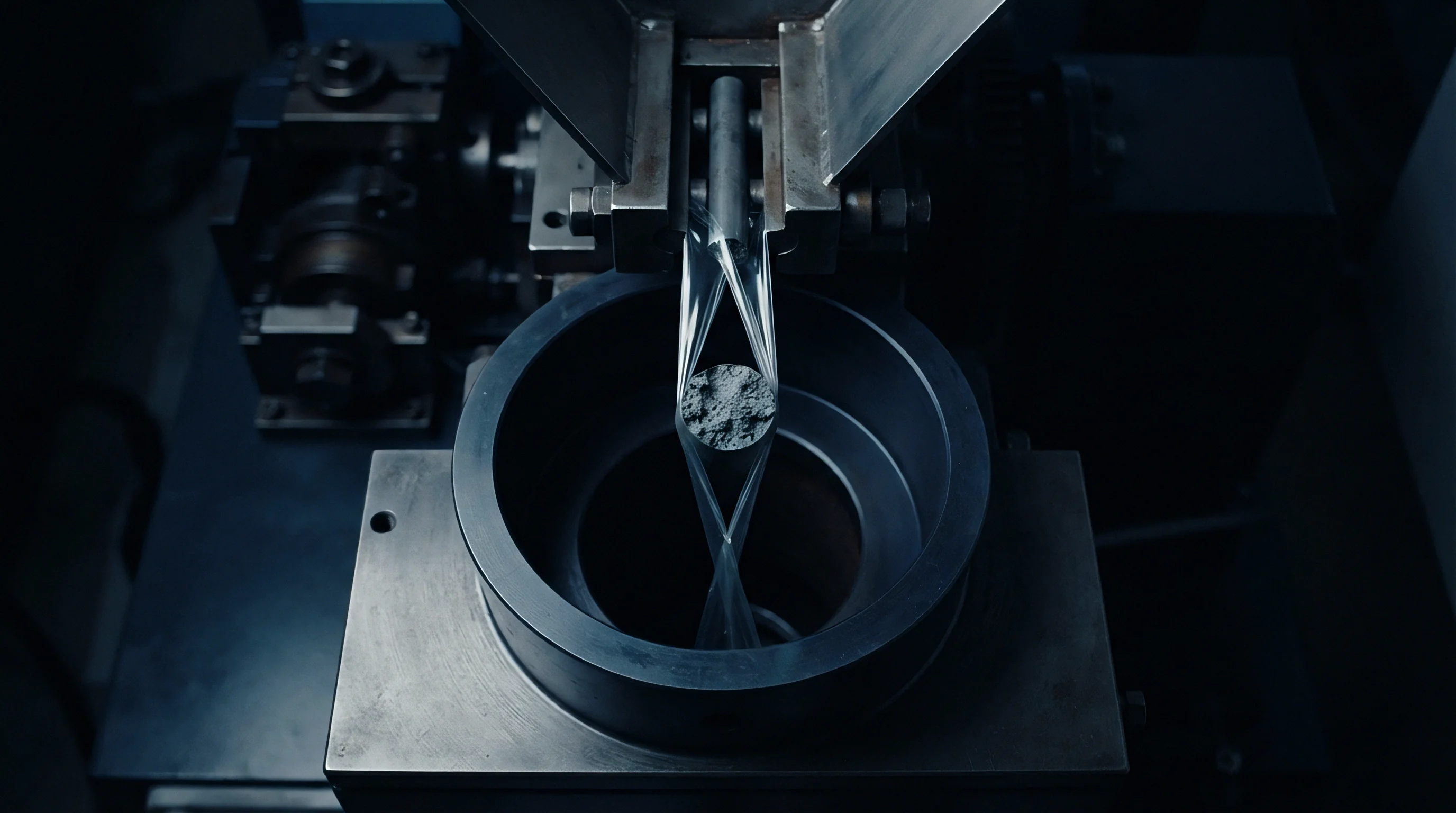
Thermal cracking of mixed polyolefin waste yields liquid hydrocarbons with varying chemical compositions that dictate downstream credit conversion ratios. Pyrolysis units convert sorted post-consumer plastic scrap into pyrolysis oil at mass yields ranging from 45 percent to 75 percent, depending on feedstock contamination, moisture content, and operating temperature. Feedstocks with high polyethylene and polypropylene fractions operating at 480 to 520 degrees Celsius produce high paraffinic and olefinic liquid yields.
Feedstocks contaminated with polyethylene terephthalate, polyvinyl chloride, or polyamide generate unwanted aromatics, organic acids, and chlorinated waxes. Pyrolysis oil requires rigorous chemical hydrotreating and dechlorination before entering a conventional steam cracker furnace. Crackers enforce strict contaminant ceilings: organic chlorine limits sit below 1 to 5 parts per million, oxygenates below 50 parts per million, and heavy metals below 10 parts per billion.
Upstream mass loss directly impacts the calculation of chemical mass balance credits. When 100 metric tonnes of mixed plastic waste enter a thermal cracking plant, process inefficiencies reduce the finished, cracker-grade circular feedstock to a fraction of the incoming weight:
- Feedstock Preparation Losses reduce incoming tonnage through mechanical shredding, optical sorting, and moisture drying steps, removing 8 to 15 percent of raw municipal collection bale mass as unusable fines and organic contaminants.
- Pyrolysis Non-Condensable Off-Gas accounts for 12 to 22 percent of reactor mass output, consumed on-site as process heating fuel rather than entering the polymer chemical chain.
- Solid Char And Inorganic Residue represents 5 to 15 percent of feedstock mass, capturing carbon black, calcium carbonate fillers, and residual titanium dioxide pigments that exit the reactor bottoms.
- Hydrotreating Hydrogenation Losses and severe purification purge streams consume another 3 to 8 percent of the raw pyrolysis condensate to eliminate heteroatoms prior to cracker injection.
The chemical attribution math depends entirely on whether an accounting model uses gross feedstock weight or cracker-ready naphtha-equivalent weight. The table below illustrates typical mass yields and conversion losses when processing mixed polyolefin waste into virgin-grade food-contact packaging polymers through thermochemical conversion and steam cracking.
| Processing Phase | Mass Yield Fraction | Contaminant Limits | Attributable Credit Yield |
|---|---|---|---|
| Sorted Post-Consumer Bales | 1.000 | Moisture under 5 percent, ash under 7 percent | 100.0 percent gross reference |
| Crude Pyrolysis Condensate | 0.580 | Chlorine up to 350 ppm, oxygen up to 1.2 percent | 58.0 percent raw yield |
| Hydrotreated Naphtha Feed | 0.520 | Chlorine under 2 ppm, olefins under 1.0 percent | 52.0 percent cracker-grade input |
| Steam Cracker Monomer Output | 0.245 | Purity over 99.95 percent ethylene and propylene | 24.5 percent polymer-grade monomer |
| Finished Food-Contact Pellet | 0.240 | Non-detectable NIAS migration at 10 ppb threshold | 24.0 percent final allocation yield |
Steam crackers co-feed hydrotreated circular naphtha with conventional fossil feedstocks. In typical commercial operations, circular naphtha represents 1 to 5 percent of total furnace feed due to operational constraints on steam cracker tube coking. In the radiant section, hydrocarbons crack at temperatures exceeding 800 degrees Celsius, yielding ethylene, propylene, butadiene, methane, and pyrolysis gasoline.
Ethylene and propylene fractions proceed to high-pressure polymerization reactors. During this phase, the physical atoms of circular origin disperse indistinguishably throughout the product slate. Mass balance certification models assign the recycled attribute to specific end products using mathematical bookkeeping ledgers rather than physical segregation.
Converters purchasing granules derived from these crackers encounter wide variances in claimed circular percentages. If a resin producer attributes 100 percent of the cracked chemical feedstock to a small volume of specialty packaging resin, other product fractions generated from the same cracker run carry zero circular attribution. This flexibility allows petrochemical producers to concentrate scarce circular credits onto high-margin, tax-exposed packaging grades.
Auditors scrutinize this practice. When regulatory authorities require physical or proportional attribution, arbitrary allocation across distinct chemical fractions fails legal inspection, nullifying the claimed recycled content.

Trace
Verification of mass balance credits across jurisdictions breaks down into three distinct structural models: physical segregation, site-level mass balancing, and cross-site mass balancing. Physical segregation keeps recycled feedstocks isolated through dedicated transfer lines, dedicated cracker runs, and isolated product silos. This approach is technically and economically prohibitive for high-pressure polyolefin assets.
Site-level mass balancing restricts credit allocation to products physically manufactured within the boundaries of a single production facility or contiguous chemical park sharing pipe networks. Inputs and outputs balance within specified reconciliation periods, typically twelve months. Cross-site mass balancing decouples the physical asset from the credit, permitting a corporate entity to transfer credits accumulated at an ethylene cracker in Belgium to an unrelated polypropylene plant in southern France.
Auditors verify credit validity by enforcing strict territorial bounds, rejecting corporate ledger transfers between unconnected industrial manufacturing hubs.
The distinction between these chain-of-custody models forms the battleground of packaging tax audits. Physical traceability preserves an uninterrupted material chain from the collected waste bale to the molded packaging part. Site-level accounting maintains a plausible link to the physical operations of the plant.
Cross-site transfer breaks physical linkage, converting mass balance credits into virtual offsets. Regulatory compliance mandates documentary verification across each transition point.
National tax statutes prioritize spatial and physical verification over virtual corporate ledgers. When tax inspectors review customs imports, their documentation requirements follow a clear sequence:
- Bale Sourcing Verification establishes post-consumer status under ISO 14021:2016 through waste collection manifests, sorting facility weighbridge tickets, and vendor declarations.
- Pyrolysis Input-Output Logs verify mass loss, process energy consumption, and raw oil output against calibrated Coriolis mass flow meters.
- Purification Certificates quantify chemical yield losses, hydrotreater purging ratios, and final cracker delivery volumes backed by analytical test certificates.
- Steam Cracker Run Data documents furnace throughput, co-feed blending ratios, conversion factors, and monomer allocation matrices during the operational period.
- Polymerization Batch Records track monomer consumption, additive packages, reactor yield factors, and physical storage silo assignments.
- Credit Ledger Reconciliation confirms credit issuance, deduction, and expiration timelines within accredited chain-of-custody databases, matching physical bill-of-lading shipments.
Where a supplier uses cross-site allocation, Step 6 breaks the regulatory chain. The resin delivered to the converter contains no physical constituent derived from the chemical recycling plant, and the production site never received recycled monomers. In jurisdictions requiring physical presence, the compliance file fails at Step 4, exposing the buyer to full packaging levies.
Dossier
Assembling a defensive packaging tax audit file requires an integrated documentary hierarchy spanning multiple business entities. The Declaration of Conformity forms the apex of this file. It must state the precise mass balance methodology, the certification scheme identifier, the specific manufacturing site of the resin, and the calculated recycled percentage per individual lot number.
Declarations containing general commercial statements without batch-specific mass balance delivery notes fail administrative muster. Importers must hold the complete chain of documentation before filing packaging tax declarations or customs entries.
ISO 22095:2020 defines the international mass balance boundaries, but national tax authorities hold final jurisdiction over credit cross-border validity.
The table below summarizes the evidential documents required across key European packaging tax jurisdictions to support recycled content declarations derived from chemical recycling.
| Jurisdiction and Authority | Accepted Mass Balance Schemes | Cross-Site Credit Transfer Eligibility | Mandatory Primary Evidentiary Dossier Components |
|---|---|---|---|
| United Kingdom (HMRC) | ISCC PLUS, REDcert2, RSB under review | Rejected; requires physical presence in UK manufacturing chain | Weighbridge receipts, production run logs, batch release certificates, ISO 9001 audit trials |
| Spain (Agencia Tributaria) | UNE-EN 15343:2008 accredited certifications only | Prohibited; requires direct physical tracking to ENAC-accredited processors | Accredited third-party certificate per site, raw material invoices, analytical mass loss sheets |
| Italy (Agenzia delle Dogane) | UNI 10667, ISCC PLUS, REDcert2 (projected) | Restricted; pending ministerial operational decree execution rules | Customs single administrative document, converter production records, certified supplier DoC |
| European Union (PPWR Mandates) | EU harmonized mass balance rules under calculation | Under negotiation; fuel-use exclusion and single-site limits debated | Digital Product Passport data, third-party accredited audit reports, raw material sourcing log |
A complete audit dossier links the raw material commercial invoice, the bill of lading, the batch analysis certificate, and the chain-of-custody credit transfer certificate. Inspectors audit timestamps. If a credit transfer certificate shows an issuance date later than the resin production date or customs entry date, auditors disregard the credit.
The mass balance system requires credit retirement upon material conversion. Retiring credits after product distribution constitutes an audit failure, triggering retroactive tax adjustments and penalties.
Dossier integrity requires verification of non-intentionally added substances and chemical purity under migration rules. Chemical recycling exposes polyolefins to process degradation products, catalyst residues, and secondary pyrolysis contaminants. Under Regulation (EC) 1935/2004 and Regulation (EU) 10/2011, food-contact materials manufactured with chemically recycled resins must undergo comprehensive non-intentionally added substance screening.
Laboratory testing using gas chromatography with mass spectrometry (GC-MS) and liquid chromatography with high-resolution mass spectrometry (LC-HRMS) must demonstrate that unlisted migrating substances do not exceed toxicological thresholds of 10 parts per billion. An audit dossier must include these migration reports alongside fiscal certificates. If an article fails food-contact migration requirements, it loses its commercial qualification, invalidating underlying customs classifications and regulatory filings.

Jurisdiction
Regulatory divergence among European states destroys cross-border mass balance fungibility. A chemical producer running a naphtha cracker in the Netherlands can credit recycled pyrolysis oil against European market sales. When those granules enter the United Kingdom, Her Majesty’s Revenue and Customs operates under independent statutory guidelines.
UK plastic packaging tax guidelines state that mass balance credits decoupled from physical recycled inputs within the component do not satisfy the 30 percent threshold. The UK statutory framework requires physical mass traceability: the recycled material must physically constitute a part of the imported packaging component. Commercial mass balance certificates operating under book-and-claim models are rejected by UK border auditors, leaving the importer liable for the 217.85 pounds per tonne tax.
Can Book-And-Claim Credits Satisfy Spanish Tax Audits?
Spanish tax enforcement under Law 7/2022 rejects book-and-claim mass balance mechanisms. The Spanish tax agency requires certifications issued by entities accredited by the Entidad Nacional de Acreditación (ENAC) or equivalent national accreditation bodies under Regulation (EC) 765/2008. The underlying standard, UNE-EN 15343:2008, governs the traceability and assessment of conformity and recycled content in plastics recycling.
This standard assumes physical presence of recycled plastics in the processing facility and continuous tracking of material batches. Chemical mass balance systems allocating credits from distant facilities fail to comply with UNE-EN 15343. Spanish auditors mandate that the certificate of conformity specify the exact physical processing facility and demonstrate direct physical consumption of recycled material in the production batch.
Importers claiming exemptions based on non-site-specific ISCC PLUS certificates face tax assessments of 0.45 euros per kilogram, complemented by 50 to 150 percent fiscal penalties.

Will PPWR Harmonize Chemical Credit Transfers?
The European Packaging and Packaging Waste Regulation creates future union-wide recycling targets, mandating minimum post-consumer recycled content for contact-sensitive packaging by 2030 and 2040. The European Commission must establish secondary calculation and verification methodologies for chemical mass balancing. The legal text debates the exclusion of energy and fuel allocations: if pyrolysis feedstocks are used to attribute credits, chemical manufacturers cannot allocate circular credits to polymer slates while diverting circular carbon into cracker fuel gases or downstream fuels.
The draft framework prioritizes fuel-use-excluded chemical mass balancing, demanding strict mass boundaries that prevent credit transfers across distinct geographic regions. If the Commission adopts fuel-use exclusion and restricts cross-site banking, converters holding long-term supply agreements based on free-allocation mass balancing will face widespread credit cancellations.
Legal harmonization remains years away from operational reality. In the interim, multinational packaging converters face fragmented national policies. An identical plastic container manufactured in Germany using mass balance polypropylene qualifies for recycled status in some customer commercial reports, faces audits and tax levies in Spain, and incurs direct packaging tax liability in the United Kingdom.
Companies operating across borders must maintain parallel accounting ledgers to track tax compliance separately in each target market.
Reconciliation
Operational reconciliation of mass balance credits demands continuous monitoring of physical lot numbers against external certification registry databases. A plastics converter must establish an internal bookkeeping architecture that tracks physical resin deliveries, consumption runs, scrap production, and finished packaging dispatches. The reconciliation process operates under strict temporal parameters.
Certification schemes define twelve-month maximum reconciliation windows, but national tax authorities often operate on quarterly or monthly tax accounting periods. Credits allocated in a subsequent fiscal quarter cannot retroactively cure a physical product dispatch completed in an earlier tax window.
The mechanics of mass balance accounting require converters to establish double-entry credit ledgers. When a delivery of certified resin arrives, the converter logs:
- Gross Physical Quantity measured across calibrated warehouse weighscales, establishing the total physical lot weight.
- Attributed Recycled Percentage stated on the supplier Certificate of Analysis and delivery note, verified against the active certification scheme portal.
- Calculated Circular Inventory expressed in net kilograms of circular polymer, entered into the facility internal compliance balance.
- Batch Identification Links connecting the physical delivery to silo loading operations, masterbatch additions, and production schedule records.
When the production run executes, physical scrap rates directly reduce circular balances. In thermoforming processes where skeletal web scrap reaches 25 to 40 percent of incoming sheet weight, the converter cannot allocate 100 percent of the purchased circular mass credits to the finished containers while selling the skeletal scrap into secondary markets as conventional material. The circular credits must be apportioned proportionally between the primary finished product and the process waste stream.
If process scrap is re-extruded in-house, it requires separate internal mass tracking. Auditors review scrap handling to verify that converters do not double-count circular mass credits by assigning the full credit value to primary goods and re-claiming recycled status on reprocessed scrap.
Financial and regulatory exposure hinges on credit retirement proof. When finished packaging parts ship to an end customer, the converter must generate a corresponding credit retirement entry in the certification registry. The retirement certificate must reference the commercial invoice number, the physical product specification, and the customer corporate tax registration number.
Failure to execute retirement simultaneously with shipment allows inventory inaccuracies to propagate across multiple accounting cycles, resulting in system disqualification during annual surveillance audits.
Where third-party certification schemes discover accounting discrepancies, certificates face immediate suspension. A suspended certificate invalidates all recycled declarations issued during the affected period. Tax authorities then initiate retroactive audits, assessing liabilities against every customer who claimed tax relief based on the suspended documentation.
The legal liability flows downstream, leaving packaging users with substantial financial claims against converters and material suppliers.
The contract standard governing these transactions shifts the burden of proof down the supply chain: Supplier warrants that circular attributes comply with ISCC PLUS mass balance rules at the plant gate, but makes no representation regarding local packaging tax deductibility or statutory fiscal recognition within the purchaser territory.