Meaning
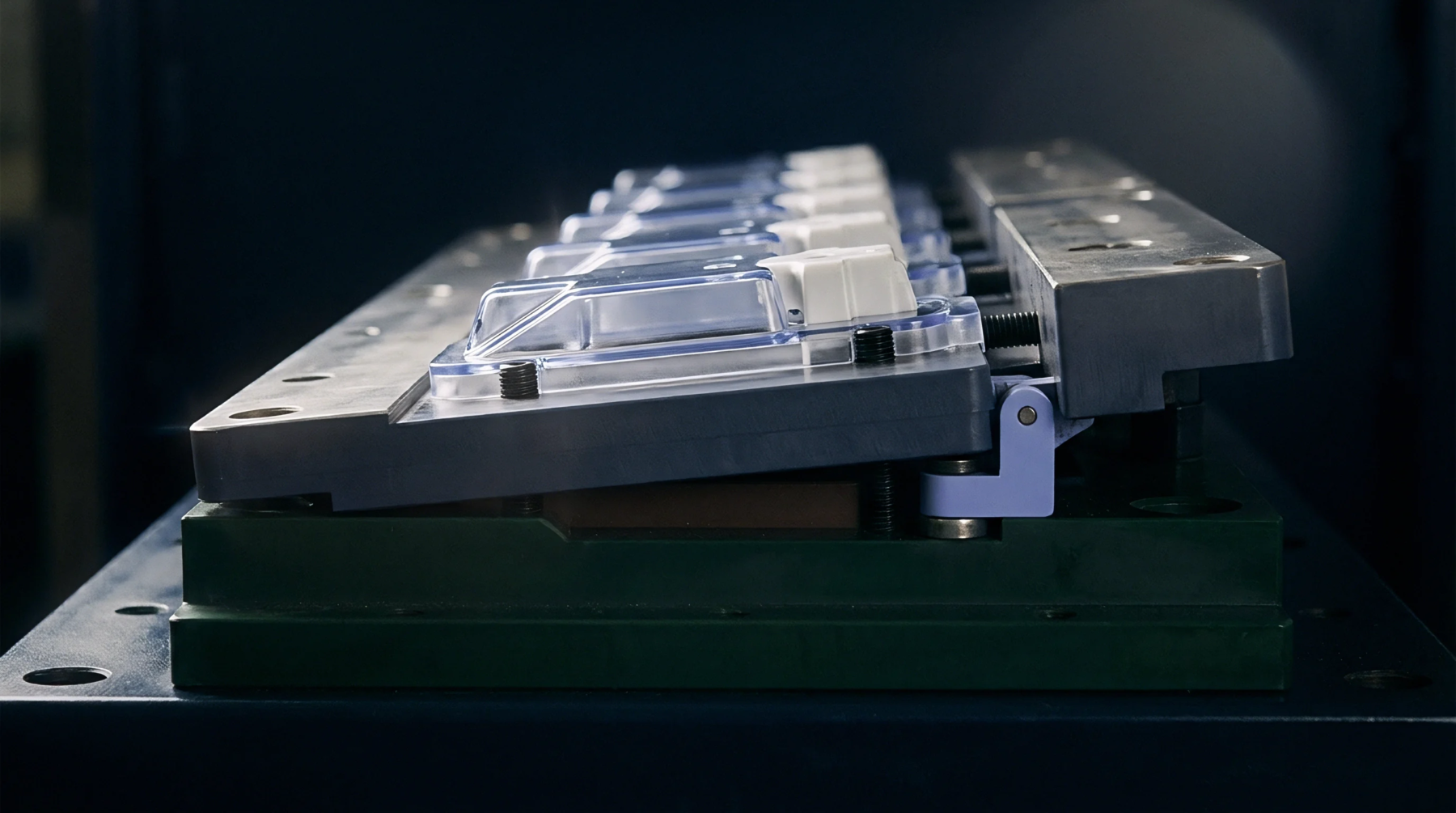
Mechanical alignment defines the spatial orientation between the stationary and moving components of an injection moulding press during the closing cycle of the production process. Platen parallelism establishes the precise degree of surface flatness and perpendicularity maintained across the face of the tooling interface when the machine reaches full tonnage. A deviation in this geometry introduces uneven force distribution across the mould cavity.
Variations in pressure cause differential flashing along the parting line or incomplete filling in thinner sections of the part. This alignment factor governs the integrity of the closing force throughout the transition from the molten phase to the solid state of the polymer.
Tooling Variance
Mould designers rely on the consistent closure of the machine to ensure the intended wall thickness of complex components. Even minor tilting within the guide bars creates a wedge effect that prevents the two halves from coming together flush. High quality steel moulds exhibit accelerated wear patterns when subjected to non-uniform loading cycles.
These defects force technicians to adjust machine parameters to compensate for imbalances that represent a failure in the mechanical foundation of the press. Proper setup preserves the geometry of the part and prevents the premature degradation of the guide pins or leader bushings.
Processing Impact
Uniform clamping pressure ensures that thermal expansion of the metal surfaces does not lead to localized areas of high stress. Injection moulding machines that maintain strict tolerance levels for this metric produce parts with consistent dimensions across multi-cavity arrangements. Excess deflection within the frame introduces variability in the weight of the moulded articles.
This loss of control creates waste when parts fail inspection because the wall thickness falls outside the accepted margin for the technical specification. Virgin resin costs remain manageable when the machine holds the required geometry through every cycle of the shift. Regrind material ratios change the melt flow rate and make the process sensitive to any additional mechanical instability.
Operators measure the closure against a reference plane to identify potential drift before the variation results in scrapped inventory.
Operational Tolerance
Manufacturers define acceptable thresholds for this deviation based on the required precision of the finished plastic item. Large machines frequently experience greater deflection under the extreme tonnage required for automotive or aerospace components. Maintenance teams verify the condition of the tie bars and the toggle system at set intervals to confirm that the movement remains linear.
Gravity influences the sag of the moving mass over time. Reliable performance depends on the calibration of the hydraulic sequence to offset the natural forces that cause components to shift out of true alignment. Extreme pressure requirements amplify any inherent inaccuracy in the press frame.
Rigid clamping systems offer stability by minimizing the transfer of structural vibration to the mould faces. A machine that maintains exact alignment throughout the injection phase produces parts that hold tight tolerances.