Quantifying Heterophasic Polypropylene Rubber Phase Morphology
Quantifying rubber morphology requires measuring xylene soluble viscosity ratios, staining domain dispersions, and tracking interparticle ligament thickness.


Extract
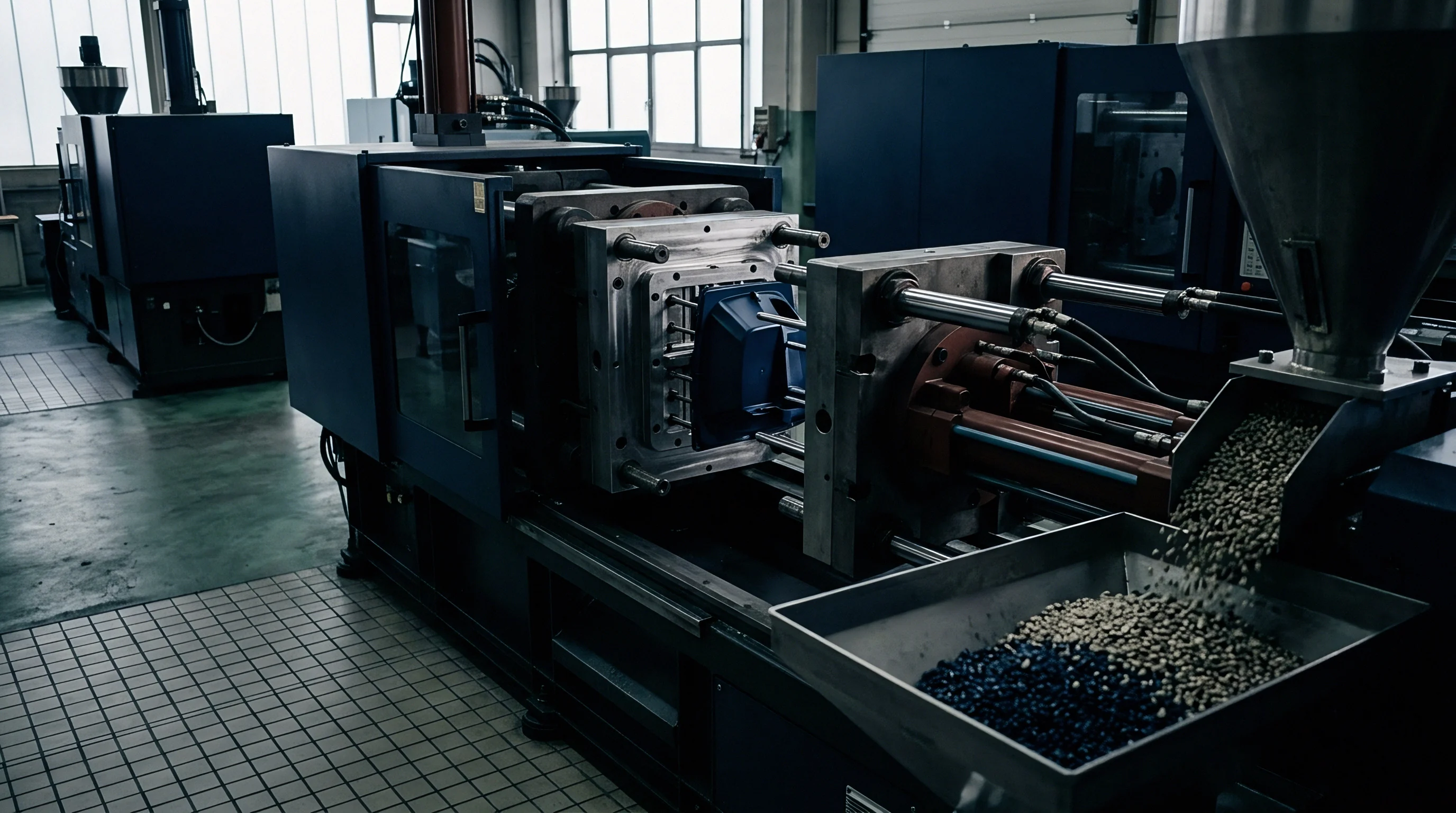
Solvent Gravimetry against High Temperature Liquid Chromatography
Pellet pricing on medium-impact and super-high-impact polypropylene copolymers hinges on the fraction of dispersed elastomer synthesised in the secondary gas-phase reactor. Standard technical data sheets report xylene solubles measured under ISO 16152 at 25 degrees Celsius, typically between 12 percent and 32 percent by weight. Dissolving two grams of pellets in boiling ortho-xylene and cooling to ambient room temperature isolates the amorphous ethylene-propylene copolymer from the crystalline isotactic homopolymer matrix.
However, the precipitated isotactic polypropylene fraction retains low molecular weight atactic chains and short ethylene sequences, skewing the gravimetric balance. Centrifugation and drying cycles add a laboratory variance of 0.8 weight percent across identical production lots.
Automated high-temperature liquid chromatography and crystallization elution fractionation deliver chemical composition distributions without manual solvent boiling. Chromatographic separation across porous graphite columns at 160 degrees Celsius with trichlorobenzene resolves ethylene content across molecular weight fractions within three hours, splitting crystalline ethylene segments from amorphous rubber components. Gravimetric extraction fails to show whether an eighteen percent xylene soluble portion consists of actual dispersed ethylene-propylene rubber or low-molecular-weight oligomeric wax generated by degraded peroxide initiators during visbreaking.
Dissolution testing under ISO 16152 at 25 degrees Celsius yields a repeatable gravimetric fraction only when cooling rates remain locked at one degree per minute.
Peroxide-cracked controlled rheology grades frequently mislead incoming solvent screens. Visbreaking cuts long polymer chains to raise melt flow rate from 2 grams per 10 minutes to 30 grams per 10 minutes at 230 degrees Celsius under 2.16 kilograms. When ethylene sequence lengths run long, scission targets the high molecular weight rubber fraction preferentially.
The resulting wax dissolves into the xylene phase alongside functional elastomer, leaving the laboratory with a compliant rubber measurement while impact toughness drops forty percent on the moulding floor.

Intrinsic Viscosity of Isolated Elastomer Phases
Capillary viscometry on the decanted liquid fraction reveals the true molecular weight of the impact modifier. Measurements in decahydronaphthalene at 135 degrees Celsius under ISO 1628-3 yield the intrinsic viscosity of the isolated amorphous copolymer phase. In polypropylene impact copolymers, the intrinsic viscosity ratio ~ the rubber phase intrinsic viscosity divided by that of the matrix phase ~ spans 1.1 to 3.2.
For instance, a matrix with a melt flow rate of 12 grams per 10 minutes possesses an intrinsic viscosity near 1.45 decilitres per gram, while an isolated rubber phase yielding 2.60 decilitres per gram establishes an intrinsic viscosity ratio of 1.79.
Reactor controls in gas-phase copolymerization dictate this ratio by metering hydrogen transfer agents into the secondary vessel. Increasing hydrogen concentration lowers rubber intrinsic viscosity, accelerating elastomer flow during mold filling. Reducing secondary reactor hydrogen produces high molecular weight rubber chains capable of absorbing dynamic shock down to minus thirty degrees Celsius.
When viscosity values are mismatched, severe phase separation occurs during screw plastification inside injection moulding barrels.
Wide lot-to-lot impact variances occur even when xylene soluble percentages remain within invoice specifications.

Stain
Ruthenium Tetroxide Fixation and Cryogenic Sectioning
Direct inspection of rubber domain architecture demands chemical fixation of unsaturated or amorphous regions. Heavy metal deposition with ruthenium tetroxide vapour targets the amorphous ethylene-propylene rubber phase through differential diffusion rates, while crystalline isotactic lamellae resist vapour penetration over exposure times of two hours. Transmission electron microscopy specimens sectioned at minus 100 degrees Celsius using a diamond knife maintain structural integrity without smearing ductile elastomer particles across the rigid crystalline groundmass.
Ultrathin sections between 60 and 80 nanometers thick provide optical contrast under high-angle annular dark-field imaging.
Micrographs show spherical, ellipsoidal, or core-shell inclusions distributed across the continuous semicrystalline polypropylene matrix. Rubber domains appear dark under transmission electron beams because heavy ruthenium atoms scatter electrons. Internal matrix inclusions inside the rubber particles, often called core inclusions or sub-inclusions, consist of crystalline polypropylene homopolymer trapped during secondary polymerization.
These occlusions alter the effective rubber volume fraction, so a measured sixteen percent rubber weight fraction can occupy twenty-four percent of the volumetric space when internal occlusions proliferate.
| Grade Designation | Matrix MFR (230 C / 2.16 kg) | Rubber Fraction (wt%) | Number-Average Diameter (μm) | Area-Average Diameter (μm) | Interparticle Ligament (μm) |
|---|---|---|---|---|---|
| Medium Impact Copolymer | 15 g/10 min | 13.5 | 0.48 | 0.72 | 0.85 |
| High Impact Copolymer | 10 g/10 min | 18.0 | 0.65 | 1.15 | 0.42 |
| Super High Impact Copolymer | 2.5 g/10 min | 28.5 | 1.10 | 1.85 | 0.18 |
| Controlled Rheology High Flow | 45 g/10 min | 17.0 | 0.32 | 0.94 | 0.58 |
Domain Size Distribution and Ligament Thickness
Image processing software extracts quantitative particle geometry from calibrated digital micrographs. Stereological corrections convert two-dimensional cross-sectional cut areas into true three-dimensional spherical diameter distributions via the Saltykov planar transformation. This calculation establishes number-average particle diameter, area-average particle diameter, and domain polydispersity.
Sub-micron domains below 0.2 micrometres fail to scatter crack propagation energy effectively, whereas particles exceeding 2.5 micrometres initiate macroscopic premature fractures under multiaxial puncture stresses.
Interparticle ligament thickness defines the exact distance separating adjacent elastomer domains through the crystalline matrix. The Wu model calculates this thickness using area-average particle diameter and rubber volume fraction. Toughening occurs when interparticle distance falls below a critical threshold between 0.30 and 0.45 micrometres for polypropylene matrices at ambient temperatures.
Dropping below this threshold shifts the fracture mode from brittle cleavage to general matrix yielding, as thin ligaments force the surrounding crystalline matrix into plane stress and initiate localized plastic flow before microcracks reach critical propagation speeds.
Fine rubber dispersions yield ductile behavior when matrix ligament thickness remains narrower than particle diameter.
Atomic force microscopy operated in quantitative nanomechanical mode bypasses chemical staining altogether. Silicon cantilevers with tip radii below ten nanometers tap the cryo-faced surface, gathering elastic modulus, adhesion, and energy dissipation data simultaneously. Modulus mapping distinguishes the rigid polypropylene matrix at 1.8 gigapascals from rubber domains at 40 megapascals, highlighting the diffuse transition zone where amorphous polypropylene chains interdiffuse into the ethylene-propylene rubber phase.
Rubber particles that lack internal crystal occlusions yield lower impact efficiency per kilogram of elastomer added.
Melt
Capillary Flow Mechanics and Droplet Deformation
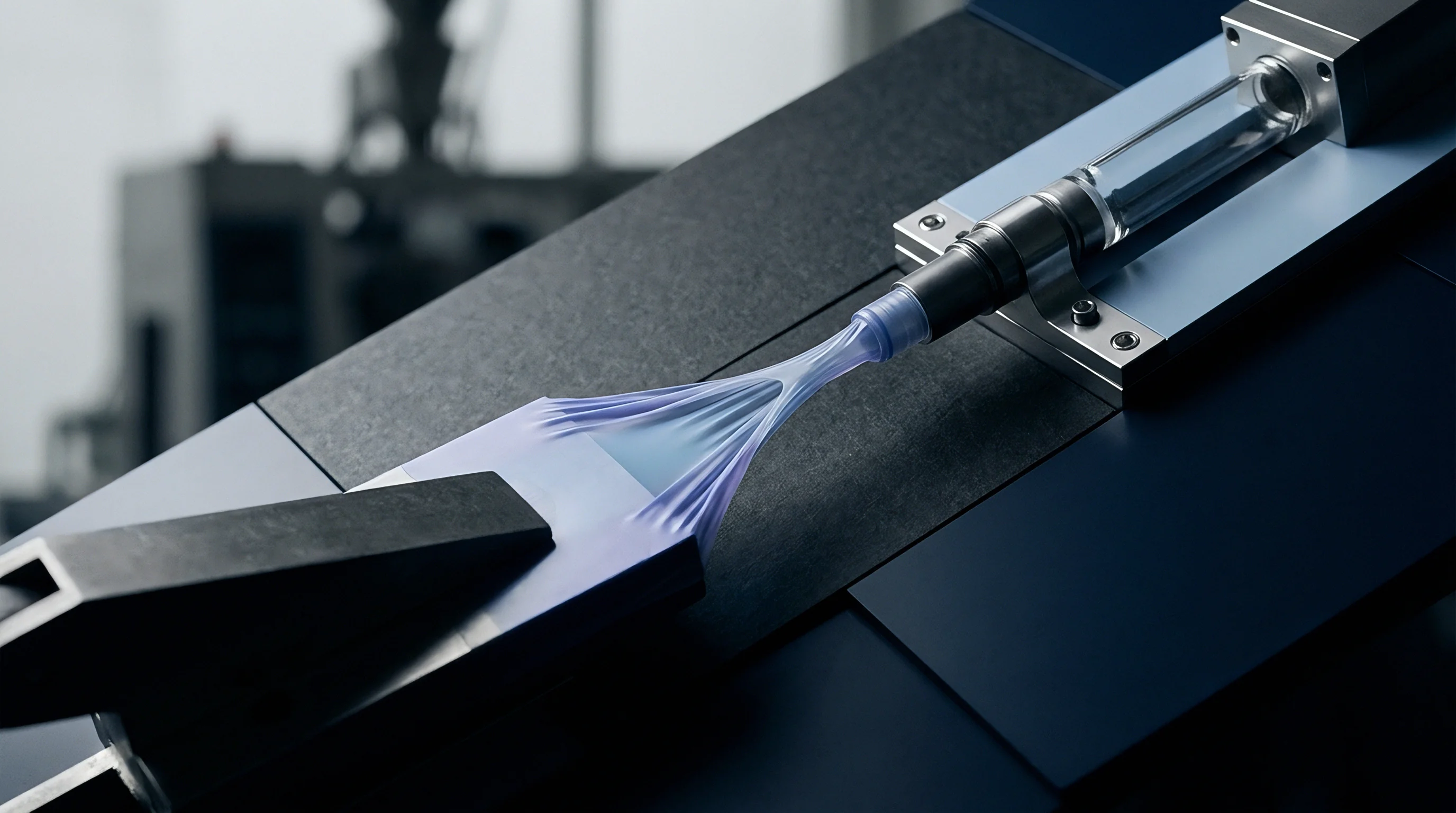
Molten resin traveling through compounding extruders and injection tool gates subjects dispersed rubber droplets to intense shear and elongational velocity fields. Droplet deformation obeys the dimensionless Capillary number, balancing hydrodynamic shear stresses against interfacial tension between the molten polypropylene matrix and the rubber phase. That interfacial tension sits between 0.5 and 1.5 millinewtons per metre at 200 degrees Celsius; this low interfacial energy allows extensive droplet elongation into cylindrical threads inside the extruder transition zone.
High viscosity ratios prevent droplet breakup. When rubber phase viscosity exceeds matrix viscosity by more than a factor of 3.8, irrotational shear flow fails to break the elongated elastomer domains, forcing them to tumble without dividing. This leaves oversize rubber inclusions that trigger surface gloss defects and structural fissures.
Conversely, when the viscosity ratio sits below 0.1, the matrix shears around droplets without transferring enough stress to break them. Viscosity matching near 1.0 to 1.5 enables rapid droplet division, establishing uniform domain sizing between 0.5 and 0.8 micrometres.

Extrusion History and Dynamic Coalescence
Twin-screw compounding extruder configurations alter final particle morphology through shear exposure and thermal history. High-shear kneading blocks disperse rubber domains efficiently during initial melting, but subsequent low-shear transport zones allow dynamic particle coalescence. Molten rubber droplets collide and coalesce into irregular agglomerates when melt temperatures exceed 240 degrees Celsius.
Because viscosity drops faster in the homopolymer matrix than in the elastomer phase, the operational viscosity ratio distorts during the final metre of the extruder barrel.
Repeated thermal processing during compounding or regrind addition alters dispersion uniformity. Degraded matrix chains lower matrix viscosity, pushing the intrinsic viscosity ratio upward and away from the optimum breakup regime. The resulting dispersion contains both sub-micron particles and large coalesced islands, broadening the particle size distribution and degrading surface finish.
Molders end up with localized tiger striping, where alternating bands of high and low gloss mark alternating rubber morphology orientations frozen at the mold wall.
- Thermal degradation of process stabilizers allows radical cross-linking within high-ethylene rubber domains during prolonged barrel residence.
- Screw shear profile mismatch generates localized hot spots that trigger matrix visbreaking ahead of rubber melting.
- Elongational gate stress stretches spherical domains into oriented string-like fibrils parallel to the mold flow front.
- Extruder vacuum vent starvation traps volatile monomer fractions that cause micro-voiding at the rubber-matrix interface.
Whether non-destructive high-frequency ultrasonic attenuation can quantify molten rubber droplet distributions online inside hot-runner injection manifolds remains an open analytical question.
Rupture

Cavitation and Matrix Shear Yielding Mechanics
Mechanical impact loads applied to heterophasic polypropylene initiate microscopic stress concentrations at the equator of dispersed rubber domains. Because elastomer particles have higher thermal contraction coefficients than the surrounding crystalline matrix, cooling from melt temperatures generates internal triaxial tensile stress. External dynamic impact builds on this tension until the rubber particle cavitates internally.
Cavitation then relieves triaxial stress within the inclusion, preventing crazing while concentrating shear stress into adjacent matrix ligaments.
This stress relief activates shear yielding across the matrix ligaments between cavitated rubber domains, allowing the crystalline matrix to absorb dynamic mechanical energy through widespread plastic deformation. Failure occurs when rubber inclusions fail to cavitate, forcing the triaxial stress field to build until brittle matrix microcracks nucleate. Transmission electron microscopy of damaged specimens confirms internal voiding within rubber particles alongside extensive shear banding throughout surrounding crystalline spherulites.
| Resin Lot ID | Rubber Vol. Fraction (%) | Ethylene in Rubber (wt%) | Ligament Thickness (μm) | Flexural Modulus (ISO 178) | Notched Charpy at -20 C (ISO 179-1eA) |
|---|---|---|---|---|---|
| Lot A-401 | 14.2 | 42 | 0.78 | 1520 MPa | 3.8 kJ/m² |
| Lot A-402 | 18.5 | 48 | 0.41 | 1310 MPa | 6.2 kJ/m² |
| Lot B-108 | 22.0 | 51 | 0.28 | 1140 MPa | 11.5 kJ/m² |
| Lot B-109 | 22.1 | 68 | 0.29 | 1180 MPa | 4.1 kJ/m² |
Sub-Zero Toughness and the Brittle-Ductile Boundary
Temperature dictates how heterophasic polypropylene responds under dynamic impact. Pure isotactic polypropylene homopolymer has a glass transition temperature near 0 degrees Celsius, making it brittle under cold operating conditions. Amorphous ethylene-propylene rubber, however, retains molecular mobility down to minus 50 degrees Celsius, provided its ethylene content stays between 45 and 55 weight percent ~ a range that maximizes chain flexibility while suppressing ethylene crystallization.
Ethylene fractions exceeding 65 weight percent in the rubber phase form crystalline polyethylene segments within the domains. These semicrystalline cores cause glass transition temperatures to rise toward minus 10 degrees Celsius, destroying impact absorption at minus 30 degrees Celsius. When rubber domain ethylene sequences crystallize into polyethylene lamellae, the brittle-ductile transition temperature shifts upward by 25 degrees Celsius, causing impact testing under ISO 179-1eA at minus 20 degrees Celsius to drop from ductile hinge breaks to sharp brittle shattering.
A rubber phase with fifty weight percent ethylene keeps the glass transition temperature at minus fifty degrees Celsius.
Stress whitening is the optical result of rubber phase cavitation and debonding under tensile deformation. Microscopic voids formed inside cavitated rubber inclusions and dilated matrix crazes scatter light, producing chalky white streaks across molded surfaces long before structural fracture occurs. Automotive interior parts require controlled morphology where core-shell inclusions cavitate without generating microscopic cracks that spread into surface voids.
Mismatched rubber morphology shifts the brittle-ductile transition temperature into ambient handling ranges, causing injection-molded transport crates to shatter on cold loading docks.


Audit
Incoming Inspection Discrepancies and Datasheet Gaps
Standard certificates of analysis delivered with resin railcars obscure morphological variations behind generic bulk metrics. A certificate listing a melt flow rate of 12 grams per 10 minutes under ISO 1133 at 230 degrees Celsius with a 2.16 kilogram load and an overall density of 0.905 grams per cubic centimetre provides no information on rubber dispersion, domain sizing, or interparticle spacing. Compounders hit nominal melt flow and bulk density targets by blending high-MFR homopolymer with dense, low-ethylene rubber concentrates or off-spec industrial regrind, leaving the buyer with an unstable mechanical blend invoiced as high-grade impact copolymer.
Verification protocols must combine rapid spectroscopic screening with thermal characterization. Attenuated total reflectance Fourier-transform infrared spectroscopy determines total ethylene content by measuring absorbance peaks at 720 and 731 reciprocal centimetres, while differential scanning calorimetry under ISO 11357-3 identifies secondary crystalline melting peaks. A distinct polyethylene melting peak near 120 to 125 degrees Celsius alongside the primary polypropylene peak at 165 degrees Celsius exposes excessive ethylene sequence blockiness inside the rubber phase ~ a secondary endotherm that signals poor low-temperature toughness despite compliant total ethylene numbers.
Landed Cost Models and Rejection Thresholds
Procuring prime heterophasic copolymer entails pricing spreads tied to naphtha and polymer-grade propylene monomer contracts. Impact copolymers trade at a 120 to 180 dollar per tonne premium over commodity homopolymer grades due to extended secondary reactor residence cycles and lower manufacturing line speeds. Accepting resin that drops toughness specifications downstream leads to heavy losses: a single 40-tonne silo load converted into defective automotive fascia parts can trigger tooling downtime, mold contamination, and disposal scrap costs exceeding 85,000 dollars.
- Incoming railcar sampling draws five composite core samples from distinct hopper compartments to assess lot homogeneity before offloading.
- Rapid melt flow indexing compares the pellet batch at 2.16 kilograms and 5.0 kilograms loads at 230 degrees Celsius to evaluate shear sensitivity changes.
- Differential scanning calorimetry runs screen for contaminating polyethylene crystallization peaks between 118 and 126 degrees Celsius.
- Capillary rheometer extrusion trials confirm shear viscosity stability across the processing shear rate window from 100 to 10,000 reciprocal seconds.
- Mechanical plaque molding and puncture testing validates multiaxial energy absorption under ISO 6603-2 at minus 30 degrees Celsius.
Purchase contracts must incorporate explicit morphological tolerances rather than relying on standard commercial datasheets. Contracts using ASTM D4101 line-callout specifications establish legally enforceable boundaries for xylene solubles, rubber intrinsic viscosity, and minimum sub-zero impact energy. When delivery samples deviate beyond an agreed 1.5 weight percent xylene soluble tolerance or exhibit secondary crystalline melting peaks exceeding two Joules per gram, the receiving facility can issue an immediate rejection claim, transferring demurrage costs and freight liability back to the producer.