Moisture Thresholds and Intrinsic Viscosity Loss in Extrusion
Exceeding 50 ppm moisture in PET extrusion triggers rapid hydrolytic cleavage, collapsing intrinsic viscosity, ruining melt strength, and causing brittle parts.
Threshold
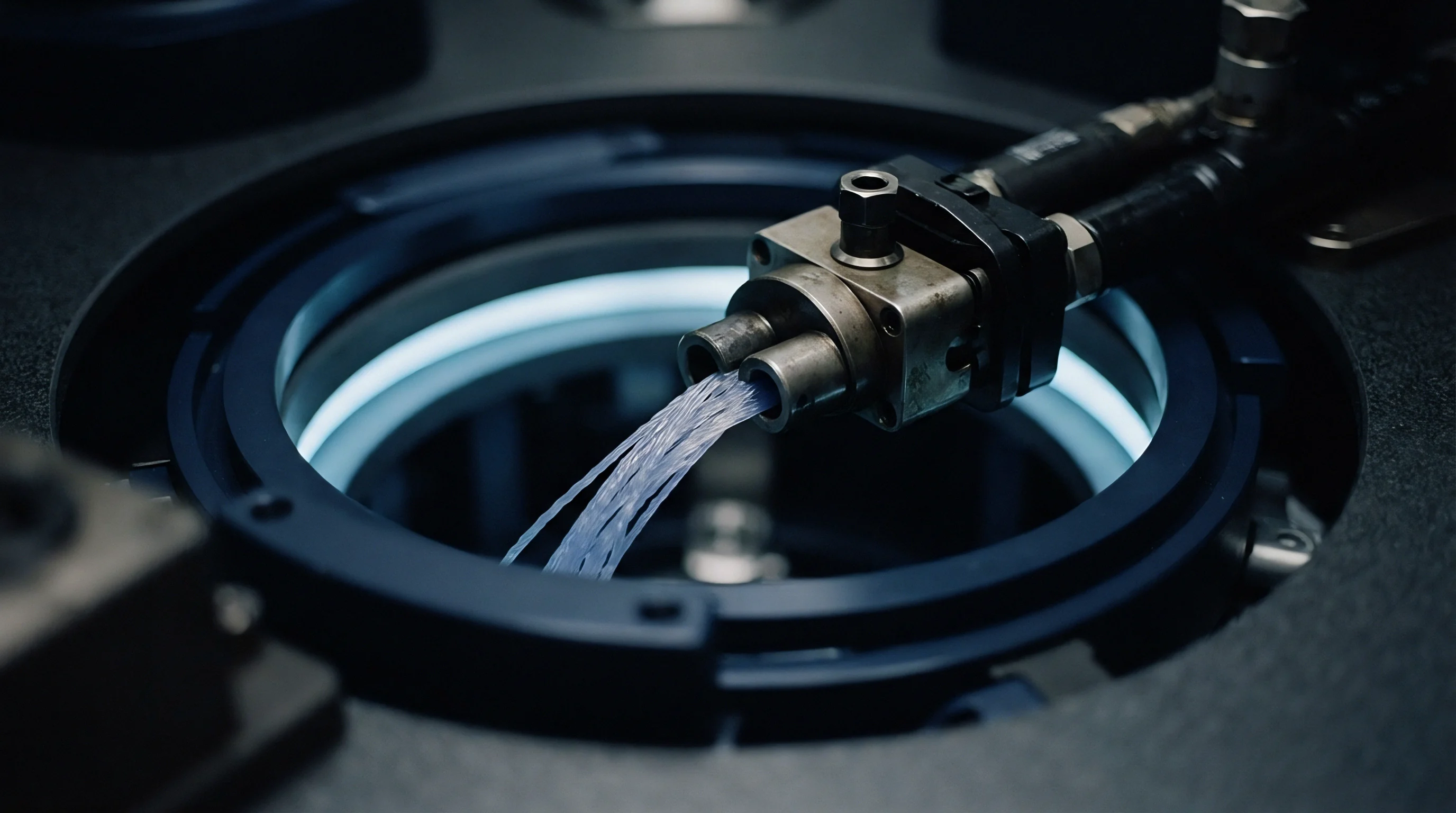
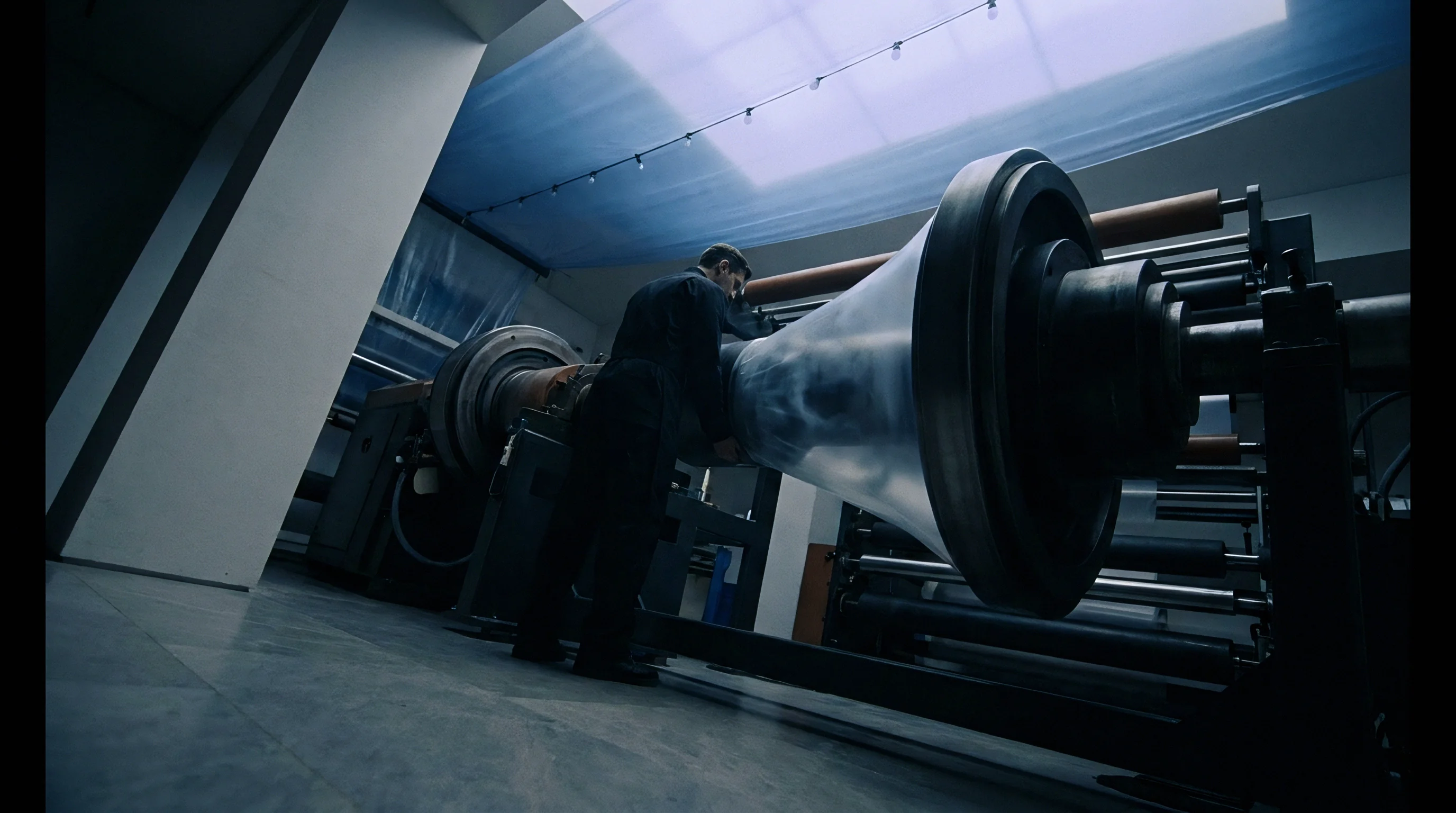
Karl Fischer titration reveals 420 parts per million of water in a lot of virgin polyethylene terephthalate pellets sampled straight from an aluminum-lined gaylord. That single measurement explains why the cast film line downstream spits brittle, surging web. Condensation polymers enter the feed throat carrying ambient humidity that initiates chain scission the moment heater bands liquefy the crystalline matrix.
Ester linkages split rapidly under thermal agitation when unbonded water resides within the free volume of the resin.
Processing hygroscopic polyesters without aggressive dehumidification guarantees structural failure. At 280 degrees Celsius, water dissolves into the molten polyester backbone within milliseconds. Hydrolysis consumes one ester bond.
The reaction leaves a carboxyl end group and a hydroxyl end group while severing the macromolecular chain in two. Intrinsic viscosity measures the capability of a polymer solution to build hydrodynamic volume, reflecting molecular weight directly. When molecular chains snap, intrinsic viscosity collapses, melt strength drops, and the extrudate sags or tears under tension.
| Resin Grade and Matrix | Incoming Equilibrium Moisture (ppm) | Extrusion Moisture Ceiling (ppm) | Baseline Intrinsic Viscosity (dL/g) | Reference Test Method |
|---|---|---|---|---|
| Polyethylene Terephthalate Bottle Grade | 2,500 to 4,000 | 30 to 50 | 0.80 to 0.84 | ASTM D4603 / ISO 1628-5 |
| Polyethylene Terephthalate Sheet Grade | 2,000 to 3,500 | 50 to 80 | 0.70 to 0.74 | ASTM D4603 / ISO 1628-5 |
| Polybutylene Terephthalate Injection Grade | 1,500 to 3,000 | 40 to 60 | 0.90 to 1.20 | ISO 1628-5 |
| Polyamide 66 Extrusion Grade | 8,000 to 15,000 | 800 to 1,200 | 2.40 to 2.80 (Relative) | ISO 307 |
| Polylactic Acid Extrusion Grade | 2,000 to 3,500 | 100 to 150 | 1.40 to 1.80 | ASTM D5225 / ISO 1628-1 |
Polyethylene terephthalate bottle grades tolerate a maximum moisture content of 50 parts per million prior to screw entry. Higher moisture levels trigger exponential degradation. Standard atmospheric exposure drives dry pellets from 30 parts per million to 120 parts per million within twenty minutes in a humid plant.
Polybutylene terephthalate degrades at comparable rates, though its lower processing temperature mitigates absolute cleavage kinetics. Polyamide 66 tolerates significantly higher residual moisture, operating cleanly up to 1,200 parts per million because its amide linkage establishes equilibrium with moisture at lower hydrolytic driving forces.
Polyethylene terephthalate dried to 30 parts per million moisture retains 94 percent of its initial intrinsic viscosity after four minutes at 280 degrees Celsius.
Resin pricing often tempts procurement teams to accept commodity chips packed in unlined paper sacks. That purchase transfers substantial drying costs to the plant floor. Pellets packed in sealed barrier foil bags arrive near 100 parts per million, demanding three hours in a desiccant hopper.
Pellets packed in plain paper sacks draw moisture from transoceanic container walls, landing at 4,000 parts per million. Removing those deep water molecules requires six hours at 170 degrees Celsius with a desiccant air stream displaying a dew point below minus 40 degrees Celsius.
Cleavage
The mathematical relationship linking intrinsic viscosity to molecular weight rests on the Mark-Houwink-Sakurada equation, where intrinsic viscosity equals the Mark-Houwink constant multiplied by the weight-average molecular weight raised to the exponent a. For polyethylene terephthalate in a 60/40 phenol/1,1,2,2-tetrachloroethane mixture at 25 degrees Celsius, typical constants register as K equals 0.000372 dL/g and a equals 0.73. Intrinsic viscosity losses directly track the destruction of high-molecular-weight fractions during extrusion.
Every single water molecule reacting in the melt cleaves a primary covalent bond. One mole of water weighing eighteen grams theoretically destroys one mole of ester bonds. Virgin bottle chip starting at an intrinsic viscosity of 0.82 dL/g possesses a number-average molecular weight near 26,000 grams per mole.
Introducing 200 parts per million of moisture into the melt yields roughly 0.011 moles of water per kilogram of resin. That inventory contains enough reactive molecules to cut the average molecular chain length in half within a three-minute residence window.
Brittleness develops across finished parts. Parison drop profiles in blow moulding distort because the polymer melt cannot sustain hoop stress under inflation pressure. Melt strength depends on chain entanglements that vanish when intrinsic viscosity drops below 0.68 dL/g.
The extrudate runs like water from the die lips, sagging instantly and creating uneven wall thickness distributions across the product profile.
Uncontrolled chain severance manifests through identifiable operational failures:
- Parison Sagging induces severe upper-wall thinning in blow-moulded industrial containers when intrinsic viscosity falls below 0.72 dL/g.
- Sheet Flutter causes catastrophic edge-pinning failure and gauge banding across high-speed cast roll systems.
- Die Drool accumulates rapidly at the orifice lip as ultra-low-molecular-weight oligomers separate from the bulk polymer flow.
- Hydrolytic Splay leaves silver surface streaks across thermoformed articles, ruining optical clarity and print adhesion.
- Drop Impact Shatter causes blow-moulded bottles to burst along base pinch-off seams during cold qualification trials.
Melt flow index values rise sharply as intrinsic viscosity drops. A resin with an initial melt flow rate of 15 grams per 10 minutes at 280 degrees Celsius under a 2.16-kilogram load will surge past 38 grams per 10 minutes when processed at 300 parts per million moisture. Screw motor amperage drops in tandem.
Extrusion pressure drops without warning. The operator observes a deceptively smooth melt that lacks the molecular integrity to survive downstream calibration tanks.
Analytical laboratories measure intrinsic viscosity using capillary viscometers under ASTM D4603 or ISO 1628-5. The test dissolves polymer in toxic solvent mixtures at precise concentrations, timing liquid flow through calibrated glass capillaries at 25 or 30 degrees Celsius. While solution viscometry delivers ground-truth verification, it yields results hours after the extrusion run ends.
Melt phase viscometers mounted on the extruder adapter flange track real-time viscosity, warning the line lead when cleavage exceeds allowable parameters.
Whether secondary thermal stabilizers can actively block ester hydrolysis in high-moisture melts without forming corrosive phosphoric byproducts remains an open question in modern compounding.
Dryer
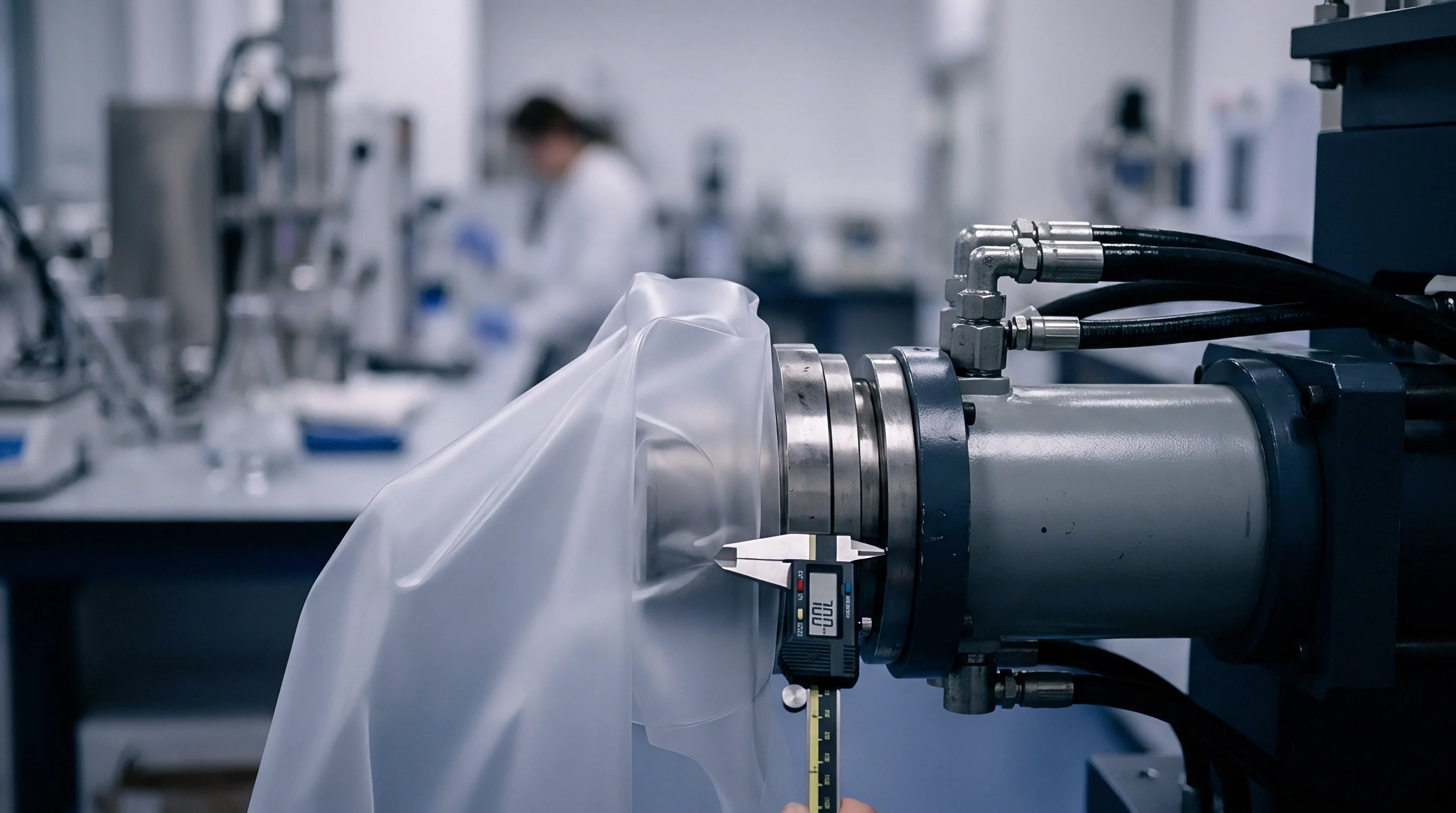
Desiccant dehumidification systems represent the primary defense against hydrolytic scission. Atmospheric air passes through packed beds of synthetic molecular sieves, typically crystalline aluminosilicates with pore diameters of four angstroms. The desiccants strip moisture until the air stream achieves a dew point of minus 40 degrees Celsius or lower.
Circulating this dry air through an insulated hopper heated to 160 to 175 degrees Celsius draws absorbed water out of PET pellets.
Desiccant beads saturate over time. Regeneration cycles bake collected moisture out of the sieve beds using heated atmospheric purge air at 250 degrees Celsius. A dual-bed dryer alternates absorption and regeneration on fixed time clocks or automated dew-point triggers.
When a regeneration valve leaks, moist purge air bleeds directly into the process loop. Condensation blinds the air chillers. The effective process dew point spikes to minus 10 degrees Celsius, halting pellet drying without triggering a system shutdown alarm.
Extrusion barrels convert trapped pellet moisture into instant polymer chain scissor blades.
Operating a drying battery requires disciplined mechanical surveillance:
- Regeneration Valve Inspection prevents moist exhaust air from leaking back into the primary process loop during bed rotation.
- Dew Point Sensor Calibration verifies that optical or capacitance probes read accurately below minus 40 degrees Celsius rather than drifting toward positive values.
- Airflow Velocity Balancing ensures the hopper bed achieves uniform thermal saturation without channeling dry air through preferential paths.
- Cone Temperature Verification confirms that pellets exiting the discharge slide maintain the target setpoint for their entire residence interval.
Residence time inside the drying hopper directly controls final moisture. Virgin PET pellets require four to six hours at temperature to migrate water from core to surface. Accelerating line speed without expanding hopper volume shortens residence times.
Pellets drawn after two hours carry wet cores into the extruder throat despite bone-dry surfaces. Water vaporizes inside the barrel. Flash steam splits polymer chains within the initial melting zone.
Loss-in-weight moisture analyzers installed next to the extruder provide fast checks but often mislead operators. Heating a sample pan to 160 degrees Celsius drives off surface moisture and volatile processing additives simultaneously. The balance records additive loss as water content, reading artificially high.
Coulometric Karl Fischer titration per ASTM D6869 provides the only legally defensible incoming verification. Vaporization ovens sweep liberated moisture into a titration cell containing iodine ions, quantifying water down to single parts per million.
Plant managers often report that their resin supplier certified the gaylord moisture content below 50 parts per million at shipping, making dryer operation redundant during the morning shift.
Melt
Extruder barrels accelerate chemical reactions through intense shear heating and high hydrostatic pressures. When pellets cross the feed throat, cooling jackets maintain temperatures near 50 degrees Celsius to prevent premature softening and throat bridging. Once inside the transition zone, flight geometry compresses the pellets against heated barrel walls.
Processing temperatures for standard PET range from 265 to 290 degrees Celsius. Screw shear accelerates thermal decomposition.
| Initial Moisture (ppm) | Residence Time (min) | Final IV (dL/g) | Retained IV (%) | Number-Average Molecular Weight (g/mol) |
|---|---|---|---|---|
| 30 | 2.0 | 0.812 | 99.0 | 25,600 |
| 30 | 4.5 | 0.795 | 97.0 | 24,800 |
| 80 | 2.0 | 0.765 | 93.3 | 23,400 |
| 80 | 4.5 | 0.730 | 89.0 | 21,900 |
| 200 | 2.0 | 0.680 | 82.9 | 19,800 |
| 200 | 4.5 | 0.625 | 76.2 | 17,600 |
| 500 | 2.0 | 0.560 | 68.3 | 15,100 |
| 500 | 4.5 | 0.480 | 58.5 | 12,400 |
| Values reflect bottle-grade PET with initial intrinsic viscosity of 0.820 dL/g processed on a 90mm smooth-bore single screw extruder. | ||||
Barrel residence time distribution determines the extent of hydrolytic degradation. Polymer residing along the root of the screw moves slower than material traveling through the barrel clearance. In an extruder running with a four-minute mean residence time, tail fractions linger for eight minutes or longer.
Those fractions undergo complete IV degradation if trace moisture exists. The degraded material blends into the main melt pool, depressing overall melt strength and broadening the molecular weight distribution.
Vented extruders extract moisture directly from the melt pool using deep vacuum ports. The compression zone melts the resin, then passes it into an extraction zone with decompressed flights. Applying a vacuum of ten millibars pulls flash steam and volatile monomers out of the thin polymer film.
Degassing screws remove substantial moisture burdens, though they cannot fully reverse chain scission that occurred in the initial feed and compression zones. Hydrolysis happens faster than vacuum vaporization.
Temperature control across the adapter pipe and screen changer holds equal weight. Operators frequently raise adapter zone temperatures to drop melt pressure before dirty screens. Running the melt at 305 degrees Celsius instead of 280 degrees Celsius triples hydrolytic reaction rates.
Every ten-degree increase doubles the rate of ester cleavage. Low moisture levels that prove harmless at 275 degrees Celsius trigger rapid viscosity collapse when exposed to thermal hot spots in worn adapter blocks.
Hot polymer chains cleave immediately whenever water accompanies resin past the feed throat.

Regrind
Post-industrial scrap and post-consumer bottle flakes disrupt moisture management routines. Flake materials present massive surface area compared to solid pellets. Recycled flake carries surface moisture.
Flake absorbs ambient humidity five times faster than virgin pellets during transit across open plant floors. Blending twenty percent un-crystallized post-industrial edge trim into virgin resin introduces erratic moisture spikes that overwhelm standard desiccant hopper settings.
Purchase specifications referencing ASTM D6869 moisture limits shift the financial burden of hydrolytic polymer degradation back to the resin supplier.
Flake drying introduces physical constraints that virgin pellets avoid. Amorphous PET edge trim softens and fuses into impenetrable agglomerates at 80 degrees Celsius. Virgin chip undergoes solid-state crystallization during pelletization, allowing it to withstand 170 degrees Celsius without sticking.
Processing amorphous regrind mandates a two-stage drying arrangement. An agitated crystallizer heats the regrind to 140 degrees Celsius under mechanical stirring to induce crystallization before the material enters the primary desiccant drying hopper.
Chain extension additives compensate for historical intrinsic viscosity losses in recycled feedstocks. Epoxy-functionalized acrylic oligomers react with both carboxyl and hydroxyl end groups in the melt. The additive bridges severed polymer fragments, rebuilding average molecular weight and lifting intrinsic viscosity from 0.65 dL/g back to 0.78 dL/g.
Chain extenders alter the polymer architecture, introducing long-chain branching that increases melt elasticity while reducing linear crystallization rates.
Solid-state polymerization provides an alternative mechanism for recovering lost intrinsic viscosity. Heating washed bottle flake to 210 degrees Celsius inside a vacuum reactor removes water and ethylene glycol byproducts, driving the polycondensation equilibrium forward. Solid state polymerization rebuilds chains.
The reaction increases intrinsic viscosity from 0.70 dL/g to 0.84 dL/g over twelve hours, restoring the structural capability required for heavy-duty strapping or carbonated beverage preforms.
A rigorous qualification sequence filters incoming regrind lots before line charging:
- Bulk Density Verification separates dense bottle chip from fluffy edge trim that starves extruder feed throats.
- Contamination Screening measures residual polyvinyl chloride and polyolefin flake counts via thermal optical microscopy to avoid severe acid degradation.
- Intrinsic Viscosity Titration verifies baseline molecular integrity prior to thermal drying and compounding.
- Crystallinity Profiling determines whether scrap lots require pre-crystallization to prevent hopper agglomeration.
Procurement agreements for recycled resin must include precise technical metrics covering flake size distribution, moisture thresholds upon unsealing, and residual PVC limits below fifty parts per million. Section 7.2 of typical commercial polymer supply contracts specifies that moisture non-conformance claims require verification via coulometric Karl Fischer testing within twenty-four hours of container destuffing.

Ledger
Degraded intrinsic viscosity carries direct financial penalties. Assume an extrusion facility processes 1,000 kilograms per hour of bottle-grade PET on a continuous sheet line, operating 7,000 hours annually at a virgin material cost of 1.35 dollars per kilogram. Processing resin at 180 parts per million moisture drops finished sheet intrinsic viscosity to 0.64 dL/g, falling outside the customer specification of 0.72 plus or minus 0.02 dL/g.
The line produces off-spec scrap.
| Operational Drying Scenario | Delivered Moisture (ppm) | Finished Sheet IV (dL/g) | Scrap Rate (%) | Annual Material Loss (USD) |
|---|---|---|---|---|
| Calibrated Desiccant Loop | 25 to 40 | 0.74 | 1.5 | 141,750 |
| Saturated Sieve Bed Leak | 90 to 120 | 0.69 | 6.0 | 567,000 |
| Shortened Hopper Residence | 180 to 220 | 0.64 | 18.0 | 1,701,000 |
| Unvented Ambient Regrind | 350 to 500 | 0.58 | 45.0 | 4,252,500 |
Off-spec sheet cannot ship to medical or food packaging clients. Reprocessing degraded sheet internally lowers the overall intrinsic viscosity baseline of the plant. Virgin resin must dilute internal regrind, requiring higher proportions of prime material to maintain structural properties.
Off-spec resin commands steep discounts. Brokers purchase degraded polyester rolls at forty to sixty percent below prime market pricing, destroying operating margins across the conversion business.
Tool wear accelerates when moisture-degraded melts run through profile dies. Hydrolysis produces acidic carboxyl end groups that corrode tool steels over extended production campaigns. Highly acidic polymer melts etch chrome plating on calender rolls and pitting die lands.
Regrinding etched rolls costs upwards of 25,000 dollars per incident, excluding three days of unrecoverable line downtime. Melt fracture caused by erratic molecular weight distributions creates surface roughness that ruins high-barrier metallization layers applied downstream.
Molten polyester cleaves in fractions of a second when water vapor meets an ester linkage at processing temperatures.
Landed part cost reflects the total balance of resin price, energy consumption, and structural survival rates. Skipping desiccant maintenance to save five kilowatts of heater power sacrifices hundreds of thousands of dollars in scrapped extrudate. Low viscosity induces parison sag.
Sheet sag causes gauge variation. Degraded resin lowers burst pressure. Cold hoppers condense ambient moisture.
Managing moisture through rigorous testing, aggressive desiccant drying, and strict procurement specifications protects the enterprise balance sheet from the severe costs of hydrolytic chain cleavage.
Overlooking incoming resin moisture values leaves extrusion operations exposed to severe financial scrap losses, tool corrosion damage, and customer warranty rejections.