Transesterification Kinetics and End Group Stoichiometry Drift in Polyhydroxyalkanoate Extrusion Blends
Uncontrolled transesterification and end-group drift in PHA extrusion alloys lower melt viscosity and alter phase morphology, requiring carboxyl capping.
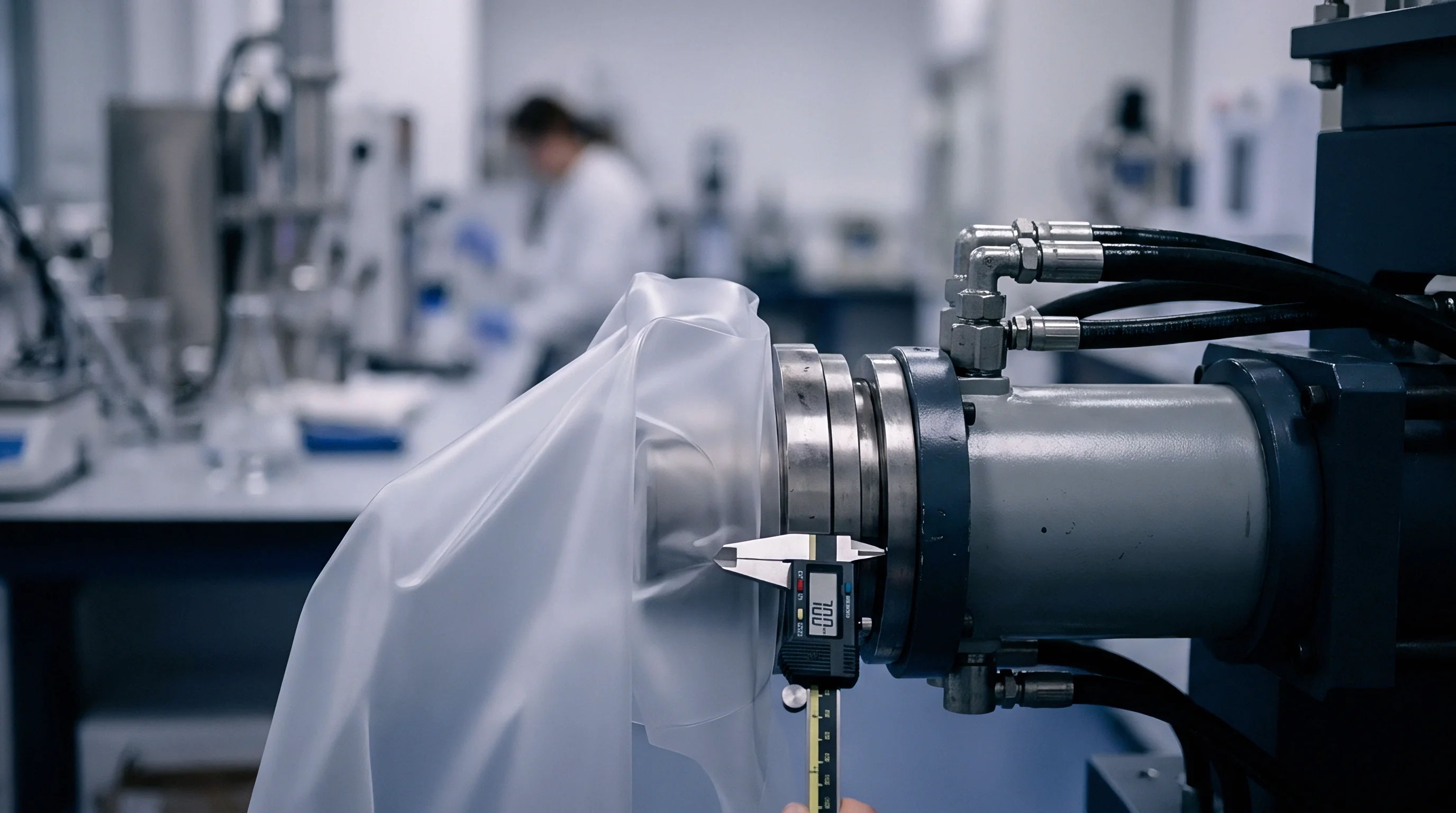

Catalysis

Organometallic Residues and Transesterification Pathways
Polyhydroxyalkanoate resins synthesized via bacterial fermentation or subsequent chemical modification retain trace concentrations of organometallic catalysts, heavy metals, and enzymatic residues. Residual catalyst species like stannous octoate, zinc acetylacetonate, and titanium alkoxides lower the activation energy required for ester interchange reactions during high-temperature melt processing. When melted alongside secondary polyesters like polylactic acid or polycaprolactone, these catalyst traces activate transesterification pathways at thermal thresholds as low as 170 degrees Celsius.
Cleavage occurs along the ester backbone, redistributing chain lengths and altering the molecular weight distribution within minutes of barrel entry.
Ester exchange proceeds predominantly through alcoholysis and acidolysis mechanisms. Terminal hydroxyl groups from one polyester chain attack carbonyl carbons along the backbone of an adjacent polymer, forming a newly coupled chain while liberating a shorter ester fragment. Simultaneously, terminal carboxyl groups attack ester linkages, generating distinct chain segments terminated by carboxylic acid functions.
The rate of intermolecular exchange scales exponentially with melt temperature, following Arrhenius dependency where activation energy values range between 85 and 115 kilojoules per mole depending on the specific catalyst species present.
Transesterification kinetics in polyhydroxyalkanoate formulations operating at 190 degrees Celsius yield a threefold increase in interchange rate constants for every 15 degrees Celsius rise in melt temperature.

Ester Interchange Kinetics at Processing Temperatures
Extrusion compounding exposes resin compounds to combined shear fields and thermal stress. Inside the melt zone, transesterification transforms discrete homopolymer phases into block copolymers, eventually progressing toward random copolymer structures if residence times extend past critical limits. The second-order rate equation governing intermolecular ester exchange links hydroxyl end-group concentration, carboxyl end-group concentration, and backbone ester linkage density.
High shear rates inside twin-screw mixing elements elevate local melt temperatures well above setpoint values, accelerating reaction kinetics beyond static laboratory isothermal predictions.
Uncontrolled transesterification alters the structural identity of the polymer compound during a single processing pass. As random ester exchange continues, the initial physical properties defined by the base resin grades give way to hybrid copolymer architectures with altered melting points and reduced mechanical integrity. The kinetic boundary dividing useful phase compatibilization from catastrophic chain degradation remains an active area of investigation among polymer rheologists studying bioplastic melt stability.

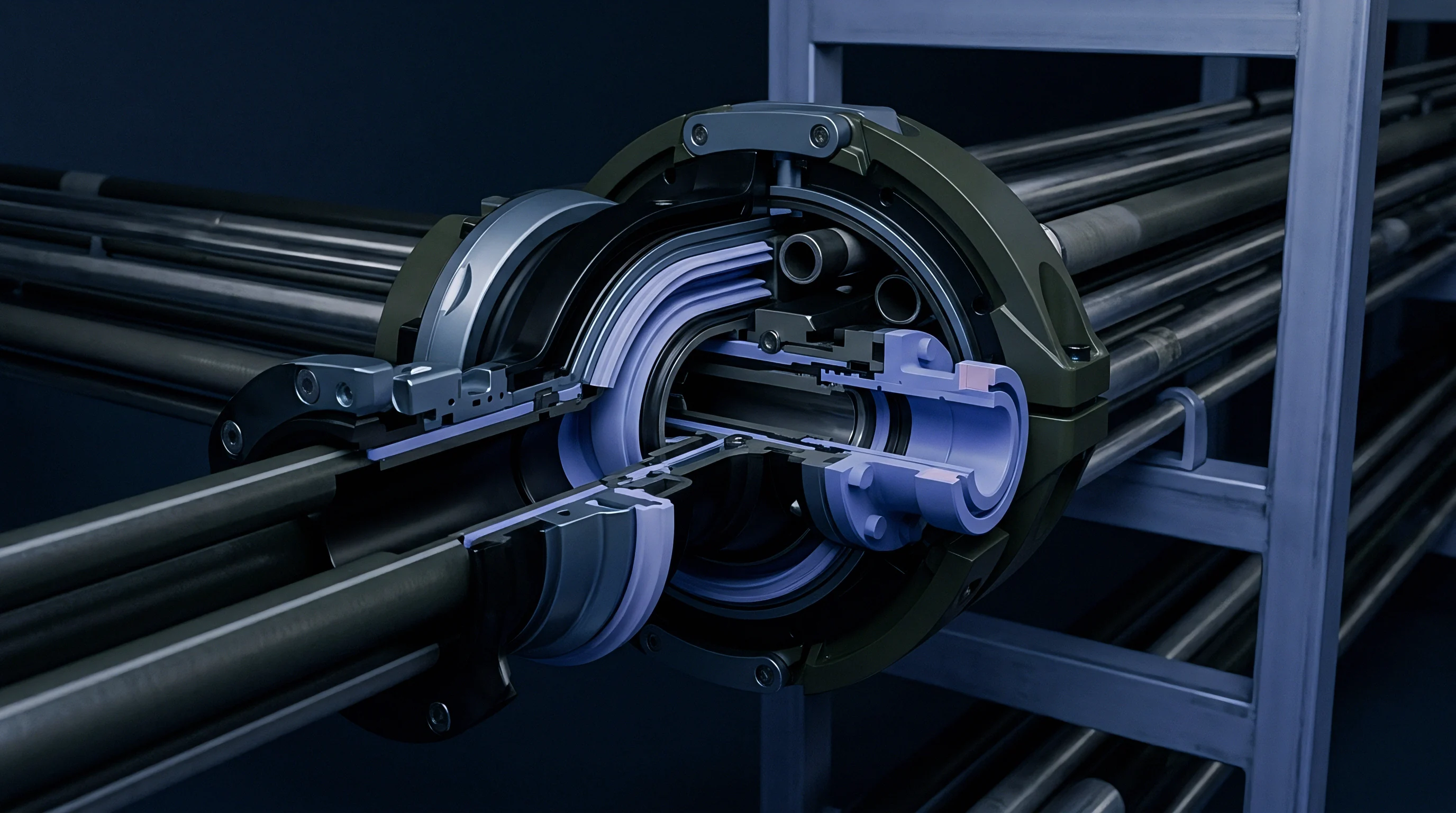
Hydrolysis

Thermal Scission Mechanisms and Acid Generation
Water content within incoming polyhydroxyalkanoate resin acts as a primary trigger for hydrolytic cleavage, generating carboxyl and hydroxyl terminal groups at elevated processing temperatures. Even at residual moisture levels below 0.02 percent by weight, thermal hydrolysis competes directly with transesterification. Each hydrolytic cleavage event generates one additional carboxylic acid group, which subsequently accelerates secondary degradation through acid-catalyzed ester scission.
The accumulation of free carboxylic acid groups creates an autocatalytic feedback loop inside the extruder barrel, rapidly driving down the number-average molecular weight.
Non-hydrolytic thermal degradation operates concurrently through a six-membered cyclic transition state, known as beta-elimination. This unimolecular scission mechanism cleaves the ester bond along the polyhydroxyalkanoate backbone, producing crotonic acid derivatives and unsaturated end-groups containing terminal alkenes. The reaction produces an equimolar ratio of carboxylic acid groups and vinyl ester functionalities without requiring water.
Beta-elimination becomes the dominant degradation mechanism at processing temperatures exceeding 180 degrees Celsius, rendering traditional desiccant drying insufficient to arrest end-group stoichiometry drift entirely.
Standard supply agreements for extrusion-grade polyhydroxyalkanoate resins impose a strict moisture threshold of 0.015 percent by weight prior to hopper loading to prevent accelerated chain scission.
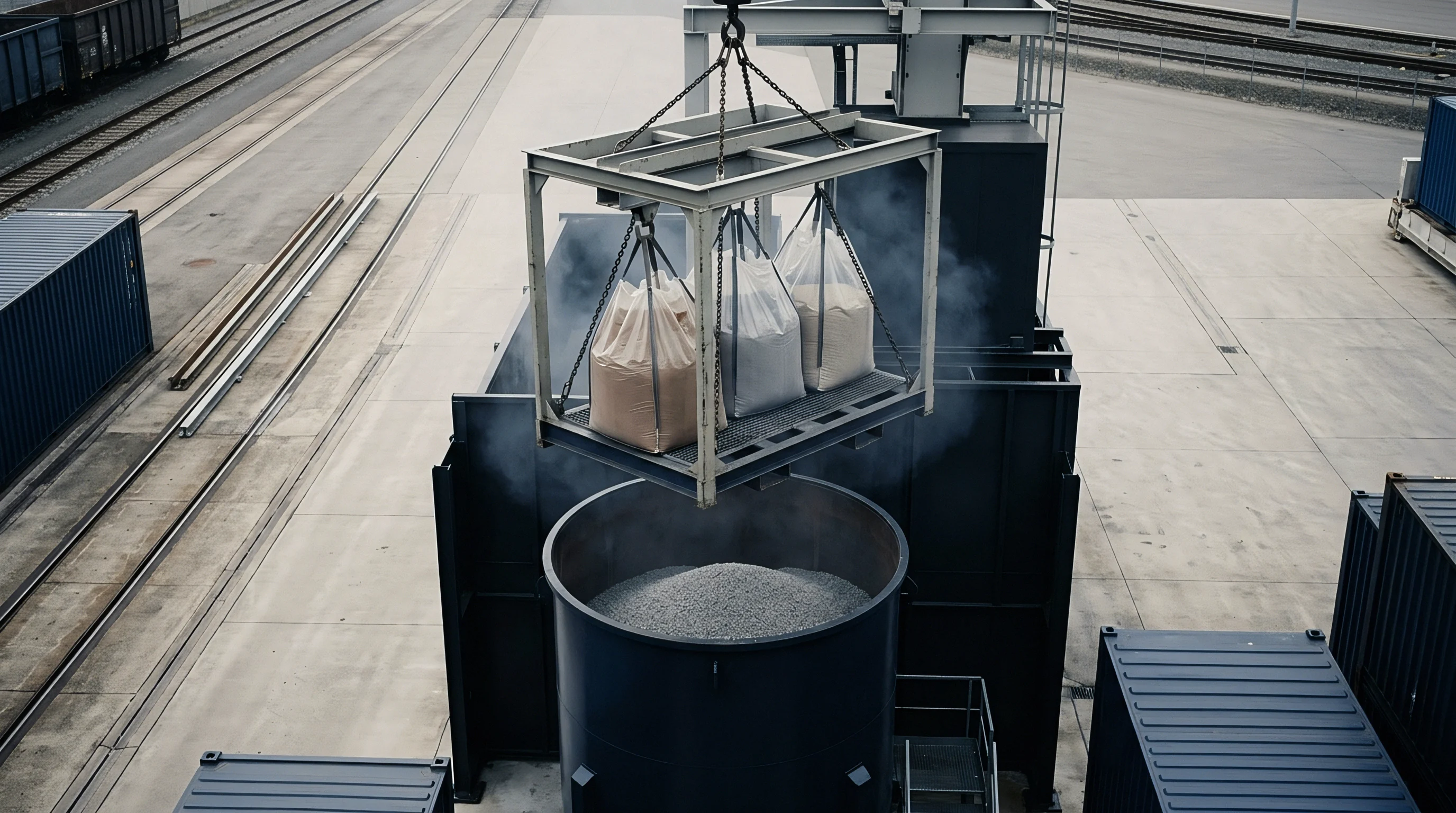
Processing Window Sequence for Moisture Elimination
Moisture removal requires dedicated handling procedures to preserve resin integrity before the polymer enters the extruder feed throat.
- Sample incoming gaylords at three bed depths using a sealed thief sampler to capture moisture gradients.
- Transfer pellets directly into a desiccant dryer capable of delivering a continuous dew point of minus 40 degrees Celsius.
- Maintain drying temperatures between 60 and 70 degrees Celsius for a minimum of 4 hours, avoiding thermal softening and pellet agglomeration.
- Verify moisture content using Karl Fischer coulometric titration with an oven evaporator set at 120 degrees Celsius.
- Purge hopper loader lines with dry nitrogen gas to prevent moisture re-absorption during pneumatic transfer to the extruder.
Carboxyl concentration accelerates non-enzymatic backbone cleavage rapidly once processing temperatures cross the melt transition point.


Vapor
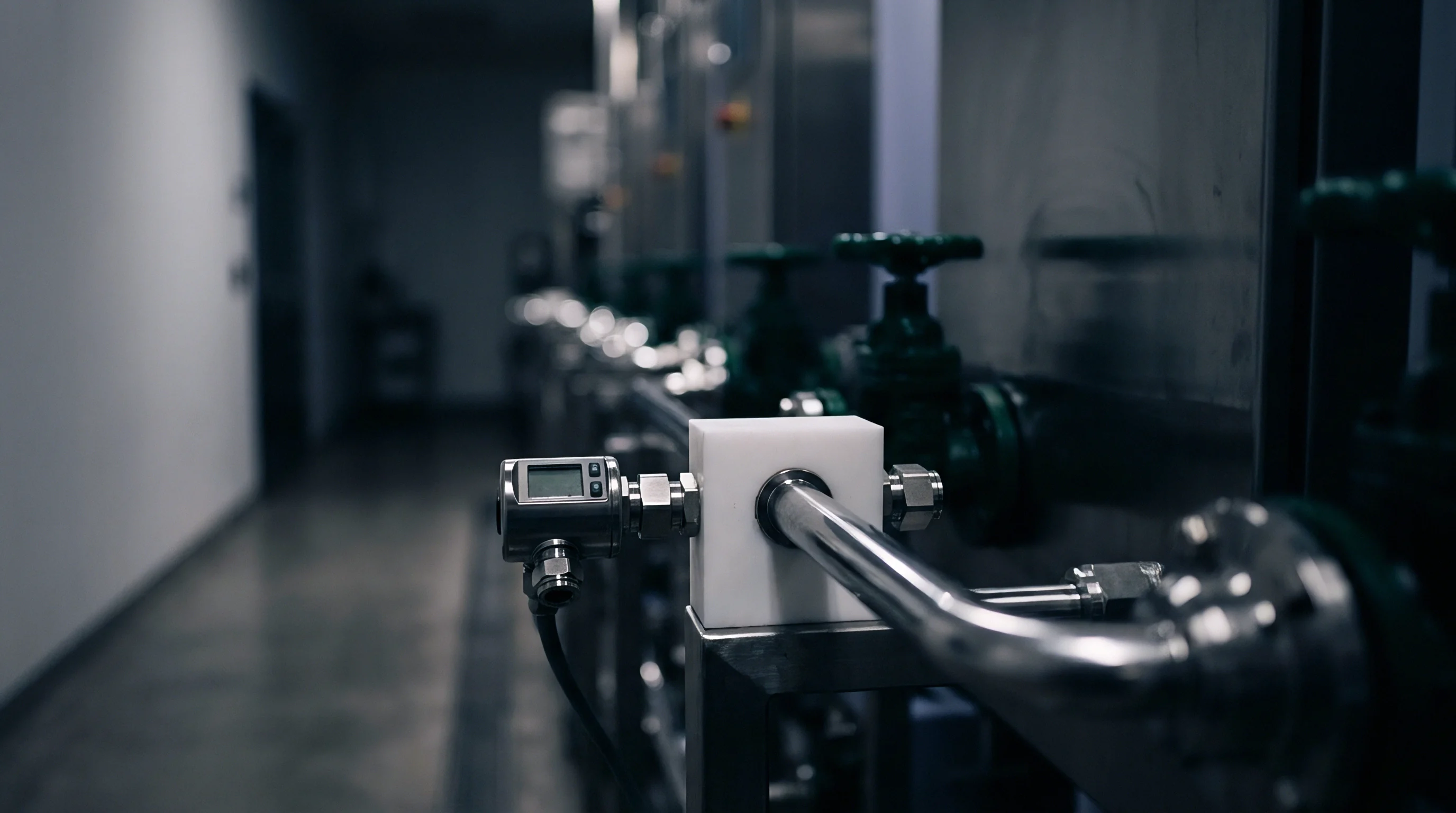
Volatile Degassing and Barrel Venting Dynamic
Thermal decomposition generates low molecular weight volatile compounds during polyhydroxyalkanoate extrusion. Crotonic acid, 2-butenoic acid monomers, and cyclic oligomers evaporate into the free volume of the extruder barrel as melt temperatures cross 185 degrees Celsius. These volatile species act as internal plasticizers if allowed to remain dissolved within the polymer melt.
Plasticization depresses melt viscosity unpredictably, causing severe feed section surges, die pressure oscillations, and inconsistency in extrudate wall thickness. High volatile concentrations inside the melt pump trigger cavitation, destroying output accuracy.
Devolatilization efficiency relies on twin-screw extruder vacuum venting configurations designed to expose thin polymer films to continuous surface renewal. Vacuum zones operating at pressures below 20 millibar draw off gaseous crotonic acid and water vapor before these compounds participate in secondary side reactions. Inadequate vacuum venting leaves carboxyl-rich volatile fractions entrained in the melt, driving end-group stoichiometry drift toward high acid values and causing severe gas void formation within finished extruded profiles.
To quantify the physical impact of volatile generation during processing, continuous compounding parameters can be evaluated under unvented melt conditions. Take a 100-kilogram lot of poly-3-hydroxybutyrate-co-3-hydroxyvalerate processed at 190 degrees Celsius with a nominal residence time of 3.5 minutes. Unvented thermal degradation generates 1.2 moles of crotonic acid per hundred kilograms of polymer matrix.
Without vacuum extraction, this concentration depresses the zero-shear melt viscosity by 38 percent while generating gas bubbles that reduce extrudate density from 1.24 grams per cubic centimeter to 1.11 grams per cubic centimeter. The calculated viscosity drop destabilizes the melt curtain in film extrusion, forcing an immediate machine shutdown.

Manifestations of Volatile Accumulation and Degradation
Inadequate volatile removal and un-stabilized end-group drift yield immediate physical and operational defects across compounding and downstream conversion processes.
- Melt Pressure Oscillations represent dynamic gauge variations at the die adapter exceeding 15 percent of nominal operating pressure caused by entrained gas pockets expanding within the metering zone.
- Extrudate Foaming and Void Formation consists of microscopic bubbles trapped inside the solidifying polymer matrix that drop tensile strength and optical clarity.
- Die Lip Carbonization involves the accumulation of degraded crotonic acid deposits at the die exit, creating continuous drag lines and surface defects along the extruded profile.
- Acid Value Elevation marks a measured increase in free carboxyl groups exceeding 50 millimoles per kilogram of resin, indicating extensive backbone scission.
- Melt Flow Rate Spikes manifest as sudden increases in melt flow index, shifting the resin out of its target viscosity window mid-run.
Neglecting vacuum vent maintenance accelerates volatile condensation inside exhaust lines, causing condensate backflow that ruins entire production lots through localized discolored contamination.
Phase

Randomization and Blockiness Index Shifts
Transesterification changes phase morphology in binary bioplastic alloys. When polyhydroxyalkanoates are melt-compounded with secondary polyesters such as polylactic acid or polycaprolactone, the initial system exhibits a distinct two-phase morphology characterized by domain dispersion. As transesterification proceeds at elevated temperatures, ester interchange reactions across the phase boundary form block copolymers at the interface.
These in-situ generated block copolymers act as compatibilizers, lowering interfacial tension and reducing domain sizes from several micrometers down to sub-micron scales.
Extended residence times or excessive thermal exposure push transesterification past compatibilization toward complete molecular randomization. The blockiness index, determined via carbon-13 nuclear magnetic resonance spectroscopy, tracks this transition from pure homopolymer blends through blocky architectures to fully random copolymers. A blockiness index approaching unity signifies complete randomization, accompanied by the total loss of discrete phase domain separation and the destruction of the crystalline morphology native to each homopolymer constituent.
| Polymer Alloy System | Blend Ratio (wt%) | Rate Constant (kg/mol·s) | Activation Energy (kJ/mol) | Phase State at 4 Min |
|---|---|---|---|---|
| PHBV / PLA | 70 / 30 | 0.0042 | 108.5 | Compatibilized Microphase |
| PHBV / PLA | 50 / 50 | 0.0058 | 102.1 | Partial Block Copolymer |
| PHB / PCL | 80 / 20 | 0.0115 | 84.3 | Randomized Copolymer |
| PHB / PCL | 60 / 40 | 0.0142 | 79.8 | Single Phase Amorphous |

Glass Transition Confluence in Reactive Extrusion
Morphological changes driven by transesterification directly alter thermal transition behavior. Differential scanning calorimetry traces reveal the progression of phase coalescence. An un-transesterified formulation displays two distinct glass transition temperatures corresponding to the individual resin components.
As reactive transesterification generates block copolymers, the two glass transitions shift closer together. Fully randomized systems display a single intermediate glass transition temperature, confirming complete phase homogenization.
This thermal confluence alters mechanical properties at room temperature. Loss of distinct crystalline polyhydroxyalkanoate domains reduces heat deflection temperature and flexural modulus while increasing elongation at break. Control over transesterification kinetics allows compounders to target specific microphase structures, balancing stiffness and impact resistance through precise thermal and shear control during extrusion.
Material suppliers frequently claim their resin grades maintain absolute thermodynamic phase stability across standard processing temperatures, ignoring the reality of shear-induced ester interchange.

Assay

Quantitative End Group Determination via Titration and Spectroscopy
Accurate quantification of end-group stoichiometry requires specialized analytical test methods. Carboxyl end-group concentration is measured by non-aqueous potentiometric titration. The polymer sample is dissolved in chloroform or a benzyl alcohol and chloroform mixture at elevated temperatures, followed by titration against standardized potassium hydroxide in ethanol.
Results are reported in millimoles of carboxylic acid per kilogram of polymer resin. Baseline carboxyl values for prime commercial polyhydroxyalkanoate grades sit below 20 millimoles per kilogram, whereas degraded or poorly dried lots frequently exceed 60 millimoles per kilogram.
Proton nuclear magnetic resonance spectroscopy provides complementary quantitative data by resolving terminal structures. Spectra acquired in deuterated chloroform display distinct resonance peaks for terminal methyl, hydroxyl, and crotonate vinyl protons. Integration of the olefinic proton peaks relative to the backbone methylene signals yields a direct measurement of thermal beta-elimination scission events.
High-performance liquid chromatography and gel permeation chromatography coupled with triple-angle light scattering track the resulting shifts in molecular weight distribution and polydispersity index.
| Residence Time (min) | Carboxyl Groups (mmol/kg) | Hydroxyl Groups (mmol/kg) | MFR (g/10min at 190°C/2.16kg) | Mw (kg/mol) |
|---|---|---|---|---|
| 0.0 | 14.2 | 18.5 | 8.5 | 380 |
| 2.0 | 28.6 | 22.1 | 16.2 | 295 |
| 4.0 | 52.4 | 29.4 | 38.7 | 190 |
| 6.0 | 89.1 | 38.0 | 94.0 | 110 |

Is Carbodiimide Addition Effective against Autocatalytic Scission?
Suppression of autocatalytic hydrolytic degradation requires active chemical capping of generated carboxylic acid functions. Monomeric and polymeric bis-carbodiimides act as effective acid scavengers during reactive extrusion compounding. The nucleophilic addition of a carboxylic acid across the carbodiimide double bond forms an N-acylurea derivative, effectively neutralizing the acid functionality and halting its catalytic influence on backbone scission.
Addition of 0.5 to 1.5 percent by weight of polymeric carbodiimide maintains carboxyl levels below 25 millimoles per kilogram even after extended thermal exposure.
Stoichiometric balance between carbodiimide additive levels and initial carboxyl content dictates stabilization efficiency. Under-dosing leaves residual acid groups that continue to catalyze degradation, while over-dosing leads to unreacted carbodiimide residues that can cause yellowing and cross-linking side reactions. Alternative capping agents, including epoxy-functionalized acrylic oligomer additives and oxazoline compounds, offer alternative reaction kinetics for systems sensitive to urea derivative formation.
Standard material procurement specifications require incoming polyhydroxyalkanoate resin lots to supply a certified carboxyl end-group analysis conducted within seven days of shipment.

Resin Lot Qualification Protocol
Incoming inspection procedures verify chemical stability prior to releasing resin silos for compounding operations.
- Document Audit mandates verifying the certificate of analysis against agreed specification limits for carboxyl content and melt flow index.
- Moisture Verification requires moisture analysis via Karl Fischer titration prior to unsealing shipping containers.
- Thermal Stability Testing involves running melt flow rate tests at 190 degrees Celsius with a 10-minute dwell time to calculate thermal degradation factors.
- Chemical Titration mandates performing non-aqueous carboxyl end-group titration on representative pellet samples drawn from top, middle, and bottom gaylord zones.
Yield
Scrap Rate Dynamics and Additive Economics
End-group stoichiometry drift directly dictates process yield and financial viability in polyhydroxyalkanoate conversion operations. Uncontrolled thermal degradation during compounding increases melt flow variability, resulting in high scrap rates during downstream injection molding or sheet extrusion. A shift in melt flow rate from 8.5 to 38.7 grams per 10 minutes over a four-minute residence window causes severe wall-thickness variations, flash generation in molds, and structural weakness in finished products.
Reclaiming un-stabilized polyhydroxyalkanoate scrap exacerbates degradation, as second-pass extrusion compounding yields severe molecular weight loss and thermal discoloration.
Commercial stabilization packages add raw material cost but protect overall process economics by stabilizing yield. Polymeric carbodiimide chain extenders and end-group cappers trade at prices between 22 and 34 dollars per kilogram. Adding a 1.0 percent dose of carbodiimide stabilizer increases compound cost by approximately 0.25 to 0.35 dollars per kilogram.
This expenditure is offset by reducing scrap rates from 18 percent down to under 2 percent during downstream conversion of sensitive thin-wall packaging products.
| Formulation Variant | Additive Cost ($/kg) | Melt Flow Delta (%) | Downstream Scrap (%) | Effective Landed Cost ($/kg) |
|---|---|---|---|---|
| Un-stabilized Prime PHA | 0.00 | + 355 % | 18.5 % | 5.15 |
| 0.5 wt% Epoxy Capper | 0.14 | + 62 % | 6.2 % | 4.48 |
| 1.0 wt% Polymeric Carbodiimide | 0.28 | + 12 % | 1.8 % | 4.27 |
| 1.5 wt% Carbodiimide Blend | 0.42 | + 5 % | 1.5 % | 4.41 |
Delivered Cost Analysis for Capped Resin Streams
Financial calculations for stabilized polyhydroxyalkanoate alloys balance additive cost, processing throughput, and product scrap rates. The optimum commercial formulation incorporates sufficient chemical stabilization to absorb unexpected thermal residence time spikes without inducing additive over-dosing cost penalties. Processing lines operating without real-time melt viscosity monitoring risk running un-stabilized material through extended thermal cycles during line pauses, generating whole production shifts of out-of-specification roll stock.
Compounders purchasing prime virgin polyhydroxyalkanoate resin at 4.20 dollars per kilogram achieve lowest landed costs per good kilogram by utilizing a 1.0 weight percent polymeric carbodiimide addition strategy. The reduced scrap generation and stabilized melt strength allow downstream convertors to run higher line speeds, lowering machine hour cost allocations per unit produced. Precise end-group control transforms volatile bio-based polyesters into reliable engineering materials capable of meeting strict commercial performance criteria.