PET Drying Windows and the Hydrolysis a Moulder Absorbs
Excess residual moisture causes instant ester chain hydrolysis in molten PET, dropping intrinsic viscosity and destroying mechanical part strength.
Kinetics
Poly(ethylene terephthalate) contains polar ester linkages along its backbone, which stay vulnerable to nucleophilic attack whenever free water enters the melt. At processing temperatures between 275°C and 300°C, this chemical reaction occurs rapidly. A single water molecule cleaves an ester bond, splitting one long polymer chain into two shorter segments capped by a carboxylic acid group and a hydroxyl group.
Hydrolysis in molten PET acts as a direct chain-scission mechanism that lowers average molecular weight before the resin leaves the injection nozzle or extrusion die. Controlling water concentration in the solid feed remains the primary operational defense against mechanical property loss in finished moldings.
The rate of hydrolytic degradation depends on temperature, residual moisture concentration, and the concentration of existing carboxyl end groups. Acidic carboxyl groups accelerate the cleavage of adjacent ester bonds. As water cleaves polymer chains, each scission event generates an additional carboxyl group, establishing an autocatalytic feedback loop inside the barrel.
The kinetic rate equation for ester hydrolysis in the melt phase follows a second-order rate expression:
-d /dt = k_h
Here k_h represents the hydrolytic rate constant, is the mole concentration of dissolved water in the melt, and is the concentration of carboxylic acid end groups. The rate constant k_h follows an Arrhenius relationship driven by an activation energy of approximately 92 kJ/mol. Raising barrel temperatures from 270°C to 295°C doubles the reaction velocity for a given moisture level.
Thermal energy alone cannot initiate this specific bond-cleavage pathway without water present, but elevated processing heat accelerates the destructive potential of whatever moisture remains inside the pellet matrix.

Ester Bond Cleavage Dynamics at Processing Temperatures
Once thermal transition begins, bound water drives stoichiometric molecular degradation within seconds. Solid PET pellets fed into an injection barrel transition from a semi-crystalline solid to a fluid melt within the first three flights of the screw. Residual water trapped within the internal pellet matrix volatilizes under barrel pressure, dissolving directly into the liquid phase.
Dissolved water reacts with the molten polymer backbones almost instantaneously at 285°C.
Chain scission alters the molecular weight distribution of the resin. Number-average molecular weight drops faster than weight-average molecular weight during early hydrolysis because short and long chains experience equal statistical probability of cleavage. The Mark-Houwink equation relates intrinsic viscosity to molecular weight:
= K (M_n)^alpha
For PET dissolved in a 60/40 phenol/1,1,2,2-tetrachloroethane solvent mixture at 30°C, the empirical constants K and alpha equal 2.1 x 10^-4 dl/g and 0.82 respectively. Calculate the starting number-average molecular weight for a virgin resin batch with an intrinsic viscosity of 0.80 dl/g: the baseline M_n calculates to approximately 24,500 g/mol. A residual moisture level of 250 ppm (0.025% by weight) inside the feed pellet translates to roughly 0.0139 moles of water per kilogram of resin.
If every dissolved water molecule completes one hydrolysis reaction during melt residence, 0.0139 moles of ester linkages cleave per kilogram.
Cleaving 0.0139 moles of bonds per kilogram increases the total moles of polymer chains from 0.0408 mol/kg to 0.0547 mol/kg. The degraded number-average molecular weight drops to 18,280 g/mol. Recalculating intrinsic viscosity through the Mark-Houwink expression yields a final value of 0.62 dl/g.
A moisture concentration of 250 ppm destroys 22.5 percent of the original intrinsic viscosity inside the residence barrel. Tensile impact resistance drops sharply once intrinsic viscosity falls below 0.68 dl/g, rendering the molded component prone to premature brittle failure under environmental stress.

Carboxyl End Group Autocatalysis in Molten Polyethylene Terephthalate
Carboxyl end group concentration functions as an internal multiplier for hydrolytic damage. Commercial virgin PET typically leaves the polymerization reactor with a carboxyl end group count between 15 and 30 milliequivalents per kilogram (meq/kg). Solid-state polymerization increases intrinsic viscosity while maintaining or slightly reducing this carboxyl count.
When recycled flakes or improperly dried virgin pellets undergo melt processing, initial hydrolysis increases the carboxyl end group concentration rapidly.
Elevated carboxyl levels lower the activation energy barrier for subsequent ester bond cleavage. Melt processing a lot with 45 meq/kg initial carboxyl content yields double the rate of intrinsic viscosity loss compared to a clean resin lot carrying 18 meq/kg under identical moisture and temperature conditions. Reprocessed regrind contains higher baseline carboxyl concentrations due to thermal history.
Mixing 30 percent un-dried regrind into virgin resin introduces elevated carboxyl counts that accelerate the hydrolysis of the entire melt stream, even if the virgin component was dried correctly.

Stoichiometry of Water Concentration and Molecular Weight Loss
Target moisture thresholds reflect strict chemical limits rather than arbitrary processing recommendations. Reaching an intrinsic viscosity loss below 0.02 dl/g demands restricting total moisture in the feed pellets to less than 50 ppm (0.005% by weight). Moisture levels above 100 ppm yield detectable viscosity loss, while feed moisture exceeding 300 ppm causes catastrophic thermal-hydrolytic degradation that reduces melt strength, induces barrel drool, and compromises structural integrity.
Residence time inside the barrel dictates how close the reaction comes to full stoichiometric completion. At a processing temperature of 280°C, the reaction between dissolved water and ester bonds reaches thermodynamic equilibrium in less than 40 seconds. Typical injection molding cycle times expose polymer melts to elevated temperatures for 30 to 90 seconds depending on shot size and barrel utilization.
The reaction goes to completion within standard processing windows, meaning every single water molecule introduced into the feed barrel hydrolyzes a polymer chain before part ejection.
The mathematical relationship governing water concentration and chain scission highlights why partial drying fails to protect engineering components. Processing resin dried only to 150 ppm water content leaves sufficient reactants to cleave millions of polymer chains per gram of extruded material. Moisture management must maintain absolute dryness across every hopper zone up to the throat of the barrel.
Engineers tracking hydrolytic decay must clarify whether terminal carboxylic acid build-up acts as an absolute kinetic limiter or whether transesterification reactions can rebuild chain lengths under specific thermal conditions.


Swell
PET pellets absorb atmospheric moisture through surface adsorption followed by Fickian diffusion into the glassy core. The polymer structure contains polar ester groups that form weak hydrogen bonds with migrating water molecules. Amorphous regions absorb water readily, while densely packed crystalline domains resist penetration.
Virgin PET pellets typically arrive from bulk polymerization plants with a crystalline fraction between 35 and 45 percent. The balance consists of amorphous matrix material that acts as a reservoir for atmospheric water uptake during pneumatic transit, storage, and handling.
Understanding moisture distribution within individual pellets clarifies why surface-drying methods fail to prevent melt hydrolysis. Water concentration inside a pellet forms a steep radial gradient during ambient exposure. The surface layer reaches moisture equilibrium with surrounding air within hours, while moisture diffuses into the core over several days.
When damp pellets enter a drying hopper, surface moisture evaporates quickly, but internal core moisture requires sustained heat and vapor-pressure differential to diffuse outward. Retaining core moisture leads to internal chain scission once the resin melts inside the processing screw.
Moisture Diffusion Gradients in Semi-Crystalline Pellets
Mass transport of water through a spherical PET pellet follows Fick’s second law written in spherical coordinates:
dC/dt = D_w ( d^2C/dr^2 + (2/r) dC/dr )
Here C represents local moisture concentration at radius r and time t, while D_w is the temperature-dependent diffusion coefficient of water in the polymer matrix. At an ambient storage temperature of 23°C, the diffusion coefficient of water in semi-crystalline PET measures approximately 1.5 x 10^-12 cm^2/s. Heating the polymer to 160°C inside a desiccant drying hopper increases D_w by four orders of magnitude to roughly 4.8 x 10^-8 cm^2/s, enabling water molecules to escape the pellet core within a four-hour drying cycle.
Pellet dimensions dictate the required residence time for drying. Standard commercial cylindrical pellets measure 2.5 mm in diameter and 3.0 mm in length. Regrind flake displays variable thickness, ranging from 0.8 mm thermoformed sheet fragments to 4.0 mm heavy-wall bottle necks.
Thin regrind flakes lose moisture rapidly during drying, but thick neck sections retain core moisture long after thin flakes have fully dried. Non-uniform particle geometry creates localized moisture spikes inside the melt stream, causing transient viscosity drops that destabilize injection pressure and part weights.

Equilibrium Isotherms across Storage Temperature and Ambient Humidity
The total moisture content of PET stored at ambient conditions depends on relative humidity and air temperature. Equilibrium moisture absorption fits a combination of Henry’s Law for dissolved water molecules and Langmuir site-binding models for hydrogen bonding at ester sites. At 23°C and 50 percent relative humidity, virgin PET reaches an equilibrium moisture content of approximately 2,500 ppm (0.25% by weight).
Tropical environments at 35°C and 85 percent relative humidity push equilibrium moisture past 5,500 ppm (0.55% by weight).
Unloading a bulk railcar or opening an octabin in high-humidity ambient air triggers rapid surface condensation. Cold pellets brought into a warm molding shop act as condensation traps. Pellets stored at 10°C exposed to 25°C shop air at 60 percent relative humidity collect surface moisture within minutes.
Surface water increases total moisture content by several thousand ppm before the resin reaches the drying hopper, overwhelming desiccant beds and extending required drying times beyond standard operational schedules.
| Resin Grade and Format | Crystallinity (%) | Diffusion Coefficient at 23°C (cm²/s) | Diffusion Coefficient at 160°C (cm²/s) | Equilibrium Moisture at 23°C / 50% RH (ppm) | Equilibrium Moisture at 35°C / 85% RH (ppm) |
|---|---|---|---|---|---|
| Virgin Injection Grade (Virgin Spherical) | 42 | 1.4 x 10⁻¹² | 4.5 x 10⁻⁸ | 2,400 | 5,200 |
| High-IV Bottle Grade (Crystalline Cylindrical) | 48 | 1.1 x 10⁻¹² | 3.8 x 10⁻⁸ | 2,100 | 4,800 |
| Amorphous Sheet Grade (Un-crystallized Pellets) | 8 | 2.8 x 10⁻¹² | 7.2 x 10⁻⁸ | 3,600 | 6,800 |
| Post-Consumer Flake (Mixed Wall Thickness) | 35 | 1.8 x 10⁻¹² | 5.1 x 10⁻⁸ | 2,800 | 5,900 |
| Reprocessed Regrind (Heavy Wall Sections) | 38 | 1.3 x 10⁻¹² | 4.2 x 10⁻⁸ | 2,500 | 5,400 |

Hygroscopic Differences between Virgin Matrix and Post-Consumer Flake
Recycled PET flake exhibits higher moisture uptake rates than virgin resin pellets. Mechanical recycling introduces micro-voids, residual surface contaminants, and increased amorphous content from rapid cooling during previous molding cycles. Micro-voids increase the effective surface area exposed to ambient air, allowing water to condense inside surface capillaries.
Post-consumer flake absorbs water up to 30 percent faster than virgin resin under identical ambient conditions.
Flake geometry distorts drying gas flow distribution inside industrial hoppers. Irregularly stacked flakes create channeling pathways where hot dry air bypasses tight clusters of material. Channeled airflow leaves dense pockets of flake unheated and wet.
Mixing 20 percent flake into virgin cylindrical pellets alters bulk density and air resistance, requiring operators to increase blower pressure and extend hopper residence times to guarantee consistent dryness.
- Purge the hopper cone completely of stagnant material and inspect the lower discharge valve seal for air leaks before loading fresh resin.
- Calibrate the inline dew point sensor against a certified reference probe to verify system performance before starting heat cycles.
- Set the drying air temperature setpoint to 160°C and run process airflow through the desiccant beds until supply air dew point drops below -40°C.
- Fill the hopper to 80 percent of rated volumetric capacity to establish proper air velocity distribution across the entire bed height.
- Maintain continuous heated airflow for a minimum of four hours before starting screw rotation on the production press.
- Sample resin directly from the hopper throat using a vacuum-sealed sampling port to measure moisture content via Karl Fischer titration.
Physical swelling and internal moisture storage demand rigorous, systematic drying protocols prior to melt transformation to prevent drop failures. Skimping on drying time or ignoring core moisture gradients leads directly to un-cleaved hydrolytic damage inside the molding machine.
Brief ambient exposure during octabin transfers is often treated as harmless on the assumption that surface moisture flashes off in the feed throat, though core moisture uptake continues regardless.

Desiccant
Desiccant drying systems extract bound internal moisture from PET pellets by creating a steep vapor pressure differential between the pellet core and the surrounding process air stream. The process requires circulating dry, heated air through a packed bed of polymer inside an insulated hopper. The air stream supplies thermal energy to break hydrogen bonds between water and ester groups, then sweeps evaporated water out of the hopper.
Molecular sieve desiccant beds capture this water vapor before re-circulating the dry air back through the process heater. Maintaining a low process air dew point ensures rapid outward diffusion of core moisture.
Standard process parameters for semi-crystalline virgin PET mandate drying air temperatures between 160°C and 170°C with an air dew point of -40°C or lower. Airflow rates must range between 1.5 and 2.5 cubic meters per hour for every kilogram per hour of resin processed. Under these conditions, a four-hour residence time reduces total moisture content from an initial 2,500 ppm down to below 30 ppm.
Operating below these drying windows leaves un-evaporated moisture in the pellet matrix, while exceeding safe exposure limits risks thermal degradation, color shifting, and unwanted acetaldehyde generation.
How Does Dew Point Drift Shift Process Tolerances?
Dew point measures the absolute water vapor concentration inside the process air stream. Air at a dew point of -40°C contains roughly 0.12 grams of water per cubic meter of air at standard pressure. If a desiccant bed becomes saturated or suffers from leaking seals, the dew point can drift upward to -10°C, increasing water vapor concentration to 2.1 grams per cubic meter.
This reduced vapor pressure differential slows the drying rate dramatically.
Process air running at a -10°C dew point cannot dry PET below 150 ppm moisture during production operations, regardless of drying time or air temperature. Residual moisture at 150 ppm guarantees severe intrinsic viscosity loss inside the extrusion barrel. Dew point monitoring must operate continuously with automated alarm thresholds set at -35°C to catch desiccant saturation before wet resin reaches the molding machine.
Operating at a process air dew point of -20°C increases residual pellet moisture content to 120 ppm after four hours at 160°C, causing an intrinsic viscosity drop of 0.09 dl/g in the barrel.
Dry Air Delivery and Airflow Dynamics in Hopper Design
Uniform airflow distribution inside the drying hopper prevents localized under-drying. Process air enters through a diffuser cone located at the bottom of the hopper, rising upward through the descending column of polymer pellets. Air velocity must remain below the fluidization limit to prevent pellet channeling while remaining high enough to deliver required thermal energy.
Mass flow hoppers with a cone angle of 60 degrees ensure plug flow movement, where pellets move downward uniformly across the entire cross-section.
Funnel flow hoppers allow central material to fall rapidly while peripheral resin sits stagnant along the outer walls. Central pellets exit the hopper after only two hours of residence time, retaining core moisture, while outer pellets remain trapped for eight hours, suffering thermal degradation. Correcting hopper geometry to maintain true plug flow is essential for achieving uniform moisture extraction across continuous production runs.
- Airflow Short-Circuiting Irregular pellet packing creates low-resistance air channels that bypass dense resin regions, leaving clusters of damp pellets inside the hopper core.
- Desiccant Bed Contamination Volatile additives and oil vapors carried from process air migrate into molecular sieve pores, reducing moisture absorption capacity over time.
- Regeneration Heater Failure Broken heating elements prevent desiccant beds from reaching the 250°C temperature needed to purge captured water during regeneration cycles.
- Hopper Air Leaks Damaged access door gaskets draw ambient room air into negative-pressure zones, raising process air dew points rapidly during humid weather.
- Fines Accumulation Polymer dust lodges in process air return filters, restricting volumetric airflow and reducing heat transfer to descending pellets.
Thermal Degradation Risks during Extended Residence Times
Over-drying PET at elevated temperatures introduces thermo-oxidative degradation pathways that damage resin optics and chemical purity. Exposing pellets to 170°C air for more than six hours breaks polymer chains through non-hydrolytic oxidation if process air contains oxygen. Thermo-oxidative scission creates vinyl ester and carboxylic acid end groups while generating yellow color bodies measured as an increase in yellowing index (b value).
Extended drying times also generate acetaldehyde (AA) inside the solid pellet. Acetaldehyde forms through thermal cleavage of hydroxyethyl end groups. In bottle-grade PET preform molding, excess acetaldehyde migrates into packaged drinking water, altering taste at concentrations as low as 10 parts per billion.
Over-dried resin entering the injection screw exhibits accelerated acetaldehyde formation rates due to thermal pre-conditioning, making process time control as critical as moisture extraction.
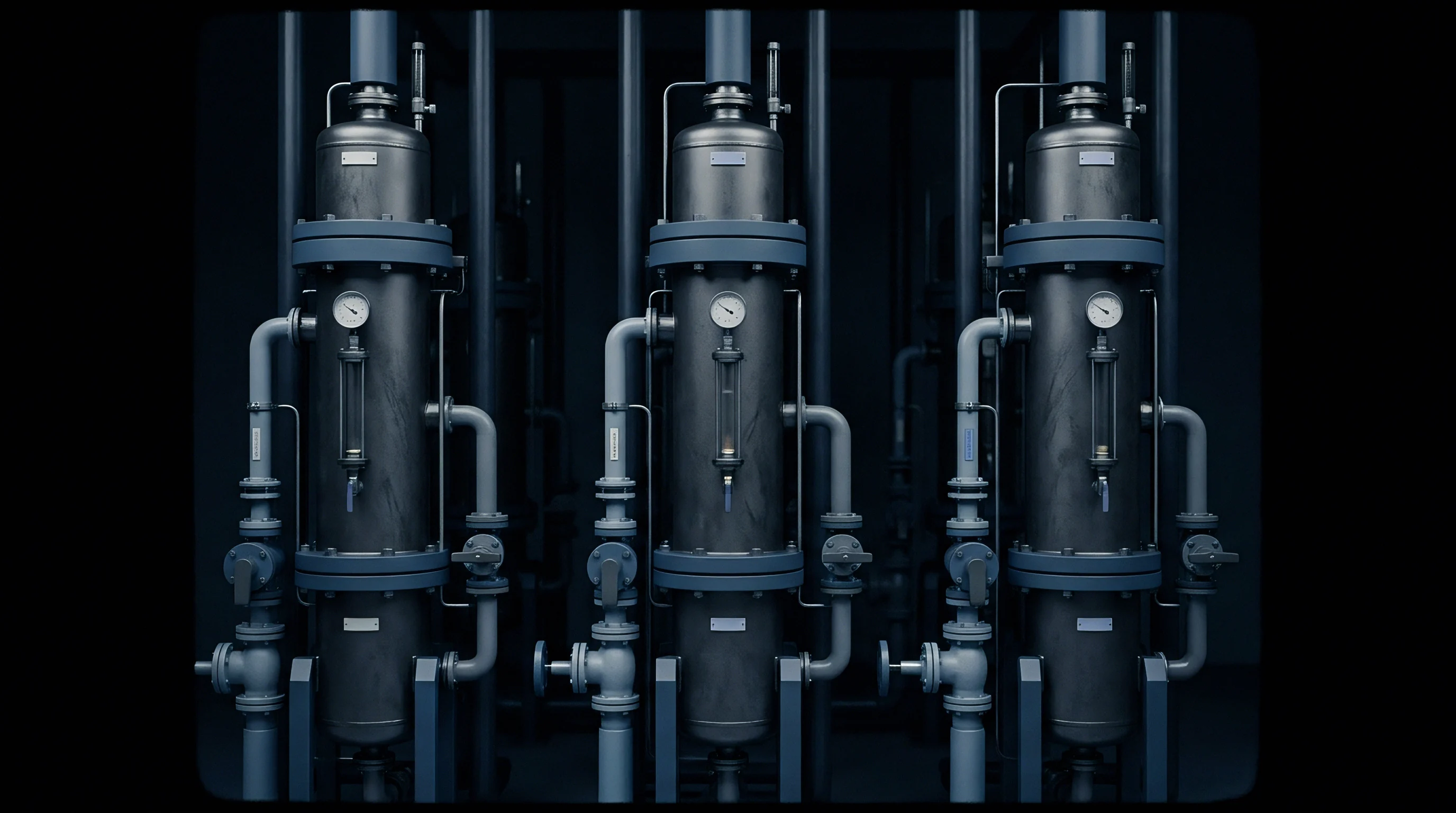
A bypass valve failure on a dual-tower desiccant system allowed saturated air to bypass regeneration for twelve hours, contaminating three metric tonnes of bottle-grade PET with 280 ppm moisture. The resulting intrinsic viscosity loss forced the plant to scrap 14,000 preforms, incurring a direct financial loss of $18,400 in wasted material, downtime, and purging labor.

Viscosity
Intrinsic viscosity serves as the ultimate benchmark for structural integrity in PET processing. Represented as in units of deciliters per gram (dl/g), intrinsic viscosity reflects the hydrodynamic volume of polymer chains dissolved in solvent. Higher intrinsic viscosity corresponds to longer polymer chains, greater chain entanglement, and superior mechanical toughness.
Hydrolysis cleaves these chains, lowering intrinsic viscosity and destroying physical properties long before visual molding defects become visible on the factory floor.
Dynamic melt viscosity scales exponentially with intrinsic viscosity. Melt zero-shear viscosity obeys a power-law relationship with weight-average molecular weight, proportional to M_w raised to the 3.4 power. A minor drop in intrinsic viscosity translates to a major collapse in melt strength.
Uncontrolled hydrolysis inside the injection barrel causes flash at parting lines, cushion instability, drop in injection pressure, and loss of melt structural integrity during blow molding or sheet extrusion operations.
Correlation between Intrinsic Viscosity and Melt Flow Metrics
Melt Flow Rate (MFR) testing provides a field-accessible metric for tracking hydrolytic degradation. Standard MFR testing for PET per ISO 1133-1 Condition 300°C/1.2kg or 280°C/2.16kg measures mass flow through a specified orifice over ten minutes. Hydrolysis increases melt flow rate rapidly because shorter polymer chains slip past one another with reduced molecular resistance.
A virgin resin with an initial intrinsic viscosity of 0.82 dl/g yields a standard MFR of approximately 15 g/10 min at 280°C/2.16kg. Cleaving polymer chains through moist melt processing until intrinsic viscosity drops to 0.65 dl/g increases the MFR to over 48 g/10 min under identical test conditions. High melt flow rates cause nozzle drool, mold flashing, and uneven wall thickness distribution in stretch-blow molded containers.
Measuring MFR at the press throat gives real-time verification of moisture control effectiveness.
| Intrinsic Viscosity (dl/g) | Equivalent M_n (g/mol) | Melt Flow Rate at 280°C/2.16kg (g/10 min) | Tensile Strength at Yield (MPa) | Tensile Elongation at Break (%) | Notched Charpy Impact at 23°C (kJ/m²) |
|---|---|---|---|---|---|
| 0.84 (Virgin High-IV) | 26,100 | 12.5 | 61.2 | 145 | 4.8 |
| 0.78 (Acceptable Process Limit) | 23,800 | 18.2 | 60.8 | 120 | 4.2 |
| 0.72 (Moderate Hydrolysis) | 21,500 | 27.4 | 58.5 | 45 | 3.1 |
| 0.64 (Severe Degradation) | 18,600 | 49.1 | 54.0 | 8 | 1.8 |
| 0.56 (Catastrophic Failure) | 15,800 | 92.0 | 46.2 | 3 | 1.1 |
| Testing standards applied: Solution Intrinsic Viscosity per ISO 1628-5 in 60/40 phenol/1,1,2,2-tetrachloroethane at 30°C; Melt Flow Rate per ISO 1133-1; Tensile properties per ISO 527-2 at 50 mm/min; Notched Charpy Impact per ISO 179-1/1eA. | |||||

Degradation Impact on Tensile and Impact Performance
Mechanical properties exhibit distinct sensitivity thresholds to intrinsic viscosity loss. Yield strength remains relatively stable across moderate degradation bands because yielding depends primarily on inter-chain secondary bonding forces within crystalline domains. Tensile elongation at break and notched impact resistance collapse catastrophically once intrinsic viscosity drops below critical entanglement thresholds.
Chain entanglement requires a minimum molecular weight to transfer impact energy across amorphous regions. Virgin PET with an intrinsic viscosity of 0.84 dl/g demonstrates a tensile elongation at break exceeding 140 percent, yielding a ductile failure mode during tensile testing per ISO 527-2. Dropping intrinsic viscosity to 0.64 dl/g reduces elongation at break to under 10 percent, converting material behavior from ductile to brittle.
Molded parts subjected to drop testing or cold handling shatter instantly upon mechanical stress.
- Documented Moisture Maximums Require incoming shipments to carry certified Karl Fischer water test values below 50 ppm measured at bulk loading.
- Melt Flow Verification Limits Establish a maximum allowable press throat MFR increase of 20 percent over raw pellet baseline prior to production approval.
- Purge Protocols Reject melt streams exposed to barrel residence times exceeding five minutes during press interruptions to avoid introducing hydrolyzed resin into tools.
- Screw Speed Optimization Limit peripheral screw velocity to 0.25 m/s to minimize shear heat generation that accelerates hydrolytic reaction kinetics.
- Regrind Ratio Caps Restrict reprocessed flake content to 15 percent by weight unless solid-state polymerization equipment is available to rebuild intrinsic viscosity.
Supply agreements specifying an intrinsic viscosity tolerance of +/- 0.02 dl/g permit immediate lot rejection if solution viscosity testing per ISO 1628-5 confirms degradation exceeding 0.04 dl/g from baseline virgin values.
Acetaldehyde Generation and Volatile Byproduct Accumulation
Thermal hydrolysis increases volatile organic compound generation within the melt stream. Chain cleavage produces reactive hydroxyethyl terminal groups that undergo secondary pyrolytic degradation, releasing acetaldehyde gas. Acetaldehyde generation accelerates when processing damp resin because water-induced scission creates more reactive end groups per unit volume.
Accumulated acetaldehyde gas creates micro-voids in thick-walled injection molded parts and degrades clarity in optical sheets. In packaging applications, acetaldehyde imparts a distinct synthetic taste to beverages. Controlling moisture levels protects both physical chain length and chemical purity by preventing end-group formation.
A reliable operational rule of thumb states that any processing condition causing a visible increase in barrel nozzle drool has already destroyed the impact resistance of the finished part.

Audit
Verification protocols ensure moisture management systems function correctly before wet resin enters production barrels. Incoming pellet inspection cannot rely on visual appearance or basic weight loss drying balances. Standard micro-balance loss-on-drying instruments lack the sensitivity needed to detect low moisture levels and suffer from measurement errors caused by volatile additive evaporation.
Quality control audit plans demand direct chemical measurement of water content through Karl Fischer titration combined with solution viscosity testing to verify polymer chain integrity.
Sampling methodologies dictate measurement reliability across bulk shipments. Water content varies significantly across octabins, bulk railcars, and hopper zones. Surface samples taken from open octabins absorb ambient air moisture within seconds, yielding false high readings.
Auditing requires sealed sampling tubes, nitrogen-purged sample containers, and rapid transfer to analytical testing equipment to ensure incoming resin evaluations reflect true batch conditions.

Moisture Determination through Karl Fischer Titration
Coulometric Karl Fischer titration per ISO 15512 Method B or ASTM D6869 represents the benchmark method for quantifying water content in PET resin. The test places a weighed sample of pellets into an extraction oven heated to 170°C ~ 180°C. A stream of dry nitrogen carrier gas carries released water vapor into a reaction cell containing iodide ions, sulfur dioxide, and an organic base. Electrical current oxidizes iodide to iodine, which reacts stoichiometrically with water:
H2O + I2 + SO2 + 3 Py + CH3OH -> 2 Py-H+I- + Py-H+SO4CH3-
Measuring the total current required to generate iodine allows the instrument to calculate absolute water mass with microgram precision. Testing requires a minimum sample mass of 1.0 to 3.0 grams weighed on an analytical balance accurate to 0.1 milligrams. Karl Fischer titration detects moisture levels down to 5 ppm, providing the precision needed to confirm resin dryness before starting high-value molding cycles.
Solution Viscosity Testing Procedures and Solvent Selection
Direct measurement of intrinsic viscosity requires dissolving dried PET samples in aggressive solvent mixtures followed by capillary viscometry per ISO 1628-5 or ASTM D4603. Standard solvent systems utilize a 60/40 weight ratio of phenol to 1,1,2,2-tetrachloroethane or a 50/50 ratio of phenol to 1,2-dichlorobenzene. Dissolution occurs at 110°C for 30 minutes under continuous stirring, followed by cooling to 30°C in a controlled thermal bath.
An Ubbelohde glass capillary viscometer measures the flow time of pure solvent (t_0) versus flow time of the polymer solution (t). Relative viscosity (eta_rel) equals t divided by t_0. Specific viscosity (eta_sp) equals eta_rel minus one.
Calculating intrinsic viscosity utilizes the Billmeyer relationship:
= 0.25 (eta_sp + 3 ln(eta_rel)) / c
Here c represents solution concentration in grams per deciliter (typically 0.5 g/dl). Solution viscosity testing provides clear proof of hydrolytic degradation during processing by comparing raw pellet IV against molded part IV. An IV drop exceeding 0.03 dl/g indicates inadequate drying or severe thermal degradation inside the processing barrel.
- Inadequate Sample Sealing Moisture ingress into unsealed sampling containers elevates recorded water content during transit to testing laboratories.
- Oven Temperature Errors Setting Karl Fischer extraction ovens above 200°C causes thermal degradation of PET, generating water as a byproduct and inflating test results.
- Solvent Degradation Using aged or moisture-contaminated phenol solvent mixtures distorts capillary flow times during intrinsic viscosity testing.
- Incomplete Pellet Dissolution Undissolved crystalline pellet cores alter solution concentration, yielding inaccurate intrinsic viscosity calculations.
- Carrier Gas Contamination Using nitrogen gas with a dew point above -60°C introduces background water into Karl Fischer titration cells, obscuring true moisture readings.
A standard resin supply agreement specifying delivery moisture below 50 ppm allows the buyer to reject shipments if Karl Fischer testing per ISO 15512 Method B yields water content exceeding 80 ppm upon delivery.

Sampling Protocols for Silos and Octabins
Statistical sampling plans ensure accurate quality audits across incoming material lots. Sampling from bulk silos requires grain-thieve probes capable of extracting material from multiple depths simultaneously. Sample thief tubes must feature closed inner compartments that open only at target sampling depths to prevent surface layer contamination.
The plant rejected twelve metric tonnes of bottle-grade resin when Karl Fischer titration confirmed water content at two hundred and ten parts per million.
Octabins require core sampling from five distinct points: center, top left, top right, bottom left, and bottom right. Individual sub-samples are mixed inside a sealed bag purged with dry nitrogen before extracting analytical test specimens. Implementing strict sampling discipline prevents accepting damp resin lots that compromise molding operations.
Systematic auditing provides the quantitative proof required to hold material vendors and plant operators accountable for proper thermal processing protocols.
Section 7.3 of international resin purchasing agreements mandates that where intrinsic viscosity testing per ISO 1628-5 confirms a viscosity loss exceeding 0.05 dl/g between raw feed pellets and finished molded components, the processing failure shall be classified as material hydrolytic degradation caused by inadequate drying infrastructure, transferring all associated scrap and tool downtime expenses to the processing facility.

Ledger
Hydrolysis imposes severe financial costs that extend far beyond raw material waste. When damp PET enters an injection tool or sheet line, hydrolytic chain scission reduces melt strength, induces part brittleness, generates visual defects, and destabilizes process control. The true cost of poor moisture management includes scrap disposal, lost press capacity, unrecoverable energy consumption, accelerated mold wear, and product recall risks.
Sourcing practices must evaluate drying windows through landed-cost models that calculate the total cost of good parts delivered to customers.
Evaluating resin pricing without accounting for moisture-induced scrap creates false economies. Virgin injection-grade PET selling at $1,350 per metric tonne appears economical compared to a pre-dried specialty grade priced at $1,600 per metric tonne. However, operating an unmonitored dryer that allows pellet moisture to drift to 200 ppm can elevate molding scrap rates from 1.5 percent to 12 percent.
High scrap rates consume expensive machine time, waste electrical energy, and double labor costs per good component, making cheap resin expensive in practice.
Scrap Multipliers and Landed Cost Arithmetic
Calculating the true financial impact of hydrolytic degradation requires tracking scrap multipliers across entire production runs. Total component cost equals direct material costs, energy costs, machine hourly rates, labor overhead, and tool depreciation divided by total acceptable parts produced:
Unit Cost = ( Material Cost + Energy Cost + Machine Rate Hours + Labor ) / Acceptable Yield
Landed cost per good part illustrates the operational penalty of inefficient drying. Consider a production run molding 500-gram technical housings using PET resin priced at $1.40 per kilogram ($1,400/tonne). The press operates at $85.00 per hour with a cycle time of 45 seconds, producing 80 parts per hour.
Energy consumption measures 0.40 kWh per kilogram processed at an electrical rate of $0.15 per kWh. Direct labor costs equal $30.00 per hour.
Under optimized drying conditions (moisture below 30 ppm), the scrap rate remains at 1.0 percent. Over a 10-metric-tonne production run (20,000 parts molded), 19,800 parts pass quality inspection. Total variable costs sum to $14,000 for resin, $600 for energy, and $21,250 for press time and labor, totaling $35,850.
The resulting cost per good part equals $1.81.
If defective drying permits pellet moisture to rise to 220 ppm, severe hydrolytic chain scission drops intrinsic viscosity from 0.80 dl/g to 0.63 dl/g. Drop testing failure rates cause the overall scrap rate to surge to 15 percent. Out of 20,000 parts molded, only 17,000 components pass inspection.
Total variable costs remain identical at $35,850, but dividing by fewer good parts inflates the cost per good part to $2.11. Inadequate drying adds $0.30 per unit in hidden costs, incurring a $5,100 penalty on a single 10-tonne run.
| Process Drying Status | Pellet Moisture (ppm) | Molded Part IV (dl/g) | Production Scrap Rate (%) | Total Good Parts Delivered | Total Production Cost ($) | Net Landed Cost Per Good Part ($) | Financial Penalty Per 10-Tonne Run ($) |
|---|---|---|---|---|---|---|---|
| Optimal Drying (Desiccant -40°C Dew Point) | 25 | 0.79 | 1.0 | 19,800 | 35,850 | 1.81 | Baseline ($0) |
| Minor Moisture Ingress (Saturated Bed) | 85 | 0.73 | 3.5 | 19,300 | 35,850 | 1.86 | +965 |
| Moderate Hydrolysis (Air Dew Point -10°C) | 160 | 0.67 | 8.0 | 18,400 | 35,850 | 1.95 | +2,800 |
| Severe Hydrolysis (No Desiccant Regeneration) | 250 | 0.61 | 15.0 | 17,000 | 35,850 | 2.11 | +5,100 |
| Catastrophic Failure (Un-dried Wet Resin) | 600 | 0.52 | 45.0 | 11,000 | 35,850 | 3.26 | +29,000 |

Downtime Allocation and Barrel Flush Accounting
Hydrolytic degradation causes machine downtime that damages plant profitability. Wet resin causes severe nozzle drool, mold flash, and part sticking, forcing automated cells to pause for manual intervention. Clearing flashed molds, purging degraded resin from barrels, and cleaning tool parting lines consumes active press hours.
Every hour spent purging a press represents unrecoverable lost capacity. A 500-tonne molding press carrying an operational cost rate of $120 per hour loses $960 in margin contribution during an eight-hour shift spent troubleshooting moisture-induced flashing. Flashed tools also suffer physical damage.
High-pressure injection of low-viscosity, hydrolyzed resin forces material into vent lines and slide clearances, galling polished steel surfaces and requiring costly toolroom repairs. Re-polishing damaged mold cores costs thousands of dollars while removing the press from service for days.
Commercial Specifications and Moisture Guarantees in Supply Contracts
Preventing financial losses requires drafting precise quality criteria into raw material supply contracts. Material purchase agreements must replace generic terms like dry resin with clear quantitative standards. Contracts should specify maximum allowable moisture limits upon delivery, sample testing standards, third-party laboratory verification procedures, and financial liability assignments for off-spec material.
A comprehensive commercial contract mandates that raw PET resin delivered in sealed bulk containers carry a certified moisture content below 50 ppm as measured per ISO 15512 Method B. If incoming Karl Fischer verification reveals moisture levels above 80 ppm, the contract must establish the buyer’s right to reject the entire shipment, obligating the vendor to replace material within five business days while absorbing all freight and storage expenses. Including explicit technical thresholds in commercial contracts protects buyers against moisture-induced financial losses.
Incorporating mandatory Karl Fischer moisture verification into resin purchasing agreements transfers all financial liability for moisture-induced scrap directly to the material supplier if delivered moisture exceeds contract thresholds.
Hydrolytic degradation acts as a direct tax on molding profitability, destroying polymer chain length, causing part failure, and eroding operating margins. Establishing strict drying protocols, conducting regular verification audits, and drafting precise commercial contracts protects both polymer integrity and business performance across global manufacturing operations.
Managing hydrolytic loss requires continuous alignment between analytical testing, processing discipline, and commercial contract enforcement across all sourcing channels.