Determining Intrinsic Viscosity Accumulation Limits in Recycled Polyethylene Terephthalate Processing
Intrinsic viscosity accumulation limits in rPET are governed by end-group stoichiometry, byproduct diffusion rates, and contaminant-induced chain scission.
Ceiling
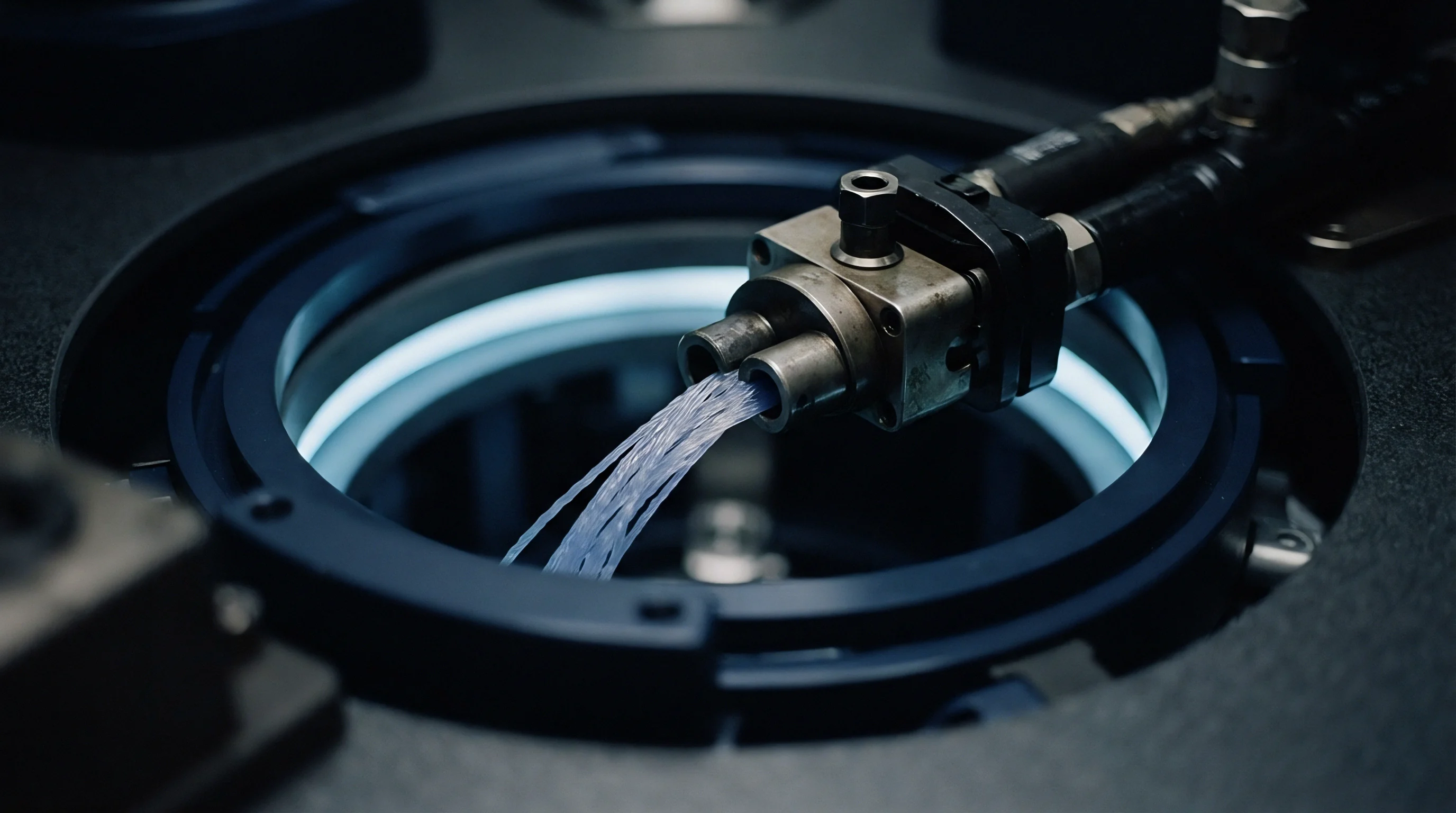
Conversion yields on extrusion lines depend strictly on the boundary where intrinsic viscosity stops advancing under heat. In bottle-grade recycled polyethylene terephthalate, target values sit between 0.78 and 0.84 dL/g for standard carbonated beverage preforms, whereas thermoforming sheet lines run between 0.68 and 0.74 dL/g. Industrial strapping pushes past 0.95 dL/g to secure high tensile break strength.
Solid-state polycondensation units build intrinsic viscosity by driving reactions in the amorphous zones between polymer crystals below the melt point. A practical ceiling appears once chain-scission kinetics balance chain extension, establishing an equilibrium plateau where extra residence time yields thermal degradation instead of higher molecular weight.
Chain extension requires continuous removal of volatile condensation byproducts. When processors try to drive intrinsic viscosity beyond 0.88 dL/g in standard flake lots, secondary reactions accelerate: vinyl ester generation, thermal ester pyrolysis, and diethylene glycol formation accumulate rapidly above 210 degrees Celsius, competing directly with forward transesterification. Extruders handling high-viscosity melts see steep jumps in motor torque, severe shear heating along the barrel, and uncontrolled melt temperature spikes.
When melt temperatures climb, residual moisture above 50 parts per million triggers rapid hydrolytic degradation. Higher contamination fractions in post-consumer flakes inevitably pull this viscosity ceiling downward.
Incoming flake moisture above 0.005 percent by weight causes instant hydrolytic scission in the extruder throat, eliminating 0.08 dL/g of intrinsic viscosity within ninety seconds.
Because preform injection requires stable flow, excessive molecular weight shifts the shear viscosity curve upward across all shear rates, narrowing the operating window in thin-walled tooling. Injection pressures spike beyond rated machine limits, forcing molders to raise barrel temperatures to restore flow. That thermal adjustment triggers transesterification back-reactions and pushes acetaldehyde concentrations past 3.0 parts per million, spoiling the organoleptic profile in mineral water packaging.
Processors lacking tight control over the solid-state polycondensation plateau face erratic fill times, gate vestige crystallization, and cyclic part failures that cascade into batch rejections across bottling facilities.


Heat
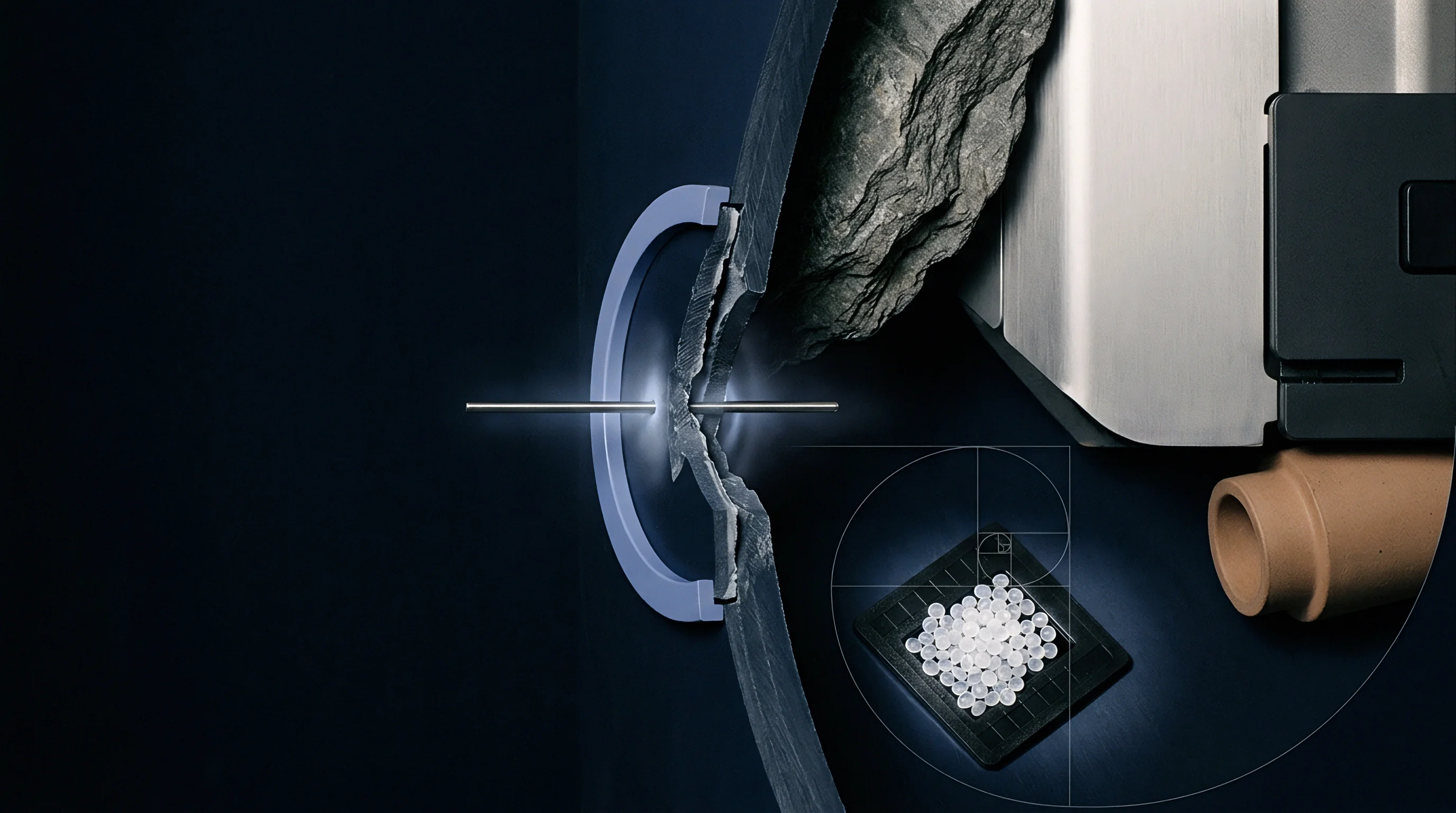
Thermal energy drives the transesterification and esterification reactions responsible for rebuilding polymer chains in solid-state reactors. Operating temperatures typically range from 195 to 220 degrees Celsius, safely below the crystalline melting band of 250 to 260 degrees Celsius. In this range, mobility within the amorphous phase permits terminal functional groups to encounter one another.
The reaction between hydroxyl and carboxyl end groups generates water, while hydroxyl-hydroxyl transesterification releases ethylene glycol. Removing these volatile molecules from the pellet interior into the vacuum or inert gas sweep dictates the rate of intrinsic viscosity build.
What Dictates Solid State Polycondensation Termination?
Chemical stoichiometry between carboxyl and hydroxyl terminal groups governs where chain growth stops. Transesterification demands two hydroxyl end groups to lengthen a chain while liberating one ethylene glycol molecule. Direct esterification pairs one carboxyl group with one hydroxyl group, yielding water.
Mechanical recycling streams subject flake to repeated thermal cycles, depleting hydroxyl end groups through thermal oxidation and beta-elimination. Carboxyl end groups accumulate proportionally, shifting the stoichiometry away from the 1:1 balance required for continuous chain lengthening.
Condensation rapidly consumes carboxyl groups, but when the concentration of available hydroxyl ends approaches zero, transesterification stalls completely. Unpaired carboxyl end groups cannot react together without external chain extenders. Continued exposure to thermal energy then produces carboxylic acid-catalyzed chain cleavage, holding the polymer at an asymptotic molecular weight ceiling where thermal scission matches the residual condensation rate.
A carboxyl end group concentration exceeding 35 milliequivalents per kilogram stalls solid-state polycondensation kinetics at an intrinsic viscosity of 0.82 dL/g under 1.0 millibar vacuum.
Physical diffusion limits the process alongside stoichiometry. Condensation byproducts must migrate from the core of each flake or pellet to the external surface. The diffusion coefficient of ethylene glycol through crystalline polyethylene terephthalate is roughly an order of magnitude lower than that of water.
In thick-walled pellets or non-uniform flakes, diffusion controls the kinetics: byproduct accumulation at the core creates localized equilibrium traps where trapped ethylene glycol drives transesterification backward, cleaving ester bonds while the dry outer shell continues building molecular weight. That radial gradient leaves individual pellets with a broad molecular weight distribution.
| Reactor Temperature | Atmosphere Condition | Residence Time | Starting IV | Terminal IV | Carboxyl Content |
|---|---|---|---|---|---|
| 195 degrees C | Vacuum < 0.5 mbar | 4.0 hours | 0.72 dL/g | 0.78 dL/g | 24 meq/kg |
| 205 degrees C | Vacuum < 0.5 mbar | 6.0 hours | 0.72 dL/g | 0.84 dL/g | 28 meq/kg |
| 215 degrees C | Nitrogen sweep dew point -40 C | 8.0 hours | 0.72 dL/g | 0.89 dL/g | 36 meq/kg |
| 225 degrees C | Nitrogen sweep dew point -40 C | 10.0 hours | 0.72 dL/g | 0.87 dL/g | 48 meq/kg |
| Measurements conducted on flake thickness of 0.35 to 0.45 mm according to ISO 1628-5 using dichloroacetic acid solvent at 25 degrees Celsius. | |||||
Pilot trials on uncolored flake fractions show an activation energy of 115 kilojoules per mole for transesterification during solid-state polycondensation. This parameter shifts upward to 135 kilojoules per mole if the starting flake carries catalyst residues or high levels of diethylene glycol units. Higher diethylene glycol content depresses the melting point and loosens the crystalline structure, increasing byproduct diffusion rates while lowering the thermal degradation threshold.
Commercial operators frequently raise reactor temperatures by five degrees Celsius to accelerate cycle times, but this intervention compresses the margin between productive polycondensation and degradation. At 225 degrees Celsius, thermal ester cleavage generates vinyl esters and carboxyl groups faster than volatile byproducts can desorb through the pellet boundary. Net molecular weight drops, evidenced by declining terminal intrinsic viscosity across extended reaction cycles.
Whether secondary transesterification additives can permanently reset this thermodynamic accumulation ceiling without destabilizing the melt phase remains an active dispute across compounding facilities.

Acid
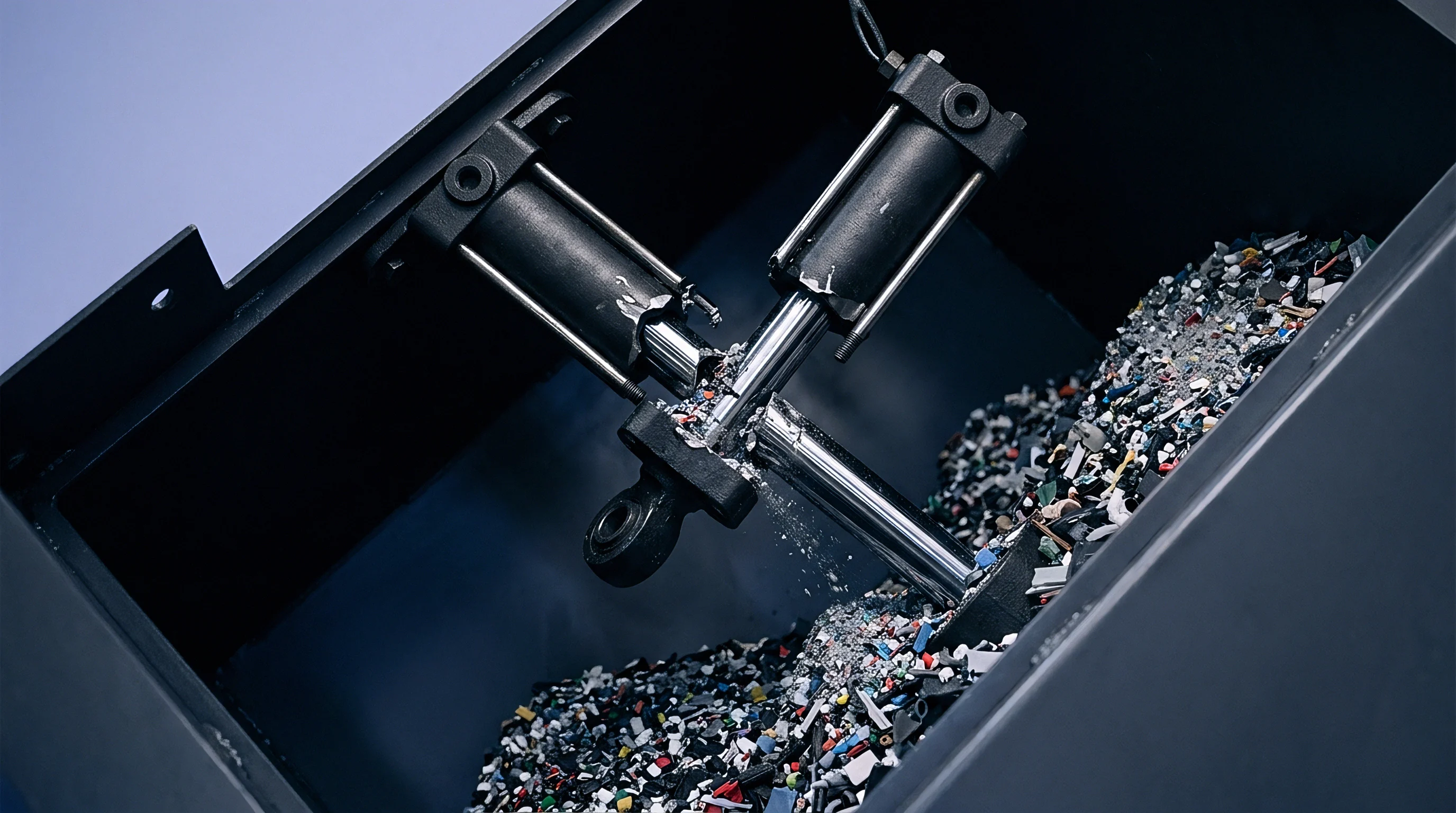
Chemical impurities present in recycled flake introduce catalytic and degradative pathways that alter intrinsic viscosity progression. Post-consumer collection captures labels, adhesives, closure fragments, and non-target barrier polymers along with clean polyester beverage containers. Polyvinyl chloride represents the most destructive contaminant in thermal recycling equipment.
At temperatures exceeding 190 degrees Celsius, polyvinyl chloride undergoes unzipping dehydrochlorination, releasing free hydrochloric acid directly into the melt or the solid-state reaction bed.
Free hydrochloric acid drives rapid chain fragmentation, acting as an aggressive catalyst for ester bond hydrolysis and transesterification scrambling. Trace chlorine levels as low as 50 parts per million depress the attainable intrinsic viscosity accumulation ceiling by 0.06 dL/g, initiating severe polymer yellowing quantified by an increase in the Hunter Lab b color coordinate. The release of acidic volatiles mirrors the chlorine management dilemmas found in marine vinyl scrap recycling, where halogen emissions strip processing stabilizers and pit internal tool steel.
In polyester processing, hydrochloric acid also deactivates residual antimony or titanium polycondensation catalysts by forming inactive metal chlorides.
- Hydrochloric acid catalysis fragments ester linkages within amorphous chains, accelerating random hydrolytic cleavage and depressing the maximum molecular weight accumulation limit.
- Polyolefin cross-contamination from bottle closures induces phase separation during extrusion, creating localized stress risers and distorting capillary rheometer shear stress measurements.
- Adhesive acetate decomposition generates acetic acid volatiles that attack ester linkages and accelerate yellow chromophore formation during extended thermal dwell cycles.
- Polyamide transamidation creates polyester-polyamide block copolymer hybrids with depressed crystallization rates, high melt haze, and premature viscosity decay.
Antimony trioxide, widely used as the primary polymerization catalyst in virgin bottle resin at concentrations between 200 and 300 parts per million, remains active within recycled flakes, though catalyst poisoning progressively limits reaction rates. Phosphorus-based thermal stabilizers added during virgin synthesis neutralize a portion of this catalyst. Repeated reprocessing cycles accumulate additional thermal stabilizers from varied flake sources, depressing active catalyst concentrations and slowing solid-state reaction kinetics.
- Incoming bale sortation strips polyvinyl chloride and non-polyester contaminants below 25 parts per million to prevent acid formation during drying.
- Optical flake sorting ejects opaque, colored, and barrier flakes to maintain optical clarity and prevent additive-induced catalyst deactivation.
- Caustic hot washing strips surface glues, food residues, and surface-bound acids at 85 degrees Celsius to stabilize end-group stoichiometry.
- Pre-drying desiccation extracts absorbed moisture below 30 parts per million to suppress hydrolytic scission during extruder plasticization.
- Solid-state conditioning advances intrinsic viscosity to target tolerances under continuous byproduct extraction.
Moisture drives rapid hydrolytic chain scission in unwashed or poorly dried flakes, generating carboxyl end groups at ten times the baseline rate. Water cleaves the polyester backbone instantaneously in the extruder feed throat, liberating one carboxyl group and one hydroxyl group for every broken bond. When flakes enter the solid-state polycondensation reactor with high initial carboxyl numbers, the system enters the diffusion-controlled regime with depleted reaction partners, enforcing an early accumulation plateau.
Thermal yellowing is often treated as benign variance in post-consumer bales that longer reactor dwell times can reverse, yet extended thermal exposure simply accelerates chain scission rather than rebuilding lost viscosity.
Bench
Viscometric measurements serve as the gatekeeper for lot qualification and process validation in compounding operations. Intrinsic viscosity represents the specific hydrodynamic volume of a polymer coil at infinite dilution, directly proportional to weight-average molecular weight through the empirical Mark-Houwink-Sakurada relationship. Unlike polyolefins evaluated via melt flow index, polyethylene terephthalate requires solvent-based capillary viscometry to eliminate shear heating artifacts and thermal degradation during testing.

Where Does Dilute Solution Viscometry Lose Precision?
Capillary viscometer accuracy degrades when non-polyester impurities alter solution flow times. International standards define specific solvent combinations and testing temperatures for characterization. ASTM D4603 employs a 60/40 mass ratio mixture of phenol and 1,1,2,2-tetrachloroethane tested at 30 degrees Celsius.
ISO 1628-5 utilizes dichloroacetic acid or a 50/50 mass mixture of phenol and 1,2-dichlorobenzene tested at 25 degrees Celsius. Insoluble contaminants such as cross-linked silicone gels, polyolefin particles, and inorganic fillers plug the viscometer capillary tube or artificially increase the measured efflux time, yielding falsely elevated intrinsic viscosity readings.
ASTM D4603 viscometry protocols mandate filtration of insoluble contaminants through a 0.5 micrometer PTFE membrane to prevent false solvent efflux time inflation.
Dilute solution measurements isolate molecular friction from macroscopic processing conditions, but dissolving recycled polyethylene terephthalate requires aggressive solvents that present severe operational and disposal hazards. Phenol and tetrachloroethane mixtures hydrolyze the polymer if solution preparation temperatures exceed 110 degrees Celsius or if dissolution stretches beyond 45 minutes. Overheating during dissolution breaks polymer chains in the testing flask, generating artificially low intrinsic viscosity figures that fail to reflect the bulk pellet condition.
| Intrinsic Viscosity | Zero-Shear Melt Viscosity (280 C) | Melt Flow Rate (285 C, 2.16 kg) | Number-Average Molecular Weight | Suitability Boundary |
|---|---|---|---|---|
| 0.64 dL/g | 140 Pa-s | 42 g/10 min | 18,500 g/mol | Fiber spinning, non-woven strapping |
| 0.72 dL/g | 310 Pa-s | 28 g/10 min | 22,000 g/mol | Thermoforming sheet extrusion |
| 0.80 dL/g | 680 Pa-s | 16 g/10 min | 26,500 g/mol | Standard beverage preforms |
| 0.86 dL/g | 1,250 Pa-s | 9 g/10 min | 30,000 g/mol | Carbonated soft drink preforms |
| 0.96 dL/g | 2,600 Pa-s | 4 g/10 min | 35,500 g/mol | Heavy-duty strapping, industrial monofilament |
Melt rheology demonstrates a direct power-law dependence where zero-shear melt viscosity scales with weight-average molecular weight raised to the 3.4 power. This extreme sensitivity means that an increase in intrinsic viscosity from 0.72 dL/g to 0.86 dL/g quadruples the zero-shear melt viscosity at 280 degrees Celsius. In injection molding, this rheological escalation raises peak cavity pressures, increases gate shear stress, and accelerates molecular orientation freeze-off in mold cavities.
No universal branching index threshold reliably marks the gelation boundary across multi-source recycled flakes, particularly when barrier tie layers introduce uneven cross-linking. Under this analytical uncertainty, incoming inspection operations must screen lots by tracking the ratio of zero-shear melt viscosity to dilute solution intrinsic viscosity, rejecting lots where the melt elasticity deviates by more than 15 percent from historical baseline calibrations.
- Efflux time validation requires triplicate solvent blanks through Ubbelohde 1B capillaries to ensure kinematic viscosity drift remains below 0.2 percent.
- Dissolution temperature controls restrict sample heating to 105 degrees Celsius for 35 minutes to halt thermal scission during preparation.
- Moisture suppression protocols enforce Karl Fischer coulometric titration confirming pellet moisture sits below 25 parts per million prior to thermal melt analysis.
When melt flow index rises unexpectedly while solution intrinsic viscosity holds steady, cross-linking or chain branching has altered the shear response of the resin.
Invoice
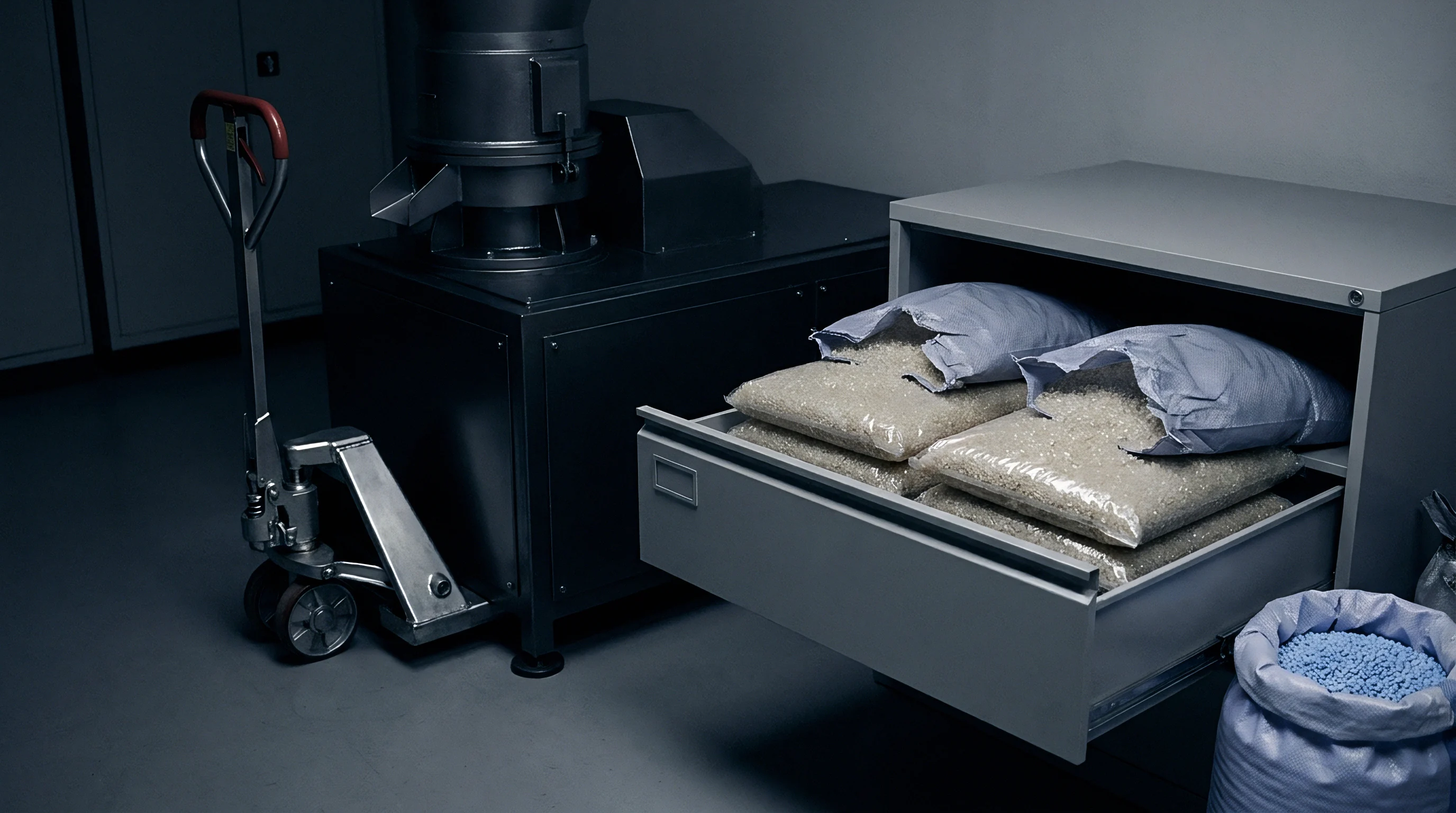
Every fraction of an intrinsic viscosity point carries a measurable processing cost and commercial exposure. Sourcing clean recycled resin involves pricing the conversion energy expended during solid-state polycondensation against downstream manufacturing scrap rates. Solid-state reactors represent significant capital investments and consume immense volumes of electricity to maintain elevated thermal beds under deep vacuum or continuous dry nitrogen sweep.
Increasing intrinsic viscosity from 0.74 dL/g to 0.84 dL/g requires between four and eight hours of additional reactor dwell time depending on flake thickness and end-group balance.
Off-spec viscosity incurs immediate financial penalties across commercial lots. Take a 20-tonne production lot of recycled polyethylene terephthalate pellets intended for preform injection, priced at an incoming raw material cost of 1,420 dollars per tonne. Operating an industrial solid-state polycondensation reactor consumes approximately 85 kilowatt-hours of electrical energy per tonne to raise intrinsic viscosity by 0.10 dL/g.
Assuming an industrial electricity tariff of 0.14 dollars per kilowatt-hour, direct energy additions total 11.90 dollars per tonne. Reactor amortization, inert gas losses, and operator labor add 45.00 dollars per tonne across a six-hour processing window, bringing the total intrinsic viscosity accumulation processing cost to 56.90 dollars per tonne.
If the flake stock contains uncorrected carboxyl imbalances or moisture contamination, the reaction hits its accumulation ceiling prematurely at 0.78 dL/g instead of the contracted 0.84 dL/g target. Attempting to force the reaction forward by running the reactor for two additional hours adds 18.90 dollars per tonne in energy and processing overhead without increasing molecular weight. The resulting lot exhibits elevated yellowness with b shifting from 1.5 to 3.8 and a carboxyl concentration climbing past 40 milliequivalents per kilogram.
Downstream converters running this degraded 20-tonne lot experience a 4.5 percent scrap rate from gate crazing and wall thickness variation during blow molding, compared to a baseline defect rate of 0.5 percent on qualified resin. Across 20 tonnes of material converted into 28-gram preforms, this scrap differential destroys 28,570 units. With finished preforms valued at 0.085 dollars per unit, the direct manufacturing scrap loss totals 2,428.45 dollars.
Adding unrecoverable conversion overhead and color reject costs pushes the real commercial loss past 3,500 dollars on that single truckload.
Contractual purchase orders must define intrinsic viscosity boundaries with clear rejection protocols. Purchase specifications referencing ASTM D4603 or ISO 1628-5 that stipulate an intrinsic viscosity band of 0.82 to 0.85 dL/g with an automatic ten percent invoice debit for shipments landing between 0.79 and 0.81 dL/g protect the buyer from bearing the financial burden of downstream scrap and cycle time inflation.