Characterizing Polymer Chain Scission in Reprocessed Polyethylene Terephthalate Commodity Lots
Characterizing polymer chain scission in rPET lots requires pairing solution viscometry with end-group titration to quantify backbone loss and dryer failure.


Mechanisms
Polymer degradation in polycondensates follows distinct chemical pathways under heat and moisture. In post-consumer recycled polyethylene terephthalate, physical property loss stems mainly from an irreversible drop in molecular weight. Thermal history cleaves covalent bonds along the ester backbone, breaking long polymer chains into shorter fragments.
This causes lower melt strength, reduced impact resistance, and brittle failure in downstream preforms or extruded sheet stock. Pinpointing how these bonds split requires isolating the micro-structural triggers active during processing.
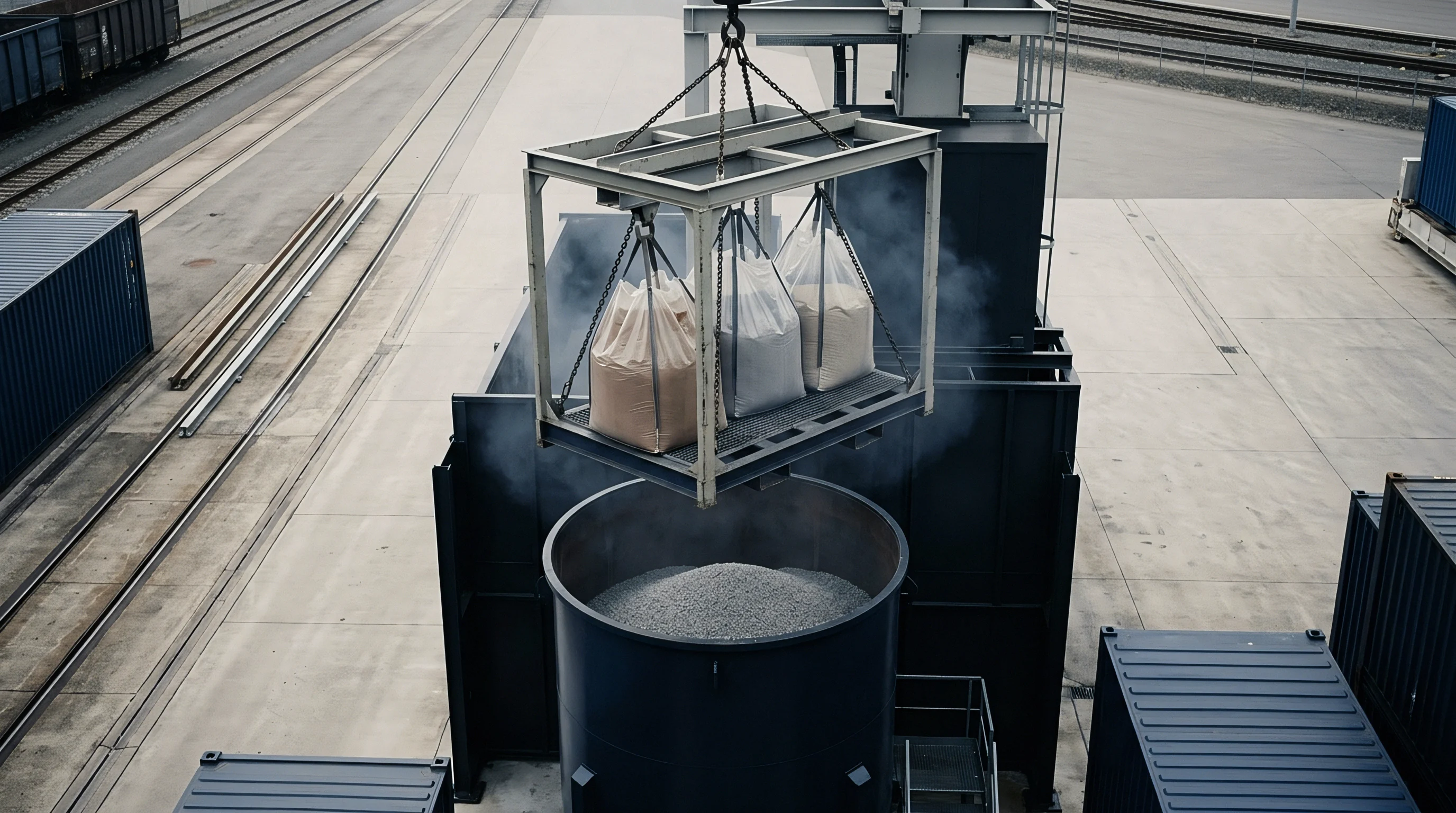
Ester Linkage Cleavage and End Group Generation
Water present in the resin melt acts as an aggressive nucleophile at processing temperatures above 260 degrees Celsius. The carbonyl carbon of the ester linkage undergoes nucleophilic attack by the oxygen atom of water, forming a tetrahedral intermediate that collapses to split the chain. Each hydrolytic event cleaves one ester bond, yielding one carboxyl end group and one hydroxyl end group.
The reaction follows pseudo-first-order kinetics at low conversion, with the rate of chain scission scaling directly with moisture concentration in the polymer melt.
Carboxyl end groups generated by this reaction self-catalyze subsequent hydrolysis. The acidic protons on carboxyl terminations lower the activation energy needed for water to attack adjacent ester bonds. Under identical processing conditions, a recycled lot carrying an initial carboxyl end group concentration of 35 milliequivalents per kilogram degrades at twice the rate of a virgin bottle-grade resin with 18 milliequivalents per kilogram.
In reprocessed flake grades where moisture levels exceed 50 parts per million, this acceleration drives a 0.08 deciliter per gram intrinsic viscosity loss in under two minutes of melt residence time. Controlling carboxyl accumulation is therefore just as critical as managing moisture during resin preparation.
- Hydrolytic Backbone Cleavage occurs when absorbed moisture reacts with ester linkages during the amorphous melt stage, immediately reducing molar mass and generating equal quantities of carboxyl and hydroxyl terminations.
- Thermal Unzipping occurs under high thermal loads above 280 degrees Celsius, forming vinyl ester end groups and free carboxylic acid species via a cyclic transition state.
- Thermo-Oxidative Scission involves oxygen radical attack on the methylene carbon of the ethylene glycol unit, generating hydroperoxides that decompose into alkoxy radicals and drive rapid chain degradation.
- Mechanical Shear Degradation breaks long polymer chains within high-shear zones of single- or twin-screw extruders, especially in solid-bed compression zones where un-melted flake experiences heavy viscous dissipation.
- Transesterification Side Reactions rearrange chain lengths via alcoholysis or acidolysis, shifting molecular weight distribution without altering the total count of chain ends.

Thermal Oxidative Scission and Radical Pathways
Oxygen entering processing equipment triggers free radical cascades along the ethylene glycol segment of the polymer chain. Peroxy radicals form quickly at elevated temperatures, abstracting hydrogen atoms from adjacent methylene groups to yield unstable hydroperoxides. Homolytic cleavage of these hydroperoxides generates alkoxy and hydroxyl radicals that drive further backbone scission, producing acetaldehyde, vinyl esters, and quinoid chromophores.
Quinoid structure formation causes progressive yellowing, tracked commercially by an increase in the CIE b color coordinate.
Thermal degradation without oxygen occurs simultaneously whenever processing temperatures exceed thermal stability thresholds. Non-radical thermal scission proceeds through a six-membered cyclic transition state, splitting the ester bond into a carboxylic acid group and a vinyl ester group. Vinyl ester groups can then react with amine or hydroxyl species, or thermally polymerize into colored conjugated byproducts.
Acetaldehyde gas escapes as a volatile byproduct, posing taste and odor contamination risks in food-contact packaging applications.
Processing wet polyester flake at melt temperatures above 275 degrees Celsius destroys polymer molecular weight faster than any mechanical shear mechanism operating in a compounding extruder.
The interplay among thermal, oxidative, and hydrolytic mechanisms alters the molecular architecture of reprocessed lots. While pure thermal scission demands significant energy, hydrolytic degradation proceeds rapidly even under modest thermal loads. Managing these degradation vectors requires quantifying the distribution of chain lengths surviving compounding, since chain end concentrations dictate both rheological behavior and downstream mechanical integrity.
The balance between these degradation channels depends heavily on processing conditions and resin history. Melt temperature, residence time, screw speed, atmosphere composition, and pre-drying efficiency determine whether hydrolytic or thermal-oxidative scission dominates. Where the molecular weight threshold sits between usable structural resin and scrap remains an open operational question for compounders.


Flake
Post-consumer regrind lots enter compounding facilities with non-uniform moisture levels and surface contamination. Water sits both on the exterior surface of shredded bottle flake and deep within the amorphous polymer matrix. Polyethylene terephthalate is hygroscopic, absorbing atmospheric moisture up to an equilibrium concentration of roughly 0.6 percent by weight at ambient temperature and relative humidity.
Extruding resin at this equilibrium moisture level causes severe hydrolytic breakdown, converting high-value packaging polymer into brittle low-molecular-weight wax within seconds.

Where Does Hydrolytic Scission Dominate Shear Degradation?
Drying performance dictates the mechanical fate of reprocessed material. Water trapped inside the polymer matrix must diffuse to the surface and evaporate before reaching the extruder feed throat. Dehumidifying desiccant dryers operating at dew points below minus 40 degrees Celsius are standard for preparing reprocessed lots.
Standard drying protocols mandate holding flake at 160 to 180 degrees Celsius for four to six hours to bring internal moisture below 50 parts per million, or 0.005 percent by weight.
Shear scission dominates degradation only when moisture drops below this critical 50 parts per million threshold. In high-shear twin-screw extruders operating at 400 revolutions per minute, mechanical energy dissipation cleaves long polymer chains, particularly with high-viscosity regrind. If moisture remains above 100 parts per million, hydrolytic degradation accounts for over 80 percent of total intrinsic viscosity loss, completely masking mechanical shear effects.
Controlling moisture eliminates hydrolysis as a variable, allowing compounding engineers to optimize screw profiles and shear delivery.
- Sample incoming flake directly from the center of gaylord containers or bulk silos using a thief sampler to prevent surface moisture bias.
- Place a 10-gram representative sample into a Karl Fischer coulometric moisture titrator equipped with a water vaporization oven set to 180 degrees Celsius.
- Verify that total moisture content reads below 0.005 percent by weight before releasing the lot from drying hoppers to extruder feed lines.
- Monitor exhaust dew point sensors continuously, flagging any drift above minus 40 degrees Celsius for immediate maintenance intervention.

Dehumidification Benchmarks and Hopper Residence Physics
Hopper geometry and airflow dynamics dictate drying uniformity across a reprocessed batch. Non-uniform flake size distributions create preferential airflow channels inside drying hoppers. Air follows paths of least resistance, leaving dense zones of fines under-dried.
When wet fines drop into the extruder feed throat, localized hydrolytic spikes cause periodic intrinsic viscosity dips in the extruded strand output.
Extruding polyester flake carrying over 0.01 percent moisture results in immediate intrinsic viscosity loss exceeding 0.10 deciliters per gram during melt processing.
Processing temperature profiles must balance drying kinetics against solid-state stickiness. Post-consumer flake contains residual amorphous material from bottle necks and thermoformed sheet scrap. Holding amorphous flake above its glass transition temperature of 78 degrees Celsius causes thermal softening and inter-particle agglomeration, building solid bridge structures inside drying hoppers.
Crystallizing amorphous flake in continuous rotary or fluid-bed crystallizers at 140 degrees Celsius prior to high-temperature dehumidification prevents hopper bridging and ensures uniform mass flow through the dryer.
Extrusion degassing zones equipped with high-vacuum vent ports provide a secondary defense against residual moisture and volatile degradation products. Twin-screw extruders with dual vacuum degassing zones operating below 5 millibars strip residual moisture and acetaldehyde from the polymer melt. Vacuum venting cannot repair chains already cleaved by hydrolysis in the primary melting zone of the screw, but extraction removes volatile byproducts, preventing voids in extruded pellets while stabilizing downstream melt pressure.
Controlling variables during flake preparation ensures predictable compounding performance. When feed streams maintain uniform moisture levels below critical thresholds, variations in pellet quality stem directly from incoming raw material molecular weight rather than drying failures. Flake handling discipline protects the polymer backbone before compounding even begins.


Solution
Capillary viscometry remains the primary laboratory benchmark for evaluating molecular weight retention in recycled polyester. Solvent-based testing isolates the physical dimensions of individual polymer chains in dilute solution, eliminating secondary effects caused by thermal history or crystalline structure. By comparing the efflux time of a dilute polymer solution through a calibrated glass capillary against that of pure solvent, technicians calculate the specific and reduced viscosity of the lot.

Dilute Viscometry Protocols and Mark Houwink Constants
Testing in accordance with ISO 1628-5 mandates dissolving dried polymer samples in a 50/50 weight mixture of phenol and 1,2-dichlorobenzene or phenol and 1,2,4-trichlorobenzene at 135 degrees Celsius. Solvents such as dichloroacetic acid or trifluoroacetic acid allow room-temperature dissolution but introduce severe health, safety, and disposal challenges. Dissolution requires precise sample preparation: polymer concentrations must stay within narrow limits, typically 0.5 grams per deciliter, to prevent chain entanglement in the testing capillary.
Intrinsic viscosity is calculated by extrapolating reduced viscosity values to zero concentration using the Huggins and Kraemer equations. Single-point measurement protocols using the Billmeyer equation provide rapid operational assessments for incoming lot control. Converting intrinsic viscosity values into weight-average or number-average molecular weight relies on the empirical Mark-Houwink-Sakurada relationship:
left = K · Mva
For polyethylene terephthalate dissolved in 50/50 phenol/1,2-dichlorobenzene at 25 degrees Celsius, standard Mark-Houwink constants are K = 4.68 × 10⁻⁴ deciliters per gram and a = 0.68. A measured intrinsic viscosity of 0.80 deciliters per gram corresponds to a viscosity-average molecular weight (Mv) of approximately 58,000 grams per mole. If hydrolytic degradation reduces the intrinsic viscosity to 0.60 deciliters per gram, calculated Mv drops to 38,000 grams per mole, representing a 34 percent collapse in average chain length.
| Analytical Method | Primary Metric Measured | Standard Protocol | Precision and Variance | Operational Limitation |
|---|---|---|---|---|
| Dilute Solution Viscometry | Intrinsic Viscosity (IV) | ISO 1628-5 / ASTM D4603 | +/- 0.005 dL/g | Hazardous solvent handling and slow dissolution times |
| Gel Permeation Chromatography | Mw, Mn, and Polydispersity Index | ASTM D5296 (modified) | +/- 2 percent Mw | Requires high-temperature fluorinated solvents like HFIP |
| Melt Mass-Flow Rate (MFR) | Melt Flow Index (g/10 min) | ISO 1133-1 Condition 275/2.16 | +/- 5 percent MFR | Highly sensitive to residual sample moisture during test |
| Carboxyl End Group Titration | CEG Concentration (mmol/kg) | ASTM D7409 / ISO 2115 | +/- 1.0 mmol/kg | Measures end groups without direct chain length distribution |

Size Exclusion Chromatography for Distribution Profiling
Size exclusion chromatography reveals molecular weight distribution changes that single-point intrinsic viscosity measurements cannot resolve. Polyethylene terephthalate requires aggressive solvent systems for room-temperature chromatographic separation. Hexafluoroisopropanol (HFIP) dissolves PET cleanly, allowing separation across porous gel columns calibrated against narrow-polydispersity polymethyl methacrylate standards.
Chromatographic profiles show clear shifting and broadening of molecular weight distributions as chain scission proceeds. Virgin bottle resins feature narrow, monomodal distributions with polydispersity indices (PDI = Mw/Mn) close to 2.0, typical of step-growth polymerization equilibrium. Reprocessed lots subjected to multiple thermal cycles show broader distributions, with polydispersity indices expanding to 2.5 or 3.2 as short-chain oligomeric fragments accumulate.
Single-point intrinsic viscosity tests fail to detect low-molecular-weight oligomeric fractions that compromise part impact strength under high strain rates.
Quantifying carboxyl end groups provides complementary structural data to chromatographic separation. Potentiometric or photometric titration of dissolved polymer samples using potassium hydroxide in benzyl alcohol yields the exact concentration of carboxylic acid terminations. Virgin resins carry carboxyl end group values between 15 and 25 milliequivalents per kilogram, whereas heavily degraded reprocessed lots frequently exceed 60 milliequivalents per kilogram.
Elevated end-group values confirm that hydrolytic scission occurred, offering clear proof of inadequate drying during earlier processing.
Relying solely on intrinsic viscosity data to qualify reprocessed lots creates significant commercial and operational risk. A lot can show an acceptable average intrinsic viscosity while harboring a high concentration of short low-molecular-weight fragments that degrade environmental stress crack resistance. Misinterpreting these analytical profiles leads directly to part failure in load-bearing applications.


Spread
Broadened molecular weight distributions in reprocessed resin shift melt strength and crystallization rates during secondary processing. Random chain scission splits long polymer backbones at arbitrary points, increasing the proportion of short chains while depleting high-molecular-weight entanglements. This shift changes the dynamic response of the polymer melt under shear and elongational flow, affecting performance during injection molding, blow molding, or sheet extrusion.

Polydispersity Shifts and Low Molecular Weight Fractions
Rheological characterization using small-amplitude oscillatory shear rotational rheometry exposes structural degradation without requiring solvent dissolution. Measurements performed under nitrogen purge at 270 degrees Celsius generate dynamic complex viscosity curves across a spectrum of angular frequencies. Virgin bottle resin displays high zero-shear viscosity (η0) and a distinct Newtonian plateau at low frequencies, reflecting strong physical entanglements between high-molecular-weight chains.
Degraded reprocessed lots show a sharp drop in zero-shear viscosity alongside accelerated shear thinning at lower frequencies. As average chain length decreases, a larger fraction of the distribution falls below the critical entanglement molecular weight (Mc ≈ 8,700 grams per mole for PET). Chains below this threshold cannot form physical entanglements, acting as internal plasticizers that lower melt viscosity.
This drop causes barrel drool at injection nozzles, web sag during sheet extrusion, and parison snap-off in stretch blow molding.
- Zero-Shear Viscosity Collapse indicates an overall drop in weight-average molecular weight, reducing melt strength and load capacity during hot-melt processing.
- Cross-Over Frequency Shift tracks the transition from elastic to viscous response, shifting to higher frequencies as long-chain entanglements break down under mechanical shear or hydrolysis.
- Storage Modulus (G’) Suppression reflects a loss of melt elasticity, leading to poor wall-thickness distribution during thermoforming and blow molding.
- Relaxation Spectrum Broadening confirms an expanded polydispersity index, causing unpredictable die swell and orientation behavior on fiber and strapping lines.
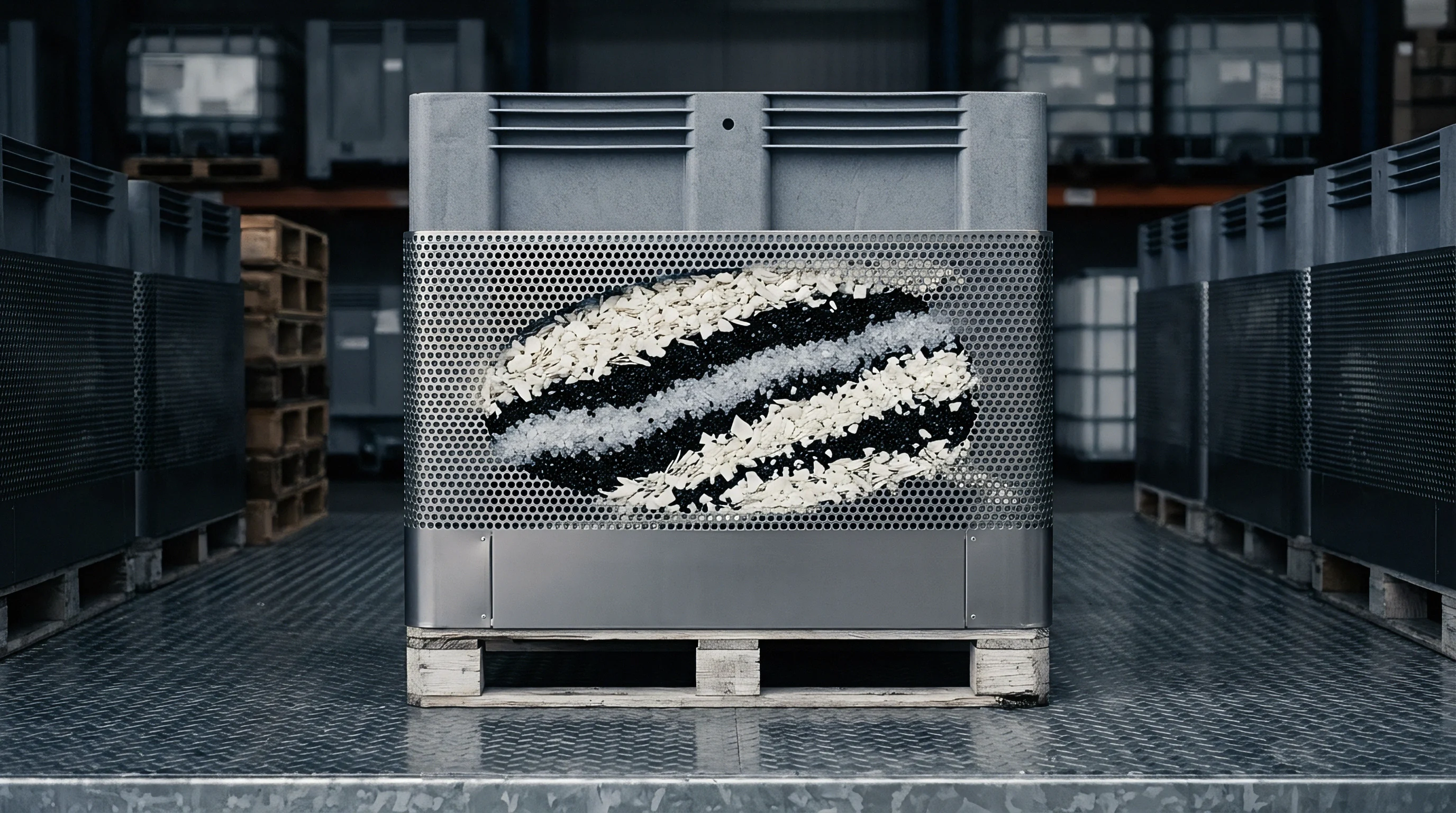
Thermal Signatures and Differential Scanning Calorimetry
Differential scanning calorimetry identifies degraded chain structures quickly by analyzing crystallization kinetics. Thermal scans conducted according to ISO 11357 show clear shifts in glass transition temperature, cold crystallization temperature, and peak melting behavior. Short polymer chains created by scission possess higher molecular mobility than long entangled chains, allowing them to organize into crystalline lattices at lower energy thresholds.
| Processing State | Intrinsic Viscosity (dL/g) | Cold Crystallization Temp Tcc (C) | Peak Melting Temp Tm (C) | Enthalpy of Fusion (J/g) |
|---|---|---|---|---|
| Virgin Bottle Grade | 0.82 | 142.5 | 254.0 | 42.0 |
| Clean Reprocessed Flake | 0.74 | 136.0 | 251.5 | 46.5 |
| Degraded Extruded Pellet | 0.58 | 124.0 | 247.0 | 54.0 |
| SSP Upgraded Pellet | 0.85 | 145.0 | 255.5 | 41.5 |
During non-isothermal cooling from the melt at 10 degrees Celsius per minute, degraded reprocessed lots crystallize at higher onset temperatures than virgin resins. Short chains act as nucleating sites, accelerating crystallization kinetics and driving up overall percent crystallinity (Xc). High final crystallinity increases part stiffness but drastically cuts notched Izod impact strength, causing brittle failure under shock loading.
Double melting peaks on first-heat DSC scans confirm populations of imperfect crystals formed by short-chain fractions.
Elevated cold-crystallization temperatures combined with double melting peaks on first-heat DSC thermograms indicate significant concentration of short-chain degradation products.
Evaluating thermal and rheological signatures allows compounders to spot lot contamination and structural breakdown before running material on production lines. Shifts in crystallization temperature alter part shrinkage factors, leading to dimensional instability across multi-cavity injection molds. Processing instability is often attributed to minor temperature fluctuations, though structural changes in chain length distribution within reprocessed lots are the underlying cause.
Uncontrolled crystallization kinetics pose immediate technical risks to converter operations. Parts molded from lots with broad polydispersity develop internal stress gradients, accelerating premature cracking under mechanical load. Managing these structural variations requires clear commercial frameworks that account for degraded material before lots leave the recycling facility.


Discount
Commercial valuation of recycled polyester lots directly tracks the cost of restoring intrinsic viscosity through secondary solid-phase processing. Commodity buyers do not trade reprocessed pellets based purely on aesthetic metrics like color or clarity; the real benchmark is chain length integrity, measured by intrinsic viscosity. A drop in intrinsic viscosity represents permanent mechanical degradation that requires capital equipment, thermal energy, and residence time to repair.

Intrinsic Viscosity Scission Penalties in Supply Contracts
Supply contracts for reprocessed post-consumer resin feature tiered pricing schedules tied directly to certified intrinsic viscosity ranges. Standard bottle-grade pellet contracts specify a baseline intrinsic viscosity of 0.80 deciliters per gram. When incoming quality testing reveals degradation, penalty clauses execute automatically, reducing the invoice price per metric tonne according to established discount brackets.
| Quality Tier | Intrinsic Viscosity Range (dL/g) | Processing Performance Impact | Contract Price Adjustment | Secondary Remediation Required |
|---|---|---|---|---|
| Prime Reprocessed | 0.78 – 0.82 | Direct replacement for virgin bottle resin | Baseline Market Price (100%) | None; standard dehumidification drying |
| Grade A Regrind | 0.73 – 0.77 | Minor drop in melt strength; suitable for sheet | Minus 8 to 12 percent penalty | Optional blending with virgin resin |
| Grade B Off-Spec | 0.65 – 0.72 | Severe web sag; unsuitable for stretch blow | Minus 22 to 30 percent penalty | Mandatory Solid State Polymerization |
| Degraded Scrap | Under 0.65 | Unusable for structural applications | Minus 50+ percent (Scrap Value) | Chemical recycling or compounding filler base |
A delivered lot testing at 0.70 deciliters per gram cannot be processed into standard carbonated soft drink bottles without risking burst failures during pressurization. Upgrading this material requires Solid State Polymerization (SSP), holding pellets under high vacuum or dry nitrogen purge at 200 to 220 degrees Celsius for 8 to 20 hours. Solid State Polymerization drives transesterification and esterification reactions forward, building chain length back up to target specifications.
Solid-state processing consumes significant energy, adding 150 to 250 US dollars per metric tonne in processing costs while causing a 1.5 to 3.0 percent mass loss through dust formation and volatile stripping.
- Certified Intrinsic Viscosity Guarantees specify minimum allowable solvent viscosity values measured according to ISO 1628-5, setting clear rejection thresholds for incoming shipments.
- Carboxyl End Group Ceiling Limits establish maximum permitted carboxylic acid terminations, protecting buyers against rapid autocatalytic hydrolysis during secondary compounding.
- Contamination and Ash Content Caps restrict non-melting inorganic residues, non-target polymers like PVC or polyolefins, and fine particulate matter below 100 parts per million.
- Color Variance Tolerance Bands establish acceptable CIE L , a , and b limits, capping allowed thermal-oxidative degradation byproducts.
Solid State Polymerization Economics and Mass Balance
Solid State Polymerization kinetics depend heavily on the concentration of available chain ends. The rate of chain rebuilding follows a second-order reversible reaction mechanism governed by how fast reaction byproducts diffuse out of the solid pellet core. Water and ethylene glycol generated by end-group condensation must diffuse to the surface and be swept away by vacuum or dry nitrogen streams.
If byproduct diffusion is hindered, the reverse reaction halts chain growth, capping the maximum attainable intrinsic viscosity.
Pellet size uniformity directly influences solid-state chain rebuilding kinetics. Small pellets possess high surface-area-to-volume ratios, allowing rapid byproduct gas extraction and faster intrinsic viscosity recovery. Large or irregularly shaped pellets retain reaction byproducts in their core, creating non-uniform molecular weight profiles within individual pellets.
When non-uniform pellets enter downstream melting equipment, cross-sectional intrinsic viscosity gradients cause melt flow instabilities, void formation, and process surging.
Evaluating the economics of reprocessed lots requires factoring in mass balance losses during chain rebuilding. Severe degradation increases volatile organic compound generation during thermal treatment, stripping low-molecular-weight oligomers out of the reactor into filtration systems. Combined with high thermal energy consumption, vacuum maintenance, longer residence times, and yield loss, heavily degraded rPET lots become commercially unviable for packaging converters, even at steep initial discounts.
Supply agreements protect buyers by formalizing quality expectations and testing protocols. Contractual clauses specifying incoming inspection procedures, sample preparation methods, and independent laboratory arbitration prevent suppliers from passing off degraded, high-carboxyl lots as prime structural resin. Enforcing these technical standards maintains raw material consistency, ensuring operational reliability across converting operations.
Purchasing agreements governing reprocessed resin streams state that any delivered lot exhibiting an intrinsic viscosity drop exceeding 0.04 deciliters per gram from the certified certificate of analysis baseline triggers immediate lot rejection at the supplier’s expense, including return freight and mill storage charges.