Caloric Adsorption Testing and Intrinsic Viscosity Retention in Polyethylene Terephthalate Processing
Caloric adsorption testing quantifies residual resin moisture to prevent hydrolytic chain scission and maintain intrinsic viscosity target during PET melt processing.
Heat
Polyethylene terephthalate readily absorbs water vapor through polar interactions in its amorphous domains. Ester functional groups pull moisture from the air until reaching an equilibrium set by ambient temperature and relative humidity. If resin carrying unextracted water is processed into a melt, immediate hydrolytic degradation follows, shortening polymer chains and ruining mechanical integrity.
Thermodynamics of Polymer Water Sorption
Desiccant air dryers remove water from the solid polymer matrix before melt processing, where drying efficiency is governed by the binding energy between absorbed water and surrounding polymer chains. Caloric adsorption testing measures this binding energy by tracking sorption enthalpy through moisture desorption or absorption cycles. Values for water in PET typically run from 45 to 65 kilojoules per mole ~ exceeding the 40.7 kilojoules per mole latent heat of vaporization for free water ~ because water molecules form strong hydrogen bonds with carbonyl oxygen atoms inside amorphous polymer domains.
Supplying dry air with a dew point of minus 40 degrees Celsius pushes equilibrium moisture concentration below 50 parts per million. Heated air entering the drying hopper transfers thermal energy through the resin bed, breaking hydrogen bonds and sweeping released moisture into the circulating air stream. Molecular sieve desiccants inside the loop capture this vapor by exothermic physical adsorption, heating the desiccant bed.
Tracking this heat release offers direct telemetry regarding desiccant saturation and overall dehumidification performance.
A dry air stream at sub-zero dew point extracts hydrogen-bonded moisture from polymer voids before thermal energy reaches the melting transition.
Because moisture breaks ester linkages, sieve desiccant beds must continuously capture water vapor while thermal energy transfer inside the hopper dictates drying velocity. If desiccant regeneration falls short, bound water remains trapped within the pellet core, causing rapid polymer breakdown inside the plasticating screw.
Desiccant beds operating above ambient saturation temperatures deliver warm air that leaves unacceptably high residual water levels prior to melt processing.

Cleavage
Hydrolytic decomposition in polyester melts proceeds rapidly whenever molten resin contains residual moisture during processing. At elevated temperatures, water acts as a nucleophile, attacking the carbonyl carbon of the ester linkage and breaking the polymer backbone. Each severed ester bond leaves behind one carboxylic acid end-group and one hydroxyl end-group, dropping molecular weight and compromising melt strength, impact resistance, and tensile performance.
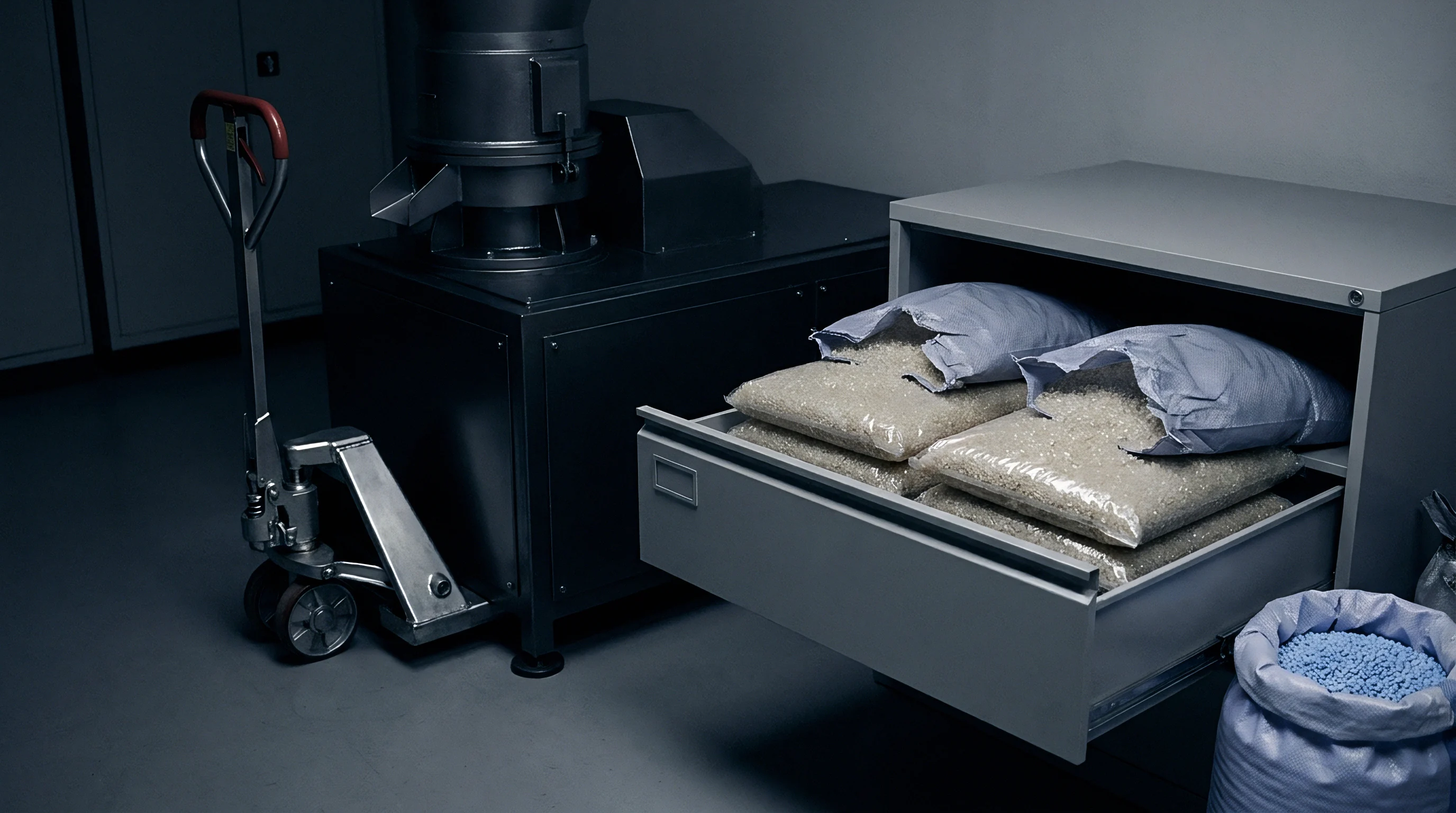
Molecular Weight Decay Kinetics in the Melt State
Thermal processing cleaves ester bonds and liberates free carboxylic acid groups, compounding ester breakdown. These acid end-groups auto-catalyze ongoing hydrolysis, rapidly multiplying the rate of chain scission. Intrinsic viscosity correlates directly with number-average molecular weight through the Mark-Houwink equation, where intrinsic viscosity equals the Mark-Houwink constant K multiplied by molecular weight raised to the power a.
For PET in a 50/50 phenol and 1,2-dichlorobenzene solvent mixture at 25 degrees Celsius, K equals 0.00021 deciliters per gram and a equals 0.82.
As residual water accelerates polymer degradation, higher processing temperatures increase reaction velocity constants dramatically, causing chain scission that quickly degrades melt strength. Consequently, an initial intrinsic viscosity of 0.80 deciliters per gram drops rapidly during melt conversion if residual moisture exceeds safe thresholds.
At 280 °C melt temperature, every 100 ppm of unextracted water reduces PET intrinsic viscosity by approximately 0.06 dL/g within four minutes of barrel residence.
Quantifying how moisture levels, residence times, and intrinsic viscosity losses interact establishes clear operating boundaries for injection molding and extrusion processes.
| Initial Moisture (ppm) | Residence Time (min) | Initial IV (dL/g) | Final IV (dL/g) | IV Retention (%) |
|---|---|---|---|---|
| 30 | 2.0 | 0.800 | 0.792 | 99.0 |
| 30 | 5.0 | 0.800 | 0.781 | 97.6 |
| 100 | 2.0 | 0.800 | 0.765 | 95.6 |
| 100 | 5.0 | 0.800 | 0.728 | 91.0 |
| 250 | 2.0 | 0.800 | 0.712 | 89.0 |
| 250 | 5.0 | 0.800 | 0.635 | 79.4 |
| 500 | 2.0 | 0.800 | 0.620 | 77.5 |
| 500 | 5.0 | 0.800 | 0.490 | 61.3 |
- Sample incoming virgin or recycled PET resin directly from sealedGaylord containers or silo sampling ports using a clean stainless steel thief probe.
- Seal resin samples immediately inside moisture-tight aluminum foil laminated bags to eliminate post-sampling atmospheric moisture absorption.
- Pre-heat high-pressure microcalorimetry cell to 180 degrees Celsius under a dry nitrogen purge flowing at 50 milliliters per minute.
- Introduce 15 milligrams of resin sample into the microcalorimetry cell and record baseline heat flow during isothermal moisture desorption.
- Integrate the resulting endothermic caloric peak to determine total sorption enthalpy and calculate precise water content prior to processing.
Whether secondary carboxylic end-group auto-catalysis dominates chain degradation at residence times below ninety seconds remains a point of debate among compounders operating high-speed twin-screw extruders.


Bench
Accurately measuring absorbed water content requires analytical methods fine-tuned for polyesters. Standard loss-on-drying instruments often lack the sensitivity required, as volatile low-molecular-weight oligomers evaporate alongside water, skewing total mass readings. Direct analytical methodologies isolate water vaporization specifically, ensuring accurate measurement prior to melt processing.

What Moisture Limit Prevents Intrinsic Viscosity Loss during Melt Processing?
Keeping residual moisture below 0.005 percent by weight preserves target mechanical properties across injection molded parts, whereas moisture levels exceeding 50 parts per million spark measurable chain scission during standard extrusion residence times. Karl Fischer coulometric titration combined with an evaporation oven operating at 160 degrees Celsius isolates water molecules without thermal polymer decomposition. Caloric adsorption testing via high-pressure microcalorimetry offers rapid thermal verification by quantifying sorption enthalpy directly against established moisture calibration curves.
While Karl Fischer titration quantifies bound water, assessing polymer chain length requires solution viscometry, where solvent choice impacts precision. Solution viscometry performed according to ISO 1628-5 utilizes dichloroacetic acid or phenol and 1,1,2,2-tetrachloroethane solvent blends to measure capillary efflux times at 25 degrees Celsius. Extrapolating relative, specific, and reduced viscosity through Huggins equation calculations yields intrinsic viscosity.
Compliance with ISO 1628-5 solution viscometry testing establishes legal proof of resin compliance when incoming lot intrinsic viscosity falls below processing limits.
Comparing analytical methodologies helps compounding laboratories select appropriate incoming inspection toolsets based on precision, cycle time, and operational cost.
| Test Method | Target Parameter | Standard Designation | Sample Size | Test Duration |
|---|---|---|---|---|
| Karl Fischer Oven Titration | Water Content (ppm) | ISO 15512 Method B / ASTM D6869 | 1.0 – 3.0 g | 10 – 15 min |
| Caloric Sorption Microcalorimetry | Enthalpy / Moisture | ISO 11357-3 Modified | 10 – 20 mg | 5 – 8 min |
| Capillary Solution Viscometry | Intrinsic Viscosity (dL/g) | ISO 1628-5 / ASTM D4603 | 0.25 g | 45 – 60 min |
| Melt Flow Rate (MFR) Indirect | Melt Mass-Flow Rate | ISO 1133 / ASTM D1238 | 5.0 g | 8 – 12 min |
| Capillary solution viscometry utilizes solvent mixture of 60/40 phenol/1,1,2,2-tetrachloroethane by weight at 30 °C per ASTM D4603. | ||||
Catching wet resin during incoming laboratory verification prevents costly tool contamination and part rejection downstream.
- Hygroscopic Re-Absorption occurs when dried resin sits in unheated hopper loaders, absorbing ambient moisture within twenty minutes of dryer discharge.
- Thermal Oligomer Volatilization distorts standard weight-loss moisture analyzers, reporting false high moisture figures due to cyclic trimer evaporation.
- Solvent Degradation Exposure degrades viscometry accuracy when phenol tetrachloroethane solvent blends absorb atmospheric water during capillary efflux testing.
- Incomplete Pellet Core Drying leaves internal moisture pockets unmeasured when low-temperature surface test sweeps fail to extract deeply bound water molecules.
Ambient humidity during pneumatic transfer is often cited as accounting for minor intrinsic viscosity drops observed in incoming inspection samples.
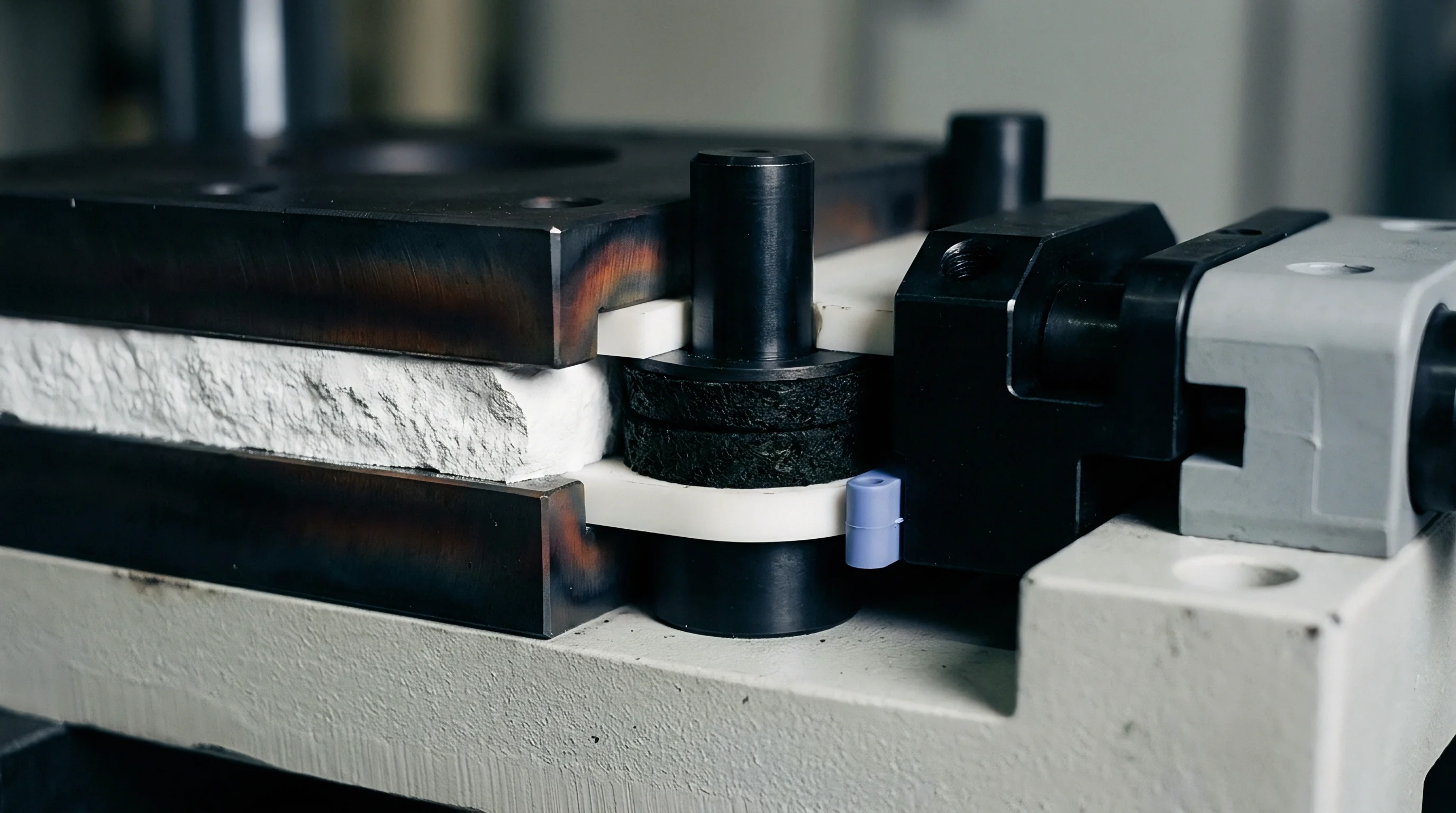

Injection
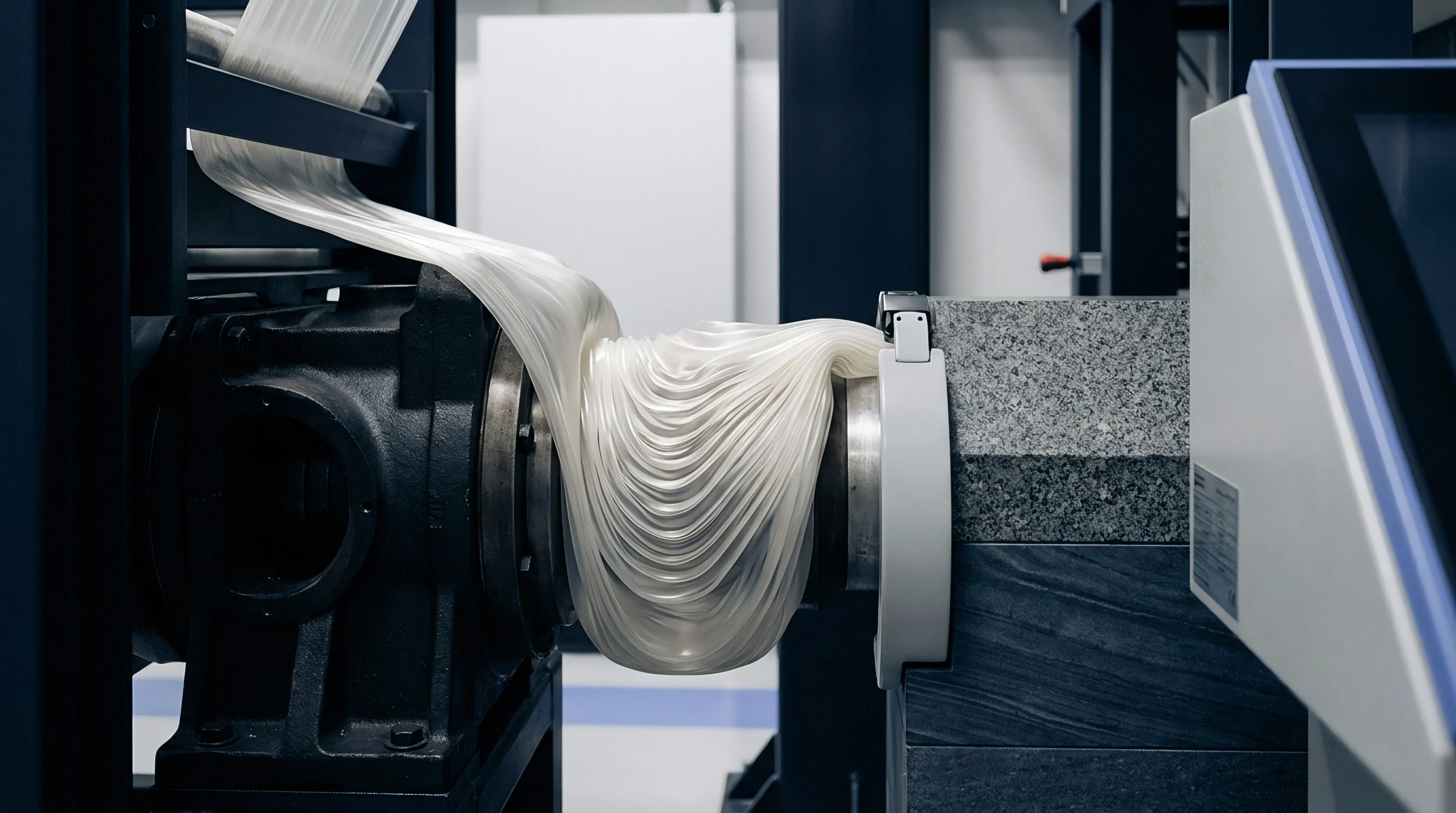
Melt processing inside plasticating units imposes simultaneous thermal and mechanical stress upon polymer chains. Plasticating screw design determines shear stress exposure, while barrel temperature zones supply thermal energy required to transition resin pellets into a homogeneous melt stream. Excessive shear heating combined with residual moisture accelerates hydrolytic scission, resulting in rapid intrinsic viscosity decay inside the barrel.
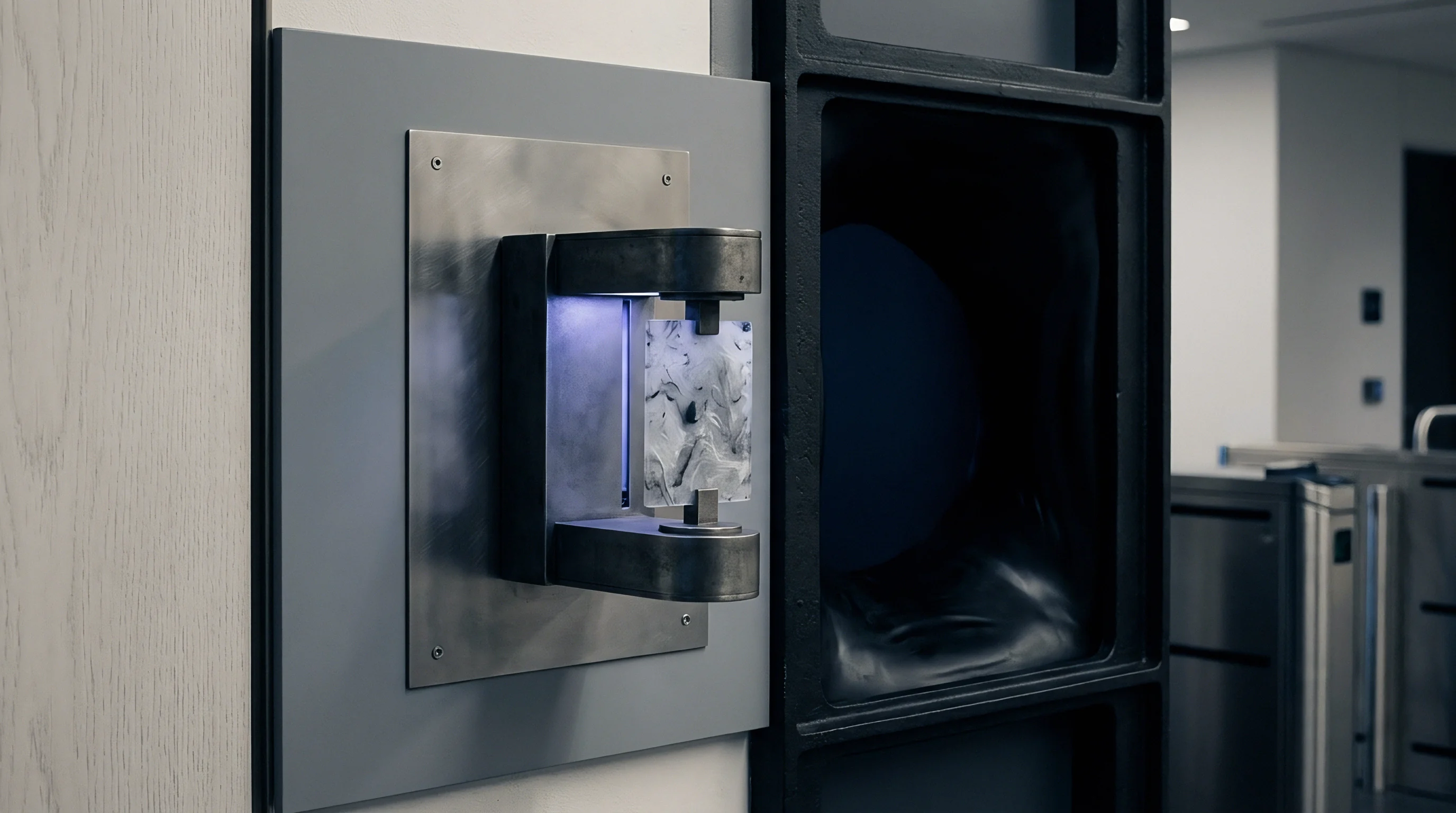
Melt Phase Shear and Thermal Degradation Dynamics
Screw rotation introduces frictional energy that elevates polymer temperature above set barrel zone parameters. High shear regions near screw flight tips create localized hot spots where thermal degradation operates in parallel with hydrolytic scission. Intrinsic viscosity retention requires balancing melt temperature, screw speed, back pressure, and residence time against residual moisture levels measured prior to hopper entry.
Because polymer chain fracture during shear heating lowers bottle top-load capacity, maintaining target intrinsic viscosity limits product scrap. Consider an injection molding line producing bottle preforms at a rate of 1,200 kilograms per hour. The plasticating barrel maintains a polymer hold-up volume of 80 kilograms, establishing an average melt residence time of 240 seconds.
The set barrel temperature profile spans 275 to 285 degrees Celsius from feed zone to nozzle.
Assume incoming virgin PET resin arrives with an initial intrinsic viscosity of 0.84 deciliters per gram. Operating with an optimized desiccant dryer achieves a residual resin moisture level of 30 parts per million prior to plasticating. Under these conditions, hydrolytic degradation reduces intrinsic viscosity by 0.02 deciliters per gram, while thermal shear breakdown contributes an additional 0.01 deciliters per gram reduction.
The resulting preform intrinsic viscosity equals 0.81 deciliters per gram, achieving 96.4 percent intrinsic viscosity retention and maintaining container top-load strength requirements.
Now consider an uncorrected dew point excursion that elevates residual resin moisture to 180 parts per million entering the feed throat. Hydrolytic reaction kinetics accelerate dramatically under identical barrel temperatures and residence times. Hydrolysis causes an intrinsic viscosity loss of 0.11 deciliters per gram, while thermal shear degradation remains at 0.01 deciliters per gram.
The final preform intrinsic viscosity drops to 0.72 deciliters per gram, representing only 85.7 percent intrinsic viscosity retention. Container top-load strength drops by 18 percent, causing structural failure during stretch blow molding operations and automated vertical stacking.
Melt pressure fluctuations inside the injection barrel signal ongoing polymer chain degradation before molded preforms cool in the tool cavity.
Processing wet resin causes severe wall thinning, while preform hazing indicates high crystallinity and low intrinsic viscosity causes container failure. Monitoring structural defect indicators allows press operators to halt production before shipping non-conforming inventory.
- Structural Preform Hazing arises when low molecular weight chains crystallize rapidly within unheated mold regions, forming light-scattering spherulites.
- Sidewall Gate Streaking indicates severe polymer chain scission causing localized melt viscosity variance during high-speed cavity injection.
- Container Stress Cracking develops along base ribs when degraded resin fails to absorb environmental stress under internal beverage carbonation pressures.
- Vertical Top Load Collapse occurs during warehouse storage when low intrinsic viscosity sidewalls yield under stacked pallet load mass.
Processing wet PET resin leads to widespread preform wall thinning, compromised burst strength in blow-molded containers, and complete loss of optical transparency across finished parts.
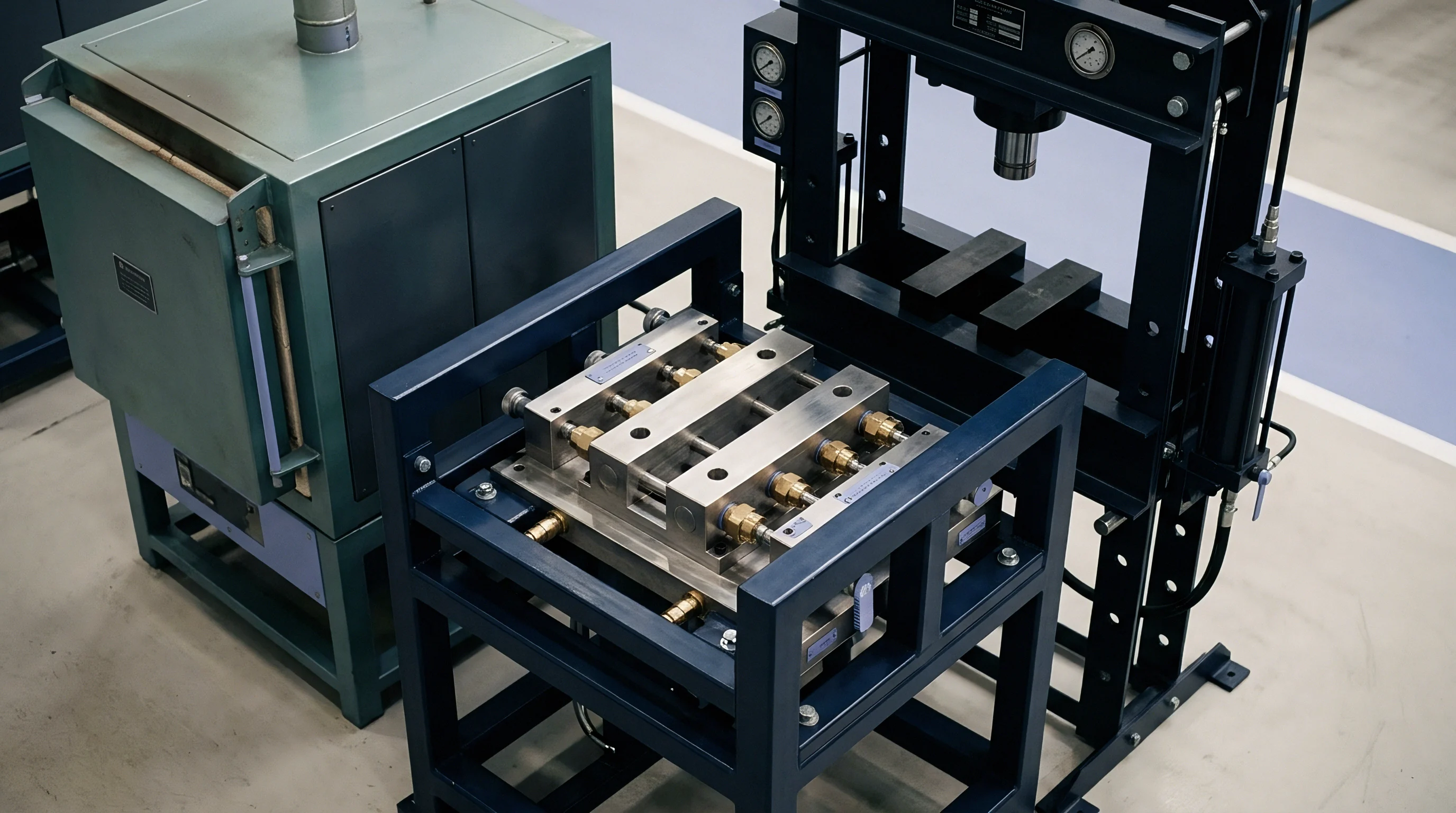
Contract
Commercial resin specifications set clear boundaries for allowable material degradation during conversion. Raw material purchase contracts establish baseline intrinsic viscosity requirements, moisture limits upon delivery, and maximum allowable intrinsic viscosity loss during processing. Commercial disputes over resin performance center on distinguishing poor drying discipline from substandard supplier material quality.
Commercial Acceptance Thresholds and Procurement Strategy
Buying virgin polyester resin demands rigorous analytical validation prior to accepting silo deliveries. Certificate of analysis documentation provided by producers states lot average intrinsic viscosity, moisture at packaging, color values, and diethylene glycol content. Incoming inspection protocols verify these parameters independently against contractual quality clauses prior to releasing material into storage silos.
Integrating recycled PET flake and pellet stock adds complexity to commercial specifications. Post-consumer recyclate streams carry variable moisture histories and higher initial carboxylic acid end-group concentrations, accelerating hydrolytic scission compared to virgin resin. Procurement contracts for recycled grades define strict intrinsic viscosity thresholds, contamination maximums, and caloric adsorption moisture profiles to guarantee processing stability.
| Processing Scenario | Residual Moisture (ppm) | Final Preform IV (dL/g) | Scrap Rate (%) | Resin Cost ($/Tonne) | Landed Cost per 10k Parts ($) |
|---|---|---|---|---|---|
| Optimized Drying Baseline | 25 | 0.815 | 0.5 | 1,450 | 437.18 |
| Minor Dryer Degradation | 80 | 0.760 | 2.8 | 1,450 | 447.28 |
| Severe Moisture Excursion | 220 | 0.695 | 14.5 | 1,450 | 498.58 |
| Uncontrolled Wet Processing | 450 | 0.580 | 42.0 | 1,450 | 620.80 |
Financial losses stemming from intrinsic viscosity degradation accrue through scrap generation, tool downtime, container field failure claims, and energy lost drying resin incorrectly. Specifying tight material acceptance boundaries protects convertors from absorbing supplier quality variance.
Incorporating ASTM D4603 test parameters directly into purchase agreements forces suppliers to absorb scrap costs when delivered resin exhibits IV loss exceeding 0.03 dL/g under specified drying conditions.