Polyester Drying Parameters and Intrinsic Viscosity Retention Limits
Polyester drying parameters demand minus forty degree dew point air to limit intrinsic viscosity drop below zero point zero four deciliters per gram.


Swell
Polycondensation resins carry ester bonds that remain thermally vulnerable whenever residual moisture exists inside the pellet matrix during extrusion or injection molding. At processing temperatures above 230 °C, moisture concentrations exceeding 0.005 percent by weight, or 50 parts per million, trigger hydrolytic chain scission within seconds. Melt cleavage happens instantly.
Each reaction breaks a polymer chain, converting a long-chain ester group back into carboxylic acid and hydroxyl end groups while dropping the average molecular weight of the polymer mass.
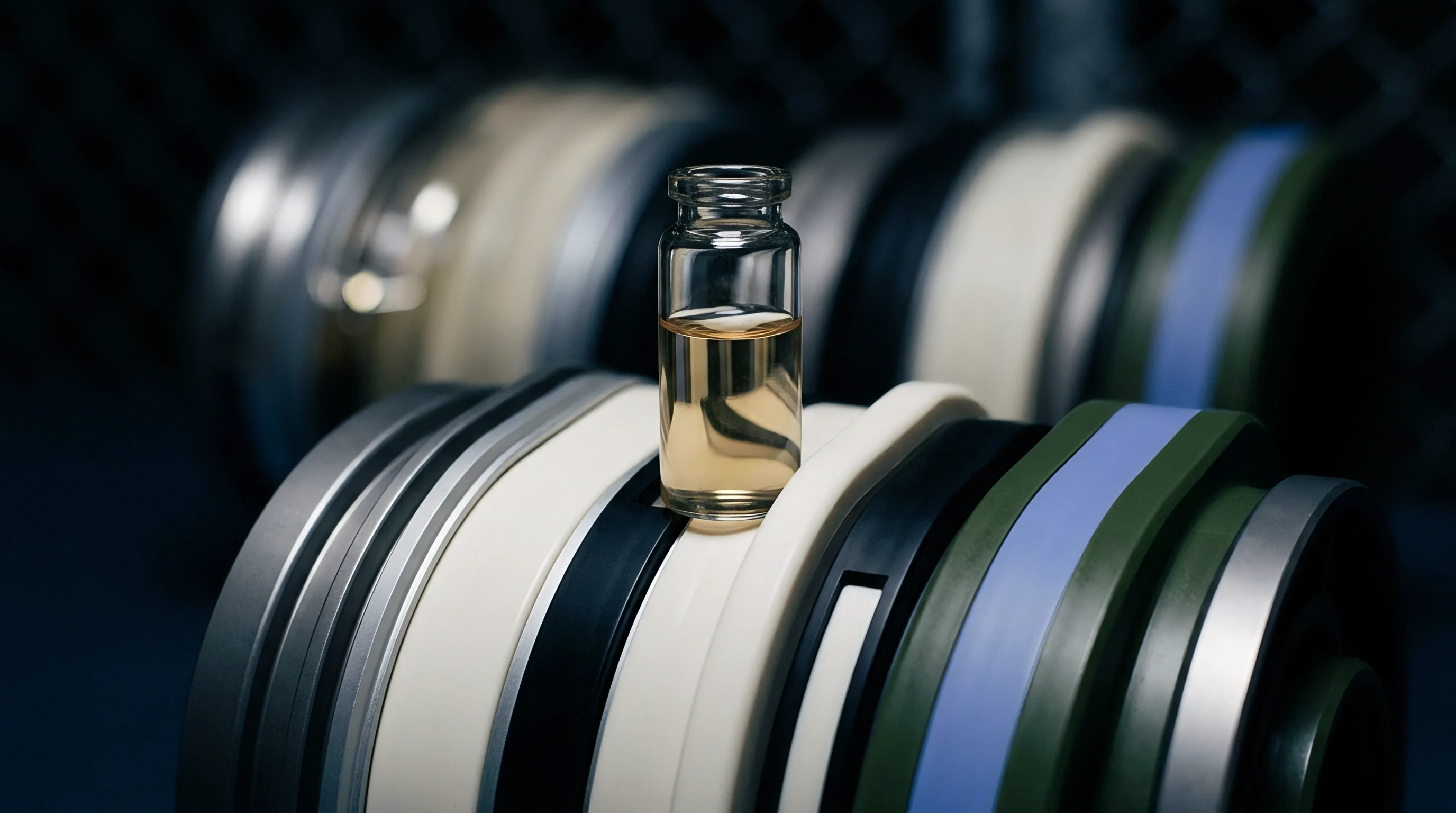
Ester Cleavage and Water Vapor Equilibrium
The rate of hydrolytic degradation correlates directly with the concentration of dissolved water molecules present in the amorphous regions of the solid pellet. Prior to heating, solid-state polyesters absorb atmospheric moisture until reaching an equilibrium state determined by relative humidity and ambient temperature. Standard virgin polyethylene terephthalate stored under humid conditions absorbs up to 0.6 percent water by weight.
Water destroys molecular weight. When this wet resin enters a heated plasticizing barrel, thermal energy rapidly converts trapped liquid into high-pressure steam, forcing rapid chemical attack on the backbone ester linkages.
The molecular weight drop caused by unremoved moisture manifests as a steep reduction in intrinsic viscosity, expressed in deciliters per gram. Intrinsic viscosity quantifies the specific polymer chain length and defines the mechanical capacity of the final molded part. A virgin resin entering the barrel at an intrinsic viscosity of 0.80 dL/g can drop to 0.62 dL/g if processed at 150 parts per million moisture content.
This chain degradation degrades impact resistance, tensile elongation, and environmental stress crack resistance long before visual surface flaws like splay or bubbles appear on the molded component.
Polyester pellet drying requires continuous residence time under dew points lower than minus forty degrees Celsius to suppress hydrolytic scission during melt processing.
Structural Consequences of Moisture-Induced Chain Scission
Hydrolytic scission alters the fundamental molecular weight distribution of the polymer matrix, narrowing the distribution curve toward lower molecular fractions. This chemical change degrades structural performance across several failure modes:
- Loss of Impact Resistance occurs as short polymer chains lose the entanglement density needed to dissipate sudden mechanical strain, leading to brittle fracture under Izod pendulum testing per ISO 180.
- Elevated Melt Flow Rates develop because shorter polymer chains slip past one another easily, creating flash at tool parting lines and unstable barrel pressure profiles during high-speed injection cycles.
- Environmental Stress Cracking accelerates when short-chain end groups concentrate at molded-in stress points, allowing external solvents, cleaning agents, or oils to initiate micro-crazing.
- Thermal Sag and Deflection worsen during post-molding processes like heat sealing, powder coating, or blow molding because lower molecular weight lowers the heat deflection temperature under load per ISO 75.
Processors who ignore moisture control parameters experience high internal scrap rates, dimensional instability across cavities, and field failures under sustained mechanical loads. Sub-standard drying practice converts specification-grade engineering resin into compromised, low-viscosity structural material within the barrel zone.

Airflow
Desiccant drying systems isolate raw resin from ambient humidity by circulating heated, ultra-dry air through a insulated drying hopper. Modern desiccant dehumidifiers route process air through molecular sieve beds to strip moisture down to a pressure dew point of minus 40 °C or lower. Dry air prevents hydrolytic attack.
The process relies on four interlocking parameters that balance thermal energy, mass transfer, and air diffusion: air dew point, process temperature, volumetric airflow rate, and residence time.

Desiccant Drying Parameters across Polyester Families
Different polyester formulations demand tailored drying regimes based on their glass transition temperature, melting point, and hydrolysis kinetics. Homopolymer polyethylene terephthalate withstands high drying temperatures without pellet clumping, whereas amorphous glycol-modified polyester softens and agglomerates if heated above its lower glass transition point. The following target parameters establish stable moisture removal across major polyester chemistries prior to processing:
| Polymer Grade | Drying Temp (°C) | Residence Time (hr) | Target Dew Point (°C) | Max Moisture (% wt) |
|---|---|---|---|---|
| 160 to 180 | 4.0 to 6.0 | -40 | 0.005 (50 ppm) | |
| 120 to 140 | 3.0 to 4.0 | -40 | 0.020 (200 ppm) | |
| 60 to 70 | 4.0 to 6.0 | -40 | 0.008 (80 ppm) | |
| 150 to 170 | 5.0 to 7.0 | -45 | 0.003 (30 ppm) |
Volumetric airflow rate governs heat supply to the hopper bed, requiring a minimum delivered air volume of 3.1 to 3.7 cubic meters per hour for every kilogram per hour of resin throughput. Wet pellets turn brittle. If volumetric airflow drops below this threshold, heat fails to penetrate the center of the hopper cone, leaving pellets damp at the outlet drop valve.
Processing standard polyethylene terephthalate at 0.005 percent moisture content retains ninety-five percent of the initial intrinsic viscosity through standard screw residence times.
Verification Sequence for Processing Hopper Loop
Establishing proper hopper operation requires direct measurement of air conditions inside the return duct and process diffuser. Processors calibrate air loops through sequential verification steps:
- Measure process air temperature directly at the hopper entry inlet nozzle using a calibrated thermocouple to verify heater band output against control setpoints.
- Install an inline chilled-mirror or capacitive sensor inside the dry air delivery line to continuously log pressure dew point values entering the hopper base.
- Record return air temperature at the top suction outlet to confirm that thermal transfer across the pellet bed maintains an outlet temperature between 80 °C and 100 °C.
- Verify differential pressure across the hopper filter assembly to identify airflow restrictions caused by fines, dust, or degraded molecular sieve media.
Drying operations that maintain stable air delivery, steady thermal profiles, and verified dew points achieve stable melt behavior without requiring barrel profile adjustments across processing shifts.


Viscometry
Intrinsic viscosity serves as the ultimate analytical metric for verifying polymer chain length and structural integrity in polyesters. Laboratory measurements record dilute solution viscosity by dissolving dried resin samples in specialized organic solvent mixtures at precise concentrations and temperatures. Solution viscosity reveals molecular length.
The efflux time of the polymer solution through a capillary viscometer compares against the efflux time of pure solvent, yielding relative, specific, reduced, and intrinsic viscosity figures.
What Solvent System Yields Accurate Intrinsic Viscosity Values?
Phenol and 1,2-dichlorobenzene mixed in a 60/40 weight ratio provides standard solubility for general polyethylene terephthalate grades tested under ASTM D4603. Phenol and 1,1,2,2-tetrachloroethane in a 50/50 ratio remains widespread across European laboratories under ISO 1628-5, though environmental toxicity has accelerated transitions toward dichloroacetic acid or capillary rheology alternatives. Capillary viscometers, such as Ubbelohde Type 1C units, require temperature control inside a water bath regulated to within plus or minus 0.01 °C at 25 °C or 30 °C. Slight thermal fluctuations inside the bath alter solvent flow rates, invalidating baseline calibration curves.
Melt flow rate testing under ISO 1133 or ASTM D1238 provides a quicker quality check on the factory floor, using test loads of 2.16 kg or 5.0 kg at 270 °C to 280 °C. Melt flow rate inversely tracks intrinsic viscosity. However, melt flow rate tests expose the polymer sample to thermal stress during the required pre-heat dwell time, which hydrolyzes slightly damp resin inside the test barrel and artificially inflates the measured flow rate. Dew point monitoring protects resin.
Solvent viscometry remains the definitive referee method for resolve commercial disputes over degraded shipments.
Supply contracts for engineering-grade PET state that incoming virgin resin must demonstrate an intrinsic viscosity loss of less than 0.03 dL/g following process validation trials.

Retention Limits and Melt Processing Degradation
Intrinsic viscosity retention represents the ratio of part intrinsic viscosity to incoming pellet intrinsic viscosity, expressed as a percentage. Degradation lowers intrinsic viscosity values. Well-controlled injection molding operations target an intrinsic viscosity retention limit of 92 to 97 percent.
Extrusion blow molding processes demand higher retention limits due to parison melt strength requirements during drop cycles.
| Resin Application | Virgin IV (dL/g) | Part Target IV (dL/g) | Max Permissible Drop | Primary Mechanical Risk |
|---|---|---|---|---|
| 0.82 to 0.85 | 0.78 to 0.81 | 0.04 dL/g | Creep deformation under pressure | |
| 0.95 to 1.05 | 0.90 to 0.99 | 0.06 dL/g | Tensile yield failure under tension | |
| 0.70 to 0.75 | 0.66 to 0.72 | 0.04 dL/g | Hinged latch fracture during assembly | |
| 0.72 to 0.80 | 0.65 to 0.74 | 0.07 dL/g | Flange embrittlement during die cutting |
Commercial purchase specifications incorporate explicit intrinsic viscosity retention limits to bind compounders and converters. Under standard supply agreement clauses, any production lot exhibiting an intrinsic viscosity drop greater than 0.08 dL/g relative to incoming certificates of analysis permits immediate rejection of the delivered goods at the supplier expense.

Desiccant
Dehumidifying dryer efficiency rests on synthetic zeolite molecular sieves, typically Type 4A or Type 13X, engineered with uniform crystal pore sizes of four or ten angstroms. These synthetic aluminosilicate structures capture tiny water molecules while ignoring larger hydrocarbon chains. Heat accelerates ester cleavage.
Over repeated regeneration cycles reaching 250 °C to 300 °C, sieve beds degrade thermally, losing structural surface area and water adsorption capacity.

Molecular Sieve Atrophy and VOC Contamination
Volatile organic compounds released from additives, lubricants, or residual monomers contaminate desiccant beds during return air circulation. Flame retardants in PBT compounds and glycol residues from rPET flakes deposit organic films over zeolite pores, blinding the active surfaces. Sieve beds lose absorption capacity.
Blinded sieves lose the ability to capture water molecules, causing the process air dew point to climb from minus 45 °C toward minus 10 °C during standard drying shifts.
- Thermal Sintering collapses internal crystal micropores when regeneration heaters overshoot target temperature limits, permanently reducing adsorption capacity.
- Dust Accumulation from abraded resin pellets coats desiccant beads, creating high pressure drops across the canister and blinding active adsorption sites.
- Oil Contamination from leaking blower seals coats molecular sieves, blocking moisture access and triggering rapid dew point spikes during drying runs.
- Chemical Poisoning by halogenated additives or acidic degradation byproducts breaks down the binder holding molecular sieve beads together, generating loose powder.
Dust blocks internal airflow paths. Regular monitoring of drying air dew points downstream of the desiccant bed alerts operators to sieve breakdown before degraded resin enters processing equipment.

Airflow Short-Circuiting and Hopper Geometry
Proper mechanical design of the drying hopper ensures even air distribution and uniform resin residence time. Symmetrical mass flow requires a minimum cone angle of 60 degrees at the hopper base. In properly sized hoppers, pellets move downward as a uniform plug, exposing every pellet to rising dry air for the full duration of the specified drying time.
When funnel flow occurs, pellets in the central core move rapidly while material along the outer walls remains stagnant. This funneling allows newly loaded wet pellets at the top center to drop into the discharge throat within two hours, bypassing the required four-hour residence time. Equipment manufacturers frequently claim that elevated drying temperatures offset reduced residence times, but higher thermal inputs cannot accelerate internal moisture diffusion through crystalline polymer matrix structures beyond fixed physical limits.


Discount
Material degradation directly impacts processing economics through elevated scrap rates, longer machine cycle times, and reduced asset utilization. Scrap eats melt margin quickly. Degrading a 0.80 dL/g virgin PET lot down to 0.65 dL/g due to high moisture levels destroys physical properties, rendering parts useless for load-bearing or pressure-containing duties.
Converting degraded parts back into regrind fails to restore initial value because thermal histories accumulate, worsening degradation upon remelting.

Financial Exposure Matrix for Thermal and Hydrolytic Degradation
Processing degraded resin results in compounding financial losses across material scrap, wasted machine time, re-sorting labor, and product liability claims. Resin quality governs part strength. The following matrix illustrates financial exposure calculated for a ten-tonne processing run of standard engineering polyester:
| Degradation Level | IV Drop Range | Equivalent Mn Loss | Defect Rate Range | Scrap Cost (USD / 10t) |
|---|---|---|---|---|
| 0.01 to 0.03 dL/g | Under 5 percent | Under 0.5 percent | $150 to $300 | |
| 0.04 to 0.07 dL/g | 6 to 12 percent | 2.0 to 5.0 percent | $1,200 to $3,000 | |
| 0.08 to 0.12 dL/g | 13 to 22 percent | 12.0 to 25.0 percent | $7,200 to $15,000 | |
| Above 0.12 dL/g | Above 23 percent | Above 50.0 percent | Above $30,000 |
Operating a facility with uncalibrated dryers introduces persistent quality variation. Scrapping five percent of daily throughput on a 500-tonne annual resin budget wastes substantial capital while exposing the company to warranty claims and customer chargebacks.
Continuous dew point recording provides verifiable evidence of resin preparation history during customer quality audits.

Commercial Risk Management and Technical Specifications
Procurement specifications must link resin purchasing terms to physical drying validation metrics. Purchase contracts ought to define acceptable moisture levels at hopper delivery, clear intrinsic viscosity drop limits across barrels, and mandatory calibration schedules for dry-air equipment. Procurement teams that mandate dew point logging create an auditable trail that insulates production schedules against hidden material defects.
How much capital investment in advanced desiccant monitoring equipment is justified to prevent latent micro-cracking defects in automotive electrical connectors that only manifest after eighteen months in the field?