Calculating Injection Molding Machine Downtime Cost from Moisture Defects
Unplanned moisture downtime costs combine press burden, purge compound, cavity cleaning, and scrapped resin into losses exceeding base machine rates fivefold.
Burden
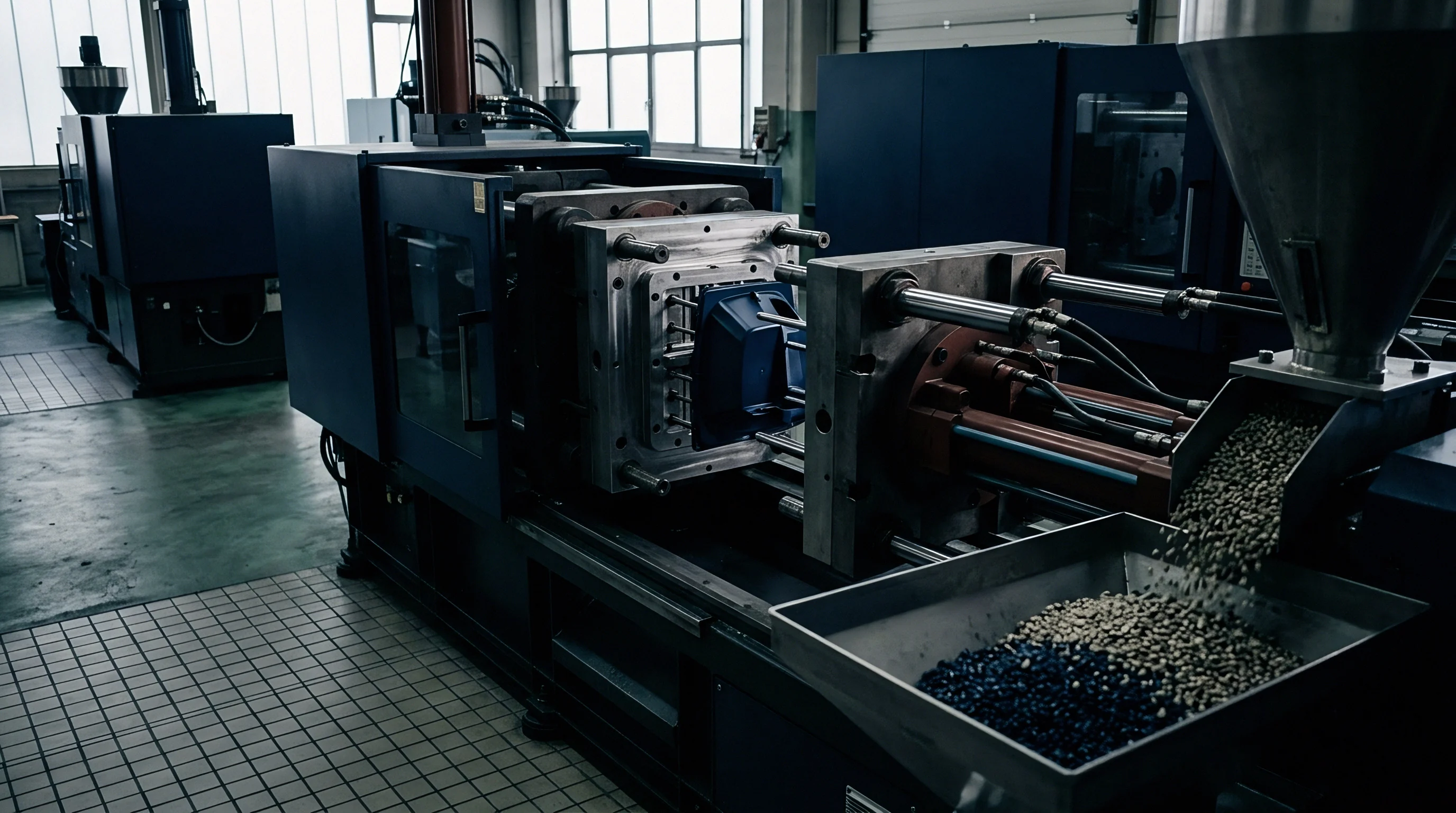
Calculating press downtime begins with the fully absorbed shop rate assigned to an injection molding workcell. Machine hour rates represent capital depreciation, facility floor footprint, utilities, and preventive maintenance reserves. When moisture defects like splay, voids, or nozzle drool interrupt production, this fixed machine burden ticks continuously without yielding sellable parts.
Tonnage dictates basic press burden. Small hydraulic and electric presses below 150 tonnes clamp force operate at lower depreciation charges, while 1000-tonne presses carry massive hourly asset costs that amplify every lost minute.
Direct Financial Exposure across Machine Classes
Press tonnage sets baseline running rates. Plant controllers calculate cell rates by combining machine depreciation, required technical staff, and auxiliary equipment power consumption. Auxiliary chillers, mold temperature controllers, and desiccant dryers consume steady electrical power regardless of whether the clamp is cycling or idling in fault mode.
| Machine Clamp Rating | Base Press Burden | Direct Labor Allocation | Auxiliary Energy Load | Total Hourly Downtime Rate |
|---|---|---|---|---|
| 100 Tonnes Electric | $32.50 per hour | $22.00 per hour | $4.50 per hour | $59.00 per hour |
| 300 Tonnes Hydraulic | $54.00 per hour | $25.00 per hour | $11.20 per hour | $90.20 per hour |
| 500 Tonnes Hydraulic | $82.00 per hour | $28.00 per hour | $16.50 per hour | $126.50 per hour |
| 1000 Tonnes Hydraulic | $145.00 per hour | $32.00 per hour | $28.00 per hour | $205.00 per hour |
Direct labor costs compound the asset charge. A standard molding line assigns a fractional process technician, an operator or tender, and quality assurance inspection staff. During an unscheduled moisture event, technical personnel redirect their attention away from planned startups to troubleshoot the active cell.
Unscheduled press idle charges escalate faster during multi-cavity runs than single-cavity cycles.
Primary Cost Components of Moisture Interruptions
Plant accounting ledgers separate downtime into equipment depreciation, assigned staff, discarded material, and mold tooling maintenance. Water vapor trapped in the melt causes cosmetic silver streaking, internal structural bubbles, and localized flash that trigger immediate part rejections.
- Unabsorbed Machine Burden accumulates every second the clamp remains stationary while operators purge the barrel.
- Direct Technical Labor diverts processing engineers, set-up technicians, and inspection personnel toward active troubleshooting.
- Scrapped Production Volume discards molded components produced between the onset of splay and press shutdown.
- Purge Compound Consumption consumes expensive engineered purging agents needed to scrub charred residue from the screw.
Unplanned stops destroy shift margins. Calculating the real hourly exposure provides the commercial baseline needed to justify strict upstream resin handling and moisture verification procedures. When molders ignore these composite rates, moisture-induced outages silently erode manufacturing profitability until entire contracts become loss-making ventures.
Hydrolysis
Water molecules present within hygroscopic resin pellets attack molten polymer chains at elevated barrel temperatures. Polymers containing ester, amide, or carbonate linkages undergo hydrolytic degradation in the melt. Water cleaves the ester backbone.
This chemical cleavage breaks covalent bonds within the polymer backbone, reducing the mean molecular weight of the material in seconds.
Which Melt Indicators Signal Moisture Induced Degradation?
Rheological shifts reveal thermal breakdown through drastic changes in plastic flow rates. Hydrolysis cuts polymer chain length. Shorter polymer chains slide past each other with reduced mechanical resistance, causing the melt flow rate to spike upward dramatically compared to virgin technical specifications.
| Resin Family and Grade | Moisture Limit | Test Condition | Nominal Melt Flow | Degraded Melt Flow |
|---|---|---|---|---|
| Polyamide 66 Unfilled | 0.15 weight percent | 275 °C at 5.00 kg | 22.0 g per 10 min | 58.0 g per 10 min |
| Polybutylene Terephthalate | 0.02 weight percent | 250 °C at 2.16 kg | 15.0 g per 10 min | 42.0 g per 10 min |
| Polyethylene Terephthalate | 0.005 weight percent | 280 °C at 2.16 kg | 11.0 g per 10 min | 39.0 g per 10 min |
| Polycarbonate Optical Grade | 0.02 weight percent | 300 °C at 1.20 kg | 10.0 g per 10 min | 26.0 g per 10 min |
| Polyphenylene Sulfide 40GF | 0.03 weight percent | 315 °C at 5.00 kg | 28.0 g per 10 min | 64.0 g per 10 min |
Melt flow jumps confirm severe polymer breakdown. When polybutylene terephthalate enters the barrel at 0.08 percent moisture instead of its 0.02 percent limit, melt viscosity collapses by more than half under ISO 1133 test parameters. Lower molecular weight drives drool.
Drool drips out of the nozzle orifice, fouling the sprue bushing and creating cold slugs that jam subsequent injection strokes.
Polybutylene terephthalate dried above 0.02 weight percent moisture exhibits an intrinsic viscosity loss exceeding 35 percent at 250 degrees Celsius barrel temperatures.
Molecular Weight Collapse and Viscosity Decay
Chain cleavage reduces the physical length of thermoplastic polymer backbones during plasticization. In polyamides and polyesters, this molecular decay lowers the end-use tensile strength, elongation at break, and notched Izod impact resistance of the molded component. The part may show visual silver streaks, known as moisture splay, or it may appear visually acceptable while harboring latent mechanical embrittlement.
Wet melt flashes past vents. The sudden drop in melt viscosity causes the plastic to penetrate parting lines and ejector pin clearances as narrow as 0.01 millimeters. The resulting flash requires line shutdowns to scrape tooling faces and clear jammed slide mechanisms.
Splay on cosmetic surfaces forces immediate press shutdowns, as parts fail optical acceptance standards.
Material suppliers frequently claim that cosmetic surface splay reflects minor tool condensation rather than molecular degradation within the delivered resin.
Screw
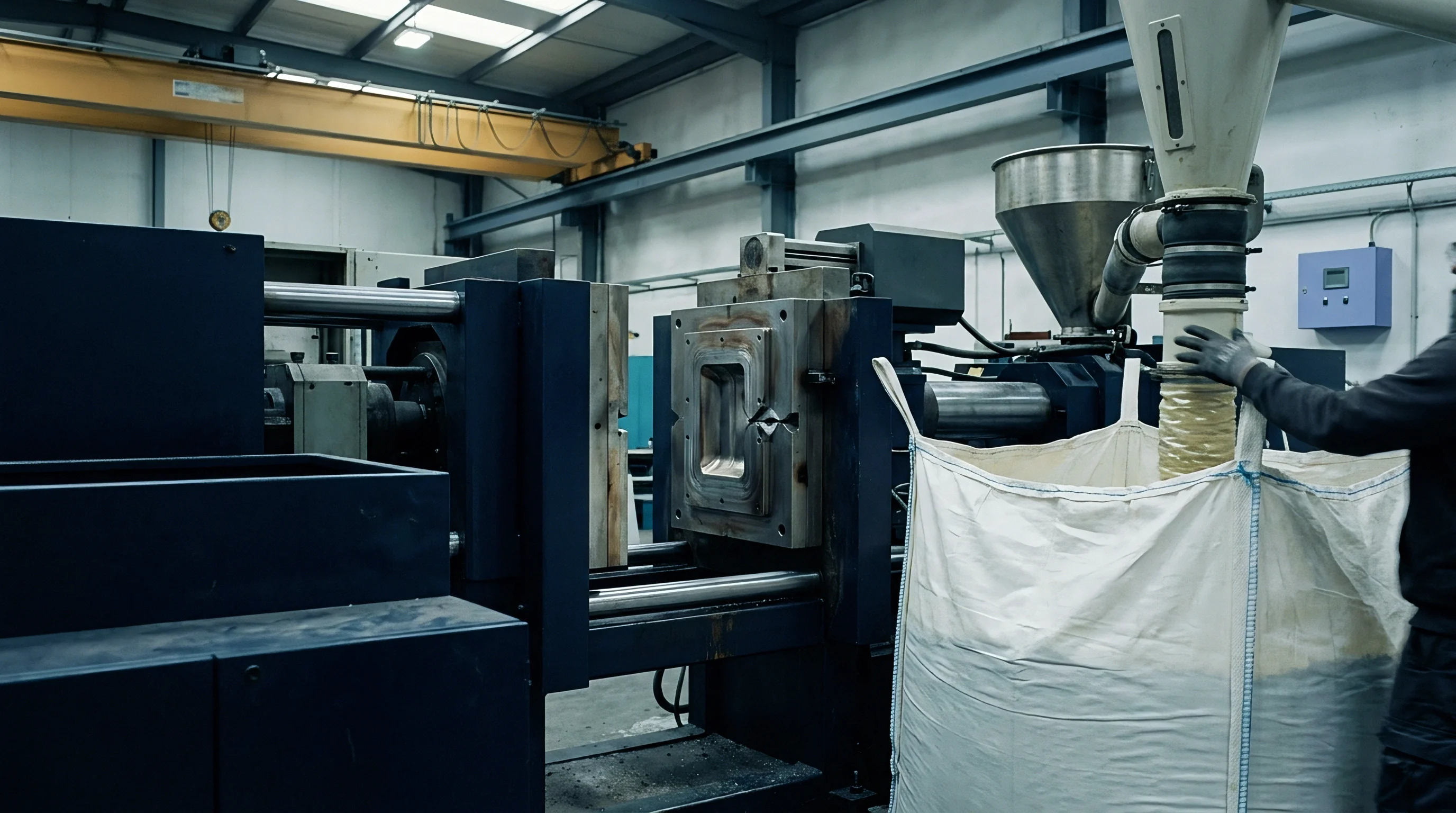
Clearing a plasticizing barrel after moisture contamination stalls manufacturing operations. Operators must purge the degraded, watery polymer out of the barrel to halt corrosive gas generation and restore stable melt cushion control. Purging clears the degraded charge.
If degraded material remains stationary at 280 degrees Celsius, it chars against the barrel wall, creating black specks that contaminate future production runs.
Where Do Latent Purge Stoppages Compound Losses?
Operators facing severe splay often introduce specialized acrylic compounds to scour degraded material from cylinder walls. Purge compounds cost between $6.00 and $18.00 per kilogram, substantially higher than virgin engineering base resins. Clearing a 500-tonne press with a large shot capacity consumes 15 to 30 kilograms of purge resin before the discharge runs clear.
Silver streaks reveal trapped steam. When moisture-laden resin remains in the feed zone, water flashes into vapor, eroding screw flights and corroding check rings. Acidic hydrolysis byproducts, such as acetic or brominated compounds in flame-retardant polymers, pit the high-chrome tool steels inside mold cavities.
Corrective Action Sequence for Splay Events
Technicians follow strict execution stages when vapor defects halt part acceptance. The entire workcell remains unproductive throughout this physical remediation process.
- Immediate Press De-energization halts automatic cycle execution to prevent packing degraded resin into cooled cavities.
- Hopper Gate Isolation shuts off the incoming flow of suspect wet material from the gravimetric blender or dryer feed line.
- Barrel Purge Evacuation displaces hydrolyzed resin using an appropriate high-viscosity purging polymer under low screw speed.
- Mold Surface Degreasing wipes acidic deposition, plate-out, and condensed volatiles from parting lines and cavity vacuum vents.
- Dryer Regeneration Check verifies heating elements, desiccant wheel rotation, and airflow dew points before re-introducing material.
Moisture vaporizes into volatile steam. Vent slots clog with degraded low-molecular-weight waxes, requiring mold maintenance personnel to dismantle ejector plates and ultrasonic-clean contaminated inserts. Every hour spent pulling a screw or scrubbing parting surfaces delays production schedules and inflates maintenance department expenditure.
Purging a contaminated barrel before adjusting dryer airflow wastes expensive compound without resolving the root failure.
Desiccant
Dehumidifying dryer beds supply air below minus forty degrees Celsius to strip moisture from incoming pellets. Non-hygroscopic resins like polypropylene and polyethylene carry surface moisture that evaporates readily under basic hot air. Hygroscopic engineering grades, including polyamides, polyesters, and polycarbonates, chemically bind ambient moisture within their amorphous polymer regions.

Dew Point Monitoring and Airflow Integrity
Continuous inline sensors detect saturated molecular sieves before wet pellets enter the machine hopper. Cold pellets draw ambient humidity. When desiccant beds fail to regenerate, humid return air re-deposits moisture directly into the drying hopper cone, reversing hours of conditioning.
Dew points drift without warnings. Standard molecular sieve beads lose adsorption capacity through oil contamination and repeated thermal cycling over eighteen to twenty-four months. A drying hopper operating at minus ten degrees Celsius dew point instead of the required minus forty degrees Celsius dew point leaves significant moisture inside the pellet interior.
Compliance with ISO 15512 Method B2 prevents moisture titration drift by vaporizing residual water into an electrolytic cell at 220 degrees Celsius.

Moisture Verification and Laboratory Standards
Incoming quality teams measure residual water content using loss-on-drying balances or coulometric Karl Fischer titration. Accurate moisture accounting demands strict adherence to laboratory testing standards before releasing a resin lot to the molding floor.
- Karl Fischer Coulometry under ISO 15512 Method B2 determines exact water ppm by heating pellets and titrating vaporized moisture.
- Loss On Drying Analyzers under ASTM D6980 heat sample pans to measure mass reduction, requiring calibration against volatile additive loss.
- Dew Point Meter Verification under ASTM D7191 monitors drying hopper process air to verify minus forty degrees Celsius performance.
- Hopper Residence Tracking calculates mass throughput to confirm pellets undergo the required three to four hours of drying time.
Desiccant beds exhaust over time. A common floor error involves pulling pellets from a newly refilled drying hopper before the core temperature reaches equilibrium. Cold pellets delivered to the machine throat condense moisture on their surfaces, initiating immediate barrel drool and parts rejection.
Can plant floor moisture balances distinguish true water vaporization from the evaporation of volatile processing waxes in heavily lubricated engineering grades?

Recovery
Financial models quantify the total expense of moisture incidents by synthesizing press depreciation, scrap generation, and delayed lot fulfillment. Unplanned stoppages generate compounding losses that exceed the straightforward machine hour rate. The true cost includes degraded resin, specialized purge compound, quality sorting labor, and unrecoverable cavity downtime.
Worked Downtime Calculation for Technical Resins
Evaluating a four-hour stoppage on a 500-tonne molding press demonstrates the commercial scale of under-dried polybutylene terephthalate. Assume a 500-tonne press running a 30 percent glass-filled polybutylene terephthalate (PBT-GF30) electrical connector on an 8-cavity mold with a 24-second cycle time. The part weight is 45 grams per shot (including cold runner), and the virgin material costs $4.20 per kilogram.
The press stops due to severe moisture splay and nozzle freeze-up after three hours of undetected defective production. Remediation consumes four full hours of machine downtime: one hour of diagnosis and purging, two hours waiting for material re-drying, and one hour of mold cavity cleaning and process re-stabilization.
| Cost Ledger Category | Quantity or Duration | Unit Cost Basis | Total Financial Impact |
|---|---|---|---|
| Unabsorbed Press Burden | 4.0 hours downtime | $126.50 per press hour | $506.00 |
| Direct Process Technician | 4.0 hours active labor | $45.00 per hour | $180.00 |
| Purge Compound Consumed | 20.0 kg commercial purge | $11.50 per kg | $230.00 |
| Scrapped Defective Parts | 450 shots (3,600 parts) | $0.42 per part | $1,512.00 |
| Toolmaker Cavity Cleaning | 1.5 hours toolroom labor | $65.00 per hour | $97.50 |
| Quality Sorting and Containment | 6.0 inspection hours | $24.00 per hour | $144.00 |
| Resin Re-Drying Energy Load | 180 kg batch load | $0.18 per kg energy | $32.40 |
| Total Outage Financial Loss | Seven consolidated cost categories | $2,701.90 | |
A four-hour moisture defect costs $2,701.90 on this single cell. The direct machine burden of $506.00 represents less than twenty percent of the overall financial loss. Discarded parts and commercial purge consumption dominate the final ledger, proving that machine hour rate calculations grossly underestimate true downtime expenses.
Scrapped technical parts compounded with glass fibers forfeit full regrind value through irreversible fiber length attrition during granulation.
Scrap Allocation and Regrind Devaluation
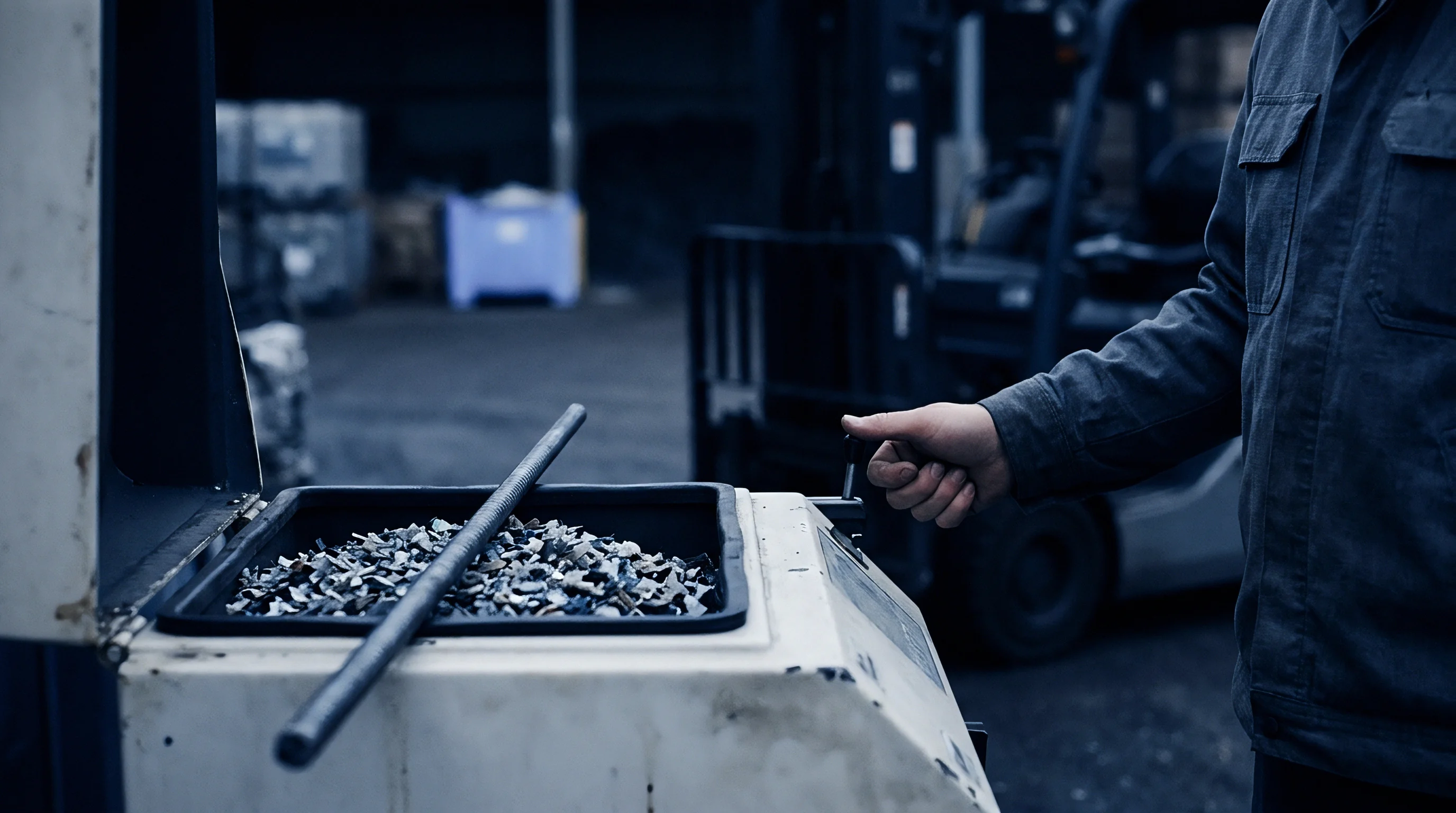
Degraded engineering polymers forfeit significant value when chopped into secondary feedstocks. Hydrolyzed polybutylene terephthalate or polycarbonate cannot return to technical production without catastrophic drop-impact failures. Glass fibers break during granulation.
Regrinding reinforced materials shears fiber bundles, dropping mean length below critical reinforcement thresholds and slashing resin value from $4.20 per kilogram to less than $0.80 per kilogram on the secondary spot market.
Regrind alters baseline viscosity values. Blending hydrolyzed regrind back into virgin feedstocks introduces unpredictable viscosity swings that destabilize process capability metrics across subsequent shifts. Production managers seeking to recoup scrap losses by secretly feeding wet, degraded regrind trigger secondary splay cycles, doubling their total downtime expense.
Commercial purchase contracts stipulate that material degradation originating from improper drying voids all resin supplier warranty protections under standard ISO 9001 incoming defect claim terms.