Automated Mass Spectral Deconvolution for Recycled Polyolefin Odor Characterization
Automated mass spectral deconvolution resolves co-eluting trace odorants beneath polyolefin hydrocarbon backgrounds to quantify real olfactory risk in recycled resins.
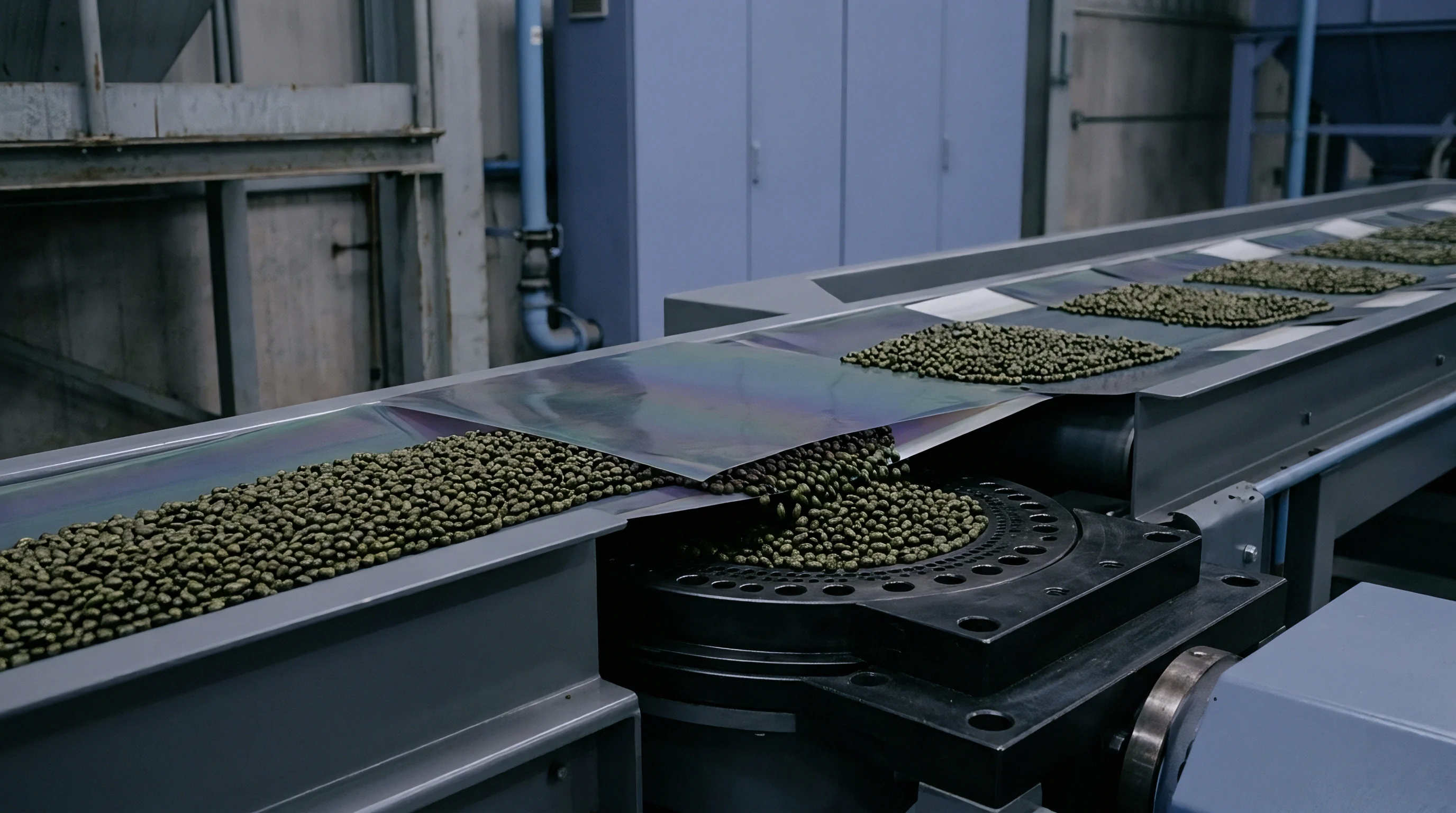

Vapor
Post-consumer polyolefin streams carry complex mixtures of volatile organic compounds left over from packaging contents, thermal degradation during processing, and environmental sorption. Standard gas chromatography coupled with single-quadrupole mass spectrometry frequently fails to resolve these odorants in recycled high-density polyethylene or polypropylene pellet lots. Total ion chromatograms from recycled resins show severe baseline elevation and co-eluting peaks, where low-concentration scent compounds with low sensory thresholds sit directly beneath massive aliphatic hydrocarbon background signals.
Deodorization units in recycling plants target specific chemical families, yet sensory rejection still occurs when aggregate volatile organic content drops below fifty parts per million. The human nose detects certain sulfur species, pyrazines, and unsaturated aldehydes at concentrations below parts per trillion. Standard integration routines simply assign the total peak area of a co-eluting band to the dominant alkane, hiding the trace odorant underneath.
| Chemical Compound | Chemical Structure Class | Odor Descriptor | Odor Threshold in Air (µg/m³) | Quantification Mass Ion (m/z) |
|---|---|---|---|---|
| Limonene | Terpene | Citrus, orange peel | 38.00 | 68 |
| Octenal | Unsaturated aldehyde | Fatty, green, stale | 1.50 | 70 |
| Butyric acid | Carboxylic acid | Sour, rancid butter | 9.00 | 60 |
| 2-Ethyl-3,5-dimethylpyrazine | Alkylpyrazine | Roasting, earthy, nutty | 0.01 | 136 |
| Geosmin | Bicyclic alcohol | Musty, wet soil | 0.005 | 112 |
| Dimethyl disulfide | Organosulfur | Cabbage, decaying matter | 1.20 | 94 |
Extrusion breaks down polyolefins into homologous series of n-alkanes, 1-alkenes, and aldehydes through free-radical chain scission and secondary oxidation. Thermo-mechanical stress at 230 °C during polypropylene compounding splits tertiary carbon centers, generating volatile oligomers that swamp mass detector signals. When post-consumer packaging carries residual fragrances from detergents or personal care items, terpene oxidation products like linalool, alpha-terpineol, and carvone tangle with these resin degradation products.
Single-quadrupole mass detectors operating in full-scan mode miss sulfur-bearing odorants present at 0.05 parts per million when co-eluting under alkane background concentrations of 12 parts per million.
Conventional peak integration relies on clear baseline separation, needing a valley between peaks that drops to at least ten percent of the peak maximum. Runs of post-consumer polyolefins routinely produce clusters where six to ten distinct volatile species elute within a four-second window. Splitting these peaks manually introduces integration errors exceeding three hundred percent for the minor component.
Automated mass spectral deconvolution handles these overlapping signals by tracking characteristic fragment ions across the scan timeline, reconstructing individual spectra without physical chromatographic separation.
Off-odor complaints may originate in customer storage conditions or downstream molding temperatures rather than residual volatile contamination within the delivered resin lot.
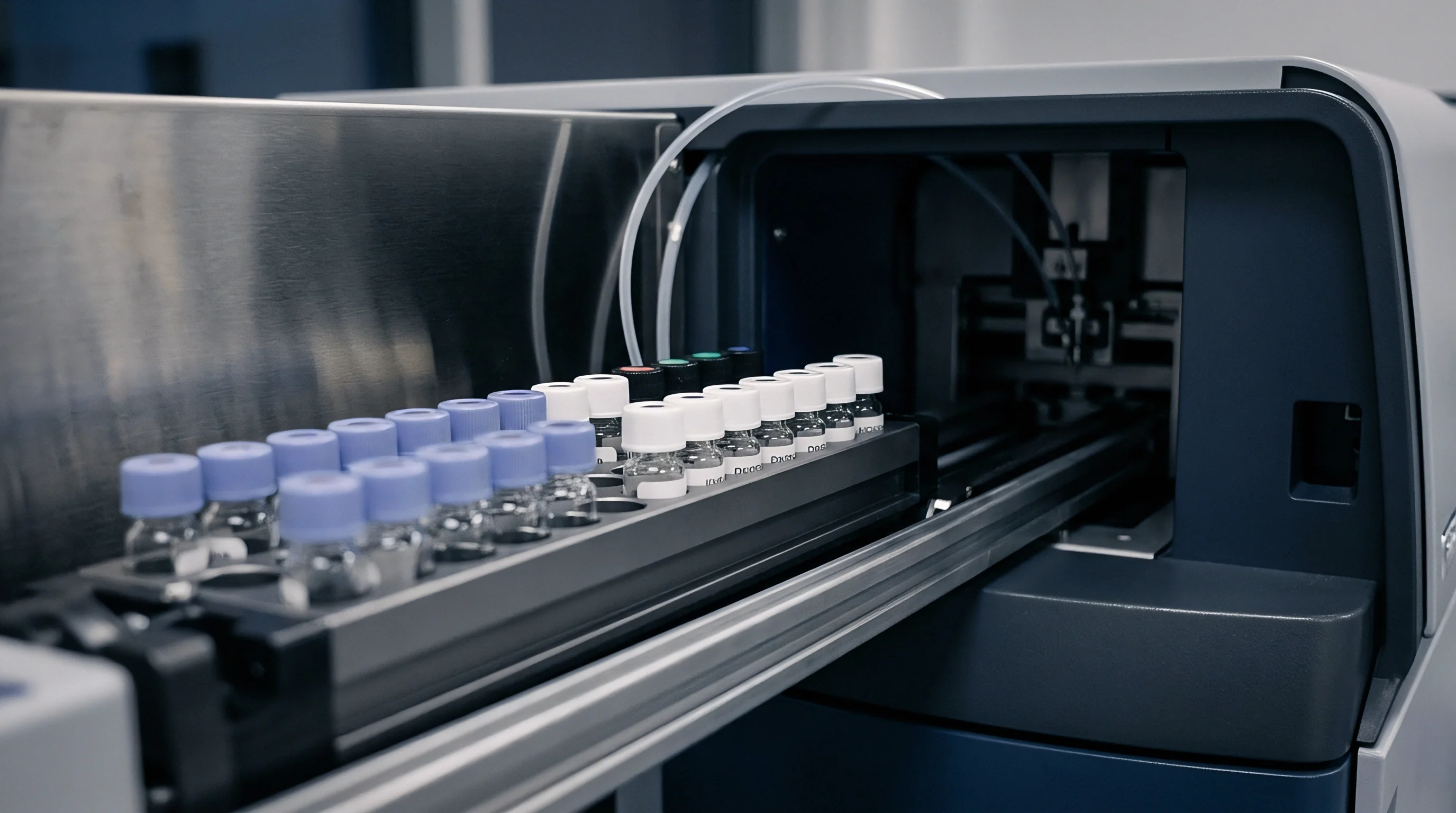
Desorption
Sample preparation dictates the fidelity of volatile extraction before gas chromatography-mass spectrometry. Direct thermal extraction inside a glass sampling tube releases volatile organic compounds straight from solid polyolefin pellets, skipping solvent extraction steps that introduce impurities or lose volatile species during concentration. Holding the sample matrix at 120 °C for twenty minutes mobilizes volatile species with boiling points up to 250 °C while keeping the polymer below its melt transition point to avoid degradation during sampling.
Static headspace sampling requires equilibrating five grams of ground polyolefin pellets in a twenty-milliliter vial at 80 °C for sixty minutes. Solid-phase microextraction boosts sensitivity by inserting a coated fused-silica fiber into the headspace above the heated resin. Triple-phase fiber coatings of divinylbenzene, carboxen, and polydimethylsiloxane cover a broad polarity range, trapping non-polar terpenes alongside polar carboxylic acids and mid-polarity aldehydes.
- Gas Phase Extraction Temperature ~ Heating polyolefin samples above 150 °C initiates thermal auto-oxidation in un-stabilized recycled resin, adding artificial aldehyde artifact peaks to the analytical dossier.
- Equilibration Time Window ~ Fiber exposure times under thirty minutes during solid-phase microextraction fail to reach thermodynamic partition equilibrium for high-molecular-weight odorants like geosmin, underreporting concentration by up to seventy percent.
- Pellet Particle Size Standardization ~ Cryogenic grinding of post-consumer pellets to a uniform 1.0 millimeter mesh size eliminates diffusion-rate variances between thick-walled container regrind and thin film flakes.
- Fiber Coating Degradation ~ Repeated extraction of acidic volatiles strips the carboxen layer after eighty injections, causing quantitative sensitivity drift above fifteen percent across consecutive runs.
Desorption tube kinetics depend directly on carrier gas flow rates and heating ramp speed. Rapid thermal desorption at 300 °C with a helium purge rate of 50 milliliters per minute transfers the volatile extract into a trap cooled to -30 °C. Flash-heating this trap at 60 °C per second injects a narrow band onto the capillary column. Tight injection bands compress initial peak widths down to 1.2 seconds, supplying the high sampling rates needed for deconvolution algorithms.
| Preparation Protocol | Equilibration Temperature (°C) | Sample Size (g) | Target Boiling Range (°C) | Thermal Artifact Risk Factor |
|---|---|---|---|---|
| Static Headspace (SHS) | 80 | 5.00 | 30 to 150 | Negligible |
| Headspace SPME (DVB/CAR/PDMS) | 90 | 2.00 | 40 to 220 | Low |
| Direct Thermal Desorption (TD) | 120 | 0.50 | 50 to 300 | Moderate |
| High-Temperature DTD | 180 | 0.25 | 50 to 380 | Severe (Polymer Pyrolysis) |
Dynamic headspace techniques sweep volatile species continuously from heated resin samples onto sorbent beds of Tenax TA or Carbotrap. Purging five hundred milliliters of inert gas per minute over a ten-gram pellet charge extracts ultra-trace odorants down to sub-nanogram per gram levels. Moisture control becomes critical when sampling flakes derived from food packaging.
Water vapor trapped with organic analytes can form ice plugs in the cryo-focusing unit at -30 °C and shift mass spectral ion ratios in the electron ionization chamber.
Testing according to VDA 270 sensory protocols requires parallel analytical validation via thermal desorption gas chromatography to prevent off-odor lot acceptance based on biased human panel scoring.
Polypropylene homopolymer pellets containing residual organophosphite antioxidants generate few volatile artifacts under standard headspace conditions. In contrast, post-consumer fractions carrying un-passivated metal residues like copper or iron trigger rapid hydrocarbon oxidation inside the sampling vial above 100 °C. The artificial formation of hexanal, octanal, and 1-octen-3-one that follows distorts the volatile characterization profile. Thermal sampling parameters must balance analyte mobilization against matrix breakdown.
Selecting an unsuitable extraction temperature skews volatile recovery figures, leading a compounding plant to accept contaminated recycled resin lots that later trigger customer olfactory rejections.


Resolution
Deconvolution algorithms pull pure mass spectra and individual chromatographic profiles from overlapping ion signals without physical baseline separation. The calculation models total ion chromatogram data as a three-dimensional matrix of retention time, mass-to-charge ratio, and ion intensity. Software using the Automated Mass Spectral Deconvolution and Identification System or Parallel Factor Analysis tracks changes in ion fragment ratios across consecutive scans.
Ions whose intensities rise, peak, and decay in step are grouped as belonging to a single compound.
Extracted ion chromatograms show that co-eluting compounds have tiny differences in peak apex times, often under 0.05 seconds. A single-quadrupole mass spectrometer gathering data at five spectra per second records only two data points across a shifted peak shoulder. High-speed time-of-flight mass spectrometers capturing fifty to five hundred spectra per second supply the dense data matrices required to pull apart distinct ion clusters.
- Data Matrix Noise Subtraction ~ Raw spectral matrices undergo baseline offset correction and detector noise removal via Savitzky-Golay smoothing along the retention time axis.
- Peak Apex Identification ~ Derivative operators identify local intensity maxima across all recorded mass-to-charge values simultaneously to locate candidate compound apexes.
- Ion Model Profile Grouping ~ The deconvolution engine groups mass fragment ions sharing identical peak shapes and matching apex times within a 0.02-second window.
- Pure Spectrum Extraction ~ The algorithm computes relative fragment ion abundances for each extracted compound, stripping background ions from co-eluting polyolefin matrix compounds.
- Chromatographic Peak Area Reconstruction ~ Individual deconvoluted ion profiles are integrated to yield accurate peak areas for overlapping volatile species.

How Does PARAFAC Resolve Overlapping Enantiomeric Odorants?
Parallel Factor Analysis decomposes high-order datasets into structural vectors corresponding to individual chemical components. When enantiomeric terpenes like D-limonene and L-limonene co-elute on non-chiral stationary phases alongside matrix alkanes, standard deconvolution returns a single combined spectrum because their fragmentation patterns are identical. PARAFAC resolves multi-dimensional data arrays by incorporating retention time shifts across multiple sample runs, using slight matrix-induced retention variances to separate overlapping isomer signals.
This tensor-based approach improves identification accuracy in post-consumer recycled polyolefin batches with mixed packaging histories.
| Algorithm Architecture | Minimum Required Spectra per Second | Mass Spectral Accuracy (%) | Maximum Co-Eluting Peak Overlap (%) | Processing Time per File (s) |
|---|---|---|---|---|
| AMDIS (NIST Standard) | 10 | 88.50 | 75.00 | 4.50 |
| ChromaTOF Deconvolution | 100 | 97.20 | 92.00 | 1.20 |
| PARAFAC (Multi-way) | 20 | 99.10 | 98.00 | 45.00 |
| PARAFAC2 (Shift-invariant) | 20 | 99.60 | 99.50 | 120.00 |
Deconvolution parameters require precise calibration to prevent computational artifacts. Setting a noise threshold too low causes the algorithm to misidentify background electronic noise as micro-concentration volatiles, generating dozens of false positives. Setting the peak resolution threshold too aggressively causes closely eluting structural isomers to merge into a single chimeric spectrum.
Optimized pipelines evaluate signal-to-noise ratios, requiring at least ten to one for fragment ions used in compound reconstruction.
Maintaining high signal fidelity during deconvolution allows software to extract clean spectra even when an odorant’s total ion signal accounts for less than one percent of the peak area. The extracted spectrum is stripped of co-eluting alkane background ions, such as m/z 57, 71, and 85, isolating the specific fragment ions that define the target compound ~ such as m/z 136 for pyrazines or m/z 112 for geosmin.
Whether quantum chemical calculations will eventually replace empirical library matching for deconvoluted spectra without library hits remains an open question.
Identification
Reconstructed mass spectra from deconvolution are cross-matched against reference libraries like NIST, Wiley, or specialized flavor and fragrance databases. Reverse match factor algorithms score the similarity between extracted spectra and standards, where scores above 800 out of 1000 indicate high confidence. Matching mass spectra alone often yields ambiguous results for volatile polyolefin odorants because structural isomers and homologous aliphatic compounds produce nearly identical electron ionization fragmentation patterns.
Linear retention indices provide a mandatory second dimension of identification. Injecting a series of n-alkanes (C8 to C30) under identical temperature conditions establishes retention index values for every eluting peak. Comparing experimental Kovats indices against published values on polar polyethylene glycol (DB-WAX) and non-polar 5% phenyl-methylpolysiloxane (DB-5) columns eliminates false matches that share similar mass spectra but differ in volatility.
Odor Activity Values quantify the real sensory impact of identified volatiles. Calculating an Odor Activity Value requires dividing the measured concentration of a compound in the polyolefin matrix by its reported sensory threshold in air or water. Compounds displaying large peak areas often exhibit Odor Activity Values below 1.0, rendering them odorless to end consumers.
Conversely, trace contaminants with tiny peak areas frequently yield Odor Activity Values exceeding 100, dominating the resin’s olfactory profile.
Calculated retention index values matching within five units on a polar capillary column combined with a spectral reverse match score above 850 confirm compound identification without authentic reference standards.
Gas chromatography-olfactometry links human sensory evaluation directly with mass spectral deconvolution data. A glass sniffing port splits column effluent, sending fifty percent of the volatile stream to a human panelist while the rest enters the mass detector. Panelists log odor descriptors and intensity scores alongside chromatographic elution.
Automated software then correlates time-stamped sensory events with deconvoluted peaks, identifying the exact chemical structures driving off-odors.
Specifications under EN 15347 require compounders to certify that volatile organic compound concentrations stay within threshold limits, leaving non-compliant recycled polyolefin shipments open to rejection under standard quality clauses.
Acceptance
Automated spectral deconvolution changes incoming quality control for facilities buying post-consumer polyolefin resins. Traditional screening protocols based on total volatile organic compound mass routinely pass resin lots containing micro-contaminants that later fail olfactory testing on molded parts. Automated mass spectral deconvolution workflows allow rapid, non-targeted identification of problematic odorants within a thirty-minute run.
Establishing operational thresholds requires mapping deconvolution peak areas against customer sensory panel scores across multiple production runs. Acceptance boundaries are set using calculated Odor Activity Values for target compounds like butyric acid, p-cresol, and 2-methylisoborneol. When incoming shipments show deconvoluted peak areas yielding Odor Activity Values above established limits, automated software flags the lot for rejection before pellets enter compounding silos.
- Sample five hundred grams of pellets from three distinct levels of the incoming bulk container or transport truck.
- Cryogenically grind the combined sample to a maximum particle size of one millimeter using liquid nitrogen.
- Weigh exactly 1.00 gram of ground polymer into a standard twenty-milliliter headspace vial and crimp-seal with a PTFE-lined silicone septum.
- Run automated thermal desorption headspace gas chromatography time-of-flight mass spectrometry with optimized temperature profiles.
- Process raw data files through the automated deconvolution software pipeline using pre-set noise and peak resolution parameters.
- Automatically compare extracted mass spectra and retention indices against the target volatile odorant master library.
- Generate an automated lot acceptance dossier reporting individual Odor Activity Values and pass/fail indicators against contract specifications.
Landed-cost calculations for recycled polyolefin compounds must account for potential off-odor rejections and deodorization processing. Saving 200 EUR per tonne on low-grade post-consumer high-density polyethylene feedstock yields negative returns when off-odor complaints force compounders to add two percent targeted vacuum stripping additives or rerun compounding cycles. Verification via automated analytical dossiers creates an empirical record that protects compounders against warranty claims if off-odors emerge after molding.
Incoming inspection systems that catch low-threshold odorants before silo loading prevent high-volume contamination events.