Predicting Anisotropic Thermal Aging Dimensional Drift in Unreinforced Polypropylene Thin Wall Moldings
Predict anisotropic drift by coupling skin-fraction orientation tensors with secondary crystallization kinetics rather than relying on isotropic plaque datasheets.

Chill
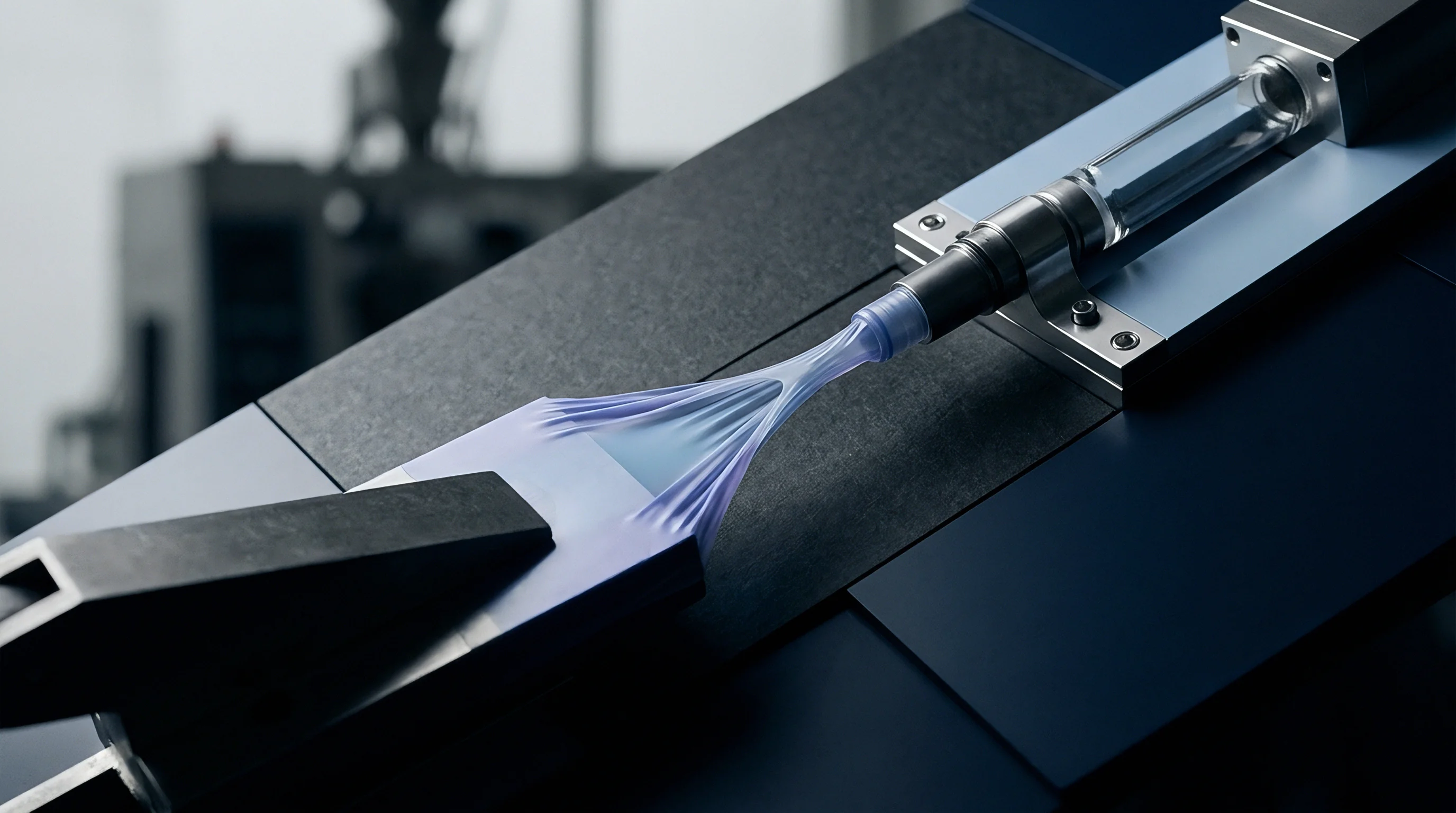
Injecting unreinforced polypropylene into sub-millimeter cavity spaces at velocities above five hundred millimeters per second requires massive hydraulic pressures. As the melt hits tooling steel held between twenty and fifty degrees Celsius, its temperature plunges hundreds of degrees in fractions of a second, with shear rates across the advancing boundary layer topping fifty thousand reciprocal seconds. That severe thermal shock freezes polymer backbones in an extended state along the flow path before the chains have time to relax back into random coils.
Such rapid heat extraction sets up distinct morphological strata across the wall thickness. Within fifty milliseconds of contact with the steel, the melt forms an outer skin of highly oriented fibrillar crystals. In parts thicker than two millimeters, this skin accounts for less than five percent of the volume, leaving the insulated core to form isotropic, unoriented spherulites as it cools slowly.
In cross-sections below one millimeter, however, that distribution flips entirely: the oriented skin and high-shear intermediate zones expand to consume between sixty and eighty-five percent of the total cross-section.
Melt freezing before chain relaxation completes freezes directional strain into the molding permanently.
Chains trapped by this sudden vitrification solidify into a blend of alpha-monoclinic lamellae and disordered smectic mesophases. These mesomorphic domains appear because the extreme quench rate cuts off the orderly chain folding required for monoclinic crystal growth. In this rapidly chilled layer, the molecular orientation factor reaches roughly zero point seven along the flow vector, while the cross-flow direction shows negative orientation values relative to the stream.
Transverse shrinkage therefore lags behind flow-direction shrinkage while the part sits in the mold, storing up substantial entropic driving force for delayed contraction once heat later restores chain mobility.
Machine pack pressure drops off abruptly once the thin gate freezes shut. Because volumetric compensation cuts off well before the core densifies, an unbalanced internal stress field remains trapped between the stiff, oriented surface and the constrained interior. Published shrinkage values measured on four-millimeter ISO plaques give no indication of this behavior, as thick test plaques develop dominant spherulitic cores that wash out skin effects.
Sizing tooling cavity steel to isotropic shrinkage estimates inevitably yields parts that bow, twist, and drift off specification when heated.
Balancing melt viscosity against tooling heat transfer dictates the steel dimensions that establish whether a part passes initial inspection.


Oven
Service environments in automotive compartments, sterilisation chambers, and distribution containers provide the thermal activation energy missing when parts leave the mold. Operating temperatures between sixty and one hundred and twenty degrees Celsius mobilize amorphous chains pinned between crystalline lamellae, initiating physical aging as the polymer relaxes toward thermodynamic equilibrium and secondary crystallization continues for weeks.
Thermal Trajectories across Post-Molding Regimes
Sustained heat triggers two distinct structural mechanisms in this frozen morphology. Above sixty degrees Celsius, the disordered smectic mesophases created during cavity quenching convert into stable monoclinic alpha-crystals. That transition drives local density up from zero point nine zero grams per cubic centimeter toward zero point nine three six grams per cubic centimeter, producing immediate volumetric contraction in every direction.
At the same time, oriented amorphous chains aligned with the flow vector retract toward higher conformational entropy.
| Aging Temperature | Duration | Flow Shrinkage MD | Cross Shrinkage TD | Anisotropy Ratio TD to MD | Smectic to Alpha Conversion |
|---|---|---|---|---|---|
| 23 °C | 168 Hours | 0.12 % | 0.08 % | 0.67 | 0 % |
| 60 °C | 24 Hours | 0.38 % | 0.54 % | 1.42 | 38 % |
| 60 °C | 168 Hours | 0.44 % | 0.72 % | 1.64 | 62 % |
| 90 °C | 24 Hours | 0.58 % | 1.15 % | 1.98 | 89 % |
| 90 °C | 168 Hours | 0.65 % | 1.48 % | 2.28 | 100 % |
| 110 °C | 48 Hours | 0.71 % | 1.82 % | 2.56 | 100 % |
| 110 °C | 500 Hours | 0.78 % | 2.10 % | 2.69 | 100 % |
Thermal aging data shows that transverse shrinkage overtakes flow-direction contraction once temperatures pass sixty degrees Celsius. In the mold, elastic recovery produces greater shrinkage along the flow path, but post-bake exposure reverses that completely. As lamellae thicken, chain unfolding forces expansion along the crystal c-axis parallel to flow, offsetting amorphous entropic contraction in the longitudinal direction.
Across the flow, however, lateral lamellar growth into amorphous inter-lamellar domains proceeds unhindered.
Post-crystallization at ninety degrees Celsius for forty-eight hours drives transverse dimensional contraction to three times the flow-direction value in zero-point-eight millimeter homopolymer walls.

What Kinetics Govern Morphological Recrystallization?
Rearrangement kinetics follow modified Avrami relationships with temperature-dependent nucleation and growth rates. This secondary crystallization occurs unevenly across the wall thickness. Because the outer skin holds dense shear orientation, row-nucleated structures provide an abundance of nucleation sites, dropping the crystallization half-time in oriented zones by two orders of magnitude compared to unoriented bulk melt.
Thin-wall parts complete most of their phase conversion within the first twenty-four hours of thermal soak, though geometric distortion continues over hundreds of hours as internal stresses slowly redistribute through creep relaxation.
Progressive recrystallization generates severe functional risks across thin-wall polypropylene assemblies:
- Interlocking Snap Latch Failure occurs when cross-flow contraction reduces engagement depth below retention limits, permitting accidental disengagement under vibration.
- Planar Surface Warpage develops from through-thickness asymmetry in lamellar growth, bowing flat covers into parabolic troughs that break environmental perimeter seals.
- Fastener Boss Ovalization pulls circular pilot holes into ellipses perpendicular to the feed path, cracking mating self-tapping screws during assembly.
- Optical Sensor Misalignment tilts sensor brackets past allowable angular tolerances, blinding cross-functional automation systems.
Whether prolonged secondary crystallization ever reaches absolute thermodynamic equilibrium at temperatures approaching one hundred and thirty degrees Celsius remains unproven across commercial polypropylene grades containing varied nucleator packages.
Tensor
Predicting post-molding dimensional drift requires quantitative modeling of molecular alignment throughout the part volume. Scalar orientation values cannot capture the directional dependence of thermal contraction. Instead, the second-order orientation tensor maps spatial distribution by averaging the dyadic products of unit vectors tangent to polymer backbone segments across localized material coordinates.
Eigenvalues extracted from this tensor define principal alignment vectors through the wall thickness. When the primary eigenvalue aligns with the local melt velocity vector, the material behaves with extreme orthotropic asymmetry. Linear coefficients of thermal expansion and delayed physical aging contraction tensors reflect this alignment directly: along the principal orientation axis, thermal expansion coefficients decrease, while transverse coefficients increase proportionally to chain alignment.
Linear shrinkage prediction models calibrated solely on standard tensile bars systematically underestimate cross-flow warpage in thin-wall geometries.
A constitutive framework for predicting drift couples the modified Avrami crystallization equation with an orientation-dependent structural strain tensor:
Total dimensional drift strain combines three terms: instantaneous elastic spring-back upon mold opening, thermal contraction during cooling to ambient factory conditions, and delayed physical aging strain driven by secondary crystallization. Resolving the delayed aging strain vector in local coordinates yields distinct directional components. Longitudinal strain parallel to melt flow equals the product of the crystalline density differential, the change in absolute crystallinity fraction over aging time, and an orientation suppression factor.
Transverse aging strain incorporates an amplification factor derived from lateral lamellar splaying.
| Wall Thickness | Skin Volume Fraction | Herman Orientation Factor | CLTE Flow MD (10⁻⁵ /K) | CLTE Cross TD (10⁻⁵ /K) | Transverse Drift Factor |
|---|---|---|---|---|---|
| 0.50 mm | 0.88 | 0.74 | 3.8 | 18.4 | 3.45 |
| 0.75 mm | 0.71 | 0.62 | 5.2 | 16.1 | 2.80 |
| 1.00 mm | 0.54 | 0.48 | 6.9 | 14.2 | 2.15 |
| 1.50 mm | 0.31 | 0.29 | 9.1 | 12.0 | 1.45 |
| 2.00 mm | 0.14 | 0.12 | 11.4 | 11.8 | 1.08 |
Predictive calculations require systematic parameter extraction across mechanical, rheological, and morphological boundaries:
- Orientation Tensor Mapping establishes spatial orientation values across multiple mesh layers through the wall thickness via Moldflow or Moldex3D filling simulations.
- Differential Scanning Calorimetry extracts baseline crystalline fraction and identifies the latent heat release corresponding to smectic-to-alpha transition during thermal exposure.
- Thermo-Mechanical Analysis measures directional coefficients of linear thermal expansion on micro-machined specimens extracted parallel and perpendicular to the fill axis.
- Isothermal Dilatometry quantifies volumetric shrinkage under specific thermal aging temperatures to isolate phase-change densification from mechanical stress relaxation.
Consider a worked calculation predicting the final length and width of an electronic module carrier plate. The part measures one hundred and fifty millimeters in length along the melt flow path, fifty millimeters in width across the transverse flow direction, and zero point eight millimeters in nominal wall thickness. The selected resin is an unreinforced isotactic polypropylene homopolymer with a melt flow rate of forty grams per ten minutes.
Processing parameters create an average Herman orientation factor of zero point six zero across the dominant skin layers, yielding an orientation tensor principal component of zero point seven three along the length axis. The part is ejected, stabilized at twenty-three degrees Celsius for twenty-four hours, and subsequently placed into an automotive validation bake cycle at ninety degrees Celsius for one hundred and sixty-eight hours.
Initial in-mold shrinkage accounts for one point two percent along the flow axis and zero point eight five percent across the transverse axis. The length immediately after twenty-four hours of room-temperature resting measures one hundred and forty-eight point two zero millimeters, while the width measures forty-nine point five eight millimeters. Thermal aging at ninety degrees Celsius activates delayed secondary crystallization, increasing overall crystalline mass fraction from zero point four eight to zero point six two.
Volumetric densification yields an isotropic volume reduction of one point one two percent.
Oriented chain mechanics allocate this volumetric contraction unevenly. Longitudinal aging strain calculates at negative zero point four two percent, suppressed by crystalline lamellar thickening along the chain axis. Transverse aging strain calculates at negative one point four六 percent, driven by lateral crystallite growth and free-volume collapse between oriented microfibrils.
Multiplying the post-mold baseline dimensions by these aging strain tensors yields a baked length of one hundred and forty-seven point五八 millimeters and a baked width of forty-eight point八六 millimeters. Total post-mold shrinkage from the original steel cavity dimensions equates to one point six one percent in the flow direction and two point two八 percent in the cross direction. An isotropic mold design allowance based on a single published shrink value of one point five percent creates a zero point三九 millimeter dimensional error across the transverse span, exceeding standard engineering tolerances.

Cavity
Tooling geometry and press settings govern the initial orientation distribution before the mold ever opens. Tool designers who attempt to eliminate anisotropic drift solely by increasing packing pressure fail, because gate freeze occurs within zero point four seconds on thin-wall geometries. High packing pressures applied against a frozen gate merely introduce severe residual hoop stresses around the sprue without feeding the expanding crystallites in the distal cavity zones.
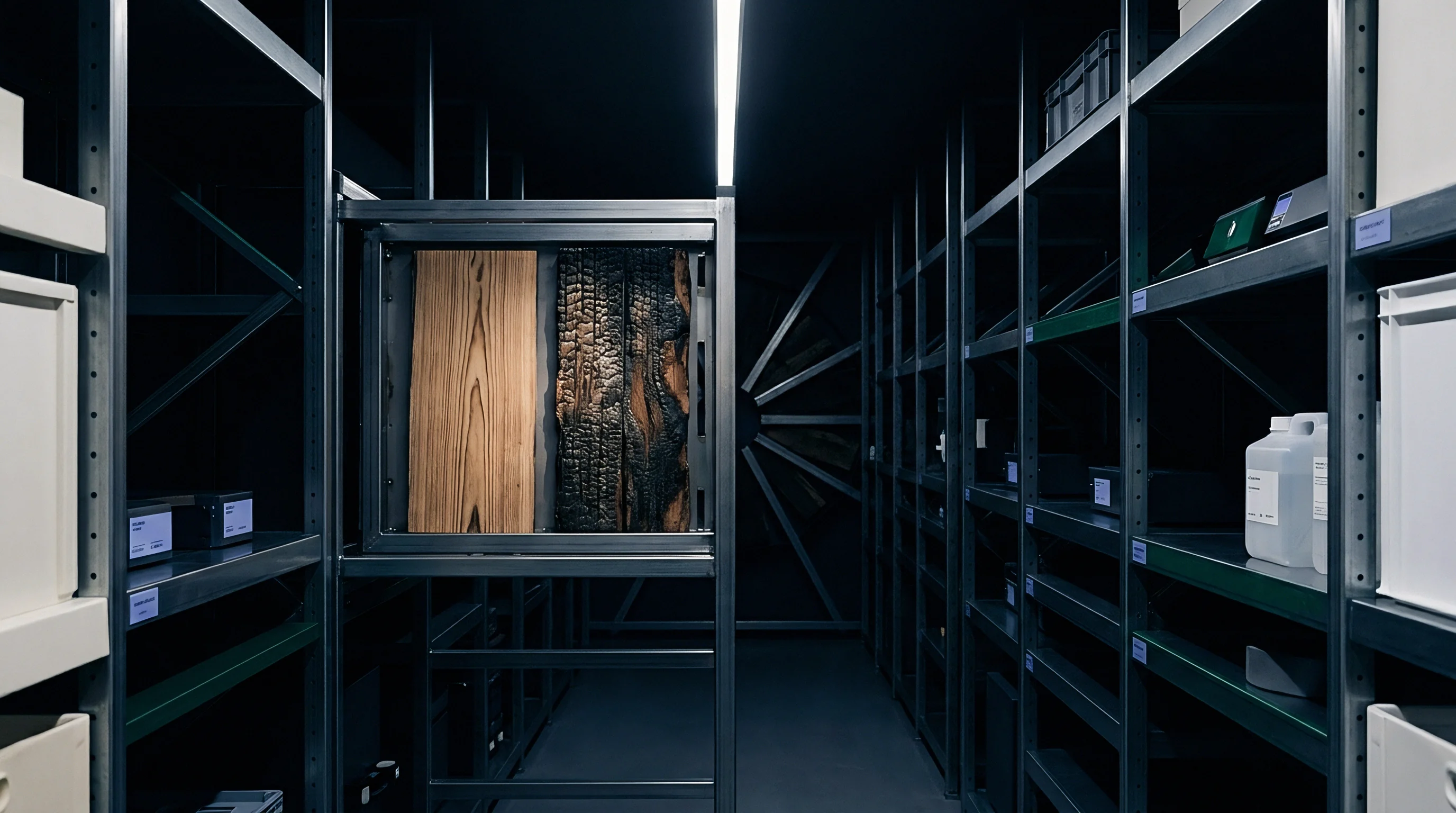
Cavity Pressure Signatures and Core Freezing
Piezoelectric pressure transducers placed directly behind the gate and at the end of the fill track the true state of the melt. If the pressure trace at the end of cavity drops to atmospheric while the gate transducer still registers four hundred bar, the flow path has frozen mid-cavity. This creates an uncompacted, highly oriented zone subject to extreme cross-flow contraction during thermal aging.
Maintaining uniform pressure transmission across the entire flow path requires adjusting injection velocity profiles to achieve a linear pressure drop from gate to vent.

Which Tooling Variables Restrict Directional Relaxation?
Gate configuration dictates the orientation field throughout the part volume. Edge gates feeding long rectangular geometries generate unidirectional flow paths that maximize anisotropic orientation. Center gating or distributed multi-gating alters flow trajectories, replacing unidirectional alignment with radial divergent flow.
Divergent radial flow spreads orientation angles across the plane, converting unidirectional transverse contraction into distributed planar stresses that manifest as minor uniform dish warpage rather than massive one-axis dimensional collapse.
Stabilizing thin-wall polypropylene moldings against thermal drift follows a sequential press-side procedure:
- Execute Injection Velocity Profiling to establish constant melt-front velocity through the thin wall, eliminating localized deceleration spikes that cause premature freezing.
- Map Cavity Freeze Transitions using paired pressure transducers to pinpoint the exact millisecond when the packing phase loses hydraulic authority over the cavity.
- Set Packing Pressure to Peak Transfer Pressure for the precise duration of gate seal life, avoiding excess packing time that generates residual stress concentrations.
- Elevate Tool Core Temperatures by fifteen to twenty-five degrees Celsius relative to the cavity half to accelerate relaxation of frozen shear layers during the cooling interval.
- Conduct Immediate Post-Molding Annealing in a secondary fixture if geometric tolerances demand complete elimination of residual orientation prior to product assembly.
Cooling system architecture plays a decisive role in mitigating post-molding drift. Conventional drilled waterline circuits cannot extract heat uniformly from deep cores or high-speed thin-wall cavities. When one cavity half cools five degrees faster than its opposing plate, the resulting asymmetric freeze layer shifts the neutral thermal axis toward the colder tool surface.
During subsequent thermal aging, the side with thicker oriented skin contracts further, generating severe bowing toward the cooler molded face. Vacuum-brazed or diffusion-bonded tool inserts containing conformal cooling channels provide uniform heat extraction across complex three-dimensional contours, ensuring symmetrical frozen skin development on both part surfaces.
Attributing out-of-round features or twisted mounting flanges to lot-to-lot resin variation overlooks the underlying thermal and orientation gradients established in the mold.

Allowance
Commercial contracts for thin-wall polypropylene injection moldings frequently break down during product qualification baking cycles. The tooling quote accounts for steel, machining, and cavitation, but omits the iterative wire-EDM adjustments required to trim cavity dimensions for asymmetric post-crystallization shrinkage. When parts pass receiving inspection at twenty-three degrees Celsius only to fail dimensional checks after vehicle paint-oven cycles or environmental heat testing, the financial impact falls upon the supply chain.
Standard DIN 16742 defines tolerance groups for plastic moldings, assigning unreinforced polypropylene to groups TG4 through TG7 depending on processing precision and part complexity. For a nominal dimension of one hundred millimeters, tolerance group TG5 permits a variation of plus or minus zero point two eight millimeters. Achieving TG5 across thermal aging regimes is virtually impossible with unreinforced polypropylene unless tooling steel incorporates anisotropic shrinkage offsets.
| Cavitation Count | Tool Cost Base | Achievable DIN 16742 | Post-Bake Scrap Rate | Steel Modification Cost | Amortized Part Impact |
|---|---|---|---|---|---|
| 4-Cavity Proto | $38,000 | TG4 (±0.18 mm) | 3.5 % | $4,500 | $0.090 / part |
| 8-Cavity Production | $82,000 | TG5 (±0.28 mm) | 6.2 % | $9,800 | $0.024 / part |
| 16-Cavity Production | $145,000 | TG6 (±0.42 mm) | 14.8 % | $22,000 | $0.017 / part |
| 32-Cavity High-Volume | $265,000 | TG6 (±0.42 mm) | 22.5 % | $48,000 | $0.012 / part |
| 48-Cavity Stack Tool | $480,000 | TG7 (±0.65 mm) | 38.0 % | $85,000 | $0.014 / part |
| Data calculated across production lots of 500,000 units exposed to 85 °C aging for 48 hours. Steel modification costs reflect two iterative recut cycles on production molds. | |||||
High cavitation compounds the commercial difficulty. In a thirty-two-cavity production tool, shear rates and thermal histories vary between inner and outer cavity groups despite balanced hot-runner manifold designs. Cavities located adjacent to main feed drops receive hotter melt under lower effective shear than perimeter cavities fed by extended runner branches.
Parts molded in central cavities develop thinner oriented skins and lower Herman orientation factors, producing less transverse post-bake shrinkage than parts ejected from perimeter cavities.
Invoking DIN 16742 tolerance group TG6 without qualifying mold thermal history forces commercial rejection of sixty percent of unreinforced polypropylene parts post-bake.
Tooling buyers must demand anisotropic shrink allocations directly within the initial request for quotation. Cutting steel to a single isotropic shrink value of one point six percent across an unreinforced polypropylene component guarantees that every cavity must be dismantled, welded, or recut via electrical discharge machining after initial production trials. Suppliers absorb tooling rework costs when contracts define post-aging dimensions as receiving criteria.
If the tooling quote assumes symmetric shrinkage, the molder absorbs tooling modification costs, production delays, and high scrap rates once thermal environmental testing exposes the dimensional drift.
Failure to establish anisotropic shrinkage allowances within tooling purchase orders results in production shutdowns, re-tooling capital losses exceeding fifty thousand dollars per mold, and unresolvable commercial disputes regarding component acceptance.