Cross Border Injection Tooling Ownership Verification Procedures
Verify cross-border injection tool ownership through deep steel stamping, explicit bailment agreements, temporary import registrations, and full part amortization.

Title

Perfection of Physical Steel Ownership
Physical possession of an injection mould inside an offshore manufacturing facility grants no automatic legal title under international trade frameworks. Overseas vendors frequently treat tooling on their factory floors as general plant equipment or operational machinery unless formal asset segregation has been established. Clear legal title requires structured contract terms, explicit payment milestones, and local property registration protocols.
Buyers secure ownership by writing explicit title transfer provisions into the agreement before releasing initial tooling deposits, keeping the physical steel distinct from the supplier’s commercial assets.
Cross-border procurement requires perfecting legal title within the specific jurisdiction where the tool physically resides. In the People’s Republic of China, Article 641 of the Civil Code recognizes retention of title agreements, but enforcing them against third-party creditors requires explicit asset registration and physical marking. In Mexico, machinery operating under bonded manufacturing programs falls under specific pledge registers; unregistered foreign tooling faces attachment by local tax authorities if the supplier becomes insolvent.
A contract claiming buyer ownership remains unenforceable against a court-appointed liquidator if the physical asset lacks clear, unencumbered identification matching the commercial documentation.
Under Article 641 of the Chinese Civil Code, ownership retention clauses covering off-site tooling remain ineffective against bona fide third-party creditors unless registered in the Unified Credit Information Code system.
Payment schedules dictate when legal title moves. Full transfer of ownership requires documentation proving that all production milestones have been met or that partial title accrues in step with payments made. The table below outlines the contractual mechanisms and legal instruments necessary to perfect tooling title across primary low-cost injection moulding hubs.
| Jurisdiction | Primary Legal Instrument | Registry Protocol | Insolvency Protection Mechanism |
|---|---|---|---|
| China | Civil Code Retention of Title Agreement | Zhongdeng Net Asset Registry | Permanent steel stamping with buyer Unified Social Credit Code |
| Mexico | IMMEX Annex 24 Asset Schedule | SARTEC Equipment Listing | Pedimento 50 Import Entry showing foreign asset ownership |
| Vietnam | Law on Property Registration | National Registration Agency for Secured Transactions | Customs Form E-Declaration asset identification schedule |
| United States | UCC Article 9 Security Agreement | State Secretary of State UCC-1 Filing | Serial number registration on public notice board |

Cross Border Rights and Asset Segregation
Separating intellectual property rights from ownership of physical steel prevents suppliers from holding moulds hostage during commercial disputes. CAD geometry, runner designs, and specialized cooling channels remain proprietary IP, while P20 or 1.2344 tool steel is tangible personal property. Standard purchase orders often blur this distinction, leaving room for moulders to assert builder liens over the tool under local commercial codes.
Contracts must isolate the physical asset by specifying that fabrication charges cover complete construction, leaving the moulder with no residual financial stake or security interest once final payment settles.
Effective asset segregation relies on a formal bailment structure rather than a standard vendor-vendee contract. The buyer acts as bailor, handing temporary physical custody of the mould to the supplier, who acts as bailee solely to produce components. This structure prevents the supplier from claiming that the tool constitutes an integrated part of its factory asset base.
Explicit bailment language confirms the supplier holds zero equity in the tooling, barring them from encumbering, pledging, or subleasing the mould to third parties under any circumstances.
Title transfer terms must connect directly to the final press-side acceptance protocol. The contract specifies that physical custody transfers to the bailee upon delivery to the moulding shop, while absolute legal title remains with the bailor throughout the tool’s service life. “The Bailee acknowledges that the injection mould identified in Schedule A remains the sole, exclusive personal property of the Bailor, free and clear of all liens, claims, or encumbrances, and agrees to surrender immediate physical possession upon written demand without assertion of builder liens or offset rights.”


Stamp
Permanent Marking Specifications for Mould Base Steel
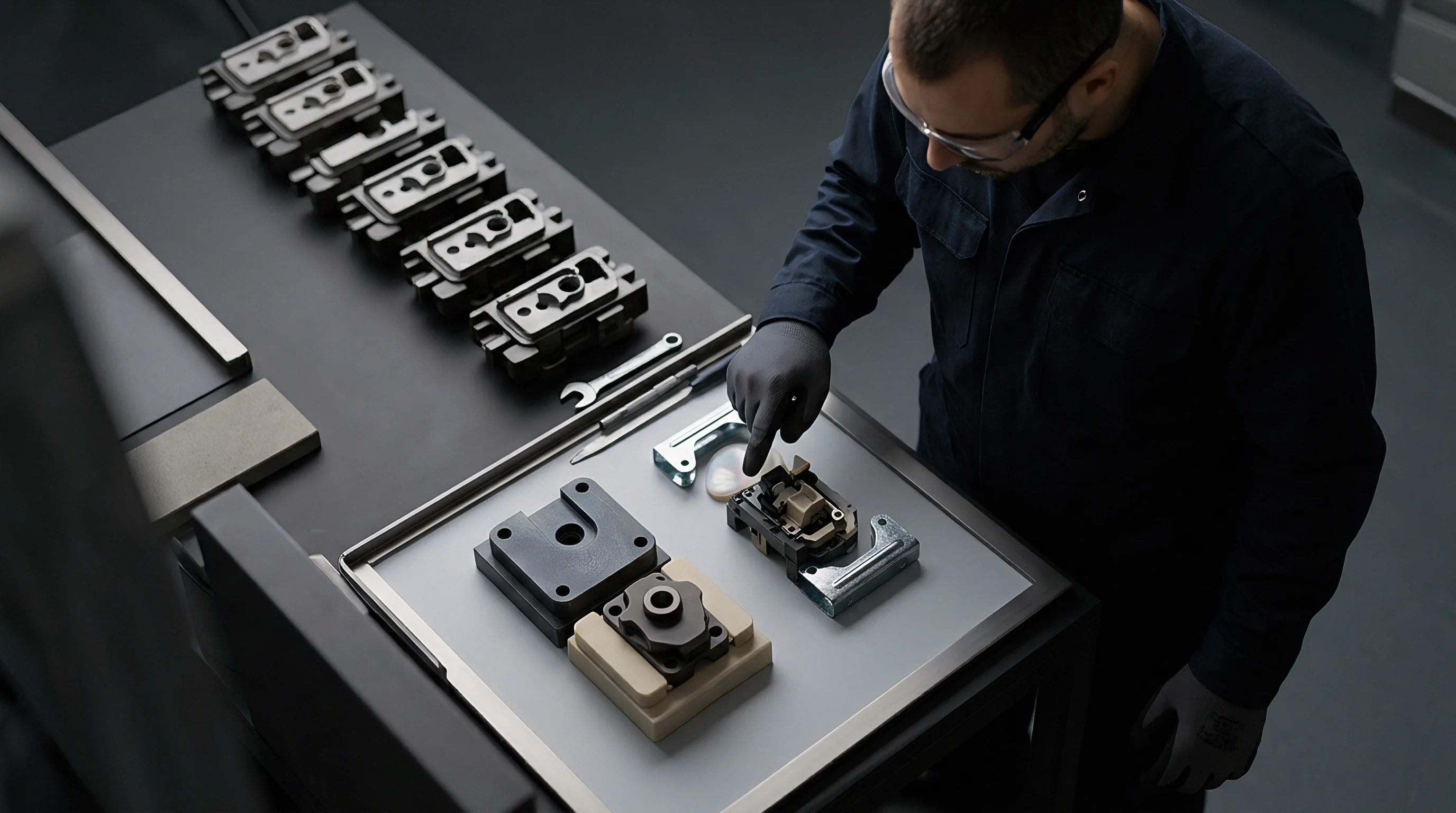
Physical identification etched directly into the tool steel maintains a clear chain of custody between commercial contracts and press-side machinery. Paint, adhesive labels, and superficial tags fail rapidly under press operating conditions, where thermal cycling up to 180°C and constant exposure to hydraulic oils, mold release agents, and degreasers degrade transient markings. Having the toolmaker machine asset identification directly into the B-plate and main ejector housing prior to final heat treatment ensures deep engraving that survives heavy refurbishment, surface grinding, or tool modifications.
Standardized steel identification requires precise placement and depth parameters on non-wearing exterior surfaces. Milling a 1.0 mm deep recessed pad on the operator side of the top clamp plate protects identification text from abrasion during transport and crane rigging. This pad holds the buyer name, corporate registration number, unique asset identifier, and project code milled using a 1.5 mm ball-end cutter.
Placing marks at this depth ensures that any unauthorized attempt to grind off ownership data damages the structural precision of the clamp plate, making tampering instantly visible during audits.
Multi-cavity tools also require cavity-level marking across component structures. Core insert bases, cavity blocks, and hot runner manifolds carry matching laser-etched serial numbers linked to the master asset record, positioned where maintenance crews can read them easily during bench work and press setup.
- Top Clamp Plate Face carries the primary owner name, asset serial number, and project identification milled into a 1.0 mm recessed pad on the operator side.
- B-Plate Ejection Side exhibits deep-stamped text specifying tool weight, outer dimensions, and customs temporary import registration codes.
- Hot Runner Manifold Body contains high-temperature laser engraving detailing the manifold serial number, zone pinouts, and original manufacturer tracking identifiers.
- Core and Cavity Inserts display micro-machined serial tags along the non-moulding mounting flange to verify component integrity during bench maintenance.
- Removable Side Actions incorporate stamped identification numbers matching the slide housing to prevent cross-tool component swapping during shop cleanup.

Non Destructive Asset Tracking Mechanisms
Modern verification supplements mechanical steel stamping with embedded digital identifiers capable of transmitting asset data to press-side monitoring equipment. Stainless-steel-encased radio-frequency identification tags withstand operating temperatures up to 220°C and clamping forces exceeding 10,000 kN. Machining a dedicated pocket inside the mould base housing allows the RFID tag to sit flush with the steel plate, shielded from mechanical impact while remaining readable by handheld field scanners during inventory sweeps.
Digital tracking capsules record total operational machine hours, cycle counts from embedded mechanical stroke counters, and historical maintenance events. Linking physical asset scans to digital verification ledgers prevents suppliers from substituting duplicate or lower-cavitation copy moulds during high-volume production runs. When physical identification tags fail or exhibit evidence of mechanical tampering, the buyer faces severe custom fines, asset forfeiture during audits, or complete loss of legal standing in local repossession proceedings.
Physical ownership plates must feature deep CNC-milled characters at a minimum depth of 0.8 mm into non-wearing mould base steel to withstand aggressive factory refurbishments.

Customs
Tariff Designations and Temporary Import Documentation
Cross-border relocation of injection moulding tools exposes the owner to complex tariff classifications, customs duty assessments, and value-added tax liabilities. Under the Harmonized System, injection moulds for plastics fall under heading 8480.71, carrying variable duty rates depending on the destination territory and trade agreements. Importing tooling without declaring foreign buyer ownership creates severe tax compliance vulnerabilities; improper declarations trigger seizure of the physical asset by border control authorities under suspicions of undeclared capital investment or transfer pricing non-compliance.
Temporary import mechanisms allow buyers to move tools into manufacturing destinations without paying full import duties and value-added tax, provided the tool remains dedicated to producing export goods. Programs such as Mexico’s IMMEX system or China’s processing trade regime require temporary import entries, known as Pedimentos or Customs Handbooks, explicitly identifying the foreign entity as the tool owner. Failure to cross-reference the physical steel asset tag with the customs clearance declaration creates a regulatory disconnect, allowing local tax agencies to reclassify the tool as domestic equipment subject to full back-taxes and penalties.
| Trading Region | HS Code | Import Tariff Framework | VAT / Tax Treatment | Maximum Bonded Duration |
|---|---|---|---|---|
| European Union | 8480.71.00 | Temporary Admission (ATA Carnet / Duty Relief) | VAT Suspended under Bond | 24 Months (Extendable) |
| United States | 8480.71.80 | Chapter 98 HTSUS Temporary Import under Bond | Duty-Free under Bonded Security | 1 Year (Renewable to 3) |
| Mexico | 8480.71.01 | IMMEX Importacion Temporal (Rule 3.3.1) | 0% VAT via VAT Certification | Duration of IMMEX Program |
| China | 8480.71.90 | Processing Trade Customs Handbook Registration | Tax Deferred under Bonded Processing | 12 Months per Handbook Cycle |
How Can Asset Registry Entries Prevent Third Party Liens?
Local customs authorities hold superior statutory liens over foreign-owned tooling residing within their geographic borders. When an offshore moulding supplier fails to settle corporate tax liabilities or breaches import quota regulations, government authorities distrain factory assets, including third-party injection tools sitting on the shop floor. Registering the tool on official government asset schedules establishes clear third-party ownership prior to tax enforcement actions, ensuring foreign assets remain exempt from domestic asset liquidations.
- Verify that the commercial invoice explicitly states the foreign buyer legal name, full payment status, and steel asset serial numbers.
- Obtain a certified copy of the customs import clearance declaration specifying temporary import status under processing trade parameters.
- Cross-check the physical serial numbers on the mould base against the entries recorded in the factory bond ledger.
- File a formal asset registration with the local ministry of commerce or tax authority to record foreign title.
- Conduct annual physical verification audits to ensure customs tracking tags remain affixed to the tool steel.
Relying on informal tax exemption certificates instead of formal asset registration leaves foreign-owned equipment improperly declared. Accepting such justifications exposes the tooling owner to summary asset confiscation when border authorities perform retrospective audits on plant equipment.
Failure to match physical tool serial numbers to temporary import entries invalidates bonded tax exemptions, subjecting the equipment to immediate back-tax assessments up to 30 percent of original landed value.

Bailment
Execution of Floor Level Access Protocols
Physical possession represents the ultimate point of leverage in cross-border tooling management. A buyer holding clean legal title on paper remains powerless if local factory management refuses physical entry to the facility or blocks rigging crews from removing the tool steel. Establishing explicit operational access rights through a binding Bailment Agreement backed by irrevocable powers of attorney ensures that logistics teams can access the plant, unclamp the mould, and transport it out of the facility during supply chain disruptions.
Operational control requires establishing pre-authorized entry parameters for independent auditing and extraction engineering teams. The agreement defines strict operational protocols governing floor access, tool trials, maintenance inspections, and emergency repossession scenarios. The table below outlines the core elements required in a robust bailment framework.
| Operational Stage | Required Documentation | Trigger Event | Execution Timeframe |
|---|---|---|---|
| Routine Verification | Notice of Audit Letter | Quarterly Asset Inspection | 48-Hour Advance Notice privilege |
| Tool Refurbishment | Transfer Maintenance Order | Shot Count Limit Reached | 24-Hour Notice to Release |
| Default / Relocation | Notice of Bailment Termination | Contract Breach or Insolvency | Immediate Unrestricted Access |
| Emergency Extraction | Irrevocable Removal Authorization | Force Majeure or Factory Closure | Same-Day Floor Access |
Landlord Waivers and Lien Discharge Verification
A primary failure point in tool retrieval occurs when factory landlords assert statutory liens over plant equipment following a tenant rent default. Under standard commercial leasing laws across many jurisdictions, a property owner possesses a distraint right over all machinery situated within the leased premises to cover unpaid rent. Securing an executed Landlord Waiver prior to installing any tooling inside a contract manufacturer’s facility explicitly waives the property owner’s right to attach foreign-owned assets during tenant landlord disputes.
The Landlord Waiver acts as a direct legal covenant between the tooling owner and the real estate holder. The property owner acknowledges that the injection mould constitutes personal property owned exclusively by the third-party bailor, agreeing to permit unrestricted access to extraction teams regardless of the tenant’s lease standing. The checklist below details the mandatory operational elements verified during a physical tool audit prior to executing relocation activities.
- Press Mounting Condition demands confirmation that hydraulic lines, electrical hot runner cables, and water lines feature rapid-disconnect fittings for rapid teardown.
- Physical Tag Matching requires visual confirmation that the milled clamp plate markings precisely match the serial numbers listed on the bailment registry schedule.
- Shot Counter Reading involves recording the mechanical counter value directly from the mould base to verify historical production run logs.
- Tooling Condition Report dictates taking photographic evidence of parting line wear, core face conditions, and side-action slide clearances before unclamping.
- Rigging Clearance Path assesses factory overhead crane capacity, aisle widths, and bay door clearance dimensions to ensure seamless physical extraction.
Executing a contested tool extraction during active labor disputes requires presenting local enforcement marshals with certified bailment agreements, proof of foreign asset registration, and explicit ownership documentation.


Amortization
Tooling Cost Amortisation Schedule Reconciliation
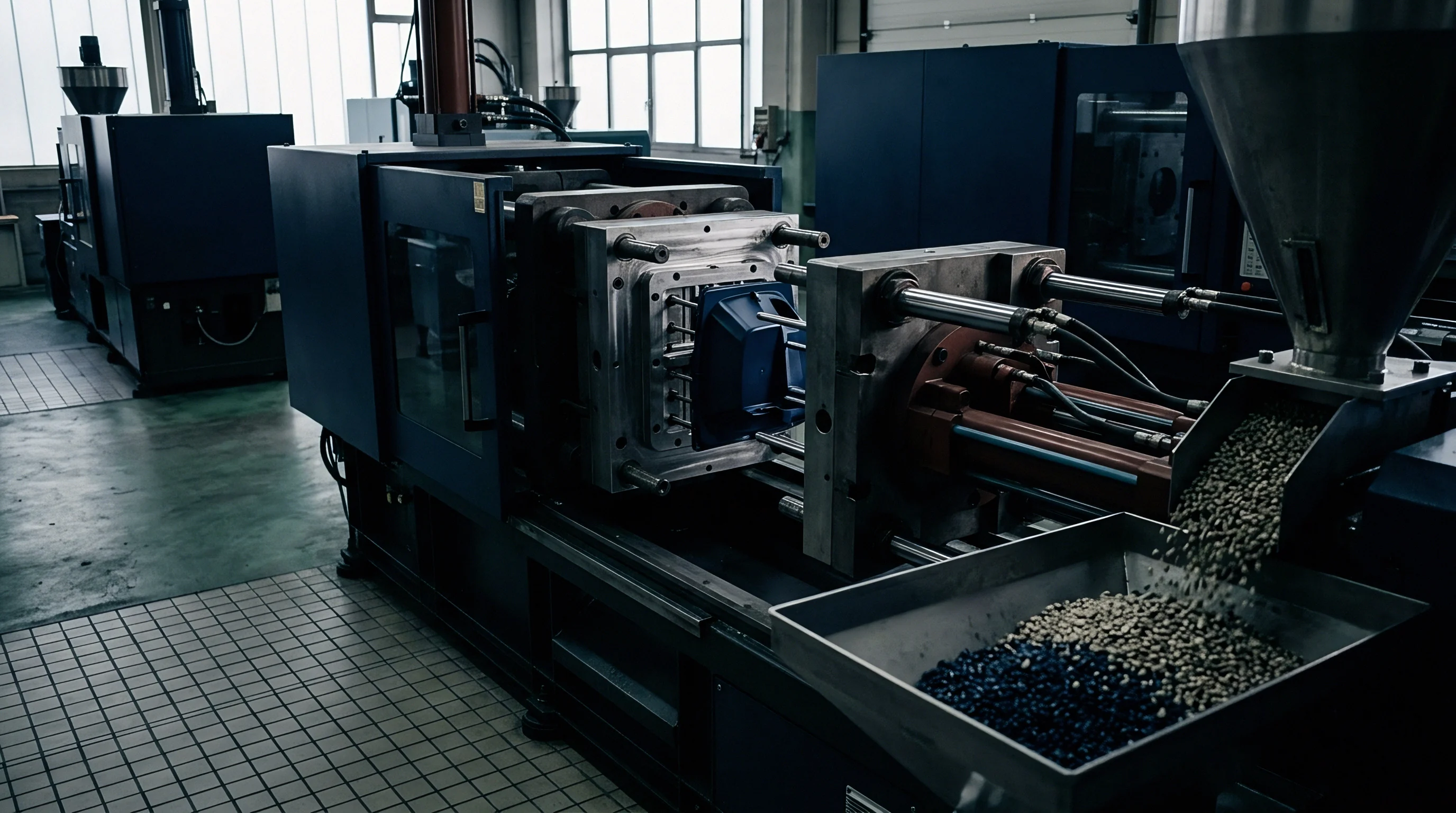
Financial title perfection requires reconciling the capital amortisation incorporated into unit part prices against the initial tooling purchase agreement. Sourcing agreements frequently utilize amortised tooling structures, where the buyer pays a reduced upfront tooling charge and allows the moulder to recover the remaining steel balance through an agreed surcharge added to the first 100,000 or 500,000 production parts. Disputes arise when production volumes hit agreed thresholds, yet the supplier continues billing the amortised part price without converting ownership title or lowering the unit cost.
Rigorous verification demands a continuous shot-counter tracking protocol tied directly to invoicing records. Take a 4-cavity injection mould producing PBT-GF30 electrical connectors running at a 22-second cycle time. Assume an initial tooling cost of 60,000, structured as a $30,000 upfront capital payment and a $30,000 amortised balance recovered at $0.30 per part over a 100,000-unit contract threshold.
The mathematical model below illustrates the exact financial tipping point where full legal and financial title clears across the production lifecycle.
The total unit tooling cost component $Cu paid across production volume V follows the relation:
Ct = Pu + (V × Ap)
Where Pu represents the initial upfront tooling payment (30,000), $Ap represents the amortisation rate per part (0.30), and $V represents verified delivered volume. Once V hits 100,000 units, total payments reach 60,000, satisfying the capital commitment. Continuing to pay $Ap beyond V = 100,000 represents an unearned supplier premium that complicates ownership claims by allowing the moulder to assert ongoing financial equity in the tool base.
Upon reaching the amortisation limit, the buyer issues a formal price adjustment notice removing Ap from the piece price bill of materials. The molder signs a certificate of full satisfaction, acknowledging that all financial obligations regarding the steel fabrication have been satisfied in full.
Once cumulative delivered volume satisfies the contractual tooling amortisation volume, the piece price drops automatically by the exact amortised unit amount while legal title converts to unencumbered foreign asset status.
Ledger Audit for Final Asset Release
Reconciling piece-price accounting requires cross-referencing machine cycle logs, maintenance scrap declarations, and delivered warehouse receipts. High scrap rates or aborted production runs are sometimes cited to extend the amortization timeline and demand extra volume to recover steel costs. The buyer counters these assertions by enforcing contractual clauses stating that amortisation credits accrue on every filled shot that passes quality control inspection, shifting the financial risk of process scrap back onto the setter.
A comprehensive audit reconciles three primary records: physical mechanical shot counter figures from the mould base, press controller cycle records from the factory manufacturing execution system, and landed customs import receipts signed by the receiving logistics hub. Discrepancies between press shots and delivered part counts indicate process yield losses, unrecorded scrap, or unauthorized extra-shift production runs. Verifying these ledgers guarantees that financial ownership converts cleanly without residual debt claims, allowing the buyer to update asset management databases with complete, unencumbered title documentation.
When piece prices, maintenance records, asset stamps, and customs declarations align precisely, the foreign buyer holds an unassailable ownership position that survives supplier insolvency, regulatory changes, and regional manufacturing relocations.