Injection Tooling Bailment Rights and Physical Possession Protection Procedures
Enforceable injection tooling bailment combines clear contract title and UCC filings with permanent steel asset plaques and tamper-proof cycle monitors.
Title
Production purchase orders routinely conflate the procurement of plastic injection mouldings with the legal status of the steel that shapes them. An injection mould is an independent capital asset whose physical location inside a third-party manufacturing plant creates a classic bailment relationship. Under common law jurisdictions and codified civil codes alike, a bailment arises through the delivery of personal property by one party to another for a specific purpose, without transferring underlying ownership.
The tooling fabricator or custom moulder operates strictly as a bailee holding temporary physical possession, while the buying OEM retains title as the bailor. When contracts treat tooling merely as an unsegregated line item inside a piece-part price schedule, the buyer forfeits the legal mechanisms required to extract that tool during commercial disputes.
Retaining clear title demands distinct, fully executed bailment agreements executed concurrently with initial capital tooling deposits. The tooling asset comprises the core and cavity inserts, ejector pins, cooling manifolds, hot runner manifolds, valve gates, and the entire mould base assembly. Steel ownership vests immediately upon payment milestones, beginning with the initial steel cut approval and continuing through the final production part approval process.
Without definitive contractual separation between the part supply agreement and the tooling custody terms, contract moulders can claim possessory liens over the mould base to secure disputed piece-part invoices, machine downtime charges, or raw resin inventory holding fees.
Under UCC Section 9-102, an OEM that fails to file a precautionary financing statement on customer-owned tooling exposes that steel to the senior secured lenders of a bankrupt moulder.
Tool retention mechanisms hinge on establishing unencumbered title before the tool ever touches a press bed platen. The bailment agreement defines the bailee moulder as an agent holding custody solely for running scheduled purchase orders. It explicitly prohibits the moulder from pledging the tooling as collateral, sub-contracting production to unauthorized facilities, or modifying core geometry without written consent.
The contract establishes that the tooling remains movable personal property, irrespective of its attachment to chilling lines, hydraulic cores, or 1000-tonne tie bars.
Drafting Enforceable Tool Bailment Agreements
Operational bailment agreements isolate the asset from day-to-day manufacturing frictions through precise possessory covenants. The document specifies that physical possession by the supplier confers zero equitable or beneficial interest in the steel. The bailee holds a revocable licence to mount the tool inside designated injection presses for the sole purpose of fulfilling validated purchase orders issued by the bailor.
The licence terminates automatically upon material breach, insolvency events, or unilateral written redelivery demand.
Standard terms establish that payments made toward steel fabrication, whether milestone payments at tool design freeze, T1 trial shots, or dimensional qualification, create proportional ownership that vests into sole ownership upon final tooling payment. Title vests regardless of whether part inspection yields open action items on non-critical visual boundaries. Tooling custody language establishes immediate rights to physical repossession without requiring judicial arbitration over part pricing disputes.
A standard contractual provision stipulates that the bailee waives all statutory and common law liens against the tooling asset, agreeing to assert monetary counterclaims exclusively against outstanding trade accounts receivable.

Plaque
Physical identification establishes the evidentiary baseline during repossession disputes and insolvency proceedings. When liquidators or bailiffs arrive at a shuttered moulding plant, untagged steel gets swept into debtor assets. The legal presumption of ownership defaults to the entity in physical possession unless unassailable, permanent identification proves otherwise.
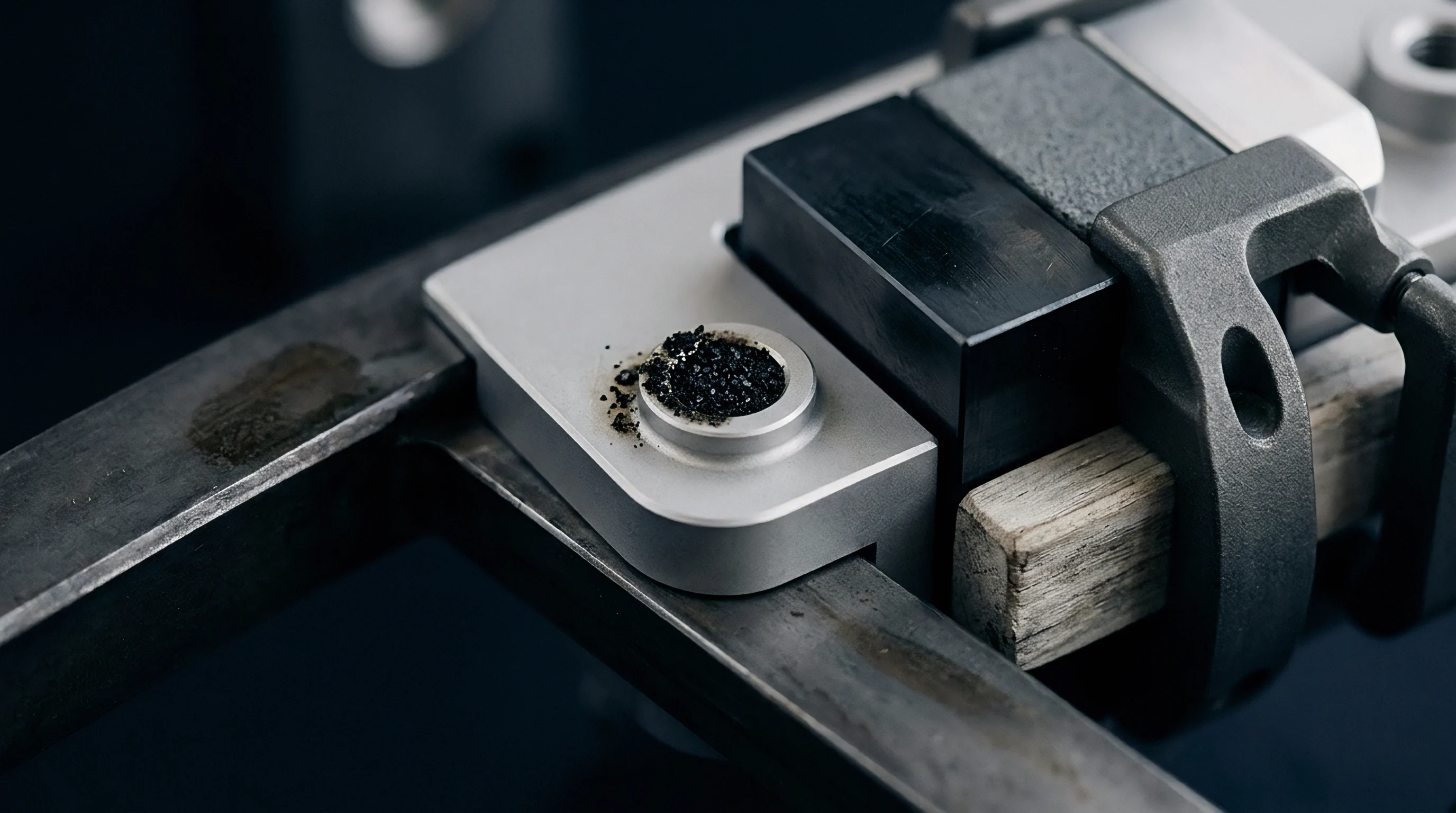
Riveted anodized aluminium plaques, deeply engraved cavity callouts, and hardened steel stampings separate client assets from plant property.
Data plates must withstand continuous exposure to operating conditions in industrial moulding environments. Typical tooling environments involve 180-degree Celsius mould temperatures, aggressive aromatic degreasers, ultrasonic wash baths, and high-pressure steam cleaning cycles. Stamped stainless steel or photo-anodized aluminium nameplates mechanically fastened to the non-operator side clamping plate resist accidental detachment.
Spot-welded sheet tags or deep CNC milling directly into the mould base provide permanent legibility across multi-year production runs.
A stainless steel asset plaque fastened by four blind drive rivets withstands solvent washdowns and proves ownership during forensic asset audits.
Identification markings tie the physical tool back to corporate balance sheets and filed security declarations. The plaque displays the legal entity name of the asset owner, internal asset tag numbers, tool serial numbers, part numbers with revision levels, and active bailment registry references. A secondary, covert marking placed inside the B-plate water jacket or beneath the ejector retainer plate defeats intentional badge removal during contested commercial breakups.

Whose Mark Establishes Legal Title on Tooling?
Contested ownership claims settle rapidly when permanent steel engravings match executed purchase documentation and security filings. Contract moulders often attempt to apply their internal shop identification placards to foreign moulds, creating evidentiary ambiguity during warehouse inspections. Plant managers frequently argue that internal tooling stamps are standard plant numbering conventions rather than deliberate assertions of factory ownership.
Dual marking policies eliminate identification disputes during commercial seizures:
- Primary external asset plaques display high-contrast, photo-anodized text fastened to the top clamp plate with tamper-proof mechanical fasteners.
- Direct CNC steel engravings cut owner entity names into the operator-facing parting line face at a minimum depth of 0.8 millimetres.
- Internal cavity serial stamps mark every individual slide, sub-insert, and core pin to prevent cavity cannibalisation between sister tools.
- Radio frequency identification transponders embedded inside machined pockets behind the ejector housing transmit encrypted asset registers to handheld industrial scanners.
Inspection regimes must confirm the integrity of these physical markings during routine vendor quality audits. Process auditors verify tag legibility, check rivet tension, and cross-reference physical serial numbers against the corporate master asset register. Missing plates indicate either unauthorized tool maintenance involving aggressive surface grinding or intentional removal by rogue operators.
| Marking Method | Substrate / Attachment | Chemical Resistance | Thermal Limit | Removal Resistance |
|---|---|---|---|---|
| Photo-Anodized Aluminium | Riveted to Mould Base | Resists Methyl Ethyl Ketone | 450 °C | High shear shear force |
| CNC Deep Milling | P20 / H13 Steel Face | Immune to solvents | 1200 °C | Permanent steel loss |
| Laser Annealed Steel | S50C Clamping Plate | Degrades in strong acids | 600 °C | Surface grinding required |
| Embedded RFID Capsule | High-Temp Epoxy Pocket | Hermetically sealed | 220 °C | Concealed internal location |
The shop supervisor claimed the missing brass plaque fell off inside the ultrasonic wash tank during mold maintenance.
Lock
Physical possession risks escalate rapidly during off-shift production cycles when plant management faces margin erosion. Injection tooling running fast-cycling commodities presents an attractive target for unauthorized part production, commonly referred to as ghost shifts. Contract moulders run unmonitored cycles at night, diverting moulded parts to grey market distributors or using customer steel to service competing product lines.
Safeguarding physical possession requires electromechanical and physical control systems installed directly on the mould base.
Mechanical non-resettable cycle counters provide an initial baseline for monitoring tool utilisation against purchased part receipts. Standard mechanical counters strike a hardened actuation pin against the ejector plate during every complete mould stroke. These units feature mechanical internal ratchets sealed inside machined enclosures.
Tamper-evident cable seals across mounting screws reveal unauthorized tool disassembly or counter bypassing.
Electronic tracking devices provide tamper-resistant logging of real-time press conditions. Battery-backed telemetry modules embedded within deep-drilled pockets in the clamping plates record mould opening, closing, cycle time, platen shock, and operating temperatures. These devices log continuous time-series data for up to five years, writing to non-volatile memory that syncs with plant gateways or local encrypted radio probes.
Discrepancies between billed parts and recorded machine cycles immediately expose off-book tool usage.
A mismatch of three percent between mechanical counter increments and accepted scrap-adjusted warehouse receipts confirms unauthorized press cycling.
Physical interlocks physically restrict press mounting without explicit authorization from the asset owner. Mechanical platen clamping locks and custom hydraulic valve interlocks render the mould inoperable unless an authorized technician applies an encrypted key or removes a lockout fixture. These physical barriers enforce operational compliance between authorized production campaigns.

Which Physical Interlocks Prevent Off-Shift Cycling?
Mould owners deploy hardware solutions that prevent press installation without physical intervention. Mechanical platen lock brackets bridge the A and B plates, holding the tool rigidly closed during storage and transit. Hardened steel locking bars, secured by high-security padlocks with registered keyways, prevent the mould from opening until the production window commences.
Without removing the bar, the machine cannot cycle, and hydraulic tonnage cannot be applied against the parting line.
Electronic cycle monitors introduce real-time oversight into external vendor operations:
- Install non-resettable mechanical counters recessed flush with the mould base edge to capture every complete ejector stroke.
- Thread braided aircraft security cables through counter mounting fasteners, securing the loop with numbered lead seals.
- Embed telemetry modules featuring integrated three-axis accelerometers into deep pockets to capture cyclic clamp shock waveforms.
- Calibrate monitoring software to cross-reference recorded cycle counts against scrap logs and finished part shipping manifests.
- Deploy physical lockout plates across primary water manifold connections to block cooling loops during unapproved storage windows.
Discrepancies in shot counts carry quantifiable economic costs that extend beyond stolen steel wear. Unapproved cycles consume tool life, depleting the guaranteed cavitation life cycle of H13 hardened cavities rated for one million shots. A 16-cavity closure tool run without cooling circuits accelerates core thermal fatigue, inducing parting line micro-cracking and flash.
Tool wear translates directly into dimensional drift, destroying Cpk process capability and forcing premature, unbudgeted tool rebuilds at the asset owner expense.
The mould runs hot. Cavity pressures spike. Inserts crack.
Unmonitored running degrades cavity coatings and induces thermal fatigue that ruins the tool before scheduled capital amortization completes.
Transit
Repossessing injection moulds demands methodical logistical and legal execution to prevent physical destruction or border seizures. When business relationships deteriorate, extracting tooling from a hostile facility requires immediate, coordinated physical control of the steel. Riggers, logistics handlers, and technical engineers must secure the tool, verify completeness, and remove it from the bailee property under clear legal authority before local managers attempt physical obstruction.
Tool extraction procedures begin with an unannounced on-site verification audit conducted by qualified tooling personnel. The recovery team inspects the mould while it sits mounted in the press or secured on factory racking. Technicians inspect the mould base, slide retainers, electrical hot runner junction boxes, temperature controllers, and dedicated spare component kits.
Missing core inserts, removed valve gate pins, or severed wiring harnesses turn an operational mould into a brick of dead steel, rendering the recovery effort useless.
Rigging teams must secure moving components before unbolting moulds from machine platens. The tool must be brought to ambient temperature to prevent thermal warping of matched core-cavity sets. Hydraulic core-pull cylinders require mechanical locking pins to lock slides in their retracted positions.
A heavy steel safety strap, painted safety yellow and bolted across the parting line between the A and B plates, prevents premature mould opening during crane hoists and road freight transit.
Logistical documentation requires careful structuring to avoid customs delays during cross-border tooling movements. Cross-border movements under bailment demand temporary importation bonds or ATA Carnets, proving that personal property is transitioning between manufacturing venues without triggering unexpected value-added taxes or import tariffs. Commercial invoices must explicitly state that the steel is client-owned tooling moving under continuing bailment, citing original customs entry numbers and serialised asset tags.
| Component / Step | Physical Condition Verified | Operational Risk | Remediation Action |
|---|---|---|---|
| Parting Line Safety Straps | Bolted rigidly across A and B plates | Mould separates during rigging | Install 20 mm thick steel retention bars |
| Hydraulic Core Cylinders | Slides pinned; lines drained and plugged | Slide collides with closing core | Fit mechanical transport slide locks |
| Hot Runner Electrical Box | Junction box intact; wiring mapped | Heater zones short upon restart | Perform megohmmeter insulation resistance test |
| Cooling Water Circuits | Compressed air blown dry; anti-rust flushed | Internal channel corrosion | Inject light industrial mineral oil flush |
| Cavity Surface Protection | Coated with neutral anti-corrosion wax | Atmospheric condensation pitting | Apply industrial moisture-displacing film |
A mould safely secured in its transit crate is only half recovered until the matching end-of-arm tooling, controller cards, and maintenance logs clear the plant gate.
Lien
Supplier insolvencies trigger rapid legal confrontations over physical factory assets. When a custom moulder enters formal bankruptcy, insolvency administrators secure the facility, padlocking gates and seizing all machinery inside the perimeter. Under commercial legal codes, third-party creditors assume that plant equipment belongs to the debtor.
The OEM must defeat these statutory presumptions through pre-established legal filings to prevent their production tooling from being liquidated at public auction.
Contract moulders frequently invoke statutory possessory liens to retain third-party tooling. Known in various jurisdictions as moulder liens, toolmaker liens, or artisan liens, these statutory remedies grant fabricators and processors the right to retain customer property until outstanding balances clear. Moulders use these possessory claims aggressively, seeking leverage by inflating unpaid part invoices, claiming unamortized development engineering hours, or charging exorbitant storage fees for idle tooling assets.
Defeating a possessory lien requires strict adherence to jurisdictional perfection protocols. In the United States, filing a UCC-1 financing statement naming the tool as client property perfects the bailment against junior and senior secured creditors. In Canada, registration under the Personal Property Security Act serves the same protective function.
In civil law jurisdictions across Europe and Asia, bailment registrations require notarized title certificates, certified customs entry logs, and stamped commercial registry declarations filed in the district where the plant operates.
Tooling recovery during active bankruptcy proceedings hinges on filing an immediate motion for relief from the automatic stay. The bailor files an emergency reclamation petition accompanied by executed bailment agreements, certified proof of capital payment, stamped UCC filings, and photo documentation of physical asset plaques. Proof that the mould is an amortized, fully paid capital asset owned by the customer compels bankruptcy courts to order the release of the steel, bypassing the claims of general unsecured creditors.
Legal teams routinely debate whether pre-emptive contractual waivers of statutory liens survive judicial review when local processing statutes grant absolute possessory rights to unpaid parts manufacturers.