Resolving Priority Conflicts between Secured Lenders and Cross Border Tooling Owners
Subordinating plant-level secured credit requires physical engraving, dual perfection across both jurisdictions, and explicit non-accession waivers.

Situs
Choice of Law at the Platen
Physical possession of production tooling outside the buyer’s home territory creates an immediate structural exposure to the plant’s domestic secured creditors. When an overseas injection moulder signs a general security agreement covering all present and after-acquired personal property, the secured lender’s floating lien automatically attaches to everything resting inside that facility. The physical location of the steel governs property rights under the doctrine of lex rei sitae.
A North American buyer relying entirely on a domestic Uniform Commercial Code financing statement finds that filing powerless when a regional court in Shenzhen, Querétaro, or Katowice freezes local plant assets.
Conflict of laws rules routinely direct cross-border property disputes to the territory where the asset sits at the moment the competing claim arises. While contractual choice of law clauses govern the payment obligations between the original equipment manufacturer and the contract moulder, those bilateral provisions possess zero binding authority over third-party lenders holding perfected institutional liens under domestic statutes. A secured lender executes against the tangible property found on the factory floor.
The moulder’s default on working capital facilities triggers asset freezes irrespective of off-balance-sheet declarations written into an unfiled, offshore tooling supply agreement.
Domestic commercial codes enforce this reality across major export jurisdictions. Under Article 403 and Article 441 of the Civil Code of the People’s Republic of China, security interests in movable property establish priority according to the exact time of public registration. An unregistered tooling bailment leaves the foreign owner positioned as an unsecured general claimant against the local insolvency estate.
Canadian provincial Personal Property Security Acts apply comparable mechanics: failing to register a financing statement against the local processor leaves the bailor’s underlying ownership subordinate to a perfected domestic personal property lien.
The local secured lender captures every unengraved tool on the floor through the operational default of the moulder.
Overcoming this statutory capture requires establishing perfection in the host jurisdiction before the tool clears customs clearance and enters the facility. The legal classification of the tool shifts from general personal property to an ostensible asset of the plant the moment technicians bolt it into the machine platen. Lenders inspect factory bays, observe multi-cavity tools operating inside three-hundred-tonne presses, and legally presume those assets form part of the debtor’s productive plant unless public registers and physical demarcations prove otherwise.
Asset retention systems cannot rely on home-country registration instruments to establish priority over a plant-level debt facility. A perfected filing in Delaware or an Ontario registry does not notify a domestic commercial bank extending credit against collateral located inside a foreign industrial zone. Complete protection requires legal integration across both the sovereign registration system of the asset’s physical situs and the international financing structures binding the corporate parent.
The moulder’s legal counsel routinely dismisses these requirements during contract negotiation by asserting that offshore title retention language provides sufficient insulation. That assurance fails the moment a local receiver locks the factory gates.
Statute

Perfection Mechanisms under Parallel Systems
Navigating secured transaction laws demands simultaneous filings across divergent legal systems. In common-law regimes outside the United States, asset protection structures must address the interaction between fixed charges, floating charges, and statutory retention regimes. Civil-law jurisdictions treat personal property security through codified registries, special pledges, and specific statutory retention mechanisms.
Preserving cross-border priority requires calibrating the bailment filing to the exact statutory architecture of the host country.
| Jurisdiction | Primary Statutory Basis | Perfection Instrument | Public Registry System | Priority Baseline |
|---|---|---|---|---|
| United States | UCC Article 9-501 | UCC-1 Financing Statement | Secretary of State (Debtor Location) | First to file or perfect |
| China | Civil Code Art. 403/441 | Production Equipment Bailment Notice | Credit Reference Center (PBOC) | Registration timestamp |
| Mexico | Commerce Code Art. 398 | Equipment Bailment (Comodato) | RUG (Registro Único de Garantías) | Electronic recordation entry |
| Germany | BGB § 930 (Besitzkonstitut) | Title Transfer Agreement | None (Possession presumption) | Clear marking and physical audit |
The Mexican comodato framework illustrates the rigorous statutory compliance demanded in major contract manufacturing hubs. Operating under the Commercial Code, an unrecorded gratuitous equipment loan remains unenforceable against third-party judicial attachments or fiscal liens held by the tax authority. Filing the contract within the Registro Único de Garantías Mobiliarias alerts commercial banks that the manufacturing apparatus belongs to a third-party foreign bailor.
Without this specific administrative entry, the equipment joins the general collateral base supporting the moulder’s operational credit lines.
German manufacturing installations operate under structural principles grounded in physical possession rather than centralized notice filing. Under paragraph 930 of the Bürgerliches Gesetzbuch, indirect possession transfers title through a construct known as Besitzkonstitut. This mechanism requires unambiguous, observable physical evidence identifying the external owner.
A foreign asset owner must verify that the tooling bears indelible, mechanically stamped markers and that the plant maintenance system lists the unit as third-party property, rebutting the statutory presumption of ownership dictated by physical custody under paragraph 1006.
Common-law floating charges introduce a distinct statutory hazard across Commonwealth jurisdictions. A general corporate debenture automatically hovers over the processor’s enterprise, crystallizing into a fixed charge over all on-site machinery upon loan acceleration or formal insolvency. Subordinating that floating charge requires the tooling owner to secure an explicit, written deed of non-assertion or intercreditor carve-out from the senior lender prior to delivery.
Relying on an unrecorded bailment leaves the foreign entity holding an unsecured claim for conversion against an empty operational company.
Statutory timelines compound this procedural exposure. The Uniform Commercial Code establishes a twenty-day window under Section 9-324 to perfect purchase-money super-priority interests, yet foreign registries rarely provide equivalent grace periods. Under Chinese civil practice, registration through the People’s Bank of China Credit Reference Center establishes legal enforceability strictly from the hour and minute of submission.
Any commercial bank securing a general floating pledge over plant equipment before that digital timestamp captures the arriving tooling, leaving the original purchaser legally disenfranchised.
Failure to execute these simultaneous local filings leaves the foreign buyer holding worthless contractual cross-claims while domestic secured creditors liquidate the core production tooling to settle the moulder’s unserviced debts.
Stamp

Physical Demarcation and Plate Engineering
Public filings remain incomplete unless matched by unambiguous, permanent engineering demarcation directly on the mould base. Secured lenders conduct periodic on-site physical audits of manufacturing plants to appraise collateral value and audit equipment asset lists. Plant managers frequently pass unlabelled tools off as corporate-owned capital equipment to inflate collateral capacity.
Indelible physical demarcation directly counters the legal presumption of moulder ownership by delivering actual, physical notice to visiting loan officers and court-appointed receivers.
Attaching a painted aluminum inventory plate with pop rivets fails standard operational audits. Plant technicians remove those plates during cavity cleaning, surface grinding, or mold base modifications. Permanent demarcation demands mechanical engraving into the tool steel itself.
The mold designer must specify CNC mill engraving or wire electrical discharge machining into the stationary clamping plate, the movable clamping plate, and the hot half manifold housing. The physical text must state the corporate name, corporate registry number, jurisdiction of incorporation, and a specific legal declaration of non-transferable third-party ownership.
Every tool must carry its legal status cut directly into the structural steel to defeat on-site collateral presumptions.
Engineering standards for high-pressure injection moulds require this demarcation to survive extreme thermal and chemical environments. The tool operating environment exposes steel plates to continuous thermal cycling between 80 degrees Celsius and 140 degrees Celsius for engineering polymers such as polyamides and polybutylene terephthalate. Standard shop tags degrade rapidly under hydraulic oil spray, alkaline mold cleaners, and ultrasonic wash solutions.
The text depth should measure no less than 1.5 millimetres with a character height of 10 millimetres, placed on an external surface visible when the tool hangs fully plumbed between machine tie bars.
Specific data points must appear on the primary clamp plates to link the physical asset directly to international public registry filings:
- Corporate Bailor Name identifying the true legal owner and corporate jurisdiction without colloquial trade abbreviations.
- Global Registry Identifier linking the physical tool to the specific electronic filing number recorded in the public personal property registry.
- Drawing Reference Code detailing the original part number, tool revision level, and project codename matching the master supply agreement.
- Negative Pledge Declaration explicitly warning third parties that the mould cannot serve as loan collateral or form part of the facility’s asset base.
When lenders inspect industrial plants, their collateral verifiers document all unengraved production assets. If a multi-plate tool producing twenty-thousand automotive connectors a day lacks physical ownership stamps, the lender adds that asset directly to its liquid inventory calculation. A subsequent plant default results in a court sealing order applied to every machine in the bay.
When the mould carries clear, engraved proof matching registry documentation, the recovery engineer can petition the court for an immediate asset carve-out, preventing months of costly production downtime.
Skipping this mechanical step hands total tactical leverage to the moulder’s primary creditor during an unexpected operational crisis.


Friction
Intercreditor Realities and Commercial Disputes
Documenting priority does not prevent practical operational friction when an overseas contract manufacturer enters distress. Commercial lenders do not review technical files or cross-border bailment agreements when executing loan defaults. Their institutional mandate focuses exclusively on recovering defaulted capital balances.
When a lender accelerates debt, local enforcement officers physically chain the injection machines, seize auxiliary chillers, and lock the plant doors, holding captive every production tool bolted to the platens.
The primary tactical dispute centers on tool extraction. The buyer may possess clean legal title, supported by local and foreign filings, yet the physical extraction of an eight-tonne, high-cavitation tool demands heavy rigging, overhead crane operation, and specialized transport. The secured lender, holding a judicial attachment over the building and equipment, routinely denies site access to foreign rigging crews.
The lender uses this physical leverage to extract settlements, conditioning the release of clear-title tooling on the buyer paying down portions of the bankrupt moulder’s outstanding commercial debt.
Statutory landlord liens and employee wage claims introduce additional legal friction. In several European and Latin American civil jurisdictions, unpaid factory workers hold statutory priority super-liens over every productive asset located on the manufacturing floor, completely superseding both secured lenders and external asset owners. The Mexican derecho de retención and French worker-preference provisions allow insolvency administrators to impound third-party manufacturing equipment until local payroll liabilities are fully discharged.
A tooling owner with flawless cross-border perfection still faces mandatory statutory payments to liberate captive assets.
The financial impact scales directly with production volumes and product launch schedules. Take a high-volume polypropylene automotive component program requiring 120,000 units per month, supported by an eight-cavity injection mould costing 180,000 dollars. If the Tier-2 moulder defaults and the senior lender freezes the plant, manufacturing lines face catastrophic downtime penalties.
The buyer faces a stark choice: pay a disputed 75,000-dollar release fee demanded by the secured bank, or spend twenty-six weeks and another 180,000 dollars cutting replacement steel while paying millions in automotive assembly-line delay charges.
Commercial contracts cannot eliminate this physical leverage without advance coordination with the moulder’s lending syndicate. Sophisticated buyers require the contract moulder to provide formal bank disclaimers during the initial RFQ stage. The senior lender must execute an unambiguous Landlord and Lender Waiver, granting the buyer unconditional, forty-eight-hour access to the facility to extract identified, tagged tooling in the event of default, regardless of underlying dispute status between the borrower and the bank.
Neglecting to obtain this upfront waiver leaves the tooling owner negotiating at an extreme commercial disadvantage during a plant shutdown.
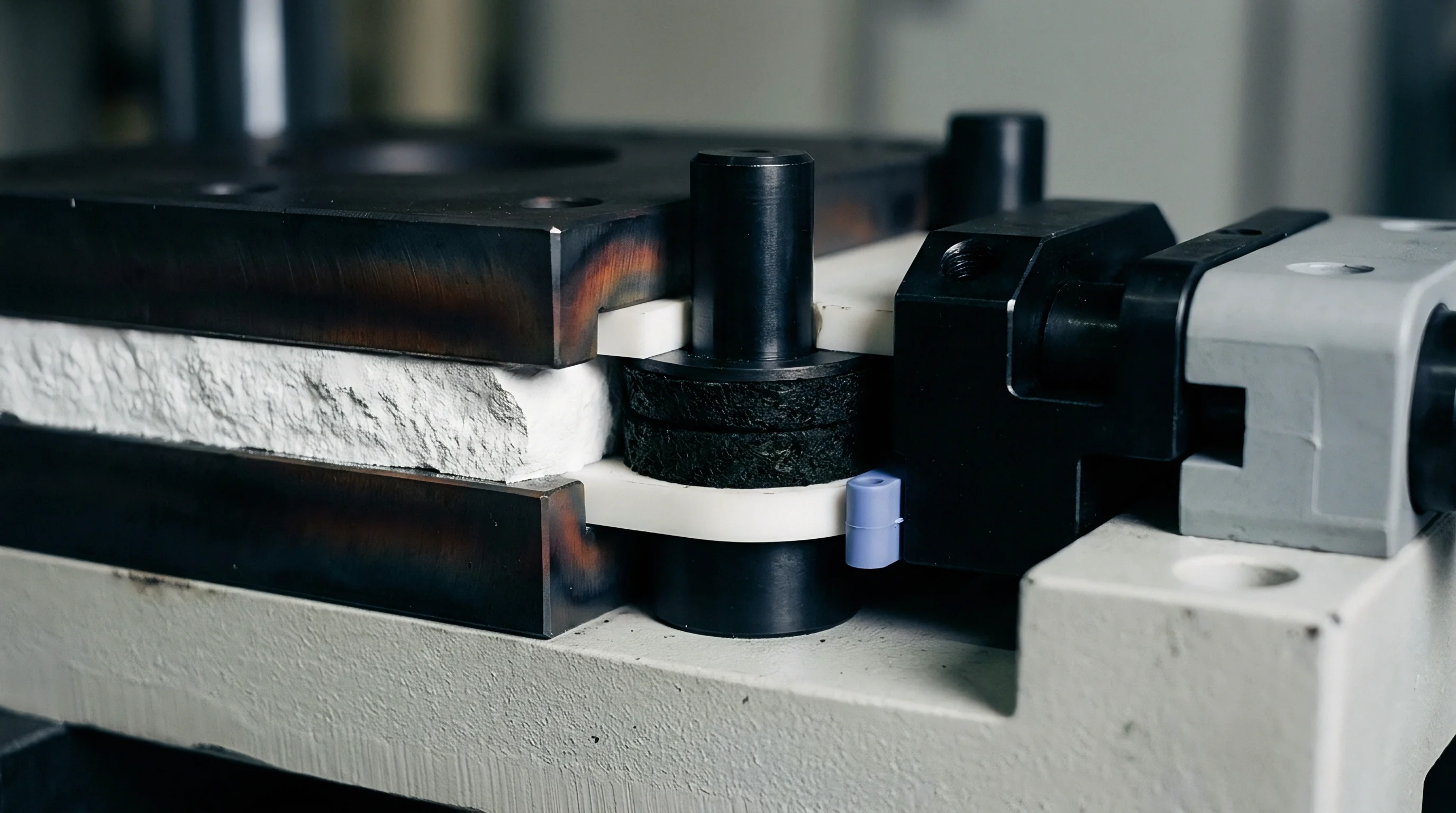
Accession

Physical Integration and Component Separation
Lenders frequently challenge tooling ownership claims through the legal doctrine of accession. Under commercial law frameworks internationally, when a personal property asset becomes an integral, inseparable component of a larger host machine, the owner of the main machine acquires legal title to the added component. Lenders holding mortgages over the injection moulding machines argue that custom hot-runner manifolds, specialized core-pull hydraulic units, and robot end-of-arm tooling permanently enhance the primary asset, converting those elements into plant property subject to the primary machine lien.
| Tooling Subsystem | Physical Attachment Method | Removal Duration | Machine Impact Upon Removal | Legal Accession Risk |
|---|---|---|---|---|
| Base Mould Halves | Standard Platen Clamps / T-Bolts | 0.5 to 1.5 Hours | Zero functional damage | Minimal |
| Hot Runner Controller | External Cable Loom / Junction Box | 0.2 Hours | Zero functional damage | Minimal |
| Hydraulic Core Pull Valves | Direct Hard-Piped Machine Manifold | 4.0 to 8.0 Hours | Temporary hydraulic circuit drain | Moderate |
| Integrated Machine Screws/Barrels | Press Splines and Heater Bands | 12.0 to 24.0 Hours | Press totally disabled from service | Extreme |
Preventing accession claims requires precise engineering and documentation during the mold design phase. The design engineer must configure all core systems as distinct, self-contained sub-assemblies. Hydraulic core sequences should utilize quick-disconnect couplings mounted on external utility plates rather than hard-piped connections integrated directly into the press hydraulics.
Hot runner heating systems must operate via external control cabinets plugged into auxiliary power feeds, avoiding dedicated integration into the primary injection press software architecture.
The technical dossier must demonstrate complete mechanical reversibility. If removing a tooling package requires cutting machine structural members, splicing internal factory wiring looms, or permanently damaging the press platen, an insolvency judge will classify the assembly as a permanent accession to the debtor’s equipment. The tooling specifications must explicitly document that every sub-assembly detaches through standard mechanical operations, leaving the host press fully functional for standard manufacturing operations.
Bespoke secondary equipment demands equal operational caution. Automated degating stations, visual inspection rigs, ultrasonic welding nests, and downstream assembly cells represent high-value investments often co-located around the press. When these auxiliary units link directly into the central automation bus of the moulder’s plant, lenders claim the entire cell as a continuous manufacturing line covered by their general fixed-charge debenture.
Each auxiliary cell must carry its own standalone programmable logic controller, its own structural base frame, and its own engraved third-party ownership plate.
Contractual agreements must state that all equipment, inserts, spare cavities, cold-runner plates, and automation modules remain completely independent of the plant real estate and host machines. Both the moulder and its primary lender must contractually confirm that no mechanical integration constitutes an accession under domestic property statutes, reserving the owner’s immediate right to sever and extract each item upon demand.
Failing to preserve this physical and operational modularity allows aggressive creditors to fold millions of dollars in custom tooling directly into the debtor’s liquidation pool.
Replevin

Cross-Border Recovery and Judicial Enforcement
Enforcing property rights against an uncooperative foreign entity culminates in judicial recovery procedures. Domestic replevin, known across civil law jurisdictions as actions for revendication or possessory reclamation, requires presenting an airtight chain of title, undisputed registry evidence, and explicit proof of default. Procedural missteps in the local court provide hostile lenders with weeks of legal delay, during which high-value production tooling may suffer damage, improper operation, or illegal relocation to unauthorized sub-contract facilities.
Emergency asset recovery begins with an ex parte petition for interim injunctive relief. The owner’s recovery counsel must petition the commercial court in the plant’s legal district to issue immediate preservation orders. The evidentiary package submitted to the presiding judge must contain certified translations of the master bailment agreement, verified bank proof of complete capital payments for the tool build, official public registry search results, and photographic documentation of the mechanical ownership engravings.
Any gap in the financial paper trail between the buyer’s corporate account and the toolmaker’s accounts receivable allows the plant’s receiver to contest outright ownership.
Commercial insolvency courts prioritize physical possession over foreign equity claims until presented with stamped, verified registry filings.
The mechanical condition of the tool upon extraction determines whether recovery succeeds commercially. Judicial marshals do not understand precision manufacturing equipment. Executing a court seizure order requires the presence of an experienced tooling engineer alongside the court officer.
The engineer must verify the safe shutdown of the press, manage the thermal cooling sequence to avoid cavity distortion, supervise the application of protective anti-corrosion grease to mirror-polished cavity surfaces, and verify that all core slides are physically locked with shipping brackets prior to crane rigging.
Extracting the steel from the facility is only half the battle; cross-border customs regulations present a final, lethal barrier. If the tool originally entered the foreign country under a temporary importation program for export manufacturing, such as Mexico’s IMMEX system or inward processing relief mechanisms in the European Union, the legal classification of the tool is tied directly to the moulder’s corporate tax identity. Transferring the tool to an alternate domestic processor or exporting it back to the home country requires formal customs rectifications, cancellation of domestic bond liabilities, and settling past-due import tariffs.
A successful cross-border extraction workflow demands systematic execution across five sequential operational gates:
- Securing Judicial Sequestration via an ex parte court order to physically seal the tool and freeze unauthorized plant cycling.
- Conducting Physical Verification matching the engraved base plate serial numbers against the registered public bailment filing.
- Executing Tooling Preparation by securing slide locks, purging internal water lines, and spraying rust inhibitors across all precision moulding faces.
- Resolving Customs Entitlements through the formal transfer of temporary import documentation to an alternate certified processing entity.
- Managing Heavy Transport Rigging using dedicated machinery air-ride transport directly to an audited, pre-qualified replacement facility.
The greatest unresolved exposure in cross-border asset reclamation remains the treatment of unregistered foreign working liens against floating charges on captive production moulds when the host jurisdiction lacks an electronic filing registry for movable machinery.