Identifying Ink Set off Contamination Modes in Flexible Packaging
Ink set-off in flexible packaging occurs when stack pressure transfers uncured photoinitiators and solvents onto inner food-contact surfaces during roll storage.

Reel
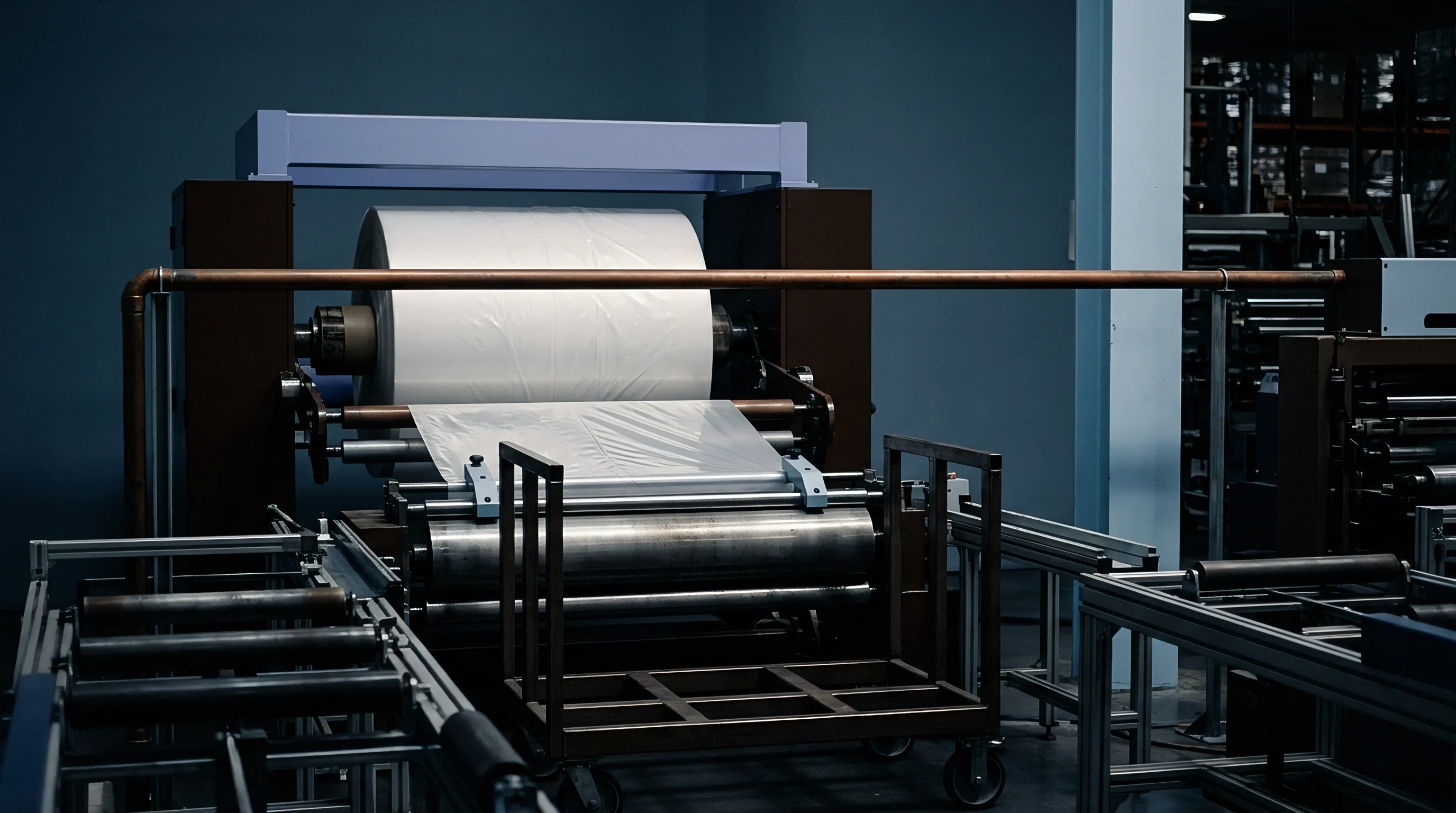
Flexible packaging substrates stored on tight master rolls generate direct mechanical contact between printed outer surfaces and unprinted food-contact inner faces. When web tension remains high during rewinding, pressure inside the roll core forces low-viscosity ink formulation components into the soft polyolefin sealant layer. Ink transfers under pressure.
This mechanical contact transfers volatile solvents, unreacted acrylic monomers, plasticizers, and photoinitiators directly onto the surface that will eventually touch dry, liquid, or fatty foodstuffs. Stacking amplifies physical transfer.
Process conditions on the converting floor dictate the extent of physical set-off long before the substrate reaches the filling line. High line speeds often reduce dwell time inside drying tunnels, leaving residual flexographic solvents within the ink matrix. Solvents migrate rapidly.
When these trapped solvents remain inside the web during rewinding, they act as plasticizing agents, lowering the glass transition temperature of the polymer surface and increasing its capacity to absorb migrating ink components. Stacking pressure on palletized rolls further accelerates mass transfer across the interface.
Tightly wound printed webs convert surface tension into direct mass transfer across the inner food contact interface.
Physical set-off differs fundamentally from substrate permeation because mass transfer happens while the material rests in roll form or stacked sheets. Tension controls physical contact density. The physical transfer rate correlates directly with roll storage duration, ambient storage temperature, roll diameter, and winding hardness profile.
Converters using central impression flexographic presses or ultraviolet-curing offset lines encounter distinct contamination signatures based on their drying and curing mechanics.
- Web Tension Compression Elevated winding force increases interfacial mechanical pressure, driving uncured ink photoinitiators into adjacent sealant layers.
- Incomplete Solvent Evaporation Residual flexographic solvent trapped during high-speed printing softens the reverse polyolefin matrix and accelerates chemical migration.
- Over-Nip Pressure Rollers Excessive nip load during slitting operations flattens surface topographies, maximizing contact area between ink matrices and inner contact surfaces.
- Electrostatic Surface Stacking Static charges accumulated on fast-moving webs draw adjacent layers together tightly, compounding mechanical pressure in storage racks.
Roll storage at elevated temperatures converts minor surface adhesion into permanent chemical contamination. When ambient storage conditions exceed thirty-five degrees Celsius, polyolefin chains gain significant mobility, allowing transferred ink species to diffuse deep into the bulk sealant layer where surface cleaning methods cannot remove them. Storage temperature limits set the boundary between surface residue and bulk contamination.


Molecules
Low-molecular-weight compounds inside printing inks diffuse rapidly across surface interfaces during storage. Ultraviolet cured inks represent a primary source of volatile set-off migrants due to incomplete polymerization of photoinitiators and reactive diluents. Photoinitiators migrate across contact interfaces.
Unreacted free photoinitiators remain mobile within the cured acrylate matrix, moving into adjacent sealant films under core compression.

Photoinitiators and Curing Byproducts
Ultraviolet inks rely on reactive compounds that frequently leave unreacted fractions within the cured film matrix. Benzophenone, 4-methylbenzophenone, isopropylthioxanthone, and 2-ethylhexyl-4-dimethylaminobenzoate top the list of frequently detected set-off contaminants. Benzophenone migrates rapidly due to its small molecular volume and low affinity for cured acrylate networks.
Photoinitiators migrate quickly. Cleavage byproducts generated during free-radical polymerization, such as benzoyl formic acid methyl ester and substituted benzoic acids, transfer alongside parent compounds.
Benzophenone migration exceeds the ten parts per billion limit when stack pressure remains above four bars for twenty-four hours at room temperature.
Flexographic liquid inks utilizing nitrocellulose, polyurethane, or polyvinyl butyral binder systems introduce secondary migration vectors. Plasticizers like acetyl tributyl citrate, dibutyl phthalate, and diisononyl phthalate added to flexographic inks to improve film flexibility migrate readily under mechanical compression. Plastizicers leach across interfaces.
Residual solvents including ethyl acetate, isopropanol, ethanol, and ethoxypropanol remain trapped within binder structures, acting as carriers that accelerate the co-migration of heavy ink pigments and mineral oils.
| Chemical Compound | CAS Registry Number | Ink Chemistry Type | Specific Migration Limit (mg/kg) | Primary Migration Route |
|---|---|---|---|---|
| Benzophenone | 119-61-9 | UV Free Radical | 0.60 | Pressure Set-Off |
| 4-Methylbenzophenone | 134-13-4 | UV Free Radical | 0.01 | Pressure Set-Off |
| Isopropylthioxanthone (ITX) | 5495-84-1 | UV Free Radical | 0.01 | Pressure Set-Off |
| Trimethylolpropane triacrylate (TMPTA) | 15625-89-5 | UV Acrylate Monomer | 0.05 | Contact Transfer |
| Acetyl tributyl citrate (ATBC) | 77-90-7 | Solvent Flexographic | 60.00 | Co-Solvent Migration |
Mineral oil saturated hydrocarbons and mineral oil aromatic hydrocarbons present significant analytical challenges in set-off identification. Derived from offset ink vehicles and recycled fiber packaging materials, these complex hydrocarbon mixtures transfer through direct pressure contact during web storage. Direct contact transfers unreacted monomer.
Ink manufacturers often explain that photoinitiators detected on inner contact layers represent gas-phase deposition inside the curing chamber rather than true physical set-off from roll pressure.


Headspace
Gas chromatography coupled with thermal desorption isolates volatile ink compounds transferred to food-contact layers. Analytical laboratories utilize static headspace gas chromatography mass spectrometry to screen unprinted contact faces for residual printing solvents and light photoinitiator fragments. Thermal desorption isolates ink volatiles.
Direct headspace analysis measures volatile organic compounds without requiring complex liquid solvent extraction steps that can dissolve underlying polymer substrates.

Which Photoinitiators Penetrate Polyolefin Films under Stack Pressure?
Benzophenone and isopropylthioxanthone exhibit high migration rates across low-density polyethylene sealants when stored under mechanical loads. Laboratory testing relies on gas chromatography coupled with tandem mass spectrometry operating in multiple reaction monitoring mode to isolate specific photoinitiator fragmentation ions down to parts per billion levels. Tenax captures volatile species.
Liquid chromatography coupled with triple quadrupole mass spectrometry targets non-volatile oligomers, photoinitiator cleavage products, and high-molecular-weight UV absorbers extracted from the contact surface.
- Extract a ten by ten centimeter printed web sample from the center of the master roll core.
- Enclose the unprinted food contact layer inside a stainless steel migration cell facing Tenax absorbent material.
- Condition the cell at forty degrees Celsius for ten days in an environmental chamber.
- Desorb volatile components thermally directly into a gas chromatograph coupled with tandem mass spectrometry.
- Quantify peak areas against analytical standards to establish mass transfer per square decimeter.
Screening unprinted inner contact layers requires strict distinction between migration penetrating through the film thickness and physical set-off occurring on the outer contact surface. Dual-sided surface extraction cells isolate the inner food-contact face, preventing solvents from reaching the outer printed face during laboratory contact cycles. Toluene traces confirm setoff contamination.
Surface solvent swabbing with high-purity ethanol captures un-absorbed surface set-off, while total immersion testing measures bulk-absorbed migrants.
Whether gas-phase volatile transfer inside heat-set drying tunnels contributes more total contaminant mass to inner contact layers than core compression during extended warehouse storage remains open to definitive analytical proof across commercial web widths.

Barrier
Physical film structures determine whether ink components pass through the substrate thickness or transfer solely via surface contact. Polyolefin films lack inherent density. Monolayer low-density polyethylene and cast polypropylene films possess open amorphous regions that offer virtually no resistance to organic solvent or photoinitiator migration.
Pressure drives direct chemical transfer. In contrast, oriented polyester films, biaxially oriented polyamide films, and aluminum foil layers serve as high-density barriers against chemical diffusion.
Substrate Penetration versus Direct Surface Transfer
Reverse-printed laminates isolate ink layers within internal adhesive interfaces, preventing direct face-to-face transfer during winding. The outer clear film acts as a physical shield during rewinding operations, forcing any potential migration to pass through the adhesive layer and structural substrate. Adhesive layers retard solvent movement.
Multi-layer coextrusions containing embedded ethylene vinyl alcohol resin layers block chemical diffusion from behind, but remain vulnerable to direct surface set-off if the unprinted contact layer touches printed outer surfaces on the roll.
Under Regulation EU 10/2011 Annex I rules a non-listed set-off migrant forfeits market access when specific migration reaches ten micrograms per kilogram.
Pinhole networks compromise barrier integrity. Microscopic defects within aluminum oxide or silicon oxide vacuum-deposited ceramic coatings create localized migration pathways. Under high core winding pressures, mobile ink components concentrate around microscopic pinholes, penetrating thin barrier layers and reaching internal food-contact surfaces.
Pinholes transform continuous barrier films into localized porous membranes under mechanical compression.
| Laminate Structure | Printing Method | Diffusion Barrier Level | Set-Off Vulnerability | Dominant Contamination Route |
|---|---|---|---|---|
| Monolayer LDPE (50 μm) | Surface Flexo | Very Low | Critical | Direct Roll Set-Off |
| BOPP / LDPE (20/30 μm) | Reverse Rotogravure | Moderate | Low | Adhesive Co-Migration |
| PET / AL / LLDPE (12/7/40 μm) | Reverse Flexo | Absolute | Negligible | Core End-Face Bleed |
| PET-AlOx / OPA / CPP (12/15/50 μm) | Surface UV Offset | High | Moderate | Pin-hole Surface Contact |
Standard quality agreements governing food-contact flexible packaging require that no non-authorized substance shall transfer from the outer printed surface to the inner food-contact surface in quantities exceeding overall migration limits or specific migration thresholds under Annex I of Regulation EU 10/2011.

Threshold
European Union regulations mandate that unlisted packaging migrants stay below non-detectable concentration levels in food items. Regulation EC 1935/2004 requires that materials touching food do not transfer constituents in quantities that endanger human health or bring about an unacceptable change in food composition. Regulation EC 2023/2006 on Good Manufacturing Practice explicitly regulates printing ink application, stating that printing inks applied to the non-contact side of packaging must not be transferred to the food-contact side through set-off or transfer during storage.

Specific Migration Limits and Non-Listed Substances
Article 14 of Regulation EU 10/2011 enforces a strict upper limit for substances transferring from non-contact printed surfaces. Non-listed substances, including photoinitiator degradation products and unapproved ink additives, must not migrate above 0.01 milligrams per kilogram of food or food simulant. Test chambers run at forty degrees.
Specific migration testing utilizes food simulants such as ten percent ethanol, three percent acetic acid, fifty percent ethanol, and vegetable oil or Tenax for dry matrix evaluation.
Food simulants extract unreacted UV monomers faster than solid dry matrix simulants under identical exposure windows.
| Food Simulant Code | Simulant Composition | Target Food Category | Standard Screening Conditions | Analytical Limit of Detection |
|---|---|---|---|---|
| Simulant A | 10% Ethanol (v/v) | Aqueous Foods | 10 days at 40°C | 0.01 mg/kg |
| Simulant B | 3% Acetic Acid (w/v) | Acidic Foods | 10 days at 40°C | 0.01 mg/kg |
| Simulant D2 | Vegetable Oil (Isopropanol alt) | Fatty Foods | 10 days at 60°C | 0.005 mg/kg |
| Simulant E | Tenax (Modified Polyphenylene Oxide) | Dry Goods | 10 days at 60°C | 0.01 mg/kg |
Failure to detect ink set-off before placing printed packaging onto commercial filling lines triggers rapid product recalls, mandatory border rejections, complete stock destruction liabilities, and severe brand damage across distribution networks.
Clause
Quality agreements signed between converters and food packagers govern chemical transfer liabilities across flexible substrate shipments. Incoming delivery verification procedures rely on rapid screening protocols executed before master rolls enter slitters or pouch-forming operations. Gas chromatography analysis of unprinted inner surface swabs establishes chemical baseline compliance for every production lot arriving at the packaging plant.
Incoming Audit Protocols for Flexible Laminates
Verification procedures require batch-specific gas chromatography testing prior to releasing printed rolls onto active packing lines. Packaging buyers specify maximum allowable surface concentration limits for total volatile organic compounds, residual solvents, and unreacted photoinitiators within purchasing contracts. Laboratory certificates of analysis must accompany every pallet, referencing specific migration test reports generated by accredited third-party analytical facilities under ISO 17025 guidelines.
Incoming inspection procedures isolate incoming rolls inside temperature-controlled staging zones while quality control technicians sample core layers. Sampling takes place three layers beneath the outer wrap to eliminate atmospheric contamination and capture maximum set-off pressure zones. Technicians perform surface extraction using analytical grade solvents, transferring extracts into sealed headspace vials for automated gas chromatography injection.
Rolls showing photoinitiator peaks corresponding to surface concentrations above five micrograms per square meter remain in quarantine pending full quantitative migration evaluation in food simulants.