Chromatographic Purification Techniques for Dual Use Additives in Fats
Preparative size exclusion chromatography isolates dual use packaging additives from fatty food matrices to prevent false positive migration non-compliance.


Sieve
Analytical verification of dual use additives in edible fat matrices fails most frequently at the triglyceride cleanup boundary. When plastic packaging migrates substances such as glycerol monostearate (E 471), calcium stearate (E 470a), or alpha-tocopherol (E 307) into vegetable oil or food simulant D2, the bulk oil contains triacylglycerols that share molecular mass, polarity, and ester linkages with the analytes. Direct injection of fatty extracts into gas or liquid chromatographs fouls stationary phases within five injections.
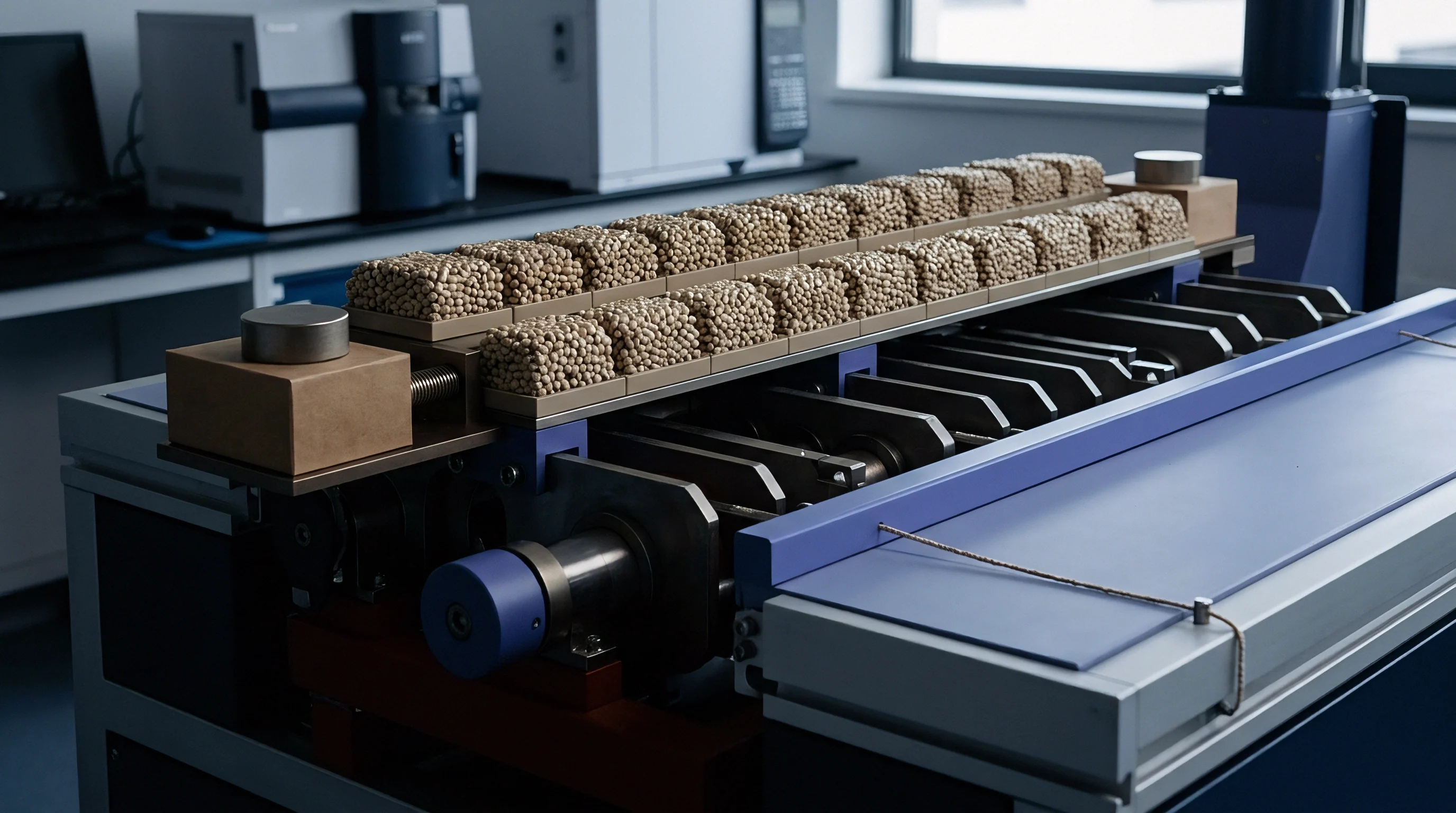
Non-destructive preparative gel permeation chromatography, operating with styrene-divinylbenzene copolymer beads packed in series, separates the large triglycerides from lower-mass migrants based on hydrodynamic volume exclusion.
The exclusion threshold of standard crosslinked polystyrene gels typically cuts off at 800 to 1,000 Daltons. Bio-Beads S-X3, running under atmospheric pressure or moderate backpressure with toluene, cyclohexane, or ethyl acetate mixtures, permits triglycerides (molecular weight roughly 850 to 920 Daltons) to elute in the void volume. Smaller dual-use molecules, such as butylated hydroxytoluene (molecular weight 220.35 Daltons) or free stearic acid (molecular weight 284.48 Daltons), penetrate the internal pore network, delaying their emergence.
High-resolution preparative SEC columns drop the solvent consumption from two hundred milliliters per run down to thirty milliliters, isolating clean additive fractions without thermal stress.
Evaporative concentration follows the size separation. High temperatures above sixty degrees Celsius trigger transesterification between residual glycerides and trace alcohols present in reagent solvents. Maintaining a nitrogen stream inside an automated vacuum evaporation unit prevents thermal breakdown of sensitive antioxidants like propyl gallate (E 310) or ethoxyquin.
Solvents must attain pesticide-grade purity; stabilizer residues from tetrahydrofuran or chloroform mimic synthetic packaging antioxidants during mass spectrometer ionization.
Preparative size exclusion columns clean eighty milligrams of fat per cycle while maintaining baseline resolution between tripalmitin and monostearin.
Calibration standards injected before each sequence dictate the exact fraction cut window. Shifts in laboratory ambient temperature alter solvent viscosity, which nudges the retention volumes of both the triglyceride front and the additive peak. Column jackets connected to circulating water baths hold thirty-five degrees Celsius within two-tenths of a degree.
Injecting a reference mixture composed of refined corn oil spiked with five milligrams per kilogram of synthetic antioxidant verifies baseline separation prior to running compliance extracts. Fractions collected outside the validated retention window forfeit regulatory authority.
A column running cooler than its qualification window broadens peaks and drops cleanup recovery.


Elution

Adsorption Mechanisms across Polar Stationary Phases
Normal-phase adsorption on activated silica gel or diol-bonded particles provides the secondary separation when size exclusion cannot cleanly untangle polar mono- and diglycerides from neutral triglycerides. Silica columns heated to one hundred thirty degrees Celsius for sixteen hours establish reproducible silanol activity. Deactivation with specific water percentages (one to three percent by weight) stabilizes adsorption capacity across variable ambient humidity.
In a typical elution sequence, non-polar hexane fractions wash out hydrocarbons and residual squalene.
Gradient systems using binary mixes of hexane and methyl tertiary-butyl ether resolve fatty acid methyl esters from monoacylglycerols. The monoester forms strong hydrogen bonds with accessible surface silanols, remaining pinned to the stationary phase while diesters and triesters migrate ahead. Adding zero point one percent formic acid suppresses the ionization of unesterified fatty acids, sharpening the chromatographic band.
Recoveries of polar slip additives drop precipitously if basic glass active sites remain unshielded on the silica bed.

Where Does Triglyceride Coelution Break Quantitation Limits?
High-performance liquid chromatography using refractive index or evaporative light scattering detection hits severe baseline instability when fat matrices contain partial glycerides matching the target additives. Natural olive oil contains between zero point five and one point eight percent endogenous 1,2- and 1,3-diglycerides, alongside three-tenths of a percent monoglycerides. When testing polypropylene containers for glycerol monostearate migration into simulant D2, these endogenous fats coelute with the packaging migrant on classical C18 columns.
Silver-ion chromatography solves this positional overlap by exploiting coordination complexes between transition silver ions and olefinic double bonds. Silica impregnated with silver nitrate separates saturated stearates from monounsaturated oleates regardless of chain position. A migrant consisting of pure saturated mono- and diglycerides elutes ahead of unsaturated olive oil decomposition fractions, clearing the analytical path for accurate flame ionization quantification.
| Technique | Stationary Phase | Mobile Phase | Recovery Range | Fat Removal |
|---|---|---|---|---|
| Gel Permeation | Styrene-DVB (Bio-Beads S-X3) | Cyclohexane:Ethyl Acetate (1:1) | 88 to 96 percent | 99.2 percent |
| Solid-Phase Silica | Unbonded Silica (55 µm, 60 Å) | Hexane to Diethyl Ether Gradient | 82 to 91 percent | 96.5 percent |
| Silver-Ion HPLC | Ag-impregnated Nucleosil | Dichloromethane:Methanol (98:2) | 79 to 88 percent | 98.9 percent |
| Reversed-Phase C18 | Octadecylsilane (5 µm, 100 Å) | Acetonitrile:Isopropanol | 71 to 84 percent | 92.1 percent |
Solid-phase extraction cartridges require precise solvent conditioning to prevent premature breakthrough. Conditioning with three column volumes of iso-octane aligns surface tension before fatty extract loading. If sample viscosity impedes gravity percolation, vacuum manifolds must pull no more than five millimeters of mercury to avoid channel formation through the bed.
Channeled beds pass triglycerides directly into the recovery vial, ruining downstream gas chromatography columns.
Contractual purchase orders referencing EN 1186 part two mandate solvent blank subtractions from authenticated matrix spikes before release of payment.
Purchasing specifications demanding compliance with standard EN 13130 dictate that recovery of specific migrants from fatty food simulants must span eighty to one hundred twenty percent with a relative standard deviation under ten percent across six replicates.


Interference
Endogenous lipid compounds present an unyielding barrier to low-level additive quantification. Natural oils contain sterols, tocopherols, free fatty acids, and squalene at concentrations that exceed migrant levels by factors of one thousand. Alpha-tocopherol added to high-density polyethylene as a processing antioxidant sits alongside natural tocopherol isomers (beta-, gamma-, and delta-tocopherol) in sunflower oil.
Gas chromatography coupled with triple quadrupole mass spectrometry in multiple reaction monitoring mode isolates the characteristic daughter fragments, separating synthetic additives from matrix background.
Derivatization steps convert non-volatile, thermally labile dual-use additives into volatile species suitable for high-resolution gas chromatography. Silylation with N,O-bis(trimethylsilyl)trifluoroacetamide (BSTFA) containing one percent trimethylchlorosilane converts hydroxyl groups on monostearin and free fatty acids to trimethylsilyl ethers within thirty minutes at seventy degrees Celsius. Incomplete derivatization produces split peaks, as underivatized active hydrogens interact with liner glass wool and column phase silanols.
Moisture levels above zero point zero five percent in the extract quench the BSTFA reagent, yielding unreacted additives and false low-migration readings.

Are Derivatization Protocols Generating Erroneous Peaks?
Excess silylating agents react with trace water and residual fatty acids, creating polysiloxane contaminants that mimic packaging plasticizers in scan-mode mass spectra. Trimethylsilyl esters of palmitic and stearic acids elute in identical windows to several proprietary ultraviolet stabilizers. Laboratories that run single-quadrupole instruments without retention-time locking protocols misidentify native oil decomposition products as restricted packaging migrants.
Internal standards correct for recovery losses throughout extraction and chromatographic cleanup. Deuterated analogues, such as d4-butylated hydroxytoluene or 13C-labeled glycerol monostearate, compensate for volume shifts during solvent evaporation. The internal standard enters the raw fatty extract before any solid-phase extraction or size exclusion cycle begins.
Calculating concentration against an internal standard spiked at the sample intake stage neutralizes analytical drift caused by sample transfer losses or matrix suppression inside electrospray ionization sources.
- Stable isotope internal standards correct for volume losses across complex multi-step evaporation workflows.
- Retention time locking algorithms adjust column head pressure to anchor target peaks within three-thousandths of a minute across instrument maintenance cycles.
- Matrix-matched calibration curves calibrate detector response against genuine blank oil extract rather than pure organic solvent solutions.
- Chemical ionization screening modes preserve molecular ion integrity for labile packaging additives that fragment completely under standard seventy-electronvolt electron ionization.
Sample throughput slows dramatically when extracts demand serial cleanup. Fast gas chromatography utilizing short microbore columns (ten meters length, zero point one millimeter internal diameter, zero point one micrometer film thickness) cuts analysis times down to six minutes per injection. Operating at high carrier gas linear velocities requires hydrogen gas to retain chromatographic efficiency, demanding atmospheric sniffers and pressure-relief exhaust systems to manage flammability risks inside laboratory environments.
The exact quantitative contribution of endogenous matrix components to the specific migration limit remains open to technical interpretation when virgin oil baselines shift across seasonal harvests.

Dispute

Declaration Mismatches and Article Eleven Exclusions
Article 11(3) of Regulation (EU) 10/2011 governs substances that are simultaneously authorized as food contact additives and direct food additives under Regulation (EC) 1333/2008. Downstream food processors face legal liability if migration from packaging causes a food additive level to exceed authorized limits in the packaged edible oil. Declarations of compliance routinely disclose the identity of dual use additives without stating migration figures, assuming the buyer will conduct final matrix testing.
Sourcing desks receiving raw polymer pellets discover that downstream converter certificates do not match the resin declaration.
A typical documentation failure occurs when a polymer supplier declares calcium stearate as an authorized additive with no specific migration limit, omitting its role as an E 470a salt of fatty acids subject to purity criteria. The food manufacturer packaging refined olive oil then records an apparent violation of overall migration or additive purity because the testing laboratory quantified the migrant as free stearic acid against the food standard. Importers face customs holds when border testing protocols quantify migrating salts as unauthorized processing aids.

Why Do Dual Use Declarations Omit Extraction Yields?
Polymer converters rarely test finished articles against fatty food simulant D2 due to the high cost and analytical difficulty of olive oil extraction. Converters substitute alternative simulants, relying on ninety-five percent ethanol or iso-octane under substitute test conditions set in EN 1186. Iso-octane testing for two days at twenty degrees Celsius or ninety-five percent ethanol for ten days at sixty degrees Celsius exaggerates the swelling of polyolefin matrices, yielding migration values four to ten times higher than actual oil contact.
Discrepancies generate commercial disputes when converters claim product failure based on alternative simulant screening.
Laboratory reports that omit specific matrix spike recovery data generate indefensible compliance certificates during border audits.
Consider a standard procurement construction: a European packaging converter purchases forty tonnes of food-grade polypropylene film containing a dual use slip additive package (nominal zero point two percent erucamide and zero point one percent glycerol monostearate). The supplier dossier certifies overall migration below ten milligrams per square decimeter in three percent acetic acid and ten percent ethanol, but marks simulant D2 testing as mathematically modeled. Testing the film against genuine refined olive oil (ten days at forty degrees Celsius, sixty square decimeters of film contact per kilogram of oil) reveals twenty-eight milligrams per kilogram of endogenous lipid interference masking the additive peaks.
| Declared Additive | EU Dual Use Code | Declared Value | Measured Migration (D2) | Status |
|---|---|---|---|---|
| Glycerol Monostearate | E 471 | Not Disclosed | 14.2 mg/kg (Spike-corrected) | Exceeds 10 mg/kg Target |
| Alpha-Tocopherol | E 307 | Qualitative Mention | 1.8 mg/kg (GPC-cleaned) | Complies (SML 60 mg/kg) |
| Calcium Stearate | E 470a | Listed as Lubricant | 8.6 mg/kg (as Stearate) | Documentation Incomplete |
| Butylated Hydroxytoluene | E 321 | 0.05% w/w in Resin | 2.1 mg/kg (Ag-HPLC) | Complies (SML 3.0 mg/kg) |
The financial fallout lands immediately. The converter holds eighty thousand euros in manufactured laminate rolls that cannot be cleared for market introduction. Independent laboratory testing using preparative size exclusion cleanup costs twelve hundred euros per lot and takes three weeks to validate.
The raw material supplier defends the delivery by asserting that their technical data sheet guaranteed resin composition rather than finished film performance under prolonged fatty food contact.
Converters routinely explain that mathematical migration modeling overrides physical simulant D2 testing across all standard polyolefin grades.

Settlement
Procurement departments mitigate fatty matrix testing exposure by writing explicit analytical purification criteria into raw material supply contracts. Relying on generic supplier declarations leaves the buying brand exposed to mandatory product withdrawals and border rejections under the Rapid Alert System for Food and Feed (RASFF). Contracts must allocate testing costs, define arbitration laboratories, and specify the exact chromatographic purification technique used to resolve dual use migrants from edible oil lipids.
Supply terms governing polyolefin films destined for fatty food contact require specific operational controls:
- Certified analytical method validation covering size-exclusion cleanup and derivatization gas chromatography with documented eighty percent recovery baselines.
- Explicit disclosure of dual use additives identifying E numbers, Chemical Abstracts Service registry numbers, and quantitative inclusion rates in the raw compounding batch.
- Substitute simulant arbitration protocols stating that iso-octane results will be superseded exclusively by preparative GPC extraction against genuine olive oil simulant D2.
- Batch-linked testing certification tying chromatographic migration data to specific production resin lots rather than historical annual qualification dossiers.
The landed cost calculation must incorporate compliance overheads. Running full fatty food migration testing through an accredited facility charging ISO 17025 certified protocols adds between eight hundred and fifteen hundred euros per composite structure. When amortized over a twenty-tonne production order, the testing expense represents zero point zero six euros per kilogram of finished converted packaging.
Skimping on this analytical verification exposes the importer to container rejection fees, warehousing penalties, and product recall liabilities that average two hundred thousand euros per incident.
A contract clause rejecting alternative simulant screening without verified olive oil correlation data shields converters from false positive migration rejections.
Dispute resolution clauses must designate an independent reference laboratory equipped with preparative high-resolution size exclusion chromatography and triple-quadrupole mass spectrometers. When initial border inspections flag suspected migration violations based on uncleaned total extractables, the settlement protocol triggers re-analysis using silver-ion fractionation and isotope-dilution mass spectrometry. If the independent referee confirms the original supplier declaration was inaccurate due to matrix interference, the supplier absorbs all demurrage, re-testing, and associated freight expenses.
Omitting explicit chromatographic extraction clauses from international supply agreements shifts total regulatory liability onto the importing entity when custom officers impound fatty food packaging at destination ports.