Meaning
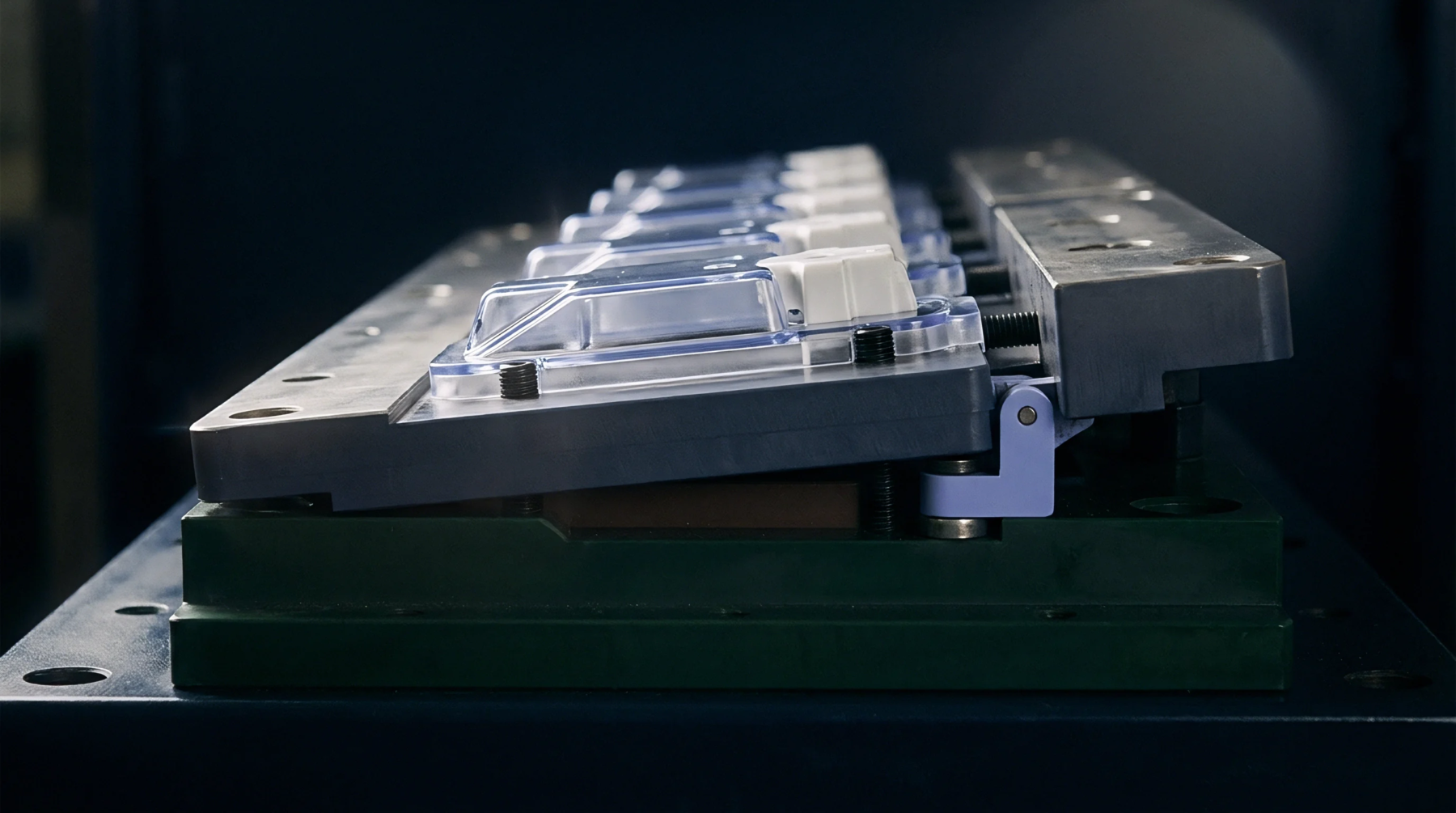
A mechanical component located within an injection mould cavity transmits force through a secondary medium to detect internal pressure without direct contact with the polymer melt. This indirect pressure pin allows sensors to monitor cycle consistency by measuring the compression of a deformable material or the deflection of a baseplate as the cavity fills. It prevents the sensor face from exposure to high temperature resin, which extends service life and improves stability in high volume production environments.
Moulding Dynamics
Tooling engineers select this device to correlate clamping force with internal cavity pressure across complex geometries where direct transducers occupy too much space. The device acts as a buffer between the molten material and the sensitive electronic circuitry of a piezoelectric or strain gauge sensor. Drift occurs when the interface material experiences thermal fatigue or when the clearance between the pin and the mould sleeve gathers particulate matter from the resin.
Virgin material processing requires periodic calibration of these pins to account for subtle changes in viscosity that alter how the force translates through the tool steel.
Resin Specification
Plastic pellets contain specific fillers that modify the transmission of pressure through the cavity walls to the monitoring pin. Base resin grades exhibit predictable flow characteristics, but the addition of glass fibre or mineral fillers changes the thermal expansion coefficient of the moulded part. These variations force adjustments to the alarm thresholds configured on the press controller to avoid false rejections of acceptable parts.
A material specification defines the target range for pressure decay, while a part specification dictates the acceptable variance based on dimensional tolerances.
Production Economics
Regrind usage often mandates a lower sensitivity setting on the monitoring equipment due to the reduced molecular weight of the polymer. Processors accept that the indirect pressure pin provides a relative signal rather than an absolute measurement of cavity pressure. Small changes in the setup translate to different force outputs across a single production run.
Stability of the finished product depends on maintaining the gap between the pin and the mould core as thermal cycling expands the steel components.