Meaning
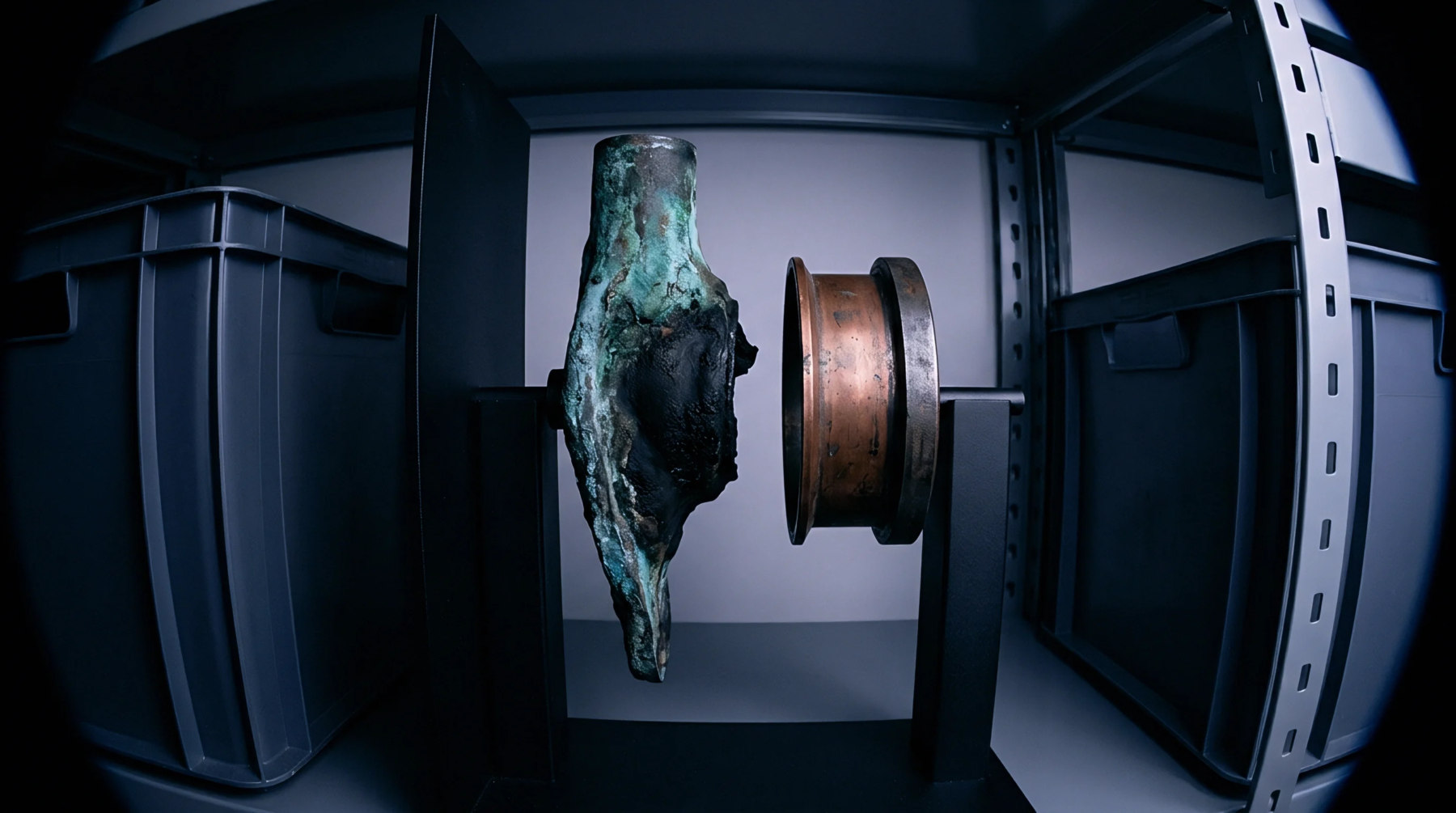
Surface degradation occurs when small-amplitude oscillatory movements take place between two contacting solid bodies under a normal load. Fretting wear develops when these micro-movements prevent the formation of stable protective oxide films on metal surfaces. Repeated cycling removes material debris that subsequently acts as an abrasive, accelerating the removal of substrate layers at the interface.
Contact Mechanics
Moulders observe this phenomenon at the interface of steel inserts and aluminium mould bases where thermal expansion cycles induce microscopic sliding. Fretting wear diminishes the dimensional accuracy of cavity tolerances over production runs. Engineers calculate the expected service life of a tool by monitoring the coefficient of friction and the contact pressure within these joints.
Excess clearance between housing components increases the amplitude of sliding, which leads to deeper pits and eventual structural failure of the tooling assembly. Preventive maintenance involves the application of anti-seize compounds or the use of high-hardness coatings to mitigate the mechanical action.
Surface Integrity
Dimensional stability within a mould relies on the tight fit of core pins and bushings. Fretting wear undermines this fit by eroding the surface material until the clearance exceeds the limits defined for thin-wall injection moulding. Variations in injection pressure during the cycle cause the mould plates to breathe, forcing these surfaces to move against each other.
High-temperature resins exacerbate the situation by accelerating the rate of oxidation and particulate entrapment at the contact points.
Material Economics
Regrind utilization alters the thermal conductivity of a part and influences the cooling time, which indirectly impacts the frequency of thermal expansion cycles in the mould. Machine operators adjust holding pressure to compensate for minor inconsistencies, yet this action changes the clamping force on the mould components. Increasing this force to stabilize the part geometry heightens the risk of surface degradation.
Maintenance costs climb when technicians replace worn inserts prematurely rather than implementing surface treatments that resist oscillatory damage. Proper tool design prioritizes the avoidance of high-frequency vibration to minimize the rate at which parts lose their initial tolerances.