Meaning
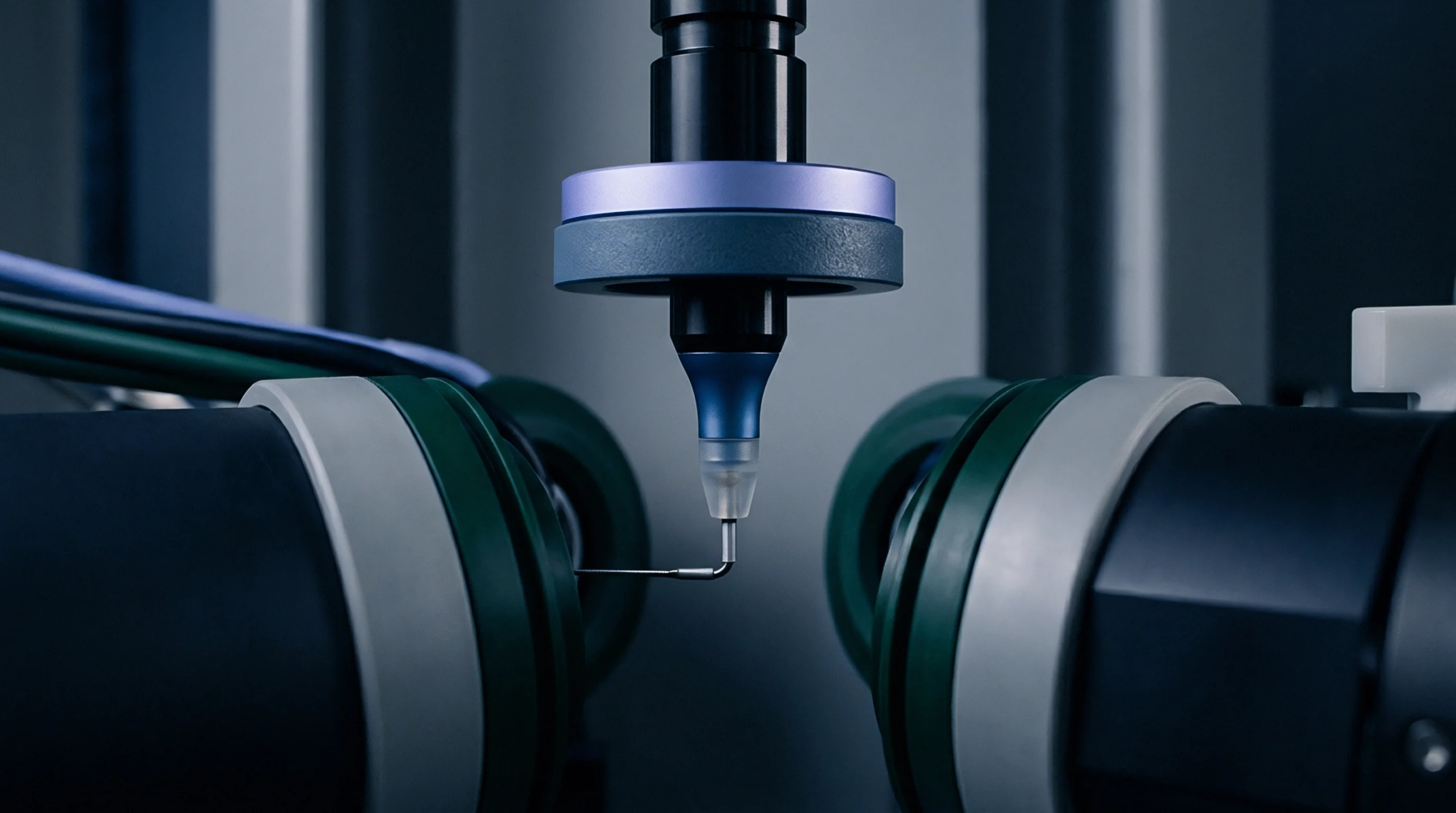
Embedded within an optical fibre integrated into injection moulding tools or resin structural composites, a micro-structured optical filter provides real-time strain and thermal measurements. The installation of a fiber bragg grating reflects specific wavelengths of light while transmitting all others, shifting its peak reflected wavelength in response to localized mechanical strain or temperature changes inside the cavity. Mould designers utilize these sensors to capture high-frequency pressure waves without electrical interference.
Optical measurement stops at points where mechanical bending exceeds the physical fracture limit of the glass fibre core.
Reflectance Response
Periodic variations in the refractive index along the fibre core create a narrowband dielectric mirror. When applied strain stretches the optical fibre, the grating period expands, causing a measurable shift in the reflected Bragg wavelength. Thermal expansion of the silica glass similarly alters the optical path length, producing a concurrent wavelength shift that requires dual-grating compensation schemes to separate strain from temperature.
Precise calibration correlates optical wavelength shifts directly to cavity pressure during the holding phase.
Tool Integration
Routing fragile optical fibres through hardened tool steel requires protective steel tubing and strain-relief channels. Direct contact between the sensor tip and the melt stream demands specialized sealing to prevent resin ingress into the optical channel.
Signal Resolution
Optical sensing immune to electromagnetic noise delivers sub-millisecond response times during the rapid fill phase of thin-wall injection moulding. High sampling rates enable precise detection of melt front arrival at remote cavity positions. Data captured across production runs supports automated ejection control based on actual cavity pressure rather than machine hydraulic pressure.