Karl Fischer Moisture Determination Standards for Recycled Polyethylene Terephthalate Flakes
Coulometric Karl Fischer with oven desorption at 170°C isolates true flake moisture from volatiles to prevent hydrolytic intrinsic viscosity loss.
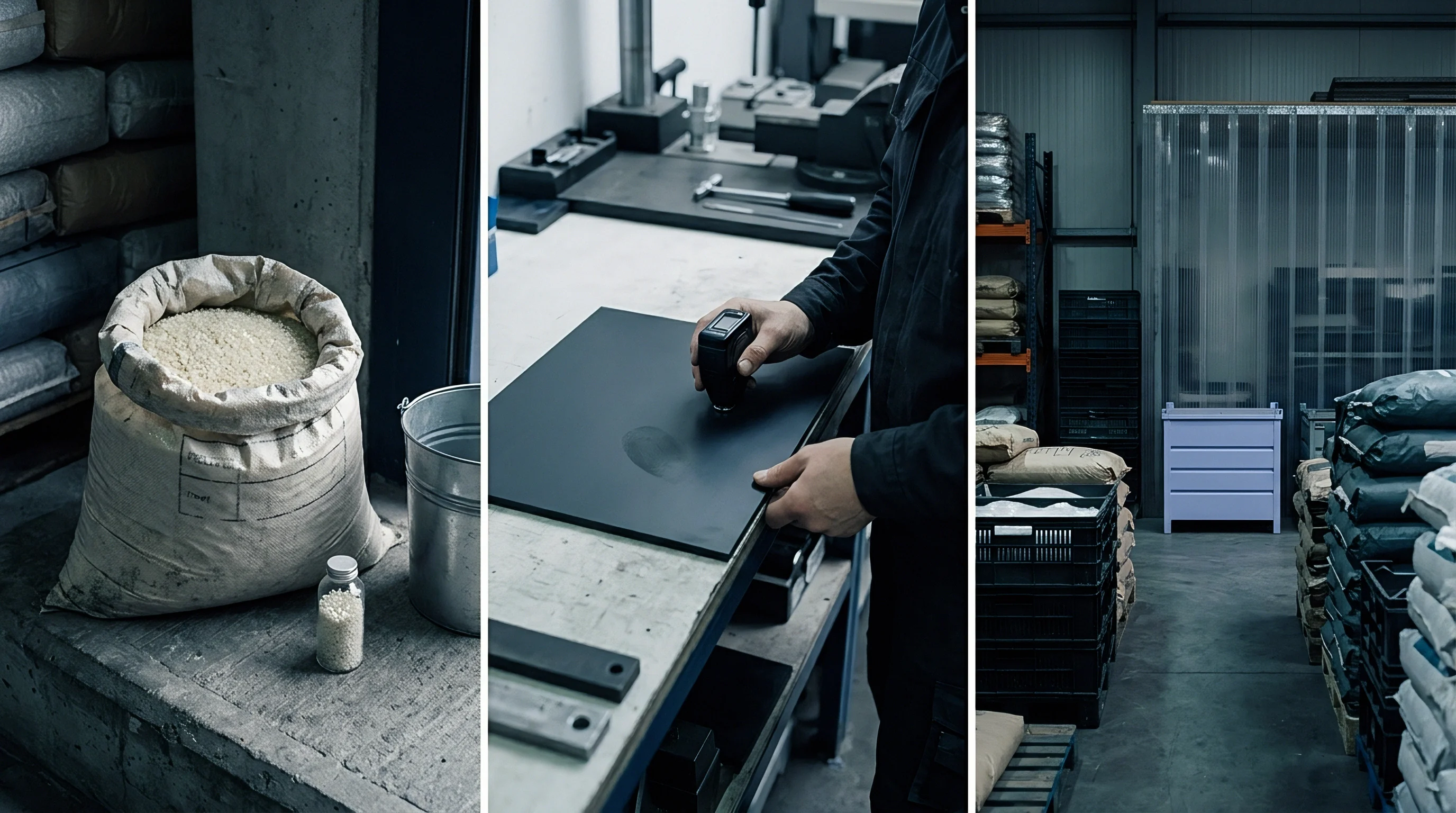
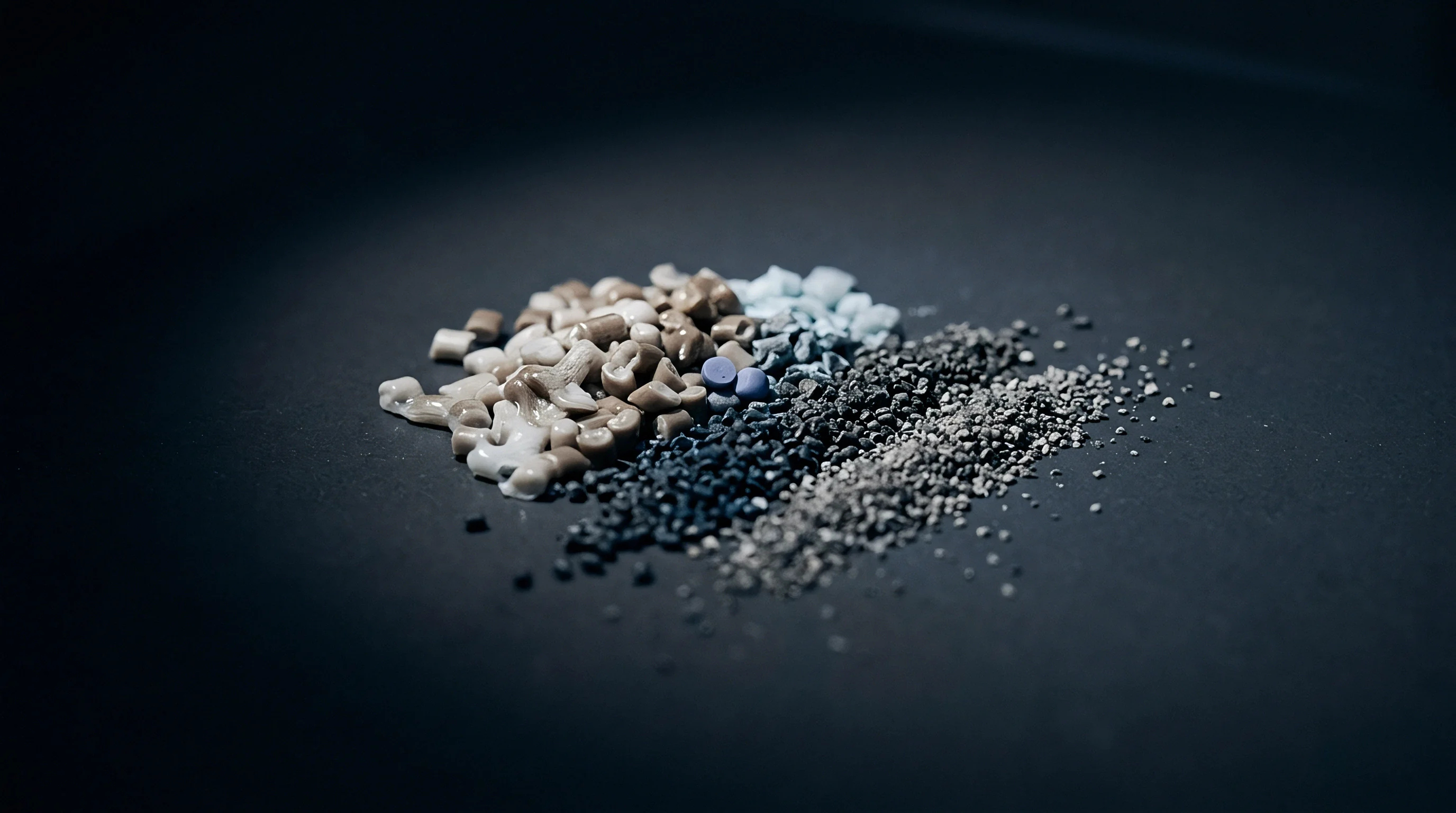
Hydrolysis
Moisture present in post-consumer polyethylene terephthalate induces chain cleavage at elevated melt temperatures, lowering the molecular mass across seconds. Water molecules attack the ester linkages within the polymer backbone at temperatures above the melting point of 255°C, yielding shorter polymer fragments terminated by carboxylic acid and hydroxyl groups. The intrinsic viscosity drops immediately.
This drop reduces melt strength, causes bubble instability in blown film, generates parison sag in blow moulding, and produces brittle preforms that fracture under standard burst pressures. Virgin bottle-grade resin typically enters an injection screw at moisture concentrations below 50 parts per million. Recycled polyethylene terephthalate flakes, sourced from post-consumer collection and aggressive caustic wash lines, arrive at processing facilities holding between 0.3% and 1.5% total water by weight.
Surface moisture comprises the majority of this incoming volume, clinging to the jagged edges and fractured faces of mechanically shredded flake.
Wet flake entered into an extruder barrel destroys polymer chain length before mechanical shear begins.
Drying systems eliminate surface water within minutes, yet equilibrium moisture trapped within the amorphous domains of the flake matrix diffuses outward far more slowly. Processing recycled flake requires drying down to 30 to 50 parts per million for standard injection applications, and below 20 parts per million for industrial strapping or high-draw monofilament extrusion. Infrared balances and loss-on-drying instruments fail to deliver the precision needed for these low thresholds.
Loss-on-drying heating lamps volatilize not only water but also residual wash chemicals, volatile organic compounds, limonene absorbed from beverage flavorings, and unreacted low molecular weight oligomers. The gravimetric balance records every volatilized gram as moisture. An operator relying on gravimetric loss-on-drying risks sending over-dried or chemically degraded flakes into compounding lines while misreading volatile emissions as lingering water content.
- Incoming bale shredding delivers unwashed flakes carrying ambient humidity alongside liquid beverage residue.
- Caustic hot washing introduces surfactant-laden wash liquor into surface micro-cracks under vigorous agitation.
- Centrifugal mechanical dewatering removes bulk surface water, leaving flakes at approximately one percent moisture.
- Desiccant air drying extracts bound interstitial water to meet critical processing thresholds below fifty parts per million.
Standard analytical titration according to ASTM D6869 and ISO 15512 Method B establishes an absolute distinction between true water content and non-aqueous volatile matter. These methods isolate water through controlled thermal desorption in a closed sample vessel, transferring the carrier gas into an electrochemical titration vessel where iodine reacts selectively with water molecules. Inaccurate quantification leads directly to uncorrected hydrolytic degradation during processing, driving scrap rates upward and causing catastrophic structural brittleness in blow-moulded packaging containers.
Furnace
Thermal extraction units vaporize embedded moisture out of solid flake matrices without melting the polymer into an unyielding mass. Both ASTM D6869 and ISO 15512 specify thermal desorption ranges from 160°C to 180°C for polyethylene terephthalate. Solid flake pieces remain below their crystalline melting point inside these boundaries, allowing water vapor to desorb from the polymer matrix while preventing the flake particles from sintering into a solid agglomerate that impedes diffusion.
Raising the thermal chamber past 200°C initiates solid-state ester condensation. Carboxyl end groups react with hydroxyl end groups, producing synthetic water that did not exist in the incoming flake lot. This condensation reaction creates an artificial moisture signal during analysis, falsifying the certificate of analysis and misinforming downstream drying settings.

Does Oven Temperature Alter Reaction Stoichiometry?
Thermal extraction ovens operate by purging the sample chamber with an inert, moisture-free carrier gas. Dry nitrogen or compressed air treated through molecular sieve drying columns moves the vaporized water into the titration medium. Carrier gas dryness dictates background stability.
The gas supply must exhibit a dew point colder than -60°C, translating to less than 2 parts per million of ambient water vapor. Flow rates run between 30 and 50 milliliters per minute. Gas flow rates below 30 milliliters per minute cause condensation inside the sample transfer lines before the vapor reaches the titration cell.
Gas flow rates exceeding 60 milliliters per minute introduce thermal turbulence into the titration cell, accelerating electrolyte solvent evaporation and destabilizing the electrochemical potential reading at the indicator electrode.
A carrier gas velocity of 40 milliliters per minute at 170°C sweeps desorbed water without carrying volatile cyclic trimers into the cell.
Transfer line construction governs measurement integrity. Lines running from the heating furnace to the titration vessel require external electrical trace heating maintained between 110°C and 130°C. Cold spots along this transit path cause water vapor to condense on tube walls, delaying the titration response and generating broad, inaccurate peak shapes. Fluoropolymer tubing lines such as PTFE or PFA minimize surface adsorption compared to unheated stainless steel lines.
Stainless steel components retain polar water molecules along inner metal wall interfaces unless constantly heated. Flakes containing post-consumer contaminants, such as polyolefin labels or hot-melt adhesive remnants, generate secondary decomposition gases when heated. Volatile cyclic trimers, particularly cyclic ethylene terephthalate trimer, sublime at temperatures above 190°C and accumulate as a white crystalline powder inside needle valves and transfer junctions.
Operating the furnace strictly at 170°C desorbs trapped moisture within fifteen to twenty minutes while keeping trimer sublimation below detection thresholds.
| Parameter | ASTM D6869 Standard | ISO 15512 Method B1 | Compounding Floor Protocol |
|---|---|---|---|
| Furnace Setpoint | 170°C to 180°C | 170°C ± 5°C | 165°C to 175°C |
| Carrier Gas Type | High-purity Nitrogen | Dry Nitrogen or Dry Air | Dried Industrial Nitrogen |
| Carrier Dew Point | Below -60°C | Below -60°C | -50°C to -60°C |
| Purge Flow Rate | 30 to 50 mL/min | 30 to 50 mL/min | 40 mL/min |
| Heating Duration | 15 to 25 minutes | Until drift stabilizes | 18 minutes fixed |
| Transfer Line Temp | 110°C to 120°C | 110°C to 130°C | 120°C |
Whether lower desorption temperatures can extract tightly bound moisture from high-crystallinity thick-walled bottle neck flakes remains unresolved across international testing laboratories.
Cell
Electrochemical titration vessels quantify microgram quantities of volatilized moisture through the quantitative conversion of iodide to iodine. Coulometric titration serves as the primary method for post-consumer flake inspection where absolute water levels fall below 1000 micrograms per test sample. Volumetric Karl Fischer titration relies on a mechanical piston burette delivering an iodine-containing reagent into the solvent.
Volumetric dosing lacks the resolution needed to measure dry flake samples accurately, where total titrated water frequently measures under 100 micrograms. Coulometric vessels generate iodine directly within an anolyte solution using an electric current applied across platinum mesh generator electrodes. Faraday’s law governs the transformation.
Ten point seven one coulombs of electrical charge generate exactly one milligram of water-equivalent iodine.
Coulometric titration units utilize either diaphragm or diaphragmless generator cells. Diaphragm cells isolate the cathode chamber from the main anode electrolyte with a porous ceramic frit. This ceramic frit prevents electrolytically reduced species formed at the cathode from migrating back into the anode space and consuming iodine outside the water reaction.
Diaphragm cells provide superior precision at extreme low-moisture levels below 20 parts per million. Diaphragmless cells dispense with the ceramic barrier, relying on modified cathode geometry to minimize back-reactions. Diaphragmless cells avoid the chronic clogging caused when recycled flake contaminants, evaporated plasticizers, or sublimed oligomers lodge inside the micro-pores of ceramic frit structures.
Diaphragmless coulometers eliminate porous frit fouling during long analytical shifts.
The chemical reagent mix balances sulfur dioxide, an organic base, and an alcohol solvent. Methanol serves as the primary solvent in standard Karl Fischer formulations, reacting with sulfur dioxide and the base to form an intermediate alkyl sulfite salt. Water desorbed from the recycled flake oxidizes this alkyl sulfite to an alkyl sulfate in the presence of electrochemically generated iodine.
Imidazole has replaced toxic pyridine as the buffering organic base in current formulation chemistry. Reagents must maintain a pH window between 5.5 and 7.5. Acidic drift slows the reaction rate, causing sluggish endpoints and over-titration, while alkaline drift triggers an unprompted consumption of iodine that registers as false moisture.
- Cathode polarization occurs when reducible volatile organic residues coat platinum surfaces during continuous testing runs.
- Anolyte reagent exhaustion manifests when the total accumulated water exceeds the sulfur dioxide buffering capacity.
- Ceramic frit clogging impedes electrical ion flow across diaphragm cells through particulate contamination.
- Secondary iodine consumption takes place when basic washing additives carry over into the carrier gas stream.
Clear reagents turning dark amber indicate unspent iodine waiting for water vapor entry.

Drift
Background moisture ingress sets the baseline noise floor for every coulometric measurement cycle. Atmospheric humidity constantly penetrates titration vessel seals, septa, and ground-glass fittings. The titration instrument monitors this continuous background consumption of iodine, designating it as the drift rate.
Modern instruments calculate this drift in micrograms of water per minute. Stable analytical setups maintain a baseline drift below 5 micrograms per minute. An elevated drift rate distorts results on dry recycled flakes.
A baseline drift of 15 micrograms per minute operating over a twenty-minute extraction cycle adds 300 micrograms of apparent water to the calculation. If the true sample water content is only 150 micrograms, the uncompensated background leakage triples the reported moisture percentage.
Will Ambient Humidity Distort Sealed Vial Measurements?
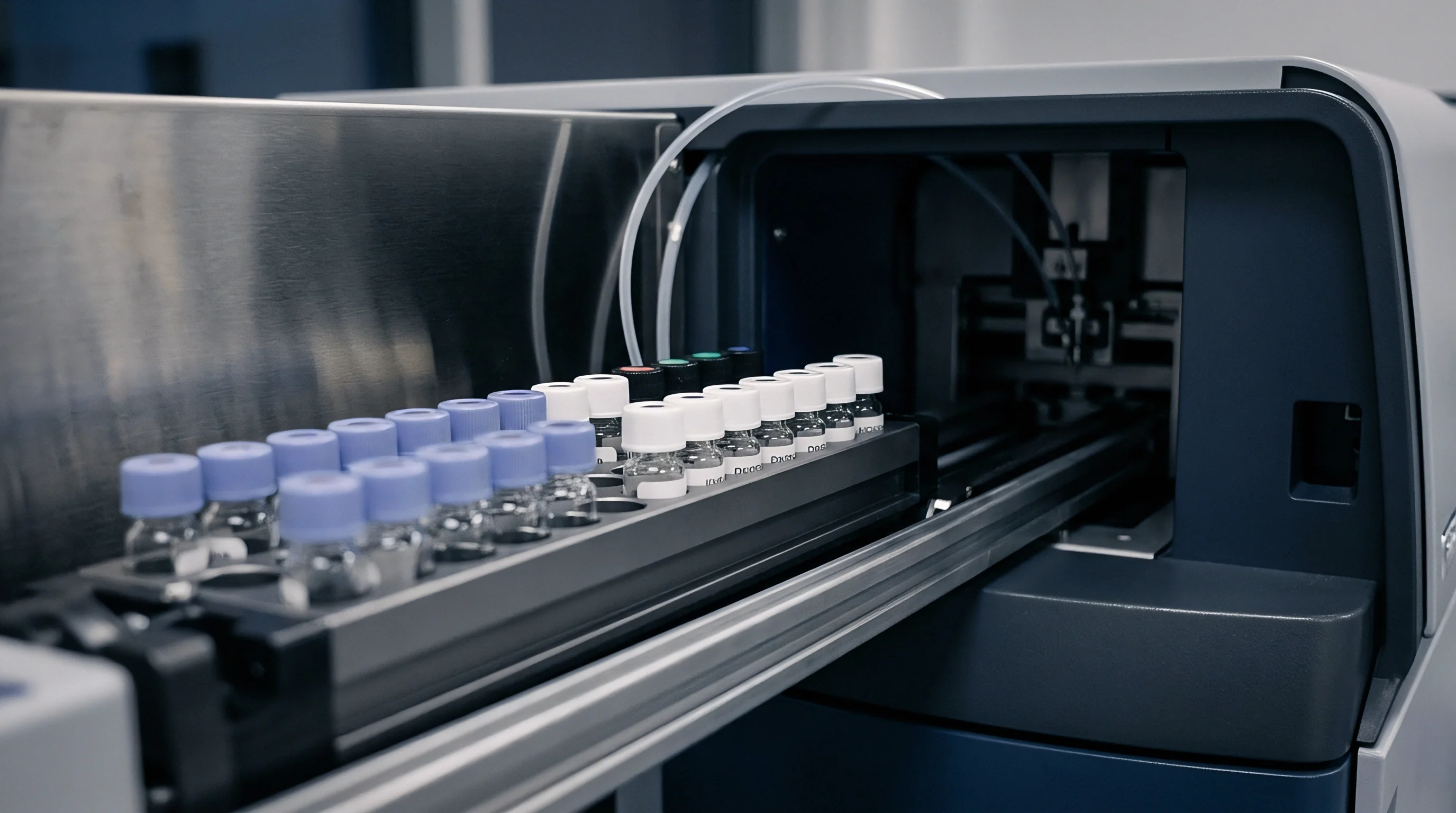
Vial crimping technique establishes the physical boundary between ambient factory humidity and the tested sample. Analytical laboratories processing flake shipments employ headspace autosamplers. These units heat flake samples inside crimped glass vials, using double-sided needle cannulas to inject dry carrier gas and vent desorbed moisture directly to the titration vessel.
Aluminum crimp caps utilize PTFE-laminated silicone septa. The PTFE layer must face downward toward the vial interior to prevent silicone plasticizers from desorbing under heat and entering the gas stream. Septum coring introduces ambient air.
Re-using crimp caps or using dull transfer needles creates fissures in the septum, allowing moist room air to enter during heating cycles. Flakes collected on humid production floors absorb ambient moisture rapidly. Handling exposed flake samples during weighing operations alters true water readings within seconds.
Sample preparation procedures demand consistent handling discipline:
- Tare an empty, pre-dried headspace vial alongside its PTFE-faced crimp cap on a four-place analytical balance.
- Transfer approximately two grams of recycled flake from a sealed barrier foil sample bag using dry metal tweezers.
- Crimp the vial immediately using a calibrated pneumatic crimper to achieve a uniform gas-tight seal.
- Record the precise mass to zero point one milligram resolution before loading into the autosampler rack.
- Process empty sealed blank vials at the start of each analytical queue to determine the ambient vial cavity moisture.
The vendor stated the sample must have sat exposed on the loading dock before the receiving team crimped the vials.
Assay
Quantitative determination of residual water demands rigorous alignment between flake sample mass and detector sensitivity limits. Test precision depends on releasing an absolute water quantity that falls safely above instrument detection limits while avoiding overloading the titration cell. ASTM D6869 mandates a minimum consumption of 100 micrograms of water per titration run to maintain statistical validity.
Testing a dried flake lot with a suspected water content of 40 parts per million requires a sample mass of at least 2.5 grams to release 100 micrograms of water vapor. Conversely, analyzing an un-dried washed flake holding 0.5% water with a 2.5-gram mass releases 12,500 micrograms of water. This massive moisture volume exhausts the anolyte reagent, saturates the detector, and prolongs titration times beyond forty minutes.
The general equation for water content in parts per million by weight follows a direct subtraction of background and blank contributions:
W = ((C – (B × t) – V) / M) × 1000
In this relationship, W represents the final calculated moisture content in parts per million. C is the total mass of water detected by the coulometer in micrograms. B is the system baseline drift rate in micrograms per minute.
The variable t is the duration of the heating cycle in minutes. V is the blank value of the sealed empty vial in micrograms of water, and M is the net mass of the flake sample in grams. The factor of 1000 scales micrograms per gram into parts per million.
Consider a practical testing sequence on a 40-tonne consignment of washed, clear recycled polyethylene terephthalate flakes intended for sheet extrusion. The target specification sets moisture below 50 parts per million after desiccant hopper drying. Incoming quality inspection pulls five distinct sample bags across the consignment.
The analyst samples 2.0542 grams of dried flake into a sealed vial. The heating furnace operates at 170°C for 18 minutes with a dry nitrogen flow of 40 milliliters per minute. The coulometer records a total water signal of 188.4 micrograms.
The baseline drift rate B measures 3.2 micrograms per minute. The empty vial blank V accounts for 18.5 micrograms of ambient water trapped during crimping. Multiplying the drift rate of 3.2 micrograms per minute by 18 minutes yields 57.6 micrograms of background drift.
Subtracting 57.6 micrograms of drift and 18.5 micrograms of vial blank from the total recorded 188.4 micrograms leaves a net sample water mass of 112.3 micrograms. Dividing 112.3 micrograms by 2.0542 grams gives a verified moisture concentration of 54.7 parts per million.
| Trial Number | Sample Mass (g) | Gross Water (µg) | Drift & Blank (µg) | Net Water (µg) | Result (ppm) |
|---|---|---|---|---|---|
| Run 1 | 2.0542 | 188.4 | 76.1 | 112.3 | 54.7 |
| Run 2 | 2.1105 | 184.2 | 74.5 | 109.7 | 52.0 |
| Run 3 | 1.9874 | 179.6 | 75.8 | 103.8 | 52.2 |
| Run 4 | 2.0231 | 182.1 | 75.2 | 106.9 | 52.8 |
| Run 5 | 2.1450 | 193.5 | 76.8 | 116.7 | 54.4 |
| Mean Moisture: 53.2 ppm; Standard Deviation: 1.22 ppm; Relative Standard Deviation: 2.29% | |||||
ASTM D6869 Section 12 dictates that inter-laboratory repeatability limits must not exceed 10% relative standard deviation at moisture levels below 100 parts per million, voiding testing runs where consecutive duplicate measurements differ by more than five parts per million.
Settlement
Commercial invoices for post-consumer flake consignments balance raw wash weight against dry polymer yield. Moisture content serves as a financial deduction index on bulk purchasing agreements. Water weight purchased at polymer pricing erodes compounding margins immediately.
A 20-tonne shipping container of flake delivered at 1.8% moisture carries 360 kilograms of water. At a spot price of 1,200 dollars per metric tonne, the buyer pays 432 dollars in raw material cost for water, alongside dead freight charges for hauling unnecessary mass across international borders. Supply contracts specify standard moisture deductions.
If flakes arrive above an agreed reference baseline of 1.0% moisture, the gross invoiced weight is reduced proportionally to reflect net dry polymer delivery. Sourcing desks establish contractual penalty tiers linked to incoming moisture ranges.
| Moisture Band | Commercial Action | Billing Adjustment | Operational Remediation |
|---|---|---|---|
| Below 0.80% | Accepted at Par | No invoice adjustment | Standard drying cycle |
| 0.81% to 1.20% | Contract Baseline | Zero deduction tier | Standard drying cycle |
| 1.21% to 2.00% | Weight Credit Applied | Full mass deduction over 1.0% | Extend pre-crystallization dry time |
| 2.01% to 3.50% | Penalty Deduction | Mass deduction plus drying energy fee | Double pass through rotary desiccant |
| Above 3.50% | Rejection Threshold | Consignment return or re-wash credit | Lot diverted from extrusion silo |
The landed cost calculation incorporates energy expenditures associated with drying wet flake. Removing residual moisture from recycled flakes inside industrial desiccant drying hoppers consumes electrical energy. Raising moisture from 0.8% to 2.5% doubles the necessary residence time within hot-air dehumidifying hoppers.
This extension drops throughput from 1,000 kilograms per hour down to 600 kilograms per hour, inflating the conversion cost per kilogram of extruded sheet. In severe cases, high moisture causes flakes to bridge in crystallizer hoppers, welding particles together as amorphous surfaces soften before drying finishes.
Commercial settlement disputes default to oven Karl Fischer coulometry as the sole binding arbitration method.
Dispute resolution clauses in international polymer trading contracts designate ASTM D6869 or ISO 15512 Method B as the binding referee method. When receiving inspection flags an out-of-specification moisture reading, suppliers often challenge the finding by presenting internal loss-on-drying records from their washing lines. The supplier data invariably reports lower apparent moisture due to uncalibrated halogen balances or improper sample cooling after extraction.
The referee protocol requires sampling from three unopened bulk bags in the presence of an independent surveyor. Samples enter nitrogen-purged foil barrier bags, sealed hermetically with heat bars, and travel to an accredited ISO 17025 testing facility. The independent laboratory executes triplicate oven Karl Fischer coulometric titrations at 170°C. Sourcing agreements stipulate that the losing counterparty pays the full analytical testing fee alongside demurrage fees incurred while container lots sit idle at processing docks.