Evaluating Antioxidant Retention in Recycled Polyethylene Pellet Lots
Verify antioxidant retention in recycled polyethylene lots using ASTM D3895 oxidation induction times and liquid chromatography to prevent field failures.

Inventory
Basal Loading and Depletion Profiles
Incoming post-consumer polyethylene arrives with a fragmented stabilization history. Primary hindered phenols and secondary organophosphites added during prime synthesis undergo continuous thermal, shear, and chemical consumption across multiple compounding cycles. Evaluating antioxidant retention in recycled polyethylene pellet lots requires quantifying active additive mass fractions alongside oxidized degradation products.
Secondary phosphites, predominantly tris(2,4-di-tert-butylphenyl)phosphite, oxidize rapidly into phosphates during melt processing at 190 to 230 degrees Celsius. Sterically hindered phenols, such as tetrakis(methylenecarboxymethyl)methane derivatives, transform into conjugated quinone methides and dimerization products. The resulting pellet lot exhibits an altered protective capacity despite maintaining nominal melt flow characteristics.
Acceptance protocols for post-consumer recyclate must screen for both active stabilizer molecules and conversion compounds. High-density polyethylene detergent bottle regrind typically carries residual primary phenol fractions between 200 and 800 milligrams per kilogram, down from baseline prime additions of 1000 to 1500 milligrams per kilogram. The phosphite component shows severe depletion, falling below 100 milligrams per kilogram in unfortified reprocessed lots.
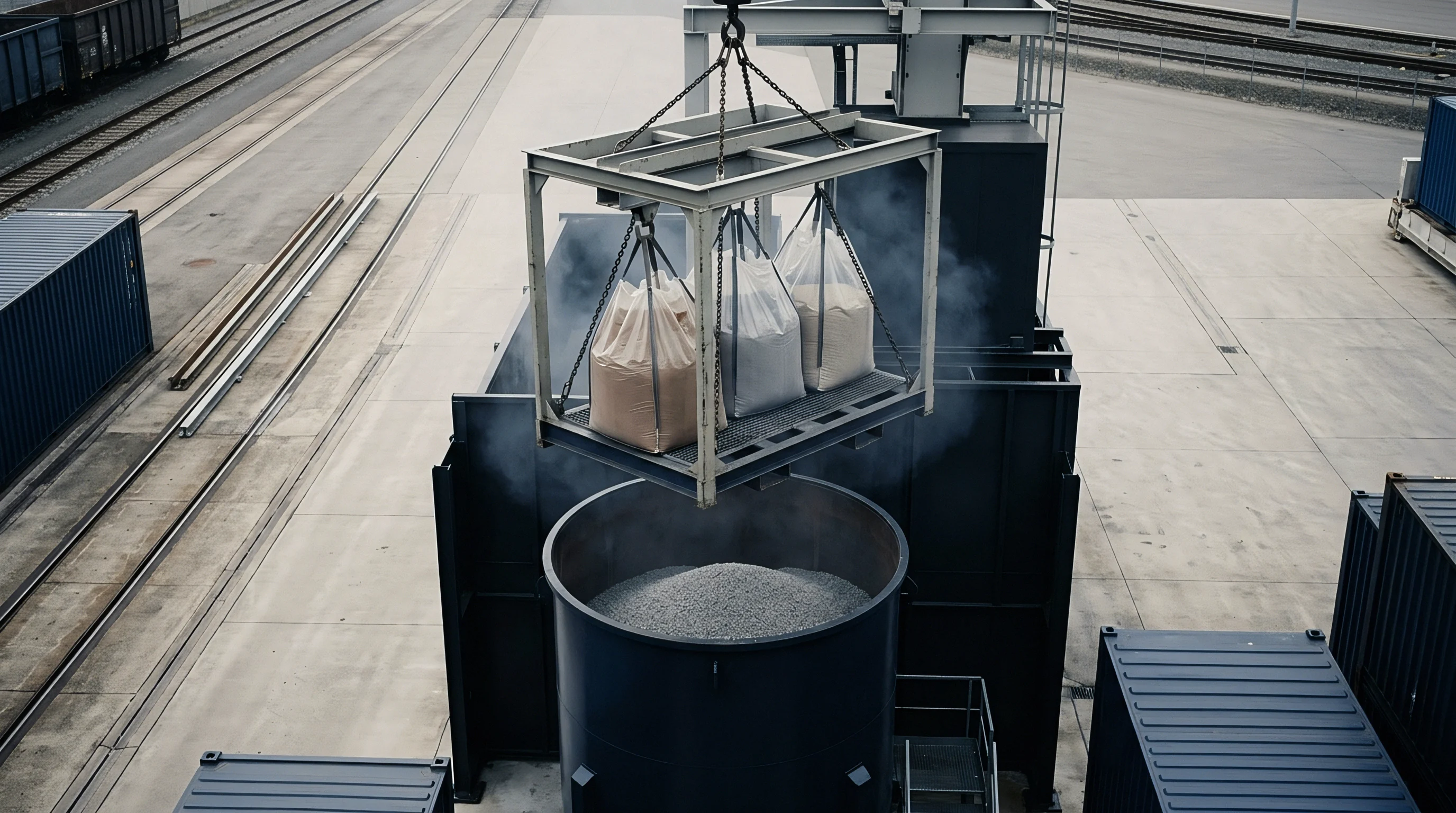
Relying on baseline prime additive recipes leads to premature brittle failure during conversion or downstream exposure. Receiving facilities perform quantitative solvent extraction followed by chromatography to map the actual stabilizer inventory prior to approving railcar or bulk bag discharge.
A resin lot lacking secondary phosphite retention develops gel clusters and broad molecular weight drift inside the compounding barrel.
Pellet color shifts correlate directly with phenol transformation chemistry. Phenolic degradation pathways yield stilbenequinones and related chromophores, causing distinct yellowing quantified by ASTM E313 yellowness index measurements exceeding 8 to 12 units. A compounder may mask this optical shift by adding ultramarine blue or optical brighteners without addressing stabilizer starvation.
Spectroscopic evaluation bypasses optical masking to resolve actual chemical inventory.
A supplier often claims that standard processing aids present in the pellet lot provide sufficient thermal stability for injection moulding or blown film extrusion.


Chromatography
Solvent Extraction Protocols
Direct quantification of additive payloads isolates low-molecular-weight stabilizers from the insoluble semicrystalline polyethylene matrix. Standard extraction relies on total dissolution followed by precipitation, or pressurized fluid extraction conducted near the polymer softening point. ASTM D6953 specifies ultrasonic extraction for low-density polyethylene, while ASTM D7210 details liquid chromatographic extraction procedures across polyolefin grades.
Slicing pellets into microtome shavings under 250 micrometers accelerates mass transfer, preventing incomplete diffusion from pellet cores that artificially depresses measured stabilizer concentration.
Total dissolution requires high-boiling aromatic solvents. Refluxing 2.0 grams of ground polyethylene in 50 milliliters of ortho-dichlorobenzene, toluene, or xylene at 130 degrees Celsius breaks crystalline lamellae entirely. Adding chilled methanol, acetone, or 2-propanol precipitates high-molecular-weight polymer chains while holding hindered phenols and phosphites in the liquid phase.
Centrifugation at 4000 revolutions per minute separates fine polymer fibrils, yielding a clean supernatant suitable for chromatographic injection. Extraction duration spans 30 to 90 minutes depending on pellet comminution efficiency.

Liquid Separation Parameters
Reversed-phase high-performance liquid chromatography separates extracted stabilizers using hydrocarbon-bonded stationary phases. An octadecylsilane silica column with 3.0 to 5.0 micrometer particle sizes provides baseline resolution for complex blends containing primary phenols, active phosphites, oxidized phosphates, and low-molecular-weight hindered amine light stabilizers. Mobile phase compositions utilize gradient elution profiles alternating between acetonitrile, water, and tetrahydrofuran or methyl tert-butyl ether.
Maintaining column temperature at 40 degrees Celsius stabilizes retention times across multi-hour analytical sequences.
Detection relies on variable-wavelength ultraviolet spectrophotometry or diode array detection. Sterically hindered phenols display characteristic absorbance maxima between 276 and 284 nanometers, while active phosphites absorb selectively near 200 to 210 nanometers. Monitoring the specific phosphite conversion ratio involves comparing peak area integration of the active phosphite against the oxidized phosphonate or phosphate species.
Liquid chromatography coupled to tandem mass spectrometry extends detection limits down to 1.0 milligram per kilogram, isolating proprietary secondary scavengers or metal deactivators commonly blended into post-consumer electrical and agricultural collection streams.
| Analyte Compound | Retention Window (min) | Detection Wavelength (nm) | Linear Dynamic Range (mg/kg) | Quantification Limit (mg/kg) |
|---|---|---|---|---|
| Octadecyl 3-(3,5-di-tert-butyl-4-hydroxyphenyl)propionate | 4.2 to 4.8 | 278 | 10 to 2500 | 5.0 |
| Tetrakis(methylene(3,5-di-tert-butyl-4-hydroxyhydrocinnamate))methane | 7.1 to 7.8 | 276 | 15 to 3000 | 8.0 |
| Tris(2,4-di-tert-butylphenyl)phosphite | 11.3 to 12.1 | 210 | 10 to 2000 | 5.0 |
| Tris(2,4-di-tert-butylphenyl)phosphate (Oxidized Form) | 9.8 to 10.4 | 215 | 10 to 2000 | 5.0 |
| Bis(2,4-di-tert-butylphenyl)pentaerythritol diphosphite | 6.4 to 7.0 | 210 | 20 to 1500 | 12.0 |
Coupling supercritical fluid extraction to chromatography eliminates liquid chemical solvent disposal requirements. Supercritical carbon dioxide modified with 5 to 10 volume percent ethanol extracts additives at pressures between 25 and 35 megapascals and temperatures of 50 to 70 degrees Celsius. The fluid penetrates swollen amorphous polyethylene regions rapidly, stripping additive reservoirs without solubilizing high-molecular-weight polymer fractions.
Extracts vent directly into automated traps, shortening sample turnaround from four hours to forty minutes for high-throughput receiving yards.
Thin-layer chromatography delivers rapid qualitative sorting during uncoupling of bulk railcars. Silica gel plates loaded with fluorescent indicators reveal the presence or complete absence of active phenolic fractions under 254-nanometer illumination within fifteen minutes. When chromatographic tracks show sole presence of oxidized phosphate spots with absent phosphite zones, testing advances immediately to thermal oxidation methods before offloading resin.
The purchase specification defines whether non-detected phosphite fractions trigger immediate lot return or require re-stabilization price adjustments.


Induction

Thermal Oxidation Protocols
Differential scanning calorimetry measures oxidative induction time to determine residual stabilization capacity. Standard evaluation adheres to ASTM D3895 or ISO 11357-6 using open aluminum pans or specialized multi-hole sample holders. The instrument heats an individual test specimen weighing 5.0 milligrams, plus or minus 0.5 milligrams, under continuous high-purity nitrogen purge at a linear rate of 20 degrees Celsius per minute to an isothermal plateau of 200 degrees Celsius.
After achieving temperature equilibrium over a five-minute holding phase, the gas purge switches automatically from nitrogen to zero-grade oxygen at a controlled volumetric flow rate of 50 milliliters per minute.
The exothermic onset signifies catastrophic autocatalytic oxidation of the molten polyethylene matrix. The instrument records oxidative induction time as the interval from the initial oxygen contact to the intersection of the extrapolated baseline and the steepest tangent slope of the oxidation exotherm. Prime virgin high-density pipe grades exhibit induction times exceeding 60 to 100 minutes at 200 degrees Celsius.
Unstabilized post-consumer scrap lots routinely undergo thermal runaway within 1.5 to 4.0 minutes under identical test parameters, exposing severe degradation vulnerability.
ASTM D3895 oxidation induction times below ten minutes at 200 degrees Celsius indicate near-total consumption of process stabilizers.
Modulating the test temperature resolves stabilization profiles in highly stabilized recyclates. Operating at 210 or 220 degrees Celsius compresses test times for durable exterior grades carrying high-performance hindered amine chemistries. Lowering isothermal setpoints to 190 degrees Celsius isolates volatile phosphite stripping from true chemical depletion in low-density film resins.
Specifying exact temperature controls remains critical because the apparent activation energy of antioxidant consumption produces a twofold rate increase for every ten-degree temperature elevation.
High-Pressure Testing Adjustments
High-pressure differential scanning calorimetry overcomes evaporation artifacts common to volatile antioxidant compounds. ASTM D5483 dictates test pressures between 3.4 and 3.6 megapascals of pure oxygen, suppressing the vaporization of low-mass phenolics before chemical oxidation begins. High-pressure testing lowers required thermal run temperatures to 150 or 170 degrees Celsius, matching actual extrusion barrel conditions closer than ambient-pressure melting arcs.
Recycled polyethylene lots containing legacy automotive or agricultural components require this high-pressure route to prevent erroneous low induction time readings driven by additive volatilization rather than consumable exhaustion.
Sample comminution methods alter oxidative induction time reproducibility across duplicate runs. Punching specimens from compression-moulded plaques yields consistent surface-to-volume ratios compared to testing irregularly shaped raw pellet slices. Direct testing of raw pellet slices induces baseline drift from micro-voids, variable skin oxidation depths, and trapped air.
Moulding uniform plaques under a nitrogen blanket at 160 degrees Celsius ensures homogenous thermal contact with the pan base, restricting sample thickness to 0.50 millimeters, plus or minus 0.05 millimeters.
Does sample morphology shift oxidative induction measurements across recycled pellet lots? Preparing plaques uniformly smooths out cross-pellet compositional variations, while un-melted raw pellet testing isolates the true additive gradient created by compounding quench inconsistencies.
Differential thermal analysis provides a secondary screening metric through oxidative induction temperature. The instrument heats the specimen continuously in an active oxygen atmosphere at 10 degrees Celsius per minute without an isothermal dwell. The temperature corresponding to the exothermic oxidation baseline departure marks the oxidative decomposition threshold.
Recycled high-density polyethylene pellet lots stabilized for pipe or rotational moulding applications must achieve onset temperatures above 225 degrees Celsius under continuous oxygen flow.
A failed induction test invalidates the standard manufacturer warranty covering environmental stress crack resistance.


Carbon
Infrared Spectroscopic Bands
Attenuated total reflectance Fourier-transform infrared spectroscopy interrogates polymer surface oxidation and residual additive payloads without solvent handling. Polyethylene degradation introduces distinct oxygenated functionalities along the aliphatic chain backbone. The carbonyl stretching region between 1650 and 1780 inverse centimeters reveals the progressive accumulation of degradation sub-species.
Deconvolving this broad spectral envelope identifies specific decomposition mechanisms active within the recycled lot.
Processing chain scission generates multiple distinct carbonyl profiles across standard infrared bands:
- Ketone Carbonyl Absorbance peaks sharply at 1715 inverse centimeters, forming the predominant terminal oxidation byproduct of high-temperature shear degradation.
- Ester Carbonyl Functionality resolves at 1735 inverse centimeters, originating from thermal breakdown fragments of high-molecular-weight hindered phenolic ester linkages.
- Carboxylic Acid Groups appear centered at 1705 inverse centimeters, indicating advanced autocatalytic oxidation and moisture-promoted chain termination.
- Aldehyde Stretch Bands produce shoulder features at 1725 inverse centimeters, marking active free radical beta-scission of secondary alkoxy macro-radicals during compounding.
- Unsaturated Vinyl Termini emerge between 905 and 910 inverse centimeters, generated through Norrish type II photochemical cleavage or thermal elimination.
Calculating the carbonyl index provides a standardized metric for lot baseline degradation. ASTM 5576 outlines spectral integration parameters comparing the area under the carbonyl absorption band against an invariant polyethylene reference peak. The methylene rocking vibrational band at 1378 inverse centimeters or the skeletal deformation band at 2020 inverse centimeters serves as internal reference standards resistant to thermal degradation.
A raw recyclate lot exhibiting an initial carbonyl index above 0.15 indicates extensive historical damage, demanding elevated baseline stabilizer additions simply to survive remelting.
Additive Spectral Detection
High-resolution spectrometers resolve hindered phenol payloads by tracking isolated fingerprint absorptions outside the crowded aliphatic region. Sterically hindered phenolic hydroxyl groups produce a sharp, non-hydrogen-bonded stretching vibration at 3650 inverse centimeters. This free hydroxyl band declines in direct proportion to antioxidant scavenging reactions, giving way to broad intermolecularly bonded hydroxyl features centered near 3450 inverse centimeters.
Secondary phosphite compounds reveal P-O-C aromatic ether stretching at 850 and 1080 inverse centimeters, while oxidized phosphate breakdown products yield distinct phosphorus-oxygen double bond absorbances at 1190 to 1250 inverse centimeters.
Spectroscopic mapping across cross-sectioned pellets uncovers localized stabilizer depletion zones. Ambient water quenching during pelletization strips water-soluble or hydrolytically sensitive phosphite stabilizers from pellet exteriors, leaving core domains intact. Slicing pellets into 20-micrometer sections via cryogenic microtomy allows step-scanning infrared microscopy from the pellet periphery to its core.
Pellets exhibiting outer-edge antioxidant starvation generate micro-gels and black specks during profile extrusion, even when bulk spectroscopic averages show acceptable stabilizer numbers.
How do surface contamination films disrupt infrared baseline accuracy? Residues of fatty acid metal soaps and migratory slip additives produce ester absorbances that artificially inflate measured polymer oxidation indices.
A lot exhibiting high baseline carbonyl absorption coupled with absent free phenol stretching cannot retain mechanical strength through secondary moulding operations.

Melt

Rheological Degradation Markers
Measuring the melt flow rate under varying shear stresses exposes hidden macromolecular architecture changes caused by stabilizer starvation. Polyethylene degradation pathways divide into two opposing rheological mechanisms driven by operational temperature and oxygen concentration. In high-density polyethylene, free radical termination favors chain branching and cross-linking, which lowers melt flow rates.
Conversely, linear low-density and low-density polyethylene formulations undergo dominant chain scission mechanisms, breaking main chains and dramatically increasing melt flow rates. Evaluating antioxidant retention requires isolating these molecular weight shifts across repeated extrusion passes.
Melt flow rate testing adheres to ISO 1133 or ASTM D1238, using Condition 190 degrees Celsius with a 2.16-kilogram standard weight. Assessing resin stability demands multi-pass extrusion trials coupled with high-load measurements using the 21.6-kilogram weight to calculate the Flow Rate Ratio. This ratio divides high-load melt flow by standard melt flow, functioning as a direct proxy for molecular weight distribution breadth.
An un-stabilized pellet lot subjected to five consecutive passes through a 25-millimeter laboratory extruder displays severe Flow Rate Ratio broadening, drifting from an initial value of 28 to figures exceeding 45.
Flow Rate Ratio expansions exceeding twenty percent across three extrusion cycles confirm the complete operational absence of secondary melt process stabilizers.
Dynamic oscillatory shear rheology on parallel-plate instruments maps macromolecular degradation with greater precision than capillary flow barrels. Testing sweeps angular frequencies between 0.01 and 100 radians per second at 190 degrees Celsius under a continuous dry nitrogen blanket. Monitoring changes in the crossover frequency, where storage modulus equals loss modulus, identifies the exact onset of molecular weight distribution broadening.
Stabilizer-depleted lots demonstrate immediate shifts of the crossover point toward lower frequencies and lower moduli values, signaling the generation of long-chain branches.
| Extrusion Cycle Pass | MFR 190 °C / 2.16 kg (g/10 min) | MFR 190 °C / 21.6 kg (g/10 min) | Flow Rate Ratio (21.6 kg / 2.16 kg) | Zero-Shear Viscosity (Pa·s) |
|---|---|---|---|---|
| Pass 0 (Incoming Pellet) | 0.75 | 22.5 | 30.0 | 14200 |
| Pass 1 (Re-compounded) | 0.68 | 21.8 | 32.1 | 15800 |
| Pass 2 (Extended Shear) | 0.54 | 19.4 | 35.9 | 18900 |
| Pass 3 (Depleted Reserve) | 0.38 | 16.7 | 43.9 | 24100 |
| Pass 4 (Terminal Gelation) | 0.21 | 12.2 | 58.1 | 38500 |
Extensional rheology exposes polymer melt weaknesses that shear measurements miss entirely. Stabilizer starvation during film blowing causes bubble instability, localized thickness variation, and web breaks. Filament stretching rheometers or Sentmanat extensional fixtures reveal strain hardening behavior shifts induced by trace long-chain branching.
When secondary phosphite stabilizers fail, unregulated macroradical combination creates hyper-branched architectures that over-stiffen the extensional response, choking thin-gauge die lips and driving motor load spikes.
Pellet-to-pellet melt index variance within a single commercial container points to poor post-consumer lot blending. Incoming acceptance plans draw composite core samples from front, middle, and rear compartments of bulk trailers. A melt flow rate spread broader than plus or minus 0.15 grams per 10 minutes at 190 degrees Celsius with 2.16 kilograms indicates blended batches possessing mismatched stabilizer reserves, guaranteeing downstream processing drift.
Uncontrolled viscosity escalation plugs screen changers and shifts injection cavity fill pressures outside standard operating windows.


Qualification

Economic Re-Stabilization Models
Evaluating antioxidant retention establishes the financial baseline for restorative compounding. Sourcing depleted post-consumer polyethylene lots requires immediate restabilization before converting the material into high-value molded or extruded industrial products. An incoming lot carrying zero residual phosphite and minimal active phenol demands additive supplementation during masterbatch compounding or secondary extrusion.
The delivered price per metric ton must account for chemical additive loading, carrier resin dilution, and compounder processing fees.
Consider a sourcing scenario where an operations team contracts a 100-metric-ton lot of recycled high-density polyethylene pellets at a quoted spot price of 920 dollars per metric ton delivered. Quality testing reveals an oxidative induction time of 4.2 minutes at 200 degrees Celsius, requiring chemical stabilization to meet a technical pipe-grade specification demanding an induction time exceeding 40 minutes. Restoring this material demands adding 0.15 weight percent of a standard binary blend containing one part sterically hindered phenol to two parts organophosphite, alongside 0.10 weight percent of a calcium stearate acid scavenger.
Compounding market costs assign 8.50 dollars per kilogram to the binary antioxidant package and 3.20 dollars per kilogram to the calcium stearate. Introducing this stabilization package through a 50 percent concentrated masterbatch adds carrier resin and compounding toll fees amounting to 140 dollars per metric ton. The chemical addition costs calculate directly across the lot tonnage:
- Binary antioxidant addition requires 1.5 kilograms per ton, generating 12.75 dollars per metric ton in raw additive expense.
- Acid scavenger addition requires 1.0 kilogram per ton, adding 3.20 dollars per metric ton.
- Toll blending, loss allowances, and masterbatch compounding fees total 145.00 dollars per metric ton.
- Incoming laboratory verification testing adds 800 dollars per 25-ton silo, contributing 32.00 dollars per metric ton.
- The effective landed raw material cost escalates from 920.00 dollars to 1112.95 dollars per metric ton to achieve functional equivalency.
Failing to verify stabilizer retention prior to issuing payment leaves the buyer bearing complete financial exposure for material downgrading. Depleted lots run without restabilization fail slow crack growth standards, including ASTM F1473 Pennsylvania Notch Tests or ISO 13479 notched pipe tests. A pipe failure occurring eighteen months after installation shifts liability back to the resin compounder who certified stabilization adequacy on the initial lot test certificate.
Contractual purchase terms must define clear acceptance criteria tied to verifiable stabilization parameters. Purchase orders must dictate minimum oxidative induction time thresholds and explicit phosphite-to-phosphate ratio limits. Standard contracts incorporate rejection remedies allowing material return at supplier expense or debit adjustments covering the full cost of in-situ masterbatch restabilization.
A purchase contract lacking specific residual antioxidant minimums leaves the receiving manufacturing facility fully responsible for production downtime and field warranty failures.