Designing Desiccant Hopper Airflow and Temperature Parameters for Recycled Flakes
Engineers optimize flake drying by scaling hopper air volume to bulk density, holding dew points below minus forty degrees, and controlling thermal sintering.

Moisture
Unprocessed post-consumer flake arrives with bound hydrogen-bonded liquid trapped inside the polymeric lattice and unbonded condensate clinging to irregular flake edges. Recycled resins sourced from post-consumer washing lines display moisture levels ranging from 2,000 to 15,000 parts per million. Standard virgin pellets present predictable bulk densities around 750 to 850 kilograms per cubic meter with uniform spherical or cylindrical shapes.
Recycled flakes exhibit flat, irregular geometries with bulk densities dropping between 220 and 380 kilograms per cubic meter. Irregular shapes increase void ratios. The increased void fraction inside a desiccant hopper creates open channels where process air bypasses dense flake clusters.
Atmospheric humidity collects rapidly on high-surface-area regrind during outdoor silo storage or gaylord staging, driving water deep into the polymer core.
Water drives chain scission. Processing condensation polymers like polyethylene terephthalate at melt temperatures without thorough pre-drying initiates rapid hydrolytic degradation. Every water molecule reacting with an ester linkage severs the polymer chain, dropping molecular weight and destroying impact strength.
Polyamides undergo identical hydrolytic cleavage when melted at moisture levels exceeding 0.02 percent by weight. Polyolefins like recycled high-density polyethylene and polypropylene do not undergo hydrolytic cleavage, but entrapped water turns into steam at the extruder feed throat. Steam pockets induce severe melt pressure spikes, pinholes, splay markings, and melt strength loss during blown film extrusion or injection molding.
Processing polyethyleneterephthalate with residual moisture above zero point zero zero five percent by weight causes hydrolytic cleavage, reducing intrinsic viscosity by up to zero point two deciliters per gram at two hundred and eighty degrees Celsius.
Sorptive Behavior in Recycled Polyethylene Terephthalate
Hygroscopic polyesters actively pull atmospheric water molecules into their amorphous intermolecular spaces until chemical equilibrium occurs. Virgin resin production controls crystallinity within tight bands, whereas post-consumer flakes contain mixed levels of orientation and crystallinity. Amorphous regions absorb moisture rapidly and hold higher total moisture contents than highly crystalline bottle-wall flakes.
Flakes manufactured from thermoformed sheet scrap contain high amorphous fractions that absorb water up to 5,000 parts per million under ambient storage. Crystalline flakes from blow-molded bottles hold water primarily within surface micro-cracks and surface pores created during mechanical granulating.
Dry resin preserves melt integrity. Wet resin destroys mechanical strength. Desiccant air drying systems pull entrained moisture out of the polymer matrix through continuous partial vapor pressure differentials.
Dew point controls govern this driving force. Introducing dry air at dew points between minus 40 degrees Celsius and minus 50 degrees Celsius creates a steep vapor pressure gradient between the flake core and the surrounding air stream. Moisture migrates along this gradient from high partial pressure inside the polymer to low partial pressure in the process air.
Lowering hopper pressure or raising process air temperature accelerates this vapor flux across the flake surface boundary layer.
Surface Adsorption versus Core Absorption
Condensate residing on external polymer boundaries demands straightforward thermal evaporation, whereas entrained interior fluid requires Fickian migration across molecular chains. Surface moisture clears rapidly during the initial thirty minutes of hopper heating. Internal moisture migration represents the true bottleneck in recycled flake preparation.
The surface area per unit mass of a 0.3 millimeter thick flake exceeds that of a 3.0 millimeter pellet by a factor of five. High surface area speeds initial surface drying, but thin flake walls buckle and pack tightly under gravity. Tight packing restricts bulk airflow, starving lower hopper zones of dry desiccant air.
Material testing protocols evaluate moisture levels using specific analytical procedures. Standard loss-on-drying instruments fail on post-consumer flakes because volatile organic contaminants, residual washing surfactants, and ink solvents evaporate alongside water, skewing total mass readings upward. Karl Fischer coulometric titration according to ISO 15512 Method B2 or water-specific vaporization sensors using ASTM D6980 provide accurate readings by isolating moisture from volatile organic compounds.
Incoming testing must differentiate surface moisture from total absorbed water to set appropriate hopper residence times.
- Hydrolytic Intrinsic Viscosity Loss occurs when residual water cleaves ester bonds at elevated processing temperatures, dropping melt strength below extrudable thresholds.
- Melt Pressure Surging manifests when unevaporated surface water turns into steam inside the transition zone of the extruder screw, driving output variations.
- Splay and Surface Delamination surface on molded components when expanded steam bubbles break across the mold wall surface during injection.
- Thermal Degradation Yellowing accelerates when prolonged residence times at elevated temperatures oxidizes surface contaminants and polymer fines.
Compounders frequently blame upstream washing plants for residual internal water, claiming post-consumer flake inherently carries absorbed dampness that desiccant systems cannot extract within standard three-hour residence windows.
Kinetics
Dehydration rate maps the speed at which liquid migrates through solid polymer structures under constant thermal exposure. Diffusive transport follows Fickian motion laws where thermal energy increases molecular chain mobility, opening transient voids through which water molecules jump. Flake thickness varies widely within a single post-consumer lot.
Thick neck rings from recycled bottles require substantially longer diffusion durations than thin body walls. Drying kinetics must target the thickest flake fraction within the distribution to prevent under-dried material from reaching the melt stream.
Temperature dominates diffusion velocity. Raising desiccant air temperature from 120 degrees Celsius to 160 degrees Celsius increases the moisture diffusion coefficient in polyethylene terephthalate by more than four hundred percent. Uncontrolled temperature increases trigger catastrophic material agglomeration inside the hopper.
Amorphous flakes soften when thermal energy crosses the glass transition temperature, causing adjacent flake surfaces to fuse into large agglomerates. Crystallization state determines maximum thermal limits inside the drying bed.
| Polymer Flake Base | Bulk Density (kg/m³) | Glass Transition Tg (°C) | Max Drying Temp (°C) | Target Moisture Limit (%) | Diffusivity at 150°C (cm²/s) |
|---|---|---|---|---|---|
| Recycled PET (Bottle Grade) | 280 – 360 | 78 – 82 | 160 – 175 | 0.005 (50 ppm) | 1.2 x 10⁻⁸ |
| Recycled PET (Thermoform) | 210 – 270 | 72 – 76 | 135 – 150 | 0.005 (50 ppm) | 1.8 x 10⁻⁸ |
| Recycled HDPE (Rigid Container) | 310 – 380 | -120 | 90 – 105 | 0.020 (200 ppm) | 4.5 x 10⁻⁷ |
| Recycled PP (Cap & Closure) | 290 – 350 | -10 | 100 – 115 | 0.020 (200 ppm) | 3.8 x 10⁻⁷ |
Diffusion Coefficients across Polymer Matrices
Temperature governs the activation energy required for entrained liquid molecules to jump between vacant sites within amorphous polymer chains. Analytical diffusion models calculate required hopper residence time as a function of half-thickness squared divided by the temperature-dependent diffusion coefficient. A flake with a thickness of 0.4 millimeters reaches target dryness in less than one-third the time required for a 3.0 millimeter virgin pellet at identical temperatures.
Short residence times tempt plant operators to scale down hopper volumes, but non-uniform flow patterns inside flake hoppers demand large safety margins.
Fines alter local diffusion dynamics. Fine particles generated during mechanical granulating possess enormous surface area and dry almost instantly. These fines absorb thermal energy rapidly, overheat, and begin thermal degradation while larger flakes in the same hopper remain wet at the core.
Air distribution governs moisture loss. Fines melt prematurely and adhere to heated hopper walls, forming char that contaminates subsequent production runs.
Higher surface to volume ratios accelerate thermal energy intake while compounding the structural risk of mechanical flake bridging inside unagitated hoppers.

Thermal Thresholds and Sintering Prevention
Exceeding the glass transition temperature transforms un-crystallized post-consumer flakes into cohesive tacky masses that block continuous mechanical discharge. Amorphous recycled polyethylene terephthalate softeners at 78 degrees Celsius, sticking together before significant drying occurs. Crystallization turns the polymer opaque and elevates the softening point above 200 degrees Celsius.
Amorphous flake streams require pre-crystallization in dedicated agitated vessels prior to entry into main desiccant hoppers. Continuous mechanical stirring breaks weak intermolecular bonds during initial heating, preventing large scale sinter formation.
Polyolefin flakes present different thermal constraints during drying operations. Recycled high-density polyethylene and polypropylene do not undergo hydrolytic degradation, but trapped moisture causes melt defects. Polymer oxidation represents the core risk when drying polyolefins at elevated temperatures over long durations.
Hot process air rich in oxygen degrades polymer chains and depletes the additive package, leading to cross-linking or chain scission. Continuous desiccant drying of polyolefins uses inert nitrogen loops or closed-loop dehumidified air with minimal ambient air makeup to limit oxygen exposure.
Drying temperatures set above the glass transition demand pre-crystallization to avoid turning unagitated hopper beds into solid polymer blocks.
Draft
Pneumatic volumetric flow through desiccant beds delivers dry air necessary to strip vapor out of the interstitial void space between suspended particles. Specific airflow rates for standard virgin pellets range from 1.5 to 2.0 cubic meters per hour for every kilogram per hour of material throughput. Recycled flakes require specific airflow rates scaled up to 2.5 to 3.5 cubic meters per hour per kilogram per hour.
Lower bulk density increases total bed volume for a given mass throughput, expanding total interstitial space. Increased air volumes maintain necessary superficial velocities across the enlarged vessel volume.
Flake geometries distort heat flow. Excess airflow creates severe operational failure modes inside the hopper. High superficial air velocities lift light, flat flakes out of the packed bed, blowing them into exhaust ducts and clogging return air filters.
Elutriation limits define the maximum permissible upward air velocity before particle entrainment begins. Engineers balance specific air volumes against vessel cross-sectional area to keep superficial air velocity below 0.3 meters per second.

What Dynamic Controls Prevent Flake Clumping?
Mechanical agitation combined with modulated process air temperatures restricts particle surface softening before agglomeration begins. Agitators installed inside the lower cone section rotate continuously at slow speeds between 2 and 10 revolutions per minute. Rotating sweep arms shear weak inter-particle bonds and prevent stable mechanical arches from forming across the discharge orifice.
Variable-speed drives adjust agitation speed based on drive motor torque feedback, accelerating rotation when rising torque indicates increased material tackiness.
Temperature staging along the vertical axis of the hopper prevents thermal shock and surface softening. Top-zone inlet air distribution introduces moderate temperatures to warm incoming cold flake gradually. Main heating loops discharge high-temperature air into the lower cone zone where flakes have already achieved sufficient crystallinity to resist softening.
Multistage air delivery manifolds equalize temperature gradients and eliminate localized overheating across the hopper cross section.
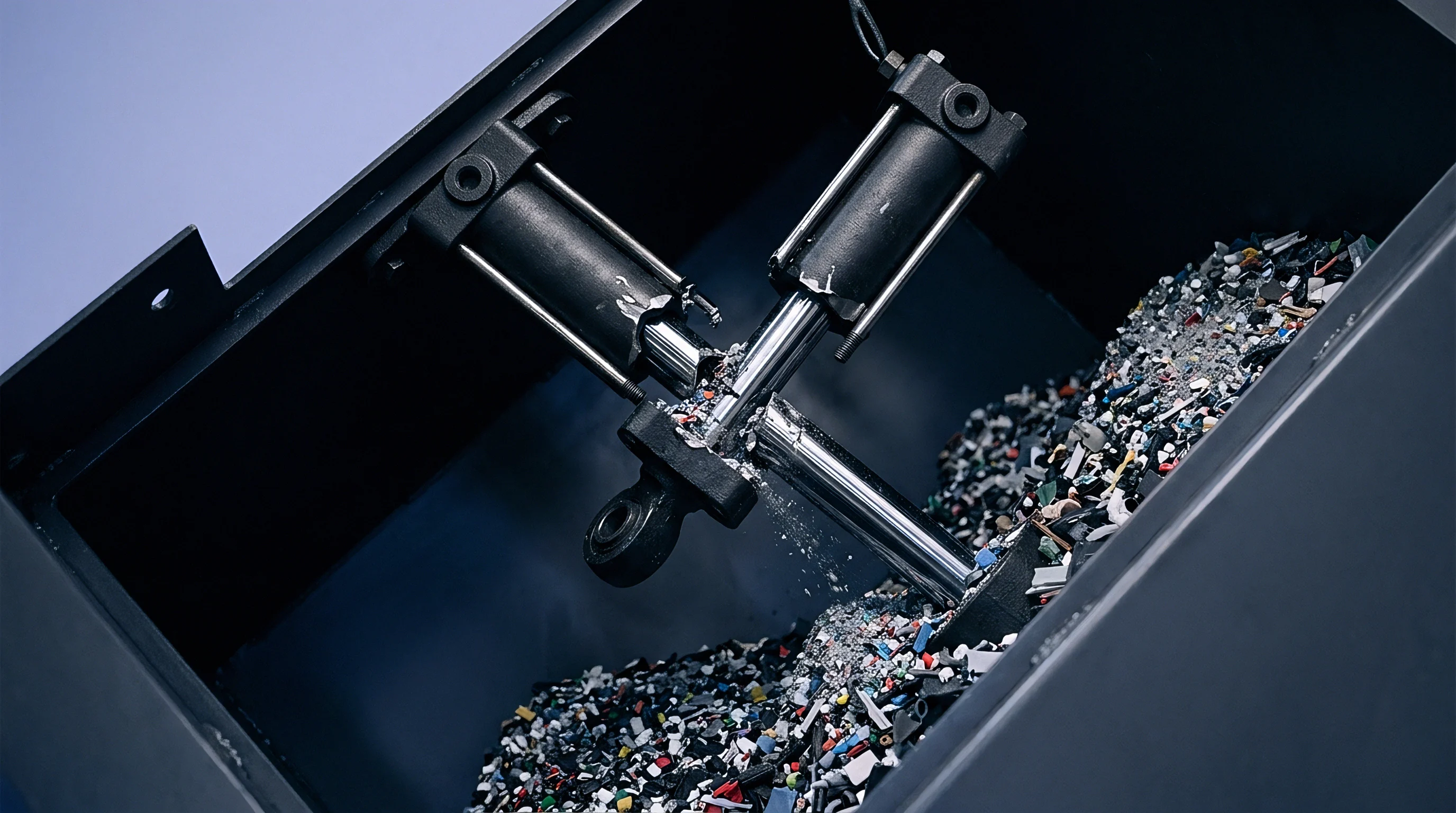
Bulk Density Mechanics in Hopper Fluidization
Post-consumer regrind occupies up to twice the volumetric space of virgin spherical pellets for an equivalent total mass. Higher void fractions drop total bed flow resistance, altering system pressure dynamics. Pressure drop across a packed bed of irregular flakes follows modified Ergun equations, where particle shape factors replace spherical diameter terms.
Interlocking flake orientations create non-uniform void distributions, causing process air to seek paths of least resistance.
Air short-circuiting occurs when process air channels through high-void regions, completely bypassing densely packed flake pockets. The bypassed flake receives insufficient heat and dry air, exiting the hopper base wet. Dynamic pressure monitoring systems track differential pressure across multiple vertical zones within the drying hopper.
Drops in pressure differential signal severe air channeling, requiring automated adjustment of inlet air velocity or mechanical bed disturbance.
- Verify blower capacity to deliver minimum 3.0 cubic meters per hour per kilogram of flake throughput against calculated bed backpressure.
- Measure particle size distribution to identify the fine fraction passing through a 1.5 millimeter mesh screen.
- Set the lower cone process air inlet temperature to target drying levels while restricting top-zone air temperatures below glass transition limits.
- Adjust the mechanical agitator drive speed to match material bulk density and monitor drive current for torque spikes.
- Inspect return air filter differential pressure gauges hourly to catch early particle carryover and filter blinding.
Insufficient airflow velocity allows localized moisture accumulation, generating melt pressure fluctuations that cause dimensional defects and structural failure in downstream extruded profiles.


Geometry
Physical dimensions of drying vessels govern how solid flakes descend while continuous dry process air moves upward through the bed. Conventional drying hoppers built for virgin pellets feature steep cone angles between 45 and 60 degrees. Irregular flakes interlock under gravity, forming stable structural bridges across 60-degree cones.
Mechanically interlocking flake webs stop downward material movement entirely, creating rat-holes where only a central core of material discharges while perimeter material remains stagnant for hours.
Mass flow demands specialized vessel shapes. True mass flow occurs when every particle moves downward relative to adjacent particles during discharge, maintaining a uniform residence time profile. Designing hoppers for recycled flakes requires cone angles of 68 to 75 degrees measured from the horizontal plane.
Asymmetric cones with one vertical wall and one steep slope reduce internal friction forces, forcing flake beds to slip along smooth stainless steel internal surfaces.
Post-consumer flake geometry transforms ideal plug flow into localized channeling inside unagitated drying hoppers.

Hopper Cone Angles and Mass Flow Dynamics
Steep sidewall inclinations exceeding sixty degrees prevent stagnant perimeter zones and eliminate internal rat-holing during continuous solids drawdown. Smooth internal finishes are critical for maintaining mass flow with low-density regrind. Hopper interior walls constructed from 304 stainless steel require mechanical polishing to Ra surface roughness values below 0.4 micrometers or electro-polishing treatments.
Rough welds or internal structural rivets provide anchor points where thin flakes hang up, initiating mechanical bridging.
Discharge throat diameters must expand significantly when handling flake materials. Standard pellet hoppers utilize throat openings of 80 to 100 millimeters. Flake hoppers require throat diameters exceeding 200 to 300 millimeters to prevent mechanical arching above the discharge valve.
Expanding the throat opening requires installing large-diameter slide gates and rotary valves designed with active knife-edges to cut through interlocking flake strands without jamming.

Residence Time Distribution across Flake Grids
Particles traveling through drying vessels experience non-uniform velocity vectors that cause variations in total thermal exposure. Mass flow profiles produce narrow residence time distributions, ensuring every flake receives identical drying duration. Funnel flow profiles produce wide residence time distributions, where central core material moves rapidly through the hopper in under sixty minutes while perimeter material stays trapped for eight hours.
Internal flow correction inserts alter velocity profiles inside cylindrical hopper sections. Inverted cone inserts and diamond-shaped baffles mounted directly above the main cone angle redistribute vertical bed pressure. Redistribution forces perimeter material to flow at speeds equal to central material, converting funnel flow vessels into true mass flow systems.
Computational discrete element modeling optimizes insert geometry to match specific flake aspect ratios and internal friction angles.
Engineers continue to debate whether mechanical agitator blade geometry creates localized thermal hot spots that degrade heat-sensitive flame retardant additives in mixed flake blends.

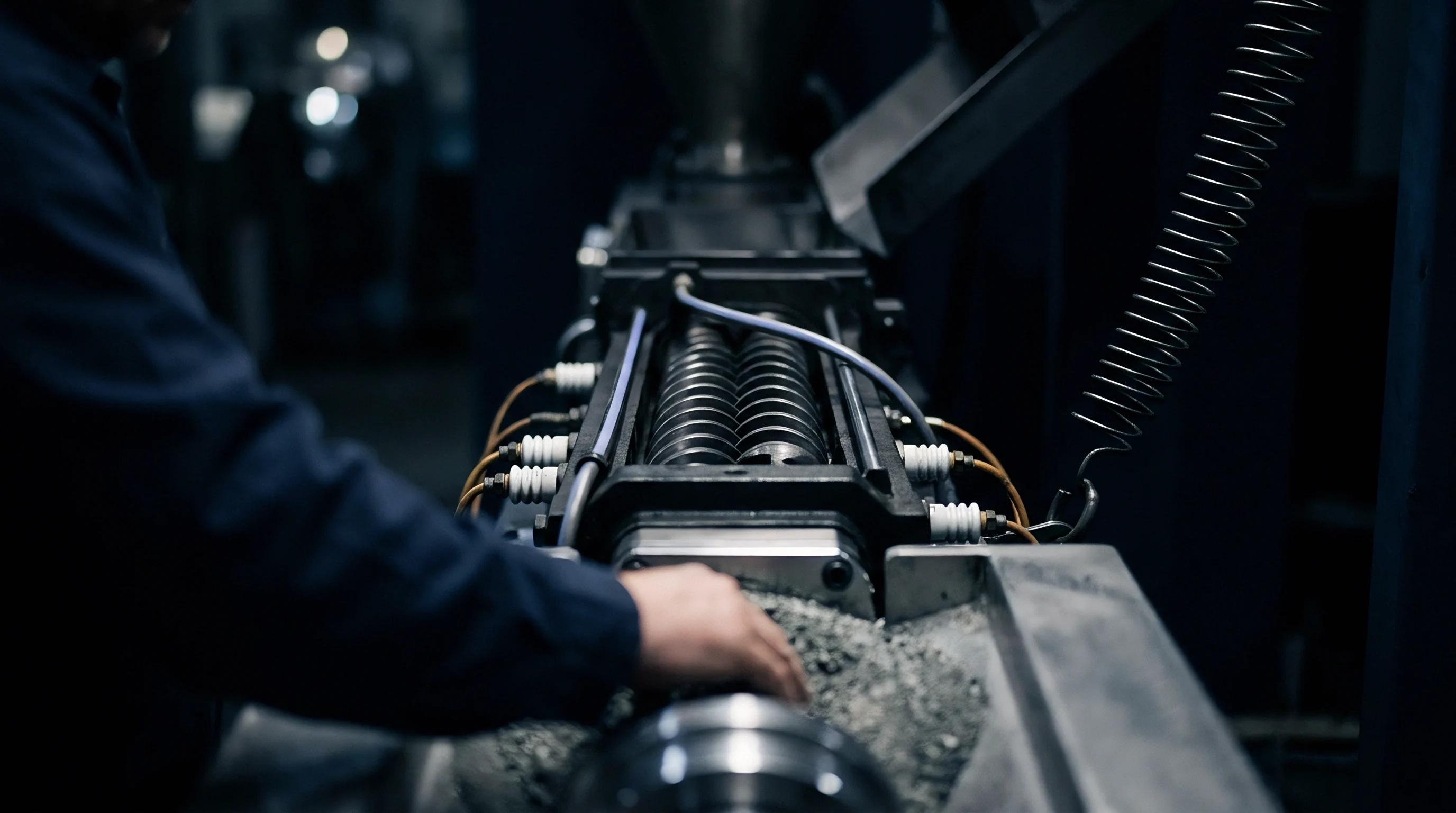
Calibration
Engineering tuning protocols align mechanical blower speed and heater power outputs against measured bulk flake properties. Recycled flake consignments shift in bulk density and particle size distribution between supplier lots. Setting static airflow and temperature parameters leads to energy waste or incomplete moisture removal.
Dynamic process adjustments scale drying inputs against real-time material measurements.
Calculated parameter matrices balance process air volume, inlet air temperature, dew point, and residence time against target final moisture levels. High surface moisture demands high airflow volumes at moderate temperatures during initial residence stages. High absorbed core moisture demands prolonged residence times under ultra-low dew point conditions.
Moisture titration data feeds back into automated control systems to adjust blower frequency drives and heater modulation circuits.
ISO 15512 Method B2 moisture titration defines acceptable resin incoming dryness before compounding melt lines process post-consumer flake feeds.
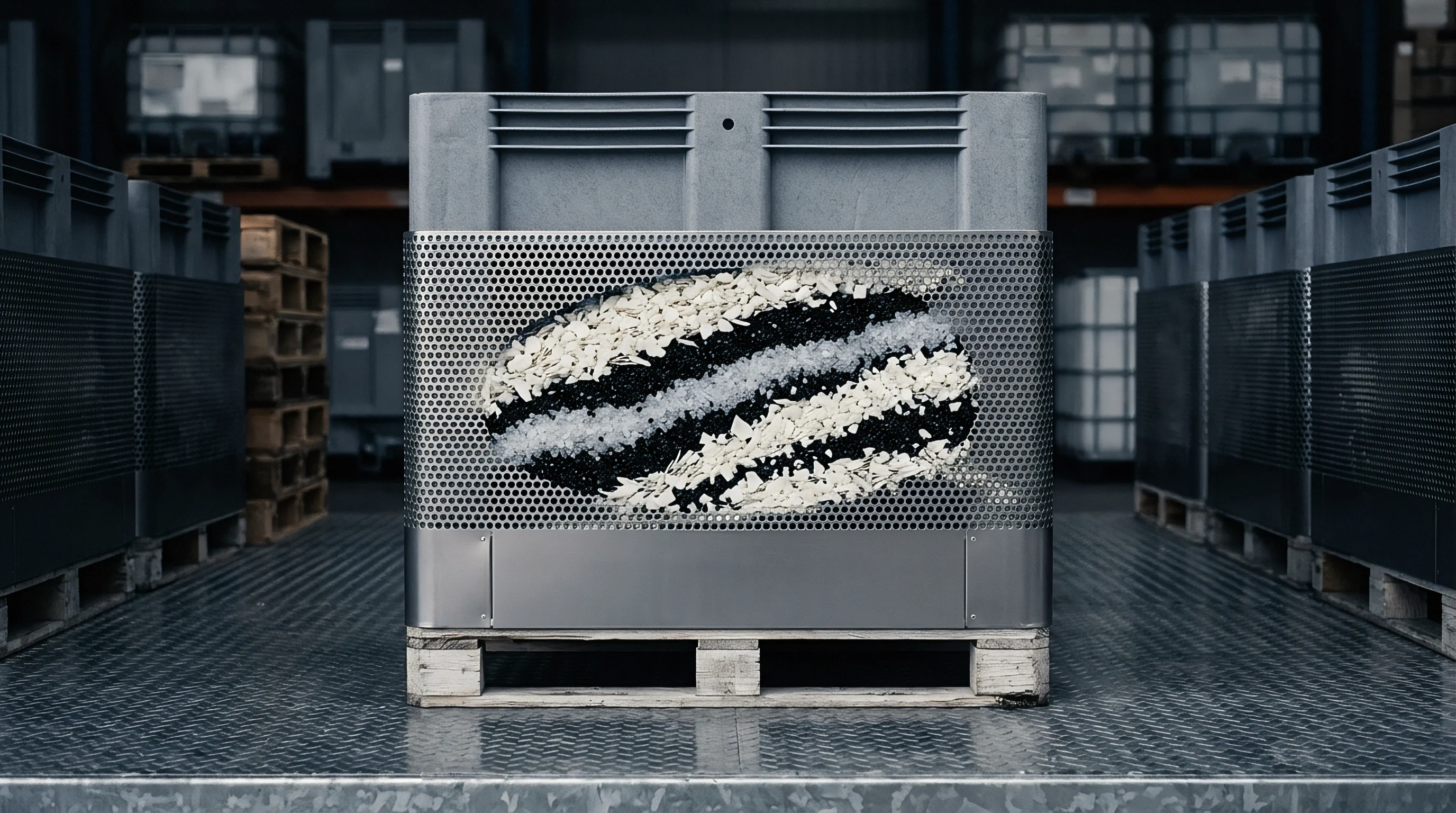
Airflow and Temperature Parameter Matrix
Operating setpoints shift substantially when transitioning production lines from dense, uniform pellets to thin, flat regrind. The parameter matrix below establishes standard engineering operational envelopes for processing post-consumer flake streams across different polymer families.
| Material Parameter | Recycled PET (Bottles) | Recycled PET (Thermoforms) | Recycled HDPE (Rigid) | Recycled PP (Rigid) |
|---|---|---|---|---|
| Specific Airflow Rate (m³/h per kg/h) | 2.5 – 3.2 | 3.0 – 3.8 | 2.0 – 2.8 | 2.0 – 2.8 |
| Inlet Dew Point (°C) | -45 to -50 | -45 to -50 | -35 to -40 | -35 to -40 |
| Drying Temperature (°C) | 160 – 175 | 135 – 145 | 95 – 105 | 100 – 110 |
| Minimum Residence Time (Hours) | 4.0 – 6.0 | 4.5 – 6.5 | 2.0 – 3.0 | 2.0 – 3.0 |
| Max Superficial Velocity (m/s) | 0.25 | 0.20 | 0.30 | 0.30 |
| Agitator Speed (RPM) | 2 – 6 | 4 – 8 | 0 – 4 | 0 – 4 |

Intrinsic Viscosity Degradation Calculations
Polymer chain length reduction scales exponentially with residual water concentration and melt residence duration. Mathematical modeling predicts intrinsic viscosity loss during compounding extrusion based on incoming flake dryness. The fundamental equation governing hydrolytic degradation models final intrinsic viscosity as a function of initial intrinsic viscosity, water content, melt temperature, and time in the extrusion barrel.
Assumptions for a worked engineering calculation: assume a recycled polyethylene terephthalate flake lot with an initial intrinsic viscosity of 0.80 deciliters per gram entering an extruder at 280 degrees Celsius with a melt residence time of 90 seconds. If pre-drying achieves a moisture level of 0.005 percent (50 ppm), calculated intrinsic viscosity loss equals 0.02 deciliters per gram, yielding a final product viscosity of 0.78 deciliters per gram. If pre-drying fails and moisture remains at 0.050 percent (500 ppm), calculated intrinsic viscosity loss jumps to 0.18 deciliters per gram, dropping product viscosity down to 0.62 deciliters per gram.
Viscosity drops destabilize extrusion pressure. Uncontrolled intrinsic viscosity loss ruins mechanical properties, causing bottle burst failures or sheet brittleness.
- Bulk Density Verification mandates measuring loose bulk density according to ASTM D1895 Method A prior to loading new flake lots into drying hoppers.
- Dew Point Sensor Calibration requires bi-monthly verification of inline chilled-mirror or impedance sensors using certified reference gas standards.
- Airflow Balance Optimization demands pitot tube array traverses across the main supply duct to verify uniform volumetric air delivery.
- Fines Fraction Screening enforces laboratory sieve testing to ensure fines smaller than 1.0 millimeter stay below 2.0 percent by weight of total feed.
Applying ASTM D6980 moisture verification procedures establishes legally binding rejection thresholds for incoming shipments, shifting moisture management liability back to the feedstock supplier.


Margin
Commercial viability depends directly on balancing electrical kilowatt-hours spent during pre-drying against the mechanical quality of molded output. Drying post-consumer resin consumes significant operational expenditure. Desiccant air systems drawing 0.10 to 0.18 kilowatt-hours per kilogram of processed polymer represent up to fifteen percent of total conversion costs in compounding halls.
Sub-optimal airflow settings double energy costs without improving dryness, destroying operational margins on low-margin recycled resins.
Yield losses compound financial risk. Processing under-dried flake generates off-spec material that must be re-reground or landfilled. A two percent scrap rate caused by moisture splay or low intrinsic viscosity converts a profitable recycling line into a net loss operation.
Upgrading hopper geometry, airflow control, and temperature staging protects capital investments by ensuring continuous first-pass quality compliance.

Energy Consumption per Processed Kilogram
Desiccant regeneration systems represent the single largest electrical draw within resin preparation infrastructure. Regeneration heaters bake absorbed moisture out of saturated desiccant wheels or dual-bed towers at temperatures between 180 and 230 degrees Celsius. Optimizing closed-loop heat exchangers recovers waste heat from regeneration exhaust air, preheating incoming process air and cutting total dryer power draw by up to twenty-five percent.
Smart airflow management controls alter blower output based on real-time production throughput. Variable-frequency drives throttle airflow down during temporary extrusion line slowdowns, keeping energy consumption scaled directly to processed resin mass. Dew point control loops switch desiccant bed regeneration cycles based on exit air moisture readings rather than fixed timers, avoiding unnecessary heating cycles when processing drier raw material lots.
Commercial Sourcing Specifications for Recycled Flakes
Purchase contracts for post-consumer regrind require explicit limits on moisture content, flake size distribution, and bulk density tolerances. Feedstock traders structure pricing contracts around certified quality metrics. Flake lots delivered with moisture levels above 1.0 percent by weight incur price deductions to cover the electrical energy required for extended hopper residence times.
Landed cost calculations incorporate the full yield impact of feedstock property variations. Sourcing cheap, unwashed, or poorly granulated post-consumer flake increases drying energy, higher fines carryover, and elevated scrap rates during melt processing. High-grade washed post-consumer flakes with tight bulk density specifications command a 10 to 15 percent price premium per metric tonne.
Premium flake pricing yields lower total landed cost per good finished part by eliminating processing downtime, reducing energy expenditure, and preserving melt properties.
Calculated energy expenditures balanced against preserved resin property values confirm that precise hopper control protects operational margins across high-volume recycled flake processing lines.