Capillary Rheometry Multi Load Testing Polyolefin Recyclate Specification
Multi-load capillary rheometry quantifies shear-thinning and elasticity variations in polyolefin recyclates that single-point melt index testing fails to detect.


Shear

Limitations of Single Point Indexing in Recycled Polyolefins
Single-point melt index testing under standard low-force loads measures flow at deformation speeds four orders of magnitude below commercial injection molding. Standard melt mass-flow rate testing per ISO 1133-1 or ASTM D1238 applies a fixed weight, typically two point sixteen kilograms at one hundred ninety degrees Celsius for polyethylene or two hundred thirty degrees Celsius for polypropylene. Low shear data lies.
Melt index indexers operate slowly. The resulting single figure reflects melt flow under gravitational and low-deadweight driving pressures where shear rates remain below ten inverse seconds. Processing machinery operates at vastly higher shear rates: profile extrusion functions between one hundred and one thousand inverse seconds, while thin-wall injection molding drives melt through runners and gates at shear rates exceeding ten thousand inverse seconds.
Post-consumer and post-industrial polyolefin recyclates carry thermal histories that alter molecular architecture. Repeated extrusion cycles generate polymer chain scission in polypropylene, increasing low-shear flow rates while reducing melt strength. Polyethylene streams often experience thermal cross-linking alongside chain scission, broadening molecular weight distribution and introducing high-molecular-weight tails.
Two recycled high-density polyethylene lots displaying an identical melt flow rate of zero point eight grams per ten minutes under two point sixteen kilograms behave in completely different ways inside a high-shear mold channel. One batch fills cavity ends cleanly, whereas the second lot generates extreme backpressure, flashes the parting line, or exhibits unacceptably high melt elasticity.

Multi Load Melt Mass Flow Rate Metrics
Multi-load testing bridges the gap between single-point melt indexers and high-shear capillary measurement. Performing consecutive extrusions under escalating load levels, such as two point sixteen kilograms, five kilograms, and twenty-one point six kilograms, establishes a flow rate ratio. ISO 1133-1 Method B automated multi-load instruments measure volumetric flow rate across changing piston displacements within a single barrel charge.
Dividing the volumetric melt flow rate under twenty-one point six kilograms by the rate recorded under two point sixteen kilograms yields a non-dimensional flow rate ratio. Higher ratio values indicate broader molecular weight distributions, structural branching, or cross-linked polymer networks that enhance shear-thinning response.
- Draw representative five-hundred-gram samples from top, middle, and bottom sampling ports of incoming pellet railcars or gaylord boxes.
- Dry the collected polyolefin samples in a desiccant hopper at eighty degrees Celsius for four hours to eliminate surface moisture.
- Load three grams of dried pellets into a preheated barrel maintained within zero point two degrees of the specified test temperature.
- Perform consecutive extrusions under two point sixteen kilogram and twenty-one point six kilogram deadweight loads per ISO 1133-1 Method B.
- Calculate the flow rate ratio by dividing the high-load volumetric output by the low-load volumetric output to establish the shear sensitivity index.
Reprocessors frequently state that single-load melt index values on standard certificates of analysis fulfill commercial delivery obligations because contractual master agreements omit multi-point rheological parameters.


Viscosity

Capillary Rheometry Fundamentals and Pressure Corrections
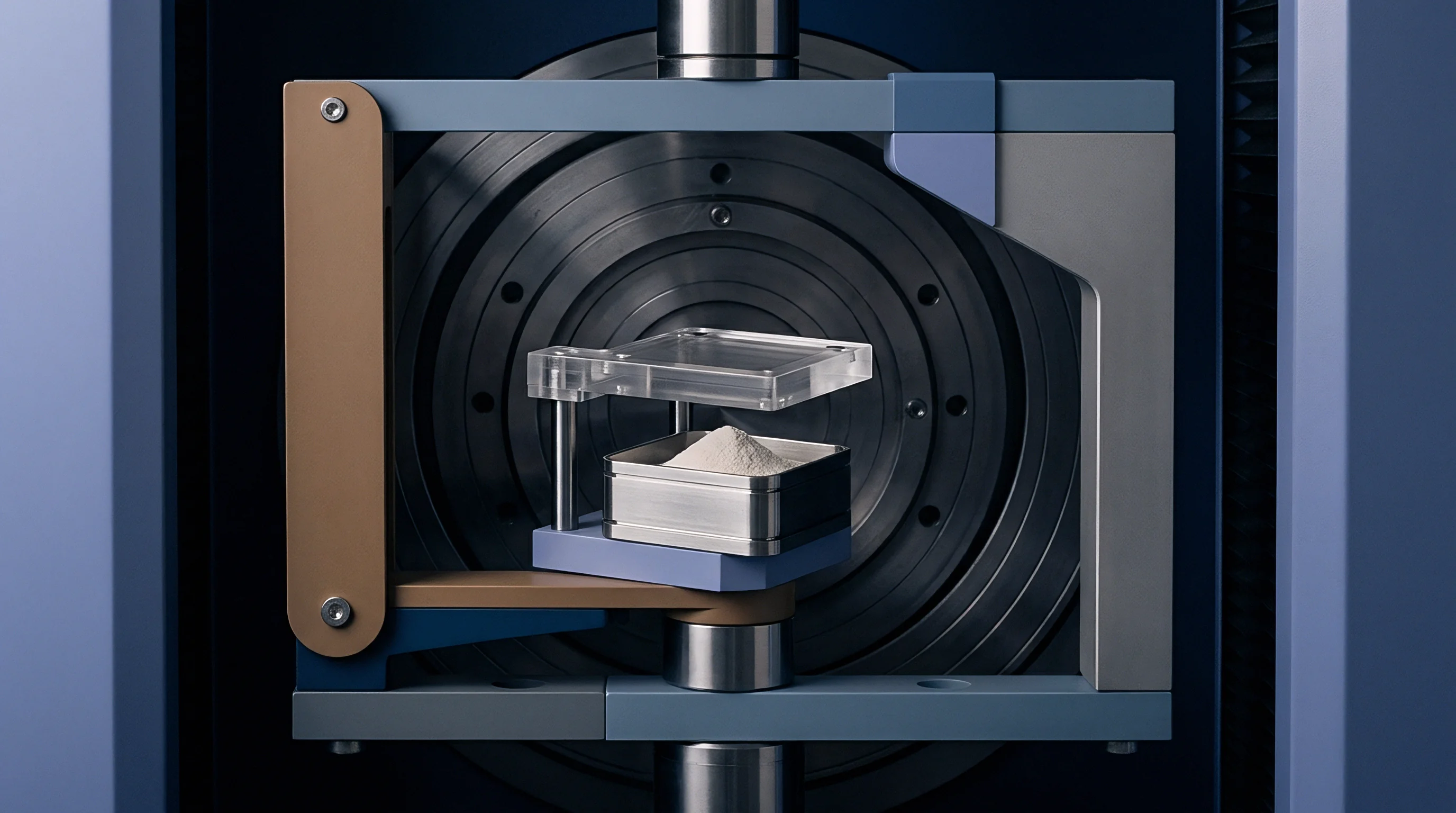
Capillary rheometers driving polymer melt through precise circular dies evaluate apparent resistance across strain rates from ten to ten thousand inverse seconds. Capillary dies reveal true flow. High-pressure capillary testing per ISO 11443 and ASTM D3835 forces molten polyolefin through a precision orifice of known diameter and length using a motor-driven piston.
Controlling piston speed dictates volumetric throughput, establishing the apparent shear rate at the capillary wall. Simultaneously, a pressure transducer mounted directly upstream of the die entrance measures the driving pressure required to sustain flow.
Apparent shear stress calculated directly from entrance pressure overestimates true material resistance. Polymer melt converging from the wide barrel into the narrow capillary orifice undergoes extensional deformation, creating a significant entrance pressure drop. Polymer chains store elastic energy during entry, which dissipates as exit pressure loss upon leaving the orifice.
Polypropylene contamination drops viscosity. Accurately determining true shear stress requires applying the Bagley correction. Testing the melt through at least two dies of identical diameter but differing length-to-diameter ratios, such as ten to one, twenty to one, and thirty to one, allows engineers to plot total pressure against capillary aspect ratio.
Extrapolating this linear plot back to a theoretical die length of zero isolates the entrance pressure loss. Subtracting entrance loss from total measured pressure yields true wall shear stress.
True viscosity for post-consumer high-density polyethylene drops by forty-two percent as capillary shear rate increases from one hundred to one thousand inverse seconds at one hundred ninety degrees Celsius.
Polyolefin melts behave as non-Newtonian, shear-thinning fluids. Apparent shear rate equations assume a parabolic velocity profile characteristic of Newtonian fluids. Real polymer melts exhibit flat velocity profiles in the die core with steep shear gradients near the metal boundary.
Applying the Rabinowitsch correction adjusts apparent shear rate to true shear rate at the wall. The Rabinowitsch factor depends directly on the slope of true wall shear stress plotted against apparent shear rate on logarithmic axes, known as the non-Newtonian power-law index. Recycled polyolefins with broad molecular weight distributions feature lower power-law indices, requiring larger Rabinowitsch adjustments than narrow-distribution prime virgin grades.

Capillary Corrections Worked Calculation
Assume a forty-tonne delivery of recycled high-density polyethylene targeted for extrusion blow molding. The laboratory tests samples using a capillary rheometer equipped with a one-millimeter diameter die of thirty-millimeter length at one hundred ninety degrees Celsius. Under an apparent shear rate of five hundred inverse seconds, the uncorrected wall shear stress reaches one hundred forty kilopascals.
Recyclate streams carry unknown thermal history. Entrance pressure losses alter calculations. Applying a Bagley correction factor derived from a zero-length die test subtracts eighteen kilopascals of entrance pressure loss, yielding a true wall shear stress of one hundred twenty-two kilopascals.
With a measured power-law index n of zero point thirty-eight, the Rabinowitsch correction factor equals one point zero eight seven, establishing a true shear rate of five hundred forty-four inverse seconds. The resulting true viscosity lands at two hundred twenty-four Pascal-seconds, compared to an uncorrected apparent viscosity of two hundred eighty Pascal-seconds. This twenty percent correction gap demonstrates why uncorrected bench readings miscalculate extrusion head pressure.
| Resin Grade | MFR 2.16kg (g/10min) | Flow Rate Ratio (21.6/2.16) | True Viscosity at 100 s⁻¹ (Pa·s) | True Viscosity at 1000 s⁻¹ (Pa·s) | Power-Law Index (n) |
|---|---|---|---|---|---|
| Prime Virgin HDPE (Blow Molding) | 0.35 | 28.4 | 1420 | 285 | 0.46 |
| Post-Consumer rHDPE (PCR Lot A) | 0.38 | 41.2 | 1180 | 195 | 0.34 |
| Post-Consumer rHDPE (PCR Lot B) | 0.32 | 48.6 | 1050 | 160 | 0.30 |
| rHDPE + 5% rPP Contaminant Blend | 0.52 | 35.1 | 920 | 175 | 0.38 |
Whether online slit-die rheometers integrated into compounding extruders can achieve the temperature stability necessary to replace benchtop capillary measurements during high-throughput recycling runs remains unproven across contaminated post-consumer lots.

Die

Extrudate Swelling and Melt Elasticity Dynamics
Extrudate swelling upon exit from orifice geometry reflects stored elastic energy accumulated during molecular orientation in the capillary channel. Die swell impacts part dimensions. As polymer melt passes through the narrow capillary, coiled molecular chains align parallel to the flow direction under shear strain.
Upon emerging into an unconstrained environment, these oriented chains relax back to randomly coiled equilibrium conformations, expanding the extrudate cross-sectional area while shortening its length. The swelling ratio, calculated as extrudate diameter divided by internal capillary diameter, quantifies melt elasticity.
Recycled polyolefins display erratic extrudate swelling behavior due to variable cross-linking, contamination, and high-molecular-weight fractions. High-density polyethylene recycled from blow-molded bottles contains long-chain branching generated during prior service life and thermal reprocessing. Broad molecular weight distributions enhance the first normal stress difference under high shear, expanding die swell ratios from one point two in virgin resins to over one point six in heavily degraded recyclate lots.
Gels cause local stress concentration. In blow molding applications, unmonitored increases in die swell alter parison wall thickness distribution, causing weight spikes, cooling delays, and severe structural pinch-off defects.
Severe extrudate swelling signals broad molecular weight distribution resulting from unblended high-molecular-weight fractions or elastomer cross-linking.
Flow Instabilities and Surface Melt Fracture
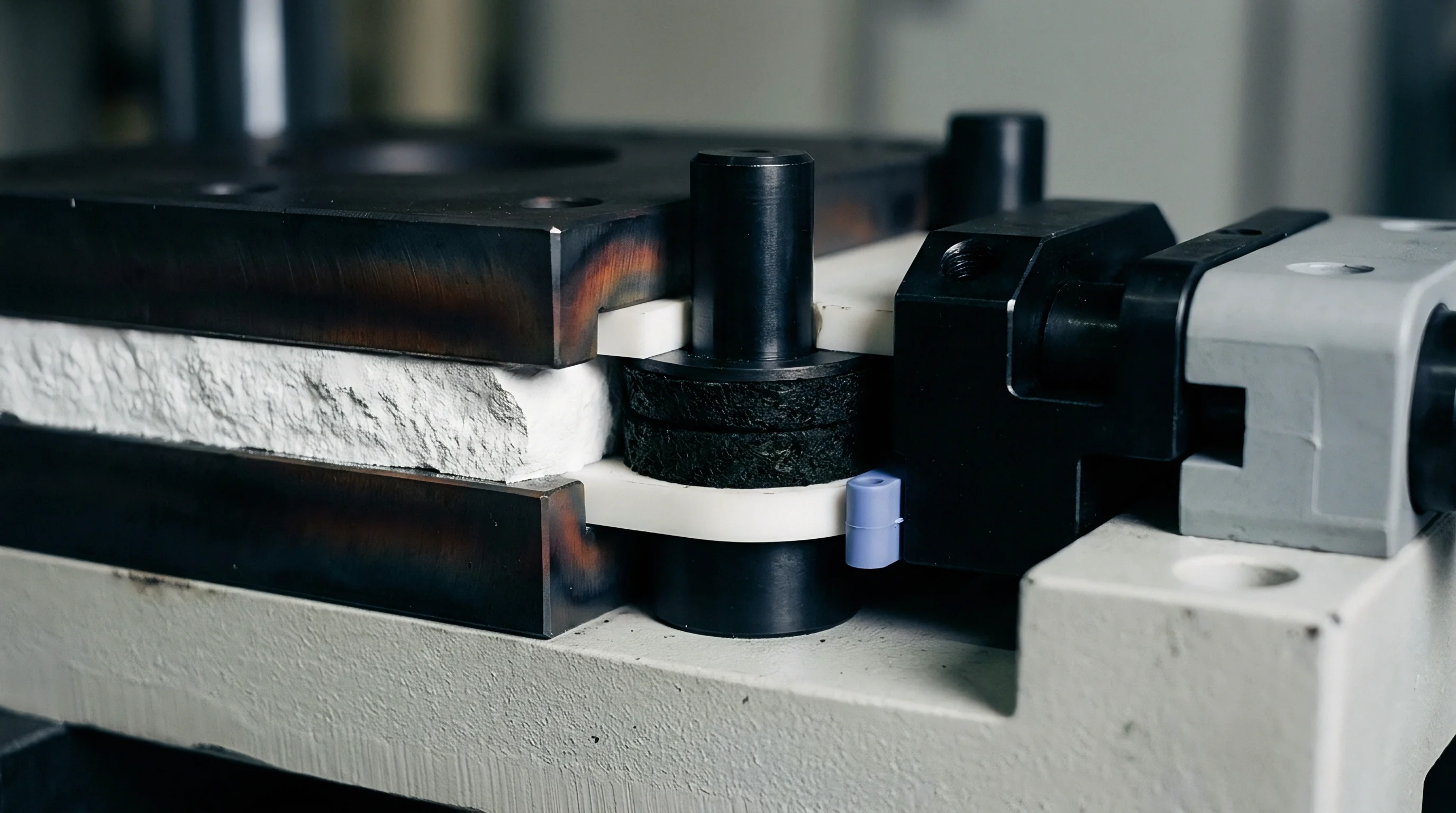
High-shear capillary rheometry identifies critical stress boundaries where smooth laminar flow transitions into surface wall instabilities. At low shear stress, extrudate surfaces remain smooth and glossy. Increasing throughput causes high wall shear stress values that exceed the adhesion strength between melt and steel die surfaces.
Tensile stress concentrations at the exit orifice exceed the melt strength of the polymer, tearing the outer surface layer. Single point measurements miss melt fracture.
- Capillary Aspect Ratio Selection ~ Standardize testing on dies with length-to-diameter ratios of thirty to one to ensure fully developed velocity profiles.
- Critical Stress Identification ~ Determine the onset threshold of surface sharkskin by inspecting extrudate strands collected across escalating piston speeds.
- Extrudate Swelling Measurement ~ Measure cooled strand diameters using laser micrometry positioned five millimeters below the exit orifice.
- Thermal Stability Time Sweeps ~ Hold polymer melt inside the preheated barrel for twenty minutes to quantify thermal degradation during capillary residence.
Surface melt fracture, commonly termed sharkskin, manifests as periodic transverse ridges across extruded strands. Further increases in driving pressure trigger slip-stick flow where pressure transducers record violent pressure oscillations, producing alternating smooth and rough extrudate segments. At extreme shear rates, gross melt fracture erupts, distorting the entire strand into helixes or random fragments.
Recycled polyolefin lots with broad polydispersity exhibit lower critical shear stress limits for sharkskin onset, forcing processing lines to operate at reduced linear speeds unless specialized fluoroelastomer processing aids are re-introduced during compounding.
Unregistered variations in melt elasticity produce dimensional variance across extruded profiles, wall thinning in blow-molded containers, and unexpected backpressure spikes that trigger automatic extruder shutdowns.


Tolerance

Translating Rheological Curves into Procurement Targets
Statistical quality windows built around multi-load viscosity ratios establish clear boundaries for incoming lot acceptance. Statistical process control bounds raw lot variance. Defining acceptable quality limits solely by single-point melt flow rate allows off-spec recyclate batches to enter production lines undetected.
Contractual tolerances protect downstream yield. Establishing a complete rheological specification requires pairing a target melt mass-flow rate with allowable true viscosity corridors at specific processing shear rates. A robust procurement template incorporates both a low-shear flow index and high-shear capillary thresholds.
For injection molding grade post-consumer polypropylene, buyers set baseline limits at two hundred thirty degrees Celsius. Single-point melt mass-flow rate under two point sixteen kilograms must fall between twelve and sixteen grams per ten minutes. Capillary testing adds an absolute viscosity window at five thousand inverse seconds of forty-five to fifty-five Pascal-seconds.
Furthermore, the flow rate ratio measured between twenty-one point six kilograms and two point sixteen kilograms must remain within a tight window of eighteen to twenty-two. Setting dual-shear boundaries restricts incoming lot variance, blocking batches containing high fractions of degraded low-molecular-weight fragments or unblended high-density polyethylene contamination.
Incorporating ISO 11443 multi-point viscosity windows into supply contracts prevents reprocessors from delivering regrind lots that pass melt index checks but stall production tooling.
| Polymer Family | Application | Standard Reference | Low-Shear Limit (MFR 2.16kg) | Flow Rate Ratio Limit (21.6/2.16) | High-Shear Viscosity Limit (1000 s⁻¹) |
|---|---|---|---|---|---|
| rHDPE (Blow Molding) | Bottle Production | ISO 11443 Method A | 0.25 to 0.45 g/10min | 38.0 to 46.0 | 180 to 220 Pa·s at 190°C |
| rHDPE (Pipe Extrusion) | Corrugated Conduit | ASTM D3835 | 0.15 to 0.30 g/10min | 45.0 to 55.0 | 240 to 290 Pa·s at 190°C |
| rPP (Injection Molding) | Automotive Trim | ISO 11443 Method A | 15.0 to 22.0 g/10min | 16.0 to 21.0 | 42 to 54 Pa·s at 230°C |
| rPP (Thin-Wall Containers) | Packaging Trays | ISO 1133-1 Method B | 35.0 to 45.0 g/10min | 12.0 to 16.0 | 22 to 30 Pa·s at 230°C |

Rheological Non Conformance Modes
Viscosity shifts alter wall thickness. Off spec resin halts automated molds. Processing polyolefin recyclates without rigorous multi-load verification triggers distinct production failures linked directly to molecular weight variance.
- Short Shots in Molding ~ Unnoticed drops in high-shear flow rate reduce mold cavity filling speeds, leaving thin-walled sections incomplete during production runs.
- Extrudate Parison Sag ~ Excessively high low-shear viscosity causes heavy blow-molding parisons to stretch unevenly before mold closure, generating excessive wall thickness variance.
- Barrel Pressure Spikes ~ Sudden shifts toward higher viscosity at processing shear rates cause feeder motor overloads and safety rupture disc failures.
- Weld Line Weakness ~ Blends containing immiscible polypropylene contaminants exhibit localized phase separation during high-shear injection, reducing structural joint strength.
When high-shear viscosity shifts while low-shear melt index remains unchanged, the molecular weight distribution has broadened through degraded chain fragments or unblended cross-linked contamination.

Clause

Commercial Specification Architecture and Certificate Verification
Commercial purchase agreements for recycled polyolefin pellets require explicit testing parameters to bind suppliers to rheological performance targets. Relying on standard off-the-shelf grade sheets exposes buyers to severe lot-to-lot volatility. Reprocessors frequently blend disparate post-consumer waste streams to hit target melt index figures, changing feedstock sources between delivery shipments.
Lab data governs commercial payment. Incorporating mandatory capillary rheology protocols into formal supply agreements shifts quality validation upstream, obligating compounders to certify flow behavior across the full shear spectrum before loading bulk tankers.
Recycled polyolefin batches from post-consumer collection streams exhibit lot-to-lot flow variance three times wider than prime virgin resins.
A structured material specification defines core test standards, target nominal values, allowable tolerance bands, and sample retention rules. Contracts specify ISO 11443 capillary testing or automated multi-load melt index testing per ISO 1133-1 Method B for every twenty-tonne production lot. Certificates of analysis delivered with shipments must attach true viscosity data at designated low, medium, and high shear rates.
If incoming bench verification at the receiving facility reveals out-of-spec flow ratios, clear commercial mechanisms trigger automatic lot quarantine, third-party laboratory arbitration, and structured price adjustment formulas.
Standard purchase order addendum language referencing ISO 11443 Method A at two hundred thirty degrees Celsius across three designated shear rates specifies automatic shipment rejection and supplier coverage of freight expenses whenever true viscosity deviates more than eight percent from the reference master curve.