Capillary Rheometry Entrance Correction Methods for Multi-Modal Pipe Resin Specifications
Uncorrected capillary rheometry overstates bimodal pipe resin shear stress; multi-die Bagley corrections isolate entrance losses to protect line throughput.
Bore
Extrusion processors purchasing bimodal pipe resins encounter significant discrepancies between laboratory rheograms and line pressure drops. High-density polyethylene designed for ISO 4427 or ASTM D3350 pressure pipe combines a low molecular weight matrix with an ultra-high molecular weight fraction exceeding 1,000,000 g/mol. The low molecular weight fraction maintains processability in the extruder screw.
The high molecular weight fraction builds tie molecules across crystalline lamellae, securing slow crack growth resistance exceeding 5,000 hours in Pennsylvania Notch Testing.
That high molecular weight tail alters the entrance flow geometry inside the rheometer test chamber. As the molten polymer accelerates from the reservoir into a narrow capillary, long polymer chains undergo intense extensional deformation. Funneling melt into the die consumes excessive mechanical energy.
Uncorrected capillary measurements record this convergent pressure drop alongside actual wall shear stress.
Melt viscosity figures published on resin producer datasheets regularly omit entrance loss corrections. A nominal shear rate calculation using raw barrel transducer data attributes the entrance pressure drop to the capillary channel. Viscosity values derived this way overestimate actual shear stress by 30 to 80 percent at wall shear rates between 500 s-1 and 2,000 s-1.
Apparent viscosity measurements taken without entrance corrections at 190 degrees Celsius and 1,000 inverse seconds overestimate true wall shear stress by 45 percent on standard bimodal PE100 resins.
Pipe manufacturers specifying resin lots on raw apparent shear curves face severe tooling errors. Extrusion die heads dimensioned from uncorrected rheology run at unexpected melt pressures, causing surging, uneven wall distribution, and thermal degradation. Processing errors cascade into dimensional rejects when running heavy-wall SDR 11 pipe profiles.

Curvature
Evaluating true shear stress in multi-modal polyolefins relies on the multi-die method developed by Bagley. A rheometer runs identical melt through capillaries of varying length-to-diameter ratios at fixed volumetric flow rates. Plotting total pressure against the length-to-diameter ratio produces an intercept on the negative horizontal axis, representing the entrance pressure loss.
Multi-modal resins produce marked non-linearities on these coordinates. Linear low-density or unimodal polyethylenes exhibit straight Bagley lines across standard shear rates. Bimodal PE100 and trimodal pipe grades show concave upward trajectories at shear rates above 800 s-1.
Extensional strain hardening in the entry convergence causes the zero-length pressure drop to scale super-linearly with flow velocity.
Which Bagley Die Array Isolates Elastic Entrance Losses?
Capillary selection dictates whether non-linear entry phenomena distort the corrected viscosity values. Testing protocols deploying only two capillary dies cannot detect curvature along the length axis. Reliable characterization mandates at least four distinct die lengths to track non-linear pressure drops across the shear domain.
| Resin Grade Designation | Molecular Architecture | Capillary Array (L/D Ratios) | Entrance Pressure Drop at 1000 s-1 (MPa) | Bagley Correction Factor (e) |
|---|---|---|---|---|
| PE80 Grade A | Unimodal MDPE | 5, 10, 20, 30 | 3.12 | 2.4 |
| PE100 Grade B | Bimodal HDPE | 5, 10, 20, 30 | 7.85 | 4.6 |
| PE100-RC Grade C | Bimodal HDPE | 5, 10, 20, 30 | 9.40 | 5.8 |
| PE-RT Type II | Ethylene-Octene Bimodal | 5, 10, 20, 30 | 6.20 | 3.8 |
| Experimental High-Modulus | Trimodal HDPE | 8, 16, 24, 32 | 12.15 | 7.1 |
High molecular weight fractions store strain energy elastically during convergent acceleration. Elastic recovery generates normal stresses that dwarf viscous dissipative forces within the die entry zone. The standard linear Bagley equation assumes constant fluid density and pressure-independent viscosity along the capillary length.
Internal barrel pressures reach 80 to 140 MPa when driving stiff pipe resins through long capillaries. The pressure-viscosity coefficient for high-density polyethylene ranges from 10 to 18 GPa-1. Compressibility effects and piezoviscous thickening distort the linear relationship between channel length and driving force.
The practitioner faces the challenge of isolating genuine elastic entrance pressure drops from pressure-dependent viscosity increases along extended capillary channels.
Vortex
Secondary circulating flows form at the die shoulders when processing multi-modal polyethylenes. The sharp ninety-degree contraction between the reservoir chamber and capillary entrance induces strong planar extensional deformation. Long ethylene backbones cannot unravel rapidly enough to follow converging streamlines smoothly.
Entangled chains deflect toward the stagnant perimeter corners. Recirculating toroidal cells grow in volume as throughput increases. Energy dissipated by these recirculating zones appears experimentally as an inflated entrance pressure drop.
Cogswell developed an analytical method to estimate extensional viscosity directly from this convergent pressure loss. The model resolves the entrance loss into shear and extensional deformation components, linking the entrance pressure to an average extensional stress. Multi-modal pipe resins exhibit high extensional strain hardening due to long-chain entanglements.
- Flow funnel restriction occurs when entrance vortices choke the effective entry angle down to forty degrees. Chain stretching accelerates dramatically.
- Elastic energy saturation is reached when extensional stresses exceed the cohesive strength of the entangled network. The melt slips intermittently at the metal boundary.
- Surface matte distortion manifests at the die exit when relaxation gradients induce high-frequency surface tearing. Pipe walls lose smooth gloss.
- Gross melt fracture initiates when shear rates surpass the critical stress limit around 0.45 MPa. Extruded profiles buckle completely.
Polymer chain entanglements govern convergent vortex boundaries before viscous dissipation takes place in the capillary land.
The compounding line inspector tracks vortex stability through extrudate appearance. Resins with excessive high molecular weight fractions generate periodic helical distortion during testing. Resin sales representatives attribute these surface defects to instrument temperature instability during the customer audit.

Tolerance
Standardized measurement protocols govern incoming resin verification across commercial laboratories. International standards ISO 11443 and ASTM D3835 provide explicit guidelines for applying entrance corrections. The two standards differ regarding instrument geometry tolerances and correction algorithms.
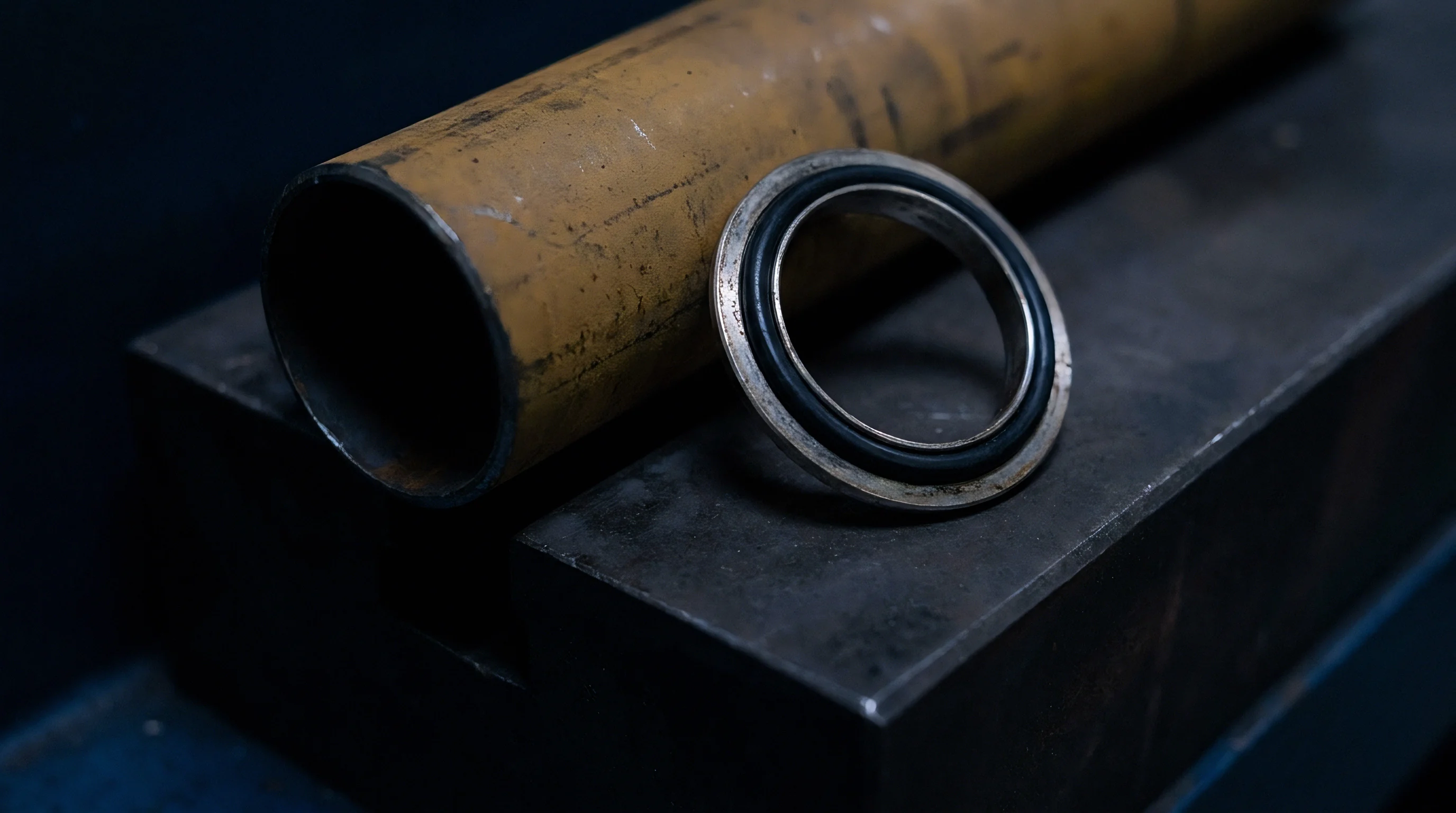
Dimensional errors in the capillary radius skew calculated shear stresses by the third power of the radius. A nominal one-millimeter die ground to 1.02 millimeters alters viscosity calculations by six percent before applying flow corrections. Verifying physical die geometry demands optical coordinate measurement machines calibrated against traceable gauge blocks.
Should Sourcing Specifications Permit Single Orifice Dies?
Single zero-length dies offer an operational shortcut to multi-capillary Bagley arrays. An orifice die with an L/D ratio below 0.2 measures entrance pressure loss directly in a single piston sweep. The zero-length approach eliminates the need for three separate capillary cleanouts and runs.
| Test Configuration | Standard Reference | Sample Consumption (g) | Duration per Shear Sweep (min) | Absolute Stress Precision (%) |
|---|---|---|---|---|
| Four-Capillary Bagley Array | ISO 11443 Method A | 120 | 45 | 1.2 |
| Dual-Bore Simultaneous Array | ASTM D3835 Method B | 60 | 18 | 2.5 |
| Zero-Length Orifice Single Die | ISO 11443 Method B | 30 | 10 | 8.4 |
| Calculated Cogswell Approximation | ASTM D3835 Annex A1 | 30 | 12 | 12.0 |
Zero-length orifice dies do not account for the exit pressure drop. Polymer exiting the die orifice retains residual elastic energy, generating a positive exit pressure. Attributing the total measured orifice pressure solely to the entrance loss overstates the Bagley correction factor.
Twin-bore capillary rheometers mitigate test duration while retaining accuracy. One barrel bore houses an orifice die, while the parallel bore holds a capillary with an L/D of twenty or thirty. The system measures entrance loss and capillary pressure drop simultaneously during a single piston stroke.
Temperature gradients between barrels remain under 0.2 degrees Celsius to prevent cross-channel viscosity drift.
- Capillary land inspection verifies the absence of internal scoring from recycled resin mineral fillers. Polished tungsten carbide bores retain tolerances.
- Pressure transducer calibration requires four-point digital verification across the 10 MPa to 150 MPa working ranges. Transducer diaphragm deflection distorts measurements.
- Barrel thermal stabilization demands thirty minutes of pre-soak time at 190 degrees Celsius. Incomplete melting yields localized unmelt clusters.
- Nitrogen blanket purge prevents oxidative crosslinking of ultra-high molecular weight fractions. Degraded polyethylenes show false high-shear thinning.
Incoming inspection procedures must align strictly with contract specifications. Under standard procurement terms, ISO 11443 Method A governs dispute resolution, invalidating data gathered via simplified zero-length orifice approximations.

Invoice
Commercial acceptance criteria for multi-modal pipe resin hinge on rheological compliance. Resin bought on basic Melt Flow Rate measurements per ISO 1133 fails to expose lot-to-lot variance in the high molecular weight tail. Testing at 190 degrees Celsius under a 5.0 kg load yields a single number.
That standard measurement remains blind to shear-thinning behavior at factory extrusion rates.
A resin lot displaying an acceptable High Load Melt Index of 9.5 g/10 min under 21.6 kg can harbor significant differences in true shear viscosity. When entrance corrections are omitted from the Certificate of Analysis, two lots with identical nominal flow rates generate divergent backpressures on the pipe extrusion line. Die head pressures spike unexpectedly.
Line speeds decrease to prevent motor overload.
| Verification Protocol | Extrusion Line Throughput (kg/h) | Start-Up Scrap Rate (%) | Resin Premium per Tonne (USD) | Net Extrusion Cost per Tonne (USD) |
|---|---|---|---|---|
| Standard MFR 190/5 Only | 850 | 4.2 | 0 | 1,485 |
| Uncorrected Capillary Rheology | 920 | 2.8 | 25 | 1,430 |
| Bagley Corrected ISO 11443 | 1,050 | 0.8 | 60 | 1,365 |
| Twin-Bore Lot Qualification | 1,080 | 0.5 | 75 | 1,348 |
Every ton of off-specification pipe compound rejected on start-up destroys operating margins. Re-pelletizing degraded pipe scrap shears high molecular chains, depleting slow crack growth resistance. Regrind additions to virgin PE100 resins are restricted to ten percent under EN 12201-1 infrastructure codes.
Uncorrected resin test certificates leave the converter absorbing all downstream scrap costs caused by tool backpressure variation.
Converters writing purchase agreements specify a three-point corrected viscosity envelope. True shear viscosity at 190 degrees Celsius must fall within plus or minus five percent at 100 s-1, 500 s-1, and 1,500 s-1. Data must derive from Bagley corrections using at least three distinct die lengths.
Stable resin lots lower plant scrap. Tooling runs cool and steady. Extrusion dies maintain continuous centering without manual intervention across multi-day manufacturing runs.