Cross-Border Tooling Eviction and Lien Priority Resolution across Multi-Jurisdiction Moulder Insolvencies
Perfect tooling titles with explicit bailment filings and physical steel tags before moulder insolvency triggers statutory possessory liens.

Custody
Ownership of injection moulds comes down to written contracts executed before steel machining begins. Buyers often assume paying a tooling invoice automatically protects their property if an offshore facility fails, but physical possession creates a presumption of ownership in many jurisdictions. Contract manufacturing agreements need to explicitly sever tool title from general production services to keep moulding equipment out of bankruptcy estates.
Bailment Structure
Separating machine operation contracts from tool location agreements keeps customer assets distinct from plant equity. A legal bailment arises when the tooling owner transfers physical possession of an injection mould to a processor while retaining absolute title. The processor acts as a bailee, holding the steel solely for part production.
Without a separate bailment agreement, insolvency receivers classify custom moulds as plant property or general operational assets.
Standard purchase orders that bundle tooling payments into piece-part pricing blur this legal separation. When tooling costs are amortised across production runs, receivers can argue that title remains with the moulder until full amortisation occurs. Direct tooling invoices showing explicit line items for mold design, cavity machining, and polishing establish clear evidence of buyer ownership.
Inserting explicit title retention clauses into tooling purchase orders prevents bankruptcy administrators from including custom steel in liquidation estates.

Identification Markers
Physical steel tags welded directly onto clamp plates provide visual proof during insolvency seizures, especially when paper documentation vanishes during a sudden plant closure. Deep mechanical engraving on non-functional mold surfaces ensures permanent identification during court inspections.
- Serialise each mold plate with the buyer’s corporate identification number and registered asset code.
- Weld a stainless steel nameplate onto the operator side clamp plate detailing ownership parameters.
- Record mold weight, cavity count, runner system type, and core pull details on the external housing.
- File a UCC-1 financing statement in the moulder’s home jurisdiction referencing the unique steel serial number.
Equipment registers inside processing plants rarely track asset ownership with sufficient legal precision. Secured lenders audit factory floors before issuing credit facilities, making clear, unalterable asset tags essential to prevent them from including third-party tooling in floating charges.
Combining DIN 16742 inspection compliance alongside explicit title retention clauses converts informal tool bailments into enforceable property rights that survive receiver actions.

Latch
Securing a multi-cavity injection tool on a locked press floor requires quick technical intervention. When financial distress forces a moulding plant to halt operations, unmaintained tools degrade rapidly inside unconditioned facilities. Residual polymers degrade inside heating zones, while condensation corrodes polished cavity inserts made of P20 or H13 steel.
Mechanical Lockdown
Purging water jackets with dry compressed air prevents internal corrosion during extended shutdowns. Coolant trapped inside beryllium-copper cooling pins or conformal cooling channels causes pitting within days, and technicians must lock mold halves together using mechanical latching plates to protect parting line shut-offs.
Hydraulic core pulls and side-action slides require physical locking blocks to prevent damage during crane lifting and transport. Hot runner manifolds also require chemical purging with high-viscosity thermal cleaning compounds before power is disconnected.
Blowing out internal water channels with compressed air at 6 bar prevents severe cavity oxidation within forty-eight hours of plant power termination.
Facility Access
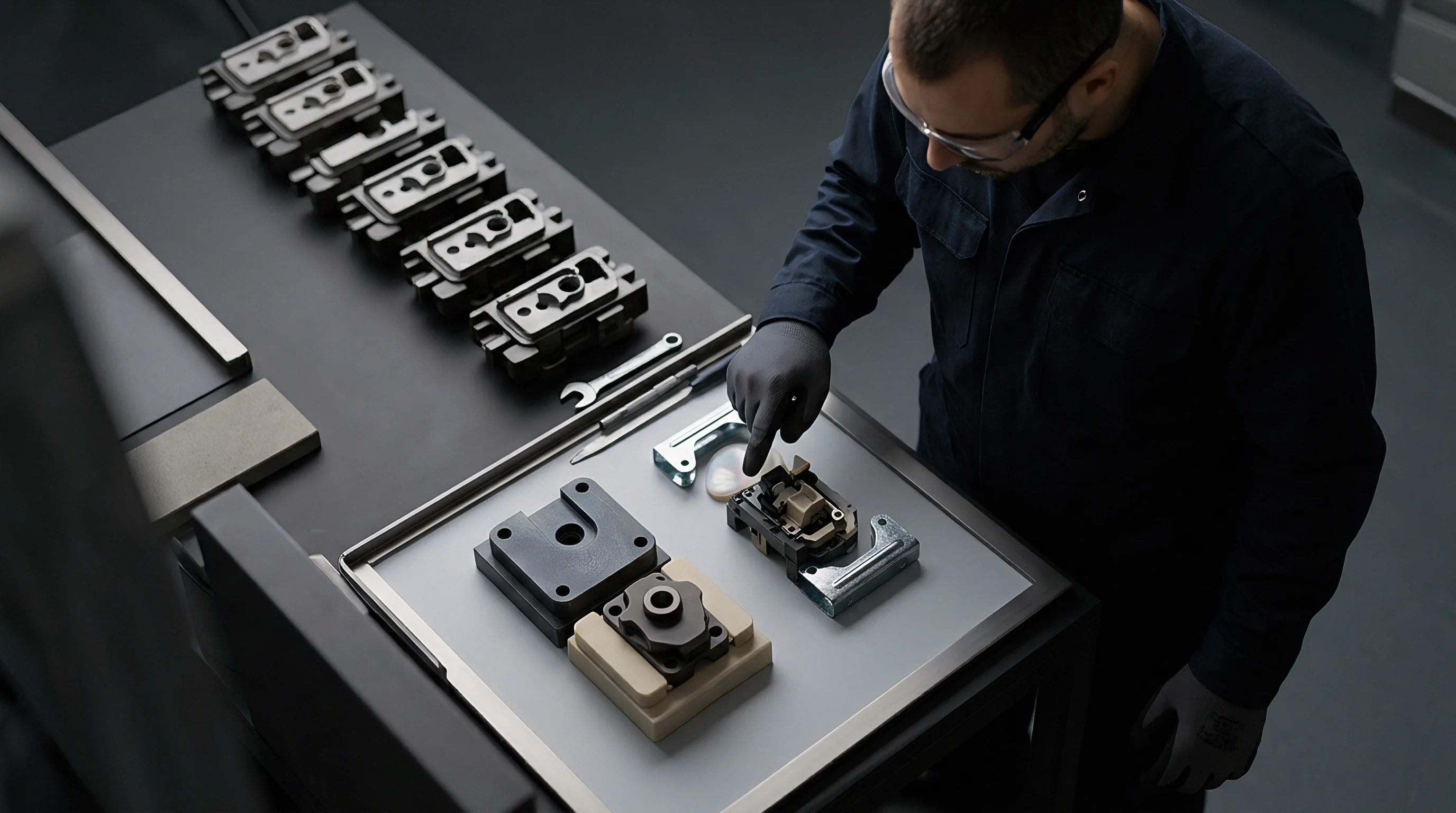
Local bailiffs and court-appointed receivers control physical entry once insolvency filings enter official dockets. Getting into press bays requires coordinated scheduling with plant security and insolvency administrators, while rigging teams need heavy overhead crane access or specialised forklifts to safely unbolt multi-ton tools from press platens.
- Unsecured side slides drop during transit, causing catastrophic damage to precision alignment leader pins.
- Unpurged water circuits initiate internal rusting that ruins tight-tolerance core insert fits.
- Missing mold latching straps allow cavity faces to strike during crane lifting operations.
- Residual PVC resin left in barrels releases hydrochloric acid fumes that etch nearby cavity steel overnight.
Applying standard DIN 50017 anti-corrosion grease over polished mold cavities preserves surface finishes down to SPI A-1 standards. Transporting heavy tools without mechanical latching plates risks severe misalignment across interlocks.
Tooling cannot be removed until all outstanding invoices across unrelated production runs are paid in full.

Conflict
Cross-border insolvency proceedings introduce immediate legal friction between foreign courts and regional property laws. Conflict of laws principles dictate whether the legal regime of the buyer’s jurisdiction or the location of the press room governs tool ownership. The principle of lex rei sitae dictates that the law of the physical location controls real property rights and possessory claims.
When Does Lex Rei Sitae Overrule Foreign Bankruptcy Stays?
Territorial jurisdiction over physical property takes precedence when a tool sits inside a foreign processing plant. Even if a United States bankruptcy court issues an automatic stay under Chapter 11, local courts in Germany, China, or Mexico enforce local possessory rights over physical assets situated within their borders. Foreign bankruptcy orders carry limited automatic enforcement authority without formal recognition proceedings.
Physical location of manufacturing tooling dictates the primary legal framework for possessory disputes regardless of corporate headquarters.

Cross-Border Insolvency Stays
Chapter 15 petitions in the United States seek recognition of primary foreign restructuring proceedings. The UNCITRAL Model Law on Cross-Border Insolvency attempts to harmonise cross-border asset management. Insolvency administrators routinely challenge foreign title claims, forcing buyers to submit to local court jurisdiction.
Priority rights over physical assets inside a factory floor remain subject to territorial enforcement mechanisms. International trade treaties rarely supersede statutory possessory liens granted to local operational facilities.
Legal scholars continue to debate whether digital asset registries can effectively preempt local physical repossession laws in cross-border disputes.


Cascade
Statutory priority rankings determine whether a moulder’s unpaid vendor charges take precedence over bank security interests. When an injection moulding enterprise collapses, multiple creditors lay claim to assets found on the factory floor. Possessory liens often rank above perfected commercial mortgages under specific statutory frameworks.

Artisan Lien Priority
Moulders who perform active maintenance or modification on steel dies acquire possessory rights in many jurisdictions. Under the German Civil Code (BGB § 647), a Werkunternehmerpfandrecht grants processors a statutory possessory lien over customer tooling for unpaid processing and tooling modification fees. Similar statutory moulder lien laws exist across various state codes in the United States, allowing moulders to retain steel until production debts clear.
The lien covers work directly applied to the tool. Standard production runs for moulded plastic parts do not always give rise to a valid artisan lien on the tool itself unless local statutory definitions explicitly include moulding service debts.

Floating Charge Claims
Secured lenders holding general inventory mortgages frequently assert rights over all tooling found on plant premises. Bank security agreements often employ broad language covering all plant equipment, tooling, and fixtures. Perfected bank liens will seize third-party tools unless clear bailment filings exist in public asset registries prior to credit perfection dates.
| Jurisdiction | Primary Statutory Basis | Possessory Lien Scope | Secured Lender Precedence | Average Eviction Timeline |
|---|---|---|---|---|
| United States | State Mold Lien Acts / UCC Article 9 | Unpaid tooling & part invoices | Junior to prior UCC filings unless statutory exception applies | 30 to 90 Days |
| Germany | BGB § 647 (Werkunternehmerpfandrecht) | Direct tooling modifications & repair | Senior to floating bank charges for direct tool repairs | 60 to 120 Days |
| China | Civil Code Property Rights Book | Contractual debts directly related to steel | Subordinate to registered mortgage charges without recorded bailment | 90 to 180 Days |
| Mexico | Código de Comercio / Commercial Liens | Unpaid processing charges | Bank mortgages take priority without public commercial registry entry | 120 to 240 Days |
Filing possessory claims requires strict adherence to notice procedures defined by local commercial law. Receivers liquidate unclaimed steel as scrap value if buyers fail to file formal asset claims within statutory deadlines.
Failing to perfect a tooling security interest before shipment leaves property vulnerable to total liquidation by senior bank lenders.

Toll
Resolving disputed tooling detentions requires clear financial evaluation of direct payoff demands against legal recovery expenses. Insolvency receivers frequently hold injection moulds hostage, demanding payment for general unpaid moulding invoices run for unrelated product lines. Evaluating the true cost of tooling recovery involves balancing settlement payouts against piece-part interruption losses.

Settlement Arithmetic
Negotiating tool release payments involves isolating legitimate maintenance expenses from general unpaid moulding invoices. Receivers calculate machine-hour tariffs and daily warehouse storage fees to extract cash from original equipment manufacturers desperate to maintain assembly line continuity.
Assume a buyer has a 4.2-tonne automotive injection mould (P20 core/cavity, 4-cavity hot runner) trapped inside an insolvent supplier facility in North Rhine-Westphalia. The insolvent moulder claims €48,000 in outstanding unpaid part invoices and €14,000 in accrued tool maintenance and storage charges. Rebuilding the tool in a domestic toolroom takes 16 weeks and costs €125,000.
Operating line closure penalties run €8,500 per day of shutdown.
Calculating the economic boundary for cash settlements requires comparing immediate payoff scenarios against formal judicial replevin actions.
| Cost Component | Direct Receiver Settlement | Judicial Replevin Action | Tool Re-Sourcing Replacement |
|---|---|---|---|
| Disputed Debts Paid | €22,000 (Negotiated) | €0 | €0 |
| Legal & Filing Fees | €4,500 | €28,000 | €2,000 |
| Storage & Rigging Fees | €6,000 | €12,000 | €0 |
| Line Downtime Loss (Days) | 10 Days (€85,000) | 75 Days (€637,500) | 112 Days (€952,000) |
| New Tool Machining | €0 | €0 | €125,000 |
Courts require cash replevin bonds equal to twice the assessed value of the steel before issuing ex parte seizure orders. Direct negotiation with insolvency administrators yields faster factory floor extraction than litigation across foreign legal systems.
Insolvency administrators frequently settle possessory tooling claims for actual direct maintenance fees when presented with verified ownership documentation.

Replevin Bond Costs
Posting judicial security grants immediate physical repossession while court proceedings resolve underlying priority disputes. Replevin bonds serve as financial collateral for the moulder’s potential statutory lien claim. Legal costs mount rapidly when insolvency practitioners fight replevin petitions to protect estate valuation.
Negotiating a consent order with bank creditors avoids prolonged court arguments over collateral valuation. Settling legitimate repair invoices clears possessory liens faster than fighting jurisdiction challenges.
Paying documented maintenance claims directly to receivers secures faster tooling extraction than pursuing litigation against insolvent entities.

Conveyance
Extracting a heavy injection mould from an insolvent press room and shipping it across international borders involves precise logistics. Rigging crews must verify floor load capacities and crane safety factors before unbolting four-tonne tools from press beds. Custom export packaging requires heat-treated wooden crates compliant with ISPM 15 standards to clear international maritime ports.
Export documentation must accurately classify the tooling under Harmonized System code 8480.71 for plastic injection moulds to prevent customs holds. Customs officials examine commercial invoices and export declarations to verify that declared values reflect tool depreciated value rather than replacement cost. Discrepancies between physical asset tags and bill of lading descriptions result in customs seizures at shipping ports.
Receiving manufacturing plants must conduct comprehensive first-article inspection routines under DIN 16742 guidelines upon arrival to verify that transit vibrations have not disrupted core alignment pins or hot runner manifold electrical contacts.
Mounting the tool into the receiving press completes the physical transfer and resumes part validation routines.