Untargeted Analytical Screening of Packaging Migrants
Untargeted screening combines high-resolution mass spectrometry and toxicological thresholds to isolate, identify, and quantify unknown packaging migrants.


Solvent
The choice of extraction medium determines which packaging components migrate into test liquids during exposure in the laboratory. Under European Regulation 10 2011, migration testing for liquid food packaging relies on set simulants: ten percent ethanol for aqueous foods, three percent acetic acid for acidic media, and vegetable oil or synthetic triglycerides for fatty products. How polyolefins, flexible multilayer laminates, and coated paperboards release compounds into these fluids depends on chemical solubility, polymer swelling, and molecular size.
Testing with vegetable oil often causes analytical trouble in high-resolution mass spectrometry because matrix interferences suppress ion yield, making substitute screening media necessary. Under EN 1186 standards, isooctane and ninety-five percent ethanol serve as official substitutes for overall migration and screening evaluations. For dry foods at elevated temperatures, Tenax ~ modified poly(2,6-diphenyl-p-phenylene oxide) ~ is used as Simulant E.

Simulant Mechanics and Thermal Acceleration
Standardized liquid contact tests reproduce migration potential under controlled laboratory conditions. Holding samples for ten days at sixty degrees Celsius simulates ambient storage over thirty days by accelerating compound diffusion through polyolefin networks. When exposed to non-polar solvents, high-density polyethylene and polypropylene containers swell, raising the diffusion coefficients of residual oligomers and low molecular weight synthetic additives.
During roll storage, when printed flexible films wind onto reels under tension, set-off occurs as uncured ink components transfer from the outer print surface to the inner food-contact layer. Extrusion conversion can also generate secondary reaction products through thermal degradation. For example, Irgafos 168, a phosphite antioxidant added to stabilize polyolefins, oxidizes into tris(2,4-di-tert-butylphenyl)phosphate and degrades into 2,4-di-tert-butylphenol.
Both secondary products routinely show up in solvent extracts despite never being added to the initial formulation.

Volatile Extraction and Swelling Protocols
Headspace analysis targets low-boiling compounds trapped within polymer layers. Static headspace gas chromatography isolates residual ink solvents like ethyl acetate, isopropanol, and toluene. For trace volatile and semi-volatile substances, headspace solid-phase microextraction uses coated fused silica fibers to adsorb target molecules directly from the packaging headspace before thermal desorption in the chromatographic injector port.
Direct extraction with dichloromethane or hexane acetone mixtures fully swells the polymer matrix to release all potential migrants. This exhaustive extraction establishes a worst-case concentration ceiling for chemical exposure. Before high-resolution screening, the extract is concentrated under a gentle nitrogen stream, taking care not to lose volatile analytes with boiling points below one hundred fifty degrees Celsius.
Deriving the Analytical Evaluation Threshold establishes the sensitivity required for non-target screening. The calculation translates human toxicological exposure limits into instrument-readable concentration values based on packaging contact geometry.
Take a rigid polypropylene container weighing twenty grams, built to hold one kilogram of fatty food, with a contact surface area of six square decimeters. Applying the conservative default Threshold of Toxicological Concern of 1.5 micrograms per person per day for an unknown substance carrying potential genotoxic or high structural toxicity risks gives the following food concentration threshold:
Target concentration in food = 1.5 micrograms / 1 kilogram food = 1.5 micrograms per kilogram (0.0015 milligrams per kilogram).
Assuming complete migration into one kilogram of food simulant, the simulant concentration works out to 1.5 parts per billion. Concentrating a one hundred milliliter simulant extract down to ten milliliters before injection adds a tenfold concentration factor. Accounting for ionization efficiency variations across unknown structures with a response factor uncertainty factor of two gives the final Analytical Evaluation Threshold for the concentrated extract:
Analytical Evaluation Threshold = (1.5 parts per billion x 10 concentration factor) / 2 uncertainty factor = 7.5 parts per billion (0.0075 milligrams per kilogram extract solution).
Any signal above 7.5 parts per billion in the concentrated extract requires characterization, identification, and structural risk assessment.
Electrospray ionization in dual polarity modes captures polar migrants that electron ionization degrades or misses entirely.
| Simulant Code | Chemical Composition | Food Type Category | Standard Screening Conditions | Matrix Interference Factor |
|---|---|---|---|---|
| Simulant A | 10% Ethanol (v/v) | Aqueous foods | 10 days at 60 °C | Low salt and organic matrix load |
| Simulant B | 3% Acetic acid (w/v) | Acidic foods (pH below 4.5) | 10 days at 60 °C | Corrosive to metal injector components |
| Simulant D2 | Vegetable oil / Isooctane | Fatty foods | 2 days at 20 °C (Isooctane substitute) | High lipid matrix interference in MS |
| Simulant E | Modified Polyphenylene Oxide (Tenax) | Dry foods | 10 days at 60 °C | Particle shedding during solvent recovery |
Unlisted chromatographic peaks are often treated as inert processing aids cleared under resin manufacturer master files, even when supporting analytical spectra are missing.


Ionization
High-resolution mass spectrometers convert neutral migrating molecules into charged gas-phase ions for analysis. Paired with gas chromatography, electron ionization at seventy electronvolts produces reproducible molecular fragmentation patterns. These spectra readily match commercial reference libraries like NIST and Wiley, making the technique well suited for identifying volatile and semi-volatile migrants.
Chemical ionization in gas chromatography uses reagent gases such as methane or ammonia to generate protonated molecular ions with minimal fragmentation. This softer ionization technique preserves pseudomolecular ion peaks, helping confirm nominal molecular weights for unknown compounds that fragment completely under standard electron ionization.

Complementary Chromatographic Platforms
Gas-phase separations isolate nonpolar, low molecular weight compounds before mass determination. Gas chromatography high-resolution mass spectrometry works well for plasticizers like phthalates and adipates, synthetic paraffin waxes, organophosphite antioxidants, and residual monomers such as styrene and vinyl chloride, whereas polar migrants elute early.
Liquid chromatography high-resolution mass spectrometry, using electrospray or atmospheric pressure chemical ionization, targets polar, non-volatile, and high molecular weight migrants. Polyurethane adhesive residues, cyclic polyester oligomers, primary aromatic amines, and photoinitiator breakdown products require this liquid-phase approach. Positive-mode electrospray produces protonated molecules along with sodium and ammonium adducts, while negative mode generates deprotonated species and formate adducts.
Variable ionization response factors introduce substantial quantitative uncertainty for unknown structures. Peaks with identical area counts in an electrospray source can differ in actual mass concentration by up to two orders of magnitude because of varying ionization efficiencies. Local ion formation depends on polarity, basicity, pKa, and co-eluting matrix compounds.
Without an authentic reference standard, estimating mass concentration requires structural surrogates, leaving final figures bounded by an uncertainty range between fifty percent and five hundred percent of the true value.
| Platform Architecture | Polarity and Volatility Band | Primary Ionization Mode | Target Chemical Classes | Typical Detection Limit |
|---|---|---|---|---|
| GC-QTOF / GC-Orbitrap | Volatile to semi-volatile non-polar | 70 eV Electron Ionization (EI) | Monomers, solvents, MOSH/POSH, plasticizers | 0.5 to 2.0 ppb extract |
| GC-HRMS (Chemical Ionization) | Semi-volatile moderate polarity | Positive/Negative Chemical Ionization | Photoinitiators, fatty acid amides, antioxidants | 1.0 to 5.0 ppb extract |
| LC-QTOF / LC-Orbitrap | Non-volatile highly polar | Electrospray Ionization (ESI+/-) | Primary aromatic amines, cyclic oligomers, dyes | 0.1 to 1.0 ppb extract |
| LC-APCI-HRMS | Non-volatile medium polarity | Atmospheric Pressure Chemical Ionization | Polyorganosiloxanes, fluorinated surfactants | 0.5 to 3.0 ppb extract |
Adduct formation complicates spectral interpretation during molecular assignment.
An analytical evaluation threshold of 1.5 micrograms per day translates to 0.01 milligrams per kilogram of food for a packaging contact ratio of six square decimeters per kilogram.
Predicting retention times with molecular descriptors helps confirm matches between experimental spectra and empirical database entries.


Structure
Raw chromatographic signals need deconvolution to isolate true migrant peaks from analytical noise. Deconvolution algorithms extract pure mass spectra from overlapping peaks by tracking fragment intensities across elution profiles. Procedural blanks, simulant blanks, and system controls are then subtracted to remove column bleed, septa siloxanes, ambient laboratory contaminants, and solvent impurities.
Accurate mass measurements using Orbitrap or Time-of-Flight instruments operating at resolving powers above fifty thousand enable precise elemental composition calculations. Measuring monoisotopic mass to within two parts per million narrows the candidate chemical formulas for an observed mass-to-charge ratio.

Library Matching and Confidence Tiering
Empirical mass spectra are screened automatically against reference spectral libraries. In NIST searches of electron ionization data, match factors above eight hundred out of one thousand point to candidate structures. For liquid chromatography, tandem mass spectrometry fragmentation trees ~ generated through collision-induced or higher-energy collisional dissociation ~ are matched against empirical and in silico databases like METLIN and MassBank.
Structural assignment confidence follows five standardized identification levels:
- Level 1 Confirmed Structure indicates that mass spectral data, retention time, and tandem fragmentation patterns match an authentic reference standard injected under identical laboratory operating conditions.
- Level 2 Probable Structure signifies an unambiguous structural proposal backed by matching public library spectra or diagnostic tandem mass spectral fragment spectra.
- Level 3 Tentative Structure reflects an established molecular formula and core structural class where positional isomerism or specific substituent placement remains unconfirmed.
- Level 4 Molecular Formula designates a unambiguous elemental composition calculated from accurate mass and isotopic pattern fitting without sufficient structural fragment evidence.
- Level 5 Exact Mass Feature represents an exact mass-to-charge ratio exceeding the analytical evaluation threshold where elemental composition cannot be assigned due to low signal intensity.
Polyolefin oligomers form complex homologous series, with non-intentionally added substances in polyolefin packaging consisting mostly of cyclic and linear saturated hydrocarbons between fourteen and fifty carbon atoms. Mechanical recycling introduces further non-target migrants, including post-consumer contaminants, limonene oxidation products, fragrance compounds, and degradation products from earlier use cycles.
Matching algorithms frequently assign similarity scores above eighty-five percent to database compounds that share core fragment ions despite having very different toxicological profiles. Across broad screening workflows, this creates a misclassification risk estimated between fifteen percent and thirty percent. To manage this uncertainty, importers often require Level 1 confirmation against an authentic standard for any unlisted peak exceeding ten parts per billion in food simulants.
Article 19 of Regulation EU 10 2011 forces packaging converters to document risk assessments for unlisted substances prior to commercial distribution.
As uncharacterized cyclic oligomers continue to turn up in recycled polyethylene terephthalate, it remains uncertain whether mass spectrometry libraries can expand fast enough to keep pace with evolving mechanical recycling streams.


Toxicity
Unidentified chromatographic peaks pose compliance risks whenever chemical structures remain unconfirmed. Evaluating safety without a clear identity relies on the Threshold of Toxicological Concern framework endorsed by the European Food Safety Authority, which links specific structural features to human exposure thresholds below which adverse toxicological effects are improbable.
Substances carrying structural alerts for genotoxicity ~ such as alkylating agents, aromatic amines, nitro compounds, and hydrazine derivatives ~ have a conservative intake limit of 0.15 micrograms per person per day. Assuming standard consumption of one kilogram of food packed in six square decimeters of material, this translates to a food concentration threshold of 0.00015 milligrams per kilogram (0.15 parts per billion).

Threshold Calculations and Risk Derivation
Exposure estimates depend on packaging dimensions, fill volume, and daily dietary consumption. Non-genotoxic migrants are classified using Cramer Decision Tree rules, which divide chemical structures into three hazard groups based on chemical reactivity, metabolic fate, and functional groups.
Structural alerts guide toxicological prioritization. Cramer Class I covers simple chemicals with efficient metabolic pathways and low toxicity, assigning an exposure threshold of 1800 micrograms per person per day (1.8 milligrams per kilogram food). Cramer Class II identifies intermediate structures, setting the limit at 540 micrograms per person per day (0.54 milligrams per kilogram food).
Cramer Class III encompasses complex structures, heterocyclic compounds, organophosphorus esters, and halogenated groups that lack evidence of metabolic detoxification, enforcing a threshold of 90 micrograms per person per day (0.09 milligrams per kilogram food).
Quantitative Structure-Activity Relationship tools, including ToXTree, Derek Nexus, and VEGA QSAR models, screen Level 2 and Level 3 structural candidates against mutagenicity and carcinogenicity databases. Evaluating non-target migrants follows a set decision sequence:
- Extract total ion chromatograms from migration simulants and calculate peak concentrations using structural surrogate calibration curves.
- Compare observed signal concentrations against the derived Analytical Evaluation Threshold to filter out toxicologically insignificant background features.
- Screen accurate mass spectra of features exceeding the threshold against chemical structural databases to assign candidate formulas and structural alerts.
- Process candidate structural topologies through Cramer decision tree algorithms and QSAR mutagenicity prediction modules.
- Compare estimated human dietary exposure figures against calculated Threshold of Toxicological Concern boundaries.
- Commission authentic reference standards for Level 1 confirmation when calculated exposure exceeds the target Cramer class threshold.
Unidentified peaks exceeding the Analytical Evaluation Threshold that cannot be structurally characterized prevent complete safety verification and delay commercial approval.
Distributing food contact articles that contain uncharacterized migrants above toxicological screening limits triggers mandatory market withdrawals, inventory write-downs, and importer liability under EU enforcement rules.


Filing
Technical compliance files document that finished food packaging satisfies safety obligations under European regulations. Declarations of conformity rely on upstream raw material statements alongside laboratory test evidence. Claims of compliance with Regulation EC 1935 2004 Article 3 and Regulation EU 10 2011 Article 15 require supporting files with analytical proof of non-target screening for non-intentionally added substances.
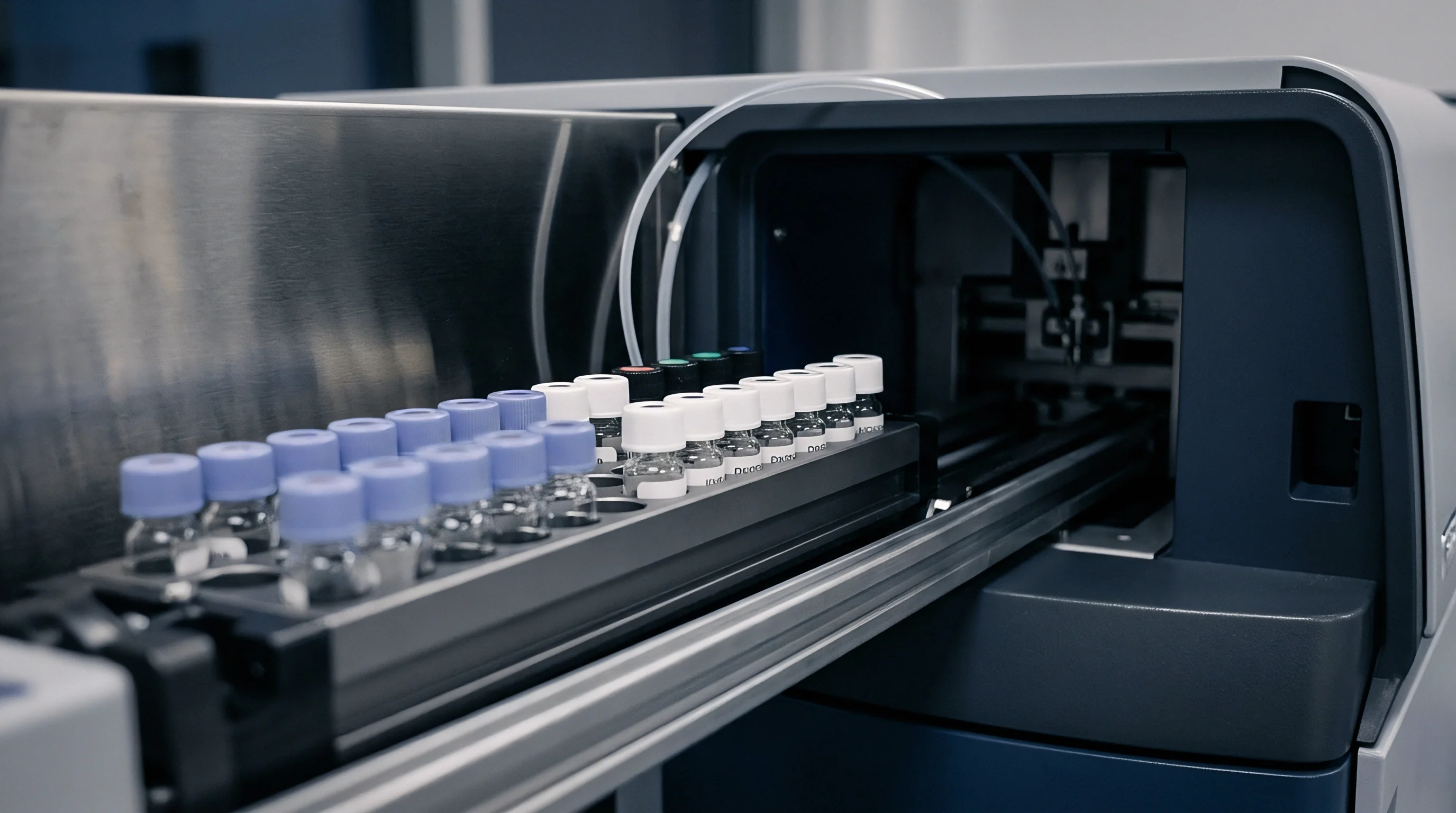
Laboratory screening reports form the core of Article 19 risk assessments under Regulation EU 10 2011. Testing dossiers must specify extraction simulants, thermal contact conditions, chromatographic setups, limits of detection, and explicit Analytical Evaluation Threshold calculations. Annotated total ion chromatograms showing integrated peak areas for all features above the threshold must accompany the final evaluation.
Documentation Chain and Dossier Requirements
Converting operations across the supply chain introduce processing aids, slip additives, anti-static coatings, and laminating adhesives that interact to form unlisted degradation products. Generic compliance statements from resin manufacturers do not cover chemical species generated during downstream conversion steps such as blow molding, film extrusion, flame treatment, and curing.
| Dossier Module | Primary Data Source | Required Documentation Level | Audit Verification Focus |
|---|---|---|---|
| Raw Material DoC | Resin and Additive Suppliers | Full chemical inventory and SML lists | Upstream restriction alignment |
| Screening Report | ISO 17025 Accredited Laboratory | TIC chromatograms, AET derivations | Peak integration and baseline noise |
| NIAS Risk File | Compliance Auditor / Toxicologist | Cramer classification and QSAR output | TTC exposure compliance proofs |
| Batch Verification | Quality Control Testing Desk | Retained sample extraction fingerprints | Lot-to-lot chemical identity match |
Auditing third-party non-target screening reports requires checking analytical parameters against a systematic review process. Buyers evaluate screening files against a standard checklist:
- Simulant Selection Validity confirms that test fluids accurately match the intended food contact scope, including fatty food simulants for lipophilic formulations.
- Analytical Threshold Derivation verifies that instrument sensitivity limits match package geometry and daily intake assumptions.
- Chromatographic Dual Platform Coverage ensures that both GC-MS and LC-MS platforms evaluated the extracts to capture non-polar volatile and polar non-volatile migrants.
- Blank Subtraction Rigor audits whether procedural control signals were correctly subtracted without obscuring genuine migrant peaks.
- Quantification Surrogate Transparency checks that response factor uncertainty factors were integrated into concentration calculations for unknown peaks.
Laboratory test reports covering base resins fail to evidence compliance when post-processing thermal steps generate secondary reaction products.
Inserting a mandatory supplier warranty clause that requires high-resolution mass spectrometry screening for each batch revision shifts the financial burden of NIAS risk assessments directly to the material converter.