Selecting Alternative Simulants for Polyolefin Food Packaging Testing
Alternative simulants for polyolefins require equivalent contact conditions that model fatty food extraction without triggering non-representative polymer swelling.
Rationale
Testing polyolefin food packaging with fatty food simulants presents immediate analytical problems on the bench. High-density polyethylene, low-density polyethylene, and polypropylene all absorb notable quantities of vegetable oil during extended heating. Standard testing with fatty food Simulant D2—typically refined olive oil, sunflower oil, or corn oil—drives liquid triglycerides straight into the amorphous phase of the polymer.
In gravimetric overall migration runs under EN 1186-2 or EN 1186-3, this uptake scrambles the mass balance: the test specimen gains weight from absorbed oil while simultaneously losing mass as low-molecular-weight additives, slip agents, and oligomers migrate out. Calculating residual mass after solvent extraction routinely yields negative values or hides significant chemical migration altogether.
Quantifying specific migration limits under EN 13130 requires isolating the vegetable oil from the specimen surface and converting it chemically. In practice, triglycerides must be saponified or enzymatically hydrolyzed into fatty acid methyl esters prior to gas chromatography. The solvents used for extraction frequently co-extract target analytes or compromise compound stability.
Furthermore, solute partition coefficients between polyolefins and viscous vegetable oils show wide experimental scatter, adding substantial analytical uncertainty.
Vegetable Oil Absorption in Amorphous Polyolefins
Polymer morphology governs mass transfer during migration testing. Polyethylene and polypropylene consist of ordered crystalline lamellae suspended in liquid-like amorphous regions. Because vegetable oil triglycerides carry non-polar alkyl chains, they interact readily with polyolefin backbones.
Under standard contact conditions of ten days at forty degrees Celsius, vegetable oil uptake in low-density polyethylene reaches three to eight percent of total specimen mass. High-density polyethylene absorbs less because of its higher crystallinity, but oil still collects in surface micro-voids enough to skew gravimetric results. Polypropylene homopolymers and block copolymers display temperature-dependent swelling that depresses the glass transition temperature.
Once absorbed, triglycerides cannot be washed away with volatile rinses like hexane or diethyl ether without stripping volatile migrants along with them.
Simulant D2 uptake in low-density polyethylene reaches eight percent by mass after ten days at forty degrees Celsius.
Determining total migration into olive oil means calculating the net mass change of the plastic after extracting all absorbed fat. Standard protocol calls for vacuum drying followed by Soxhlet extraction with pentane or isohexane to pull out the retained oil. These steps introduce cumulative measurement errors greater than two milligrams per square decimeter, burning through twenty percent of the legal overall migration allowance.
Volatile organic compounds in the polymer also escape during the high-temperature extraction phase, systematically depressing reported migration figures and making substitute media necessary for reliable compliance work.
- Assessment of polymer chemical composition to establish non-polar solvent compatibility and verify matrix stability under accelerated temperature conditions.
- Selection of alternative media based on target food contact types, mapping dry, aqueous, acidic, alcoholic, or fatty food categories to prescribed substitute fluids.
- Execution of preliminary swelling screening tests to confirm the candidate solvent does not cause excessive matrix dissolution or physical specimen distortion.
- Application of standardized exposure time and temperature acceleration factors derived from comparative diffusion kinetics data.

Regulatory Test Substitution Rules
European Regulation 10/2011 Annex IV and European Standard EN 1186-14 establish strict boundaries for choosing alternative simulants in overall and specific migration testing. Vegetable oil can be replaced with volatile organic solvents or dry synthetic media only when testing with Simulant D2 proves technically unfeasible. Recognized substitutes include isooctane, ninety-five percent ethanol in water by volume, and modified polyphenylene oxide.
For high-temperature processing above one hundred degrees Celsius, poly-dimethylsiloxane silicone oil serves as the replacement fluid.
United States Food and Drug Administration guidelines under twenty-one CFR 176 and 177 take a similar approach to polyolefin end-tests, recommending n-heptane for fatty food contact, fifty percent ethanol for alcoholic products, and distilled water for aqueous goods. An n-heptane soak at one hundred twenty degrees Fahrenheit for five hours serves as the standard accelerated fatty food extraction for polyethylene and polypropylene containers. Solvent choice depends on food contact type and processing temperatures; polyolefins intended for dry, non-fatty items are tested with poly-dimethylsiloxane or modified polyphenylene oxide to avoid liquid-extraction artifacts.
Standard olive oil testing is frequently cited as technically unfeasible for semi-crystalline polymers, with unverified ethanol extractions submitted as proof of compliance.
Phase
How a solvent behaves inside a semi-crystalline polymer comes down to thermodynamic affinity and diffusion rates. Polyolefins alter physically when brought into contact with organic solvents whose solubility parameters mirror their own backbone. Isooctane and ninety-five percent ethanol act as effective substitutes by migrating into the amorphous zones of polyethylene and polypropylene.
Penetration depth decides whether solute extraction reflects real fat contact or overstates migration via artificial plasticization, with temperature directly governing that mass transfer.
Matrix swelling accelerates solute transfer. By disrupting inter-chain van der Waals forces in amorphous regions, organic solvents enlarge polymer free volume. This structural opening raises diffusion coefficients for embedded additives, antioxidants, and oligomers by several orders of magnitude.
Selecting substitute test conditions therefore requires balancing solvent aggressiveness against the physical preservation of the polymer to prevent unrealistic leaching.
Solubility Parameters and Matrix Expansion
Hansen solubility parameters break down the dispersion, polar, and hydrogen-bonding forces at play between polyolefin matrices and replacement media. Polyethylene shows a total solubility parameter of sixteen point zero square-root megapascals, while polypropylene sits at sixteen point five square-root megapascals. Isooctane has a dispersion parameter of fourteen point three square-root megapascals with zero polar or hydrogen-bonding components, giving it strong thermodynamic affinity for non-polar polyolefins.
Ninety-five percent ethanol carries a dispersion parameter of fifteen point eight, but its polar and hydrogen-bonding values reduce its affinity for pure hydrocarbon chains.
| Polyolefin Type | Substitute Simulant | Test Condition | Hansen Parameter (MPa^0.5) | Linear Swelling (%) | Acceleration Ratio vs D2 |
|---|---|---|---|---|---|
| High-Density Polyethylene | Isooctane | 2 days at 20°C | 14.3 | 1.2 | 1.0 |
| High-Density Polyethylene | Ethanol 95% v/v | 4 hours at 60°C | 15.8 | 0.3 | 0.95 |
| Low-Density Polyethylene | Isooctane | 2 days at 20°C | 14.3 | 4.1 | 1.25 |
| Low-Density Polyethylene | Ethanol 95% v/v | 4 hours at 60°C | 15.8 | 1.1 | 1.05 |
| Polypropylene Homopolymer | Isooctane | 2 days at 20°C | 14.3 | 1.8 | 1.10 |
| Polypropylene Copolymer | Ethanol 95% v/v | 4 hours at 60°C | 15.8 | 0.8 | 1.00 |
Heavy solvent uptake depresses the glass transition temperature and creates micro-voids in the polymer. Soaking low-density polyethylene in isooctane at elevated temperatures produces linear dimensional swelling beyond four percent, distorting the specimen. Once swelling exceeds critical limits, crystalline lamellae shift and free up entrapped chemical species that would never move during ordinary food contact.
Test procedures therefore impose strict temperature limits to keep matrix expansion within realistic bounds.
Under European Standard EN 1186-14, alternative test media must not alter the physical crystal structure of the polymer matrix during exposure.

Time and Temperature Acceleration Ratios
Equivalency protocols work by matching mass transfer in substitute solvents to baseline migration rates in Simulant D2. European Standard EN 1186-14 provides standardized equivalency ratios for this purpose: ten days at forty degrees Celsius in vegetable oil corresponds to two days at twenty degrees Celsius in isooctane, or four hours at sixty degrees Celsius in ninety-five percent ethanol. Isooctane acts rapidly on amorphous domains.
- Isooctane rapid penetration occurs within forty-eight hours at ambient room temperature, reducing laboratory turnaround time while preserving polymer thermal stability.
- Ethanol thermal activation requires sixty degrees Celsius exposure to drive polar solvent penetration into non-polar polyolefin structures.
- Tenax high-temperature stability allows dry contact simulation up to one hundred seventy-five degrees Celsius without media decomposition or polymer melting.
- Silicone oil fluid dynamics provide continuous liquid contact across extreme thermal windows from one hundred to two hundred degrees Celsius.
Acceleration ratios vary based on the migrant’s molecular mass and the resin’s branching profile. High-density polyethylene demands longer contact times than low-density grades because of its denser crystalline barrier. Similarly, random polypropylene copolymers contain ethylene units that increase solvent solubility compared to homopolymer grades.
Laboratories must check matrix stability before applying standard acceleration factors to unfamiliar blends.
Solvents that produce visible haze or warp the dimensions of a polyolefin test strip yield invalid migration measurements due to irreversible structural alteration.

Analytes
Isolating chemical species extracted by alternative simulants demands clean chromatographic separation. Overall migration tests determine the total weight of non-volatile material moving from plastic to simulant, while specific migration targets distinct chemical entities with individual statutory limits. Formulations regularly include hindered phenol antioxidants, phosphite stabilizers, fatty acid amide slip agents, hindered amine light stabilizers, and low-molecular-weight oligomers.
Because alternative solvents are volatile, extracts can be concentrated quickly by evaporation, lowering detection limits for trace migrants.
Evaporating isooctane or ethanol extracts to dryness leaves behind the non-volatile residue used for gravimetric or chromatographic work. Solvent purity is critical here. Reagent-grade test solvents routinely require redistillation to strip out non-volatile background contaminants that would register as false mass gains on the balance.
When Does Isooctane Overestimate Polyolefin Specific Migration?
Non-polar solvents heavily overestimate specific migration when applied to low-density polyolefins containing lipophilic additives. Isooctane penetrates amorphous low-density polyethylene quickly, pulling out heavy antioxidants at more than five times their diffusion rate into vegetable oil. Additives like Irganox 1010 and Irgafos 168 have high octanol-water partition coefficients and dissolve preferentially into hydrocarbon liquids.
Tested at twenty degrees Celsius for two days, isooctane extracts Irganox 1010 from low-density polyethylene in quantities that regularly exceed the statutory limit of six milligrams per kilogram of food.
| Target Compound | CAS Number | Specific Migration Limit (mg/kg) | Analytical Technique | Isooctane Recovery (%) | Ethanol 95% Recovery (%) |
|---|---|---|---|---|---|
| Irganox 1010 | 6683-19-8 | 6.0 | HPLC-UV / LC-MS | 145 | 98 |
| Irgafos 168 (total) | 31570-04-4 | 6.0 | HPLC-UV / GC-MS | 138 | 95 |
| Erucamide | 112-84-5 | 60.0 (OML) | GC-FID | 110 | 102 |
| Chimassorb 944 | 71878-19-8 | Solvent Dependent | LC-MS/MS | 85 | 92 |
| POSH Oligomers (C10-C50) | N/A | Not Specified (OML) | GC-FID / GCxGC-MS | 180 | 45 |
Irgafos 168 oxidizes to tris(2,4-di-tert-butylphenyl)phosphate during melt processing, so testing must measure both the phosphite and the oxidized phosphate against the six milligram per kilogram threshold. Liquid chromatography paired with UV or mass spectrometry resolves both forms without thermal degradation. Direct injection of these concentrated extracts avoids the saponification steps required when working with vegetable oil.

Polyolefin Oligomers and Non Intentionally Added Substances
Low-molecular-weight oligomers make up a substantial share of what non-polar substitute media extract. Polyolefin saturated hydrocarbons and mono-unsaturated hydrocarbons span linear and branched carbon chains between C10 and C50, eluting alongside common additives during analysis. Isooctane extracts these light fractions so aggressively that overall migration values often breach statutory limits even when additive migration remains minimal.
Saturated hydrocarbons dominate low molecular fractions.
- Oligomer co-extraction artifacts occur when isooctane solvates low molecular mass polymer fractions that remain immobile in high-viscosity triglycerides.
- Antioxidant degradation products generate multiple secondary chromatographic peaks requiring high-resolution mass spectrometry identification.
- Slip agent blooming creates variable surface concentration profiles that produce inconsistent migration results between duplicate specimens.
- Volatile solvent evaporation losses cause low molecular mass non-intentionally added substances to vanish during extract concentration steps.
Non-intentionally added substances include reaction by-products, catalyst residues, ink decomposition products, and adhesive components, typically identified by gas chromatography-time of flight mass spectrometry. Substitute simulants provide a clean background spectrum free of vegetable oil fatty acids, permitting structural identification of unknown compounds down to ten parts per billion concentrations, alongside blank determinations to establish baseline drift.
Whether analytical laboratories can reliably separate low-molecular-weight polyolefin oligomers from synthetic wax additives without overestimating toxicological risk remains unresolved across current mass spectrometry methods.

Verification
Auditing a compliance file requires confirming that alternative simulant data legally cover the specific material in hand. Declarations of conformity under Regulation 10/2011 Annex IV must explicitly document test conditions, the chosen substitute media, and any applied reduction factors. A test report based on alternative simulants is legally defensible only if technical unfeasibility is demonstrated for vegetable oil or if the substitute parameters represent demonstrated worst-case exposure.
Dossier scope gaps create enforcement risks.
Reports that omit resin grade, melt flow index, or masterbatch loading fail regulatory inspection. Downstream converters and brand owners remain legally liable for ensuring that the physical packaging matches the scope of the underlying laboratory file.
Declaration Scope and Test Dossier Audit
Compliance documentation must trace every raw material from base polymer synthesis through masterbatch addition to converting. Auditing a declaration involves checking the underlying test report against the facility’s ISO/IEC 17025 accreditation scope, which must include EN 1186 for overall migration and EN 13130 for specific migration. Changing masterbatch suppliers or adjusting slip levels invalidates existing test dossiers, requiring analytical re-qualification of the modified polyolefin formulation.
- Verification of resin grade matching ensures test reports correspond directly to the melt index and density of the commercial shipment.
- Audit of surface area ratio factors confirms laboratory test cell dimensions accurately mirror intended commercial packaging geometries.
- Cross-checking dual-use additives verifies food additive compliance under Regulation 1333/2008 for substances migrating into food contact layers.
- Review of NIAS screening limits ensures non-listed substances undergo toxicological risk assessment following threshold of toxicological concern concepts.
Discrepancies often appear between raw film samples and final converted articles. Secondary converting processes like corona treatment, flexographic printing, and solventless lamination introduce new volatile species and shift surface energies. As a result, test reports generated for unprinted resins fail to cover converted packaging legally.
Declarations of conformity that fail to specify food simulant exposure conditions do not satisfy European union legal requirements for food contact materials.
Fat Consumption Reduction Factors and Exposure Correction
European Regulation 10/2011 allows Fat Consumption Reduction Factors (FRF) to be applied to specific migration values for lipophilic substances in fatty foods. The factor accounts for the fact that consumers do not ingest pure fat at maximum exposure levels every day. Values range from one to five and divide the analytical migration figure directly: a measured antioxidant migration of twelve milligrams per kilogram drops to three milligrams per kilogram with an FRF of four, bringing the material within legal limits.
Reduction factors cannot be applied to overall migration limits or to substances with a non-detectable statutory threshold, nor are they permitted for infant food packaging under European law. Auditors must confirm that laboratories divided the final calculated concentration rather than applying the reduction factor to raw instrument readings before surface area corrections. Standard test ratios assume uniform contact.
Clause 4.2 of European Standard EN 1186-14 mandates that alternative simulant test reports state the exact swelling factor obtained during pre-screening, rendering any report lacking swell data legally void during regulatory audits.

Arithmetic
Converting polyolefin migration test data requires systematic application of surface-to-volume ratios and reduction factors. The European reference ratio assumes six square decimeters of packaging surface area per kilogram of foodstuff. Real-world packaging shapes diverge substantially from this benchmark, so experimental values measured in milligrams per square decimeter must be scaled to actual or statutory contact configurations.
Consider a high-density polyethylene container designed for liquid vegetable oil. Assessing specific migration compliance for Irgafos 168 involves walking through raw analytical results, surface area scaling, corrections for isooctane over-extraction, and fat reduction adjustments.
Container Geometry and Surface Ratio Adjustments
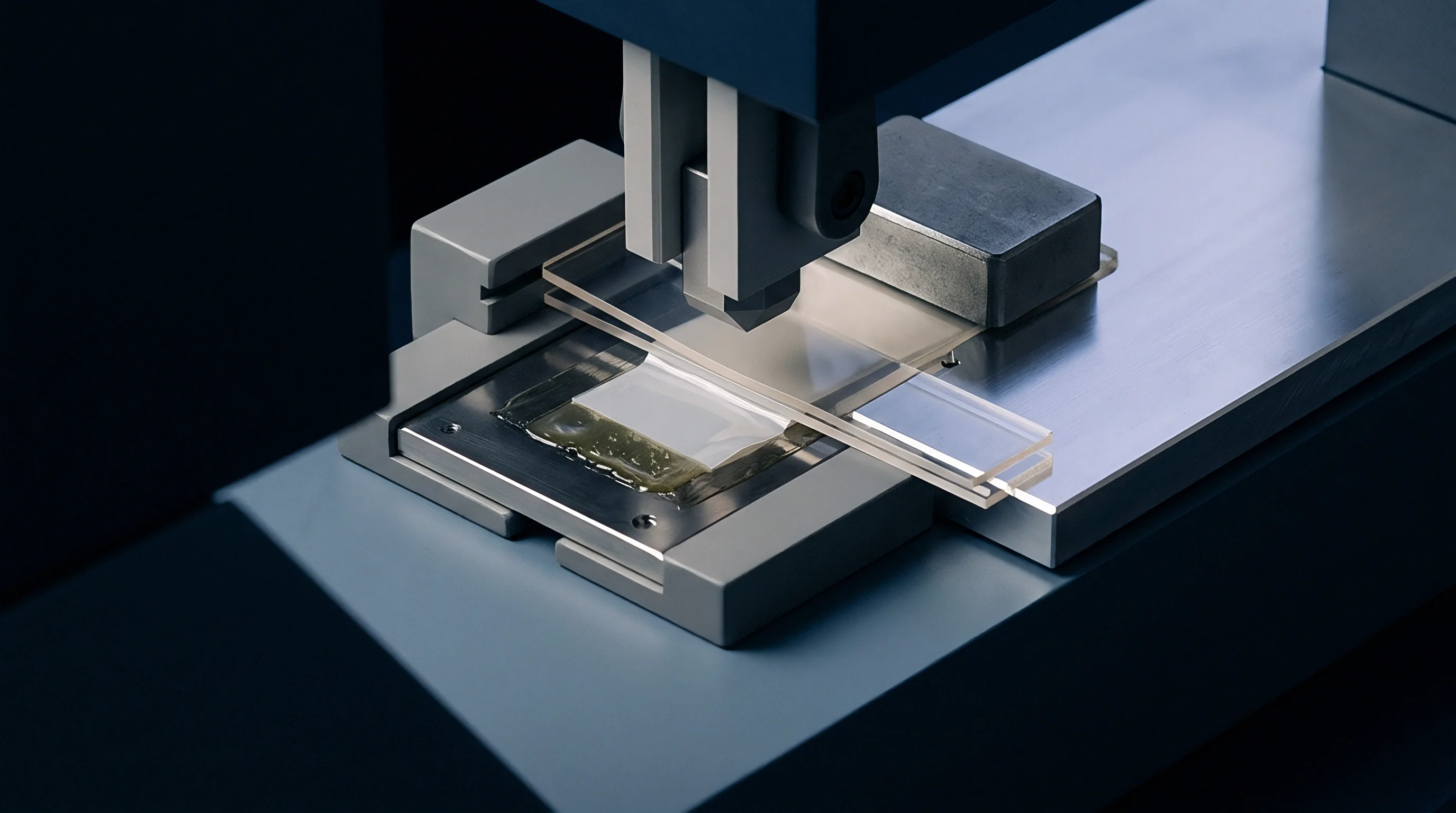
Take a rigid high-density polyethylene container holding five hundred milliliters (zero point five kilograms of food) with an internal contact surface area of three point five square decimeters. The test protocol immerses polymer specimens with one point zero square decimeters total surface area into one hundred milliliters of isooctane for two days at twenty degrees Celsius, modeling fatty food contact of ten days at forty degrees Celsius.
High-performance liquid chromatography measures a total Irgafos 168 concentration (parent phosphite plus oxidized phosphate) of zero point nine milligrams per liter in the isooctane extract. Across a one point zero square decimeter test specimen, this yields zero point zero nine milligrams of analyte, establishing a surface migration rate of zero point zero nine milligrams per square decimeter.

Comparative Migration Math for Polyethylene Containers
Calculating migration into food without correction means multiplying zero point zero nine milligrams per square decimeter by the container’s surface-to-volume ratio. Dividing three point five square decimeters by zero point five kilograms gives seven point zero square decimeters per kilogram. Multiplying that ratio by zero point zero nine milligrams per square decimeter yields a raw calculated migration level of zero point sixty-three milligrams per kilogram of food.
| Calculation Stage | Isooctane (Uncorrected) | Ethanol 95% (Alternative) | Simulant D2 (Baseline Model) | Statutory Limit |
|---|---|---|---|---|
| Extract Concentration (mg/L) | 0.90 | 0.58 | 0.45 | N/A |
| Surface Migration (mg/dm²) | 0.090 | 0.058 | 0.045 | N/A |
| Raw Calculated Food Level (mg/kg) | 0.630 | 0.406 | 0.315 | 6.00 |
| Isooctane Over-Extraction Correction Factor | 1.50 | 1.00 | 1.00 | N/A |
| Corrected Migration Level (mg/kg) | 0.420 | 0.406 | 0.315 | 6.00 |
| Fat Reduction Factor (FRF = 2) Applied | 0.210 | 0.203 | 0.158 | 6.00 |
Isooctane extracts lipophilic additives more aggressively than vegetable oil does, giving an over-extraction ratio of one point five for high-density polyethylene under these conditions. Dividing zero point sixty-three milligrams per kilogram by one point five produces a corrected migration level of zero point forty-two milligrams per kilogram. Because the container is intended for pure vegetable oil, a Fat Consumption Reduction Factor of two (FRF = 2) applies.
Dividing zero point forty-two by two yields a final compliance figure of zero point twenty-one milligrams per kilogram.
Applying a fat consumption reduction factor of two reduces the calculated specific migration value of Irgafos 168 from zero point forty-two to zero point twenty-one milligrams per kilogram.
Compared to the statutory limit of six point zero milligrams per kilogram, the container sits well within legal bounds. Testing the same material in ninety-five percent ethanol for four hours at sixty degrees Celsius gives a raw surface migration rate of zero point zero fifty-eight milligrams per square decimeter, which normalizes to zero point two hundred three milligrams per kilogram. Both replacement simulants demonstrate compliance once the arithmetic corrections are completed.
Applying the appropriate fat consumption reduction factor lowers the effective calculated concentration below the statutory threshold, allowing the packaging line to proceed into commercial production.
Exposure
Distributing polyolefin packaging on commercial markets exposes manufacturers, importers, and brand owners to serious legal and financial liabilities when documentation fails regulatory review. National authorities routinely audit packaging supply chains, sampling goods directly from retail shelves and customs checkpoints; Rapid Alert System for Food and Feed notices trigger immediate product recalls across member states when migration limits are breached, especially where recycled resins alter diffusion rates.
Liabilities extend far beyond administrative fines. Supply agreements routinely include indemnification clauses that hold converters liable for packaging line downtime, scrapped inventory, and brand recall costs resulting from non-compliant migration. Landed cost calculations reflect recall risks.

Market Access Barriers and Enforcement Actions
Customs officials use automated screening to intercept polymer shipments lacking comprehensive technical documentation. Entries with unaccredited test reports or non-compliant alternative simulant conditions are detained at port. Re-testing cargo at port laboratories causes major logistics delays and generates demurrage fees that can rapidly outstrip the value of the packaging itself, creating severe commercial exposure during seasonal packing runs.
Regulators increasingly scrutinize non-intentionally added substances and mineral oil hydrocarbons in polyolefin formats. Saturated oligomers migrating into dry foodstuffs from recycled board or masterbatch carriers attract immediate commercial bans in strict jurisdictions. Relying on older dossiers that failed to evaluate low-molecular-weight oligomer migration leaves importers open to sudden regulatory enforcement.
Contractual Defenses and Testing Guarantees
Managing exposure requires building technical requirements directly into procurement contracts and supply specifications. Purchasing terms for polyolefin resins must demand lot-specific declarations of conformity backed by current test files, alongside contractual requirements that resin producers report any shifts in catalyst chemistry, stabilizer packages, or manufacturing locations.
Converters need clear contractual boundaries with brand owners regarding simulant selection. Agreements should state plainly whether the converter or the packer is responsible for establishing simulant equivalence for complex or non-standard food matrices. Specifications should also require that alternative simulant methods be validated against baseline Simulant D2 results whenever new resin formulations enter the production line.
Placing non-compliant polyolefin packaging on the market exposes importers to mandatory product recalls, inventory seizure at national borders, and financial liability for downstream contamination claims.