Polyolefin Low Molecular Weight Hydrocarbon Extraction Principles
Extractable hydrocarbon fractions in polyolefins depend on matrix swelling and solvent molar volume during standard contact testing.
Swell
Hydrocarbon molecules penetrate semi-crystalline polymer lattices through the amorphous domains situated between folded lamellae. Polyolefin matrices lack polar functional groups, leaving inter-chain cohesion governed almost entirely by weak van der Waals forces. When liquid or vapor hydrocarbons contact polyethylene or polypropylene, small molecules enter the amorphous interstitial spaces.
Solvent absorption drives polymer chain relaxation. The surrounding polymer segments push apart to accommodate the penetrant volume, increasing free volume and enabling larger oligomer fractions to mobilize.

Solubility Parameters and Polyolefin Networks
Hildebrand parameter matching dictates whether an organic fluid penetrates a polymer matrix or remains on the external surface. Non-polar polyolefins exhibit solubility parameters between 15.5 and 17.5 Megapascals to the one-half power. Hydrocarbon solvents such as hexane, iso-octane, and cyclohexane match this cohesive energy density closely.
Solvents with matching parameters maximize thermodynamic interaction, accelerating matrix volume expansion. Linear alkanes diffuse fastest through amorphous regions. Branching or cross-linking within the polymer network restricts solvent absorption by anchoring polymer chain mobility.
The extent of matrix absorption depends directly on the degree of polymer crystallinity. Polypropylene homopolymers with seventy percent crystallinity resist solvent ingress far more effectively than low density polyethylene featuring forty percent amorphous fraction. Solvent molecules cannot enter the dense crystal lamellae.
Extraction phenomena remain confined to non-crystalline spaces, where penetrant accumulation loosens the polymer mesh. As solvent concentration inside the polymer increases, the effective glass transition temperature of the amorphous phase drops below the ambient contact temperature.
Polyolefin matrix swelling accelerates migration by lowering the glass transition temperature of amorphous phase polymer segments.
Free Volume Expansion Mechanics
Temperature increases open interstitial gaps between polyethylene chains, reducing the activation energy required for penetrant migration. Heating a polyolefin during an extraction test expands the free volume distribution within the amorphous phase. Low molecular weight hydrocarbons with carbon numbers from C10 to C30 acquire higher kinetic energy, enabling jumps between transient micro-cavities inside the matrix.
The migration contribution of low molecular weight polyolefin oligomers below C15 in commercial polypropylene homopolymer remains analytically difficult to fix, with literature measurements ranging between 12 milligrams per kilogram and 48 milligrams per kilogram due to volatile evaporation loss during residue drying steps. Buyers manage this analytical spread by setting laboratory extractions at maximum surface-area-to-volume ratio test geometries of 6 square decimeters per kilogram of simulant while specifying solvent evaporation under low-pressure cold traps prior to gravimetric weighing.
Select solvent simulants whose solubility parameters diverge from the polyolefin backbone to prevent artificial polymer matrix collapse during testing.
Simulant
Testing standard EN 1186 dictates specific fluid compositions intended to imitate fatty food contact conditions during compliance evaluations. Vegetable oils such as refined olive oil, sunflower oil, and synthetic triglyceride mixtures serve as official fatty food simulants under European regulations. Direct extraction using fatty oils presents analytical challenges because high-boiling triglycerides cannot be easily evaporated to yield a clean non-volatile extraction residue for gravimetric analysis.
Solvent Selection and Fatty Food Extraction Equivalents
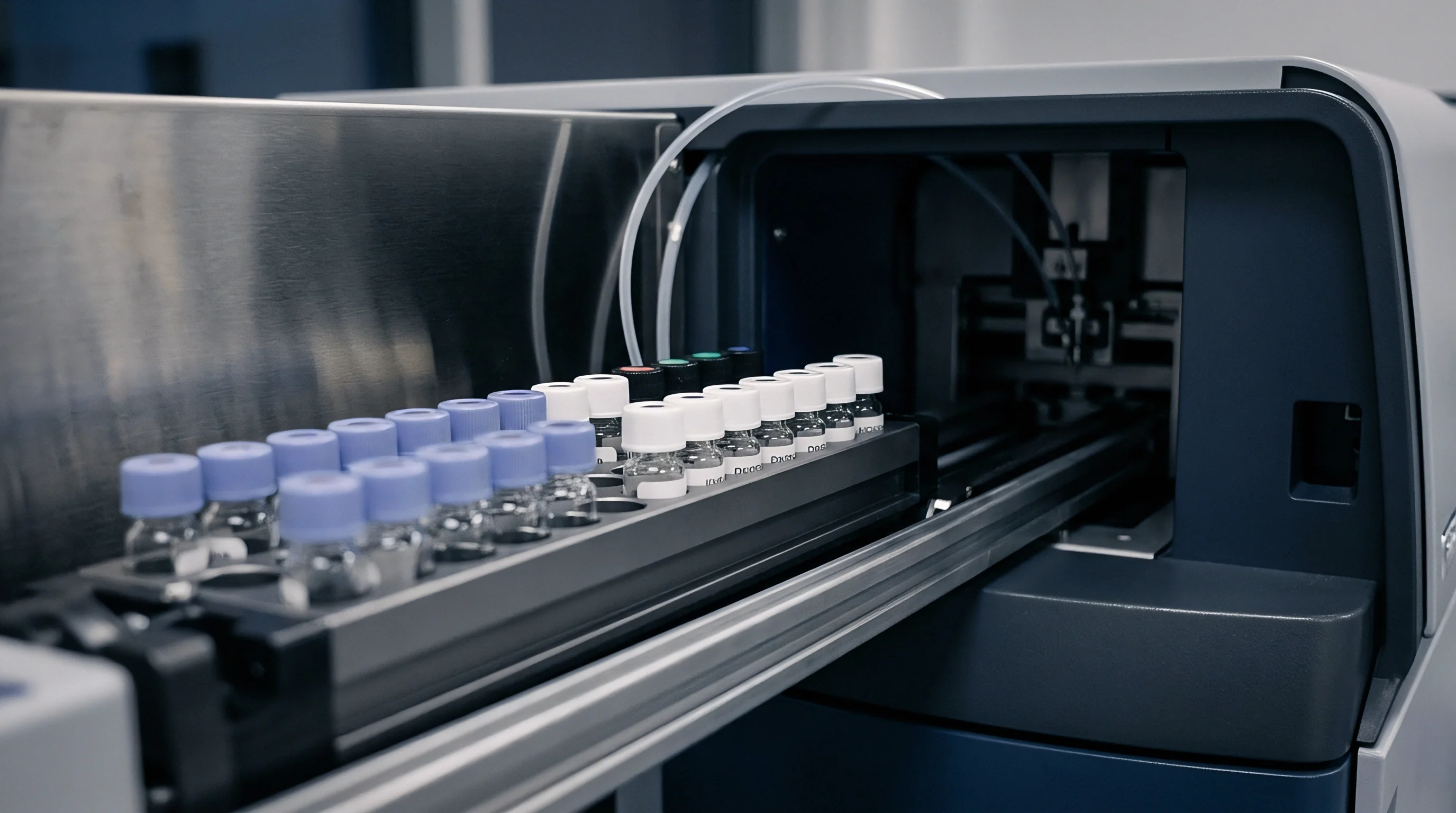
Iso-octane and ninety-five percent ethanol act as volatile substitutes for edible oils in laboratory migration testing. Iso-octane models the non-polar hydrophobic interactions of fatty foods, penetrating polyolefins rapidly. Ethanol ninety-five percent models fatty food contact.
Ninety-five percent ethanol provides a slightly more polar environment, suitable for polyolefins intended for contact with dairy products or alcohol-containing foods.
Iso-octane causes rapid swelling in polypropylene. Contact times and temperatures for substitute simulants are adjusted down from real-world exposure conditions to prevent physical dissolution of the test specimen. Exposure to iso-octane for 2 days at 20 degrees Celsius generates extractable hydrocarbon yields equivalent to 10 days of olive oil contact at 40 degrees Celsius for standard polyethylene grades.
| Polymer Type | Official Simulant | Substitute Simulant | Standard Contact Window | Equivalent Acceleration Window |
|---|---|---|---|---|
| Low Density Polyethylene | Olive Oil / Simulant D2 | Iso-octane | 10 days at 40 °C | 1 day at 20 °C |
| High Density Polyethylene | Olive Oil / Simulant D2 | Iso-octane | 10 days at 40 °C | 2 days at 20 °C |
| Polypropylene Homopolymer | Olive Oil / Simulant D2 | Ethanol 95% v/v | 10 days at 40 °C | 4 days at 60 °C |
| Flexible Polyolefin Film | Poly(2,6-diphenyl-p-phenylene oxide) | Iso-octane | 10 days at 60 °C | 2 hours at 60 °C |

Extraction Failure Modes in Contact Testing
Improper selection of test contact conditions distorts gravimetric and chromatographic residue measurements. Physical damage to test articles during solvent extraction releases particulate matter into the simulant, generating false positive mass migration values.
Testing under European Standard EN 1186 method 14 mandates iso-octane contact conditions when modeling olive oil exposure for non-polar polymers.
Gravimetric residue analysis measures total non-volatile mass. Errors surface when solvent choice alters polymer morphology during testing, leading to severe analytical defects:
- Solvent Mass Overestimation occurs when heavy solvent molecules remain trapped inside the swollen amorphous polymer network despite vacuum oven drying steps.
- Polymer Degradation Artifacts form when aggressive solvents extract internal antioxidant packages, exposing un-stabilized polyolefin chains to thermal cleavage during extraction reflux.
- Volatile Component Loss occurs when low molecular weight hydrocarbon oligomers below carbon number C14 evaporate during the solvent recovery stage before weighing.
- Matrix Dissolution Errors take place when test temperatures exceed the soft point of low-density ethylene copolymers, causing physical structural collapse into the solvent bath.
Using unapproved substitute solvents in migration screening invalidates the compliance file and exposes importers to product seizure at port of entry.

Kinetics
Mass transport of unreacted oligomers through polymer films follows Fickian diffusion principles across standard operating temperatures. The rate of mass transfer depends on the diffusion coefficient of the migrating hydrocarbon species, the concentration gradient across the packaging boundary, and the chemical affinity of the recipient medium. High initial concentration of low molecular weight oligomers inside the polymer interior drives steady outward mass transfer toward the contact interface.

Diffusivity of Low Molecular Weight Fractions
Molecular weight distribution between two hundred and six hundred Daltons governs the speed at which hydrocarbon oligomers reach outer container boundaries. Linear paraffinic chains diffuse faster than branched isoparaffins or cyclic structures of identical carbon number. Temperature increases exponentiate migration rates.
The activation energy of diffusion for aliphatic oligomers in polyolefins ranges between 80 and 110 kilojoules per mole, making diffusion rates highly sensitive to storage temperature fluctuations.
A specific diffusivity measurement of 1.2 times 10 to the power of minus 9 square centimeters per second applies to C16 linear alkanes in low density polyethylene at 40 degrees Celsius. This baseline figure rests on gravimetric desorption testing performed on 100-micron blown films. The measured diffusivity value shifts upward if resin density drops below 0.918 grams per cubic centimeter or if solvent swelling expands the amorphous free volume during extraction.
Marine engine lubricant refining faces an identical molecular weight fractioning challenge when separating paraffinic base oils from residual heavy waxes. Controlling hydrocarbon chain length distributions determines fluid performance across both industrial lubrication and polymer packaging applications.
| Hydrocarbon Fraction | Molecular Mass (g/mol) | LDPE Diffusivity at 40 °C (cm²/s) | HDPE Diffusivity at 40 °C (cm²/s) | Activation Energy (kJ/mol) |
|---|---|---|---|---|
| C12 Alkane (Dodecane) | 170.33 | 4.5 × 10⁻⁹ | 3.1 × 10⁻¹⁰ | 82.4 |
| C16 Alkane (Hexadecane) | 226.44 | 1.2 × 10⁻⁹ | 8.5 × 10⁻¹¹ | 91.0 |
| C20 Alkane (Icosane) | 282.55 | 3.8 × 10⁻¹⁰ | 2.2 × 10⁻¹¹ | 98.6 |
| C30 Alkane (Triacontane) | 422.81 | 2.1 × 10⁻¹¹ | 1.4 × 10⁻¹² | 108.3 |
Why Do Higher Density Resins Retain Oligomers?
Crystallinity levels reaching seventy percent create tortuous transport paths that restrict aliphatic hydrocarbon mobility within high density polyethylene. High density polyethylene reduces oligomer migration rates. Folded crystalline lamellae act as impermeable physical barriers, forcing diffusing molecules to navigate tortuous channels within thin amorphous inter-layers.
Thicker wall structures prolong diffusion times.
Standard purchase contracts incorporating clause 4.2 of EN 13130 specify that diffusion modeling data cannot replace physical migration testing for unlisted oligomers.

Chromatography
Gas phase separation combined with flame ionization detection isolates individual hydrocarbon carbon numbers from complex polymeric extractables. High temperature gas chromatography resolves paraffinic, naphthenic, and olefinic oligomers up to carbon number C50. Online coupled liquid chromatography connected to gas chromatography with flame ionization detection separates extractable hydrocarbons into two critical fractions: polyolefin oligomeric saturated hydrocarbons and polyolefin aromatic hydrocarbons.

Gas Phase Separation of Hydrocarbon Fractions
Capillary columns coated with non-polar dimethylpolysiloxane stationary phases resolve aliphatic oligomers by boiling point sequence. Flame ionization detectors provide uniform response factors. Mass spectrometer detectors coupled to gas chromatographs identify non-intentionally added substances, distinguishing unreacted oligomer side chains from thermal degradation products of antioxidants such as Irgafos 168 or Irganox 1010.
Screening tests establish a polyolefin oligomeric saturated hydrocarbon detection limit of 0.5 milligrams per kilogram in food simulant D2. This value rests on liquid chromatography coupled with gas chromatography baseline noise measurements across 10 replicate injections. Column bleed or high concentrations of co-extracted slip agents such as erucamide elevate background signals, shifting the practical limit of detection upward to 1.5 milligrams per kilogram.
Gas chromatography flame ionization detection limits for mineral oil saturated hydrocarbons achieve zero point five milligrams per kilogram of food simulant under EN 13130 guidelines.
Baseline drift distorts integrated peak areas. Accurate quantification of broad unresolved complex mixture humps requires specialized baseline subtraction protocols to avoid miscalculating total extractable hydrocarbon mass.
Verification Checklist for Extractable Oligomer Dossiers
Auditing migration test reports demands systematic validation of baseline integration parameters and instrument limits of detection. Laboratories must follow disciplined analytical standards to ensure data integrity:
- Baseline Integration Rules require forced manual baseline assignment under unresolved oligomeric humps to prevent undercounting migrating hydrocarbon mass.
- Internal Standard Recovery mandates minimum eighty-five percent recovery rates for internal standards n-C11 and cholestane added prior to solvent extraction.
- Simulant Blank Subtraction enforces correction for trace solvent contaminants without subtracting native low molecular weight polyolefin extractables.
- Carbon Number Range Calibration requires verification of retention time windows using n-alkane series standards spanning C10 through C50.
Resin vendors often state that low molecular weight peaks represent harmless synthetic waxes inherently generated during polymerization.


Dossier
Regulatory compliance files for polyolefin packaging items placed on European and American markets demand verified analytical proof. Manufacturers placing materials into global supply chains must substantiate overall migration compliance and specific substance restrictions through accredited laboratory testing.
US Food and Drug Administration Resin Specifications
Title twenty-one of the Code of Federal Regulations part 177.1520 mandates maximum extractable fractions under specific solvent reflux conditions. Polypropylene homopolymers intended for food contact undergo 2-hour n-hexane reflux at 50 degrees Celsius and 2-hour xylene solubility testing at 25 degrees Celsius. Hexane extraction limits protect food safety.
Xylene solubles reflect polymer branch content.
| Polymer Specification | Maximum Extractable Fraction in n-Hexane at 50 °C | Maximum Soluble Fraction in Xylene at 25 °C | Applicable Regulatory Standard |
|---|---|---|---|
| Polypropylene Homopolymer | 6.4% w/w | 9.8% w/w | 21 CFR 177.1520(c)1.1a |
| Non-oriented Olefin Copolymer | 5.5% w/w | 30.0% w/w | 21 CFR 177.1520(c)3.1a |
| Polyethylene Homopolymer | 5.5% w/w | 11.3% w/w | 21 CFR 177.1520(c)2.1 |
| Ethylene-Vinyl Acetate Copolymer | 5.3% w/w | 34.0% w/w | 21 CFR 177.1350(a) |
A declaration of conformity lacking lot-specific analytical backing shifts regulatory liability directly to the commercial importer.
Declarations of Conformity and Batch Lot Sampling
Traceability linking raw polymer resin lots to finished converted articles forms the backstop of European food contact compliance. Import control authorities reject declarations based on outdated raw material datasheets or mismatched resin lot numbers.
Executing a robust batch compliance check requires sequential verification across the manufacturing history:
- Match the finished item stock code to the exact polymer grade listed in the laboratory test report.
- Inspect the declaration of conformity to ensure overall migration test conditions match the intended food contact duration and thermal window.
- Verify that specific migration testing accounts for all dual-use additives and monomer residues declared by the resin producer.
- Audit raw material lot certificates for every production run to confirm consistency with the sample tested in the compliance file.
Batch certificates require matching resin lot codes. Discrepancies between resin supplier declarations and finished article test results expose importers to financial liabilities, including product recall mandates and port customs rejections.
Whether European regulatory bodies will establish unified specific migration limits for polyolefin oligomeric saturated hydrocarbons remains an open question across packaging supply chains.