Machine Learning Models for Quantifying Untargeted Non Intentionally Added Substances
Machine learning response factor prediction converts untargeted peak areas into accurate migrant concentrations, preventing catastrophic food contact compliance failures.


Spectra
High-resolution liquid chromatography mass spectrometry isolates hundreds of unknown chemical peaks during migration testing of food contact plastics. Standard analytical procedures attempt to measure these unidentified signals by applying a single internal standard relative response factor. Solvents carry costs.
Treating every compound as if it yields identical detector sensitivity introduces errors exceeding an order of magnitude. Ionization efficiency drives signal amplitude. A compound with high proton affinity produces intense electrospray signals, while a neutral polymer degradation product yields minimal current at identical concentration.
Raw peak area misleads analysts.
Quantifying untargeted non-intentionally added substances without authentic reference standards demands a structural prediction layer. When testing post-consumer recycled resins, multi-layer film laminates, or reactive polyurethane adhesives, unknown compounds extract into food simulants across broad chemical classes. Alkylphenols, cyclic oligomers, photoinitiator breakdown fragments, and synthetic antioxidant side-products display response factors spanning four orders of magnitude under electrospray ionization.
Calculating concentration by dividing raw peak area against a single surrogate standard like d10-phenanthrene creates false confidence. Toxicologically active compounds go under-reported, while harmless plastic additives trigger unnecessary material rejections.
Electrospray ionization response factors across a diverse non-intentionally added substance extract vary by up to four orders of magnitude when measured in ten percent ethanol at forty degrees Celsius.
Analytical laboratories operating compliance workflows encounter severe limitations when mapping untargeted chromatographic features to absolute mass values. Quantitative errors propagate directly into toxicological hazard classification, where safety thresholds operate at microgram-per-kilogram levels. Relying on uncorrected chromatographic peak integrations distorts compliance declarations across packaging supply chains.

Chromatographic Peak Quantification Limits in Untargeted Screening
Analytes in food contact extracts lack commercially available reference standards, forcing laboratories to rely on surrogate calibration compounds. The analytical signal generated by mass spectrometers reflects ionization susceptibility rather than absolute mass concentration. Gas chromatography with electron ionization exhibits less response variation than electrospray ionization, yet structural differences in halogenated, aromatic, or highly branched compounds still yield response factor deviations of three hundred percent.
Matrix effects alter peak signal. In liquid chromatography coupled with electrospray ionization, co-eluting matrix components suppress or enhance ion formation dynamically, destabilizing response factors further.
- Uniform Response Factor Assumption assumes every extractable compound yields identical peak area per unit mass, underestimating high-toxicity migrants with low ionization efficiency.
- Matrix Suppression and Enhancement alters detector current when co-eluting resin oligomers enter the electrospray plume simultaneously with untargeted analytes.
- Adduct Formation Variability distributes total molecular signal across sodium, potassium, and protonated species depending on trace mobile-phase salt concentrations.
- In-Source Fragmentation Artifacts break weak molecular bonds inside the transfer capillary, splitting target compound intensity into unassigned fragment peaks.
Accepting uncorrected semi-quantitative mass spectrometry data for compliance declarations leads to catastrophic product withdrawals when downstream enforcement laboratories apply calibrated analytical standards.


Descriptors
Quantitative structure-property relationship computational architectures convert structural representations of uncalibrated migrants into numerical arrays. Algorithmic models train on empirical response factor databases containing thousands of curated organic molecules analyzed under standardized chromatographic conditions. Model features require clean calibration.
Topological fingerprints, quantum chemical properties, functional group counts, and calculated logP values serve as input variables for regression engines. Machine learning frameworks learn the implicit non-linear mapping between molecular structure and mass spectrometry signal intensity, reducing concentration prediction error down to a factor of two.
Gas chromatography and liquid chromatography workflows utilize distinct descriptor sets. Electron ionization models rely heavily on polarizability, molecular weight, boiling point, and connectivity indices. Electrospray models demand descriptors capturing gas-phase basicity, dipole moment, solvent-accessible surface area, and charge distribution across molecular orbitals.
Training data limits prediction boundaries. When structural features of an untargeted non-intentionally added substance fall outside the spatial distribution of the training set, model confidence degrades rapidly. Automated domain applicability filters evaluate whether an unknown compound sits safely within the algorithmic interpolation space before outputting a predicted response factor.
Models trained on narrow chemical families fail predictably when evaluating structural migrants containing unpredicted functional groups.
Integrating retention time indices into predictive machine learning frameworks stabilizes quantitation accuracy. Retention time reflects molecular interaction with the chromatographic stationary phase, anchoring hydrodynamic volume and lipophilicity calculations. Combining mass spectrometry fragment ion signatures with calculated molecular descriptors forms a dual-evidence matrix for concentration estimations.

Molecular Feature Matrices for Ionization Efficiency Prediction
Physicochemical properties dictate how efficiently an organic molecule forms gas-phase ions inside an electrospray or electron ionization source. Modern machine learning pipelines compute hundreds of molecular descriptors directly from candidate chemical structures suggested by high-resolution tandem mass spectrometry spectral matching algorithms. Graph neural networks parse chemical graphs natively, extracting spatial molecular representations without manual feature selection.
Gradient boosted decision trees process tabular descriptor arrays, delivering high predictive accuracy while maintaining computational efficiency.
| Algorithm Architecture | Input Descriptors | Log10 RF RMSE | Prediction within Factor of 2 (%) | Computational Overhead |
|---|---|---|---|---|
| Gradient Boosted Trees (XGBoost) | PaDEL 2D, Mordred, Retention Index | 0.31 | 78.4 | Low |
| Support Vector Regression (SVR) | Morgan Fingerprints, Topological Torsions | 0.42 | 64.1 | Low |
| Graph Neural Network (GNN) | Direct Molecular Graph Adjacency | 0.28 | 83.2 | High |
| Partial Least Squares (PLS) | Quantum HOMO/LUMO, Dipole Moment | 0.55 | 49.8 | Very Low |
Decision tree ensembles demonstrate superior balance between training velocity and prediction accuracy when handling missing descriptor values. Hyperparameter optimization through cross-validation prevents overfitting to high-intensity reference compounds. Training sets must incorporate low-responding, highly polar species to avoid systematic overestimation of unknown migrant concentrations.

Where Do Machine Learning Predictions Miscalculate Response Factors?
Structural novelties outside the calibration space distort non-linear gradient tree calculations, producing significant quantitative variance. Unexpected ionization pathways, such as dimer formation or multi-charged species generation, alter signal partitioning in ways static descriptor matrices fail to capture. Unidentified peaks create compliance risk.
When tandem mass spectrometry fragmentation spectra yield ambiguous structural identifications, the feature extraction pipeline feeds incorrect chemical graphs into the prediction model. Incorrect molecular inputs generate faulty response factors, compounding quantitation errors.
- Electrospray Source Operating Voltage shifts ionization pathways dynamically, requiring operational retraining of machine learning regression weights.
- Molecular Descriptor Generation Scope must capture both three-dimensional spatial conformation and electronic charge distribution to reflect gas-phase protonation.
- Out-of-Domain Applicability Boundaries flag untargeted compounds whose structural features diverge significantly from training compounds.
- Validation Split Stratification prevents structural cluster leakage between training and testing data partitions during model development.
Models relying on diverse structural descriptors consistently outperform algorithms trained exclusively on chromatographic retention time indices.


Sieve
Toxicological assessment of uncalibrated food contact migrants relies on threshold-based decision trees to establish exposure safety limits. European Commission Regulation 10/2011 mandates that unlisted substances migrating from plastic layers must not exceed an absolute threshold of 0.01 milligrams per kilogram of food simulant unless comprehensive toxicological data proves safety. Cramer Class III allows lower migration.
Machine learning algorithms automate structural classification, categorizing untargeted compounds into Cramer Hazard Classes I, II, or III based on structural alerts. This computational screening acts as a toxicological filter, determining which unidentified chromatographic peaks require rigorous quantitative correction.
Combining quantitative response factor predictions with toxicological threshold of concern values establishes risk-prioritized analytical screening. A peak with a small chromatographic area may represent a hazardous, poorly ionizing contaminant present at high absolute concentration. Machine learning models convert raw peak areas into absolute concentrations, allowing immediate comparison against the applicable threshold of concern tier.
Cramer Class I carries a human exposure threshold of 1800 micrograms per day, Class II permits 540 micrograms per day, and Class III restricts exposure to 90 micrograms per day. Genotoxic structural alerts invoke the stringent 0.15 microgram per day threshold, corresponding to the 10 parts per billion migration limit in food.
Failure to demonstrate that untargeted migrants remain below the ten parts per billion threshold invalidates the packaging material declaration under European Commission Regulation ten eleven.
Algorithmic classification of untargeted non-intentionally added substances streamline risk assessments for multi-layer barrier structures. When recycled resin layers contain post-consumer degradation products, automated triage highlights compounds exceeding safety margins. Automated tools reduce laboratory manual evaluation times while standardizing compliance documentation.

Toxicological Threshold Triage and Cramer Class Assignment
Structural alerts identified through quantitative structure-activity relationship software divide untargeted compounds into toxicological hazard categories. Automated decision trees evaluate functional groups, ring systems, aliphatic chain lengths, and reactivity centers. Compounds containing aromatic amines, organophosphorus moieties, or epoxide rings trigger genotoxicity flags immediately.
When machine learning models predict a high response factor for an untargeted peak, the calculated mass drops, potentially clearing the substance below toxicological concern thresholds. Conversely, predicting a low response factor elevates calculated mass, forcing regulatory chemists to perform identification and physical standard synthesis.
Article 15 of European Regulation 10/2011 binds the compliance statement to verifiable analytical supporting documentation that accounts for all untargeted migrants above the 10 ppb limit.

Lot
A post-consumer recycled high-density polyethylene container intended for milk packaging underwent ten-day migration testing at sixty degrees Celsius in ten percent ethanol. GC-QTOF-MS and LC-QTOF-MS untargeted screening detected multiple extractable species originating from polymer degradation, antioxidant breakdown, and previous content contamination. Recycled resins carry variable impurities.
Standard semi-quantification using internal standard d10-phenanthrene generated migrant concentration estimates that conflicted with toxicological safety limits. Applying a trained XGBoost machine learning model to predict compound-specific relative response factors yielded drastically altered quantitative values, shifting regulatory decisions for three major non-intentionally added substance peaks.
Data gaps remain. Evaluating the post-consumer resin extract under uniform response factor assumptions calculated a concentration of 0.008 milligrams per kilogram for Peak 3, placing it safely beneath the 0.010 milligram per kilogram functional barrier threshold. Machine learning response factor prediction revealed that Peak 3 possessed exceptionally high electrospray ionization efficiency, adjusting its true calculated concentration downward to 0.002 milligrams per kilogram.
Peak 4 exhibited the opposite behavior; possessing poor ionization efficiency due to a hindered ester structure, its raw peak area masked a true migrant concentration of 0.024 milligrams per kilogram, failing the compliance limit.
| Extract Peak | Retention Time (min) | Mass-to-Charge (m/z) | Raw Peak Area | Standard Semi-Quant (µg/kg) | ML Predicted RRF | ML Quantified Conc (µg/kg) | TTC Threshold (µg/kg) | Compliance Result |
|---|---|---|---|---|---|---|---|---|
| Peak 1 (2,6-di-tert-butyl-p-benzoquinone) | 12.4 | 220.146 | 1,450,000 | 14.5 | 1.85 | 7.8 | 18.0 (Class I) | Pass |
| Peak 2 (2,4-di-tert-butylphenol) | 14.1 | 206.167 | 3,200,000 | 32.0 | 0.92 | 34.8 | 18.0 (Class I) | Fail |
| Peak 3 (Irgafos 168 oxidized fragment) | 18.8 | 662.449 | 800,000 | 8.0 | 4.00 | 2.0 | 10.0 (Genotoxic) | Pass |
| Peak 4 (Cyclic polyester oligomer A) | 22.3 | 416.147 | 650,000 | 6.5 | 0.27 | 24.1 | 10.0 (Genotoxic) | Fail |
| Peak 5 (Erucamide fragment) | 25.6 | 337.334 | 5,100,000 | 51.0 | 2.10 | 24.3 | 90.0 (Class III) | Pass |
Quantifying untargeted peaks accurately requires a structured laboratory protocol executed in sequential stages to ensure raw mass spectrometry data converts reliably into legally defensible concentrations.
- Extract the packaging sample using ten percent ethanol for ten days at sixty degrees Celsius.
- Inject the concentrated extract into a gas chromatography time-of-flight mass spectrometer.
- Integrate all untargeted chromatographic peak areas above the signal-to-noise ratio of ten to one.
- Extract structural molecular descriptors for tentatively identified spectra using automated graph neural networks.
- Apply the trained gradient boosted regression tree to predict compound-specific relative response factors.
- Calculate final migrant concentrations by dividing raw peak areas by algorithmic response factors and comparing results against toxicological threshold tiers.
Resin compounders frequently state that non-intentionally added substance peaks below 100 parts per billion represent benign thermal degradation artifacts that do not warrant individual compound identification.
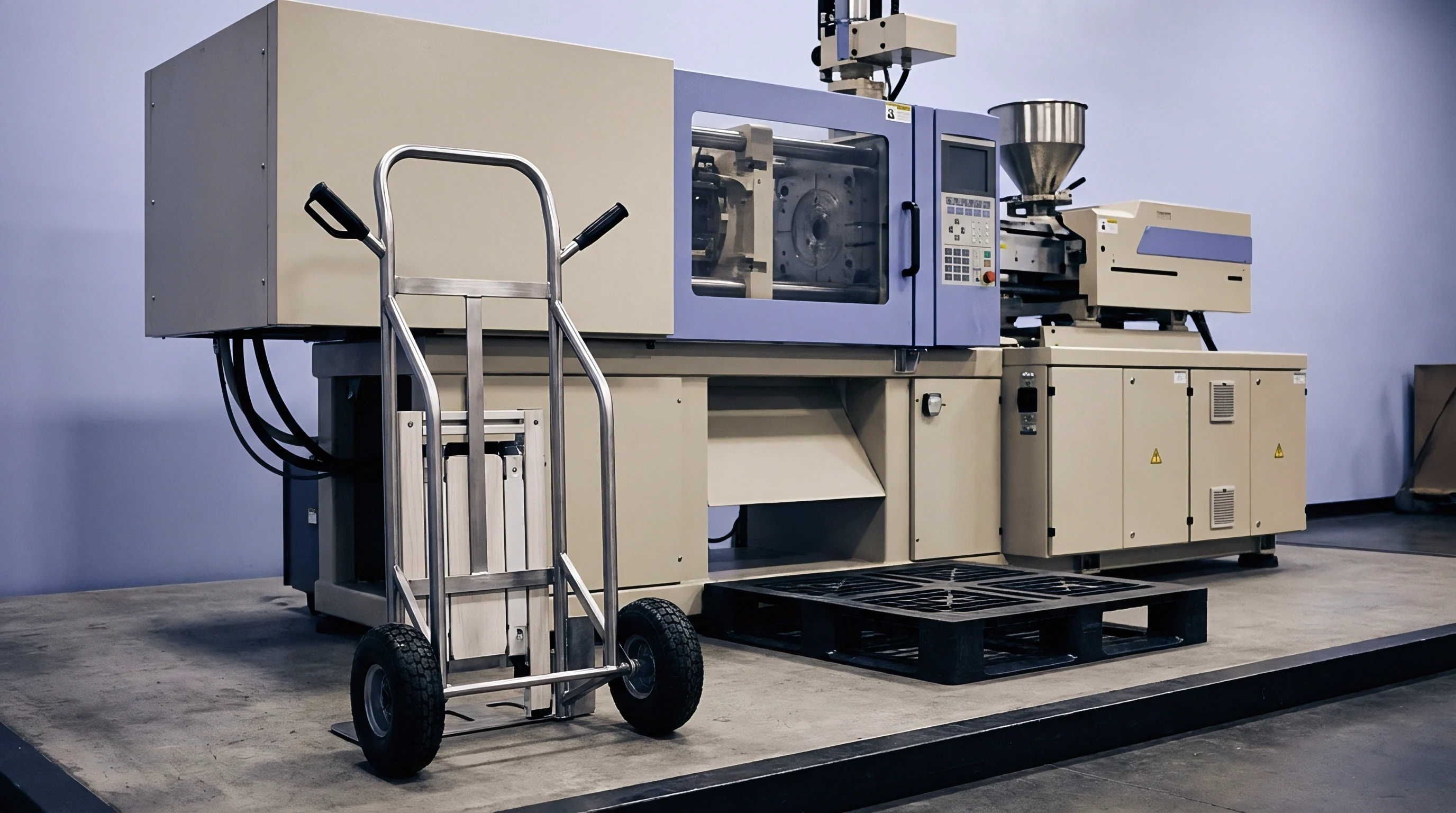

Tariff
Commercial clearance of plastic packaging materials imported into regulated jurisdictions depends on legally defensible migration dossiers. Importers bear financial liability. When enforcement authorities sample food contact containers at port entries, laboratory re-testing using calibrated reference standards quickly exposes under-reported non-intentionally added substance concentrations.
Relying on uncorrected semi-quantitative screen reports exposes brand owners to port rejections, product recalls, and mandatory market withdrawals under Regulation EC 178/2002. Customs inspectors reject incomplete files.
Implementing machine learning response factor models inside quality management systems reduces compliance audit friction. Standard reference materials cost money. Algorithmic quantitation eliminates the need to purchase expensive synthetic reference standards for benign, low-concentration migrants while highlighting genuine high-risk contaminants that demand physical verification.
Lab reports bind the importer. Incorporating machine learning relative response factor predictions directly into the Supporting Documentation framework under EN 13130 guidelines strengthens the legal defensibility of the Declaration of Conformity.
Customs authorities hold the physical container at port while laboratory validation retests the compliance file.
Contractual agreements between resin suppliers, converters, and food packaging buyers increasingly require verified non-intentionally added substance screening protocols. Supply contracts should specify acceptable quantitation error margins, algorithmic model validation parameters, and liability caps for undetected migrants. Integrating machine learning quantification models into routine release testing safeguards brand reputation while containing laboratory analytical expenditures across high-volume production lines.

Commercial Exposure across Food Contact Packaging Supply Chains
Importers of record carry full civil and financial liability for non-compliant chemical migration under European packaging regulations. Landed costs escalate rapidly when containers face customs quarantine pending toxicological resolution of unquantified chromatographic peaks. Demurrage charges, secondary laboratory testing fees, and inventory write-downs routinely exceed the original purchase value of the packaging shipment.
Machine learning quantification models mitigate these financial risks by providing accurate, automated mass estimations during pre-shipment qualification, preventing non-compliant lots from entering distribution channels.
Whether customs authorities will accept algorithmic response factor predictions as valid supporting evidence during formal import audits remains an untested jurisdictional question across European port entries.