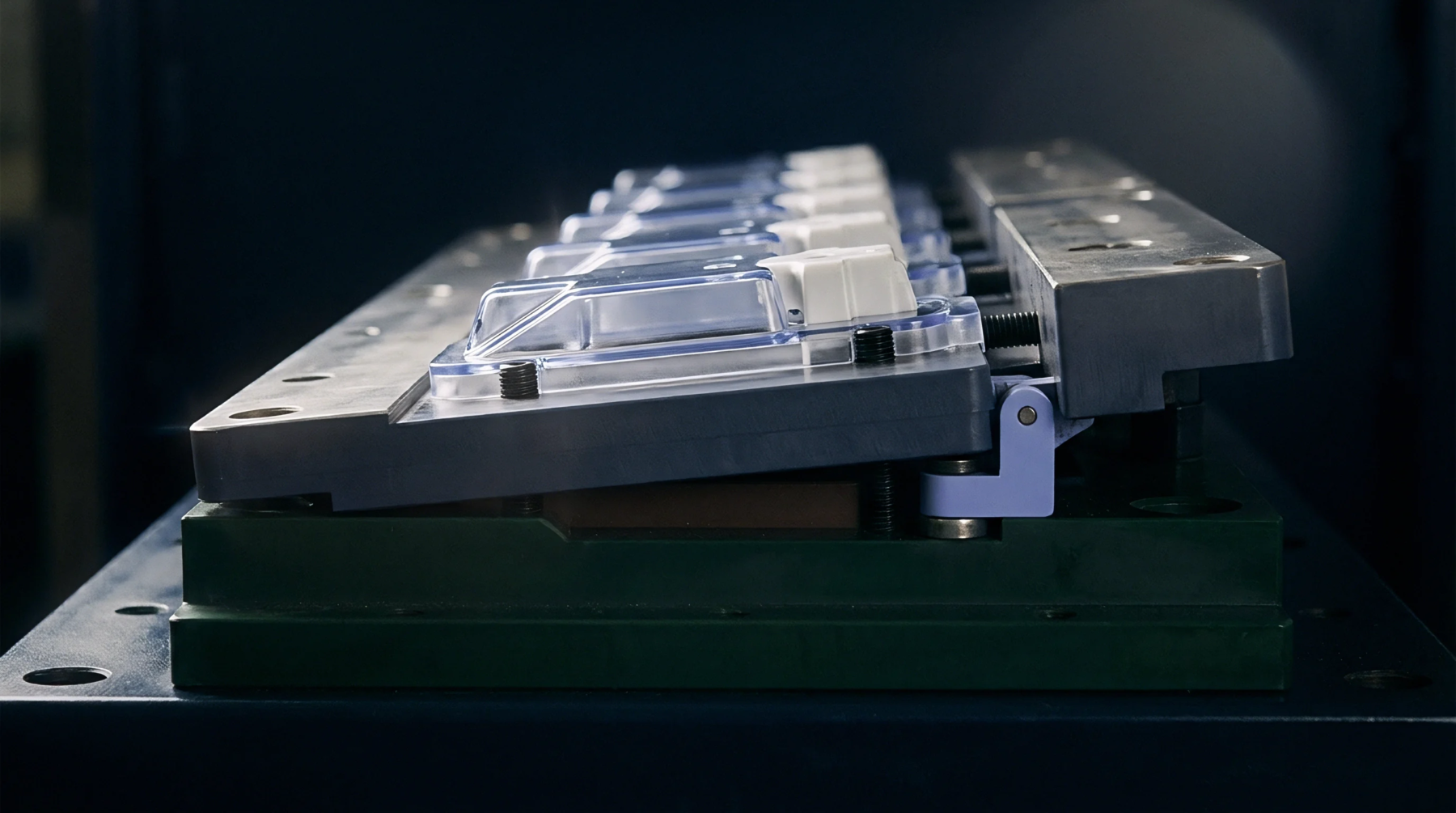
Meaning
Advanced tooling components manufactured through powder metallurgy incorporate microscopic pathways to improve heat transfer and gas evacuation during injection moulding. Using sintered metal mold inserts helps eliminate defects like gas burns and diesel effects in deep rib sections. These components are made by bonding metal powder under heat and pressure without melting it, leaving a porous structure.
Tooling Technology
The resulting material combines steel’s strength with controlled porosity that lets air escape but blocks polymer melt. This porosity is fine enough that plastic cannot enter under typical pressures.
Venting Mechanism
Air and gas trapped in the cavity can cause burns or incomplete fills if they are not evacuated quickly. Standard vents are limited to the parting line, but sintered metal mold inserts provide venting directly in deep pockets or ribs. This localized venting allows the mold to fill faster and at lower injection pressures.
Cooling Performance
Beyond gas evacuation, these inserts can be engineered with conformal cooling channels that follow the shape of the cavity. This design improves heat transfer from the polymer melt to the cooling fluid, reducing cycle time and part warpage. By reducing cycle times, these tools decrease the per-part cost of the moulding run, making them highly cost-effective for high-volume production.
The faster cooling also leads to a more uniform crystalline structure in semi-crystalline polymers, improving the mechanical strength of the part.