Meaning
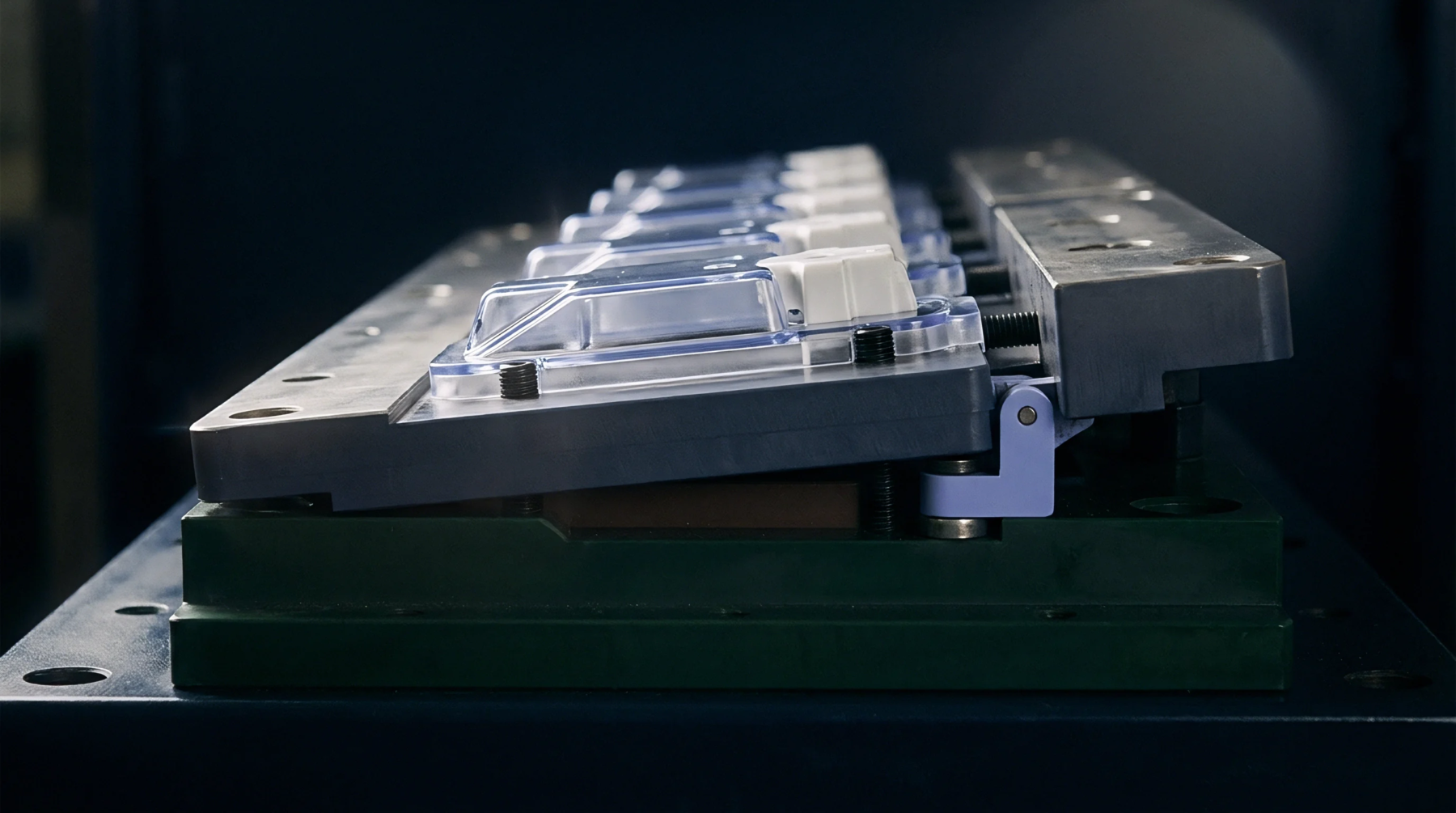
Polymeric tool deflection occurs when injection pressure forces opposing mold halves apart along their horizontal interface during cavity packing, creating a micro-gap where polymer melt enters under high shear. Parting line breathing describes this cyclic mechanical separation and closure of tooling plates during a single injection cycle. Injection molding machines experience this phenomenon when clamp tonnage proves insufficient to counteract internal melt pressure peaks.
The resulting flash defect compromises part dimensions and forces secondary trimming operations. Tooling geometry determines the exact pressure threshold where separation begins.
Clamp Deflection
Tie bar stretching permits micro-movements of the moving platen under tonnage loads, directly contributing to tool separation during high-speed cavity filling. Hydraulic circuit stability dictates whether the clamping unit maintains constant sealing force against injection pressures. Toggle mechanisms distribute mechanical load differently than direct hydraulic cylinders, changing how the mold responds to sudden viscosity spikes in the resin stream.
Moulder technicians monitor platen parallelism using dial indicators to verify that tie bars bear equal tension across the entire footprint. Unbalanced clamp forces accelerate wear on guide pins and cause asymmetric flash formation along one side of the component.
Resin Viscosity
Melt flow rate variations alter the internal cavity pressure required to fill complex geometry, changing the moment when tooling separation initiates. Shear thinning behavior causes high injection speeds to generate unexpected pressure spikes at the extreme ends of fill. Virgin material batches maintain consistent molecular weight distribution, whereas high regrind percentages introduce variable viscosity that triggers unpredictable tool breathing.
Temperature controllers on the barrel influence polymer flow properties, meaning thermal drift directly alters the pressure profile acting against the parting plane.
Flash Severity
Excessive gap width allows low-viscosity thermoplastics like nylon to escape the cavity, producing thin polymeric ridges that require manual deflashing. Post-processing labor costs escalate when repeated tool breathing creates heavy flash on structural components. Quality control inspectors measure parting line displacement using optical comparators to determine when tooling maintenance becomes necessary.
Toolmakers apply negative draft angles or increase shut-off land widths to absorb minor mechanical breathing without allowing material leakage.