Meaning
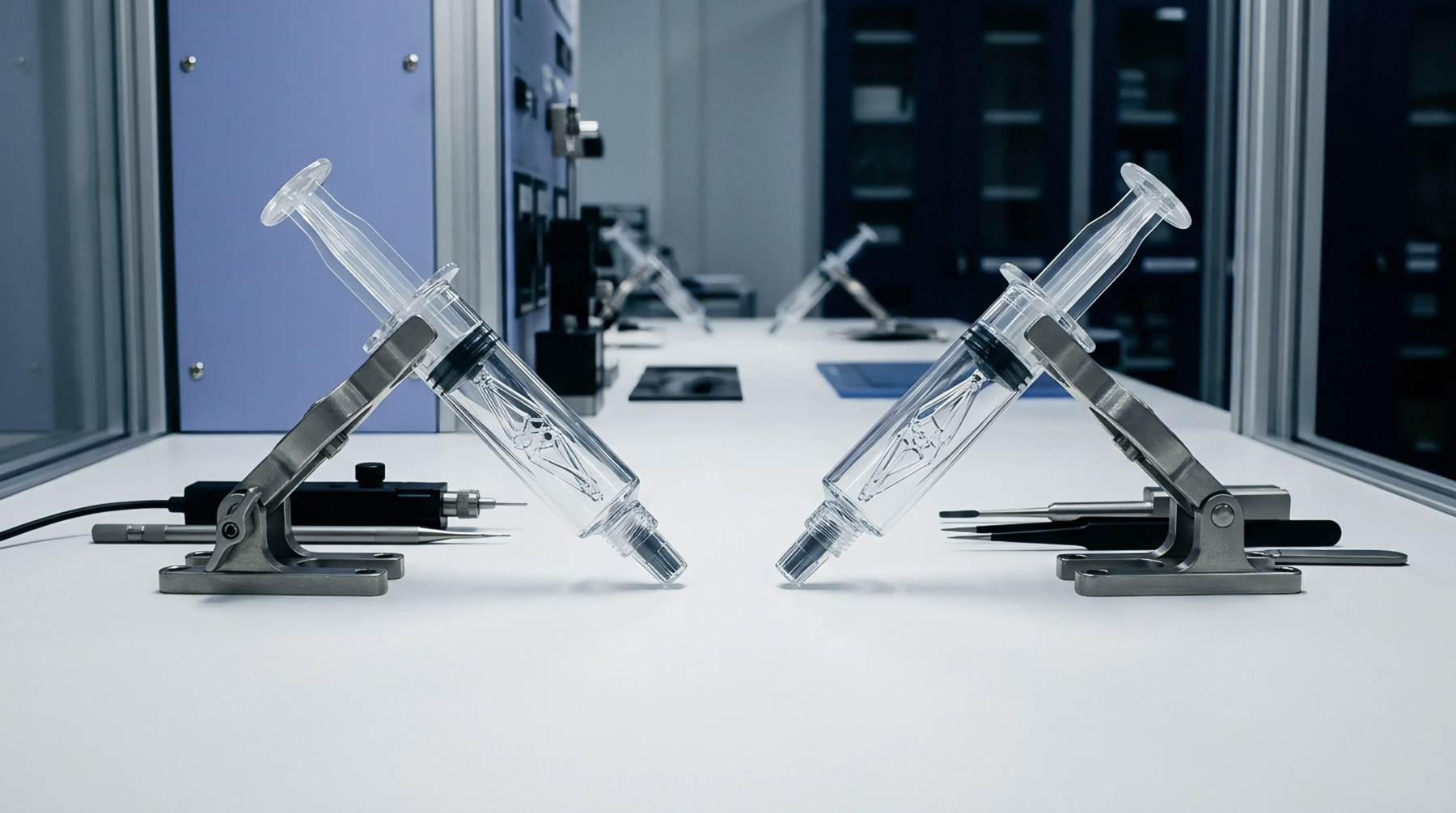
Injection moulding throughput uniformity across multiple mould cavities describes the condition where molten plastic reaches each gate at an identical pressure and temperature. The hot runner balance ensures that every part produced within a single cycle possesses identical weight and dimensions regardless of its position in the manifold layout. This performance metric governs the efficiency of the thermal distribution system and the geometry of the melt channels.
Deviations beyond narrow physical tolerances lead to inconsistent packing, flash on the heaviest parts, and short shots in starved cavities.
Flow Distribution
Melt delivery systems achieve high performance through symmetrical channel lengths and calculated branch diameters. Thermal gradients along the manifold obstruct the rheological stability required for synchronized filling across the entire tool. Pressure drops occur wherever a turn or a diameter shift impedes the velocity of the shear-thinning polymer.
Designers mitigate these variations by employing rheologically balanced layouts where the path length from the inlet to each nozzle remains equivalent. Variations in wall temperature also shift local viscosity, necessitating heater bands that provide localized control to counteract heat loss into the surrounding steel plates.
Moulding Economics
Tooling investment reflects the priority placed on minimizing scrap rates during high volume production. A perfectly configured hot runner allows the processor to maintain the lowest possible clamping force without risking dimensional instability. Regrind usage complicates the task because inconsistencies in viscosity prevent a perfectly balanced system from correcting for raw material heterogeneity.
Moulders verify the effectiveness of the design by measuring the mass of parts from each cavity across a stable run. Any weight variance exceeding the expected machine tolerance indicates a systemic defect in the heat distribution or an obstruction within the specific nozzle.
Thermal Correction
Processing variables like injection speed and holding pressure compensate for minor imbalances in the tool design. Adjusting the temperature at specific zones allows the operator to manipulate the viscosity of the melt to steer flow toward lagging cavities. Small changes in the heat input to a single nozzle branch alter the resistance encountered by the polymer stream.
Dynamic control over these inputs enables the maintenance of product quality when ambient conditions shift throughout the work day. Excessive dependence on thermal compensation indicates a structural failure in the original manifold design.