Meaning
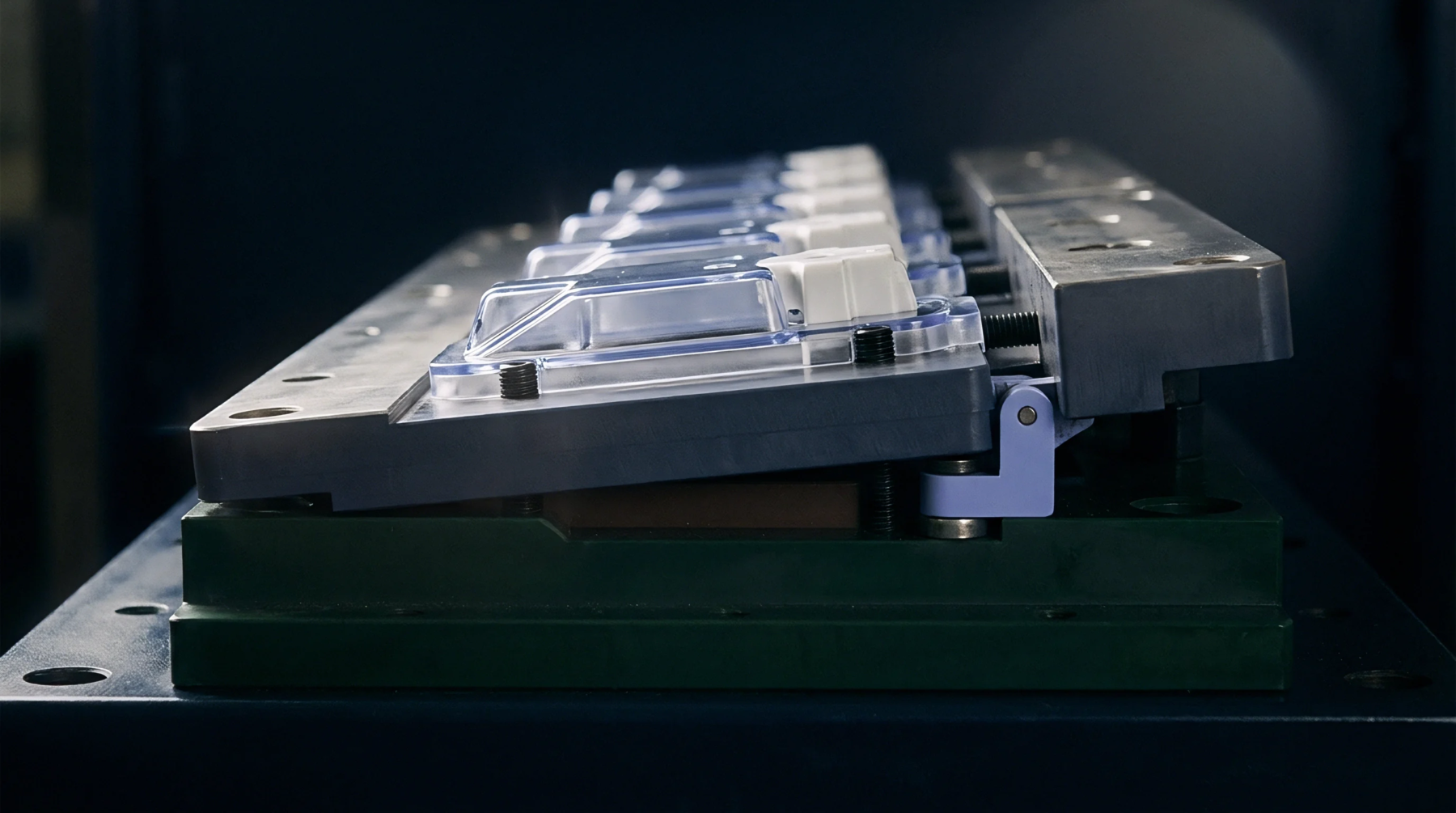
A direct cavity pressure sensor is a piezoelectric or piezoresistive instrument flush-mounted behind the ejector pin to measure melt pressure inside the mold during polymer injection. This technology governs peak cavity pressure and packing pressure profiles during the high-pressure phase of injection molding. The measurement boundary stops at the parting line interface where flash formation exceeds the sealing threshold of the tool steel.
Melt Rheology
Polymeric viscosity shifts across production lots because base resin molecular weight distribution fluctuates during polymerization. This transducer records the exact moment viscous resistance peaks within the steel boundary, revealing whether polymer flow reaches equilibrium before freezing occurs. A standard material specification describes raw resin melt flow index under laboratory shear rates, whereas this instrumentation captures real shear behavior inside the production tool under actual thermal gradients.
Virgin material exhibits stable peak pressure signatures under fixed dosing volumes, while high regrind ratios introduce viscosity drops that lower peak amplitude without any change to machine setpoints.
Tooling Mechanics
Transducer placement requires precise mechanical tolerance matching to prevent flash formation around the sensor pin tip during high tonnage clamping. Thermal expansion coefficients differ between tool steel and the sensor housing, creating friction forces that distort raw voltage signals if preloading is set incorrectly. Toolmakers mount the sensing element directly opposite the last fill zone to capture short shots before volumetric starvation causes structural part failure.
Part Quality
Final dimensional stability relies on holding consistent volumetric shrinkage rates during the cooling cycle of semi-crystalline thermoplastics. Part specifications dictate allowable sink marks and warp tolerances, which correlate directly with the residual pressure decay curve recorded by the internal tool transducer. Datasheet values assume uniform cooling in a laboratory test bar, yet production environments produce fluctuating cycle times that alter crystallinity and shift final dimensions outside acceptable limits unless closed-loop pressure feedback corrects the injection profile.