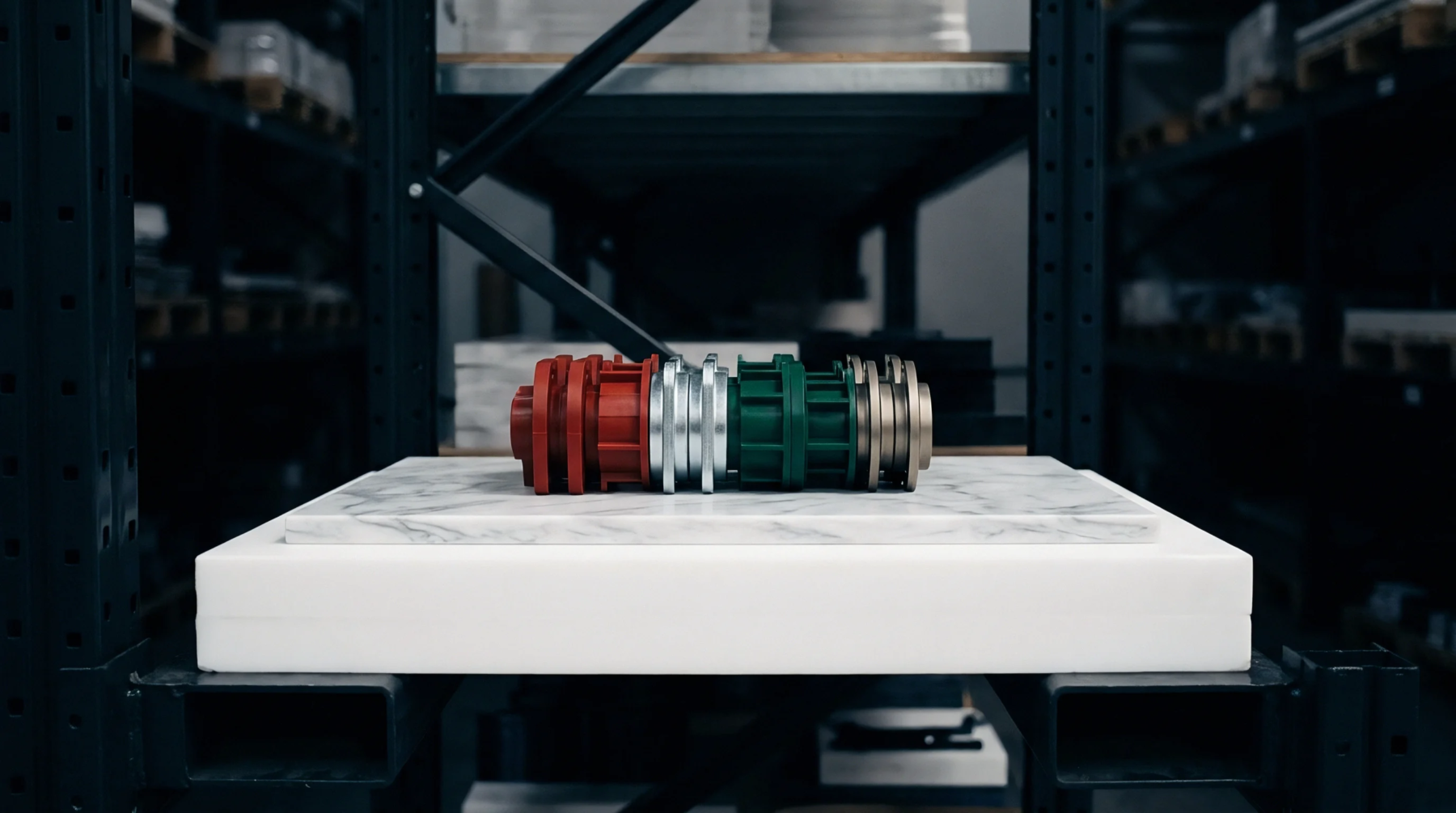
Electroformed Copper Inserts for Millimeter-Wave Tool Steel Tooling Assemblies
Electroformed copper inserts enable sub-30nm surface roughness and 35% faster cycle times in mmWave tooling when thermal expansion gaps are engineered.
High-density composite structural supports combine the electrical and thermal properties of copper with the high melting point and mechanical rigidity of tungsten to back up fragile tooling elements. A copper tungsten backup functions within electrical discharge machining operations and severe thermal zones inside injection mould cavities. Sintered and infiltrated compositions, containing sixty to eighty percent tungsten by weight, provide outstanding resistance to electrical arc erosion and thermal deformation.
Mould makers employ these backup blocks behind slender steel cores or fragile rib inserts to prevent mechanical deflection under high injection forces while extracting heat from deep cavity sections. The application of this material ends where high mechanical machinability or complex three-dimensional contouring is required, because high tungsten content causes rapid cutting tool wear.
Electrical discharge machining of deep, narrow ribs requires slender graphite or copper electrodes that tend to flex under dielectric fluid flushing pressure. Backing up fragile electrode tips with a rigid copper tungsten backup prevents dimensional drift and chatter marks during deep spark erosion cycles. The high density and high modulus of the composite provide mechanical damping against hydraulic pulses within the dielectric oil bath.
Thermal expansion remains low during sustained sparking, keeping multi-cavity electrode clusters aligned to true positional tolerances. Toolmakers machine these backing blocks using diamond tooling or wire EDM, avoiding conventional milling speeds that lead to edge chipping. Erosion rates stay predictable, which allows tight spark gap maintenance across tall tool geometries.
Deep cavity cores in plastics tooling frequently suffer from thermal fatigue and localized burning when moulding hot engineering polymers. Placing a copper tungsten backup behind structural tool inserts pulls heat away from restrictive core tips where conventional water cooling lines cannot reach. The composite thermal expansion coefficient closely matches tool steels, preventing interface gaps from opening during rapid thermal cycling.
Tool inserts remain seated without developing mechanical looseness that causes parting line flash. Polyamides and polyetheretherketone resins freeze faster against these cooled zones, shortening the necessary hold stage. Mould maintenance intervals lengthen because the backing material resists structural sagging under continuous press clamp tonnage.
Plastic injection pressures exceeding one thousand bar generate immense bending moments on slender mould pins and core blades. Mechanical deflection of cavity features causes uneven wall thicknesses, core shifting, and out-of-round hole geometries in finished plastic housings. Backing thin steel core pins with high-modulus copper tungsten blocks stiffens the entire stack against transverse melt flow pressure.
Symmetrical filling patterns must still be maintained through gate positioning, but the backup material absorbs transient pressure spikes during cavity fill. Part specifications for concentricity and perpendicularity are maintained across long production runs without pin deformation. Tool rooms verify backing seat flatness with bluing gauges during routine preventative maintenance to confirm full mechanical contact across the assembly.
Electroformed copper inserts enable sub-30nm surface roughness and 35% faster cycle times in mmWave tooling when thermal expansion gaps are engineered.
Expertise is a utility, not a secret. sentiention™ publishes its working knowledge as open reference: intelligence layer covering the materials it sources, the markets it enters, and the reference that serves both.