Electroformed Copper Inserts for Millimeter-Wave Tool Steel Tooling Assemblies
Electroformed copper inserts enable sub-30nm surface roughness and 35% faster cycle times in mmWave tooling when thermal expansion gaps are engineered.
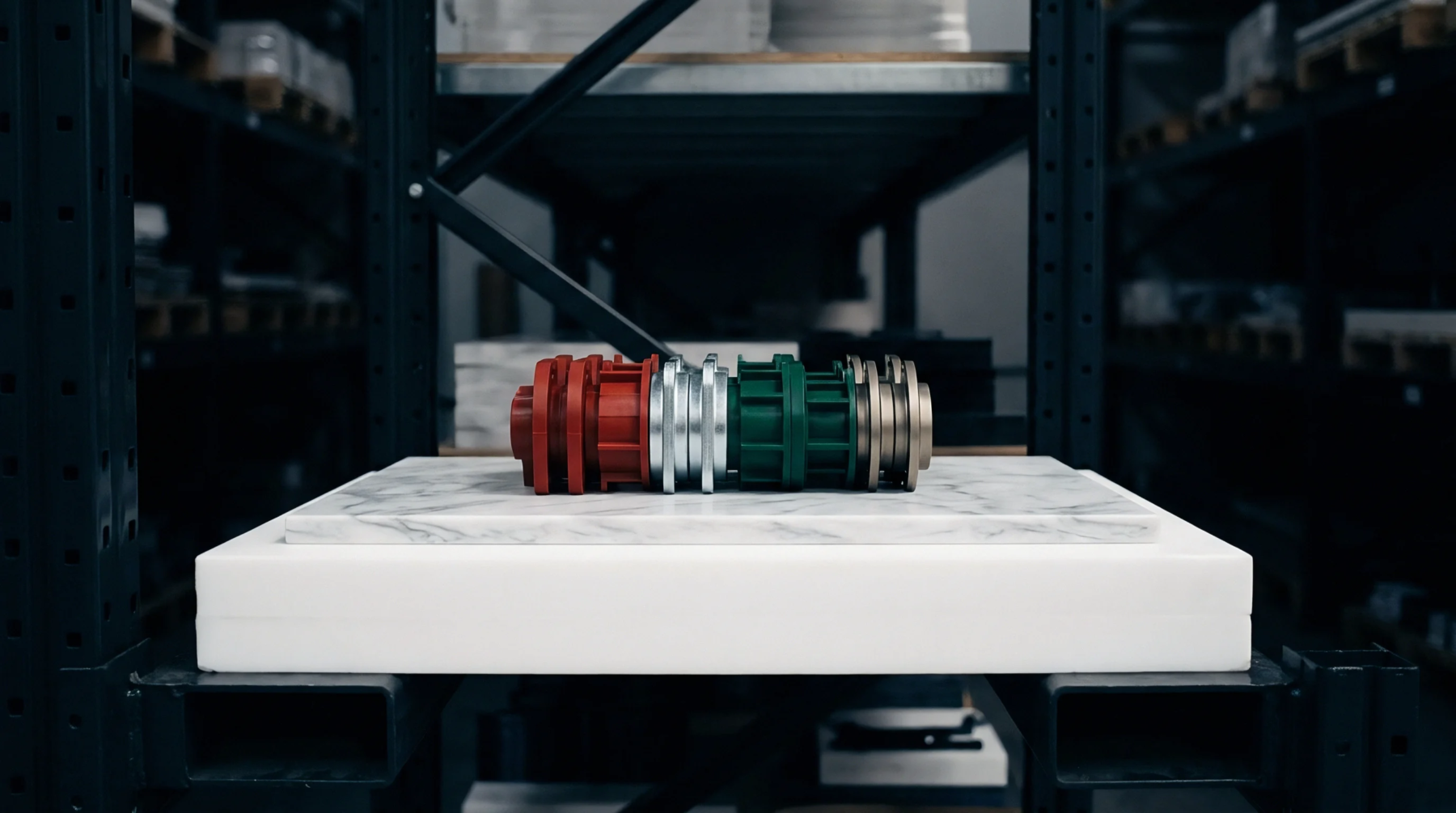
Precision tooling components made from age-hardened copper alloys serve as thermal and dimensional compensators between tool steel inserts in high-production injection moulds. A beryllium copper shim provides localized thermal dissipation alongside micrometer-level mechanical alignment across parting lines, shut-offs, and slide faces. Alloy properties combine tensile strength comparable to medium-carbon steels with thermal conductivity roughly four times greater than standard tool steels.
Designers specify these inserts to eliminate localized hot spots that produce sink marks or prolonged cooling cycles in thick plastic bosses. Wear resistance under repeated clamp tonnage prevents parting line collapse during multi-million-cycle production runs. The boundary of shim usage stops at direct optical cavity surfaces where abrasive glass-filled resins would rapidly erode softer copper alloys.
Heat transfer through standard H13 or P20 tool steel often stalls around restrictive core pins and deep cavity ribs. Placing a beryllium copper shim behind or beneath these restrictive steel features creates a rapid thermal conduction path into primary cooling channels. Faster heat extraction stabilizes cooling times and suppresses localized part warping across challenging resin geometries.
Cycle time reductions of twenty percent occur when stubborn hot spots are thermally shunted through high-conductivity copper backing. Virgin semi-crystalline polymers like polyoxymethylene or polyamide freeze predictably when cavity temperatures remain uniform. Regrind blends with irregular melt flow properties demand identical thermal uniformity to avoid severe differential shrinkage.
Tool shut-off surfaces require exact mechanical preloading to seal the cavity without crushing thin core details. Technicians install a beryllium copper shim pack behind cavity inserts to adjust parting line standoff distances in increments of five to ten micrometres. The moderate elastic modulus of the copper alloy absorbs localized clamp spikes, protecting opposing hardened steel blocks from micro-fractures.
Inadequate shim thickness creates flash defects when high injection pressures force the tool blocks apart along unsealed boundaries. Excessive shim thickness causes parting line hobbing, permanently indenting the parent mould base under primary clamp tonnage. Toolmakers routinely inspect shim seats during scheduled maintenance to verify that no resin debris has contaminated the mating planes.
Galling prevention between sliding steel elements demands dissimilar metals on mating wear faces. Copper alloys provide natural anti-friction performance when operating against hardened slide retainers and mechanical lifters. Lubrication requirements drop significantly compared to all-steel friction couples, reducing part contamination in medical moulding cells.
Repeated cycling under high tonnage gradually deforms unsupported shim edges if the underlying pocket lacks flat support. Precision grinding tolerances on shim thickness must hold within five micrometres across the entire contact plane to prevent insert tilting. Uncontrolled insert tilt causes uneven wall thicknesses and erratic part ejection forces.
Regular inspection schedules confirm surface flatness before steel fatigue damages the primary mould stack.
Electroformed copper inserts enable sub-30nm surface roughness and 35% faster cycle times in mmWave tooling when thermal expansion gaps are engineered.
Expertise is a utility, not a secret. sentiention™ publishes its working knowledge as open reference: intelligence layer covering the materials it sources, the markets it enters, and the reference that serves both.