Short-Chain Branching Distribution Measurement in Recycled Polyethylene
Crystallization elution fractionation and high-temperature GPC-IR resolve co-monomer placement in recycled polyethylene, exposing stress-crack vulnerabilities.
Flake
A certificate of analysis declaring a melt flow rate of 0.85 grams per ten minutes at 190 degrees Celsius under a 2.16-kilogram load conceals whether the underlying polyethylene consists of a uniform unimodal copolymer or a scrap mixture of blow-molded homopolymer and linear low-density film. Sourcing engineers encounter this gap whenever post-consumer lots enter the processing hall. Bulk density checks under ASTM D1895 method A register typical values between 0.945 and 0.958 grams per cubic centimeter, satisfying standard purchase orders while masking severe microstructural variance.
Melt index leaves branching invisible. When a wash plant processes rigid bales sourced from curbside municipal collection, high-density bottles manufactured with 1-butene or 1-hexene copolymers mix directly with unbranched high-density homopolymer dairy jugs and fractional-melt linear low-density stretch films. The resulting shredded chips pass color-sorting optical cameras and float-sink wash tanks without revealing the distribution of co-monomer along individual polymer chains.
Density indicates overall crystallinity while leaving the distribution of co-monomer along individual chains undetected.
Standard incoming inspection stations rely on differential scanning calorimetry running ISO 11357 heating profiles at ten degrees Celsius per minute. A single broad melting endotherm stretching from 118 to 134 degrees Celsius indicates polyolefin presence, yet the peak temperature of 131 degrees Celsius merely reports the average melting point of the thickest crystallites. The measurement integrates the thermal response of thin-lamellae linear low fractions with thick-lamellae homopolymer fractions, obliterating the discrete branching architecture that governs slow crack growth resistance and long-term part survival.
Density Measurement Blind Spots
Solid-state buoyancy columns governed by ISO 1183 method A calculate specimen mass in ethanol or isopropanol baths to assign a bulk density rating. This single scalar assumes homogeneous chain packing throughout the molded plaque. If a compound combines eighty percent homopolymer boasting a density of 0.962 grams per cubic centimeter with twenty percent metallocene film carrying an octene co-monomer at 0.918 grams per cubic centimeter, the graduated column registers 0.953 grams per cubic centimeter.
The compound passes incoming checks for blow-molding grade high-density resin. It fails catastrophically under stress.
The distribution of short-chain branches dictates how chains fold into crystal lamellae during cooling. Linear segments enter crystalline lamellae readily, whereas butyl, ethyl, or hexyl side chains remain excluded, residing within the amorphous phase or accumulating at fold surfaces. A bulk density number averages these separate regions, leaving the buyer uninformed regarding whether the branches reside on short, brittle chains or long, load-bearing backbones.

Post-Consumer Sorting Contamination Mechanics
Reclaim systems segregate scrap polyolefins through near-infrared optical sorting arrays operating at conveyor velocities exceeding three meters per second. The optical sensors record carbon-hydrogen overtone vibrations between 1100 and 1650 nanometers, identifying the fundamental polyethylene backbone in milliseconds. The sensors cannot resolve subtle side-chain methyl deflections from the primary methylene ridge under commercial sort conditions.
- Cross-Contamination from Agricultural Films introduces linear low-density polyethylene with high 1-hexene branch frequencies into blow-molding grades, softening the final melt and dropping tensile modulus below part limits.
- Homopolymer Injection Scrap Entrainment injects completely unbranched polymer chains into copolymer formulations, promoting rapid spherulite growth and reducing impact resistance at sub-zero temperatures.
- Rotomolding Powder Infiltration carries high-mass hexene-modified polymers into injection-molding feeds, shifting the high-load melt flow ratio and generating unexpected melt fracture during cavity packing.
- Lamination Film Adhesive Residue adds maleic-anhydride-grafted tie layers that interact with basic pigments and destabilize the apparent short-chain branching response inside thermal characterization columns.
When questioned about sudden lot-to-lot environmental stress crack failure in molded containers, reclaimers state that all delivered materials met the agreed density of 0.952 grams per cubic centimeter and the melt index window of 0.7 to 0.9 grams per ten minutes.

Elution
Separation of recycled polyolefins according to chain branching demands crystallization-based fractionation techniques that exploit differences in crystallite stability rather than hydrodynamic volume. In Temperature Rising Elution Fractionation, operated under ISO 25762 conditions, the polymer dissolves completely in 1,2,4-trichlorobenzene or ortho-dichlorobenzene at 150 degrees Celsius before undergoing slow, controlled cooling down to 30 degrees Celsius at rates of 1.5 to 3.0 degrees Celsius per hour. Unbranched chains crystallize into thick lamellae at elevated temperatures, while highly branched segments precipitate into thin, defective lamellae at reduced temperatures.
Crystallization governs crystal thickness. When the solvent flow initiates through the packed column bed, the temperature steps upward incrementally. Fractions dissolve and elute based strictly on their melting capability.
Highly branched fractions exit the column bed below 60 degrees Celsius, medium-branched copolymer fractions elute between 70 and 85 degrees Celsius, and strictly unbranched high-density homopolymer fractions release above 94 degrees Celsius. The infrared detector at the column outlet quantifies polymer concentration continuously, producing a direct profile of short-chain branching distribution.

Thermal Fractionation Principles
Crystallization Analysis Fractionation avoids packed column beds by monitoring the precipitation process directly within stirred reaction vessels. The infrared sensor measures polymer solution concentration during the cooling cycle rather than the heating cycle. Because crystallization involves substantial supercooling, nucleation kinetics displace peak temperatures twenty to thirty degrees Celsius below corresponding melting transitions measured during dissolution.
Crystallization Elution Fractionation merges the transport dynamics of both approaches, executing rapid crystallization under continuous, minimal solvent flow followed by dynamic thermal elution. CEF cuts analysis cycles from forty-eight hours to under three hours per specimen. Recycled resins containing mixed grades present complex multi-modal elution profiles in CEF that expose the exact ratio of homopolymer to branched copolymer.
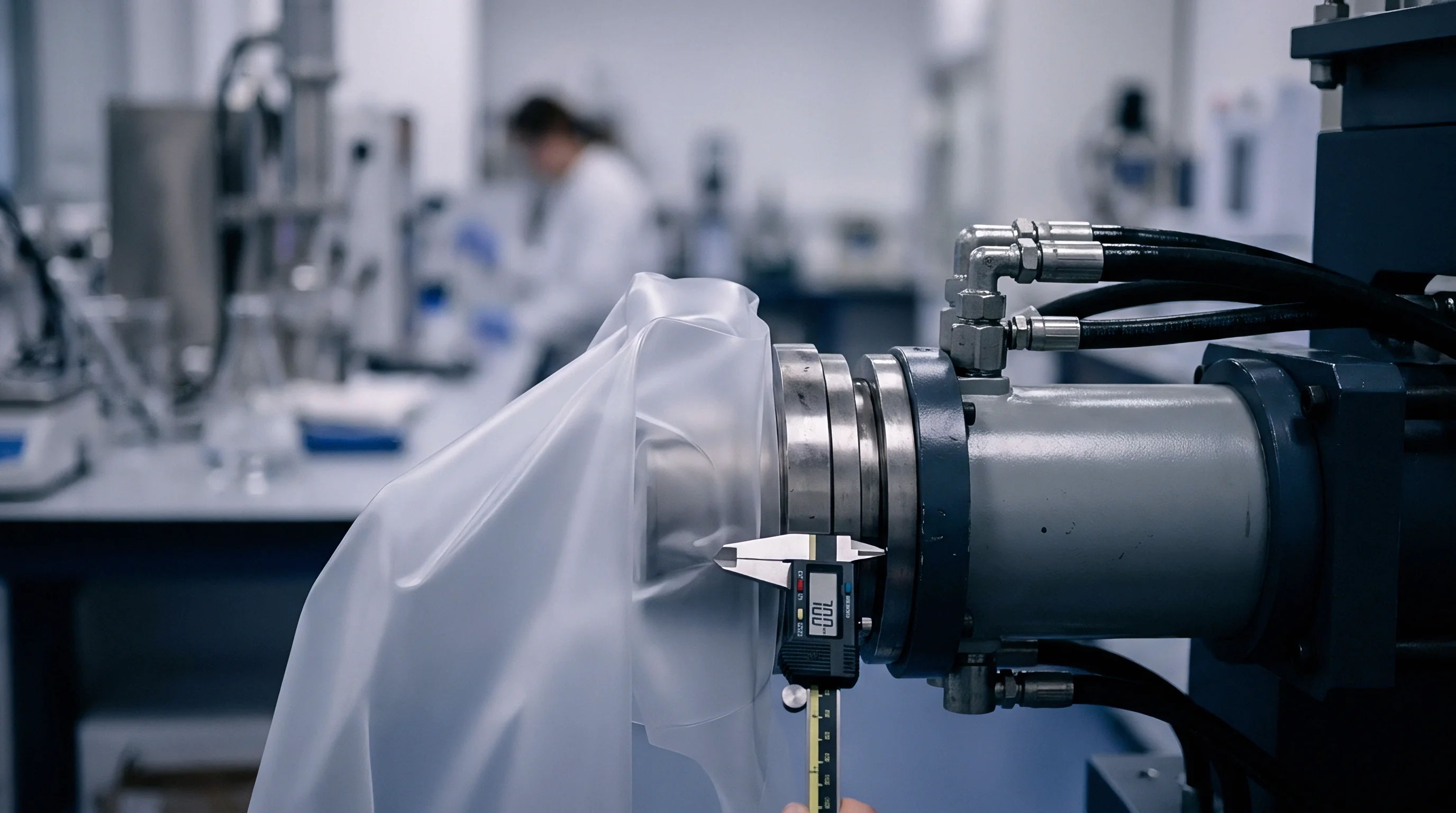
Can Crystallization Elution Fractionation Resolve Co-Monomer Distribution?
High-speed column packing utilizing spherical glass beads or stainless-steel particles provides the physical surface for lamellar deposition during the CEF crystallization stage. The technique introduces a small fluid displacement during cooling, which separates the crystallization process along the length of the column. Linear chains with zero branching precipitate at the column inlet around 98 degrees Celsius, while branched chains travel farther down the column before depositing at lower temperatures.
Solvent choice fixes elution. Ortho-dichlorobenzene provides high dissolution power and stable infrared baselines at elevated temperatures, though it operates under an operating threshold of 160 degrees Celsius to avoid thermal degradation of un-stabilized recyclate. When testing post-consumer polyethylene containing unknown degradation residues, adding 0.5 grams per liter of 2,6-di-tert-butyl-4-methylphenol prevents secondary chain scission during the dissolution stage.
Chromatographic resolution in CEF quantifies whether an incoming lot consists of an intentional bimodal pipe compound or an ad-hoc compound of virgin HDPE and recycled LLDPE film.
| Parameter | TREF ISO 25762 | CRYSTAF | CEF | HT-GPC-IR |
|---|---|---|---|---|
| Primary Separation Mechanism | Dissolution temperature of crystallites | Precipitation temperature under supercooling | Combined flow-crystallization and elution | Hydrodynamic volume via steric exclusion |
| Carrier Solvent | 1,2,4-Trichlorobenzene | 1,2-Dichlorobenzene | o-Dichlorobenzene | 1,2,4-Trichlorobenzene |
| Cooling Rate Range (C/hr) | 1.0 to 2.0 | 0.1 to 0.5 | 2.0 to 4.0 | Isothermal at 145 C to 160 C |
| Typical Analysis Time (Hours) | 24 to 48 | 8 to 14 | 1.5 to 3.5 | 0.75 to 1.25 |
| Sample Mass Demand (mg) | 20 to 50 | 10 to 30 | 2 to 5 | 1 to 3 |
| Co-Crystallization Interference | Moderate | High | Low | None |
| Branching Resolution Limit | 1 branch per 1000 total carbons | 2 branches per 1000 total carbons | 0.5 branches per 1000 total carbons | 1 branch per 1000 total carbons |
| Test temperatures span 30 C to 150 C across all thermal separation methods. Antioxidant additive package fixed at 0.4 g/L BHT. | ||||
Thermal fractionation techniques depend upon crystallizable chain segments. When recycled polyethylene contains hyper-branched architectures, long-chain branches, or atactic polypropylene contamination exceeding five percent by weight, the polymer fails to form ordered crystals. Such amorphous fractions elute entirely in the initial room-temperature wash fraction between 30 and 35 degrees Celsius, signaling to the analyst that chemical characterization must shift toward spectroscopic detection coupled directly to chromatographic separation columns.


Spectra
Chromatographic separation of polyolefins by size exclusion chromatography operating at 145 degrees Celsius under ASTM D6474 resolves the molecular weight distribution, but hydrodynamic volume measurements fail to distinguish branch frequency. Pairing the high-temperature gel permeation chromatograph with an online filter-based or dispersive infrared spectrometer resolves this analytical blind spot. The infrared flow cell records the absorbance ratio of methyl end-groups and side-chains against backbone methylene units across each retention volume slice.
Absorbance bands quantify branching. The methyl symmetrical deformation band appears at 1378 reciprocal centimeters, while the methylene rocking band occupies 720 to 730 reciprocal centimeters. As the polymer elutes through the infrared sensor cell, the ratio between the 1378 reciprocal centimeter peak and the methylene absorption band at 2928 reciprocal centimeters generates an absolute short-chain branch frequency curve plotted directly against molecular mass.
In high-performance virgin bimodal pipe resins, the short-chain branches concentrate selectively within the high-molecular-weight chains, an architecture that retards slow crack growth. In mechanical recyclate, the short-chain branches regularly concentrate within low-molecular-weight fractions derived from cheap packaging films, producing poor stress-crack resistance.
Post-consumer polyethylene containing four methyl branches per one thousand carbons in the high-mass tail exhibits a forty percent reduction in environmental stress crack life at fifty degrees Celsius under ASTM D1693 condition B.
Distinguishing whether the measured branches consist of ethyl, butyl, or hexyl groups requires higher spectroscopic sensitivity than standard online infrared filter photometers deliver. Calibrating the short-chain branching response requires high-resolution solution carbon-13 nuclear magnetic resonance spectroscopy conducted at 125 degrees Celsius in deuterated 1,1,2,2-tetrachloroethane. The chemical shift of the branch methine carbon, the adjacent methylene carbons, and the branch-end methyl carbon shifts measurably between co-monomer variants.
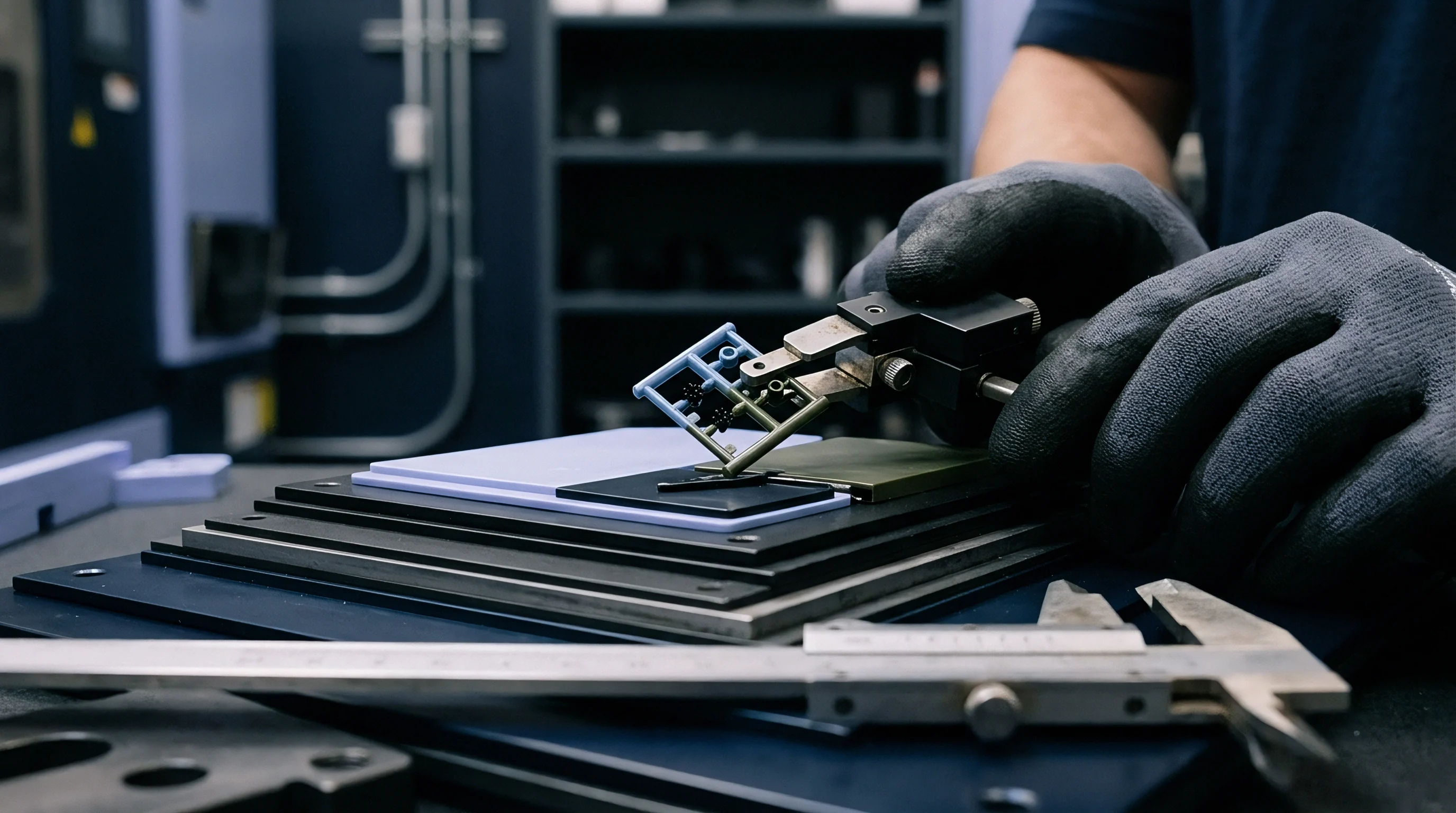
Infrared Detection along Molecular Weight
Online filter-based infrared detectors utilize narrow bandpass filters tuned to 3.42 micrometers for total carbon-hydrogen stretching and 3.48 micrometers for methyl stretching. The detector electronics output a continuous methyl index. Calibration curves constructed using narrow-dispersity ethylene-alpha-olefin standards convert this index into short-chain branch values expressed as methyl groups per one thousand total carbons.
The baseline drifts upward. When recycled resins contain residual functional additives, fatty acid slip agents like erucamide, or oxidized carbonyl species created during service life, the infrared absorption bands overlap the 1378 reciprocal centimeter methyl window. Deconvolution algorithms must subtract the ester and ketone contributions centering between 1710 and 1745 reciprocal centimeters before calculating final short-chain branching numbers.
Failure to compensate for these degradation groups overstates the true alkyl co-monomer content by up to three branches per one thousand carbons.
Distinguishing Hexene and Octene Incorporation
Carbon-13 NMR establishes the benchmark for branch identification by tracking distinct chemical shifts. The isolated butyl branch from a 1-hexene co-monomer exhibits its branch methyl resonance at 14.1 ppm and the methine carbon at 38.2 ppm. An isolated hexyl branch derived from a 1-octene co-monomer exhibits its terminal methyl carbon at 14.2 ppm, but displays unique methylene carbons labeled 4B and 3B at 27.3 and 32.2 ppm respectively.
- High-Temperature Size Exclusion Chromatography maps the macro-molecular distribution while infrared detectors capture concurrent branch frequencies across each elution increment.
- Preparative Temperature Rising Elution Fractionation isolates narrow crystalline fractions for subsequent NMR verification of co-monomer chemical structure.
- Fourier Transform Infrared Microscopy scans compression-molded plaques to evaluate local variations in methyl distribution caused by incomplete melt homogenization during compounding.
Hexene forms longer branches. These longer side chains provide greater spatial obstruction against chain folding than the ethyl side chains derived from 1-butene. Sourcing desks evaluate these parameters when purchasing regrind intended for pressure pipe compounding.
A feed showing twelve ethyl branches per thousand carbons in the low-molecular-weight tail delivers significantly lower creep rupture performance than a feed showing eight butyl branches per thousand carbons positioned along the high-molecular-weight backbone.
A procedural evaluation balances throughput against structural precision when qualifying incoming post-consumer lots:
- Screening Stage via Fast Crystallization Elution Fractionation isolates multi-modal co-monomer contamination across three temperature cuts within two hours.
- Secondary Characterization via High-Temperature Size Exclusion couples concentration and infrared detection to map branching versus molar mass whenever the elution trace indicates unexpected low-temperature fractions.
- Definitive Structural Arbitrage via Carbon Nuclear Magnetic Resonance determines exact alkyl branch lengths and uncovers oxidized structural defects when lot dispute thresholds are breached.
Whether rapid mid-infrared chemometric models can entirely eliminate the need for high-temperature solvent extraction systems during daily gate inspections remains an active technical debate among resin compounders.
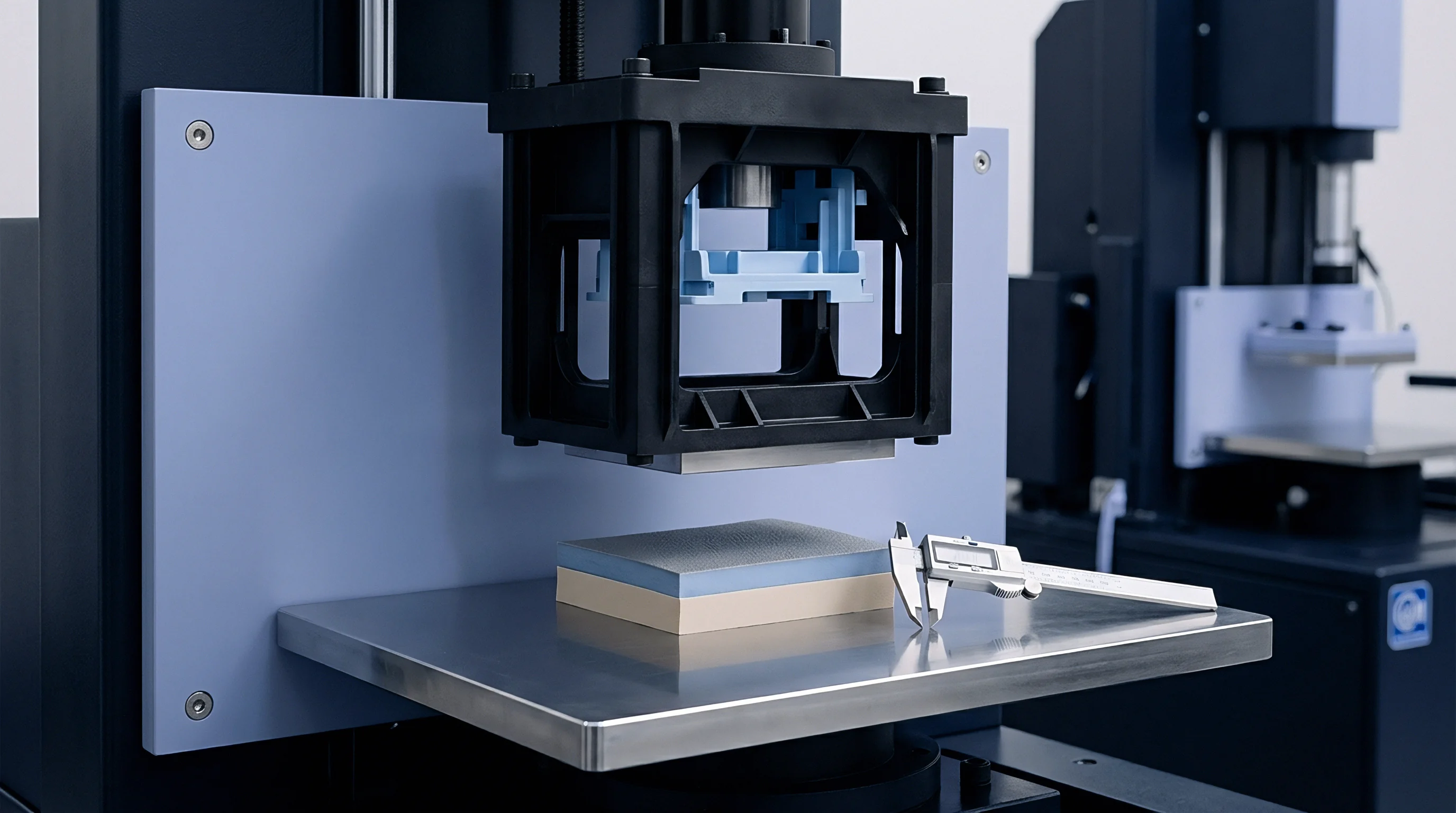
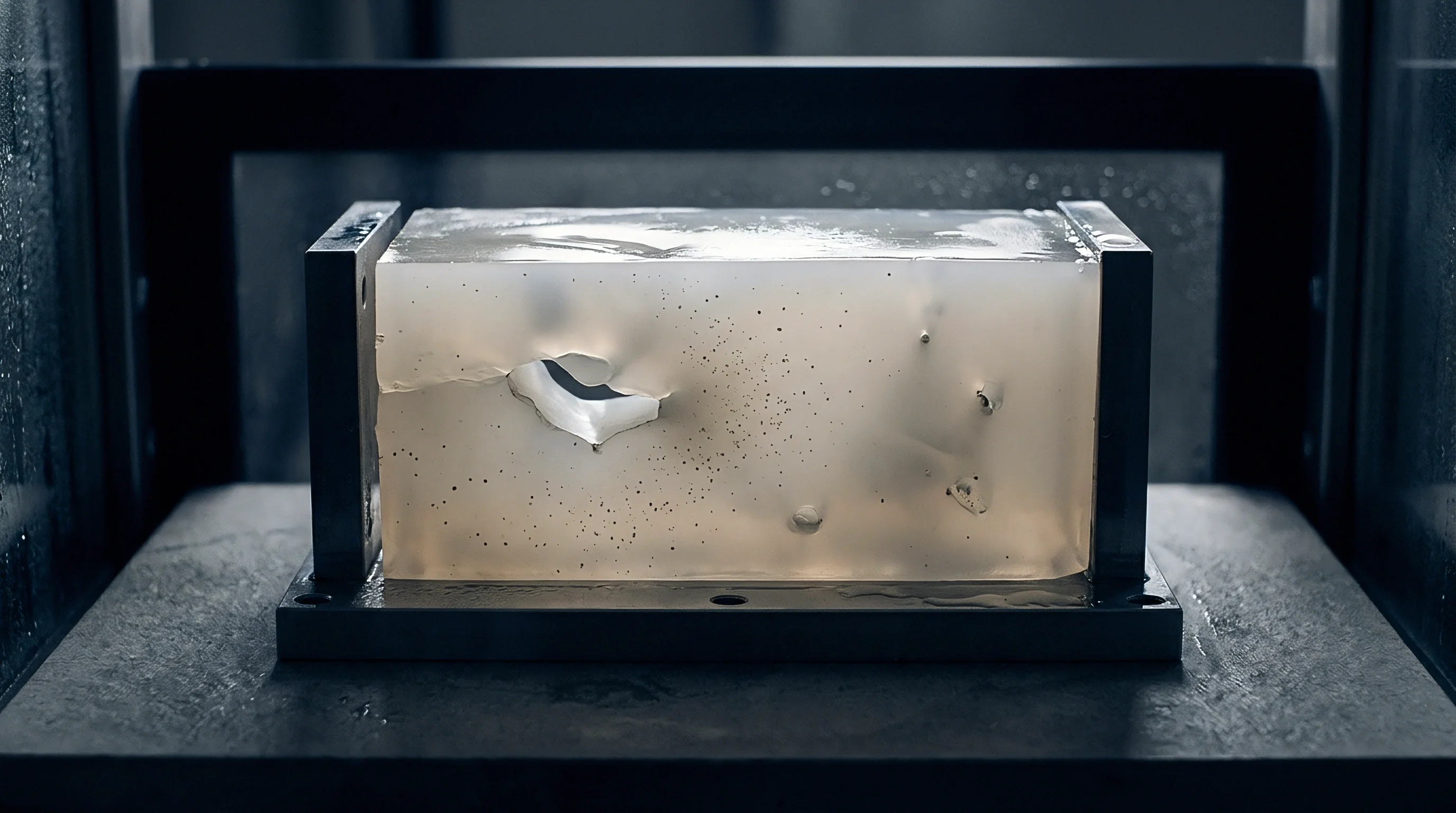
Rupture
The distribution of short-chain branches throughout the polyolefin matrix controls the probability that a single polymer chain bridges the gap between adjacent crystalline lamellae. These inter-lamellar connectors, known as tie molecules, must support mechanical stresses transferred across the softer amorphous boundaries. When external loads deform the material over months or years, these tie molecules hold the crystal plates together and prevent micro-voids from coalescing into brittle cracks.
Chain architecture governs tie formation. Unbranched linear chains fold repeatedly upon themselves, creating dense, thick crystal lamellae that exclude neighboring molecules. Branched chains fold irregularly because side groups cannot pack into the crystalline lattice.
The branched segments remain caught in the amorphous layer between lamellae, forcing the chain to anchor into two different crystals simultaneously. A resin lacking branches in its longest chains generates fewer tie molecules, leaving the inter-lamellar zone vulnerable to premature failure.
Unbranched high-molecular-weight fractions generate large lamellar crystals that exclude adjacent chains and starve amorphous regions of stress-bearing tie molecules.
Slow crack growth accelerates. In the Pennsylvania Notch Test, governed by ASTM F1473, a compression-molded bar carrying an engineered razor notch sustains a constant tensile stress of 2.4 megapascals at 80 degrees Celsius. The test measures the hours elapsed before brittle crack propagation severs the specimen ligament.
High-performance virgin HDPE pipe resins routinely exceed ten thousand hours without failure. Recycled post-consumer compounds blended without verifying short-chain branching architecture often fail within forty to eighty hours.

Tie Molecule Formation Mechanics
Theoretical formulations established by Huang and Brown express tie-molecule probability as a direct function of the ratio between polymer chain end-to-end displacement and the distance between adjacent crystal lamellae. Longer chains carry high probability of spanning the inter-lamellar distance, but only if they contain branches that prevent them from fully crystallizing into a single crystal platelet.
Recycled high-density resin streams contaminated with homopolymer injection scrap present an inverted branching distribution. In these compromised compounds, the unbranched homopolymer chains concentrate in the high-molecular-weight spectrum, while the branched chains remain confined to lower molecular weights. Under sustained stress, the thick homopolymer lamellae slip along internal slip planes, the scarce tie molecules pull out from the crystal lattices, and the part fails without exhibiting macroscopic plastic deformation.
Will Preparative Fractionation Identify Low Density Contamination?
Preparative thermal fractionation equipment scales up the TREF mechanism, processing ten to fifty grams of polymer inside stainless-steel dissolution chambers. The system dissolves the recycled resin in boiling xylene or trichlorobenzene, deposits the crystallites onto an inert support matrix during a twenty-four-hour controlled cooling program, and extracts narrow fractions by stepping the temperature upward in discrete increments. Each extracted cut undergoes solvent evaporation, vacuum drying, and physical testing.
The melt ruptures early. When analysts examine the lowest temperature fraction extracted from post-consumer blow-molding lots, typically the cut eluting below 65 degrees Celsius, they isolate the low-density film fraction that optical sorters missed. This low-crystallinity fraction frequently carries twenty-five to thirty-five branches per thousand carbons and features a very low molecular weight.
Its inclusion reduces the yield strength of the total compound and degrades the flexural modulus measured under ISO 178.
| Material Designation | SCBF Range (Branches/1000 C) | Branch Location by MWD | PENT Life ASTM F1473 (Hours) | Full Notch Creep ISO 16770 (Hours) | Tensile Modulus ISO 527 (MPa) |
|---|---|---|---|---|---|
| Virgin PE100 Pipe Compound | 2.5 to 4.5 | High-Mass Chains (Bimodal) | 10,000 | 5,000 | 1,150 |
| Post-Consumer Blow Molding (Pure) | 1.8 to 2.8 | Uniform Across MWD | 180 to 350 | 120 to 220 | 1,050 |
| Post-Consumer Compound with 15% Film | 4.5 to 7.2 | Low-Mass Concentration | 35 to 65 | 25 to 50 | 880 |
| Post-Consumer Compound with 30% Homopolymer | 0.6 to 1.2 | Unbranched High-Mass | 12 to 28 | 8 to 20 | 1,320 |
| Re-balanced Recyclate with Octene Plastomer | 6.0 to 9.5 | Engineered Distribution | 850 to 1,400 | 600 to 950 | 920 |
The data demonstrates that total branching frequency cannot predict service life when evaluated without positional context along the molecular weight distribution. Compounds carrying identical average branch counts deliver two orders of magnitude difference in brittle failure times depending upon whether those branches reside on long load-bearing backbones or short non-structural fragments.
When buyers omit short-chain branching architecture from incoming technical specifications, part rupture under ambient environmental stress cracking shifts from an occasional compounding variance to an inevitable field warranty claim.


Extrusion
Compounding operations process recycled polyethylene flakes through co-rotating twin-screw extruders to disperse contaminants, devolatilize moisture, and incorporate stabilizers. The thermal and mechanical energy applied inside the extruder barrel alters the apparent distribution of short-chain branches through selective chain scission and radical recombination. Shear heating within kneading blocks elevates local melt temperatures forty degrees Celsius above setpoint values, initiating beta-scission along the longest, most entangled polymer chains.
Beta-scission targets long chains. Because high-molecular-weight molecules sustain the highest shear stresses inside tight screw clearances, these load-bearing backbones break preferentially. If the original recyclate contained its co-monomer branches on those high-mass chains, the mechanical shearing converts them into medium-mass fragments, flattening the branch distribution curve.
The resulting melt displays higher melt flow rates under ISO 1133 testing at 190 degrees Celsius and 2.16 kilograms, while its structural resistance to slow crack growth degrades.
Melt Homogenization Limits
Recycled flakes entering the feed throat represent a heterogeneous mix of disparate melt viscosities. A fractional-melt blow molding flake with an MFR of 0.35 grams per ten minutes softens slowly, while an injection molding chip with an MFR of 7.0 grams per ten minutes melts almost instantly upon contacting the heated barrel wall. Twin-screw mixing elements must achieve distributive and dispersive homogenization before the polymer reaches the strand die.
Extruders degrade weak branches. If the screw profile employs aggressive reverse-kneading blocks to force mixing between these disparate fractions, the intense shear fields generate localized free radicals. In the absence of oxygen, these secondary macroradicals undergo intermolecular branch recombination, forming long-chain branches that disrupt the linear character of the base resin.
The presence of these processing-induced long branches skews CEF elution temperatures downward, producing artifacts on analytical traces that mislead laboratory staff evaluating the material for true alpha-olefin co-monomer content.

Compounding Adjustments for Branching Deficits
Remediating deficient short-chain branching distributions in post-consumer streams requires strategic addition of tailored virgin polyolefins or synthetic elastomers. Simply adding standard virgin high-density resin increases bulk stiffness but fails to repair the depleted tie-molecule network in the amorphous phase. Compounders utilize metallocene-catalyzed ethylene-octene or ethylene-hexene plastomers characterized by narrow molecular weight distributions and high branch densities.
- The compounder feeds the post-consumer high-density flake into the main gravimetric dosing throat while feeding the secondary metallocene modifier via a side stuffer downstream of the initial melting zone.
- The primary extruder zones melt the rigid flake matrix under moderate shear, maintaining melt temperatures below 210 degrees Celsius to prevent thermal crosslinking of residual unsaturated vinyl groups.
- The modifier melts within a dedicated distributive mixing block containing narrow-pitch forward-flighted elements that avoid shear-induced temperature spikes.
- Vacuum devolatilization ports operating at 80 millibars extract volatile organic contaminants and degradation by-products before the homogenized melt reaches the screen changer and pelletizing faceplate.
The target in re-balancing recycled compounds is positioning the added branches precisely within the inter-lamellar amorphous space. Adding five to ten percent by weight of an ethylene-octene copolymer carrying thirty branches per thousand carbons re-establishes the tie-molecule population without depressing overall compound density below critical blow-molding thresholds.
Viscosity matching governs the outcome of physical melt modification. If the virgin modifier resin exhibits a significantly lower zero-shear viscosity than the recycled high-density matrix, the additive remains sequestered within isolated micro-domains rather than integrating along the boundaries of the developing crystal lamellae.
Screw design must maximize distributive contact without escalating viscous heat dissipation beyond the thermal stability window of the primary antioxidant package.


Dossier
Trading desks and procurement teams handle post-consumer polyethylene transactions by relying on technical data sheets that detail melt flow rate, density, ash content, and tensile yield strength. These static metrics fail to capture the batch-to-batch structural variance that dictates factory downtime and processing yields. When a converter purchases fifty metric tons of recycled compound for detergent bottle manufacturing, the financial outcome depends directly upon whether the co-monomer branching distribution supports stress-crack requirements under chemical exposure.
Datasheets conceal architecture. A compounder can adjust bulk density by blending dense homopolymer scrap with low-density packaging film, and can match the target melt index by adding peroxide vis-breaking agents or low-molecular-weight waxes. The resulting pellet lot matches every conventional parameter printed on the certificate of analysis.
When the blow-molding machines convert the resin into containers and package surfactant-rich household liquids, the containers crack along their pinch-off seams within weeks of warehouse storage.

Certificate of Analysis Deficiencies
Standard incoming Certificates of Analysis state that the supplied post-consumer resin meets ASTM D5203 specifications for recycled polyethylene plastics. The standard provides classifications based on density and melt flow rate, but demands zero verification regarding short-chain branch frequency or co-monomer placement. The testing regime permits compounders to ship resin lots that drift between bimodal copolymer performance and unbranched homopolymer behavior without violating commercial parameters.
The lot faces rejection. When buyers establish a material dossier that includes thermal elution fingerprinting, they protect downstream operations against variable scrap sorting quality. Requiring the supplier to submit a quarterly CEF or HT-GPC-IR profile establishes a baseline for co-monomer distribution that prevents the compounder from quietly changing scrap feedstocks between contract fulfillment cycles.
| Evaluation Tier | Test Parameter | Reference Method | Target Performance Threshold | Commercial Action on Failure |
|---|---|---|---|---|
| Tier 1: Gate Screening | MFR (190 C / 2.16 kg) | ISO 1133-1 | Nominal value +/- 15 percent | Immediate delivery hold at silo gate |
| Tier 1: Gate Screening | Immersion Density | ISO 1183-1 | Nominal value +/- 0.002 g/cm3 | Hold shipment pending ash confirmation |
| Tier 2: Structural Verification | CEF Elution Profile | Internal or ISO 25762 | Elution peak width | Downgrade grade price by $150 per metric ton |
| Tier 2: Structural Verification | Unbranched Fraction (>95 C) | CEF Area Integration | Maximum 25 percent of total integrated area | Reject lot or divert to non-critical parts |
| Tier 3: Durability Qualification | Full Notch Creep Test | ISO 16770 (6 MPa, 50 C) | Minimum 200 hours without failure | Full financial claim for conversion costs |

Contractual Rejection Thresholds
Protecting capital during resin acquisition requires inserting clear analytical testing thresholds into procurement master service agreements. Technical specifications must define acceptable branching distributions by setting limits on the allowable fraction of unbranched homopolymer and specifying the minimum branch frequency required across high-molecular-weight fractions.
The financial ledger reflects these material safeguards. Processing a low-cost, off-spec post-consumer lot carrying unbranched chains saves two hundred dollars per metric ton at the purchase invoice, but generates twenty thousand dollars in scrapped parts, tool maintenance, and customer return penalties when parts fail quality audits. Establishing incoming verification protocols based on short-chain branching architecture eliminates this commercial exposure.
Supply agreements executing under this testing regime incorporate a specific structural clause stipulating that any delivered polyethylene lot exhibiting an unbranched high-temperature elution fraction exceeding twenty-five percent by mass under Crystallization Elution Fractionation triggers an immediate thirty percent price reduction and transfers all associated processing scrap liabilities directly to the compounding vendor.