Resolving Polyethylene Specific Gravity Discrepancies between Supplier CoA and Receiving Laboratory Inspections
Polyethylene specific gravity discrepancies stem from plaque thermal history and void entrapment; standardized ASTM D4703 cooling resolves CoA disputes.

Kinetics
Polymer chains inside semi-crystalline resins re-align continuously during cooling, dictating the final ratio between amorphous and crystalline domains. Standard Certificate of Analysis (CoA) values provided by resin synthesizers reflect measurements taken from test plaques prepared under tightly controlled thermal conditioning routines. When a receiving laboratory tests incoming pellets directly from a bulk railcar or box without replicating that thermal history, measured values deviate systematically from the shipping certificate.
Solidification speed dictates crystal morphology. High cooling rates trap amorphous structures.
Crystallization Rates and Plaque Cooling Schedules
Mass fraction crystallinity directly dictates specific gravity in polyethylene grades. Neat linear low-density polyethylene with a nominal density of 0.918 g/cm³ possesses a crystalline fraction near 45 percent, whereas high-density polyethylene reaching 0.960 g/cm³ contains crystalline domains exceeding 75 percent. When supplier quality control teams prepare plaques per ISO 17855-2 or ASTM D4703 Procedure C, the molten polymer cools at a controlled rate of 15 °C/min.
This slow cooling rate gives polyethylene macromolecular chains sufficient time to fold into lamellae, forming dense spherulites.
Pelletizing underwater systems at production plants quench molten strands in water baths held at 20 °C to 40 °C within fractions of a second. This rapid quenching yields a thermal cooling rate exceeding 100 °C/s, which freezes polymer chains into amorphous arrangements before optimal lamellar stacking occurs. Freshly extruded pellets exhibit a lower density than slowly cooled compression-molded plaques of identical chemical composition.
Testing pellets directly via liquid displacement yields lower specific gravity values than the CoA documents, creating false non-conformance flags at incoming inspection docks.
Standard slow cooling of high density polyethylene plaques at 15 degrees Celsius per minute increases mass fraction crystallinity by nearly four percent relative to rapid quench methods.
Secondary Spherulitic Growth during Transit Storage
Polymer crystallization does not terminate when a pellet solidifies inside an underwater pelletizer. Chain rearrangement continues at room temperature over extended storage periods, a process known as secondary crystallization. Amorphous polymer segments located near lamellar boundaries gradually fold into existing crystal lattices during railcar transit.
Chains align slowly during aging.
A sample tested 24 hours after production displays a lower specific gravity than the identical material tested 14 days later after ocean transport. High-density grades exhibit faster secondary crystallization rates due to lower steric hindrance along their unbranched backbones. Copolymers containing 1-hexene or 1-octene branching show slower room-temperature densification.
Receiving inspection procedures must account for elapsed time between compounding and receiving laboratory testing when evaluating small density deltas against supplier certificates.
Producers frequently explain that incoming specific gravity deficits stem from incomplete room-temperature conditioning rather than missing co-monomer content in the underlying polymer matrix.

Metrology
Analytical test method choice dictates the precision, repeatability, and bias of incoming resin evaluation. International standard organizations maintain distinct protocols for measuring specific gravity, ranging from fluid immersion displacement to gas pycnometry and density gradient columns. Comparing figures generated across disparate test methods introduces systematic offset into quality verification workflows.
Temperature control remains critical.
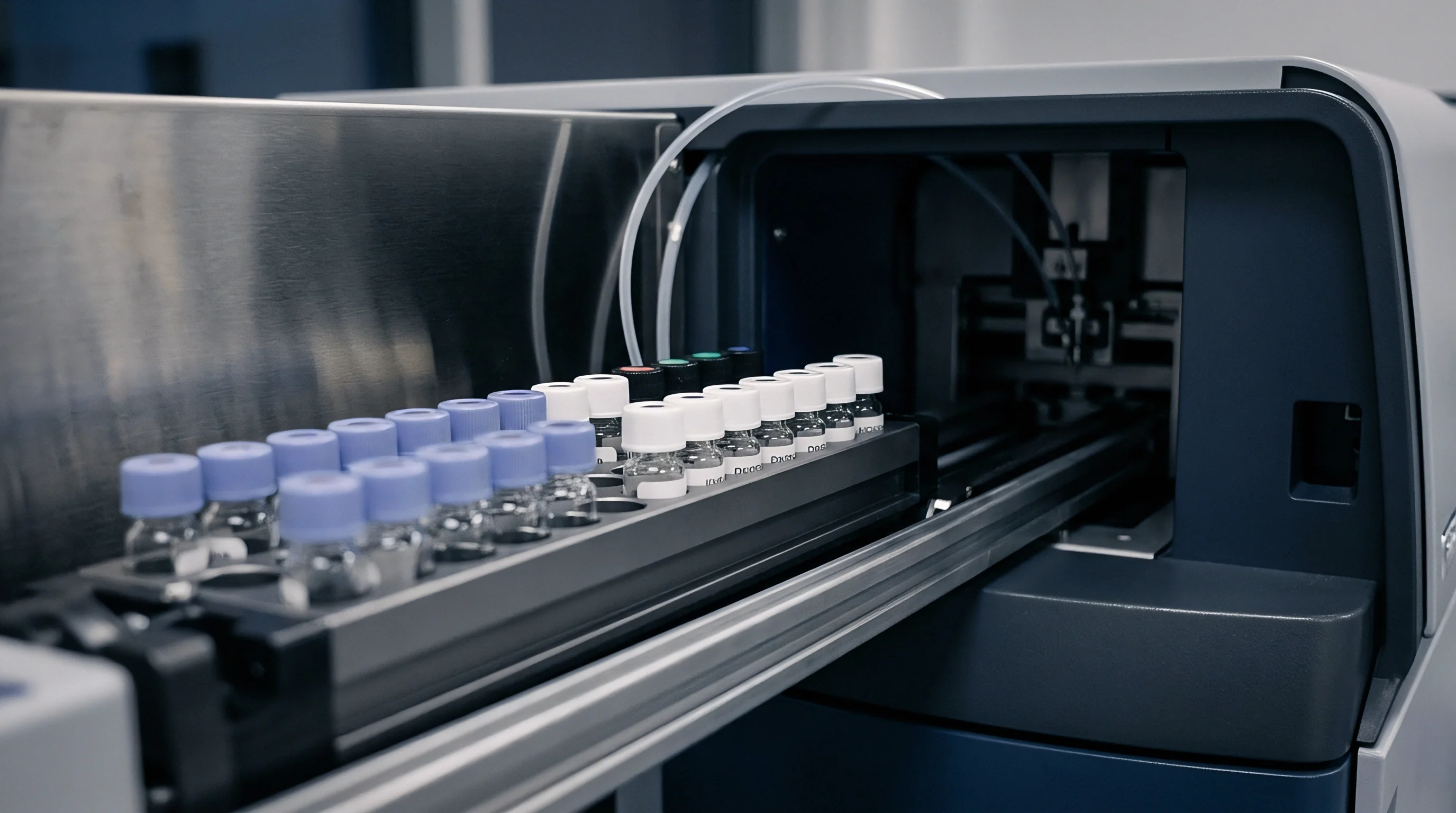
Buoyancy Physics and Surfactant Surface Wetting
Standard liquid displacement techniques described in ASTM D792 and ISO 1183-1 Method A rely on Archimedes’ principle to calculate sample volume. The specimen weighs first in air, then while suspended in a liquid medium of known density. Deionized water serves as the standard liquid, but polyethylene’s low surface energy causes air bubbles to cling to pellet surfaces upon immersion.
A single attached micro-bubble inflating displacement volume by a fraction of a microliter lowers calculated density significantly. Bubbles cling to pellet surfaces.
Surfactants like Triton X-100 added to the immersion fluid reduce liquid surface tension and promote complete surface wetting. Thermocouple accuracy must be verified. Water density changes by 0.0002 g/cm³ for every 1 °C temperature shift around 23 °C. Receiving laboratories operating without closed-loop temperature control baths transfer fluid expansion errors directly into the specific gravity calculation.
Gas displacement measures true volume.
Testing density via immersion without controlling bath temperature within a 0.1 degree Celsius window shifts specific gravity readings past commercial tolerance bands.
Is the Density Discrepancy Materially Driven or Methodological?
Resolving an incoming resin dispute begins by isolating sample preparation discrepancies from true polymer variation. Density gradient columns built to ISO 1183-2 or ASTM D1505 provide high resolution down to 0.0001 g/cm³ by floating specimen chips in a calibrated liquid column containing a density gradient, such as isopropanol and water mixture. However, specimen chips cut from compression-molded plaques can develop internal stress along cut edges, altering localized density.
Gas pycnometry per ISO 12154 eliminates liquid handling entirely by measuring helium gas displacement inside a sealed chamber.
| Test Method Standard | Measurement Medium | Sample State Required | Typical Repeatability | Primary Error Source |
|---|---|---|---|---|
| ASTM D792 / ISO 1183-1 A | Immersion Liquid (Water/Isopropanol) | Plaque or Whole Pellet | ±0.0010 g/cm³ | Surface air bubble entrapment |
| ASTM D1505 / ISO 1183-2 | Density Gradient Column | Conditioned Plaque Chip | ±0.0002 g/cm³ | Column gradient drift and aging |
| ISO 12154 | Helium Gas Pycnometry | Pellets or Cut Granules | ±0.0005 g/cm³ | Inaccessible closed internal pores |
Submerging pellets without vacuum degassing yields low specific gravity readings due to microscopic bubble entrapment.

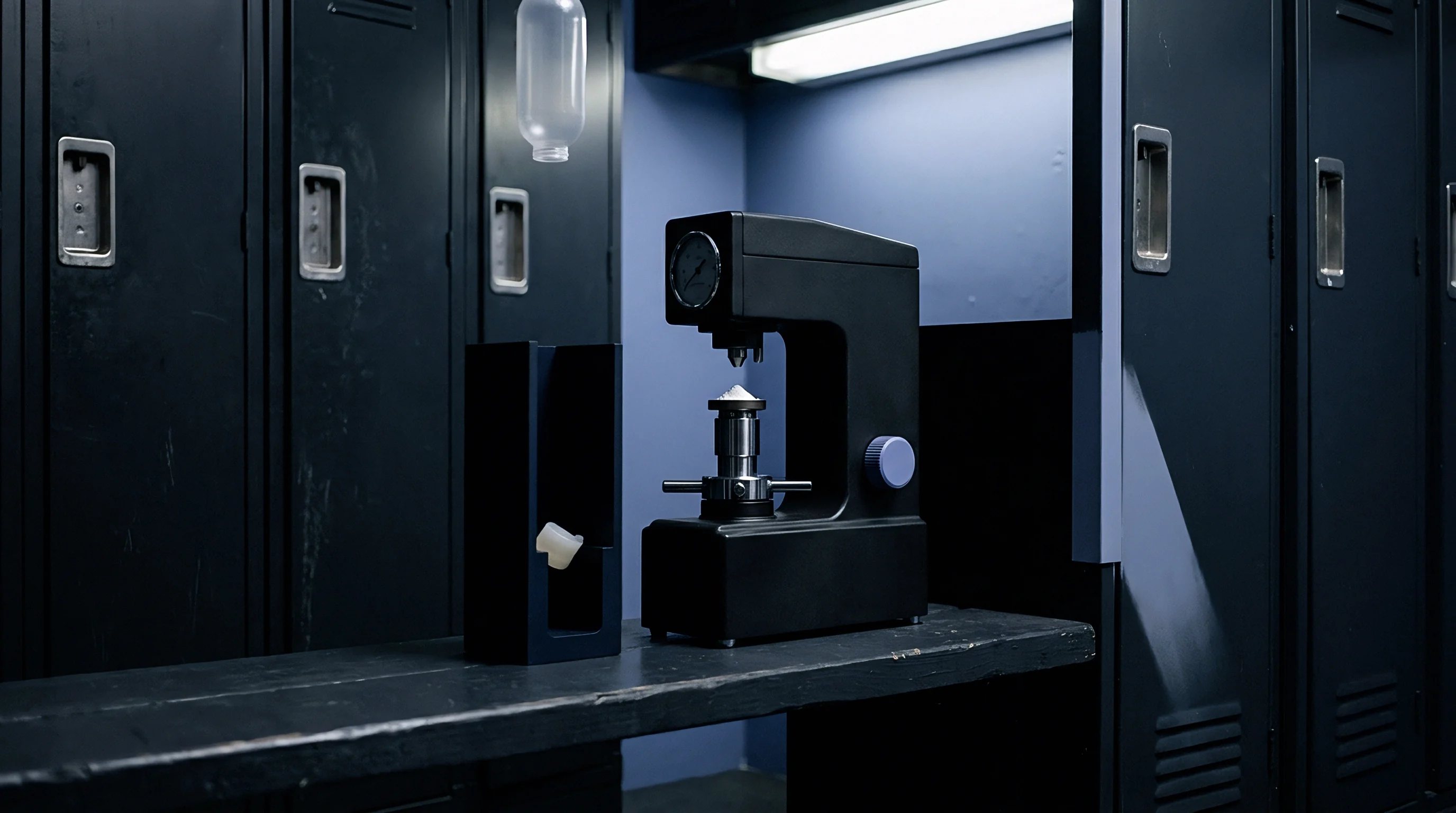
Pellet
Extrusion pelletizing geometry introduces physical artifacts that distort volumetric displacement measurements. Underwater pelletizers and strand cutters occasionally trap process gas or steam inside cooling pellets, creating internal micro-voids. These closed cavities do not contact the exterior surface, rendering liquid immersion incapable of filling the void space.
Internal voids skew envelope density.
Internal Void Mechanics in Strand Cut Resins
When molten polyethylene exits a die plate, volatile components or dissolved moisture expand as pressure drops. Rapid surface freezing in the water ring seals the outer polymer skin while the core contracts during cooling. Centrifugal vacuum forces pulled within the contracting core form hollow centers inside individual pellets.
Slicing pellets reveals closed cell micro-voids caused by volatile expansion or thermal shrinkage.
Immersion testing on intact void-bearing pellets measures envelope specific gravity rather than true skeletal resin density. A sample containing 0.5 volume percent micro-voids exhibits an apparent density loss of approximately 0.0045 g/cm³. The supplier CoA reflects solid plaque density tested on fully degassed, compression-molded material.
The receiving laboratory testing whole pellets registers a non-conforming, artificially low density figure. Cut specimens release trapped gas.
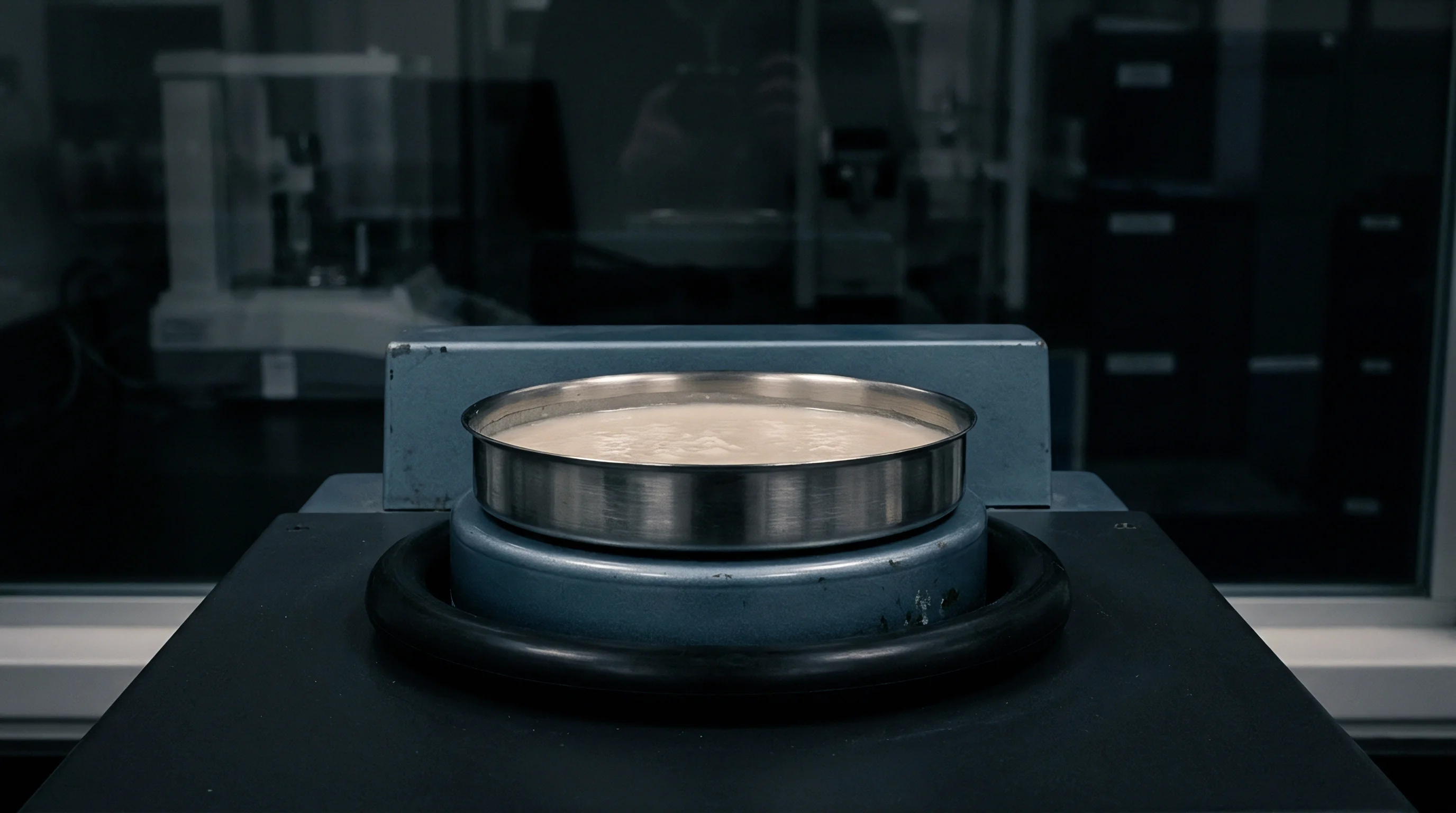
Compression molding pellets into micro-void free plaques eliminates skeletal density measurement errors caused by underwater pelletizer cooling jackets.
Discrepancy Calculation for Trapped Volatile Cavities
Quantifying the discrepancy between supplier plaque data and receiving whole-pellet measurements requires calculating void fraction effects. Consider a 20-tonne shipment of hexene-copolymer film grade resin. The supplier CoA indicates a plaque density of 0.9185 g/cm³ using ASTM D1505.
Receiving inspection performs ASTM D792 immersion tests on whole pellets, obtaining a density of 0.9140 g/cm³. The molder suspects off-spec low-density material was shipped.
- Cut twenty representative pellets into slices under ten-times optical magnification to verify the presence of internal concentric voids.
- Prepare a compression-molded plaque according to ISO 17855-2 using a press heated to 180 °C under 10 MPa load for five minutes.
- Cool the plaque at a controlled rate of 15 °C/min until the temperature drops below 40 °C.
- Punch specimen chips from the center of the plaque, avoiding outer edges.
- Condition chips for 24 hours at 23 °C and 50 percent relative humidity.
- Re-test chip density using a calibrated density gradient column per ASTM D1505.
Re-testing the compression-molded plaque yields a corrected density of 0.9183 g/cm³. The initial 0.0045 g/cm³ deficit stemmed entirely from 0.49 percent internal void volume within intact pellets rather than missing co-monomer content in the polymer chain. Molding the pellets into a solid plaque eliminated the void space.
Whether receiving inspection laboratories can justify the labor cost of slicing every incoming lot plaque remains open when high-throughput production lines demand fast silo discharge.
Drift
Chemical composition shifts during compounding alter mass distribution without always causing proportionate changes in melt index. Variations in co-monomer incorporation rates, functional additives, pigment let-downs, or mineral fillers shift base polymer density away from master specification targets. Additives alter overall compound weight.
Pigment concentrations alter density rapidly.
Co-Monomer Incorporation and Short Chain Branching
Ethylene polymer density depends inverse-proportionally on short chain branching frequency. Alpha-olefin co-monomers such as 1-butene, 1-hexene, or 1-octene introduce ethyl, butyl, or hexyl side branches along the polyethylene backbone. Side branches disrupt crystal packing, lowering density.
Reactor control drift during polymerization changes the co-monomer incorporation ratio, shifting the resulting lot density.
A reduction of two short-chain branches per 1,000 carbon atoms elevates density by roughly 0.002 g/cm³. If a polymerization plant adjusts reactor conditions to maximize throughput, subtle shifts in co-monomer distribution occur across a production run. Receiving laboratory verification catches these chemical shifts provided physical test preparation errors are completely eliminated.
Unannounced transitions from hexene to butene co-monomers alter polymer density without immediately changing melt flow rate values.
Mineral Filler and Pigment Let-Down Deviations
Injected compounds containing inorganic fillers show high sensitivity to let-down accuracy. Calcium carbonate (CaCO3) possesses a specific gravity of 2.71 g/cm³, while titanium dioxide (TiO2) reaches 4.23 g/cm³. Small dosing errors during masterbatch blending cause significant density jumps in the final lot.
| Additive / Filler Component | Additive Specific Gravity | Base Resin Density | Loading Shift (wt%) | Resulting Density Shift |
|---|---|---|---|---|
| Calcium Carbonate (CaCO3) | 2.71 g/cm³ | 0.9520 g/cm³ | +0.50 wt% | +0.0087 g/cm³ |
| Titanium Dioxide (TiO2) | 4.23 g/cm³ | 0.9200 g/cm³ | +0.10 wt% | +0.0033 g/cm³ |
| Carbon Black Masterbatch (30% Load) | 1.12 g/cm³ | 0.9350 g/cm³ | +1.00 wt% | +0.0018 g/cm³ |
| Post-Consumer Recyclate (PCR) Contaminant | 0.9600 g/cm³ | 0.9180 g/cm³ | +5.00 wt% | +0.0021 g/cm³ |
The material factors that introduce true specific gravity discrepancies between compounding runs include distinct chemical and physical phenomena:
- Co-monomer content variance alters short-chain branching frequency, directly altering the ratio of amorphous to lamellar crystalline structures within the polymer matrix.
- Mineral filler dosing drift shifts overall composite density due to high relative specific gravity ratios between inorganic compounds and neat polymer backbones.
- Cross-linking degradation occurs during high-shear recycling operations, increasing molecular mass density while reducing melt flow index figures.
- Post-consumer regrind contamination introduces higher-density polymer species into virgin resin streams, elevating baseline specific gravity beyond purchase specification windows.
Accepting resin with an uncorrected specific gravity elevation forces blow molders to run higher part weight targets to maintain minimum wall thickness, destroying profit margins over long production runs.
Arbitration
Commercial resolution of material discrepancies demands an agreed technical framework. When receiving QA flags a specific gravity deficit exceeding agreed specification limits, formal re-testing protocols must govern the dispute to prevent commercial gridlock. Standard purchase contracts that state density targets without defining specimen preparation standards leave buyers unprotected during quality claims.
Formal testing standards settle claims. Strict tolerances protect molders. Plaque preparation methods decide density.
Immersion liquids degrade over time.
Contractual Density Tolerances and Specimen Preparation Standards
Raw material purchase agreements must specify test standards, sample conditioning, and statistical acceptance criteria. Nominal density targets require explicit tolerance bands, typically set at ±0.0015 g/cm³ for neat resins and ±0.0030 g/cm³ for filled compounds. The purchase specification must mandate specimen preparation according to ASTM D4703 Procedure C or ISO 17855-2, forcing both supplier and buyer to measure fully annealed plaques rather than raw pellets.
Quality agreements must mandate sample exchange protocols upon initial rejection. The receiving facility isolates the affected railcar or lot, drawing ten representative sub-samples from top, middle, and bottom discharge ports per ASTM D1898 guidelines. Five sub-samples undergo plaque molding and density testing at the receiving laboratory, while five identical sealed sub-samples ship back to the supplier for referee testing.

Third Party Round-Robin Laboratory Verification Protocols
When buyer and supplier laboratories fail to align on specific gravity readings after standard plaque preparation, an independent ISO 17025 accredited laboratory serves as the binding referee. The referee laboratory utilizes certified reference material (CRM) glass spheres of known density to calibrate its density gradient column prior to running disputed specimens.
- Lot Quarantining freezes the disputed material inside the receiving warehouse, halting automatic feed systems to prevent production line contamination.
- Joint Sampling executes sampling procedures in the presence of both buyer and supplier representatives, producing three identical sealed sample containers.
- Protocol Calibration verifies that both plant laboratories validate analytical balance calibration using Class 1 standard weights and track immersion bath fluid temperature via calibrated RTD probes.
- Referee Execution submits the third sealed sample box to an accredited neutral testing facility operating under pre-agreed ASTM D1505 methods.
- Financial Settlement enforces dockage fees or return authorization based on referee results, applying pre-calculated cost adjustment tables to non-conforming shipments.
| Specific Gravity Delta | Probable Technical Root Cause | Commercial Action Framework | Financial Settlement Action |
|---|---|---|---|
| Within ±0.0010 g/cm³ | Inter-laboratory test noise or conditioning variance | Accept shipment; update lab baseline offsets | None; standard payment release |
| -0.0011 to -0.0025 g/cm³ | Pellet internal voids or rapid quench cooling bias | Re-test using ASTM D4703 annealed plaques | Hold invoice until plaque re-test completes |
| ±0.0026 g/cm³ | Co-monomer deviation or filler let-down error | Issue formal non-conformance notice; reject lot | Supplier pays return freight and dockage fee |
Inserting ASTM D4703 Procedure C plaque conditioning as the mandatory reference standard inside raw material purchase agreements eliminates supplier claims of receiving lab thermal history bias.