Resolving Spectroscopic Monomer Ratio Discrepancies between Producer Datasheets and Customs Regulatory Audits
Reconciling monomer discrepancies requires replacing plant ATR infrared spectra with high-temperature solution carbon-13 nuclear magnetic resonance testing.


Variance
Discrepancies between reactor plant datasheets and customs laboratory findings originate in fundamentally different spectroscopic methodologies. Polymer synthesis facilities rely on high-throughput inline or near-line analytical systems. Reactor control loops utilize process infrared spectrometers calibrated to internal liquid standards or melt-state rheological proxies to confirm chemical composition during polymerization.
The resulting Certificate of Analysis quotes nominal monomer weight percentages designed to verify process control consistency. Customs regulatory compliance laboratories analyze solidified polymer pellets collected at border discharge ports. Regulatory auditors apply standardized benchtop screening tests to verify tariff line declarations under Chapter Thirty-Nine of the Harmonized System.
The peak shifts. Pellets absorb ambient moisture. These operational realities create numerical gaps between producer documentation and border enforcement determinations.

Discrepancies between Production Lines and Regulatory Screening
Manufacturing facilities measure chemical composition at elevated temperatures where polymer chains maintain molten mobility. In contrast, customs regulatory bench testing evaluates room-temperature solid pellets subjected to mechanical handling and environmental exposure. A reactor certificate of analysis often relies on wet titration procedures, such as ISO 13975 for ethylene-vinyl acetate resins, or high-temperature proton nuclear magnetic resonance recorded during resin lot synthesis.
Customs control enforcement relies heavily on Fourier-transform infrared spectroscopy operating in transmission or attenuated total reflectance mode per ASTM D5594 or ASTM D5576. Analytical results drift when plant calibration models omit matrix effects caused by commercial additive packs.

Analytical Windows and Instrumental Limits
Spectroscopic quantification depends on measuring specific vibrational energy absorption bands corresponding to monomer functional groups. For ethylene-vinyl acetate copolymers, infrared screening targets the ester carbonyl stretching vibration located near 1735 reciprocal centimeters alongside the methylene backbone absorption band at 720 reciprocal centimeters. For random polypropylene copolymers, laboratories monitor the methyl rocking band at 1378 reciprocal centimeters against ethylene sequences at 720 reciprocal centimeters.
Interferences occur when secondary compounding ingredients absorb energy within these identical spectral regions.
- Additive absorbance overlaps occur when ester-based internal lubricants, phenolic antioxidants, or hindered amine light stabilizers generate carbonyl or aromatic stretching bands that augment target monomer absorbance values.
- Surface blooming phenomena concentrate low-molecular-weight waxes or secondary amides within the outer five micrometers of the pellet, distorting ATR infrared spectra beyond bulk polymer stoichiometry.
- Sample thermal history variations alter crystallinity levels and crystalline-to-amorphous band ratios, shifting baseline zero points during transmission spectroscopic scans.
- Polydispersity index shifts modify chain-end methyl concentrations, introducing systematic error when using methyl-to-methylene absorbance ratios for short-chain branching estimations.
A reactor datasheet reflects melt-state stoichiometry recorded during synthesis, whereas customs laboratories analyze solid-state morphological surface states.
The resin producer maintains that plant analytical instruments follow internal ISO 9001 quality controls designed for batch consistency rather than tariff classification compliance.

Foil
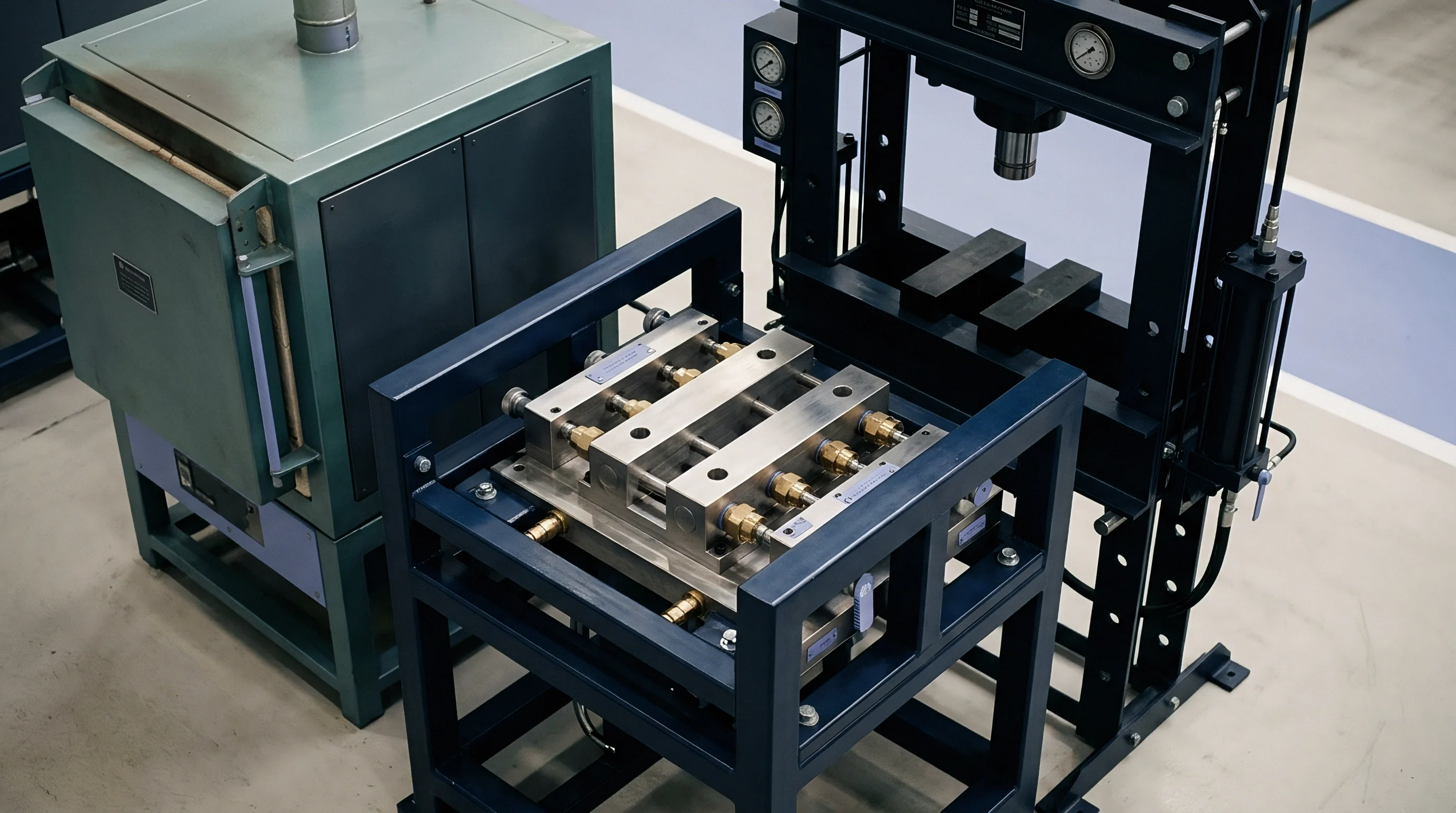
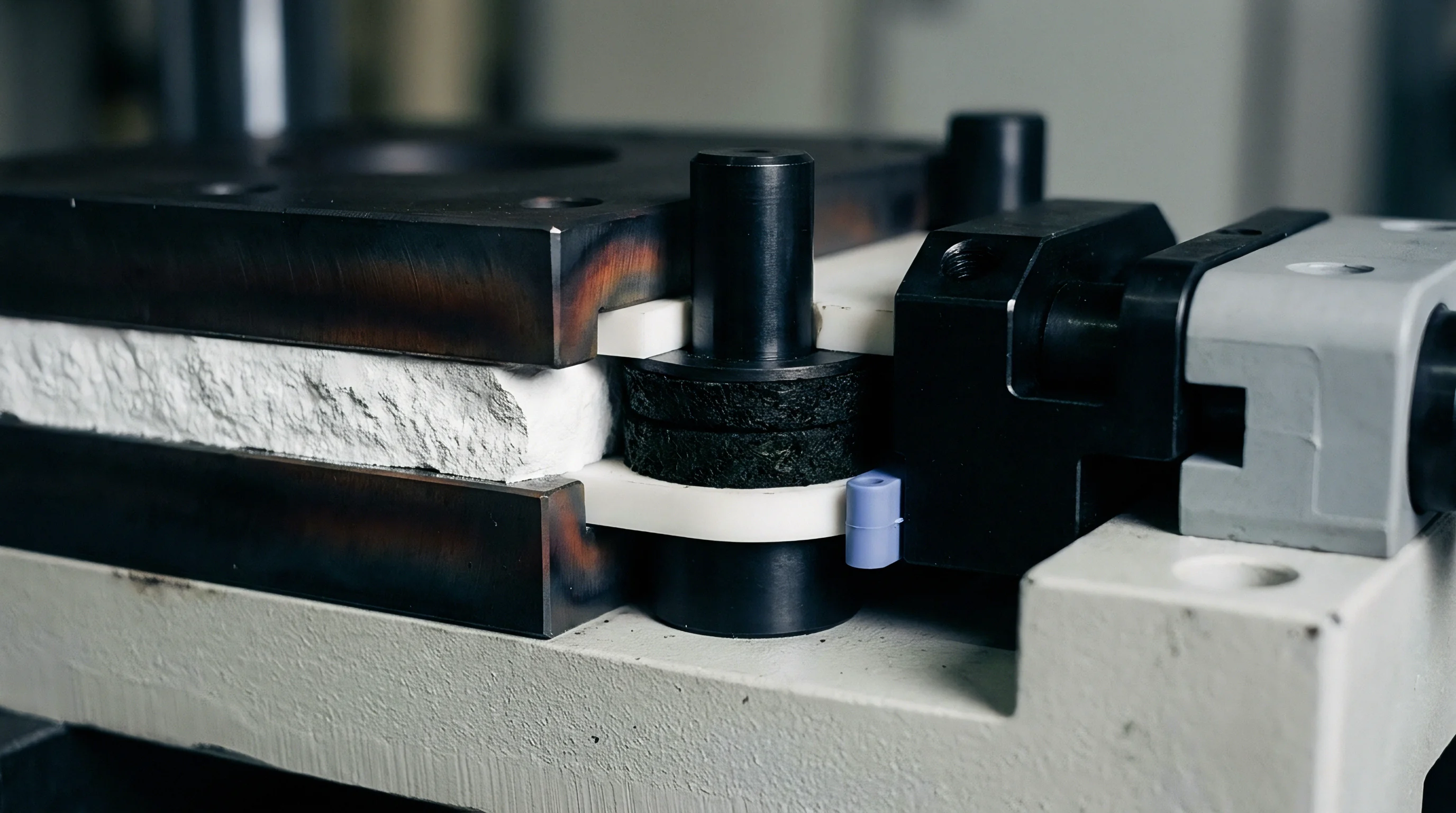
Sample preparation methods dictate optical path uniformity in transmission infrared testing. Obtaining reliable monomer ratios requires converting solid resin pellets into uniform polymer films with controlled dimensions. Hydraulic heated presses compress raw pellets between smooth polished plates to yield transparent films.
Variations in heating temperature, dwell duration, and pressure application generate internal stress patterns and non-uniform thickness profiles. Film thickness alters absorbance values. Surface blooming alters reflection optics.
The container remains held. When specimen thickness deviates from established limits, Beer-Lambert absorption calculations lose linear proportionality.

Compression Pressing versus Attenuated Total Reflectance Surface Probing
Customs auditors frequently substitute transmission film preparation with direct ATR measurement to accelerate sample throughput. Pressed films measure bulk transmission across the complete sample pathlength, averaging composition throughout the specimen volume. Attenuated total reflectance directs an infrared beam through an internal reflection crystal, such as zinc selenide or diamond, pressed against the pellet outer surface.
The infrared wave penetrates only zero point five to two micrometers into the polymer boundary layer. When low-molecular-weight additives or co-monomers migrate to the surface during pelletization or cooling, ATR spectra overestimate secondary monomer concentration relative to bulk composition.

Evanescent Wave Penetration and Refractive Index Anomalies
The penetration depth of an infrared beam in ATR crystal systems varies proportionally with wavelength. Longer wavelengths penetrate deeper into the resin matrix than shorter wavelengths. This wavelength dependence distorts relative peak area ratios across the spectrum unless mathematical corrections compensate for crystal refractive index differences.
When analyzing high-refractive-index polymers like styrene-acrylonitrile, anomalous dispersion near strong absorption bands distorts peak shapes, shifting calculated monomer mole fractions.
- Pellet selection and cryogenic homogenization demand milling ten grams of resin pellets at liquid nitrogen temperatures to eliminate lot sampling bias across incoming containers.
- Hydraulic thermal compression shapes two hundred milligrams of milled polymer powder between heated steel plates at 180 degrees Celsius under five megapascals of pressure for two minutes.
- Controlled quench cooling lowers the pressed plate temperature to twenty-five degrees Celsius at fifty degrees per minute to lock in uniform amorphous content and prevent crystallization voids.
- Micrometer pathlength verification confirms the film thickness sits precisely between fifty and one hundred micrometers across four distinct measurement points.
| Technique | Sample State | Pathlength or Depth | Testing Duration | Precision Range | Customs Acceptance |
|---|---|---|---|---|---|
| FTIR Transmission Film | Pressed Solid Film | 50 to 100 micrometers | 15 minutes | +/- 0.5 wt% | Standard Audit Method |
| FTIR ATR Crystal | Pellet Surface Contact | 0.5 to 2.0 micrometers | 3 minutes | +/- 1.2 wt% | Rapid Screening Only |
| Solution 13C NMR | Dissolved Polymer Solution | Bulk Solution Volume | 240 minutes | +/- 0.1 wt% | Primary Legal Reference |
| Pyrolysis-GC/MS | Thermal Degradation Gas | Microgram Mass | 45 minutes | +/- 0.8 wt% | Secondary Confirmatory |
| Differential Scanning Calorimetry | Thermally Melted Solid | 5 to 10 milligrams | 30 minutes | +/- 1.5 wt% | Indirect Estimation |
| Notes: Precision ranges represent two standard deviations recorded across round-robin interlaboratory evaluations using standardized ethylene-vinyl acetate reference materials. | |||||
Thrombus-like voids and thickness gradients inside pressed polymer specimens invalidate infrared absorbance calculations by distorting optical path lengths.
Incorrect film pressing parameters alter optical absorbance ratios, leading customs auditors to reclassify tariff codes and assign retroactive duty surcharges across multi-container shipments.

Calibration
Quantitative spectroscopic analysis depends on establishing rigorous mathematical relationships between peak absorbance areas and absolute chemical concentration. Instrument operators build reference curves by measuring standard samples with known monomer compositions determined by primary analytical techniques. When customs laboratories and resin producers utilize reference standards with differing underlying values, systematically offset results emerge.

Why Do Transmission and Reflectance Yield Divergent Monomer Figures?
Spectroscopic light paths interact with polymer matrices through distinct physical mechanisms depending on measurement geometry. Transmission measurements pass light completely through the specimen, collecting absorption data from core and surface regions alike. Reflectance modes sample only surface molecules where additive migration and environmental oxidation concentrate.
Carbonyl absorption bands overlap. NMR measures total bulk hydrogen. These fundamental physical distinctions produce conflicting compositional metrics from the same physical pellet.
Baseline Selection Mechanics and Peak Area Integration
Spectral data processing software introduces significant variability depending on user-defined boundary points. Integrating infrared absorption peaks requires drawing a linear baseline beneath the absorption band of interest. For vinyl acetate quantification in ethylene copolymers, operators draw baselines between 1800 and 1600 reciprocal centimeters for the carbonyl band, and between 800 and 650 reciprocal centimeters for the reference band.
Shifting the baseline anchor points by five reciprocal centimeters alters the integrated area by up to eight percent. High-resolution solution carbon-13 nuclear magnetic resonance spectroscopy bypasses baseline integration ambiguity by resolving distinct carbon resonances corresponding to specific monomer sequences.
ASTM D5594 specifies that infrared absorption coefficient calculations for vinyl acetate content depend strictly on standard reference polymers verified by proton nuclear magnetic resonance spectroscopy.
Unresolved technical debates persist regarding whether high-temperature solution carbon-13 nuclear magnetic resonance or solid-state pyrolytic chromatography serves as the definitive reference when infrared baseline choices yield conflicting monomer percentages.
Tariff
Customs classification under Chapter Thirty-Nine of the Harmonized System depends strictly on precise chemical composition thresholds. Import duty rates shift dramatically when monomer ratios cross specific legal boundaries. For instance, ethylene copolymers containing five percent or more by weight of vinyl acetate classify under subheading 3901.30, carrying distinct customs duty rates compared to polyethylene homopolymers under subheading 3901.10 or 3901.20.
The duty rate doubles. Customs lab tests land late. The importer files a protest.
A reported discrepancy of zero point four percent in vinyl acetate content moves a shipment across legal subheadings, triggering customs reclassifications, back-taxes, and potential regulatory fines.

Threshold Boundaries in Chapter Thirty-Nine Classification
Legal definitions within customs codes establish strict numerical cutoffs for monomer mole and mass fractions. Propylene copolymers governed by subheading 3902.30 require five percent or more by weight of another monomer unit, such as ethylene or butene-1. If customs spectroscopic audits report four point eight percent monomer content while the producer certificate of analysis lists five point two percent, border authorities treat the entry as misdeclared.
Similar strict boundaries govern acrylic acid copolymers under subheading 3906 and vinyl chloride copolymers under subheading 3904.

Financial Exposure and Customs Administrative Appeals
Importers facing classification disputes incur substantial storage, demurrage, and legal expenditures during border holds. When customs laboratories challenge a declared resin grade based on rapid ATR screening, border agencies issue notice of action documents withholding liquidated entry clearance. Importers either pay revised duty estimates with penalty surcharges or initiate formal administrative appeal procedures.
Defending an entry requires presenting rigorous technical dossiers that demonstrate analytical error in the customs laboratory testing procedure.
| HS Subheading | Resin Family | Standard Test Method | Legal Composition Threshold | Duty Impact Shift |
|---|---|---|---|---|
| 3901.30 | Ethylene-Vinyl Acetate | ASTM D5594 / FTIR | 5.0 wt% Vinyl Acetate minimum | 3.0% to 6.5% ad valorem |
| 3902.30 | Propylene Copolymers | ASTM D5576 / FTIR | 5.0 wt% Comonomer minimum | 0.0% to 6.5% ad valorem |
| 3903.20 | Styrene-Acrylonitrile | ASTM D1505 / NMR | 5.0 wt% Acrylonitrile minimum | 2.2% to 6.5% ad valorem |
| 3905.21 | Vinyl Acetate Copolymers | ISO 13975 / Titration | 50.0 wt% Vinyl Acetate threshold | 3.5% to 6.5% ad valorem |
A monomer ratio shift of zero point three percent across a five-percent copolymer threshold changes tariff classification under Chapter Thirty-Nine and increases import duties from six point five percent to nine point two percent.
Incorporating standard commercial trade clause INCOTERMS 2020 DDP with an explicit spectroscopic tolerance protocol shifts legal reclassification financial liabilities directly to the seller upon entry failure.


Resolution
Technical dispute settlement requires implementing structured verification protocols between importers, producers, and regulatory authorities. When border authorities issue spectroscopic discrepancy notices, importers act systematically to challenge analytical findings. Overcoming flawed customs screening involves building evidence chains that prove sample preparation artifacts or inappropriate calibration curves skewed the customs audit result.
Referee testing takes time. Chain of custody governs evidence. Implementing binding referee clauses within commercial procurement contracts protects buyers from absorbing liabilities generated by plant-level analytical drift.

Technical Dossier Assembly for Customs Regulatory Audits
Complete legal appeals depend on collecting primary manufacturing records and certified analytical spectra. The administrative defense packet must contrast the customs screening method against definitive reference testing. Importers submit high-temperature carbon-13 nuclear magnetic resonance spectra of homogenized retain samples alongside production lot logs.
Demonstrating that additive interferences caused false infrared absorbance peaks effectively refutes preliminary ATR screening findings.

Independent Referee Laboratory Binding Protocols
Selecting neutral analytical institutions certified under ISO/IEC 17025 creates legal standing during administrative hearings. Commercial purchase agreements ought to specify a designated referee testing facility prior to shipping multi-container polymer orders. When customs disputes occur, the referee laboratory receives sealed retain bags drawn under witnessed chain-of-custody procedures.
The referee laboratory applies primary solution 13C NMR protocols to establish definitive monomer values that bind both commercial parties and serve as expert evidence during tariff classification appeals.
- Primary synthesis logs document reactor temperature, catalyst pressure, and gas-phase monomer feed ratios recorded during the specific batch run.
- Nuclear magnetic resonance spectra provide absolute quantitative proton or carbon-13 mole fraction determinations without relying on extinction coefficient assumptions.
- Cryogenic pellet homogenate samples ensure the referee laboratory tests identical material drawn from sealed retention bags.
- Chain-of-custody documentation verifies container seal integrity from port discharge to analytical bench arrival.
When customs laboratories challenge resin monomer ratios, relying on primary nuclear magnetic resonance spectra prepared from homogenized bulk pellets provides stronger legal protection than defending plant infrared calibration curves.