PP Copolymer against Homopolymer for Cold Chain Drop Impact
Polypropylene impact copolymers containing disperse ethylene propylene rubber phases maintain cold drop impact strength down to minus 40 degrees Celsius where homopolymers shatter.


Melt
How mechanical loads dissipate under impact depends directly on polypropylene chain architecture. In semicrystalline polyolefins, crystalline lamellae tied together by amorphous tie molecules provide resistance against deformation. Isotactic polypropylene homopolymer consists of repeating propylene units in a stereoregular arrangement that crystallizes readily as the melt cools.
These crystalline domains deliver high stiffness, tensile strength, and heat deflection resistance, while the surrounding amorphous phase has a glass transition temperature near 0 °C. Above this thermal boundary, mobile amorphous segments flex and dissipate mechanical energy, so a homopolymer container dropped at room temperature can usually arrest crack propagation through localized chain relaxation.
Sub-zero logistics disrupt this dissipation pathway. At -20 °C or -40 °C, amorphous homopolymer segments freeze into an unyielding glassy state. Dynamic mechanical analysis shows a steep spike in storage modulus paired with a collapse in loss modulus across the glass transition zone.
Because the frozen matrix cannot accommodate localized shear yielding or chain disentanglement, kinetic energy from an impact concentrates at structural stress risers and drives rapid, unstable cracks through crystalline lamellae. Packaging molded from standard isotactic homopolymer will readily shatter upon low-height drops under these conditions.
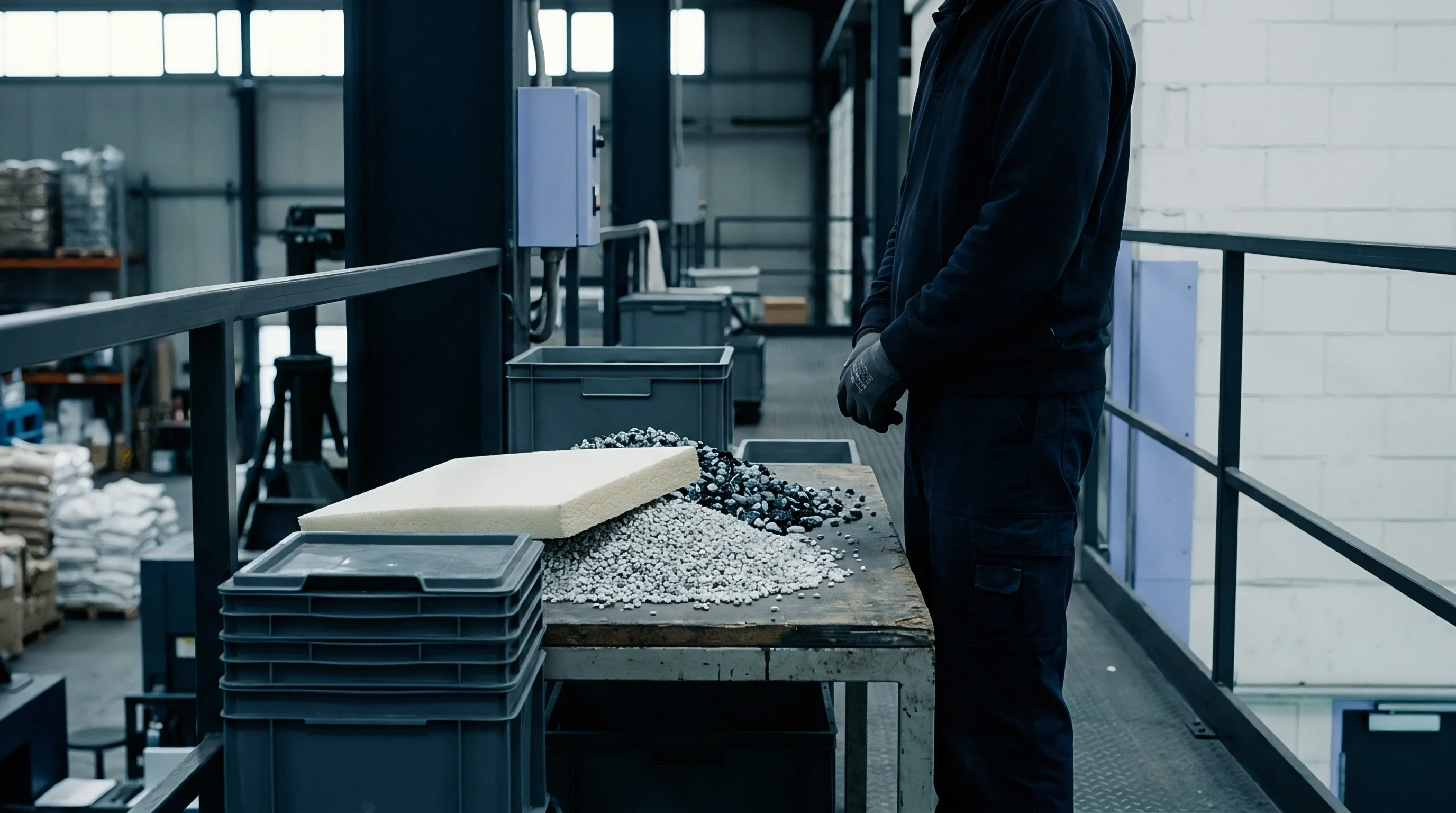
Phase Morphology of Polypropylene Homopolymer and Copolymer
Polymer chemists introduce secondary monomers during synthesis to modify matrix phase behavior. Random copolymers incorporate small amounts of ethylene, typically 1 to 7 percent by weight, straight into the polypropylene backbone. These distributed ethylene units interrupt isotactic run lengths, suppressing overall crystallinity, lamellar thickness, and melting peak temperatures.
While this lower crystallinity improves optical clarity and room-temperature ductility, the glass transition drops only marginally; the matrix remains essentially single-phase and lacks the dispersed domains needed to stop high-velocity cracks at freezing temperatures.
Block copolymers—commonly called impact copolymers—rely on sequential reactor synthesis to create a heterophasic morphology. A primary reactor produces an isotactic polypropylene homopolymer matrix, which then transfers to a secondary reactor where ethylene and propylene copolymerize into an amorphous ethylene-propylene rubber phase. The final resin contains discrete rubbery domains dispersed throughout the rigid homopolymer matrix.
Because the ethylene-rich rubbery phase maintains a glass transition well below -50 °C, these inclusions retain molecular mobility deep into sub-zero regimes.
An impact copolymer carrying 12 percent ethylene by weight retains a Charpy notched impact strength of 9.5 kilojoules per square meter at minus 20 degrees Celsius under ISO 179 1eA conditions.

Sub-Zero Glass Transition Dynamics
Cold chain durability depends on how these biphasic domains respond to temperature. Evaluated by dynamic mechanical analysis at 1 Hertz, the amorphous polypropylene matrix transitions into a brittle glass near 0 °C, whereas the ethylene-propylene rubber phase undergoes its glass transition between -45 °C and -60 °C depending on bound ethylene content. Consequently, during a drop at -20 °C, the homopolymer matrix acts as a rigid, brittle solid while the embedded rubber particles stay fully elastomeric.
Energy absorption during impact relies on ductile mechanisms. Applied shock initiates cavitation within the rubber domains or triggers crazing and shear banding along the matrix-particle boundary. This localized shear yielding absorbs kinetic energy before local stress reaches the critical threshold for crack cleavage.
Efficient energy transfer requires strong interfacial adhesion between the rubber inclusions and the matrix; weak interfaces lead to early matrix-rubber debonding without plastic yielding, prompting brittle failure.
| Grade Type | Ethylene Content (wt%) | MFR (230 °C / 2.16 kg) | Rubber Tg (°C) | Izod Impact 23 °C (kJ/m²) | Izod Impact -20 °C (kJ/m²) | Flexural Modulus (MPa) |
|---|---|---|---|---|---|---|
| Isotactic Homopolymer | 0.0 | 12.0 g/10min | +0.5 | 3.5 | 1.2 | 1550 |
| Random Copolymer | 3.5 | 10.0 g/10min | -4.0 | 5.0 | 1.8 | 1150 |
| Medium-Impact Copolymer | 8.5 | 8.0 g/10min | -48.0 | 14.0 | 5.5 | 1250 |
| High-Impact Copolymer | 13.0 | 2.5 g/10min | -52.0 | 45.0 | 11.0 | 1050 |
| Super-Impact Copolymer | 18.5 | 1.5 g/10min | -55.0 | No Break | 16.5 | 920 |
Rheological Behavior and Molecular Weight Distribution
Melt processing parameters determine how phase morphology develops within molded container walls. Melt flow rate (MFR), tested per ISO 1133 or ASTM D1238 at 230 °C under a 2.16 kg load, serves as an inverse proxy for weight-average molecular weight. High-MFR grades fill thin-wall molds with low injection pressures, but shorter polymer chains reduce entanglement density and drop-impact resistance.
Low-MFR resins feature longer, heavier chains that significantly improve energy absorption under high-rate impact.
Viscosity matching between the homopolymer matrix and the dispersed rubber phase dictates droplet size during compounding, which directly determines toughening behavior. Rubber inclusions larger than 2 microns act as flaws that initiate premature cracking, while particles smaller than 0.1 microns cannot effectively trigger shear banding in the surrounding matrix. Peak energy absorption requires average domain diameters between 0.5 and 1.5 microns, a balance controlled by compounding screw design, shear rates, and barrel temperatures during pelletization.
Sufficient chain entanglements in the higher molecular weight fractions prevent macro-phase separation. Compounders must tune the melt flow rate to satisfy mold-filling constraints without triggering excessive cavity pressures, prolonged cycle times, or structural weakness in the finished part.
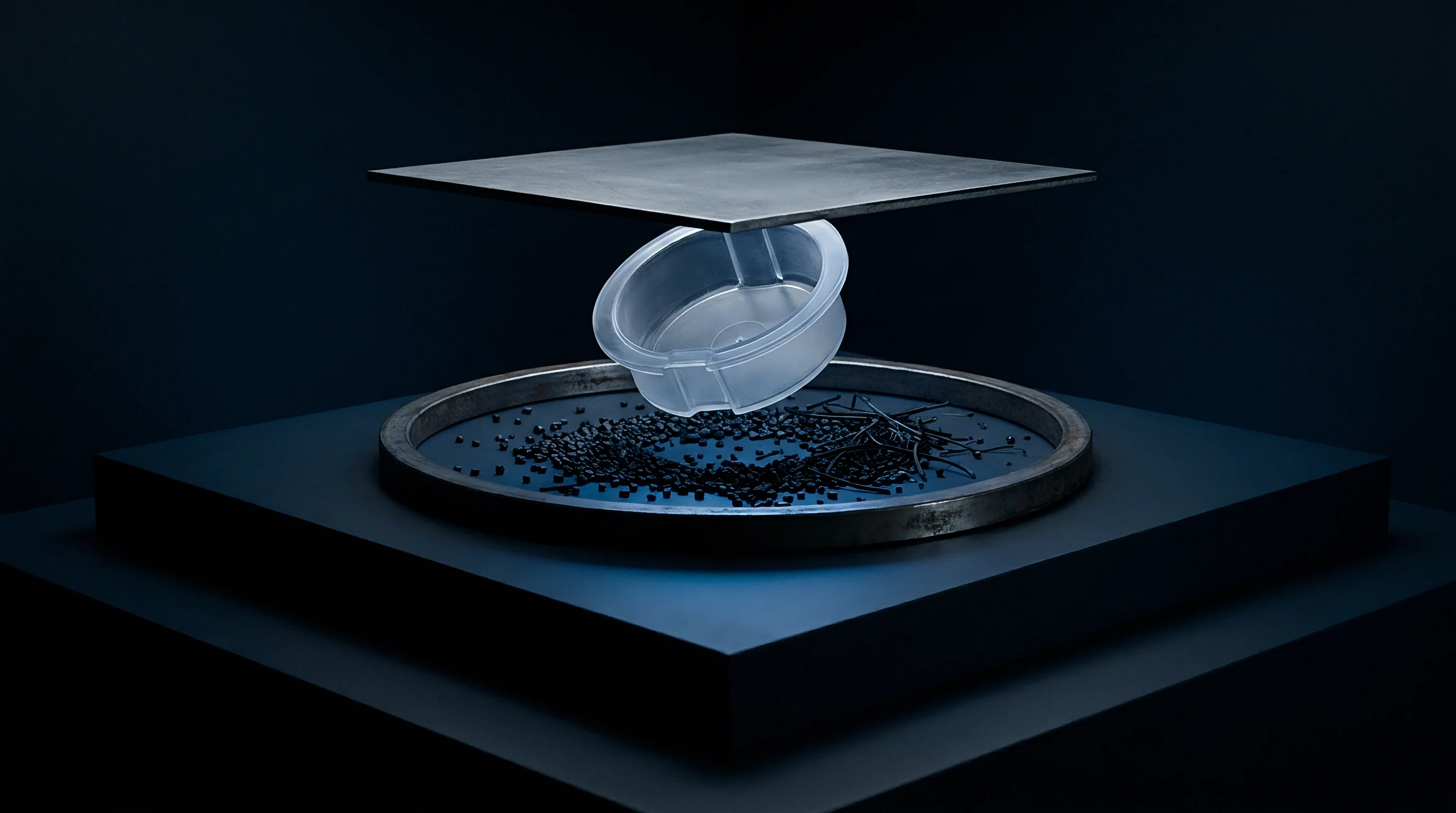

Frost
Sub-zero cold chains place rigid containers under severe thermal contraction and dynamic shock. Whether in 2 °C to 8 °C cold storage, -20 °C deep freeze, or -80 °C cryogenic transport, polyolefin packaging faces continuous embrittlement risks. Impacting a concrete floor rapidly decelerates a loaded container, generating sharp transient compressive and tensile stress waves through ribs and sidewalls within milliseconds.
Cold environments slow molecular relaxation rates. Under ambient conditions, polymer chains reorient quickly enough under load to relieve localized stresses. Below freezing, available thermal energy falls beneath the activation threshold for large-scale segmental motion, shifting the material response from viscoelastic yielding to brittle fracture.
A tote that easily withstands a two-meter drop at 23 °C can crack catastrophically from a thirty-centimeter fall inside a cold-storage warehouse.

Cold Chain Temperature Regimes and Impact Mechanics
Service temperature ranges dictate resin requirements. Biological shipping totes and frozen food containers must survive drop events at -20 °C or colder without wall breaches. Because standard polypropylene homopolymer loses more than 60 percent of its room-temperature impact resistance below 0 °C, it shifts entirely into a brittle fracture regime and becomes unusable for frozen distribution.
By contrast, ethylene-propylene rubber phases stay ductile deep into sub-zero operating environments. Impact copolymers with high rubber loading retain high impact toughness down to -40 °C, where rubber inclusions remain above their glass transition and act as stress concentrators that induce micro-yielding. This provides the toughness necessary for handling drop shock in frozen environments.
- Unstable Crack Propagation occurs when glassy homopolymer matrices absorb kinetic drop energy without localized plastic deformation, generating brittle, sharp-edged fractures across container sidewalls.
- Interfacial Debonding arises when poor chemical adhesion between matrix and rubber domains creates micro-voids that coalesce into macro-cracks under dynamic mechanical loading.
- Secondary Flange Splitting develops along stress-concentrated container rims during angled impacts, driven by anisotropic chain orientation produced during mold cavity filling.
- Hinged Latch Fracture strikes container closing mechanisms subjected to flexural fatigue at sub-zero temperatures, where low chain mobility prevents elastic hinge recovery.
Failure Modes in Freeze-Thaw Container Environments
Thermal cycling superimposes expansion stresses on top of external mechanical loads. Moving repeatedly between -20 °C freezers and ambient loading bays sets up steep thermal gradients across thick wall sections. With polypropylene’s high linear thermal expansion coefficient (around 100 x 10^-6 per Kelvin), differential expansion between contents and container walls creates considerable molded-in residual strain.
Moisture condensation in structural recesses aggravates failure risks. Water that freezes within stacking channels or seal grooves expands roughly 9 percent in volume, exerting sustained hydrostatic forces against container flanges. When an impact load combines with this pre-existing freezing pressure, rim and flange shearing frequently follows.
Crystalline Lamellae Orientation and Shrinkage
Injection molding conditions strongly influence crystalline development and directional strength. High shear during cavity filling aligns polymer chains in the melt flow direction, producing anisotropic properties where tensile strength and stiffness run high parallel to the flow while transverse impact resistance suffers.
Differential mold shrinkage introduces additional internal stresses. Highly crystalline homopolymers exhibit volumetric shrinkage between 1.5 and 2.2 percent. Impact copolymers shrink less—typically 1.0 to 1.5 percent—because the amorphous rubber phase does not crystallize.
This lower shrinkage limits residual molded-in stresses at structural transitions like handles, corners, and stacking rims, allowing impact energy to dissipate across engineered rubber domains rather than concentrating near pre-stressed gates.
Specifying standard homopolymer resins for sub-zero containers routinely leads to container failure in the field, causing product loss, contamination claims, and packaging line stoppages during cold-chain distribution.

Notch
Notch sensitivity measures how prone a material is to brittle failure at geometric discontinuities. Radii transitions, rib intersections, and latch details on molded containers act as natural stress concentrators. Under shock loading, applied stresses peak at these sharp corners; a resin that performs well as an unnotched bar can break readily when a notch is present.
Charpy and Izod pendulum tests evaluate this vulnerability by measuring the kinetic energy absorbed during high-speed fracture of standardized notched specimens.
Which Impact Test Predicts Cold Container Drop Survival?
Different impact tests isolate material behavior under distinct strain rates and stress states. Tensile impact testing applies uniaxial tension at moderate speeds; Izod testing (ISO 180 / ASTM D256) strikes a clamped cantilever bar with a pendulum; and Charpy testing (ISO 179/1eA) uses a three-point bend setup with a 0.25 mm notch tip radius. Instrumentated drop-tower tests (ASTM D3763 / ISO 6603) apply multiaxial dynamic loads directly onto molded plaques or finished parts.
Standard notched pendulum tests do not always correlate with real container drops because of differences in notch geometry and strain rates. Sharp specimen notches create triaxial stress fields that suppress shear yielding, inducing brittle failure earlier than seen in actual containers. Multiaxial instrumented drop testing tracks load-deflection profiles to yield peak force, puncture energy, and total absorbed energy, better reflecting the combined flexural, tensile, and shear deformations that occur across container bases.
Compliance with ASTM D5420 Gardner impact testing at minus 30 degrees Celsius demands a minimum mean failure energy of 18 Joules to prevent catastrophic wall fracture during refrigerated distribution.

Charpy Notched Energy and Ductile to Brittle Transition
Temperature-sweep impact testing identifies the ductile-to-brittle transition temperature (DBTT) of polyolefin formulations. Charpy notched energy plotted against temperature forms an S-shaped curve: ductile behavior with yielding and stress whitening dominates at higher temperatures, followed by a steep drop through the transition zone toward a lower-shelf energy level indicative of brittle cleavage.
| Resin Grade | MFR (g/10min) | Ethylene Phase (wt%) | Energy at +23 °C (kJ/m²) | Energy at 0 °C (kJ/m²) | Energy at -20 °C (kJ/m²) | Energy at -40 °C (kJ/m²) |
|---|---|---|---|---|---|---|
| Homopolymer Standard | 12.0 | 0.0 | 3.0 | 1.8 | 1.1 | 0.9 |
| Homopolymer High Toughness | 2.0 | 0.0 | 6.5 | 3.2 | 1.8 | 1.4 |
| Random Copolymer | 8.0 | 4.0 | 5.5 | 2.8 | 1.5 | 1.1 |
| Impact Copolymer Medium MFR | 7.0 | 9.5 | 12.0 | 8.5 | 5.2 | 2.8 |
| Impact Copolymer Low MFR | 1.8 | 14.0 | 40.0 | 22.0 | 12.5 | 7.0 |
| Reactor Super Copolymer | 0.8 | 18.0 | 65.0 | 48.0 | 25.0 | 14.2 |
The position of this transition temperature depends primarily on rubber domain concentration and morphology. Raising the dispersed rubber fraction lowers the DBTT by facilitating cavitation at lower thermal energies. Homopolymer grades transition between +5 °C and +15 °C, explaining their brittleness throughout cold storage.
Advanced impact copolymers push the DBTT below -30 °C, keeping container impact behavior well within the ductile region during frozen handling.

Crack Propagation Mechanisms in Triaxial Stress Fields
Local stress state governs the dominant deformation mode. A container dropped on a corner generates triaxial tension behind internal radii, where hydrostatic forces suppress the volume expansion necessary for standard shear yielding. Impact copolymers relieve this constraint: sub-micron rubber domains cavitate under load, reducing hydrostatic tension and shifting the local stress field toward uniaxial tension, which allows the surrounding matrix to yield plastically.
When cracks initiate in the glassy matrix, they encounter dispersed rubber inclusions that blunt the crack tip, deflect propagation paths, and expand fracture surface area. Because dynamic drop events involve high strain rates, these elastomeric domains must react within nanoseconds to disperse incoming shock waves before unstable cracks can propagate through the wall.
Balancing rubber loading to maintain ductile performance at -30 °C while preserving sufficient flexural modulus for container stacking remains a primary formulation challenge for resin producers.
Silo
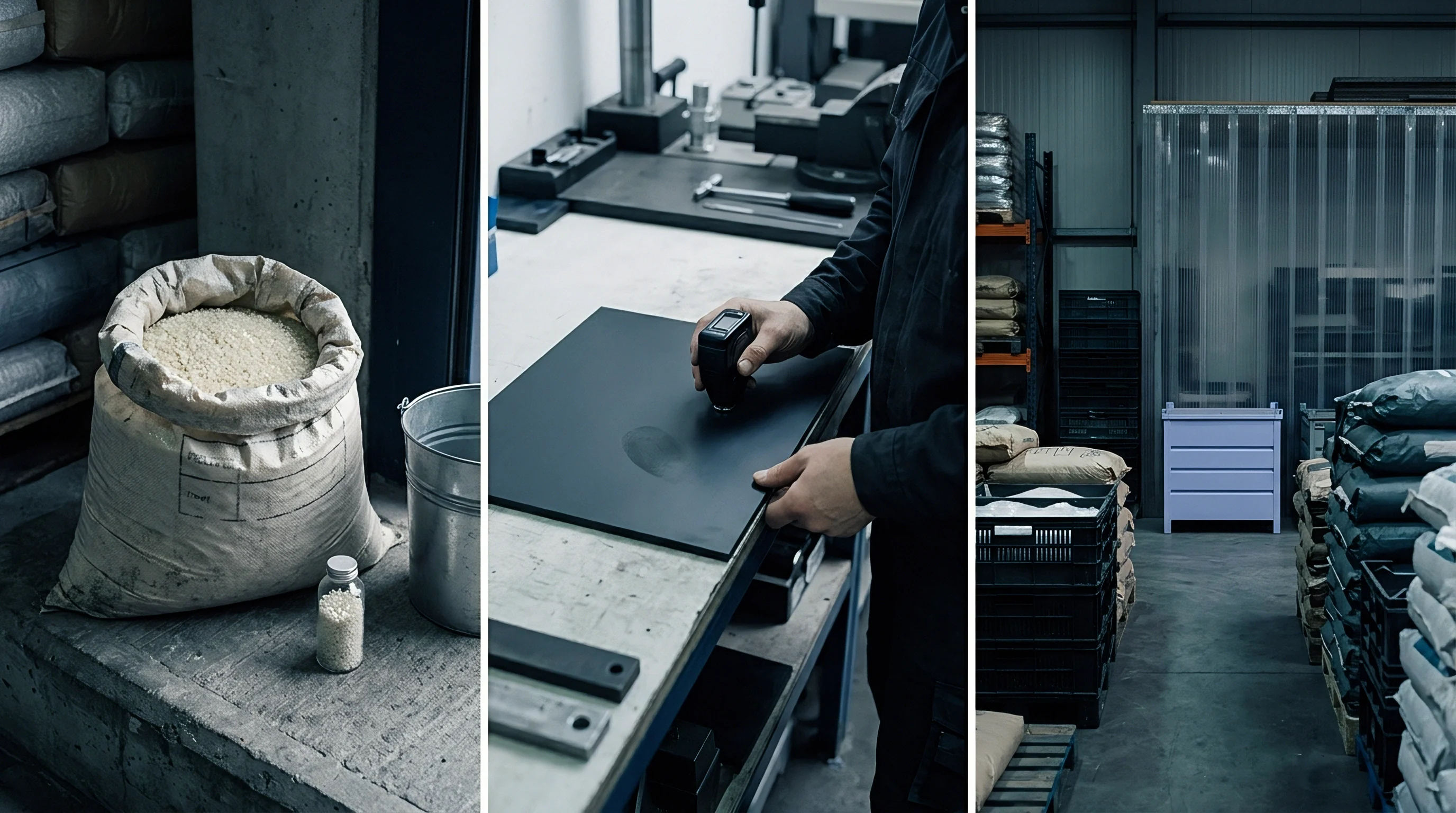
Raw material quality control prevents processing instability and cold-chain failures in the field. Bulk resin shipments delivered by railcar or tanker show lot-to-lot variations caused by reactor grade transitions, catalyst adjustments, or compounding fluctuations. Resin qualification requires verifying ethylene content, molecular weight distribution, and phase balance on incoming lots rather than relying solely on supplier certificates of analysis, which may mask broad property distributions.

Incoming Resin Lot Sampling and Verification
Rigorous sampling establishes baseline material properties before resin is loaded into plant silos. Composite samples collected across railcar compartments are tested in the plant lab for melt flow rate, density, and chemical structure before unloading. Adding unverified resin to active storage silos risks contaminating bulk inventory with off-specification lots.
- Draw a 500-gram composite sample from three compartment levels using a stainless steel sampling thief to represent the entire shipment volume.
- Measure melt mass-flow rate per ISO 1133 at 230 °C under a 2.16 kg load to verify average molecular weight against specified quality control limits.
- Perform Fourier-transform infrared spectroscopy analysis across the 700 cm⁻¹ to 4000 cm⁻¹ spectrum to measure bound ethylene content and check for contamination.
- Execute differential scanning calorimetry thermal scans from 30 °C to 200 °C at 10 °C per minute to record matrix melting points and rubber crystallization kinetics.
- Compile rheological and thermal test metrics into an incoming inspection dossier to authorize silo pneumatic transfer.

Spectroscopic Quantification of Ethylene Content
Fourier-transform infrared spectroscopy (FTIR) provides a straightforward method for quantifying ethylene content in polyolefin matrices. Standard analytical methods monitor key absorption peaks: methylene sequence rocking appears near 720 cm⁻¹, while methyl bending absorbs near 1378 cm⁻¹. The absorbance ratio between these two bands yields total bound ethylene when compared against a validated calibration curve.
Distinguishing between random ethylene incorporation and distinct ethylene-propylene rubber phases requires higher-resolution techniques. Solid-state Nuclear Magnetic Resonance (NMR) spectroscopy measures triad and pentad sequences to resolve monomer distributions. Differential scanning calorimetry (DSC) supports this analysis by identifying distinct thermal transitions: a sharp homopolymer melting peak near 163 °C alongside a secondary rubber glass transition or low-temperature melting peak confirms a heterophasic block copolymer structure rather than an amorphous random blend.
Resin lots exhibiting broad melt flow rate dispersion generate uneven wall thickness across deep draw mold cavities.

Melt Flow Rate Spread and Dispersion Analysis
MFR variation within a shipment upsets injection molding stability. A shift from 8.0 to 12.0 g/10min affects cavity filling velocity, packing pressures, and molecular orientation. While higher MFR grades reduce required injection pressures, their shorter chains lower sub-zero drop toughness.
Broad MFR distributions point to wide molecular weight distributions, which increase processing sensitivity to shear.
Pneumatic blending silos help smooth lot-to-lot spread by circulating pellets across multi-tonne batches. In cold chain applications, checking pellet-to-pellet variance confirms whether an incoming shipment is a clean reactor grade or a post-reactor lot blended with off-spec material. Stable melt rheology ensures uniform mold cavity filling and consistent rubber morphology in every container.
Lot MFR drift frequently falls within broad commercial datasheet windows, leaving molders to adjust machine parameters to maintain low-temperature impact targets.

Crate
Molding durable cold chain crates demands careful control over both tool design and machine processing. Injection molding conditions establish the morphological distribution of matrix and rubber phases throughout the crate walls. Flow length ratios, wall transitions, gate locations, and cooling layouts all govern orientation and frozen-in stresses, with bottom corners and rims requiring maximum impact resistance where handling stresses concentrate.
Container Geometry and Wall Thickness Optimization
Part design balances tote weight and cycle time against structural toughness. Thin-wall designs lower resin consumption but increase cavity shear rates, which can stretch spherical rubber inclusions into elongated fibrils. These fibrillar domains provide poor resistance against cracks traveling perpendicular to flow lines.
Maintaining spherical rubber morphology requires keeping cavity shear within reasonable bounds during filling.
Careful rib geometry prevents sharp stress concentrations. Because internal corners act as notches during impact, corner radii should measure between 60 and 80 percent of adjacent wall thickness to distribute loads evenly. Tapered ribs add bending stiffness without creating heavy wall intersections that lead to sink marks or internal voids during cooling.
- Corner Radius Filleting distributes impact energy smoothly across structural intersections, preventing stress concentration peaks from exceeding local yield strength limits.
- Uniform Wall Transitions minimize differential cooling rates across container features, eliminating residual internal mold stresses that trigger premature low-temperature brittle fractures.
- Optimized Gate Placement positions weld lines in low-stress container sidewalls, avoiding high-impact corner zones where melt front boundaries reduce toughness.
- Flow Path Ratio Control balances injection filling pressures with molecular chain orientation, preserving isotropic impact resistance across deep-draw packaging cavities.
Drop Impact Failure Patterns in Chilled Logistics
Packaging validation relies on standardized drop protocols such as ISO 2248 or ISTA 3A, where loaded crates drop from heights between 0.8 and 1.5 meters onto steel plates. Crates are conditioned in environmental chambers at -20 °C for at least 24 hours before testing, and high-speed imaging tracks dynamic flexing, shock wave dispersion, and crack initiation sites during impact.
Failure analysis typically categorizes damage by impact orientation. Corner drops produce heavy triaxial compression followed by an elastic rebound that places inner sidewalls under high tensile stress. Flat bottom drops cause severe base flexing, testing outer-surface tensile elongation.
Containers molded from impact copolymers flex elastically to absorb shock, whereas standard homopolymer crates fail by splitting vertically along gate flow lines.

Mold Flow Shear and Rubber Domain Dispersion
Machine settings govern final phase morphology. Injection velocity, melt temperature, back pressure, and mold cooling rates all shape rubber domain dispersion. Melt temperatures exceeding 260 °C reduce matrix viscosity enough to promote rubber droplet coalescence into oversized inclusions.
Conversely, excessively low melt temperatures generate high shear that tears rubber domains below their effective toughening size.
Mold cooling rates directly shape crystalline morphology. Rapid cooling limits lamellar growth and yields a fine spherulitic structure that improves container toughness. Slower cooling produces large spherulites with weak inter-spherulitic boundaries that offer easy paths for micro-crack propagation under impact.
Procurement specifications commonly require packaging lots to pass a 1.2-meter drop test at -20 °C per ISTA 3A without cracking, placing formulation liability on the compounder if material variations cause field failures.


Tariff
Polymer selection directly shapes landed manufacturing costs. Polypropylene pricing shifts with monomer feedstock dynamics, regional capacity, energy costs, and import tariffs. Monomer costs trace naphtha cracking or propane dehydrogenation economics.
Because impact copolymer production requires multi-stage reactor systems and precise elastomeric compounding, these resins carry a pricing premium over basic homopolymers.
Feedstock Pricing Mechanics and Polyolefin Spreads
Price spreads between homopolymer and copolymer grades reflect manufacturing complexity and monomer mix. Homopolymer lines run continuously at maximum rates, minimizing conversion costs per metric tonne. Impact copolymers require secondary gas-phase reactor stages and precise phase morphology control, generating a market spread that typically sits between 80 and 200 USD per metric tonne above homopolymer resin.
Ethylene monomer pricing also influences formula cost. Higher ethylene content in super-impact copolymers increases raw material costs whenever ethylene trades at a premium to propylene. Procurement teams regularly evaluate whether medium-impact copolymers compounded with low-cost impact modifiers can meet drop specifications at a lower cost than premium reactor grades.
| Polymer Grade | Resin Price (USD/Tonne) | Tote Weight (g) | Wall Thickness (mm) | Cycle Time (s) | Mfg Cost per Tote (USD) | Drop Failure Rate (%) | Landed Cost / Good Unit (USD) |
|---|---|---|---|---|---|---|---|
| Standard Homopolymer | 1,150 | 850 | 2.5 | 38.0 | 2.15 | 28.5% | 3.01 |
| High-Toughness Homopolymer | 1,220 | 920 | 2.8 | 42.0 | 2.42 | 18.0% | 2.95 |
| Random Copolymer | 1,280 | 850 | 2.5 | 39.0 | 2.28 | 22.0% | 2.92 |
| Medium-Impact Copolymer | 1,340 | 850 | 2.5 | 37.0 | 2.31 | 1.5% | 2.35 |
| High-Impact Copolymer | 1,420 | 800 | 2.3 | 34.0 | 2.22 | 0.1% | 2.22 |

Landed Cost Arithmetic for Cold Packaging Solutions
Total unit economics reflect resin cost, part weight, cycle time, and distribution scrap rates. Standard homopolymer appears cheaper on a purchase order based on price per tonne alone. However, high breakage rates during sub-zero shipping generate significant losses through damaged inventory, warranty claims, and tote replacements.
Molders attempting to use homopolymer must increase wall thickness to maintain basic strength, adding part weight and extending cooling cycles.
The initial price premium of impact copolymer resin is recovered through lower wall thickness requirements and reduced transport damage claims.
Impact copolymers support thinner nominal wall designs. Thinner walls offset higher resin pricing by lowering part mass, while faster cooling shortens molding cycle times to boost daily machine output. Across the entire logistics lifecycle, specifying an impact copolymer reduces the total cost per delivered container by preventing transit failures.
Yield Penalties and Scrap Rate Financial Modeling
Financial modeling highlights how field scrap rates outweigh raw resin savings. Drop failures in cold transit carry substantial costs in freight claims, lost product, and administrative overhead. True landed cost is calculated by dividing total manufacturing and material expenditure by the net count of undamaged containers reaching delivery points.
For a program manufacturing 1,000,000 cold chain crates annually, standard homopolymer totes produce high scrap rates in sub-zero logistics despite lower initial resin costs. Switching to a high-impact copolymer eliminates breakage, reduces part weight through thinner walls, and cuts molding cycle times. These efficiency gains easily offset the higher raw material price, improving net program economics over the container lifecycle.
Chasing a lower resin price per metric tonne increases total operating costs whenever sub-zero handling generates high container scrap rates.