Polymer Pellet Moisture Absorption Mechanisms in Sourcing Specifications
Polymer pellet moisture absorption drives catastrophic melt-phase chain scission; rigorous sourcing specifications mandate precise coulometric water caps.

Dock
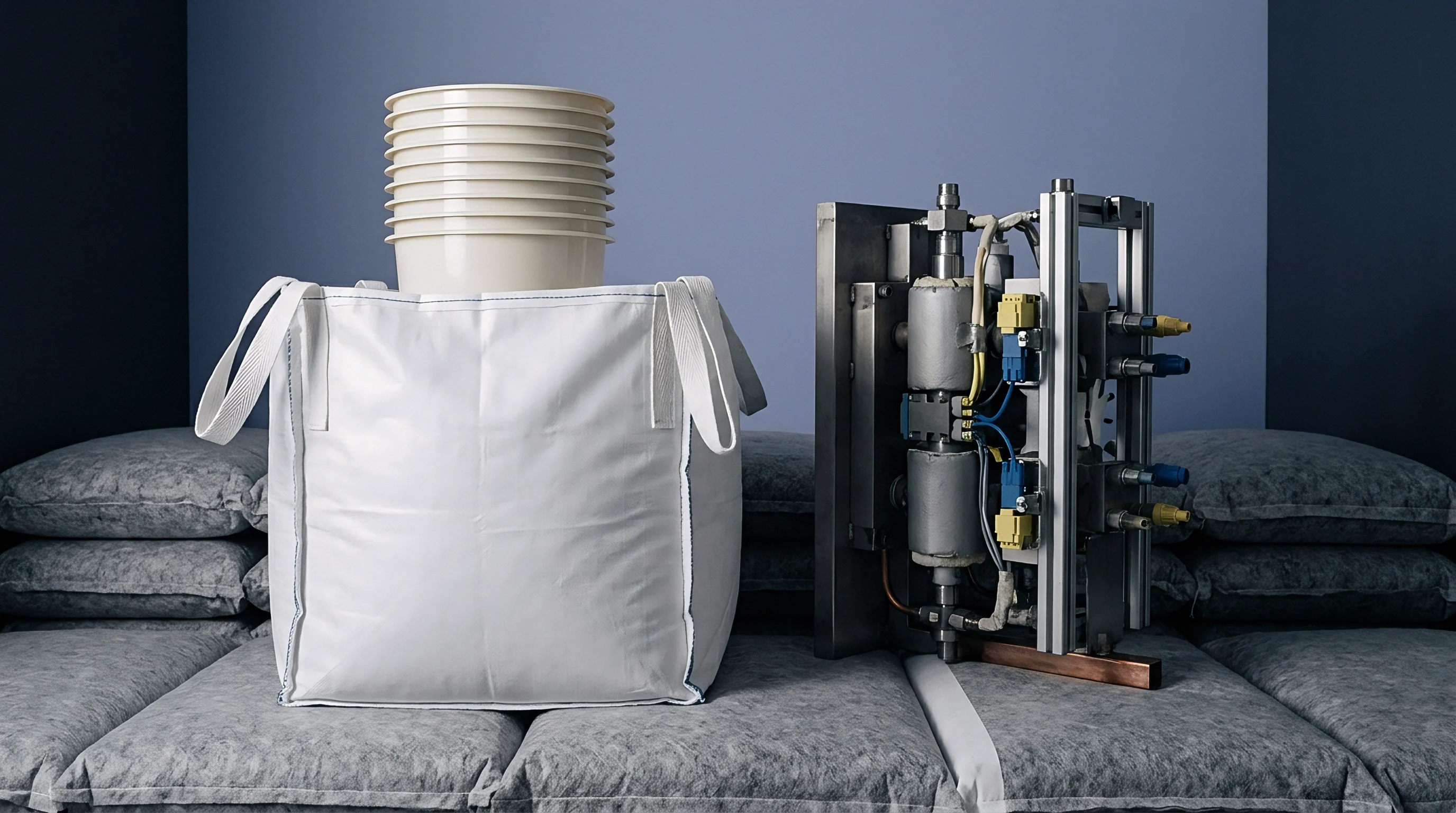
Receiving bay scales capture total weight, while Karl Fischer titration reveals the volatile penalty disguised inside the delivery ticket. When a bulk tanker or lined sea container discharges twenty-four metric tons of resin, moisture content determines whether the material feeds directly into processing lines or demands hours of desiccant extraction. Standard purchase specifications frequently state incoming moisture limits as a single broad percentage, often defaulting to 0.10 weight percent.
This blanket metric fails to account for how water distributes across pellet geometry and polymer morphology.
Water alters every polymer transaction.
Incoming inspection protocols split water detection into surface condensation and absorbed internal volume. Loss-on-drying balances operating at 105 degrees Celsius volatilize surface water, yet they often record thermal degradation additives, slip agents, or residual monomer as evaporated moisture. ISO 15512 Method B specifies water vaporization coupled with a coulometric electrolytic cell, separating volatile organic compounds from water molecules through selective carrier gas transport at target temperatures between 120 and 220 degrees Celsius.
Operating an automated coulometer at 180 degrees Celsius isolates water without inducing thermal degradation in standard polyamide or polybutylene terephthalate grades.
Courometric titration under ISO 15512 Method B isolates water down to 0.002 percent at 180 degrees Celsius without additive volatilization.
Disputes at delivery emerge from the sampling interval. Pellets extracted from the perimeter of a gaylord container show distinct moisture readings from core samples drawn through a three-zone grain probe. Surface moisture vaporizes instantly.
Core moisture demands prolonged thermal migration, creating disparities between receiving tests conducted within minutes of unloading and laboratory tests conducted twenty-four hours later.
- Core moisture sampling draws pellets from bottom and center strata using a compartmentalized lance to identify packaging seal failures.
- Coulometric reaction vessels track microgram-level iodine consumption to establish water content independent of volatile process lubricants.
- Carrier gas velocity carries vaporized water into the titration cell at two hundred milliliters per minute to prevent condensation inside the transfer line.
Suppliers routinely state that pellets left their compounding facility within specification and acquired environmental moisture during regional transit.

Uptake
Pellet saturation follows environmental vapor pressure and polymer thermodynamic affinity. Non-polar polyolefins such as polypropylene and high-density polyethylene absorb minimal internal water, maintaining equilibrium moisture content below 0.01 percent by weight at 23 degrees Celsius and 50 percent relative humidity. Polyamides, polycarbonates, and polyesters incorporate polar heteroatoms within their chain backbones, creating hydrogen-bonding sites that pull environmental water vapor through the polymer skin into the amorphous core.
Hydrogen bonds anchor penetrating water.
Fickian diffusion governs the initial sorption phase in unoriented spherical and cylindrical pellets. The concentration gradient between ambient air and dry pellet interior drives water flux across the external boundary layer. Temperature accelerates this migration exponentially following an Arrhenius relationship, while concentration-dependent swelling opens micro-voids that hasten secondary absorption.
Free volume controls migration speed. In semicrystalline materials, crystalline lamellae exclude liquid water. Water molecules accumulate exclusively within amorphous domains, depressing the glass transition temperature through plasticization.
Amorphous phase plasticization lowers engineering resin glass transition temperatures by five to fifteen degrees Celsius per absorbed weight percent.
Dual-mode sorption theory explains the deviation from classical Fickian behavior in glassy polymers like polyetherimide and polycarbonate. Water molecules dissolve into the dense polymer matrix while simultaneously filling micro-cavities frozen into the glassy structure during pelletization quench cycles. Once micro-cavities fill, subsequent moisture ingress induces swelling stress, altering pellet bulk density and creating feed inconsistencies in pneumatic conveying systems.
| Resin Family | Base Morphology | Equilibrium Moisture at 23 C 50% RH (%) | Saturation Moisture at 23 C 100% RH (%) | Target Processing Moisture Cap (%) |
|---|---|---|---|---|
| Polyethylene (HDPE) | Semicrystalline non-polar | 0.005 | 0.010 | 0.050 |
| Polypropylene Homopolymer | Semicrystalline non-polar | 0.008 | 0.015 | 0.050 |
| Polycarbonate (Unfilled) | Amorphous polar | 0.150 | 0.350 | 0.020 |
| Polyamide 6 | Semicrystalline polar | 2.700 | 9.500 | 0.080 |
| Polyamide 66 | Semicrystalline polar | 2.500 | 8.500 | 0.080 |
| Polybutylene Terephthalate | Semicrystalline polar | 0.080 | 0.450 | 0.020 |
| Polyethylene Terephthalate | Semicrystalline polar | 0.120 | 0.500 | 0.005 |
The boundary between reversible physical swelling and irreversible chemical hydration remains difficult to quantify across varying compounding masterbatch loadings.

Chain
Macromolecular breakdown accelerates when moist condensation enters the heated feed throat of an extruder or injection molding barrel. At temperatures above 240 degrees Celsius, entrained moisture acts as a chemical reactant rather than an inert vapor. Ester, amide, and carbonate linkages undergo hydrolytic scission, cleaving long polymer backbones into shorter fragments.
Melt strength collapses immediately. The loss of chain length diminishes melt viscosity, destabilizing process pressure and reducing the mechanical integrity of molded articles.

Can Molecular Weight Recover after Processing?
Post-extrusion thermal cycles cannot reconstruct broken covalent bonds once hydrolysis cleaves the main chain. In condensation polymers such as polyethylene terephthalate and polybutylene terephthalate, water reacts directly with ester carbonyl groups, generating terminal carboxylic acid and hydroxyl chain ends. Ester bonds cleave under thermal stress.
The acid groups catalyze further chain breakdown, accelerating degradation throughout the melt phase.
Assume a compounding line processes virgin bottle-grade polyethylene terephthalate with an initial intrinsic viscosity of 0.82 deciliters per gram measured according to ISO 1628-5 in phenol and 1,2-dichlorobenzene at 25 degrees Celsius. Extrusion takes place at 280 degrees Celsius with a sixty-second residence time. If incoming pellet moisture registers at 0.005 percent (fifty parts per million), intrinsic viscosity drops modestly to 0.80 deciliters per gram, preserving impact resistance and tensile elongation.
If incoming moisture reaches 0.050 percent (five hundred parts per million), the intrinsic viscosity falls sharply to 0.63 deciliters per gram.
Molecular weight drops within minutes.
| Pellet Moisture Content (%) | Melt Residence Time (s) | Final Intrinsic Viscosity (dL/g) | Number-Average Molecular Weight (g/mol) | ISO 179 Notched Impact (kJ/m²) |
|---|---|---|---|---|
| 0.003 | 45 | 0.81 | 28500 | 4.2 |
| 0.005 | 60 | 0.80 | 27800 | 4.1 |
| 0.015 | 60 | 0.74 | 24200 | 3.5 |
| 0.030 | 60 | 0.68 | 21000 | 2.8 |
| 0.050 | 60 | 0.63 | 18500 | 2.1 |
| 0.080 | 90 | 0.54 | 14100 | 1.4 |
Polyamides exhibit a parallel hydrolytic reaction where moisture cleaves amide bonds, releasing free amine and carboxylic acid end groups. The melt flow rate of polyamide 66 measured under ISO 1133 at 275 degrees Celsius with a 5.0 kilogram load surges from twenty-five grams per ten minutes to over sixty grams per ten minutes when incoming pellet moisture climbs from 0.08 percent to 0.35 percent. Tooling cavities experience flash, cycle times drift upward, and finished parts crack along weld lines during structural assembly.
Processing wet resin produces parts that pass initial visual inspection while carrying embrittled chain architectures that fail under baseline fatigue testing in the field.

Foil
Barrier packaging protects hygroscopic resins against ambient moisture vapor during multi-week ocean transit and warehouse storage. Standard twenty-five-kilogram polyethylene valve bags provide inadequate protection for hydrolytically sensitive polymers. Moisture vapor transmission rates through twenty-five-micrometer low-density polyethylene film average between ten and fifteen grams per square meter over twenty-four hours under tropical conditions of 38 degrees Celsius and 90 percent relative humidity.
Aluminum foil laminated bags reduce this transmission rate below 0.05 grams per square meter over twenty-four hours.
How Do Barrier Liners Fail during Transit?
Pinhole fissures caused by flex cracking during transport degrade barrier efficiency across container shipments. Pallet movement induces continuous friction between individual bag plies. When the internal aluminum barrier layer fractures, water vapor bypasses the hermetic seal, saturating outer pellet layers while core resin remains dry.
Packaging specifications demanding aluminum foil lamination with an MVTR below 0.05 grams per square meter per day preserve moisture integrity across transoceanic shipping lanes.
Desiccant sizing balances the vapor headspace inside sealed bulk bags and octabins. Calcium oxide and synthetic zeolite clay sachets placed inside moisture-barrier containers capture internal vapor before polymer surfaces can absorb it. Condensation collects on cold container ceilings.
Container sweat dripping onto non-laminated gaylords causes localized moisture saturation, overwhelming standard dry-air hoppers during processing.
- Ruptured outer packaging allows ambient humidity to contact secondary paper plies, creating continuous moisture reservoirs against the resin.
- Exhausted desiccant packs turn into vapor donors during thermal spikes inside shipping containers, driving absorbed moisture back into surrounding pellets.
- Unsealed valve boots expose the internal pellet core directly to exterior salt air during ocean freight movements.
Sealed foil integrity guarantees low moisture only until the packaging vacuum breaks inside an unconditioned staging warehouse.
Tolerance
Commercial contracts define actionable moisture boundaries before resin clears port customs. Sourcing documentation that references nominal resin grades without explicitly specifying maximum moisture at custody transfer exposes the buyer to catastrophic operational costs. A specification sheet listing an equilibrium moisture level of 0.20 percent provides zero contractual protection if the injection molding line demands a processing threshold of 0.02 percent to prevent hydrolytic splay and structural degradation.
Receiving tests settle disputed deductions.
Commercial clauses establish clear liabilities by linking moisture limits directly to verification methodologies and temperature parameters. Standardizing reception checks around ISO 15512 Method B eliminates disputes over volatile organic additives versus true water content. Specifying an exact temperature, such as 180 degrees Celsius, prevents compounders from claiming that volatile release skewed titration results.
Freight agreements identify transfer points where responsibility shifts from maritime carrier to domestic receiver, setting financial deductions for drying overhead when deliveries exceed negotiated moisture limits.
A raw material specification functions as an operating standard only when moisture thresholds match tool melt kinetics rather than ambient equilibrium data.
Contractual schedules assign drying costs back to the resin supplier when incoming pellets arrive above agreed thresholds. Industrial dehumidification consumes electrical energy at rates between 0.08 and 0.15 kilowatt-hours per kilogram for hygroscopic engineering polymers like polyamide and polybutylene terephthalate. Including secondary material handling, staging footprints, and machine downtime, drying expenses quickly exceed raw material margins if incoming moisture mandates six hours of desiccant hopper residence.
Purchase orders incorporating Clause 8.2 of the international resin procurement template restrict incoming water to fifty parts per million for hydrolytically sensitive polyesters, shifting all secondary desiccant drying expenses and demurrage charges to the seller upon verified analytical non-compliance.