Oxidation Induction Time Testing for Recycled Polypropylene Batch Acceptance
Oxidation induction time testing quantifies residual antioxidant protection in recycled polypropylene, enabling precise batch acceptance before melt processing.
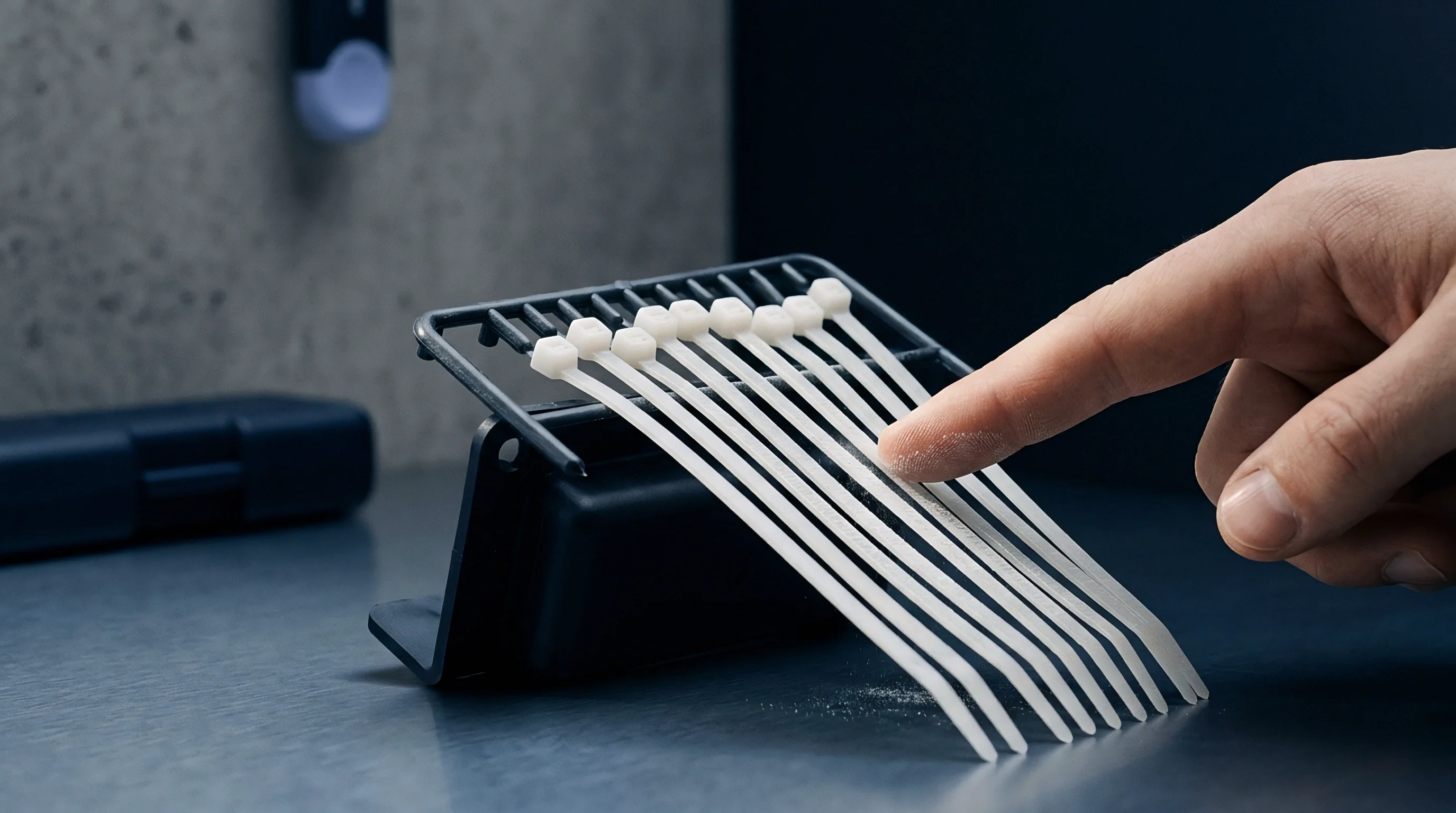
Crucible
Thermal stability measurements for recycled polypropylene depend on precise sample encapsulation inside differential scanning calorimetry test cells. Polypropylene degrades through tertiary carbon cleavage. Unstabilized recycled polypropylene fails within minutes when exposed to elevated temperatures under an oxidative atmosphere.
Differential scanning calorimetry measures the elapsed time before exothermic auto-oxidation initiates under controlled isothermal conditions. Nitrogen purge keeps oxygen off heated polymer. The primary evaluation protocol establishes a constant temperature baseline, typically set at two hundred degrees Celsius, while flushing the sample chamber with high-purity nitrogen gas at fifty milliliters per minute.
Once the specimen achieves thermal equilibrium at the designated test temperature, the cell gas input instantly switches from nitrogen to pure oxygen at an identical flow rate. Exothermic inflection marks primary stabilizer exhaustion. The time elapsed between initial oxygen exposure and the onset of oxidation defines the oxidation induction time.
Aluminium pans act as neutral sample containers. Copper crucibles accelerate catalytic thermal oxidation. Using open copper sample pans introduces metal ions that catalyze peroxide decomposition, dramatically shortening measured induction windows and revealing whether active metal deactivators remain present within the recycled compound.
Specimen preparation governs result reproducibility across incoming batch inspections. A thin disc weighing between five and ten milligrams sliced from the center of a representative resin pellet maximizes pan contact area. Thicker specimens introduce internal thermal gradients that obscure the sharp inflection point of oxidation onset.
Punching specimens directly from pellet interiors prevents surface oxidation artifacts from corrupting thermal readings.
A ten-milligram recycled polypropylene sample tested in an open aluminium pan at two hundred degrees Celsius under pure oxygen yields a oxidation induction baseline shift within five minutes when stabilization falls below five hundred parts per million.
Selecting improper sample mass or pan metallurgy hides underlying thermal vulnerability, driving rapid embrittlement and catastrophic cracking in molded parts exposed to elevated operating temperatures.

Stabilizer
Additive packages present within recycled polypropylene undergo continuous chemical depletion during prior processing passes and thermal service life. Primary hindered phenolic antioxidants capture alkylperoxy radicals during solid-state aging, while secondary phosphites scavenge hydroperoxides during high-shear melt compounding. Heavy metals accelerate radical formation in melt.
Phosphites scavenge hydroperoxides during melt processing. Phenolics capture alkylperoxy radicals during storage. Recycled post-consumer resins carry mixed additive packages.
Variable heat exposure during initial conversion, post-consumer use, wash drying, and re-pelletization leaves unpredictable residual antioxidant concentrations in delivered lots.
Compounding streams derived from post-consumer packaging or automotive scrap exhibit erratic thermal endurance due to antioxidant cross-reactions and additive extraction. Aqueous wash steps strip low-molecular-weight stabilizers, while residual pigments or mineral fillers adsorb active molecules onto particle surfaces. Acid scavengers like calcium stearate neutralize residual acidic catalyst residues, preventing premature antioxidant inactivation during re-melting.
- Peroxy Radical Scavenging depletes primary hindered phenols, leaving the polymer backbone vulnerable to chain scission during storage.
- Hydroperoxide Decomposition consumes secondary phosphites rapidly during high-shear melt compounding passes in unvented extruders.
- Pro-Oxidant Metal Complexation occurs when residual iron or copper ions catalyze Fenton-like radical generation, accelerating antioxidant depletion.
- Pigment Surface Adsorption immobilizes active stabilizer molecules onto high-surface-area quinacridone or carbon black particles, reducing steric availability in the bulk matrix.
- Volatilization and Extraction strips low-molecular-weight additives during vacuum degassing or aqueous post-consumer wash cycles.
Extending functional part durability relies on identifying the exact residual capacity of these protective systems. Unused primary antioxidants maintain an induction buffer that protects the polymer matrix through downstream molding or extrusion operations. When the primary phenolic supply falls below critical concentration thresholds, auto-catalytic degradation propagates uncontrolled, cleaving main chains and causing catastrophic loss of impact strength.
Reclaiming facilities frequently assert that low induction values stem entirely from trace volatile organic contaminants rather than structural antioxidant depletion.
Thermogram
Interpreting heat flow output curves demands precise baseline construction and tangent line fitting across the oxidation transition zone. Purge gas purity governs baseline stability. Baseline drift distorts tangent line intercept points.
Automated tangent software misreads irregular exotherms. Thermal data screens display a flat line during the inert heating phase, followed by a slight shift during gas switchover and a sustained exothermic rise when oxidation accelerates.
Standard protocols define the oxidation induction point as the intersection of two distinct tangent lines: the extrapolated baseline prior to reaction onset and the steepest tangent drawn along the exothermic reaction curve. Heterogeneous recycled polypropylene lots containing polyethylene contamination exhibit complex multi-stage exotherms. Polyethylene fractions oxidize at different kinetic rates, generating secondary inflection points or sloped baselines that complicate manual tangent placement.
| Standard Code | Isothermal Temp (°C) | Gas Flow Rate (mL/min) | Pan Metallurgy | Tangent Method |
|---|---|---|---|---|
| ISO 11357-6 | 200 | 50 ± 5 | Open Aluminium | Extrapolated Baseline Intercept |
| ASTM D3895 | 200 | 50 ± 5 | Open Aluminium | Offset Inflection Intersection |
| EN 728 | 200 | 50 ± 5 | Open Aluminium or Copper | First Exothermic Onset Curve |
| DIN 53736 | 190 or 200 | 60 ± 10 | Open Aluminium | Peak Signal Derivative Max |
Discrepancies between testing labs often trace back to differences in baseline extrapolation techniques or subtle gas purity variations. Trace oxygen entering the cell during the nitrogen holding phase initiates pre-oxidation, artificially depressing the measured induction time. Using hydrocarbon-free gas regulators and stainless steel delivery tubing eliminates atmospheric contamination risks.
A steep exothermic slope following the oxidation onset point reflects rapid autocatalytic chain propagation throughout an uninhibited polypropylene matrix.
Extending the isothermal holding duration past signal stabilization yields clean baseline tangents for recycled compounds carrying wide molecular weight distributions.


Lot
Incoming batch validation protocols for recycled polypropylene pellets depend on statistical sampling methods that account for internal container heterogeneity. Granule sampling requires composite multi-bag extraction. Melt flow rate increases as chains break.
Short induction times signal severe chain scission. Receiving multi-tonne shipments in gaylord boxes or big bags without systematic sampling risks introducing highly degraded material into production runs.
Can High Melt Flow Recycled Polypropylene Pass Short Oxidation Induction Windows?
High melt flow rates in recycled polypropylene frequently indicate prior thermal degradation and chain scission, yet targeted additive re-stabilization can artificially boost induction time readings. A re-compounded batch containing high primary antioxidant loadings yields acceptable oxidation induction times even when the underlying polymer backbone possesses reduced molecular weight and weakened mechanical toughness. Testing melt flow rate alongside thermal induction provides a complete picture of material health.
- Draw ten grams of pellets from five separate depth points within each sampled container using a segmented grain thief.
- Combine the collected primary samples into a single two-hundred-fifty-gram composite batch inside a sealed aluminum laminate pouch.
- Slice three individual three-milligram test specimens from the geometric center of separate pellets using a clean steel blade.
- Encapsulate each specimen into an open aluminum crucible and place it onto the differential scanning calorimeter sample sensor cell.
- Purge the cell with dry nitrogen at fifty milliliters per minute while raising temperature at twenty degrees Celsius per minute to two hundred degrees.
- Hold isothermally under nitrogen for five minutes to allow thermal equilibration across the sample mass.
- Switch the gas feed to pure oxygen at fifty milliliters per minute and initiate elapsed time recording at the instant of switchover.
- Extrapolate the baseline and oxidation exotherm tangent lines to derive the oxidation induction onset time in minutes.
Calculating the coefficient of variation across triplicate runs determines batch uniformity. A coefficient of variation exceeding fifteen percent indicates inadequate masterbatch distribution during re-compounding, highlighting potential spot-failures in molded parts.
| Grade Specification | Min OIT at 200°C (min) | Melt Flow Rate Range (g/10 min) | Target Application | Downstream Failure Risk |
|---|---|---|---|---|
| Technical Grade A | ≥ 30 | 8 to 15 | Automotive Under-Hood Parts | Low thermal cracking exposure |
| Industrial Grade B | 15 to 29 | 12 to 25 | Rigid Packaging and Crates | Moderate environmental stress crack risk |
| Utility Grade C | 5 to 14 | 20 to 45 | Disposables and Thin-Wall Caps | High embrittlement under heat exposure |
| Off-Spec Recycled | < 5 | > 45 | Non-Structural Fillers | Immediate degradation during moulding |
Shipments failing the fifteen-minute oxidation threshold at two hundred degrees Celsius trigger immediate container isolation and rejection under standard resin purchase terms.
Incorporating ISO 11357-6 compliance terms into purchase specifications allows buyers to reject off-spec resin lots before unloading into main storage silos.

Moulding
Melt processing during injection molding or profile extrusion subjects recycled polypropylene to rapid thermal shear stresses that consume remaining antioxidant reserves. Hot runners consume residual antioxidant reserves. Regrind blends show reduced thermal resistance.
Higher barrel temperatures accelerate stabilizer loss. Barrel residence times exceeding four minutes at temperatures above two hundred thirty degrees Celsius rapidly deplete primary phenolics before the polymer fills tool cavities.
Quantifying post-moulding induction times reveals the net thermal stabilization remaining in finished parts. Parts molded from recycled resins retaining less than ten minutes of induction time at two hundred degrees Celsius experience shortened functional lifespans when installed in elevated ambient temperature environments, such as appliance motor housings or automotive interior trim components.
- Thermal History Audit calculates cumulative shear and heat exposure across extrusion compounding and injection molding passes.
- Antioxidant Top-Up Calculation determines the precise let-down ratio of phenolic masterbatch needed to restore target thermal stability.
- Tool Temperature Adjustment lowers cavity heat to reduce residence time degradation inside high-cavitation runner systems.
- Melt Residence Monitoring tracks barrel fill volume against cycle time to prevent polymer stagnation above two hundred thirty degrees Celsius.
Adding internal regrind back into primary feed hoppers compounds thermal depletion risks. Sprues and runners reground and blended at twenty percent ratios reduce total batch induction time by up to twenty-five percent compared to virgin post-consumer pellet feeds, demanding strict monitoring of reprocessed content proportions.
Whether short-term high-temperature testing accurately predicts multi-decade stabilization loss under environmental stress cracking conditions remains a subject of ongoing industry debate.

Contract
Establishing commercial procurement specifications based on quantifiable thermal induction metrics protects buyers from unannounced resin source substitutions. Landed lot pricing reflects remaining antioxidant reserve. Unstabilized resin incurs re-formulation compounding expenses.
Purchase agreements specifying raw material inputs ought to tie batch release criteria directly to certified laboratory thermal analysis reports.
Price adjustments apply dynamically when incoming lots fall below agreed thermal induction baselines. A tiered pricing structure accounts for the added expense of dosing secondary re-stabilization masterbatches during part molding operations to achieve required durability targets.
| Delivered OIT (200°C) | Quality Status | Price Adjustment per Tonne | Required Sourcing Action |
|---|---|---|---|
| ≥ 30 Minutes | Premium Pass | Full Contract Price ($0.00) | Direct release to production silos |
| 20 to 29 Minutes | Standard Pass | Discount -$50.00 | Standard processing parameters |
| 10 to 19 Minutes | Marginal Retain | Discount -$150.00 | Mandatory 1% stabilizer masterbatch addition |
| < 10 Minutes | Batch Rejection | Full Return or -$400.00 | Immediate lot isolation and claim filing |
Pricing adjustments based on analytical thermal stability protect conversion margins against unexpected additive addition costs.
Commercial settlements resolve cleanly when both buyer and seller execute identical thermal protocols on retention samples held in climate-controlled storage.