Heavy Organic Surrogate Extraction Limits in PET Devolatilization
Heavy organic surrogate removal in PET devolatilization requires film thicknesses under 0.4 mm and deep vacuum under 1 mbar to overcome low bulk diffusion.


Matrix
Polyethylene terephthalate melt holds heavy organic surrogates within dense amorphous regions between folded crystalline structures. Devolatilization of post-consumer resin relies on driving these target species out of the molten polymer phase across a phase boundary into a gas stream or vacuum header. When model contaminants possess molecular weights above 200 grams per mole, vapor pressures drop below 0.01 kilopascals at processing temperatures of 260 to 280 degrees Celsius.
Diffusion coefficients (DP) within the bulk polymer drop into the range of 10-12 to 10-14 square centimeters per second. Diffusivity governs mass transport. Transport limits shift devolatilization mechanics from liquid-phase surface evaporation to micro-scale bulk diffusion, creating severe extraction ceilings during melt-phase recycling.
Challenge test protocols designed under regulatory guidelines employ specific surrogate chemicals to represent potential post-consumer contamination classes. Heavy organic surrogates evaluate the non-volatile polar and non-polar extraction capacity of recycled resin decontamination machinery. Benzophenone, methyl stearate, phenyl salicylate, lindane, and tetracosane represent high-boiling compounds that simulate pesticides, printing ink components, industrial lubricants, and plasticizer degradation products.
Because these compounds resist thermal degradation at standard extrusion temperatures, their retention in the finished pellet reflects true thermodynamic and mass-transfer barriers rather than kinetic degradation pathways.

Transport Dynamics in Molten Polyethylene Terephthalate
Mass transport of heavy foulants proceeds through three distinct sequential steps: diffusion from the interior of the polymer matrix to the melt surface, phase transformation across the gas-liquid interface, and convective transport out of the vacuum barrel vent. The first step operates as the rate-limiting phase in industrial twin-screw devolatilization extruders. High-viscosity resin melts, exhibiting zero-shear viscosities between 300 and 600 Pascal-seconds at 275 degrees Celsius, retard micro-scale chain mobility.
This structural restriction slows surrogate movement toward the surface film, establishing a persistent concentration gradient between the core of the melt strand and its outer surface.
Melt film thickness dictates the total diffusion time required for a surrogate molecule to reach an open interface. Fickian diffusion kinetics establish that time to extract scales quadratically with film thickness. Thin-film generation in multi-flighted screw elements reduces the characteristic diffusion path, but high shear rates generate localized viscous dissipation.
Excess heat elevates melt temperature above 290 degrees Celsius, triggering hydrolytic and thermal chain scission that reduces intrinsic viscosity (IV) below acceptable bottle-grade thresholds of 0.76 to 0.84 deciliters per gram.
Benzophenone retention drops below 50 ppb only when melt film thickness remains under 0.4 mm at 275 degrees Celsius and 1 mbar vacuum.

Thermodynamic Volatility of High-Molecular-Weight Model Compounds
Henry’s law governs phase equilibrium for dilute organic surrogates in molten polymers. The equilibrium partial pressure of a surrogate above the melt correlates directly with its activity coefficient in the polymer and its pure-component vapor pressure. Heavy surrogates display low intrinsic vapor pressures, suppressing the driving force across the gas-liquid boundary even under absolute pressures below 2 millibars.
Henry’s law constants for methyl stearate in PET remain several orders of magnitude lower than those of light volatile surrogates such as toluene or chloroform.
Chemical polarity further complicates thermodynamic release. Polar surrogates interact with ester linkages along the PET backbone, increasing the enthalpy of mixing and delaying volatilization. Non-polar paraffinic surrogates like tetracosane exhibit low solubility in polar PET, driving higher activity coefficients that favor surface expulsion.
Surrogates with strong hydrogen-bonding capacity or elevated dipole moments bind to chain ends, resisting extraction despite extended vacuum exposure.
| Surrogate Compound | Molecular Weight (g/mol) | Boiling Point (C) | Vapor Pressure at 270 C (kPa) | Diffusivity in Melt (cm2/s) |
|---|---|---|---|---|
| Toluene (Reference Light) | 92.14 | 110.6 | 480.0 | 4.2 x 10⁻⁷ |
| Benzophenone | 182.22 | 305.4 | 12.4 | 1.8 x 10⁻¹⁰ |
| Phenyl Salicylate | 214.22 | 315.0 | 8.1 | 9.5 x 10⁻¹¹ |
| Methyl Stearate | 298.50 | 443.0 | 0.62 | 2.1 x 10⁻¹² |
| Lindane | 290.83 | 323.4 | 4.3 | 1.1 x 10⁻¹¹ |
| Tetracosane | 338.65 | 391.3 | 1.1 | 8.4 x 10⁻¹² |
The operational divide between volatile and heavy surrogates shifts devolatilization performance metrics. Equipment that easily clears 99.9 percent of residual toluene often extracts less than 85 percent of methyl stearate under identical process settings. Quantitative challenge testing that reports overall decontamination efficiency based on average surrogate loss masks critical compliance failures in heavy organic clearance.
Evaluating equipment capabilities demands analyzing extraction percentages for each discrete molecular weight fraction independently.
The absolute thermodynamic extraction limit for high-boiling organics under industrial processing constraints remains an active point of debate, as kinetic entrapment within un-melted flake cores may dominate residual measurements regardless of vacuum depth.
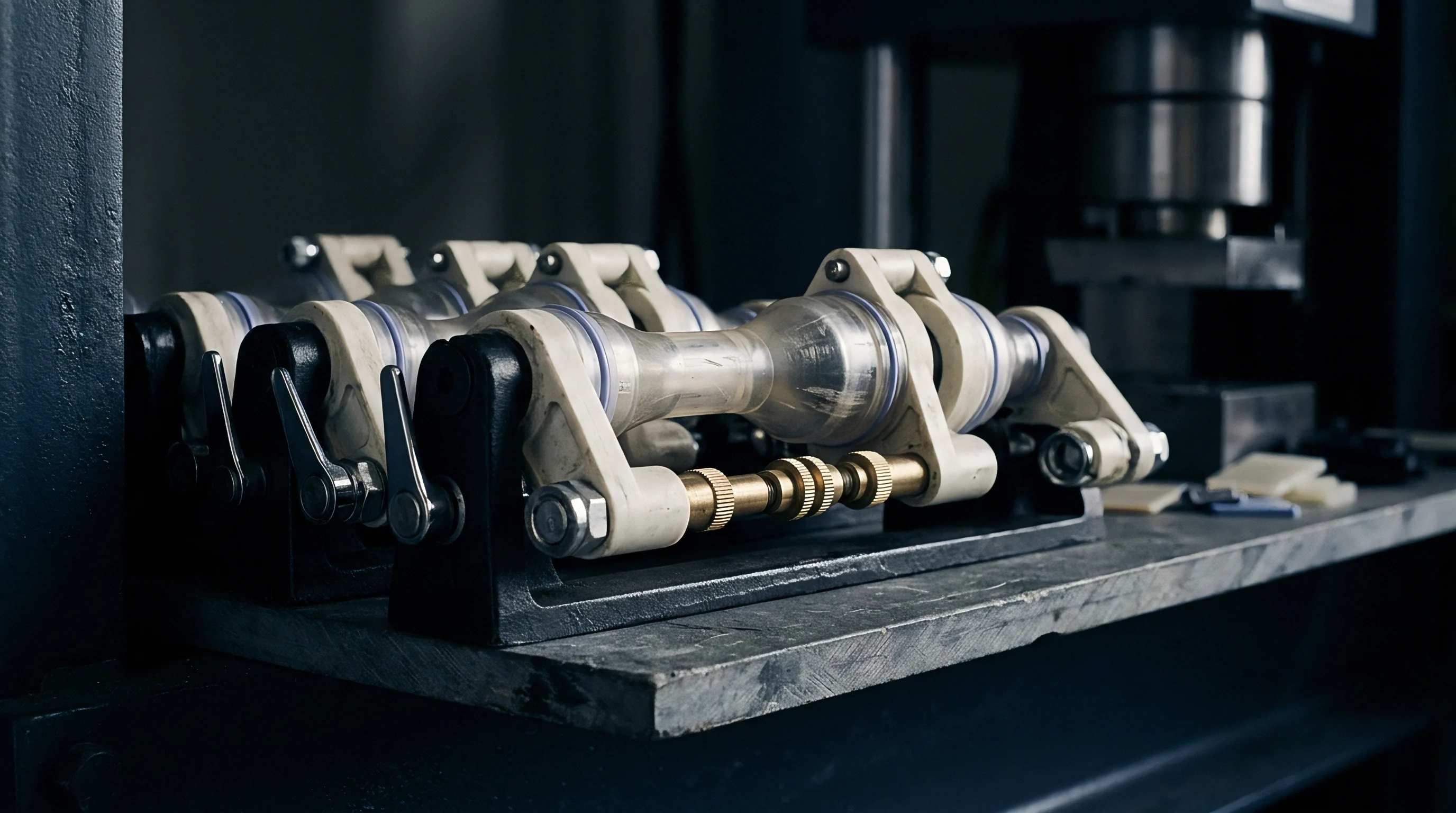

Stripping
Process equipment removes residual organic contaminants using mechanical, thermal, and vacuum driving forces within specialized reactor configurations. Melt-phase devolatilization inside co-rotating twin-screw extruders utilizes intense surface renewal to overcome low molecular diffusion coefficients. Multi-stage vacuum zones operating at absolute pressures between 0.5 and 5.0 millibars pull volatilized compounds out of the barrel cavity.
Screw elements must combine high shear distribution with low thermal generation to maintain structural melt integrity while maximizing gas-liquid interface areas.
Solid-state polycondensation (SSP) reactors operate below the polymer melting point, typically between 200 and 220 degrees Celsius under high vacuum or inert nitrogen sweep gas. SSP processing extends residence time from minutes to hours, compensating for extremely slow solid-state surrogate diffusion. Solid state polycondensation extends residence time.
High temperature promotes molecular weight buildup while stripping absorbed organic compounds out of amorphous pellet domains, providing a dual purification and mechanical upgrading route.

Vacuum Venting Mechanics in Twin-Screw Extruders
Vacuum extraction efficiency depends on the continuous renewal of thin melt films along barrel walls and screw flights. Deeply flighted conveying elements fill partially under vacuum ports, creating a gas space that allows vapor expansion. As screw flights sweep the barrel wall, they deposit thin polymer coatings with thicknesses between 0.1 and 0.3 millimeters.
Vaporization occurs rapidly from these exposed thin coatings before the pushing flight re-collects the melt into a rolling pool.
Pool devolatilization provides negligible surrogate extraction for heavy compounds due to long internal diffusion distances. Bulk melt pools hold contaminants in their interior, releasing only small surface fractions during transit down the barrel zone. High rotation speeds increase film generation frequency but cut residence time within the open vacuum stage.
Process configuration requires a precise balance between screw rotation rate, barrel fill degree, and total barrel length to ensure sufficient mass transfer time under deep vacuum conditions.
Injected stripping agents, such as nitrogen gas or dry water vapor, lower the partial pressure of volatile surrogates inside the barrel cavity. Gas injection generates micro-foaming within the polymer melt, expanding the interface area by several hundred percent. Micro-bubbles nucleate throughout the melt stream, shortening the internal diffusion distance for heavy organic molecules to reach a gas interface.
Gas stripping alters partial pressure. Injecting inert gas at rates between 0.1 and 0.5 percent by weight improves heavy surrogate removal efficiency without requiring larger mechanical vacuum pumps.

Solid State Polycondensation Residence Bounds
Solid-state reactors process crystallized PET pellets or heavy flake fraction under continuous flow or batch bed configurations. Operating temperatures must remain 30 to 40 degrees Celsius below the peak melting point to prevent pellet agglomeration and wall sticking. Solid-state diffusion coefficients for heavy organic surrogates at 205 degrees Celsius are approximately three orders of magnitude lower than melt-phase values at 275 degrees Celsius.
Prolonged exposure times reaching 8 to 16 hours become necessary to achieve required residual reduction targets.
Crystallinity controls transport speed within solid pellets. Semicrystalline PET contains crystalline lamellae that block diffusion paths, forcing surrogate molecules to traverse tortuous pathways through the remaining inter-lamellar amorphous regions. High initial crystallinity reduces internal mobility, slowing decontamination rates.
Pre-crystallization steps must establish small, uniform crystal structures that minimize diffusion path resistance before pellets enter the main solid-state stripping column.
Heavy surrogate extraction mechanisms experience characteristic physical limits during processing:
- Bubble Coalescence Failure occurs when micro-foaming agents collapse rapidly before reaching the vent zone, reducing available surface area for heavy organic mass transfer.
- Thermal Degradation Competition arises when raising melt temperatures to boost surrogate diffusivity causes ester bond cleavage and chain scission before volatile evacuation occurs.
- Vent Port Entrainment happens when deep vacuum draws low-viscosity polymer melt directly into exhaust ducting, fouling vacuum line valves and disrupting pressure stability.
- Crystalline Entrapment emerges during solid-state treatment when rapidly growing crystalline domains lock heavy organic molecules inside inaccessible amorphous pockets.
| Reactor Configuration | Absolute Pressure (mbar) | Residence Time | Benzophenone Removal (%) | Methyl Stearate Removal (%) |
|---|---|---|---|---|
| Single-Screw Extruder with Vent | 5.0 to 10.0 | 45 to 60 sec | 45.0 to 55.0 | 15.0 to 25.0 |
| Co-Rotating Twin-Screw Extruder | 1.0 to 3.0 | 20 to 35 sec | 88.0 to 94.0 | 62.0 to 74.0 |
| Multi-Ring High-Surface Extruder | 0.5 to 1.5 | 90 to 120 sec | 96.5 to 99.2 | 84.0 to 91.5 |
| Solid-State Polycondensation Reactor | 0.1 to 0.8 | 8 to 12 hours | 99.1 to 99.8 | 92.0 to 96.5 |
Extruder efficiency increases with surface renewal frequency up to the mechanical torque limit of the screw drive system.

Standard
Regulatory authorities enforce stringent safety limits on recycled plastics destined for direct food contact. European and United States framework regulations require recyclers to demonstrate that decontamination processes reduce chemical contaminants to safe dietary exposure thresholds. Challenge tests simulate worst-case post-consumer contamination by artificially spiking virgin or flake feedstock with high concentrations of surrogate compounds before running devolatilization trials.
Evaluations measure surrogate concentrations before and after processing to compute a logarithmic reduction value (LRV). High removal rates prove that equipment reliably clears volatile chemical loads. Heavy organic surrogates set the upper challenge threshold because their slow extraction kinetics reveal structural limitations in devolatilization machinery.
Achieving compliance demands proving that residual surrogate concentrations in final parts will not result in dietary exposure exceeding established toxicological limits.

Could Residual Heavy Surrogates Exceed Ten Parts per Billion in Recycled Pellets?
Recycled resin specifications frequently enforce a maximum threshold of 10 parts per billion (ppb) for specific non-volatile toxic surrogates in the final pellet batch. Challenge tests spiked with 500 to 1,000 parts per million (ppm) of methyl stearate or benzophenone require a minimum 5-log reduction (99.999 percent efficiency) to hit single-digit ppb final levels. Standard industrial melt extruders operating without secondary solid-state treatment rarely reach 5-log reductions for heavy species, leaving residual concentrations between 50 and 200 ppb in finished pellets.
Dietary exposure modeling evaluates migration potential from packaging into food simulants. Diffusion from rigid PET containers into dry or watery foods occurs extremely slowly at ambient storage temperatures. However, fatty food simulants and high-temperature filling applications accelerate migration rates.
Residual heavy surrogates present at levels above 10 ppb in bottle walls can migrate in quantities that exceed European Food Safety Authority (EFSA) threshold of regulation limits, triggering regulatory non-compliance during migration testing.
Regulatory compliance requires proving a 5-log surrogate reduction across challenge test runs prior to commercial resin issuance.

FDA and EFSA Challenge Test Protocol Variance
United States Food and Drug Administration (FDA) guidelines under CFSAN recommendations evaluate decontamination performance using surrogate suites that include volatile organics, non-volatile organics, and heavy metal salts. FDA evaluations focus on calculated human exposure metrics derived from consumption factors and food type distribution parameters. Processors must submit challenge test data demonstrating that calculated surrogate dietary concentration remains below 0.5 parts per billion for non-carcinogenic compounds.
European Union regulations enforced under EU 2022/1616 mandate explicit evaluation of decontamination technology novel processes through EFSA scientific panels. EFSA protocols emphasize conservative direct migration modeling, requiring strict validation of baseline input contamination levels and maximum allowable residual limits in the final resin. Differences in surrogate spiking mixtures, residence time assumptions, and analytical extraction techniques create scenarios where a devolatilization process clears FDA threshold criteria while failing EFSA standard requirements.
Verifying surrogate clearance under official challenge protocols follows a strict experimental sequence during technology qualifications:
- Pre-condition virgin or recycled PET flake input streams by drying to moisture levels below 50 parts per million.
- Douse input material with a surrogate cocktail containing specified concentrations of volatile and heavy organic model compounds in solvent carrier.
- Seal spiked feedstock in gas-tight containers for 14 days at 40 degrees Celsius to force contaminant diffusion deep into amorphous pellet matrices.
- Sample pre-processed flake to establish baseline surrogate content using total solvent extraction and gas chromatography analysis.
- Run contaminated feedstock through the industrial devolatilization system under steady-state operating parameters, collecting output pellets at designated time intervals.
- Cryogenic grind output pellets to particle sizes below 500 micrometers to enable complete quantitative extraction of remaining residual surrogates.
- Quantify residual organic compounds using solvent extraction combined with triple-quadrupole gas chromatography-mass spectrometry instrumentation.
According to standard commercial delivery specifications, any delivered resin lot carrying residual heavy surrogate concentrations above 10 parts per billion fails food-contact compliance certification, invalidating the shipment’s certificate of analysis and forcing re-classification of the material for non-food industrial packaging.


Bench
Laboratory quantification of heavy organic surrogates demands precise solvent extraction protocols to isolate trace compounds from semicrystalline PET matrices. Simple surface washing steps fail to extract molecules that have migrated into internal bulk domains during pre-challenge conditioning. Analytical protocols require swelling or complete dissolution of the polymer matrix to ensure quantitative recovery of non-volatile species before chromatographic separation.
Solvent selection governs recovery accuracy. Dichloromethane, hexafluoroisopropanol (HFIP), and phenol-tetrachloroethane mixtures dissolve PET completely, liberating all entrapped organic compounds. However, complete polymer dissolution requires subsequent precipitation steps using cold methanol to remove dissolved oligomers that foul GC injection ports and mass spectrometer ion sources.
Swelling methods using hot toluene or tetrahydrofuran relax polymer chain structures without dissolving the PET backbone, allowing diffusion-driven extraction of internal surrogates while leaving solid polymer chains intact.

Solvent Extraction and Gas Chromatography Quantitation
Extracted surrogate solutions undergo analysis using gas chromatography coupled to mass spectrometry (GC-MS) or flame ionization detection (GC-FID). Flame ionization detection provides linear response factors across wide concentration ranges for hydrocarbon surrogates, while mass spectrometry offers high specificity needed to detect trace target compounds in complex recycled matrices. Matrix-matched internal standards, such as deuterated benzophenone or labeled fatty acid esters, compensate for extraction losses and instrument drift during long analytical runs.
Lower limits of quantitation (LLOQ) must reach sub-part-per-billion levels to confirm compliance with European safety criteria. High-molecular-weight surrogates with high boiling points display low chromatographic peak shapes due to thermal tailing in capillary columns. Analytical methods utilize high-temperature polyimide-coated fused silica columns and fast capillary oven temperature programs to elute heavy compounds quickly, maintaining sharp peak resolution and low detection limits.

Mass Transfer Coefficient Calculation in Thin Film Devolatilization
Calculating overall mass transfer coefficients (KLa) enables scale-up modeling of devolatilization reactors. The overall mass transfer rate combines liquid-phase film resistance and gas-phase convective resistance. Liquid-phase mass transfer dominates for heavy organics due to low molecular diffusivities in high-viscosity melts.
Solvent extraction demands exact calibration. Engineers calculate effective film transfer coefficients by measuring concentration decay profiles across variable screw length ports during steady-state extruder operations.
Mathematical modeling relies on penetration theory, where mass transfer coefficient scales with the square root of surface renewal rate multiplied by surrogate molecular diffusivity. High screw speeds increase film formation frequency, raising overall volumetric transfer coefficients. However, short residence times limit total mass loss per stage.
Process design optimizes barrel segment layout, pairing high-shear mixing blocks for film renewal with unpressurized vent cavities for gas evacuation.
| Surrogate Name | Analytical Method | Extraction Solvent | Method LLOQ (ppb) | Max Target Limit (ppb) |
|---|---|---|---|---|
| Benzophenone | GC-MS/MS | Dichloromethane / Methanol | 0.5 | 10.0 |
| Methyl Stearate | GC-FID | Toluene Swelling | 2.0 | 10.0 |
| Phenyl Salicylate | GC-MS | Dichloromethane | 1.0 | 10.0 |
| Lindane | GC-ECD | Hexane / Acetone | 0.1 | 5.0 |
| Tetracosane | GC-FID | Cyclohexane | 5.0 | 20.0 |
Evaluating reactor performance requires systematic verification of hardware parameters and process metrics during qualification trials:
- Absolute Pressure Stability ensures vacuum pumps hold setpoint pressure within 0.1 millibar tolerances across variable gas loading conditions.
- Melt Temperature Uniformity prevents localized hot spots that degrade intrinsic viscosity while maintaining uniform surrogate diffusion rates.
- Screw Fill Fraction Optimization maintains open vapor space above melt pools along the entire length of the vacuum vent port.
- Surrogate Mass Balance Closure accounts for total spiked contaminant mass across liquid condensate traps, exhaust gas streams, and residual polymer output.
Commercial suppliers frequently claim that low residual numbers in finished parts stem from superior reactor devolatilization, when in truth high processing temperatures degraded the heavy organic surrogates into unmeasured thermal byproduct compounds.
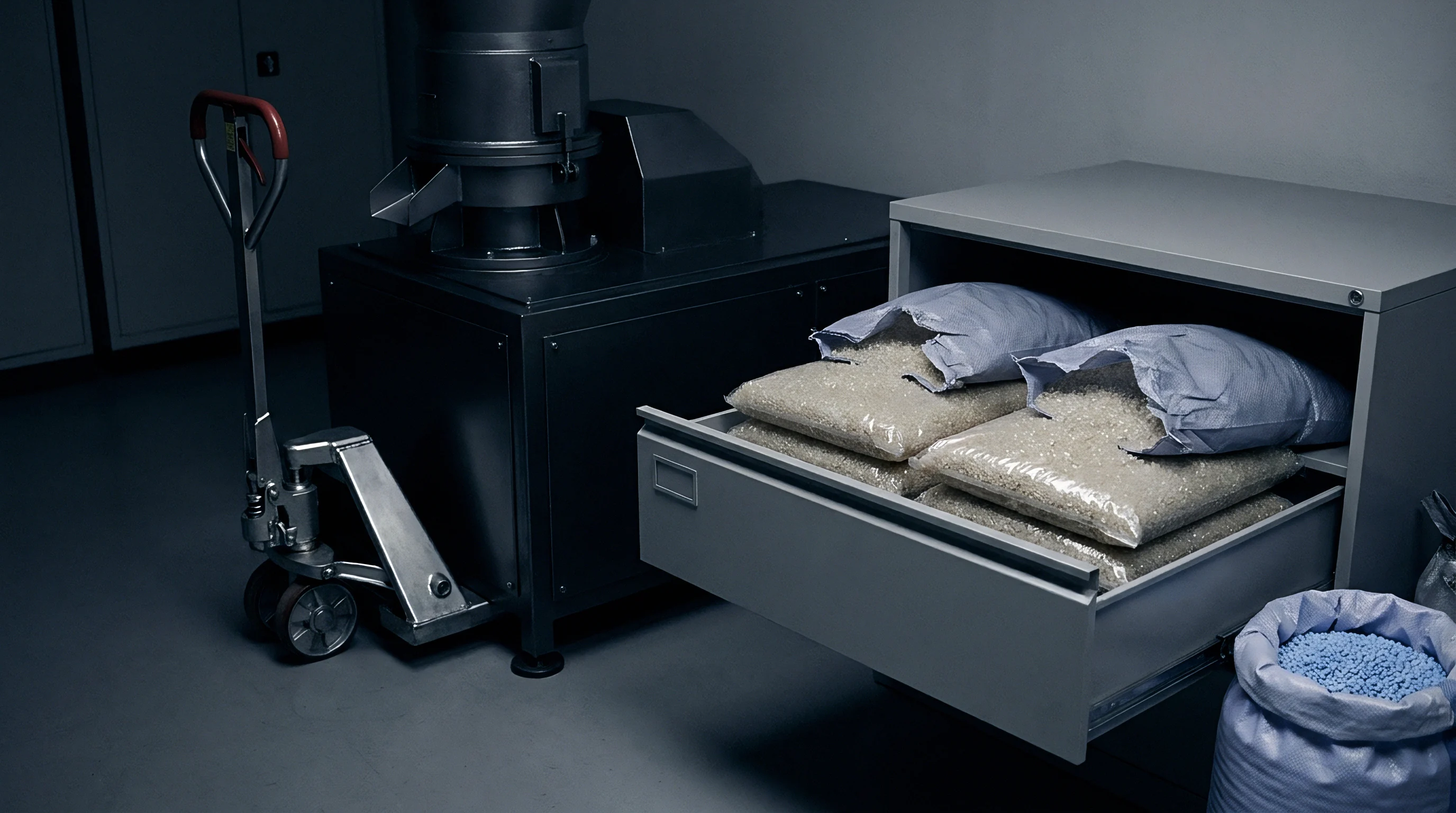

Audit
Incoming inspection procedures for recycled PET resins must catch contamination drift before material enters production silos. Commercial post-consumer flake streams contain variable levels of non-food containers, non-polymeric debris, and legacy additives. A devolatilization process validated under steady challenge test conditions can fail when incoming flake carries un-cleared heavy organic spikes above historical baseline averages.
Quality assurance programs track surrogate clearance through lot-by-lot chemical screening and certificate of analysis (COA) verification. Automated headspace-GC systems screen volatile organic profiles quickly, but heavy organic compounds resist volatile space evolution, escaping detection by rapid screening methods. Comprehensive verification requires periodic offline liquid extraction analysis to quantify non-volatile residue accumulation across incoming material lots.
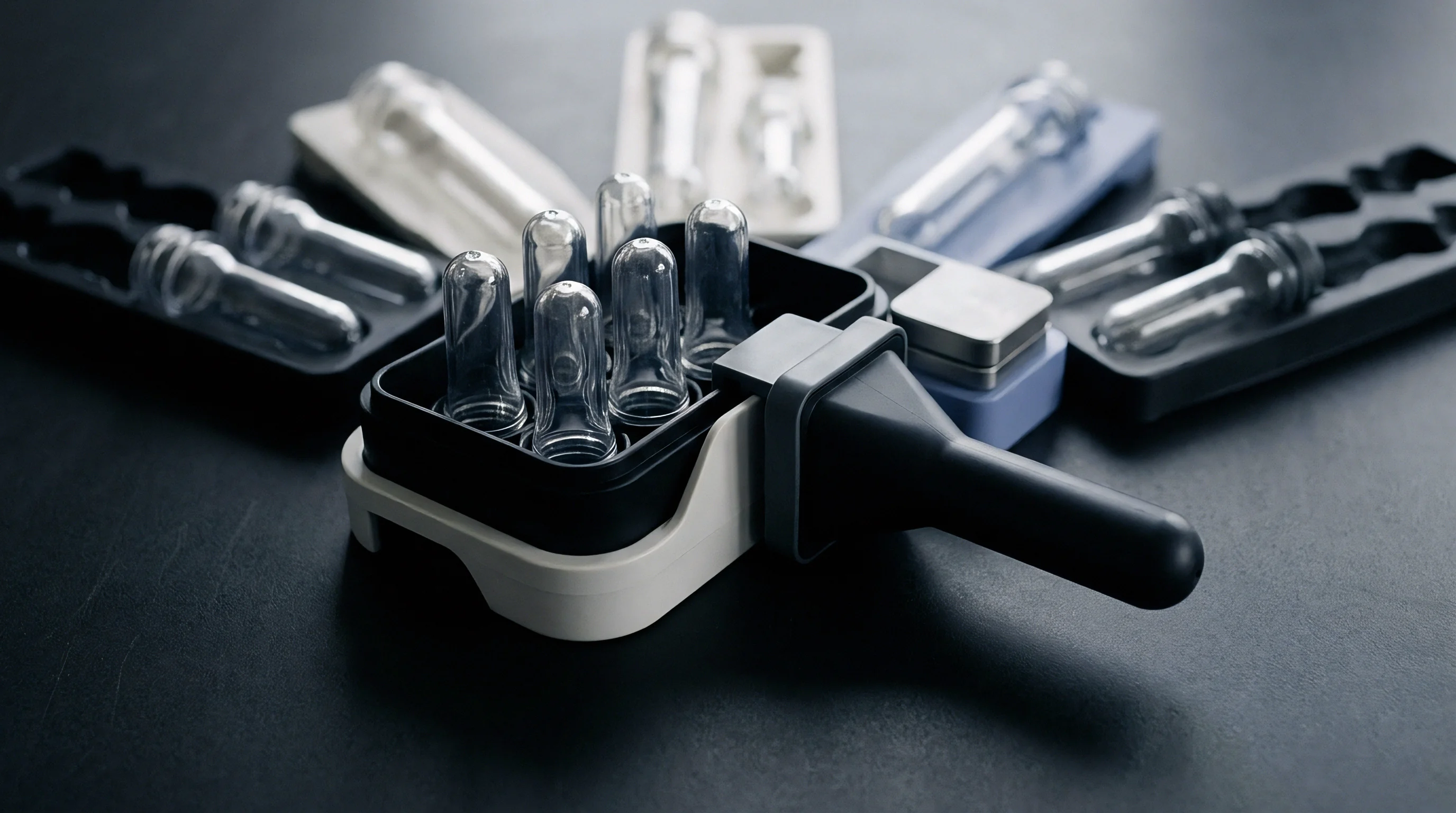
Silo-Side Inspection and Regrind Contamination Profiling
Silo sampling procedures require taking composite samples across multiple vertical height locations to catch lot-to-lot contamination stratification. Sampling depth changes compliance figures. Flake density variation and flake size distribution cause segregation during pneumatic conveyance, resulting in localized clusters of high-contamination material.
Sampling strategies must capture representative cross-sections of fine particles and coarse flakes alike.
Regrind streams generated from internal blow-molding trim or thermoforming skeleton scrap introduce re-heating history into the resin mix. Repeated extrusion cycles lower intrinsic viscosity and generate thermal oxidation products, such as aliphatic aldehydes and cyclic ester oligomers. Hydrolytic degradation of PET dried badly accelerates molecular weight breakdown, releasing free terephthalic acid and ethylene glycol that compete for surface evaporation sites, lowering the relative extraction rate of target heavy surrogates.
Un-cleared heavy organic surrogates accumulated in regrind loops lower the heat deflection temperature of thermoformed containers by 3 to 5 degrees Celsius.
Landed Cost Penalty of Extended Residence Time
Achieving regulatory compliance for heavy organic surrogate extraction carries direct manufacturing cost consequences. Extending extruder barrel length, installing high-vacuum ring systems, or running long solid-state polycondensation cycles increases equipment capital expenditures and energy consumption per kilogram of processed resin. Vacuum pumps pulling 0.5 millibars demand significantly higher electrical input and maintenance intervention than standard 20-millibar industrial venting systems.
Residence time extensions reduce total volumetric line throughput. Running a twin-screw devolatilization extruder at reduced screw speeds to increase residence time improves surrogate extraction percentages but reduces daily output tonnage. The financial trade-off pits lower production capacity and higher energy costs per tonne against the regulatory necessity of reaching single-digit part-per-billion contaminant targets for food-grade resin clearance.
Procuring food-contact certified recycled PET resin requires retaining specific technical documentation to withstand regulatory audits:
- Original Challenge Test Dossier proving that the specific machinery configuration achieves required logarithmic reduction values for heavy surrogate suites.
- EFSA Scientific Opinion or FDA Letter of No Objection confirming regulatory acceptance of the devolatilization technology for intended food-contact conditions.
- Continuous Operating Parameter Logs documenting that vacuum depth, melt temperature, and screw speed remained within validated ranges during resin production.
- Lot-Specific Certificates of Analysis verifying intrinsic viscosity, color values, acetaldehyde content, and residual contaminant screening results for each shipped batch.
Selecting low-cost recycled PET resin produced on unvalidated extrusion equipment exposes product owners to product recall liability, structural packaging failure, and regulatory enforcement actions when post-market testing reveals un-cleared heavy organic residues in food packaging walls.


Ledger
Financial calculations for recycled resin procurement balance raw material purchase price against processing penalties and scrap risks. Virgin PET resin prices move as a derivative of purified terephthalic acid (PTA) and monoethylene glycol (MEG) contract settlements. Recycled resin prices trade at premiums or discounts relative to virgin market indexes based on intrinsic viscosity, color purity, and regulatory food-contact certification status.
Food-grade rPET certified under FDA or EFSA guidelines commands price premiums of 150 to 350 USD per metric tonne over non-food post-consumer pellet grades.
Yield losses during intensive devolatilization processing add to the landed cost per good part. High vacuum levels and high melt temperatures drive volatile loss, oligomer migration, and filter mesh screen pack differential pressures. Total material loss across a multi-stage decontamination line ranges between 2.5 and 5.0 percent by weight, raising effective pellet input costs proportionally.
Unit Cost Breakdown across Vacuum Levels
Operating costs for melt-phase devolatilization escalate as target vacuum pressures drop from standard industrial levels down to deep vacuum regimes. Deep vacuum pump packages, featuring multi-stage roots blowers backed by liquid ring or dry claw pumps, add maintenance overhead and power draw. Capital depreciation, power consumption, sweep gas injection, and yield loss combine to create distinct cost tiers based on target surrogate extraction capability.
Consider a 40-tonne production run of food-grade recycled PET resin processed through a twin-screw devolatilization line. Operating at standard 10-millibar vacuum yields an extraction cost of 45 USD per tonne above base flake cost, but achieves only 70 percent clearance of heavy organic surrogates like methyl stearate. Dropping vacuum setpoint to 0.5 millibars with nitrogen sweep gas raises processing cost to 115 USD per tonne while boosting methyl stearate clearance to 92 percent.
Virgin resin blends reduce risk. The cost delta of 70 USD per tonne represents the price paid to overcome thermodynamic transport boundaries for high-boiling contaminants.

Commercial Risk Mitigation in Resin Sourcing Contracts
Resin supply contracts must bind target performance metrics to physical verification standards. Purchase specifications that cite generic food-grade compliance without naming explicit surrogate clearance limits or challenge test reference dossiers leave buyers exposed to quality drift. Procurement agreements must mandate that suppliers provide continuous process parameter records showing compliance with validated operating windows for every production lot.
Contractual penalty clauses should define monetary damages when delivered lots fail incoming analytical screening for heavy organic residues. Rejecting an incoming 20-tonne silo shipment creates immediate operational disruptions, forcing production line stoppage or emergency substitution of expensive virgin resin. Defining explicit lot acceptance thresholds, testing responsibilities, and return logistics procedures protects buying practices from assuming the financial burden of incomplete devolatilization processing upstream.
Supply agreements specify that input flake lot verification remains the sole responsibility of the compounder, ensuring that un-cleared heavy organic surrogate loads cannot be passed down to the converting facility without financial penalty. Yield losses accumulate rapidly downstream. Conversion economics shift when off-spec resin forces higher reject rates during bottle blowing operations, elevating unit cost per good container beyond initial margin targets.