Contractual Risk Allocation for Non-Conforming Recycled Resin Shipments
Enforce tight melt flow and contamination thresholds with serialized retain protocols and defined cost recovery to isolate non-conforming recycled resin risks.


Silo
Incoming polymer bulk trucks deliver twenty-five metric tons of post-consumer pelletized resin into receiver receiving terminals under strict seal verifications. The transfer line connects directly to aluminum holding tanks only after quick-check bench assays pass baseline acceptance limits. When melt mass-flow rate deviates by more than twenty percent from the purchase specification, the material compromises automated blow-molding lines within minutes.
Rapid automated sorting systems upstream occasionally miss unwashed multilayer films, producing batch-level variations that jam pneumatically driven feed lines.
Bulk delivery contracts define non-conformance through explicit parameter boundaries established in pre-shipment certificates of analysis. Buyers frequently discover that nominal virgin-equivalent grades carry unstated thermal history, generating wide viscosity bands that standard plant barrel heaters cannot stabilize. A contractual receiving protocol establishes whether legal risk transfers at the plant gate or upon full silo integration.
Once pellets drop past the rotary airlock valve into existing silo inventory, tracing contamination to an individual supplier becomes chemically impossible.

Discharge Bay Verification Sequences
Sampling from bulk tankers takes material across the top hatches using compartmentalized grain probes pursuant to ASTM D568. Technicians draw five independent composite samples representing top, middle, and bottom cargo layers before allowing the driver to pressurize tanker manifolds. Unloading ceases on visual discoloration.
Immediate burnouts via loss-on-ignition reveal inorganic filler loadings within forty-five minutes. Moisture analysis relies on coulometric titration.
- Compartmentalized Thief Extraction draws fifteen discrete core increments across all vessel compartments to isolate stratified particulate settle. A composite sample volume of five kilograms represents the minimum statistical baseline.
- Rapid Moisture Evaluation establishes water content under Karl Fischer titration per ISO 15512 Method B8 before pneumatic conveyance begins. Hydrophobic polyolefins carrying moisture above five hundred parts per million trigger discharge holds.
- Spectroscopic Screening Verification identifies unexpected polymer fractions using attenuated total reflectance Fourier-transform infrared spectroscopy. Scans revealing foreign absorption bands halt the intake procedure before silo contamination occurs.
- Sealed Quarantine Enactment locks the delivery tanker manifold with numbered security bands if preliminary indicators breach allowable technical limits. Written rejection transmittals pass to the seller within four hours.
Visual pellet inspection flags irregular pellet geometry, presence of tails, and burned degraded black specks before transfer hoses lock onto manifold couplers. The receiver retains fifty kilograms. When optical cameras identify heavy tail formations, pneumatic lines bridge, causing feeder starvation at compounding extruders.
| Test Parameter | Testing Standard | Rejection Level | Operational Failure Mode |
|---|---|---|---|
| Water Content | ISO 15512 Method B | > 0.08 wt% | Parison blow-out and splay |
| Loss on Ignition | EN ISO 3451-1 | > 2.5 wt% | Filter mesh blinding and nozzle clogging |
| Bulk Density | ISO 60 | < 480 g/L | Feed throat bridging and erratic screw take-up |
| Visible Carbon Gels | Internal Camera System | > 15 count/kg | Pinhole punctures in thin-walled thermoforming |

Bilateral Retain Protocols
Split-sample management determines whether disputed shipments proceed to binding arbitration or unilateral price debits. During bulk offloading, an automated inline sampler diverts fifty grams every two minutes, building a twenty-kilogram representative batch. The warehouse splits this volume into four hermetically sealed aluminum-lined pouches, serialized with tamper-evident security tags.
The hauler signs cargo manifests acknowledging receipt of sample custody.
Retain samples preserve legal claims. Two packets remain at the converting facility, one returns with the transport hauler for seller laboratory evaluation, and the final packet remains sealed for neutral third-party laboratory verification. If latent degradation appears during part production three weeks later, third-party labs verify the retained baseline.
The incorporation of Incoterms 2020 Delivered at Place with an explicit seven-day technical inspection rider shifts transit spoilage back to the seller.
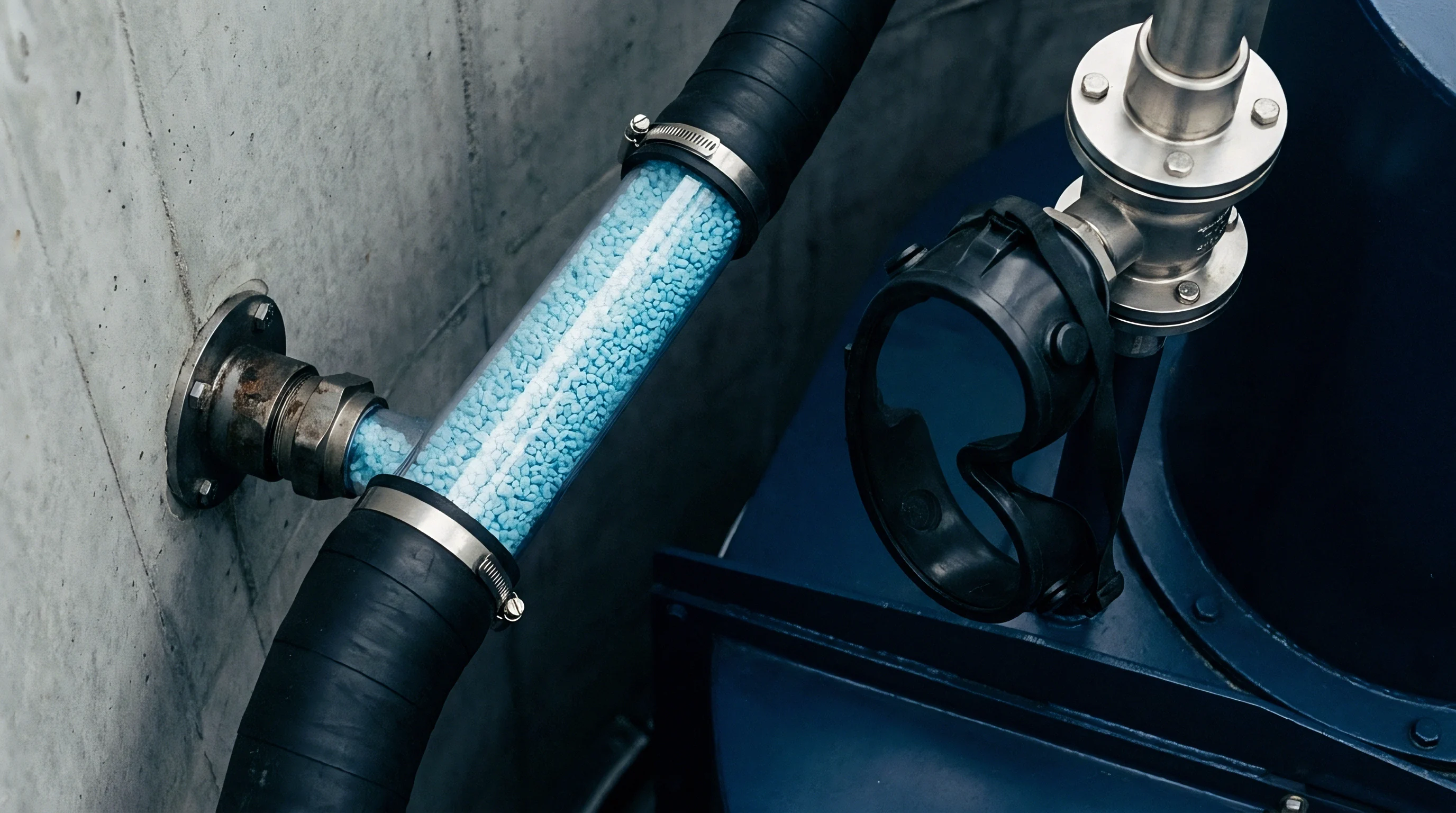

Rheology
Melt viscosity behavior dictates production throughput and mechanical integrity across converted plastic components. Recycled polyolefins undergo repeated thermal cycles during post-industrial or post-consumer lifecycles, causing polymer chain scission or radical-induced branching. A material purchased under an 8.0 g/10 min melt index datasheet specification can display erratic elasticity under high shear rates in complex injection tooling.
Testing follows ISO 1133 conditions.
Standard incoming tests measuring single-point melt mass-flow rate fail to capture shear-thinning differences between lots. Virgin high-density polyethylene demonstrates predictable pseudoplastic behavior, whereas mechanically recycled streams containing low-density polyethylene cross-fractions exhibit erratic die swell. Moulders experience wall-thickness variation, short shots, or excessive flash when running non-conforming recyclate without adjusting injection pressures across tooling cavities.
Post-consumer polypropylene showing a melt flow rate increase beyond twenty-five percent under 230 degrees Celsius and 2.16 kilograms indicates severe thermal degradation.
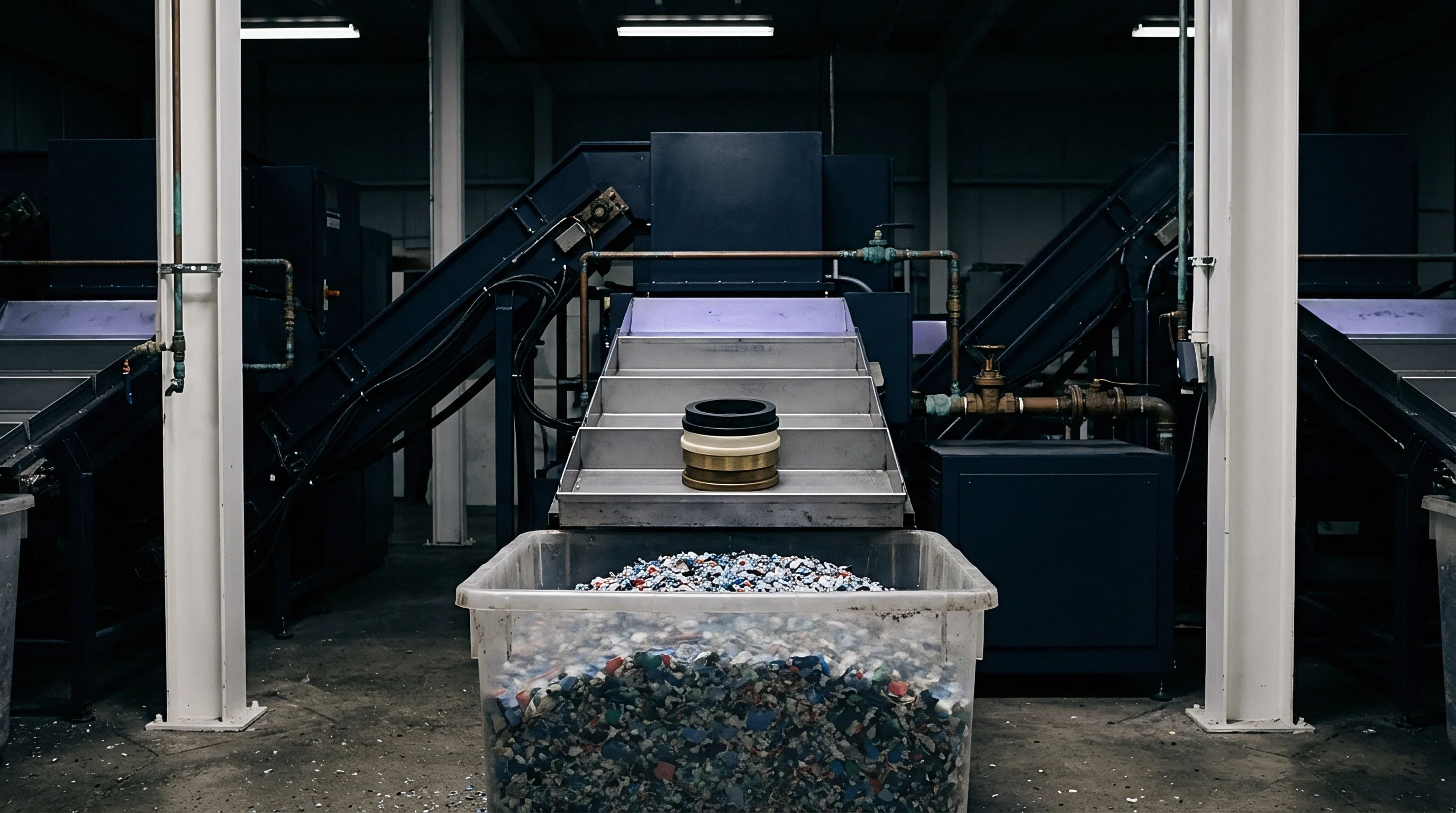
Viscosity Ratio Drift under Shear
Capillary rheometry demonstrates the non-linear relationship between shear stress and shear rate across diverse recycling grades. Processing facilities relying solely on nominal melt flow figures misjudge polymer performance during the brief, high-shear injection phase. Degradation halves tensile elongation values.
Polyethylene regrinds contaminated with low molecular weight waxes experience premature screw slippage, reducing overall plasticizing capacity.
Rotational rheometers provide dynamic frequency sweeps that measure storage modulus and loss modulus across processing temperatures. When thermal stabilizers deplete, recycled polypropylene cross-links or chains cleave during mold cavity filling. Gel counts dictate optical rejection.
Purchasing contracts must incorporate high-load melt flow ratios to constrain molecular weight distribution breadth.
| Polymer Grade | Reference Standard | Standard Conditions | Tolerable MFR Spread | HLMI / MFR Ratio Range |
|---|---|---|---|---|
| rHDPE Blow Molding | ISO 1133-1 Procedure A | 190 °C / 2.16 kg | 0.25 to 0.45 g/10 min | 65 to 90 |
| rPP Injection Grade | ISO 1133-1 Procedure A | 230 °C / 2.16 kg | 11.0 to 14.5 g/10 min | 22 to 34 |
| rPET Bottle Flake | ISO 1628-5 Ubbelohde | Phenol/1,2-Dichlorobenzene | 0.72 to 0.78 dL/g IV | Not Applicable |
| rLDPE Film Grade | ASTM D1238 Cond. E | 190 °C / 2.16 kg | 0.75 to 1.15 g/10 min | 28 to 42 |
| High-load melt index tested under 190 °C / 21.6 kg per ISO 1133 Procedure B; intrinsic viscosity measured at 25 °C. | ||||

Does Unstabilized Recyclate Trigger Latent Defect Indemnity?
Antioxidant depletion leaves secondary post-consumer recyclate vulnerable to auto-oxidation during secondary processing. Primary hindered phenolic antioxidants and secondary phosphite processing stabilizers sacrifice molecular structures to protect long polymer chains. When compounders skimp on stabilizing masterbatches, recycled polypropylene exits the granulator with acceptable initial physical properties.
Exposure to atmospheric oxygen and elevated shipping container temperatures during transoceanic transit activates radical cascades that embrittle molded articles.
Latent polymer decay bypasses standard intake quality checks because melt index figures initially fall within nominal tolerance bands. Parts molded from unstabilized lots pass dimensional inspection on Monday, yet crack under impact loading during consumer warehouse stacking thirty days later. Oxygen induction time measurements per ISO 11357-6 provide baseline tracking of remaining active stabilizer packages.
Sourcing agreements define thermal stability floors by mandating minimum oxidative induction times of twenty minutes at 200 degrees Celsius under pure oxygen. Whether high-pressure capillary rheometry can legally substitute for gel permeation chromatography in arbitrating cross-linked gel disputes remains unsettled across international jurisdictions.


Contamination
Extraneous polymeric fractions create structural vulnerabilities in molded goods by introducing incompatible phase boundaries. Mechanical recycling facilities sorting post-consumer waste cannot achieve absolute material purity through optical sorting equipment. High-density polyethylene streams regularly contain up to eight percent polypropylene from container closures.
Polypropylene lowers high-density polyethylene impact.
The morphology of contaminated polymers manifests as immiscible domains suspended within the primary continuous polymer matrix. Under mechanical loading, these foreign domains fail to transfer stress across interfacial boundaries, initiating microscopic crazing and catastrophic crack propagation. Parts designed to withstand five-foot drop tests shatter from six inches when incompatible resins compromise molecular cohesion.
Contamination triggers immediate batch quarantine.
A contamination level of fifty parts per million of polybutylene terephthalate in recycled polyethylene terephthalate ruins fiber spinning spinnability entirely.

Immiscible Polymer Commingling
Differential scanning calorimetry isolates thermal transitions that uncover unstated blended resins. When analyzing a nominally pure recycled polyethylene shipment, an unexpected endothermic melting peak at 165 degrees Celsius confirms polypropylene presence. In structural automotive moldings, two percent uncompatibilized polypropylene reduces cold notched Izod impact strength from forty kilojoules per square meter down to nine kilojoules per square meter at minus thirty degrees Celsius.
Extruder operators notice changes through shifting backpressures and visual melt turbulence at the die face. Discoloration indicates excessive extruder thermal history. Polyvinyl chloride inclusions in recycled polyethylene terephthalate decompose at PET processing temperatures of 280 degrees Celsius, releasing hydrochloric acid gas that corrodes chrome-plated tooling surfaces.
The buyer issues written notice promptly.
- Polyvinyl Chloride Debris generates hydrochloric acid outgassing inside heated injection barrels, causing severe cavity pitting and destructive melt burning. Even fifty parts per million corrodes polished mold steels within three production shifts.
- Cross-Polymer Blending alters crystallization kinetics during thermoforming operations. Unannounced polypropylene fractions inside polyethylene sheet extrusions generate localized shrinkage differentials that bow finished automotive trays.
- High Melting Polyamide Inclusions remain unmelted inside standard polyolefin melt temperatures of two hundred degrees Celsius. These solid inclusions lodge within hot runner gates, inducing immediate machine overpressure shutdowns.
- Uncrosslinked Elastomer Particles ruin optical properties in high-clarity clear rPET packaging. Flexible rubber fragments create large aesthetic fisheyes and weaken side-wall hoop strength in pressurized bottle blowing.

Volatile Residue and Particulate Debris
Organic residue trapped within the amorphous fractions of recycled resin outgasses during thermal plastification. Post-consumer milk bottles retain volatile fatty acids that release pungent odors during plant production. Thermogravimetric analysis tracks mass loss across rising temperature profiles, measuring volatile emissions below two hundred degrees Celsius.
Particulate inorganic matter, including glass cullet, sand, and aluminum flakes, evades simple visual screen checks. Melt flow shifts alter cycle times. When particulate debris exceeds screen pack ratings of one hundred mesh, compounders experience screen blinding that spikes head pressures and trips safety rupture discs.
The compounder invariably insists that occasional polyolefin cross-contamination represents an unavoidable consequence of municipal waste collection streams.


Remedy
Defective polymer shipments demand structured legal cures that balance operational timelines against commercial losses. When a laboratory confirms that incoming railcars fail technical parameters, the purchasing entity faces plant shutdown risks within forty-eight hours. Contracts without explicit tiered remedy clauses force buyers into blunt, binary outcomes: accepting compromised resin or rejecting entire trainloads.
Ash content dictates base pricing.
Contractual recovery options include price adjustments for degraded resin, on-site toll compounding to restabilize marginal lots, or immediate commercial replacement at seller expense. In high-speed packaging operations, scrap rates climbing from a normal one percent up to five percent wipe out annual production margins. Sourcing agreements must spell out the exact operational tests that validate buyer rejection rights.
Contractual cure periods forfeit buyer leverage when production schedules demand immediate hopper consumption.

Which Party Absorbs Downstream Tooling Damage?
Corrosive off-gassing and abrasive particulate inclusions present extreme threats to high-precision steel tooling. A hardened steel multi-cavity injection mold for pharmaceutical closures represents substantial capital investment. When unannounced polyvinyl chloride traces degrade into hydrochloric acid within hot-runner manifolds, mold replacement costs outstrip the raw material value of the resin shipment by a factor of ten.
Standard sales agreements written by compounders systematically disclaim consequential, indirect, and special damages. Buyers negotiate specific exceptions for latent contamination that could not be detected through ordinary intake sampling protocols. If metal fragments pass through extruder barrels and score screw flights or crack barrel linings, compounder liability provisions dictate repair indemnification.
Tooling damage clauses enforce mandatory equipment coverage up to agreed deductibles.
| Variance Category | Measured Deviation | Contractual Remedy | Commercial Adjustment |
|---|---|---|---|
| Minor Melt Flow Drift | 10% to 15% outside spec | Accept with Price Concession | 5% to 8% invoice rebate per metric ton |
| Major Melt Flow Drift | > 25% outside spec | Immediate Rejection / Return | Full refund plus inbound freight reimbursement |
| Inorganic Ash Inclusions | 1.5% to 3.0% ash content | Buyer-Side Blending Allowance | Seller covers virgin resin dilution cost |
| Acidic Outgassing (PVC) | > 50 ppm detectable halides | Mandatory Scrappage and Repair | Total disposal cost plus mold cavity restoration |

Worked Allocation of Downgraded Material
Consider a typical commercial scenario involving forty metric tons of post-consumer recycled polypropylene purchased at 1,250 dollars per metric ton, representing a total delivery value of 50,000 dollars. Intake testing reveals a melt mass-flow rate of 22 g/10 min at 230 degrees Celsius under 2.16 kilograms, breaching the contractual specification ceiling of 14 g/10 min. The manufacturing facility cannot run this material at speed without experiencing excessive cavity flash across eighty percent of molded crates.
The parties choose commercial blending over returning the forty-ton shipment, avoiding 4,200 dollars in freight and restocking penalties. Engineering models show that diluting the lot with prime virgin polypropylene possessing a low melt flow rate of 3.0 g/10 min achieves the target 12 g/10 min processing window. The blend ratio mandates forty percent virgin resin priced at 1,550 dollars per metric ton.
Settling the non-conformance requires the seller to issue an immediate credit memorandum of 11,200 dollars, covering virgin price differentials, compounding labor at 120 dollars per ton, and machine purging time. Reprocessing degraded polymer lots through virgin dilution burns margin faster than outright scrap disposal.


Exposure
Final commercial exposure encompasses the broader financial liabilities that emerge when non-conforming polymer converts into finished consumer goods. If defective resin escapes receiving checks and enters production, finished molded parts enter distribution chains with latent structural weaknesses. When product liability failures emerge six months later, warranty expenses dwarf the initial raw material purchase order value.
The supplier pays freight charges.
Cross-border resin trading links spot petrochemical margins to strict corporate environmental reporting mandates. Packaging producers face legislative penalties under European Union plastic taxes and UK packaging levies if certified post-consumer content percentages fail verification audits. When a compounder supplies industrial regrind disguised as certified post-consumer recyclate under ISO 14021, the purchasing entity faces severe regulatory fines and brand damage.
The threshold remains two percent.
Specification limits referenced to DIN EN 15343 automatically exclude uncertified post-industrial regrind from delivered lots.
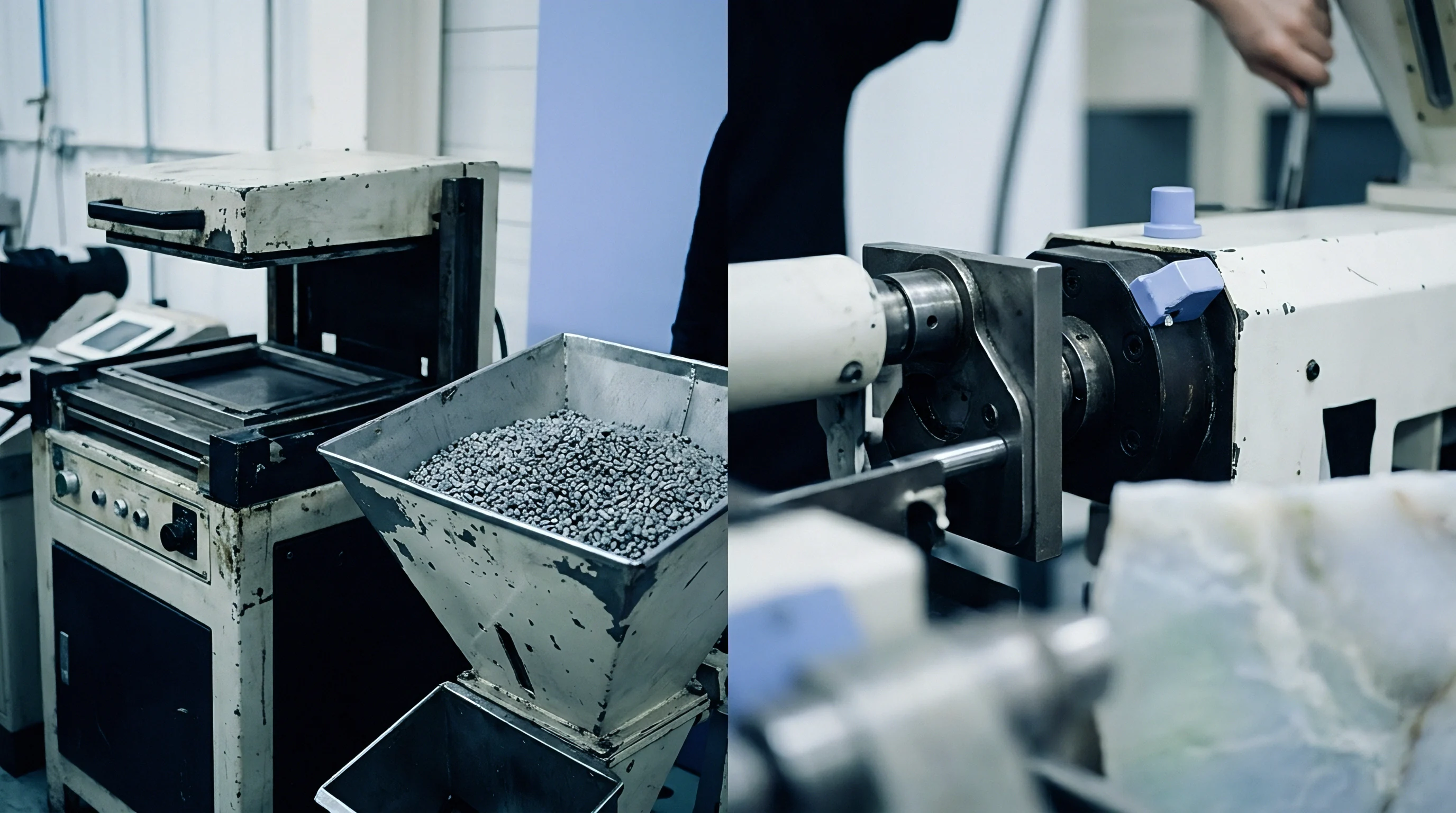
Direct Conversion Cost Recovery
Machine downtime costs accrue rapidly during processing failures caused by contaminated polymers. When non-melting foreign inclusions clog hot runner systems, molding lines halt for hydraulic teardown and mechanical cleaning. Standard conversion contracts state hourly line-stop charges that range from three hundred to eight hundred dollars per hour depending on plant automation levels.
The buyer captures line-clearance labor, scrap disposal costs, and missed shipping penalties within direct damage ledgers.
Establishing causation requires definitive laboratory forensics connecting physical machine damage to specific resin deliveries. Polymer engineers track polymer degradation markers through gel permeation chromatography to prove molecular weight breakdown occurred prior to barrel feeding. Contracts structured around international commercial law must limit buyer recovery windows while preserving claims for covert batch substitutions.
Arbitration panels rely on sealed retainers.

Commercial Dispute Settlement Terms
Litigating polymer quality disputes across international borders introduces severe jurisdictional complexities. Contract drafters specify clear governing law, such as the United Nations Convention on Contracts for the International Sale of Goods, modified by specific examination and notice derogations under Articles 38 and 39. Without bespoke contractual modifications, CISG rules often consider thirty-day buyer notice periods unreasonable, stripping converters of all non-conformance recovery rights.
Comprehensive supply agreements establish binding technical arbitration as the sole venue for resolving material performance disputes. Neutral polymer testing institutes analyze duplicate retain samples, rendering final decisions on specification adherence without recourse to state commercial courts. Commercial contracts limit compounder liability to three times invoice value, excluding speculative downstream lost profits while guaranteeing direct replacement and machine recovery compensation.
Failure to cap consequential damages in resin purchase orders results in compounders facing bankrupting assembly line shutdown claims.