Offshore Mould Tooling Bailment Security under Foreign Lex Situs Rules
Offshore tooling bailment security requires physical deep-steel plate tagging and immediate perfection filings on local chattel registries under foreign lex situs laws.

Statute
Cross-border tooling agreements often designate foreign choice-of-law clauses even though the injection mould itself sits inside a plant in Ningbo or Monterrey. Buyers routinely assume that a contract executed under English or Delaware law protects capital assets globally. Under the conflict-of-laws doctrine of lex situs, however, personal property rights depend strictly on where the asset physically rests.
If an offshore supplier defaults, faces tax distraint, or becomes insolvent, local courts apply local chattel law rather than the choice of law written into the agreement.
Under most civil law systems, physical possession creates a presumption of ownership. Under Article 447 of the Civil Code of the People’s Republic of China, a contractor holding personal property under a work or manufacturing agreement holds a statutory retaining right if the counterparty fails to pay for services. Article 2644 of the Mexican Federal Civil Code and commercial codes in Vietnam and India contain similar possessory lien provisions.
Contract language alone cannot defeat this statutory lien when a foreign manufacturer claims unpaid balances for scrap rates, engineering modifications, or press setup time.

Lex Situs Authority over Physical Assets
Courts where property is located enforce territorial jurisdiction over tangible chattels regardless of contractual choice-of-law clauses. A court in Zhejiang province or Nuevo León determines title based on local registration, physical possession, and local payment records. A clause selecting the United States District Court for the Southern District of New York binds the contracting parties, but it carries no weight with a foreign tax authority, bankruptcy receiver, or third-party creditor attaching factory equipment.
Unregistered security interests lapse as soon as local creditors seize the asset.
Enforcing a bailment requires proving that the transaction is a temporary loan of equipment, not a sale, conditional purchase, or capital contribution to the local facility. Without properly translated bailment documentation, local tax authorities often treat imported tooling as a capital contribution or an un-invoiced lease. That classification triggers corporate income tax, value-added tax, and tariff adjustments that attach directly to the steel as a tax lien.
Statutory Lien Mechanics under Foreign Civil Codes
Commercial codes across major manufacturing hubs grant possessory rights to facilities holding raw materials or tooling. When a billing dispute arises, the supplier can assert a statutory possessory lien over the injection mould, halting production and using the tool as leverage to settle disputed invoices. Reclaiming the asset requires local litigation to post a counter-guarantee bond before securing a preliminary release order.
Inclusion of an explicit express bailment provision in a bilingual contract overrides the statutory presumption of moulder ownership under Article 311 of the PRC Civil Code.
Bailment agreements need to be drafted in the language of the local court and aligned with regional chattel property rules. Dual-language contracts where the local text governs bridge the gap between corporate supply agreements and local enforcement.
The structural points where foreign bailment contracts break down under foreign lex situs review include:
- Unregistered Title Retention where the buyer relies on a foreign supply agreement without registering ownership on local public chattel databases.
- Piecemeal Tooling Payment where title transfer milestones depend on vague project sign-offs rather than verified first article inspection reports and explicit escrow releases.
- Commingled Equipment Identification where the tool lacks permanent, indelible markings identifying the owner, leaving local auditors free to classify it as factory inventory.
- Undefined Maintenance Loan Terms where the agreement does not state that routine press setup, cleaning, and cavity care are non-improving maintenance that creates no lien rights.
Under foreign lex situs rules, unregistered ownership claims offer no protection if the facility enters receivership or faces a landlord lockout.


Stamp
Physical markings on tooling steel provide the core evidence for ownership claims during customs disputes and plant seizures. Surface labels, paint codes, and temporary tags deteriorate quickly on the factory floor. Press-side cleaning with solvents like acetone or methyl ethyl ketone wipes away ink within weeks, while high-pressure die washes, thermal cycling up to 160 degrees Celsius, and automated rust preventatives strip off surface identifiers, leaving the tool defenseless during third-party audits.
Indelible asset identification requires direct mechanical engraving or deep laser etching into non-wearing exterior tool plates. Standard placement includes the non-operator side clamping plate, upper ejector housing, and manifold top plates. Markings should list the buyer’s legal entity name in both English and the local language, the unique asset registration number, and an explicit statement of bailed ownership.

Deep Mechanical Tagging Specifications
Toolmakers mill serial numbers and ownership text directly into exterior plates. CNC engraving to a minimum depth of 0.5 millimetres into P20 or 1.2311 steel ensures the text survives shop-floor conditioning, bead blasting, and re-polishing. Secondary laser-etched stainless steel plaques, set into recessed pockets on the mould frame with blind tamper-proof rivets, offer redundant proof of title.
| Marking Method | Substrate / Location | Minimum Depth / Spec | Durability Profile | Legal Weight in Foreign Courts |
|---|---|---|---|---|
| CNC Direct Milling | P20/H13 Clamping Plate | 0.50 mm depth / 10 mm font | Indestructible under normal ops | Primary evidence of physical title |
| Riveted Stainless Plate | Recessed Pocket Mold Base | 1.5 mm 316 Stainless / Blind Rivets | Resists chemical & thermal wash | Secondary proof of bailed asset |
| Laser Cavity Micro-Etch | Core/Cavity Non-Show Detail | 0.08 mm depth micro-font | Survives standard shot runs | Corroborating proof for parts produced |
| Adhesive Vinyl Sticker | External Guarding | 0.10 mm surface film | Degrades within 30 days | Inadmissible as primary title proof |
Cavity Level Asset Tracking and Isolation
Internal mould components should carry micro-engraved identifiers that match master tooling dossiers. Multi-cavity tools for medical or high-precision automotive connectors require individual insert tracking. Marking cavity block sub-assemblies with micro-laser text prevents suppliers from stripping valuable core blocks and returning an empty mould frame during a dispute.
Tooling dossiers should include high-resolution, dated photographs of all engraved markings, assembly pockets, and serial plates taken prior to dispatch and right after press installation. Cross-referenced with bills of lading, these photos establish physical identity before local courts when filing for emergency preservation orders.
Offshore suppliers often claim that direct steel engraving compromises structural integrity or breaks local shop rules, proposing temporary magnetic tags instead.


Filing
Registering bailed assets publicly turns a private contract claim into a perfected third-party property right enforceable in foreign bankruptcy proceedings. A contract binds only its signatories. Registration under local chattel statutes gives legal notice to all third parties, including lenders with floating liens on factory equipment, tax authorities, and court liquidators.
Skipping this step forfeits priority to local creditors holding registered security interests in the plant’s machinery and inventory.
How Does Registry Registration Protect Foreign Tooling Ownership?
Asset registries create public notice that overcomes the presumption of factory ownership. Once a buyer registers a bailed tool on a national movable property registry, lenders cannot argue they extended credit relying on that equipment as plant inventory. In chattel disputes, priority depends on the registration timestamp rather than when the contract was signed.
In China, filings go through the Credit Reference Center of the People’s Bank of China (PBOC) unified movable property and rights financing registry, listed under chattel leasing or title retention. In Mexico, perfection requires filing on the Single Registry of Movable Guarantees (Registro Único de Garantías Mobiliarias, or RUG). In Vietnam, registration goes through the National Agency for Registered Security Transactions (NRAST).
Physical custody of tooling offshore without local public registration grants the holding factory superior rights against third party creditors.

Jurisdictional Mechanics in Primary Manufacturing Markets
National registries process movable property rights through chattel financing filings. The dossier must detail the asset precisely, including dimensions, weight, cavity count, engraved serial numbers, and its specific location on the manufacturing floor.
| Jurisdiction | Primary Registry Body | Filing Framework | Perfection Requirement | Typical Registration Window |
|---|---|---|---|---|
| China | PBOC Credit Reference Center | Chattel Leasing / Title Retention | Bilingual Agreement + Tag Photo | 10 to 15 business days |
| Mexico | RUG (Secretaría de Economía) | Garantía Mobiliaria | Notarized Spanish Contract + RFC | 3 to 5 business days |
| Vietnam | NRAST (Ministry of Justice) | Security Transaction Notice | Certified Vietnamese Translation | 5 to 7 business days |
| Germany | Local Court (Amtsgericht) | Eigentumsvorbehalt / Asset Pledge | Written Agreement + Specific Serial | Immediate upon filing |
To establish perfected bailment security, the buyer executes a structured registration checklist across foreign operations:
- Bilingual Contract Notarization where the supply agreement and bailment addendum are executed in a dual-column layout and notarized locally.
- Registry Filing Execution where local counsel submits asset descriptions, serial tags, and plant location details to the national registry within ten days of customs clearance.
- Tax Authority Declaration where imported tooling is filed with customs and tax bodies as non-monetary bailed equipment to prevent its classification as factory capital.
- Periodic Registry Renewal where filings are tracked and renewed before statutory expiration, typically every three to five years depending on the jurisdiction.
Consider a $185,000 twelve-cavity H13 automotive connector tool shipped to Suzhou. Local registry filing fees and legal expenses total $3,200. If the supplier enters bankruptcy without PBOC registration, the court liquidator seizes the tool to satisfy $1.2 million in senior debt ~ leaving the buyer with zero recovery and a 26-week replacement lead time costing $420,000 in downtime penalties.
Perfection costs represent less than two percent of the asset’s value while insulating it against factory insolvency.
The standard bailment clause must explicitly state: “Title to the Tooling listed in Schedule A remains exclusively with Buyer; Moulder holds Tooling solely as a bailed asset and shall execute all perfection filings required under local lex situs law to notice third party creditors of Buyer’s sole ownership.”
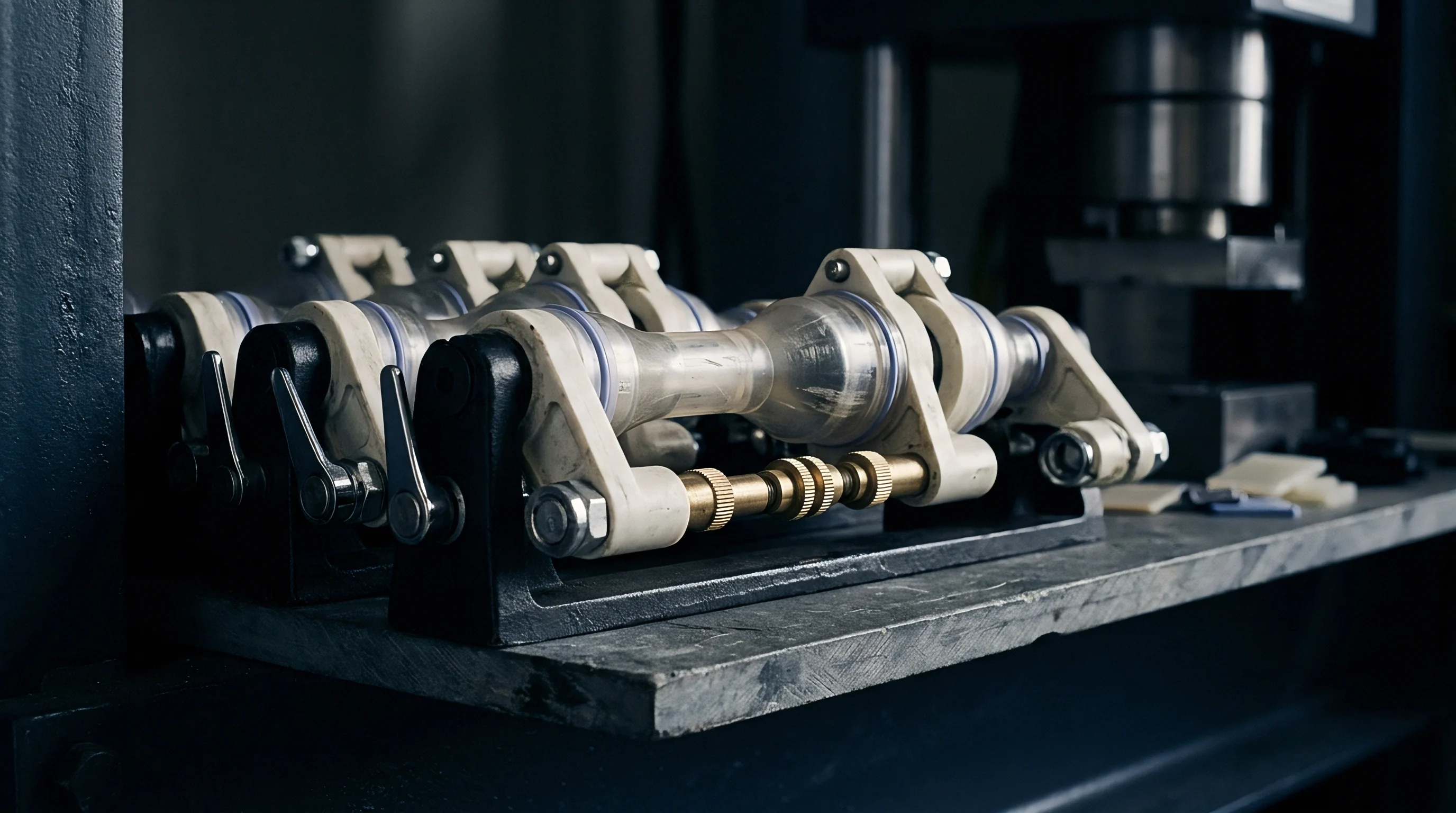
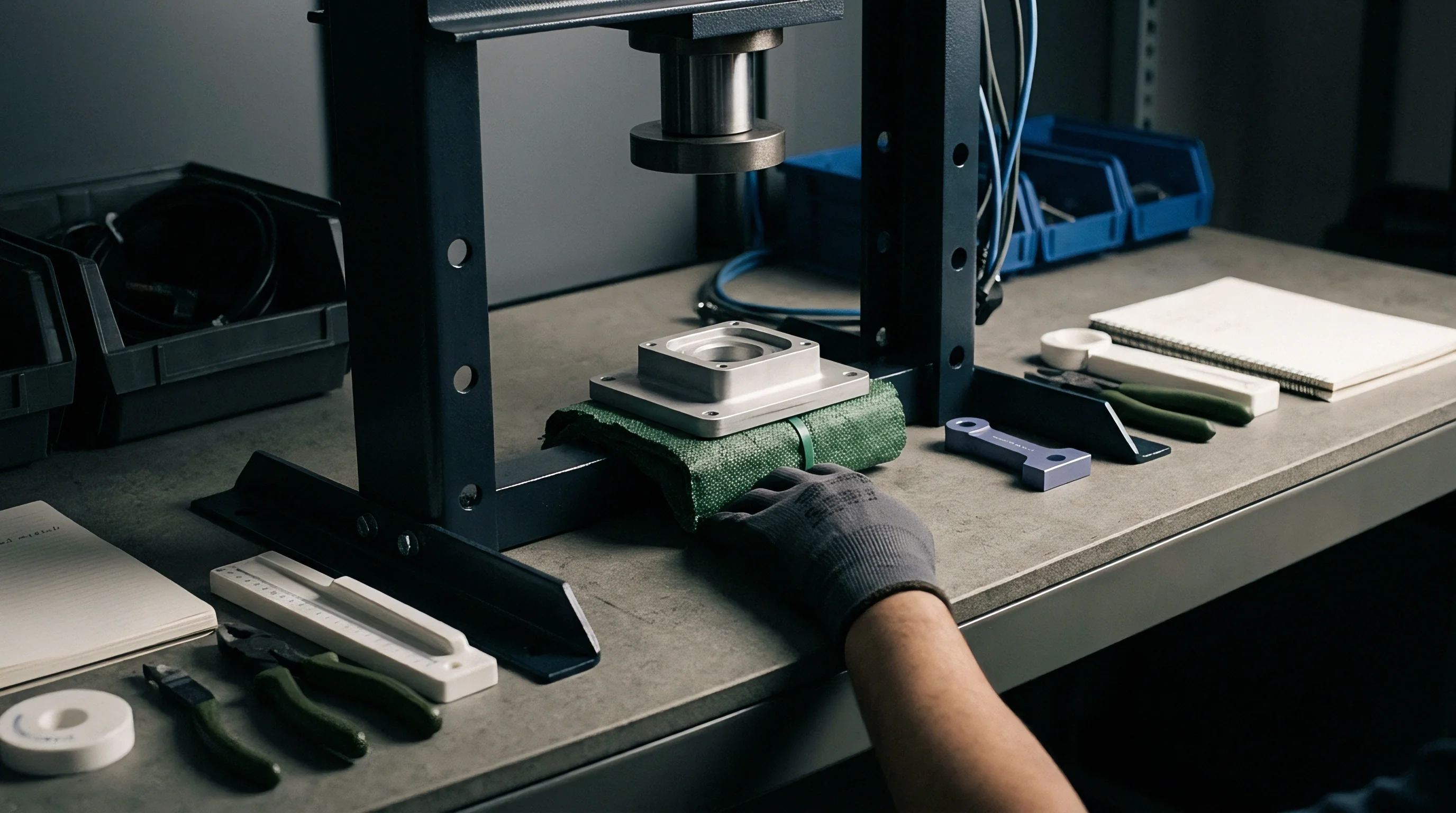
Seizure
Extracting an injection tool from a distressed facility requires direct involvement with local courts, bailiffs, and customs controls. When a supplier relationship breaks down or a plant shuts due to strikes or insolvency, management often locks the gates and refuses to release equipment. Trying to repossess tools without judicial authority risks criminal trespass charges, altercations, or immediate damage to the equipment.
Local courts demand clear proof of full payment and public registry filing before issuing ex parte emergency orders for asset preservation. Judges usually require foreign applicants to post a cash bond ranging from 30 percent to 100 percent of the disputed value before bailiffs will enter the plant to supervise removal.
Preliminary Injunctions and Replevin Writs
Securing judicial recovery orders requires clear proof of payment and prior asset registration. A local judge examines the bailment agreement, registered serial tags, and bank records. If records show unpaid piece-price balances, courts routinely deny emergency release and force the dispute into full trial litigation.
Emergency recovery requires executing a structured, sequential procedure on the ground:
- Submit a formal asset preservation application to the local intermediate court accompanied by certified bank transfer receipts proving full payment of tooling build invoices.
- Deposit the required counter-guarantee cash bond into the local court escrow account to indemnify the court against potential moulder damages.
- Accompany the court bailiff and armed court police to the foreign facility to supervise logistics contractors in unbolting the tool from the press platen.
- Transport the recovered asset directly to a secure third-party warehouse or bonded customs facility under court-sealed transport crates.

Customs Interdiction and Border Enforcement
Customs authorities can stop unauthorized exports when asset records match registered ownership databases. Foreign suppliers occasionally try to move bailed tools to affiliated plants in adjacent low-cost regions during restructurings. Registering title with foreign customs divisions helps prevent tools from crossing borders unauthorized.
A tool operating at 800000 shots requires written title confirmation before the final ten percent tooling retainage payment leaves escrow.
When a third party files an unauthorized export declaration, customs algorithms trigger an automated hold if serial numbers match registered owner records. The foreign buyer is notified immediately to confirm title or start court proceedings.
What specific judicial counter-guarantee bond ratios will local foreign courts enforce when a moulder claims unrecouped engineering expenses on a bailed tool?


Audit
Operational audits prevent foreign suppliers from running bailed tooling during unapproved shifts or for competing products. Tools run on unmonitored night shifts suffer premature wear, unrecorded thermal spikes, and fatigue stress that shortens tool life. Explicit audit rights in bailment contracts help protect physical assets throughout their service life.
Non-resettable mechanical or electronic counters mounted directly on the mould frame record stroke cycles. Technical audits cross-reference these counts against delivered part volumes, scrap logs, and raw material usage. Unexplained cycles signal unauthorized production runs, breaching bailment terms and voiding warranties.
Telemetry and Mechanical Shot Tracking
Press-side hardware tracks stroke counts to verify maintenance schedules and contract volume limits. Modern telemetry devices combine GPS tracking, accelerometers, and cellular uplinks to alert managers if a tool is moved from its assigned press or disconnected from power. Tamper-evident mechanical seals across parting lines prevent unauthorized modifications or cavity block-offs.
| Payment Structure | Title Transfer Point | Lex Situs Priority Level | Bailment Security Risk | Operational Control Factor |
|---|---|---|---|---|
| Direct Payment (50/40/10) | Upon T1 Sample or Final Payment | High (With Registry Filing) | Low (Clear Payment Proof) | Direct Buyer Asset Control |
| Piece-Price Amortization | Pro-rata across part volume | Low (Inchoate Title Claim) | High (Tool Belongs to Moulder) | Poor Asset Separation |
| Subsidized Tooling Agreement | Deferred until contract volume hit | Medium (Conditional Lien) | High (Moulder Retains Security) | Disputed Possession Rights |
| Escrow Payment Model | Upon sign-off & registry filing | Highest (Unassailable Title) | Lowest (Complete Asset Proof) | Maximum Leverage |

Payment Milestones and Title Vesting Risk
Payment schedules dictate when title transfers from the toolmaker to the buyer. Amortizing tooling costs into piece prices carries the highest legal risk under foreign lex situs regimes. In amortized structures, local courts view the moulder as the asset owner until the agreed part volume is fully produced and paid for, leaving bailment claims useless if disputes arise early in production.
A sound bailment protocol ties progress payments to clear engineering milestones: 50 percent upon steel cutting authorization, 40 percent upon T1 dimensional sign-off under DIN 16742 standards, and a 10 percent retainage released only after verified foreign registry filing and installation at the press facility.
A comprehensive foreign tooling verification audit requires evaluating explicit technical and legal operational parameters:
- Mechanical Shot Counter Integrity where non-resettable counters are checked for tampering, mechanical bypass, or serial number discrepancies against master dossiers.
- Plate Separation Seal Verification where tamper-evident lead seals along parting lines are checked to confirm no unapproved cavity changes were made.
- Maintenance Log Alignment where SPI Class 101 maintenance logs, guide pin lubrication records, and water-line descaling entries are audited against stroke totals.
- Physical Tag Integrity Check where engraved plates and laser markers are inspected for legibility, visibility, and signs of alteration.
Title documentation without local registration leaves the tool exposed, no matter how many approval stamps are stamped on the drawing.