Injection Tooling Title Transfer Provisions in Cross Border Supplier Contracts
Structure tooling contracts with stage-gated title vesting tied to Cpk dimensional acceptance, permanent asset plates, and sub-tier lien waivers.
Steel
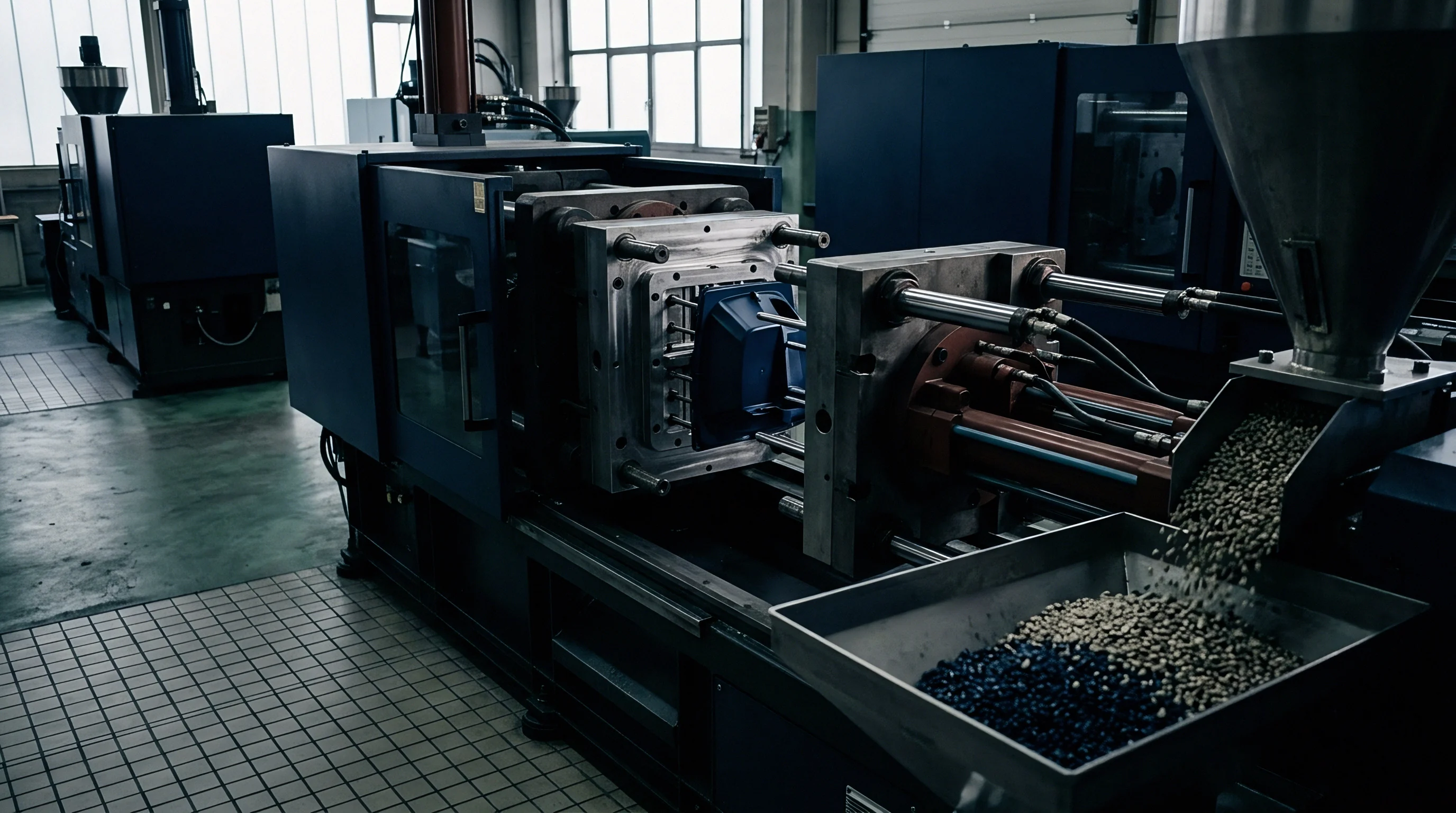
A thirty-percent advance payment wired against an unverified CAD model purchases an unsecured promissory note. Production tooling represents a heavy capital commitment in any injection moulding program, yet procurement contracts routinely conflate commercial progress disbursements with legal conveyance of the mould block. Toolmakers in foreign jurisdictions mill, grind, and burn cavities using client capital while retaining statutory possessory rights over the tool under local enterprise codes.
Legal ownership remains detached from the purchase order until contract language bridges the divide between payment milestones and property rights.
Mould steel holds substantial financial value. When a cross-border relationship deteriorates, the physical location of the steel dictates commercial leverage. Moulders facing margin erosion or project cancellation hold captive tooling on their factory floor, refusing export clearance or physical release.
The buyer discovers that local courts treat tool possession as presumptive proof of supplier ownership in the absence of explicit, notarized conveyance documentation executed under enforceable jurisdiction.
A mould builder without a paid invoice retains legal possession under local manufacturing statutes.
Cross-border agreements demand structural distinction between title transfer, operational bailment, and intellectual property licensing. The injection mould exists simultaneously as a physical asset composed of P20, H13, or S136 hardened tool steel, a manufacturing sub-assembly containing manifold electronics and hydraulic actuators, and the physical manifestation of proprietary CAD surface definitions. Unregistered title confers zero possessory rights.
Conflating these attributes inside standard purchase orders forfeits legal remedies when supply chains fracture.

The Capital Severance on Foreign Factory Floors
Disputes over mould ownership begin with the accounting ledger rather than the press clamp. Tooling contracts that fail to establish precise triggers for title conveyance expose buyers to three structural vulnerabilities:
- Unsecured creditor status leaves the buyer with uncollectible monetary claims when a vendor enters local liquidation proceedings while holding physical tooling.
- Hostage tooling leverage permits an underperforming vendor to stall supply transfers by asserting possessory liens over the mould base for disputed maintenance charges.
- Unauthorized secondary production occurs when an overseas vendor runs unapproved graveyard shifts using client tooling to supply domestic gray-market distributors.
Tooling amortisation models embedded in piece-part pricing introduce severe evidentiary hurdles. Moulders who absorb mould build costs into piece-part pricing across an assumed production volume retain legal title until the entire agreed run completes. Terminating such a contract early requires complex financial reconciliations, where the buyer pays out residual tool costs while the supplier calculates disputed carrying expenses and lost production margins.
Clear separation between component pricing and tooling capital expenditure simplifies legal ownership chains.
Mistaking a partial equipment invoice for a perfected transfer of title leaves the buyer with an uncollectible foreign unsecured claim while the factory sells parts to local competitors.

Trigger
Formal ownership of hardened injection mould steel vests through physical milestones validated by metrology. Tying title conveyance directly to cash wire dates leaves the buyer owning an incomplete or defective block of steel that cannot produce qualified parts. Conversely, delaying title passage until final full-volume production run approval gives the supplier uninhibited proprietary claims throughout the tuning and qualification phases.
Precision contracts tie the title transfer point to dimensional sign-off of specific part samples.
First shots verify basic cavity geometry. During T0 and T1 trials, shrinkage rates diverge from resin datasheet predictions, cooling circuits demonstrate thermal imbalances, and toolmakers adjust steel dimensions via sinker EDM or CNC grinding. A buyer who assumes title at T1 owns the defects in the steel.
Establishing title vesting at the formal approval of production part samples under DIN 16742 or ISO 20753 aligns legal ownership with technical utility.
A tool running at eighty-five percent cavitation efficiency consumes twice the allocated maintenance reserve before hitting half its quoted fatigue life.
Validation Gates from T0 through Production Part Approval
Stage-gate payment schedules establish commercial leverage during tool trials. Linking fractional title transfers to mechanical build progression insulates the buyer against vendor insolvency during machining while withholding final acceptance until parts conform to drawings.
| Milestone Phase | Payment Allocation | Physical Deliverable | Inspection Standard | Title Transfer Status |
|---|---|---|---|---|
| Design Freeze | 30 percent deposit | Signed 3D tool design and DFM review | Full cooling, venting, and gate layout approval | Zero percent title transferred |
| T0 First Shot | 20 percent progress | Untextured raw moulding samples | Visual completeness and fill balance check | Fractional equitable title in raw steel |
| T1 Dimensional | 20 percent progress | CMM metrology report on 32 critical dimensions | DIN 16742 Grade TG4 dimensional compliance | Equitable title with vendor retention of risk |
| Process Window (PPAP) | 20 percent progress | 300-shot capability run at cycle speed | Cpk values exceeding 1.67 on critical features | Full legal title passes to buyer |
| Final Acceptance | 10 percent balance | Completed tool dossier and signed bailment | Tooling serial plate installed and verified | Unencumbered ownership with bailment active |
Balance payments follow production part approval. CMM inspection reports on thirty consecutive mouldings per cavity establish whether steel dimensions fall within drawing tolerances. When core pin deflections or parting-line mismatch generate flash exceeding 0.05 mm, the buyer rejects the qualification gate.
Defective steel produces out-of-tolerance parts. Title transfer language must specify that equitable ownership of physical steel passes incrementally as machining milestones complete, whereas legal title to the operational mould passes only upon bilateral execution of a Part Submission Warrant.
Mathematical Qualification across Production Runs
Process capability indices establish whether a tool produces nominal geometry across consecutive operating shifts. Take a sixteen-cavity hot-runner tool for an automotive connector housing quoted at 120,000 USD running polybutylene terephthalate with thirty percent glass fiber. The critical terminal pitch dimension measures 2.54 mm with an allowable tolerance band of plus or minus 0.03 mm.
During the qualification trial, the tool setter runs three hundred consecutive shots across a four-hour window, measuring five parts per cavity at thirty-minute intervals.
If metrology yields a process capability metric of Cpk 1.18 on cavity four due to gate vestige variation, the tool fails the contract gate of Cpk 1.67. This statistical threshold rests on thirty consecutive subgroup measurements under steady-state mould temperature conditions of eighty degrees Celsius. Shifting the coolant supply temperature by five degrees alters the shrinkage behavior of glass-filled PBT by 0.0015 mm per millimeter, dropping capability below acceptable production limits.
The title clause operates cleanly here: the buyer declines the milestone certificate, holding the twenty percent progress payment until the toolmaker modifies cavity four gate geometry and demonstrates stable capability.
A rigorous acceptance sequence executes along four defined steps:
- Receipt of supplier raw material verification certificates confirming designated resin grades, melt flow rates, and masterbatch lot numbers.
- Execution of an automated thirty-shot dimensional audit measuring every functional dimension across all active cavities.
- Statistical evaluation of twenty-five consecutive production cycles confirming cycle time remains within two seconds of quoted quote baselines.
- Bilateral execution of the formal transfer certificate accompanied by high-resolution photographs of the physical asset tag installed on the mould base.
Inserting an express clause that conditions final balance disbursement on bilateral execution of the dimensional acceptance certificate prevents premature passage of legal risk.

Bailment
Physical custody of tooling remaining inside a supplier facility creates a legal relationship where physical custody separates from proprietary title. Under a cross-border bailment structure, the overseas moulder acts as bailee, holding the buyer-owned tool for the sole purpose of manufacturing components according to agreed production releases. Absent a comprehensive bailment schedule attached to the supply agreement, local statutory laws govern the relationship, often awarding the custodian expansive rights to detain, modify, or encumber machinery physically situated within their compound.
Contractual bailment provisions define the precise boundaries of the moulder custody. The supplier receives a revocable, non-exclusive license to use the tooling exclusively for fulfilling authorized purchase orders generated by the buyer. Disputed cavities halt entire assembly lines.
The contract bars the bailee from pledging the tool as collateral for credit facilities, leasing the mould to external entities, or transferring the asset to secondary subcontractors without prior written consent.

Can Physical Custody Extinguish Legal Title?
Possession creates a rebuttable presumption of ownership under commercial codes across Asian and European manufacturing jurisdictions. When a foreign enterprise faces financial distress or tax delinquency, local authorities inspect production floors to inventory tangible assets for judicial seizure. Injection moulds bolted into presses lack visible ownership trails unless physically segregated and permanently marked.
Foreign insolvency administrators routinely incorporate unmarked client moulds into debtor liquidation estates.
International aircraft engine registries and maritime vessel charters rely on formal asset identification plates to defeat third-party creditor attachments across sovereign boundaries. Injection tooling operations require the same physical discipline. Affixing a deeply engraved anodized aluminum or stainless steel asset plate to both the clamping plate and the operator-side mould base provides constructive notice to third parties.
The plate lists the buyer legal corporate name, asset serial number, proprietary design registration, and an explicit declaration of ownership.
A buyer auditing overseas production facilities verifies compliance across an operational checklist:
- Asset identification plates permanently riveted to non-wear mould surfaces stating absolute ownership by the buyer and bearing unique serial codes matching accounting registers.
- Dedicated maintenance logs documenting shot counts, ultrasonic cavity cleanings, lubrication cycles, and tool steel replacements executed according to tooling lifecycle schedules.
- Segregated storage areas designated for idle client tooling with physical locking mechanisms restricting unapproved installation onto production presses.
- Comprehensive casualty insurance naming the buyer as sole loss payee covering full tool replacement value against fire, typhoons, flooding, and transport damage.
Estimates among cross-border commercial litigators place the proportion of successful tooling repatriations without prior asset registration at roughly twenty to forty percent. The exact success rate remains impossible to defend fully with empirical court datasets because the vast majority of cross-border tooling settlements occur behind non-disclosure agreements before formal judicial decree. Prudent buyers operate under the assumption that an unmarked, unregistered mould will be lost entirely in a contested insolvency proceeding.
Plant managers routinely assert that local environmental regulations or factory electrical modifications prevent the tool from leaving their bolster plate.

Extraction
Physical removal of a three-tonne mould block from an operating facility demands detailed mechanical records. When supply negotiations break down, possessing clear legal title solves only half the operational problem. The tool must separate from the platen, clear factory security checkpoints, pass through export customs clearance, and mate cleanly with an alternate injection machine in a secondary supplier facility.
Without an exhaustive mechanical extraction pack, retrieved steel remains unrunnable production scrap.
Platen deflection alters part wall thickness. Moving a high-precision multi-cavity tool from a rigid two-platen press to a toggle-style press alters the clamping force distribution across parting lines. In a sixteen-cavity tool running polyoxymethylene gears, DIN 16742 Group 140 tolerance bands allow dimensional variations of 0.08 mm across gear pitch diameters.
When the receiving press displays platen parallelism drift exceeding 0.05 mm across the tie-bar span, inner cavities flash while outer cavities experience short shots. Mechanical documentation ensures the replacement machine matches hydraulic, electrical, and thermal parameters.
Clause 14 of the international tooling annex grants the buyer unhindered facility access within forty-eight hours of formal contract termination.

Tooling Data Dossier for Mechanical Portability
A buyer intending to move an active tool to an alternate press builder gathers four mechanical packages. Contract provisions establish that complete manufacturing design files pass into buyer ownership alongside physical steel, preventing suppliers from withholding native CAD drawings or hot runner electrical schematics during transitions.
| Interface Category | Mechanical Parameter | Standard Specification | Verification Artifact | Re-Commissioning Risk |
|---|---|---|---|---|
| Press Platen Mating | Locating ring diameter and bolt hole layout | EUROMAP 2 or SPI standards | Platen drilling template drawing | Clamp plate re-machining delay |
| Ejection System | Knockout rod spacing and stroke length | Hydraulic centre and mechanical four-point | Ejector plate tie-in schematic | Part drop interference and pin seizure |
| Thermal Regulation | Cooling channel diameter and baffle locations | BSP or NPT quick-disconnect fittings | Water manifold circuit diagram | Differential thermal warp across cavities |
| Hot Runner Control | Zone count, thermocouple type, pin actuation | Type J thermocouples, 24-pin connectors | Wiring diagram and valve gate sequence | Manifold heater burnout and gate drool |
| Dynamic Slides | Hydraulic core-pull cylinder strokes and locks | Limit switch logic and pressure ratings | Hydraulic interlock sequence chart | Cavity crash during mould close sequence |
| Methods note: Interface tolerances conform to Euromap 2 and SPI standards for press platens exceeding 250 tonnes. | ||||
Missing drawings prevent third-party tool maintenance. The contract mandates physical delivery of the extraction dossier upon completion of T1 qualification trials. Retaining a final ten percent commercial holdback until all digital files transfer gives the buyer leverage to secure proprietary tool design documentation.
The complete mechanical transfer dossier contains specific engineering records:
- Native 3D CAD models detailing every core insert, slide, lifter, cavity block, and ejector pin in STEP or Parasolid format.
- Complete 2D manufacturing drawings documenting all machining tolerances, steel hardening specifications, surface treatments, and gate geometries.
- Hot runner operation dossiers containing controller zone schematics, replacement heater part numbers, tip specifications, and valve-gate pneumatic timing profiles.
- Validated processing cards listing cylinder barrel temperature profiles, injection pressure curves, switch-over points, holding pressures, and cycle cooling seconds.
A mould that cannot run in an alternate press without re-machining the clamping plates belongs to the original supplier in every practical sense.
Lien
Third-party statutory claims against factory machinery frequently override private ownership agreements. Commercial agreements specifying clean title transfer to foreign buyers fail when local jurisdictions award statutory mechanics liens to unpaid sub-tier toolmakers. Primary manufacturing contractors routinely outsource mould base machining, EDM cavity engraving, or hot-runner integration to independent regional machine shops.
If the prime vendor collects client progress disbursements but withholds final payment from the sub-tier builder, the shop holding the steel asserts a possessory mechanics lien.
Sub-tier machine shops hold possessory rights. Under commercial jurisprudence in key manufacturing hubs across East Asia and Eastern Europe, an artisan or toolroom that expends labor and materials to enhance an asset holds an absolute legal right to retain possession until fully compensated. The buyer original contract with the prime contractor provides zero defense against an artisan lien.
Repossession attempts degenerate into protracted multi-party litigation unless the contract incorporates pass-through payment certifications and lien waiver releases.
Customs authorities in export processing zones seize unregistered foreign production assets during enterprise liquidation.

Which Statutory Liens Threaten Cross Border Extraction?
Unpaid sub-tier toolmakers hold possessory claims over finished cavities even when the prime contractor has collected full client disbursement. Contract terms protect against artisan attachments through structural financial controls. Progress payments pass to the prime contractor exclusively upon receipt of executed lien waivers from every tier-two machining facility, hot runner vendor, and steel supplier involved in the build.
The buyer reserves audit rights to inspect vendor bank payment slips confirming the downstream dispersion of tooling funds.
Insolvency regimes present even steeper hurdles. When an overseas moulding enterprise files for judicial reorganization or involuntary bankruptcy, commercial courts freeze all physical equipment situated inside the factory gates. An injection mould bolted to a press bed falls under the temporary jurisdiction of the bankruptcy receiver.
Unregistered title leaves the buyer standing in line alongside general unsecured creditors. Overcoming this presumption requires filing certified copies of the original tooling agreement, milestone acceptance certificates, asset register photos, and verified wire remittances with local enterprise registries.
Customs Classifications and Tax Encumbrances on Repatriation
Crossing international frontiers transforms a manufacturing asset into a taxable import subject to tariff assessments. Sourcing teams who neglect the customs implications of title transfer provisions encounter severe delays at maritime container terminals. In many manufacturing jurisdictions, moulds imported or built under temporary bonded status for export component manufacturing enjoy exemptions from domestic value-added taxes and import tariffs.
Unpaid tax liabilities block export permits. When a foreign buyer attempts to extract a mould from an export processing zone to move it to a different province or repatriate it overseas, regional customs bureaus treat the relocation as a formal export event. If the original tool was classified under a bonded processing regime, customs authorities demand full payment of deferred value-added taxes, plus local customs processing surcharges, before granting an export release seal.
Contracts must specify which counterparty bears legal liability for local tax clearances, customs documentation fees, and bonded-status reconciliations upon contract termination.
International arbitration bodies continue to split over whether an unregistered foreign title holder can defeat a domestic bankruptcy court liquidation order when tooling steel remains physically anchored to an insolvent debtor press floor.