Gallium Phosphate Crystal Structure and Piezoelectric Coefficients Overview
GaPO4 delivers stable 4.5 pC/N piezoelectric sensitivity to 900 °C without pyroelectric error, enabling drift-free high-temperature cavity pressure transducers.
Lattice
Gallium orthophosphate, chemically written as GaPO4, shares an isomorphic homeotype with alpha-quartz while introducing distinct structural and electromechanical parameters. The atomic arrangement belongs to the trigonal crystal system under enantiomorphic space groups P3_1 21 or P3_2 21 depending on structural handedness. Alternating gallium and phosphorus cations substitute for silicon sites within continuous three-dimensional networks of corner-sharing oxygen tetrahedra.
Because gallium and phosphorus possess distinct ionic radii of 0.62 angstroms and 0.35 angstroms respectively, the crystallographic c-axis dimension doubles relative to alpha-quartz. The unit cell dimensions at 20 degrees Celsius measure a = 4.901 angstroms and c = 11.048 angstroms, yielding a calculated unit cell volume of 229.7 cubic angstroms. The lattice parameter doubles.
The tilting of the GaO4 and PO4 tetrahedra governs both mechanical compliance and dielectric polarization under mechanical load. In synthetic alpha-quartz, the Si-O-Si inter-tetrahedral bridging angle sits near 144 degrees at room temperature, gradually opening until an displacive structural phase transition occurs at 573 degrees Celsius into the hexagonal beta phase. Gallium phosphate exhibits a significantly more rigid bridging geometry.
The Ga-O-P bond angle averages 133.5 degrees at ambient conditions. This constrained bond angle suppresses the rotational instability that drives thermal inversion in quartz. GaPO4 remains stable to 970 °C.
Thermal expansion measurements confirm stable unit cell elongation along the a-axis up to 930 degrees Celsius without anomalous volume expansion.
At 970 degrees Celsius, GaPO4 undergoes an irreversible reconstructive phase transition directly into a high-temperature cristobalite-like polymorph, accompanied by substantial volume expansion and micro-cracking across crystalline boundaries. Operating sensor elements above this threshold destroys piezoelectric sensitivity permanently. Quartz inverts at 573 °C. Transducers built for injection tooling or combustion engine instrumentation rely on the structural stability of GaPO4 to eliminate the thermal signal drift and sensitivity losses that handicap quartz sensors during continuous processing shifts above 300 degrees Celsius.
Density evaluations yield a value of 3.570 grams per cubic centimeter at 20 degrees Celsius. The packing efficiency of the tetrahedral framework provides exceptional mechanical rigidity, expressed through elastic stiffness coefficients that exceed corresponding quartz values across every principal axis. The elastic constant c11 equals 66.5 gigapascals, while c33 reaches 102.1 gigapascals at room temperature.
The c44 shear stiffness registers at 37.8 gigapascals. These elevated stiffness constants dictate high acoustic velocities, with longitudinal wave propagation reaching 5,350 meters per second along the z-axis. Mechanical rigidity directly raises the natural resonant frequency of transducer elements, which broadens dynamic response envelopes when monitoring sharp cavity pressure transitions during thermoplastic injection packing phases.


Tensor
Point group 32 symmetry establishes the specific matrix distribution of piezoelectric, dielectric, and elastic tensors in gallium phosphate. Crystals belonging to this point group lack a centre of inversion, allowing macroscopic electrical polarization to arise under applied mechanical stress. Point group 32 lacks polarity.
Spontaneous polarization along the crystallographic c-axis cannot exist, which guarantees that gallium phosphate exhibits zero primary or secondary pyroelectric effect. Pyroelectric charges do not develop. Thermal shocks generated during rapid hot-runner polymer injection create purely mechanical response signals rather than false pressure peaks induced by transient temperature gradients.

Piezoelectric Charge Distribution across Principal Axes
Mechanical stress applied to GaPO4 crystals generates surface charge densities governed by the third-rank piezoelectric tensor. Symmetries intrinsic to class 32 reduce the eighteen independent piezoelectric coefficients to two non-zero components: d11 and d14. The direct piezoelectric equations express the relationship between induced polarization vector P and mechanical stress tensor T:
P1 = d11(T11 – T22) + d14 T23
P2 = -d11 T12 + d14 T13
P3 = 0
The longitudinal piezoelectric coefficient d11 defines charge generation parallel to the crystallographic x-axis under uniaxial compressive stress along that same axis. The d11 coefficient measures 4.5 pC/N. This magnitude represents double the longitudinal coefficient of alpha-quartz, which records 2.31 picocoulombs per newton under identical conditions. The transverse shear coefficient d14 registers at 3.3 picocoulombs per newton at room temperature.
Because polarization along the z-axis P3 remains identically zero under all orthogonal mechanical stresses, sensor elements cut perpendicular to the z-axis generate no usable charge, focusing commercial fabrication exclusively on x-cut, y-cut, and rotated orientations.
Does Trigonal Symmetry Dictate Transverse Polarization?
Symmetry operations across the threefold rotation axis and three twofold polar axes mandate that mechanical compression applied along the y-axis induces an electric charge along the x-axis. This transverse piezoelectric mechanism operates through the relationship P1 = -d11 T22. A rectangular crystal plate oriented with length along y, thickness along x, and width along z produces total surface charge proportional to plate aspect ratio.
Lengthening the crystal along the stress application vector while thinning the plate along the charge collection vector multiplies voltage output. Pressure sensor designs exploit this geometry to enhance charge output in miniature sensor bores where tool steel space remains restricted.
| Material | Crystal Class | d11 (pC/N) | d14 (pC/N) | Dielectric Constant e11 | Maximum Use Temp (°C) |
|---|---|---|---|---|---|
| Gallium Phosphate (GaPO4) | Trigonal 32 | 4.50 | 3.30 | 6.1 | 900 |
| Alpha-Quartz (SiO2) | Trigonal 32 | 2.31 | -0.72 | 4.5 | 350 |
| Langasite (La3Ga5SiO14) | Trigonal 32 | 6.15 | 5.30 | 19.6 | 650 |
| Lithium Niobate (LiNbO3) | Trigonal 3m | -21.00 | – | 84.0 | 600 |
Dielectric permittivity values further influence signal voltage amplitudes. The relative permittivity component epsilon_11 for GaPO4 measures 6.1 at room temperature, while epsilon_33 records 6.6. These low dielectric constants, paired with elevated d11 coefficients, yield high piezoelectric voltage constants.
The g11 voltage output coefficient reaches 0.083 volt-meters per newton, whereas quartz records 0.058 volt-meters per newton. Transducers operating with GaPO4 generate cleaner voltage outputs into high-impedance charge amplifiers across low-pressure regimes.
A temperature coefficient of sensitivity below 0.005 percent per Kelvin ensures measurement consistency between 20 degrees Celsius and 700 degrees Celsius.
The temperature dependence of d11 demonstrates exceptional stability compared to competing single crystals. Between room temperature and 500 degrees Celsius, d11 changes by less than 2 percent. At 700 degrees Celsius, the longitudinal coefficient maintains 96 percent of its ambient baseline.
Above 750 degrees Celsius, electrical resistivity losses begin to degrade signal integration, yet the mechanical-to-electrical conversion coefficient itself avoids precipitous declines. Failure to account for crystal orientation errors during wire sawing alters the effective d11 coefficient by 0.08 picocoulombs per newton per angular degree of misalignment, generating systematic calibration offsets that distort cavity pressure monitoring across entire moulding cycles.

Wafer
Single crystals of gallium phosphate cannot be pulled directly from a melt because the material decomposes prior to melting under atmospheric pressure. Growth requires hydrothermal synthesis inside heavy-walled nickel-chromium autoclaves lined with platinum or gold to resist extreme chemical attack. Hydrothermal autoclaves run hot.
The nutrient material consists of pre-synthesized GaPO4 powder or sintered blocks placed in the cooler dissolution zone of the autoclave, while carefully oriented seed plates sit in the hotter growth zone. Phosphoric acid solutions ranging from 4 to 15 molar concentration act as the hydrothermal solvent at temperatures between 150 degrees Celsius and 250 degrees Celsius under autogenous pressures reaching 1.5 to 10 megapascals.
Gallium phosphate displays retrograde solubility in concentrated phosphoric acid below approximately 300 degrees Celsius, dissolving more readily at lower temperatures than at higher temperatures. Autoclave operations reverse conventional thermal gradients, keeping the nutrient zone cooler than the crystallization zone. Growth rates along the z-axis typically reach 0.10 to 0.25 millimeters per day, rendering boule production an extended manufacturing commitment spanning several months.
Hydroxyl defect incorporation, visible in infrared absorption spectroscopy near 3400 inverse centimeters, acts as an acoustic attenuation source and lowers bulk electrical resistivity at high operating temperatures. Controlling the seed orientation and acid concentration keeps OH absorption coefficients below 0.05 inverse centimeters.
Crystal boules undergo structural evaluation to eliminate twin defects before diamond slicing. Mechanical and optical twinning modes degrade operational yields:
- Electrical Dauphine twinning causes local reversals of the twofold polar x-axes without altering crystalline orientation, nullifying opposing piezoelectric charges under stress.
- Optical Brazil twinning introduces boundary walls that invert structural handedness between right-handed and left-handed lattice domains, destroying mechanical resonance uniformity.
- Macroscopic fluid inclusions trap concentrated phosphoric acid droplets within growing crystal sectors, precipitating internal micro-cracks during downstream thermal processing.
- Growth sector boundaries generate localized internal strain gradients that shift piezoelectric response profiles across adjacent cut blanks.
Brazil twins destroy acoustic resonance. Precision wire saws equipped with diamond-impregnated steel wire slice oriented wafers from verified defect-free boules. X-cut plates, sliced perpendicular to the crystallographic a-axis , represent the standard geometry for compression-mode pressure transducers.
Rotated cuts, including the AT-cut equivalent rotated around the x-axis by approximately 16 degrees, minimize the temperature coefficient of resonance frequency for surface acoustic wave and thickness-shear sensor designs. Lapping with sub-micron alumina slurries and subsequent chemical etching removes the subsurface mechanical damage layer induced by wire sawing, preventing micro-crack propagation under cyclic transducer preloading.
A crystal vendor confronted with high dielectric dissipation factors routinely asserts that residual structural water will outgas naturally once the transducer completes its initial baking cycle above 400 degrees Celsius.

Transducer
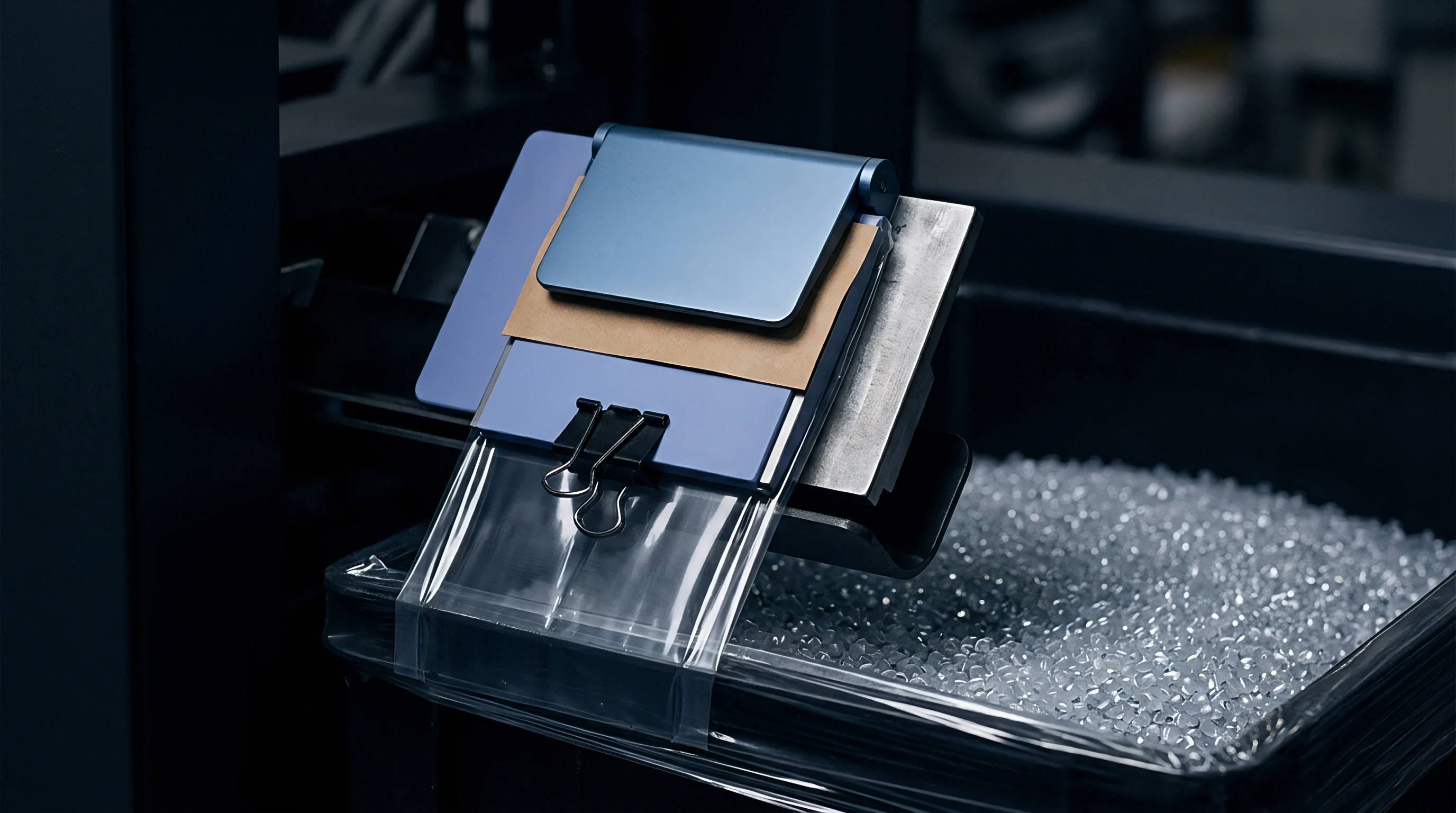
Integrating gallium phosphate crystal discs into toolroom pressure sensors demands precise mechanical packaging to withstand injection clamp pressures and cyclic cavity loading. Direct contact between raw crystal faces and tool steel causes micro-fretting and uneven stress concentration that shatters brittle orthophosphate lattices. Transducer construction utilizes polished alumina or sapphire decoupling insulators paired with gold-foil or platinum-sputtered charge collection electrodes flanking the crystal plate.
Tool cavities demand compact gauges. Miniature sensors embedded behind ejector pins or seated flush against runner walls operate under space constraints that limit crystal diameters to between 2.0 and 5.0 millimeters, with plate thicknesses typically machined between 0.30 and 0.80 millimeters.
Preload Mechanics in Sensor Stack Architecture
Piezoelectric single crystals exhibit exceptional compressive strength but minimal tensile and shear resilience. In compressive transducer designs, the internal stack must remain under constant mechanical pre-compression to prevent crystal separation or shear displacement during rapid pressure discharge cycles. Preload protects the brittle element.
An internal preload sleeve, machined from precipitation-hardened nickel-chromium superalloys such as Inconel 718, exerts a controlled mechanical bias across the stack during hermetic laser welding of the front diaphragm.
How Do High Preloads Prevent Crystal Slippage?
Compression preloads bias the crystal into an operating window where cavity pressure fluctuations act strictly as variations in an existing compressive state. Applying a preload stress of 40 to 60 megapascals prevents microscopic rocking and maintains continuous electrical contact at electrode interfaces. Insufficient preloading allows lateral slip across crystal faces during asymmetrical mould filling, generating spurious charge offsets and mechanical edge chipping.
Excessive preloading accelerates mechanical relaxation within the diaphragm sleeve, which manifests as baseline calibration drift over extended production cycles.
| Parameter | Design Target | Tolerance Band | Verification Method |
|---|---|---|---|
| Crystal Diameter (mm) | 3.00 | ±0.01 | Optical coordinate metrology |
| Crystal Thickness (mm) | 0.500 | ±0.005 | Contact stylus profilometry |
| Mechanical Preload (MPa) | 50.0 | ±5.0 | Laser-welded load-cell feedback |
| Insulation Resistance at 20 °C (Ω) | 1.0 × 10^13 | Minimum threshold | Electrometer at 100 V DC |
| Insulation Resistance at 400 °C (Ω) | 5.0 × 10^9 | Minimum threshold | Electrometer at 50 V DC |
| Charge Sensitivity (pC/bar) | -2.20 | ±0.05 | Pneumatic dead-weight calibration |
Direct metallization prevents interfacial slip. Sputtered gold or platinum layers measuring 200 to 500 nanometers thick eliminate the compliance associated with loose metal foils. Contact resistance must remain negligible to prevent phase lag in rapid signal acquisition.
Assembling a high-temperature cavity pressure transducer follows a rigid sequential stack procedure to avoid damaging polished crystal faces:
- Substrate cleaning strips surface hydrocarbons and atmospheric moisture inside vacuum bake-out ovens operating at 250 degrees Celsius for four hours.
- Insulator seating aligns high-purity alumina ceramic base discs into the precision-machined bore of the Inconel outer housing sleeve.
- Crystal orientation positions the metallized GaPO4 disc with its positive charge output face oriented toward the center signal pin, verified through optical alignment notches.
- Electrode compression inserts the polished gold-coated nickel contact disc directly above the crystal face.
- Diaphragm integration positions the front seal membrane under a controlled axial hydraulic press load while a continuous pulsed Nd:YAG laser welds the circumferential perimeter joint.
Charge amplifiers require high resistance. As operating temperatures climb during the moulding of high-temperature engineering polymers such as polyetheretherketone or polyphenylene sulfide, electrical insulation resistance through the crystal bulk and ceramic isolators degrades exponentially. While room-temperature insulation resistance easily exceeds 10^13 ohms, elevated temperatures above 400 degrees Celsius drive ionic conduction, lowering insulation resistance toward 10^9 ohms.
Melt pressure spikes abruptly. When total loop insulation drops below 10^8 ohms, the quasi-static charge measurement window collapses, causing rapid signal drift and false zero-pressure readings before the injection packing phase concludes.
Procuring custom sensor housings requires checking drawings against rigorous manufacturing standards:
- Surface flatness callouts for crystal seating shoulders must remain within 0.001 millimeters across the full contact diameter to avoid bending stresses.
- Bore perpendicularity tolerances to the front diaphragm datum must not exceed 0.005 millimeters total indicator reading.
- Weld penetration depth limits must hold between 0.15 and 0.25 millimeters without generating internal spatter near the ceramic isolator.
Under DIN EN ISO 20753 sensor cavity mounting conventions, an uncalibrated installation preload variance exceeding ten percent invalidates the transducer pressure transfer function.
According to clause 4.2 of DIN EN 60444 part 6, test leads and mounting fixtures must maintain shield isolation above 10^12 ohms during piezoelectric parameter verification, directly invalidating factory acceptance certificates derived from standard bench cables under elevated ambient humidity.
Drift
Long-term drift in gallium phosphate instrumentation stems from three distinct physical sources: mechanical relaxation of the preloaded transducer housing, loss of bulk electrical resistivity at high operating temperatures, and structural degradation along crystalline cut boundaries under cyclic shock. Synthetic polymers processed in multi-cavity moulds expose transducer diaphragms to severe pressure ramps reaching 2,000 bar within fractions of a second, followed by immediate contact with abrasive melt streams filled with chopped glass fibres or ceramic additives. Toolmakers evaluate sensor life not by static bench tests, but by signal fidelity maintained across five hundred thousand continuous press cycles.
Signal degradation follows moisture ingress. Moisture penetration through micro-cracked diaphragm welds reacts with high-temperature phosphorus compounds, generating conducting surface films that accelerate charge leakage into the grounded tool body. Because gallium phosphate possesses no Curie point, the crystal will never depole under mechanical shock or excessive heat.
This property gives GaPO4 a fundamental durability advantage over ferroelectric ceramics such as lead zirconate titanate or bismuth titanate, which experience irreversible domain depolarization when localized thermal spikes cross their ferroelectric phase boundaries.
Hydrothermal crystal growth economics impose strict constraints on raw wafer procurement. A standard single-crystal autoclave cycle produces only a limited volume of usable boule volume per run, with boules rarely exceeding 30 to 45 millimeters in diameter. Wafer yields remain constrained by the necessity of discarding twin-defective boundary zones and seed-adjacent interfaces.
Diamond wire slicing losses, commonly termed kerf loss, consume approximately 0.25 millimeters of material per slice, which cuts raw material yield in half when fabricating thin 0.40 millimeter plates. The landed cost of a certified defect-free 3.0-millimeter GaPO4 sensor disc typically ranges from 45 to 85 dollars at raw component scale, directly elevating final transducer replacement prices compared to legacy quartz alternatives.
Commercial injection moulding facilities justify this investment through process window gains. In precision optical moulding and medical device fabrication, holding cavity pressure variation within 1.5 bar across a complete production shift decides part acceptance. Quartz sensors drifting under temperature shifts between mould warm-up and steady-state cycling require active baseline recalculation algorithms inside the machine controller.
Gallium phosphate maintains an unwavering sensitivity curve from the initial shot off a cold tool through twenty-four hours of continuous production. How downstream crystal growers will overcome autoclave yield plateaus to scale GaPO4 supply for mass-market automotive electrification sensors remains an unresolved commercial question.